Purpose

I will try my best to provide detailed info on various cars and what is like to live with them, I have already produced a few for Jaguar-car-forums, I will do my best to be unbiased, but it will be hard for some cars. I will re-produce press releases and copy from other motoring news.
Showing posts with label control. Show all posts

Friday, 9 December 2016

USA - Hyundai adds a value edition to the Accent range, loads more kit for a small $ Increase.

  • The J.D. Power Initial Quality Study Segment Winner continues to offer tremendous features and pricing
A Value Edition comes to the already economically priced, feature-laden Accent for the 2017 model year. 
At just $16,450, the Value Edition costs but $705 more than the base Accent with 6-speed automatic transmission, yet includes several desirable features. 
Now the Accent crams even more content into its small-on-the-outside, commodious-on-the-inside, IQS-segment-winning shell.

2017 Hyundai Accent Value Edition includes:
  • 16-inch machine finish alloy wheels with P195/60R16 tires
  • Rear disc brakes
  • Steering wheel mounted audio controls
  • Cruise control
  • Bluetooth hands-free phone system
  • Sliding armrest storage box
PEPPY POWERPLANT

An all-aluminum, 1.6-liter four-cylinder engine, called Gamma, propels the Accent. It produces 137 peak horsepower at 6300 rpm and 123 lb-ft of torque at 4850 rpm. 


The Gamma makes use of several advanced technologies like Gasoline Direct Injection (GDI), Dual Continuously Variable Valve Timing (D-CVVT) on both intake and exhaust camshafts, and a variable length intake manifold. 

To reduce lifetime operation costs and increase reliability, the Gamma engine features a maintenance-free silent roller timing-chain. 

The Accent comes with either a six-speed automatic or manual transmission. With the manual, the Accent achieves an EPA-estimated 27 city, 37 highway, and 31 combined mpg.


COMPACT YET COMMODIOUS

Despite similar exterior dimensions to many of today’s traditional subcompacts, the EPA classifies the Accent as a compact sedan, rather than subcompact, due to its over 103 cubic-feet of interior volume as a sedan and 111 cubic-feet as a hatchback. The five-door also offers more cargo behind the rear seats than a Honda Fit.


Hyundai sprinkled convenient storage spaces throughout the cabin, including larger bottle holders in the front doors and a storage tray at the base of the center console. 

An available sliding armrest adds even more storage options. The Accent’s rear seats split 60/40 and fold for increased cargo flexibility, making it a handy IKEA™ hauler as well.


SAFETY

Six airbags help protect occupants in the event of a collision: two front airbags, as well as driver and passenger side and curtain airbags, which protect both front and rear passengers. 

The Accent’s standard front-seat active head restraints help prevent whiplash by automatically reducing the space between a front occupant’s head and the restraint during certain rear collisions. 

All this is in addition to a cadre of standard passive safety features like Electronic Stability Control (ESC), Traction Control (TCS), and Vehicle Stability Management (VSM), which integrates control of the ESC and motor-driven power steering (MDPS) to provide handling assistance in slippery conditions and emergency maneuvers. 

The system delivers counter-steering when required to assist the driver and keep the vehicle stable.

Thursday, 7 April 2016

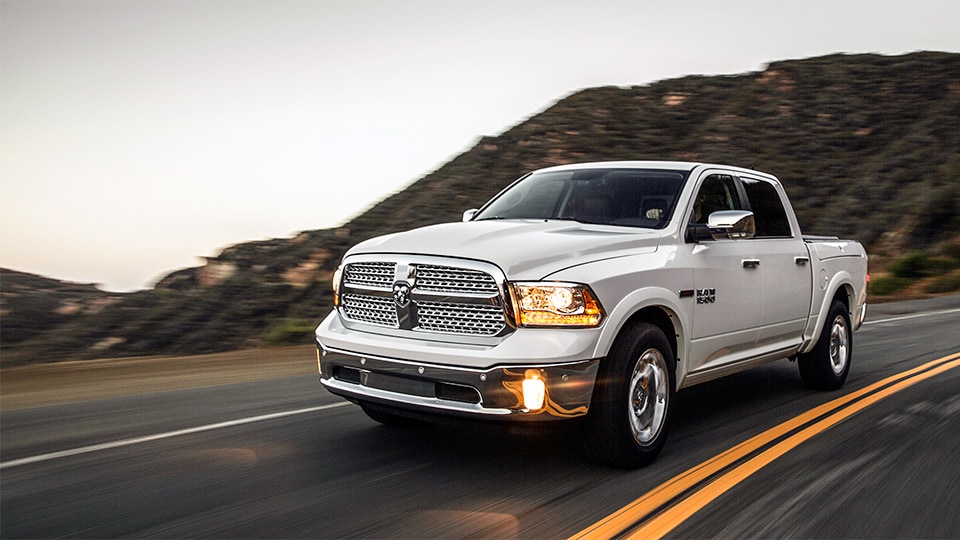
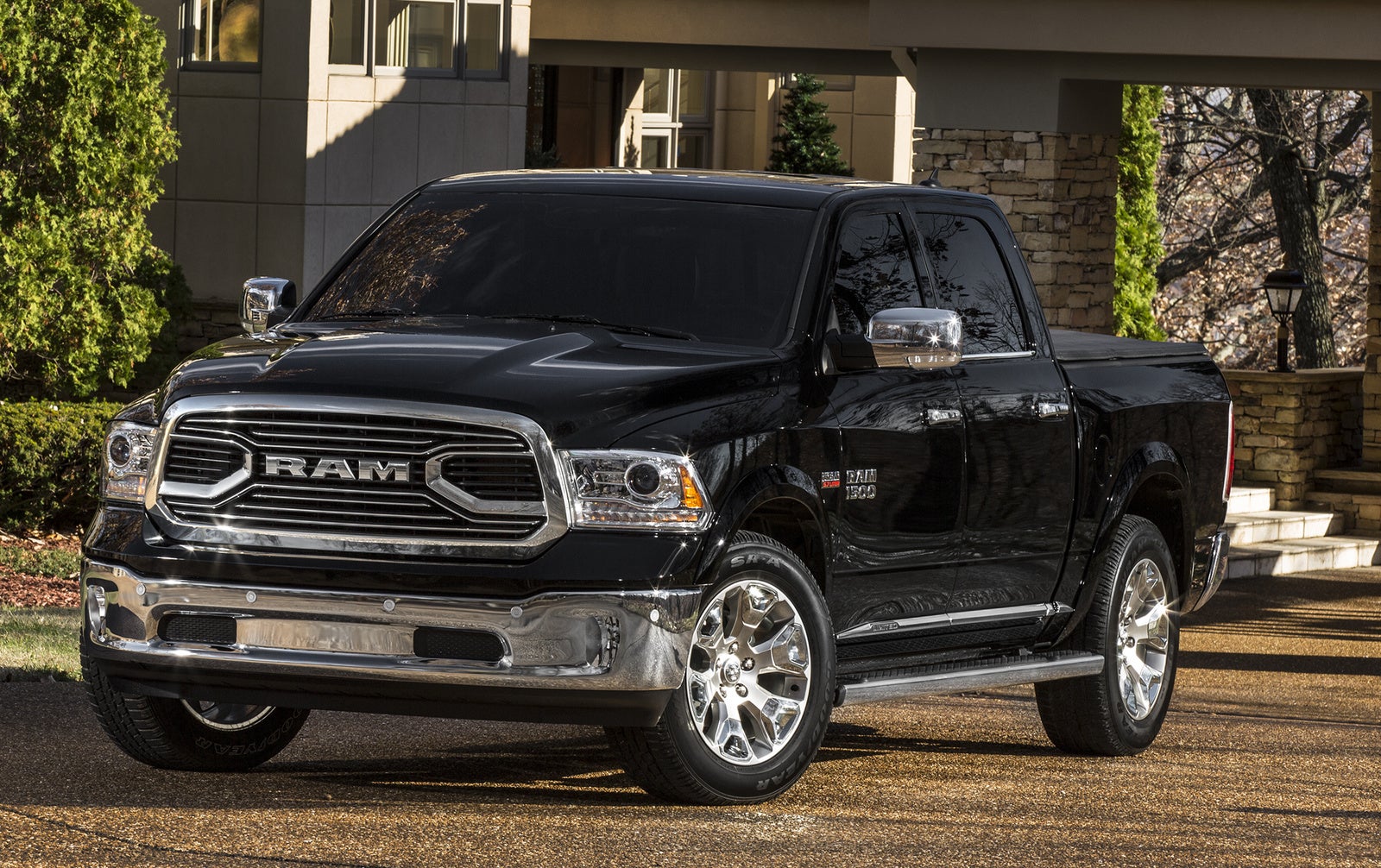
USA RECALL - FCA - 2015-2016 Ram 1500 pickups to replace the modules that control their electric power steering


FCA US LLC is voluntarily recalling an estimated 442 trucks in the U.S. to replace the modules that control their electric power steering (EPS) systems.


An investigation by the Company determined a small group of control modules, a supplied component, may have been contaminated during the manufacturing process. 


Over time, this condition may make the vehicle more difficult to steer because of intermittent or complete loss of power steering assist; however, steering capability remains.

FCA US is unaware of any related injuries or accidents.

Affected are certain 2015-2016 Ram 1500 pickups. An additional 59 vehicles are being recalled in Canada, along with seven in Mexico and six outside the NAFTA region.

Customers will be advised when they may schedule service, which is free of charge.

FCA US urges customers to follow the instructions on all recall notices. Those with questions or concerns may call the FCA US Customer Care Center at 1-800-853-1403.

Monday, 16 November 2015

Kia is developing an Autonomous driving car and will be on the roads by 2030, $2Bn investment starts now.

  • Kia developing range of Advanced Driver Assistance Systems
  • US$2 billion invested by 2018 to develop autonomous vehicle technology
  • Introduction of new partially-autonomous driving technologies by 2020
  • Kia targeting 2030 introduction of fully-autonomous vehicles to market, with vehicle-to-vehicle communication in development
By 2020, Kia plans to introduce a range of partially-autonomous driving technologies to its model line-up, and is aiming to bring its first fully-autonomous car to market by 2030.
The initial stage of investment by Kia – totalling US$2 billion by 2018 – will enable the company to develop the first of its new Advanced Driver Assistance System (ADAS) technologies and employ a greater number of engineers. The investment will lead to the introduction of Kia’s next-generation smart vehicles in the coming years.

Pictures below used for illustrative purposes only 

Tae-Won Lim, Vice President, Central Advanced Research and Engineering Institute of Hyundai Motor Group, commented, “Fully-autonomous vehicles are still some way off, and a great deal of research and rigorous product testing will need to be carried out to make the ‘self-driving car’ a reality. Kia is still in the early stages of developing its own technologies, and we are confident that the latest innovations – both partially and fully autonomous – will ultimately make driving safer for everyone.”
Kia Advanced Driver Assistance System
With ADAS still in its infancy, Kia – as part of the Hyundai Motor Group – is working closely with suppliers and affiliated companies to develop a range of technologies across three distinct categories to enable a vehicle to drive autonomously:
  • ‘Recognition’ – the development of new sensors to detect other vehicles and hazards, read the road ahead and identify poor driving conditions
  • ‘Judgment’ – advanced computing systems allowing the car to make decisions based on the information gathered by ADAS sensors
  • ‘Control’ – active electronic and mechanical systems allowing the vehicle to carry out the decisions taken by the autonomous technology in any given situation
Many of Kia’s new ADAS technologies require simultaneous input from more than one sensor, and much of Kia’s investment intoresearch and development is allowing the car manufacturer to secure localisedknowledge and establish a production-base for the high precision sensors required to realise autonomous driving technologies.
Introduction of partially-autonomous driving technologies by 2020
Kia is planning to introduce a range of partially-autonomous ADAS technologies in the coming years, with an array of new functions anticipated for introduction to market by 2020.
Among the new technologies currently under development is Highway Driving Assist (HDA), which combines a Lane Guidance System (LGS) and Advanced Smart Cruise Control (ASCC). HDA is designed to automatically maintain a safe distance from cars in front while keeping the car in its lane on the motorway and adhering to local speed limitsusing information from the navigation system. The system will also assist in safely overtaking other cars on the motorway.
Traffic Jam Assist (TJA), currently under development by Kia, will help make light work of heavy congestion by tracking the vehicle in front during moderate-to-highly congested traffic conditions. The system employs a range of sensors to maintain a safe distance from the car in front and keep the vehicle within its lane. Using TJA, drivers will find it easier – and more relaxing – to navigate traffic jams on often-congested roads.
To make Kia vehicles among the easiest cars to park, the company is developing further technologies to enable cars to complete low-speed manoeuvres more easily. Enhancing Kia’s existing Smart Parking Assist System (SPAS), which enables the car to park itself in parallel or perpendicular spaces with minimal driver input, Kia will also introduce Remote Advanced Parking Assist System (RAPAS), allowing Kia vehicles to park themselves when the driver presses the smart key button while within a certain range of the car.
At all times, the new range of ADAS technologies can be circumvented by direct driver control, enabling closer control of the car as desired.
These new technologies will join the suite of technologies already offered by Kia on its latest production vehicles in many of its global markets, including the Sorento and the soon-to-be-launched all-new Optima and Sportage. 
These technologies are primarily designed to make driving safer and easier for Kia customers by identifying hazards at the earliest possible opportunity and allowing the driver – or the car – to take the appropriate reaction. 
Existing Kia technologies include Lane Departure Warning System (LDWS), Lane Keeping Assist System (LKAS), Blind Spot Detection (BSD), Auto Emergency Braking (AEB) and Advanced Smart Cruise Control (ASCC).
Kia plans to bring fully-autonomous cars to market within 15 years

Overthe longer-term, Kia is targeting 2030 for the introduction of fully-autonomous vehicles. As a key part of Kia’s development of fully-autonomous driving technologies – the true ‘self-driving car’ – Kia is focusing R&D resources on vehicle-to-vehicle (V2V), vehicle-to-infrastructure (V2I) and vehicle-to-everything (V2X) communication.

By enabling cars to effectively communicate directly and independently with their surroundings, Kia will be able to make ADAS-equipped vehicles as safe and efficient as possible.

Saturday, 20 June 2015

Range Rover Sport controlled via your Smartphone, to drive the car - well, its happened, and here it is !


JAGUAR LAND ROVER SHOWCASE A REMOTE CONTROL RANGE ROVER SPORT, CONTROLLED BY THE DRIVER ON A SMARTPHONE OUTSIDE THE VEHICLE
  • Jaguar Land Rover researchers developing new sensing technologies that will work in all weathers and in all environments – so any future autonomous car can go anywhere
  • Autonomous driving prototypes revealed include the ‘Multi-Point Turn’ Range Rover Sport, which will perform an autonomous 180-degree turn in the road
  • Jaguar Land Rover’s vision is to create driver-focussed autonomous technologies to enhance the driving experience
Jaguar Land Rover has revealed some of the prototype technologies that its UK-based research team are developing to deliver autonomous driving in the future.

A Remote Control Range Rover Sport research vehicle demonstrates how a driver could drive the vehicle from outside the car via their smartphone. The smartphone app includes control of steering, accelerator and brakes as well as changing from high and low range. 


This would allow the driver to walk alongside the car, at a maximum speed of 4mph, to manoeuvre their car out of challenging situations safely, or even to negotiate difficult off-road terrain.

The driver could use the smartphone to reverse the car out of a parking space if someone has parked too close for them to open the door, or allow the driver to become their own off-road spotter, to guide the car over off-road obstacles from outside the vehicle.

By walking alongside the car, the driver could continually check ramp, approach and departure angles and allow precise positioning of the vehicle when rock crawling. It could also be an invaluable aid when the vehicle is fording a stream or traversing sections made slippery by mud or snow. 

The remote control function will only operate if the user is within 10 metres of the car and if the smart key can be detected. The system will stop the vehicle if the driver moves out of range or gets too close.

Future possibilities for this technology could include more autonomous functionality where the driver gives a simple command from the handset to traverse an obstacle or exit a parking space, and the car does the rest.

MULTI-POINT TURN CAR

Jaguar Land Rover’s ‘Multi-Point Turn’ Range Rover Sport is capable of autonomously manoeuvring through 180 degrees to turn the car in the road and point the car in the opposite direction. 

This autonomous vehicle could extricate itself from the most difficult situations, such as a dead-end roads or congested car parks, as well as performing many drivers’ least favourite manoeuvre – the three-point turn in a busy street or car park.

The system uses sensors to assess available space and to avoid pedestrians, vehicles and other objects. The system takes over gear selection, steering, braking and acceleration to make as many forward and backwards movements as necessary to achieve the manoeuvre.

The research team is working on a system to scan the environment around the car and inform the driver whether it is safe to perform the turning manoeuvre. The driver then confirms the manoeuvre and the car would move forward until its path is blocked. 

It then selects reverse and uses the steering, throttle and brakes to do the same again. It repeats this as many times as required until it is facing in the opposite direction.

Dr Wolfgang Epple, Director of Research and Technology, Jaguar Land Rover, said:“Getting a car out of a tricky parking manoeuvre can be a stressful experience for any driver. 

A Remote Control car, or a vehicle that can autonomously turn in the road, demonstrates how we could use these new technologies to reduce the tedious parts of driving and improve road safety.
“Research into technologies like these won’t only help us deliver an autonomous car. 

They will help make real driving safer and more enjoyable. The same sensors and systems that will help an autonomous car make the right decisions, will assist the driver and enhance the experience to help prevent accidents. Autonomous car technologies will not take away the fun of driving.”

Jaguar Land Rover’s vision is to offer a choice of an engaged or autonomous drive. This means the car will be able to drive itself if the driver chooses, or offer systems that can be adjusted for a more engaging and involved drive.

“Because our customers drive in all terrains and in all weathers, any future autonomous Jaguar or Land Rover must be as capable on rough tracks and unpaved roads as it would be on city streets,” added Dr Epple.

“We know our customers drive in heavy rain, and snow, and bright desert sunshine every day. We are working on an array of new sensors that would enable a car to operate in any environment, without any outside intervention or input from lane markings or roadside infrastructure like traffic lights. Our research engineers have a nickname for a car with this level of capability: the ‘Solo Car’.”

‘Solo Car’ enhanced sensing

Jaguar Land Rover has an advanced research programme underway to enhance the car’s sensing capability. This project is developing a range of sophisticated sensors to make autonomous cars viable in a range of driving environments and weather conditions.

Creating a car capable of functioning autonomously in all situations requires a fusion of sensors with different attributes including radar, LIDAR, cameras, ultrasonics and structured light technology. 

Each of these is needed to enable an autonomous car to function in the real world and to ensure the car can make safe and accurate decisions anywhere.

Wednesday, 21 January 2015

Volkswagen to offer a new Black Box for their cars to control and be in control your cars features.

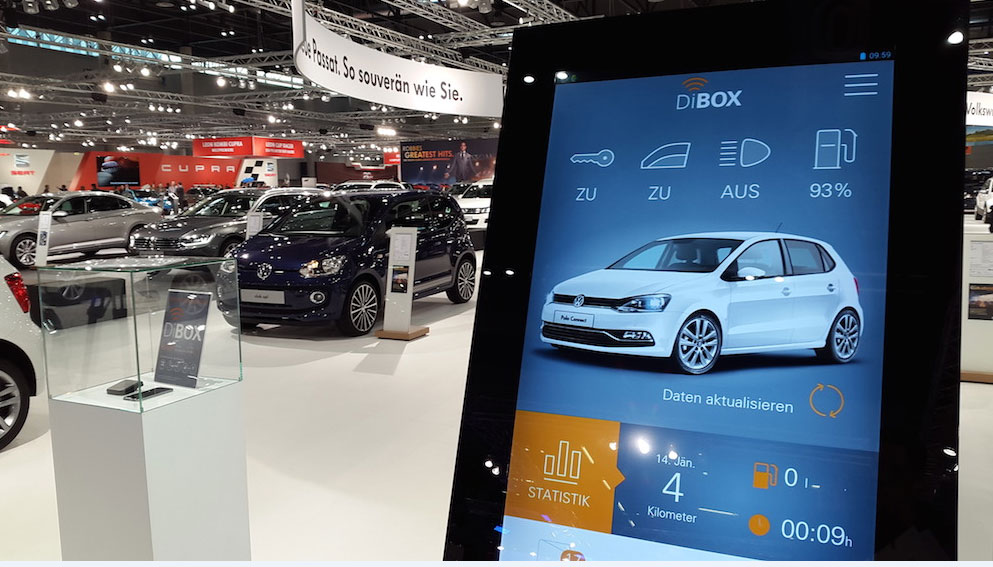
Volkswagen plans to sell a little black box in Austria that records trips and tracks the location of a car to gauge European demand for connected-vehicle services.
The DiBox allows the user to access data on the car via a smartphone and is available for new as well as old VW and Audi models, Porsche Holding, Volkswagen’s Salzburg, Austria-based retail unit, said Wednesday in a statement.
The device, which connects to a vehicle’s electronics system, will cost 299 euros ($350), plus an annual subscription fee of 49 euros.

Volkswagen and BMW are among manufacturers developing wireless links for cars to add features that warn other vehicles of traffic jams and ultimately facilitate autonomous driving.
Regulators are also backing the spread of the technology, with the European Union planning to require that new cars be equipped with a system that automatically notifies emergency services after a serious crash.


By offering the DiBox also for older vehicles, “we’re democratizing the connected car,” Alain Favey, the head of Porsche Holding, said in a statement.
Volkswagen has a target of selling 6,000 DiBoxes this year and will eventually offer the device for the automaker’s other brands, said Richard Mieling, a Porsche Holding spokesman.
Together with Telekom Austria, which is supplying some of the technology, the carmaker plans to expand the service to other European markets.

REPORT HERE

Friday, 12 December 2014

New MINI John Cooper Works, The most powerful MINI Ever.

  • 2.0-litre engine with MINI TwinPower Turbo Technology.
  • 6-speed manual transmission as standard, 6-speed Steptronic sports transmission optional.
  • New high-performance Brembo brakes with four-piston front callipers.
  • Exclusive 17-inch John Cooper Works Race Spoke light alloy wheels.
  • Aerodynamically optimised body design: front apron with large cooling air inlets; distinctive side sill & rear apron design; JCW rear spoiler.
  • Combined economy of 49.5mpg; CO2 emissions: 133g/km (both auto).
  • Priced from £22,865. On sale late April.
The hottest ticket in town at next month’s Detroit Auto Show will be the new MINI John Cooper Works.

Packing the most powerful engine ever for a production MINI – a 2.0-litre TwinPower Turbo unit delivering 231 hp and 320 Nm – the JCW also draws on the brand’s motorsport expertise with a package of suspension, brake, aerodynamic and interior modifications to deliver race-car sensations without losing sight of MINI’s premium position.

Compared with the previous MINI JCW, the new model delivers 10 per cent more power and 23 per cent more torque. This brings the 0-62 mph time down by 0.2 seconds to 6.3 seconds with the six-speed manual gearbox, and by 0.6 seconds to 6.1 seconds with the optional six-speed Steptronic sports transmission.


Equally impressive is the greatly improved driving flexibility, courtesy of the increased torque – acceleration from 50-75 mph is now 10 per cent quicker at 5.6 seconds, accompanied by an emotive rasp from twin tailpipes of the sports exhaust.

In true MINI style, the driving fun does not involve any fuel consumption penalty. Combined consumption with the manual gearbox is 42.2 mpg, with CO2 emissions of 155 g/km. With the optional Steptronic sports transmission fuel economy improves by 20 per cent to 49.5 mpg, with CO2 emissions of 133 g/km.

The suspension and the Servotronic electromechanical power steering have been tuned to allow drivers to exploit the new JCW’s extra power and torque in complete safety, and there are newly developed four-piston Brembo brakes within 17-inch John Cooper Works Spoke light-alloy wheels. John Cooper Works 18-inch alloys are optional. Dynamic Stability Control (DSC), Dynamic Traction Control (DTC), Electronic Differential Lock Control (EDLC) and Performance Control allow drivers of all abilities to get maximum enjoyment from the car, and Dynamic Damper Control is an option.        
          
The aerodynamic changes have been designed with a purpose rather than for purely aesthetic reasons. A new front apron with large engine air intakes, distinctive side sills, a model-specific rear apron and a John Cooper Works spoiler differentiate the JCW from the standard 3-Door MINI Hatch. The JCW also has LED headlamps with white indicators, wheel-arch surrounds and a unique radiator grille, side scuttles and tailgate with JCW badging. A new colour option, Rebel Green, is exclusive to the JCW.

JCW highlights of the sporty interior include exclusive bucket seats with integrated headrests in Dinamica/fabric, the sills, a multi-function steering wheel with shift paddles (in conjunction with Steptronic transmission), gear selector, instrument displays, stainless steel pedals and footrest, Driving Excitement package and key.

Bespoke JCW personalisation options includes a model-specific MINI Head-Up display (with rev lights and gear indicator), Chili Red roof and door mirror covers, bonnet stripes and exterior and interior John Cooper Works Pro design accessories. These are in addition to the vast selection of high-end options available for the entire MINI range.

Tech spec:
  • 4-cylinder MINI TwinPower Turbo engine with direct injection, fully variable valve control and variable camshaft control
  • Capacity: 1,998 cc
  • Output: 231 hp @ 5,200-6,000 rpm, max torque: 320 Nm @ 1,250-4,800 rpm
  • Acceleration (0–62mph) 6.1 seconds (auto); 6.3 seconds (man)
  • Top speed: 152mph
  • Average fuel consumption: 49.5 mpg (auto); 42.2 mpg (man)
  • CO2 emissions: 133 g/km (auto); 155 g/km (man)
Exterior dimensions:
Length: 3,874 millimetres
Width: 1,727 millimetres
Height: 1,414 millimetres
Wheelbase: 2,495 millimetres