BMW is renowned for sporty rear-wheel-drive sedans. But its front-wheel-drive 2-series Gran Tourer seats seven and needs only a sliding door to be a full-blown minivan.
Meanwhile, Mercedes-Benz may need to change its slogan to "engineered like no other [Japanese] truck in the world" when it begins building a luxury pickup based on a Nissan Frontier chassis before the end of the decade.
In their quest to boost sales and achieve double-digit profit margins, Germany's premium carmakers are dividing segments into ever-thinner slices. In the process, they are stretching their brands figuratively -- and their cars literally -- in ways previously unimaginable.
"We take into consideration what the investment is that we have to make, what's our gross sales potential, what's the net sales potential after cannibalization effects and what's the margin we make on the car," explained Ola Kaellenius, Mercedes board member for sales and marketing. "Then we run that through the machine, and if we get a net present value that meets our targets, we go for it."
In the coming five years, Audi says it will add seven new vehicles, including at least two SUVs, increasing its range to 60 models. Mercedes plans to add 10 models in new segments by 2020.
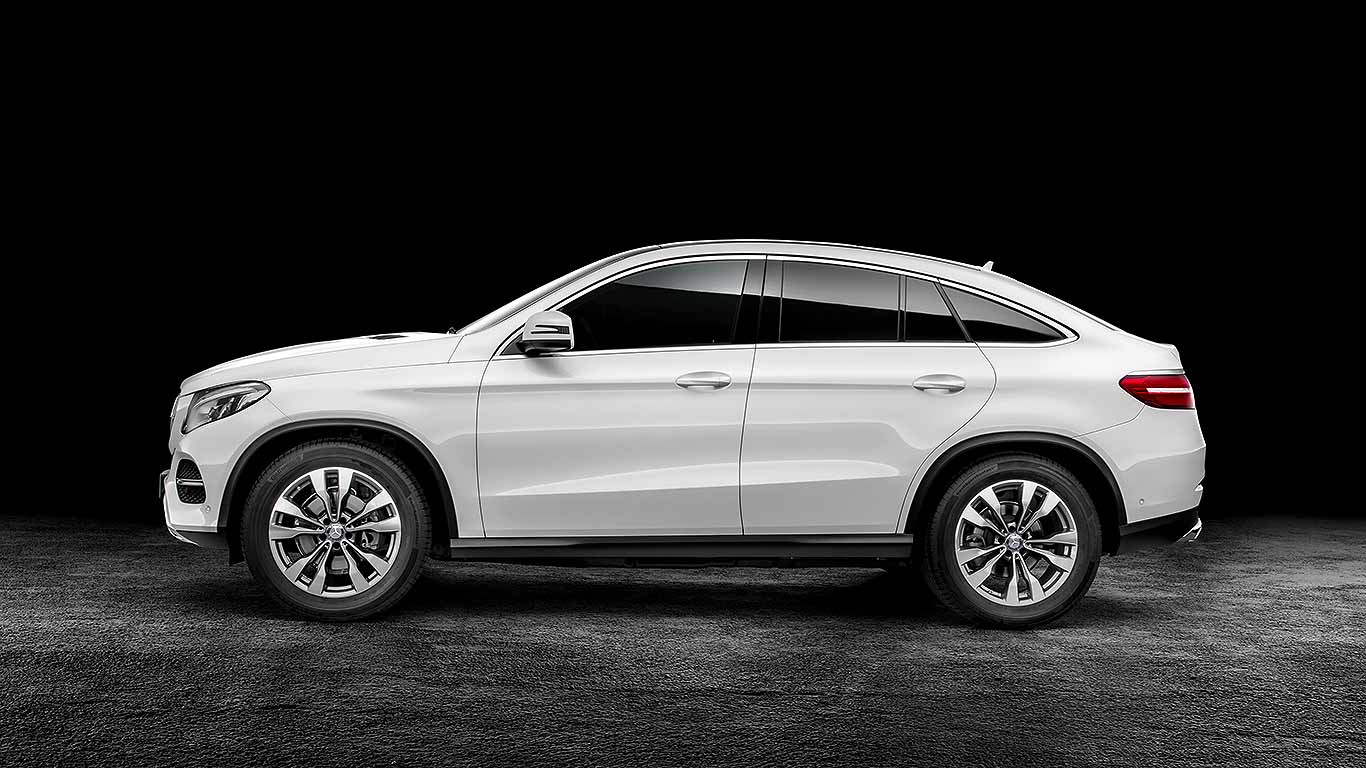
Carmakers often recombine the DNA of other vehicles as they try to create the next breakthrough concept that drivers didn't know they wanted. "Coupe-ifying" sedans and SUVs is the latest trend, including the new Mercedes GLE Coupe that costs nearly $17,000 more than its M-class sibling.
"In an increasingly crowded marketplace it's important to give their customers a sense of differentiation, so you are not driving the same BMW as your neighbor," said Anil Valsan, global lead analyst for EY's automotive team. Valsan adds that popular niche cars are typically packed with sought-after features, enabling automakers to charge higher prices and offer lower incentives.
Audi's A7 Sportback, a four-door fastback, "is based on the same architecture of the A6, [but] has average transaction prices close to the A8," Audi CEO Rupert Stadler said in an interview.
Moving downmarket
A study last year by U.K.-based CAP Automotive revealed that the number of vehicle derivatives introduced annually has quadrupled since 2009. Much of this has taken place in the smaller segments, leading to a considerable boost in prices as premium carmakers move downmarket with vehicles such as the Audi A1 subcompact or Mini Countryman crossover.
Mercedes and BMW are not alone in giving an existing chassis a nip and tuck and adding some sheet metal here and there to roll out a new vehicle.
Fiat offers European customers a choice among nine slightly different versions of its popular 500 subcompact. The higher profitability of niche vehicles enticed Ford into launching the Vignale premium trim level for Europe, where Lincoln is too weak to compete. In an unusual move, Land Rover will even launch a convertible version of its popular Range Rover Evoque SUV next year.
Nevertheless, the Germans may be the most prolific in their attempts to find untapped profit pools.
For one thing, high-end automakers have more leeway in pricing. Porsche sells more than 20 versions of the 911, for example. These include the Carrera S Cabriolet, Targa 4 GTS and GT3 RS and range from $85,295 to $195,595, including shipping, for the sportiest open-top 911 Turbo. Global 911 sales last year totaled 30,510 vehicles, or fewer than 1,500 per variant, and yet Porsche has among the highest profit margins in the industry, thanks in part to the drawing power of the 911.
It may seem risky, but experts say the economics largely work. Automakers' highly flexible platforms allow new, higher-priced niche vehicles to retain much of the underlying chassis and components, while reskinning the body at only an incremental increase in tooling costs.
"The trick is to use globally networked production plants employing standardized equipment and machines that build cars off scalable modular architectures," said Markus Schaefer, Mercedes production and supply chain head.
"Were we to take someone from our German compact car factory in Rastatt who builds the GLA crossover and put them the very next day in our Hungarian site in Kecskemet, they would be able to adapt to building the CLA four-door coupe very quickly," he said.
CLS was forerunner
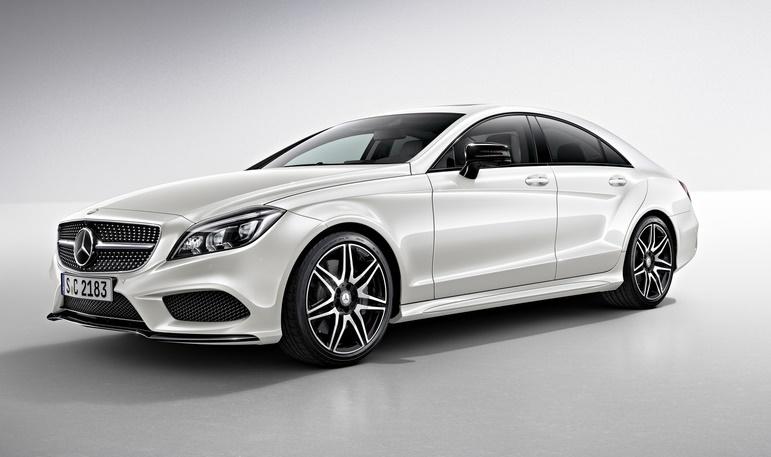
It is difficult to determine when the trend began, but it may have started with the 2004 launch of the Mercedes CLS. The company hit a nerve by taking a four-door E-class sedan and drawing the sloping silhouette down the roof and trunk that is typical of a sporty coupe. More than 50,000 were sold in the first full year on the market.
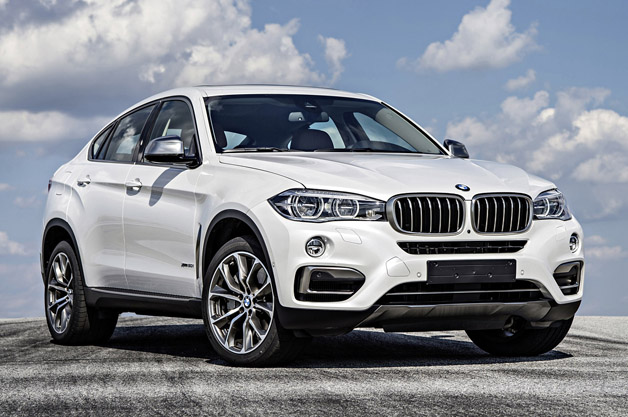
Not to be outdone, BMW followed four years later with the X6. BMW combined SUV elements such as a higher seating position and ease of entry to create what looked to be a sports car on steroids.
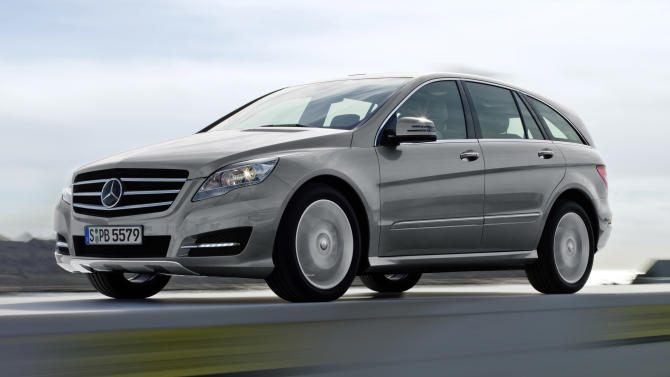
Sometimes ideas don't pan out, though. Mercedes tried to blend a wagon, minivan and SUV when it brought out the all-wheel-drive R-class sports tourer in 2005. U.K. dealership group Inchcape called the vehicle a "miscellaneous curiosity ... that the market never really understood or took to," dubbing it "the Mercedes that time forgot." The vehicle has since been pulled in all markets but China.
Taking note of the flop, BMW scrapped plans for a rival vehicle and instead announced in 2007 it would launch a "progressive activity sedan." The result: a 4-inch-higher 5 series with the wheelbase of a 7 series and almost 600 pounds of added weight. Dubbed the GT, officials claimed BMW's heaviest sedan was a "car that one has to discover from the inside out."
Few customers have been able to look beyond the exterior styling, though. Sales of the 5-series GT, which costs $10,000 more than the 5-series sedan, peaked in its first full year. As with the R class, demand is now heavily concentrated in China, where comfort is prized over handling.
'Pressure from the dealers'
Mark Wakefield, a managing director of AlixPartners, a New York consulting firm, says carmakers habitually copy each other, in part to placate retailers who get anxious when their rivals have a hot new vehicle in showrooms.
"There's pressure from the dealers, more so than from customers, to have a competing version," Wakefield said. "But then they also push back when the proliferation becomes too much and they don't want to stock all these different vehicles."
One U.S. dealership sales manager, whose BMW store was carrying a lot of inventory in part because of the proliferation of models, fears these niche derivatives are cannibalizing demand for mainstream cars such as the 320i xDrive sedan, which now leases for less than $300 a month.
"They have created so many models and so much inventory, I don't know if the demand is there to sustain that naturally," said the manager, who asked not to be named. "So now they have to be more aggressive with their incentive dollars than they ever have been in the past."
In the process, the flood of derivatives has forced the two German carmakers to overhaul their nomenclature in favor of a logical consistency that replaces the confusing and seemingly arbitrary designations of the past.
Wakefield said the trend is forcing automakers to divert mainstream advertising dollars to brand campaigns, while shifting more product ads to less-expensive social media platforms.
"When you spread your resources, it's fundamentally harder to break through to consumers if a certain product isn't the one to get the Super Bowl ad," he said. "I think that is a part of the renaming -- to help customers along that journey, as opposed to forcing them to understand what an ML or GL means."
'Jekyll and Hyde'
Peter De Lorenzo, AutoExtremist.com publisher, says BMW and Mercedes in particular suffer from what he calls the "Jekyll and Hyde disease." He believes the companies risk their premium image as they push deeper into mass-market territory.
"While Porsche has done a very good job reminding customers why its brand is special, and Audi has been consistent, BMW and Mercedes are guilty of losing their focus," he said.
A major reason why the two German brands are so prolific is to gain scale, given that Audi and Porsche benefit from the size of their parent group, Volkswagen. According to data from PwC, VW not only spent more on r&d than any other carmaker in 2014 for the third year straight, it outspent any company in the world, period.
To compete on costs, Mercedes has banded together with Renault-Nissan, which includes the cooperation on pickups. BMW is splitting its r&d bill for fuel cells and lithium air batteries with Toyota.
The financial incentives to create as many body styles off a platform as possible are significant, since the easiest method to drive profitability higher in a capital-intensive, fixed-cost-heavy business is growing volumes.
A broad lineup also cushions an automaker against market volatility. Officials at German premium brands argue that purchasing habits and customer tastes have changed markedly from 10 years ago, when demand for a vehicle over the course of its life cycle used to resemble a symmetrical bell curve.
Spiky demand
Now, vehicles have become more of a fashion item, with volumes spiking in the first year or two only to then tail off sharply in the remaining four or five. By offering fresh derivatives, carmakers can smooth volumes over the life cycle enough to maintain a relatively steady curve in terms of capacity utilization rates.
Lastly, the increasingly strict carbon emission targets for carmakers are prompting premium carmakers to sell smaller, more fuel-efficient vehicles. Mercedes forecasts that the share of its sales from compact cars will rise to 42 percent in 2025 from 33 percent last year. Executives feel there is room to add to its five-car compact range when the next generation debuts by 2018.
But signs are popping up that the trend may have gone too far.
"The checkerboard of segments and body styles is almost full," said Ian Robertson, BMW board member for sales and marketing, warning that other nameplates may start to disappear. "In the years ahead, we have to decide whether to replace models that play in segments which are contracting."
Meanwhile his boardroom colleague, Peter Schwarzenbauer, already shrank the product range of BMW's Mini brand after poor sales of several nameplates.
"Naturally, it's controversial, since it's going in a different direction from 'the more derivatives I have, the more volume I make,'" Schwarzenbauer said. "Mini is a brand that I believe can prove the opposite to be true -- that's my conviction. Now, I need to prove this strategy works."
Luca Ciferri contributed to this report.
Christiaan Hetzner