Purpose

I will try my best to provide detailed info on various cars and what is like to live with them, I have already produced a few for Jaguar-car-forums, I will do my best to be unbiased, but it will be hard for some cars. I will re-produce press releases and copy from other motoring news.
Showing posts with label project. Show all posts

Wednesday, 14 October 2015

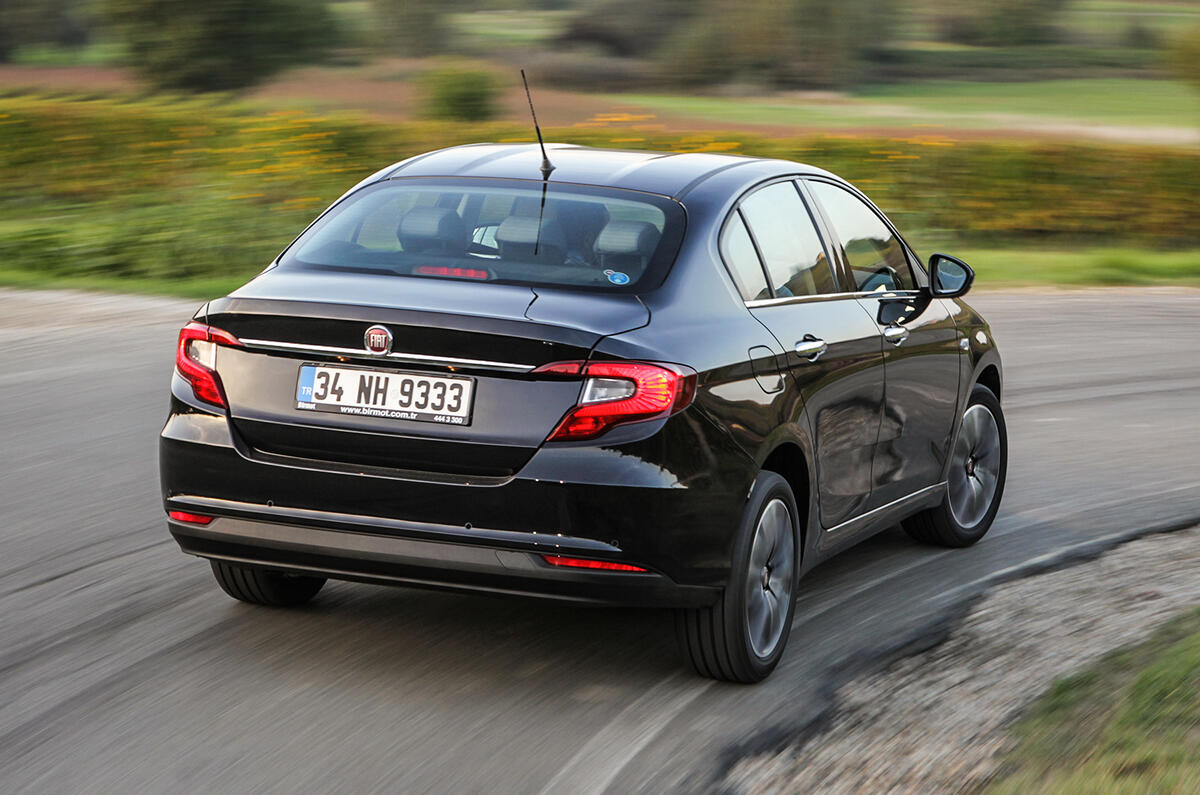
The all New Fiat family of Saloons, Hatchbacks and Estates will be renamed TIPO, an Iconic former model name.

  • As previewed by the FIAT Aegea Project, the new FIAT C-segment contender will take historic FIAT Tipo name
  •  Roomy and practical, the new FIAT Tipo is a member of the “Functional Family” within the FIAT brand
  • Four engines for the new FIAT Tipo saloon with an emphasis on value-for-money and a straightforward model range
  • The new FIAT Tipo saloon is not confirmed for the UK market at this time
FIAT’s new C-segment contender, as previewed by the FIAT Aegea Project unveiled in May at the Istanbul Motor Show, is to be known as the new FIAT Tipo. The historic name has been used by FIAT since its earliest days and is now making a comeback on a global model designed to tackle the challenges of the future.

The new FIAT Tipo saloon measures 4.5m in length, 1.78m in width and 1.48m in height, with a wheelbase of 2.64m and boot capacity of 510 litres, meaning it can accommodate five passengers and their luggage with ease. As is the case with all FIAT products, a range of reliable, muscular and efficient engines will be available - two MultiJet II turbo-diesel engines and two petrol units with power outputs ranging from 95hp to 120hp, offered with manual and automatic transmissions (depending on engine).
Inside, the new FIAT Tipo is not only styled and built to the highest standards, it is also available with the latest technological features including FIAT Chrysler Automobiles' touch-screen Uconnect™ infotainment system with hands-free Bluetooth calling and audio streaming; a rear parking camera and TomTom satellite navigation.
The new FIAT Tipo saloon sports beautifully balanced proportions and a distinctive and perfectly-resolved design, yet even with its sophisticated styling and exceptional levels of build quality, the new FIAT Tipo will be a member of the “Functional Family” within the FIAT Brand, with an emphasis on value for money and practical features, as well as a straightforward model range and pricing structure.
Designed in Italy at the FIAT Chrysler Automobiles Centro Stile, and developed in Turkey together with Tofaş R&D, one of FCA's largest research and development centres, the new FIAT Tipo will be manufactured in the Bursa plant in Turkey which has been designated Gold Medal status by World Class Manufacturing in recognition of its efficiency, quality and eco-friendliness. It will retain the FIAT Aegea name in the Turkish market only.
The new FIAT Tipo saloon has not been confirmed for the UK market at this time.

Tuesday, 7 October 2014

Volvo's Vision 2020 takes another step closer to no deaths or serious injuries in a Volvo car.

With the development of a new safety feature that locates collision-free escape routes, Volvo Cars has taken one of the final steps towards realising its vision that by 2020 no one should be killed or seriously injured in a new Volvo car.
In December, the four-year Non-Hit Car and Truck project will draw to a close, leaving as its crowning achievement the development of next-generation sensor fusion technologies that provide a seamless 360° view around a car.
A Swedish collaboration between academia, various institutions and industry, the Non-Hit Car and Truck project has focused on developing new technologies and improving existing ones in order to reduce accident risks for both passenger cars and commercial vehicles.

Unparalleled 360° view around the car – sensor fusion
One of the project’s challenges was to build one cohesive detection system out of a number of discrete sensors installed around the car, something that has never before been accomplished. This required the development of a centralised Sensor Fusion framework to enable the various technologies – cameras, radar, lidar, GPS, etc.– to share information efficiently.
Through this framework, the system is able to provide a complete 360° view of the environment and perceive any potentially threatening objects that drivers would otherwise not be able to see. By focusing on viable automotive sensors, the project has taken a big step in making this new technology a reality in the near future.
Generating collision-free escape routes – threat assessment 
The 360° view is enhanced by the manoeuvre generator, a new safety feature that uses software to identify collision-free escape routes in all traffic scenarios. The system, which works by constantly analysing threats around the car, can even assist drivers with auto-braking and steering. To illustrate how the 360° view and manoeuvre generator work together, the project has built two test vehicles.
A milestone for 2020 and self-driving cars 
“Volvo Cars is definitely on the front line when it comes to innovative active safety research and development. And with the Non-Hit Car and Truck project, we’ve taken a significant step towards realising the vision that by 2020 no one should be killed or seriously injured in a new Volvo car. The technology is also imperative for the development of self-driving cars, which will be able to automatically steer and brake to avoid collision with any object in any situation. Our primary objective is to focus on preventing different types of accident scenarios. But going forward, we will also continue to work on developing cars that adapt to each individual driver’s unique behaviour,” says Anders Almevad, Project Manager for the Non-Hit Car Project at Volvo Cars.
About the Non-Hit Car and Truck project
The Non-Hit Car and Truck project, an 80-million-SEK endeavour started by Volvo Cars and its partners in September 2010, will be closing in December 2014. It supports Volvo Cars’ vision that by 2020 no one should be killed or seriously injured in a new Volvo car. The focus has been on developing technologies to reduce accident risks for both passenger cars and commercial vehicles. Partners include: Volvo Cars, AB Volvo, ÅF (sensor fusion development), HiQ (sensor fusion development, threat assessment), Mecel (sensor supplier) and Chalmers University of Technology (sensor fusion development, driver adaptation). The Non-hit Car and Truck project is associated with the SAFER Vehicle and Traffic Safety Centre. 

Tuesday, 29 April 2014

Yamaha - Yard Built XV950 Pure Sports.

An Eighties icon roars back to life with Yamaha's Sport Heritage twin- cylinder
The Yard Built project was created to transform Yamaha Sport Heritage motorcycles into specials that fire up the imagination and passion of riders who primarily want a unique looking custom bike. A new chapter has begun in this story and this time LowRide has accepted Yamaha's challenge. LowRide is Italy's leading magazine devoted to cruisers and choppers and has always promoted the customisation culture and highprofile internationals bike shows. The editorial staff at LowRide have an incredible personal passion for hand-built creations and this led to the idea of transforming the new Sport Heritage Yamaha XV950 into a street racer with an artisan flavour by altering the riding position and styling to really bring out the sports spirit. The world's top customisers identified with the Yard Built Special philosophy and have already successfully experimented with bobbers, street trackers, cafe racers and choppers. LowRide wanted to create something really amazing so it turned to Yamaha's heritage and decided to dust off the Eighties style with a replica of the legendary Yamaha FZ750, the highly influential sports road bike.

A real key aspect of the project was to achieve exciting results with only a handful of reversible and easy-to-do alterations, without radically changing the product philosophy, reliability and functionality of the standard model. Its generous twin engine produces good torque, while the balanced handling means it's the best buddy to have on any road trip, even when the going gets tricky. Dynamic yet easy to ride, the new Yamaha XV950 proved from the get-go that it had incredible potential in the custom market, which the Pure Sports now takes to the next new level.
According to the editor at LowRide, Giuseppe Roncen, the style choice is a tribute to pragmatism spiced up with a pinch of 1980s nostalgia, "We had so much fun riding the new Yamaha XV950 on the sun-drenched, winding roads up and down the hills of California during its international press launch. Once we got it on the tricky streets of Milan we appreciated how easily it handled and we literally made sparks fly climbing the Apennine Mountains thanks to the roll-on acceleration of its twin engine. We tried to unleash its sports soul but without compromising the easy ride-ability, comfort and enviable balance. Without indulging in an exercise of style just for style's sake, our team set about restyling with absolutely no compromises on dynamics and functionality."

A total custom freak for anything on two or four wheels, Danilo Seclì, XV950 Pure Sports project leader, explained the philosophy, "We really love the radical off-road interpretations by others, however we aimed to do more than just make an awesome impression. Our "creature" is meticulously designed in minute detail and built to be exhibited at the leading custom shows. But we also wanted our special to allow the rider to travel with a passenger to on-the-road meets and rallies. Our approach was to suggest ideas that could really be replicated without too much effort and we hope that the Yard Built XV950 Pure Sports can inspire people in the custom bike scene to try new alternatives." 
Yamaha's incredible history provided an endless source of ideas "Amongst Yamaha's most emblematic models we identified the legendary FZ750 as a worthy representation of an entire era. Everyone can picture their ideal street racer; this is ours. It was created for having fun and making an impression without compromising on the all-round safety and industrial quality of a modern Yamaha... It's unique, sporty but not extreme. Anyone can ride this bike and appreciate it. Thanks to the way the standard Yamaha XV950 is built, we reckon that you don't need to have expensive special parts and irreversible alterations to realise the dream."

Radically changing the look of a standard motorcycle is easy; altering the appearance while improving its dynamics without cutting or welding anything, keeping costs down and respecting the original project though is more difficult to do. This special looks radically different from the basic model yet the chassis, mechanics, and electrics are all still perfectly standard.
Using an half fairing, tail unit and cowling inspired by the Yamaha FZ750, the LowRide team has produced a Yamaha XV950 model complete with ABS system. The style of the renamed "Pure Sports" special - as used to be written on the fairing of the iconic FZ750 - has been masterfully defined by the Italian designer Oberdan Bezzi and combines aesthetics with genuine custom build potential. All the work is bolt-on, reversible and replicable, so you can create easy to assemble bodywork in metal or composite materials, which makes it easier for dealers, customisers or bike enthusiasts to build their own interpretations. The project's technical coordinator is Andrea Radaelli from Radikal Chopper, a Milanese customizer and winner of the Scrambler & Racer category in the contests at EICMA Custom 2013 and Motor Bike Expo 2014.
 
Based on his suggestions the bodywork was handcrafted by Simone Lecca from Metal Bike, who creates unique pieces hand fashioned out of sheet aluminium in his workshop just outside Turin. No moulds or dimensional drawings: this is the work of a craftsman based solely on sketches andrenderings and built directly onto the motorcycle. Steel tubular bars to reinforce the half fairing and the tail unit are attached to the frame's preexisting mounting points. The paintwork by Kaos Design is outstanding thanks to a special scratch effect that accentuates the handcrafted work inthe silvery and metallic colour. Black and pastel red graphics reproduce the Yamaha FZ750 design from 1985, harmonising the artisan parts with the standard fuel tank. The indicators and mirrors supplied by Rizoma together with the solid handlebars are priceless yet standardised.

The rider's seating position is sportier but not too extreme and can be easily adjusted thanks to double joint bars; the footrests are stock. The leather saddle is made by Laboratorio della Pelle e del Cuoio using traditional techniques and is higher by about 120mm. The setup perfected by the Yamaha designers remains unchanged. The tyres, rims, ABS braking system, forks, frame, mechanics and all the electrics are totally standard issue. The only concession to sound is the 2-into-1 exhaust pipe which is custom designed by HP Corse; the trapezium section tip is morecompact and lighter than the original.
YARD BUILT, INSPIRED BY YAMAHA
There are riders in garages all over the world who dream of building their own motorcycle with their own completely individual stamp. Yamaha is helping them fulfil their ambitions by asking some talented bike makers to create Yard Built specials, motorcycles that provide inspirational ideas for
customers who want to customise a Yamaha model.
Yamaha unveiled three breathtaking Yard Built models at EICMA 2013 that were built by selected representatives from the custom bike scene, based on new models from its Sport Heritage range. From Deus Ex Machina came the revamped but timeless Yard Built XJR1300 'Eau Rouge' with a classic endurance twist. The Danes at Wrenchmonkees immediately got to work on reinterpreting the new Sport Heritage Yamaha SR400 by creating their Yard Built SR400 GibbonSlap, and the SR400 B.S.R. was built by an original Japanese based bike builder.
The story continues
SPECIFICATIONS: YARD BUILT XV950 Pure Sports
  • Base model: Yamaha XV950 ABS
  • Concept and development: LowRide Magazine - Italy
  • Rendering and styling: Oberdan Bezzi Design
  • Coordination and assembly: Radikal Chopper
  • Sheet aluminium half fairing, cowling and tail cowl by Metal Bike
    attached with steel tubular bars to the frame's pre-existing mounting points
  • Paintwork by Kaos Design, silver with a scratched metal effect
  • Dual seat in bond grain leather by Laboratorio Della Pelle e del Cuoio
  • Stainless steel 2-into-1 exhaust pipe by HP Corse
  • Double joint clip-on-handlebars by Motocicli Veloci
  • Rizoma LED indicators
  • Rizoma billet mirrors

Wednesday, 31 July 2013

Electric Defender goes to work at the Eden Project.


  • First Electric Defender placed at the Eden Project in Cornwall as part of Land Rover’s investigations into the electrification of all-terrain vehicles
  • Real world test: Defender used to transport Eden Project visitors around the site towing a 12 tonne road train up a 6 per cent incline

The first Electric Defender has started work at the Eden Project near St Austell in Cornwall in an inaugural real world trial of its capabilities. Unveiled at this year’s Geneva Motor Show, the Land Rover Electric Defender is a pioneering research project into the electrification of an all-terrain vehicle.

The project forms part of Land Rover’s overall sustainability objectives which have included the move to aluminum platforms in the latest all-new Range Rover and Range Rover Sport as well as the forthcoming Range Rover hybrid products. The innovative 4x4 is a rolling laboratory to develop new ideas, and investigate electrification in a real-world environment. A fleet of six vehicles will be placed with organisations where their performance can be assessed.

The Defender 110 Pick Up badged ‘All terrain Electric Research Vehicle’ effortlessly tows the four-carriage 12 tonne road train carrying up to 60 passengers on a 6 per cent incline to and from the iconic hexagonal-panelled domes. The vehicle has been designed to perform its duties throughout each day before being recharged over night for the approximate cost of £2.00.
The Electric Defender has all the qualities and performance which have become associated with the Land Rover brand during the past 65 years. It has full all-terrain capability, permanent 4WD and a top speed of 70mph.

However, it has been engineered in-house by Land Rover to test out the latest sustainable technologies. The vehicle’s Hill Descent Control is linked to a regenerative braking function, and overall up to 80 per cent of the car’s kinetic energy can be recovered. During each downhill trip at the Eden Project up to 30kW will be fed back into the batteries. Land Rover’s acclaimed Terrain Response system has been adapted for electric drive, offering a 50-mile range with a reserve of a further 12.5 miles.

The result is a zero tailpipe emissions vehicle like no other; eight hours of low-speed off-road use is achievable, and it takes 10 hours for the advanced lithium-ion batteries to be fully charged. ‘Fast-charge’ technology reducing that to just fours is also possible.

Jeremy Greenwood, Principal Engineer on the Electric Defender project, said the car was ideal for the sensitive ecology of the Eden Project. In addition, the repetitive nature of the work will provide excellent data for
future electric vehicles.

“The car has been modified so it now includes a second battery,” Jeremy explained. “That will allow it to work a full day at the Eden Project, but also improves weight distribution and stability. In addition, we’ve linked the land-train’s air brakes to the foot pedal of the Land Rover, enhancing safety.”

Gus Grand, Climate Change Lead at the Eden Project, said: “We’re very pleased to be working with Land Rover on this exciting project. It will be a great talking point for our visitors and proves that electric vehicles can be every bit as tough and rugged as their fossil fuel counterparts, while being much quieter, cheaper to run and with zero emissions at the point of use.

Wednesday, 10 July 2013

STUNNING Jaguar Project 7 concept


  • Jaguar Project 7 will make a dynamic debut at the 2013 Goodwood Festival of Speed
  • Project 7, created by the team led by Director of Design, Ian Callum, is a one-off design study based on the acclaimed new Jaguar F-TYPE
  • A single-seater, all-aluminium bodied roadster, Project 7 features a Jaguar D-type-inspired fairing, bespoke carbon-fibre aerodynamic components, and a unique interior
  • Powered by Jaguar’s 5.0-litre supercharged V8 petrol engine in 550PS / 680Nm form, Project 7 will reach 60mph in 4.1 seconds with a top speed of 186mph
  • Project 7 will be driven at Goodwood by Mike Cross, Chief Engineer, Vehicle Integrity, Jaguar
  • “Project 7 is a single-seater sports car based on the F-TYPE, with the kind of racing-inspired form that designers dream about. It has one purpose: to be driven fast and enjoyed. Jaguar sports cars are known for exceptional performance and clean design. Project 7 captures that spirit in its purest form.”
  • Ian Callum, Director of Design, Jaguar


Key exterior design changes include a fairing behind the driver’s head; bespoke carbon-fibre components – a new front splitter, side skirts and rear diffuser; lowered windshield and restyled front bumper. Project 7’s unique interior features a composite single-seat with racing harness, a helmet holder and custom trim. Project 7’s name acknowledges Jaguar’s winning of Le Mans seven times between 1951-1990 – a record for a British manufacturer – and its blue paintwork is reminiscent of the victorious Jaguar D-types of 1956/1957.


Project 7 is not a static concept, but a fully-functional, high-performance sports car. The F-TYPE’s rigid all-aluminium architecture provides the perfect starting point, power coming from Jaguar’s 5.0-litre supercharged V8 engine in 550PS/680Nm form – an increase of 55PS and 55Nm over the F-TYPE V8 S.


“The overriding dynamic aim when developing F-TYPE was ensuring connected feel; it’s a true, driver-focused sports car; agile, immediate, fast and, of course, fun. Having achieved that for the road, Project 7 has given us a unique opportunity to go that little bit further. It’s visceral in every sense – its response, its sound and its sheer performance. I’m very much looking forward to driving it at Goodwood.”
Mike Cross, Chief Engineer, Vehicle Integrity, Jaguar


In addition to the increase in power – delivered to the rear wheels through Jaguar’s eight-speed Quickshift transmission and electronic active differential – Project 7 also features a free-flow exhaust system with a ceramic finish, 10mm lower ride height and a unique spring/damper tune.

“Jaguar’s sporting bloodline and innovative ambition are perfectly embodied by Project 7, both through its sensual design, and its shattering performance. Project 7’s Goodwood debut will provide a great stage to showcase the creativity of our design and engineering teams.”
Adrian Hallmark, Global Brand Director, Jaguar


Project 7: A story of passion

Under Director of Design, Ian Callum, who constantly challenges his team to push the boundaries of design, Project 7 went from being an experimental sketch by Jaguar designer Cesar Pieri to the track in just four months.

Bringing to bear his love for cars and motorsport, his passion for Jaguar’s heritage, and his familiarity with the F-TYPE, Pieri drew a single-seater sports car with a swooping profile, cut-down windscreen and race-inspired livery.

“When I saw this sketch of a low-screen, single-seat F-TYPE, I felt enthused by it and wanted to take it further. As designers, our very purpose is to disrupt – to turn the norm on its head and see if it still works – and here at Jaguar, we love to push the boundaries.


“As a team our challenge was to take this gem of an idea, work within the limitations of production feasibility, and create something worthwhile. So I encouraged Cesar and Alister Whelan, Chief Designer, Jaguar, to take it to the next stage and develop a workable concept, and with the support of key departments across the business, Project 7 was born.”
Ian Callum, Director of Design, Jaguar

Following digital modelling, a clay model of Project 7 was produced. With that signed off, and time before Goodwood short, Jaguar’s engineering team worked closely with the design team to ensure that the build stayed true to the concept.

For Project 7, the F-TYPE’s two key ‘heartlines’ remain, the most prominent change being the completely new, D-type-inspired, rear fairing section that incorporates a rollover hoop and swoops down from behind the driver’s head. The roof system has been completely removed.

Aerodynamic modifications include a carbon-fibre front splitter, side skirts, large rear diffuser and a fixed rear spoiler with a 14-degree angle of attack, giving Project 7 a low, unified, muscular stance. The side louvres and bonnet vents are also carbon-fibre, while the carbon-fibre and aluminium wing mirrors draw inspiration from those on Jaguar’s C-X16 sports car concept, from which F-TYPE is derived.

The windshield has been lowered, while a new nose design incorporates revised air intakes and headlights with gloss black surrounds instead of chrome. The car sits on 20-inch Blade forged-alloy wheels with carbon-fibre inserts.

The cockpit of Project 7 is no less impressive than its exterior. The driver sits in a composite bucket seat, lowered by 30mm, and is gripped by a four-point racing harness. The passenger seat is replaced by a unique helmet holder, which carries a custom-designed Project 7 helmet in matching blue paint and graphics, secured by its own harness.

The seat and the insides of the doors are finished in a quilted racing-style diamond pattern. There are carbon-fibre inserts on the console and SportShift lever, the start-stop button is gloss black and the steering wheel is equipped with machined aluminium paddles.

“When you look at this car, it has got an enormous amount of appeal. It’s just full of desire – you can see that its sole purpose is to be enjoyed. Project 7 is a very special car – not just because it’s a one-off, but because of its purity of purpose. It’s pure Jaguar.”
Ian Callum, Director of Design, Jaguar