Purpose

I will try my best to provide detailed info on various cars and what is like to live with them, I have already produced a few for Jaguar-car-forums, I will do my best to be unbiased, but it will be hard for some cars. I will re-produce press releases and copy from other motoring news.
Showing posts with label xc. Show all posts

Thursday, 31 March 2016

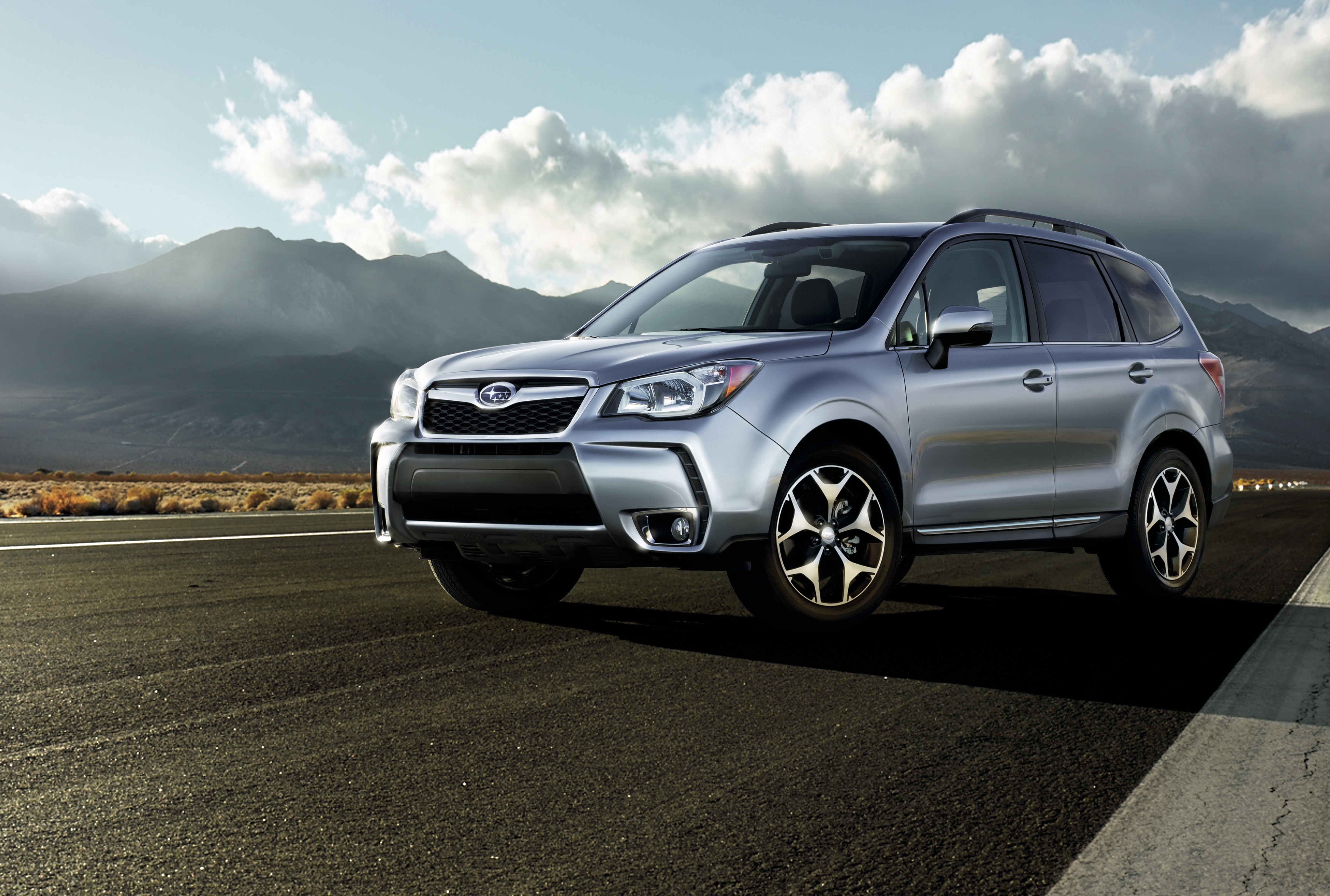
Subaru updates the Forester SUV with added soundproofing, new steering and better interiors.

  • Revised exterior and interior styling for Subaru’s UK best-seller
  • Additional soundproofing measures and upgraded cabin
  • Safety improvements with new steering-responsive headlamps
  • High standard equipment levels
  • On sale in April from £25,495 (OTR)
The Subaru Forester has been upgraded for 2016 to ensure the model maintains its status as one of the most capable and versatile SUVs in its class. The 2016 model-year upgrades to the Subaru Forester – the Japanese manufacturer’s bestselling model in the UK – result in improved safety, convenience, comfort and refinement.
The upgraded Subaru Forester will go on sale across the brand’s UK dealer network next month. Pricing remains unchanged for all trim levels in the updated Forester line-up, with the range starting from £25,495 (on-the-road) for the 2.0i XE model and £26,995 for best-selling 2.0D XC models.

Every Forester is equipped with two core Subaru technologies: Symmetrical All-Wheel-Drive, affording surefootedness in all conditions; and the latest-generation four-cylinder ‘Boxer’ engines, contributing to the low centre of gravity beneficial to balance, road holding and handling.
Upgrades to exterior and interior styling
The 2016 Subaru Forester has had an exterior and interior refresh. At the front of the car, the Forester’s distinctive hexagonal grille has been updated with a new ‘wing’ motif grille mesh, while the front bumper has been reshaped and now features new L-shaped chrome trim adding greater visual volume to the lower part of the Forester’s ‘face’. The change is designed to emphasise the car’s relatively low centre of gravity, wide stance and innate stability.
The wraparound headlamps – retaining Subaru’s signature ‘hawk-eye’ shape – feature a new black base paint finish for a sharper appearance. The 2016 model is also fitted with new LED combination lamps at the rear.
Inside the cabin, new materials and technologies have been introduced to further modernise the interior and introduce a higher-quality look and feel, while still retaining the functionality for which the Forester is renowned.
The interior is finished with a higher proportion of soft-touch materials, new piano black and metallic trim, higher-resolution TFT displays and new cloth and leather upholstery options – including a new brown leather option. Following the adoption of Subaru’s new 7.0-inch touchscreen infotainment and navigation system in 2015, the changes to the 2016 Subaru Forester are designed to further improve the quality look and feel of the cabin.
Additional soundproofing measures for significantly improved refinement


A series of modifications have been made beneath the surface of the 2016 Forester to greatly improve cabin refinement.

Thicker glass has been applied to every door and the front quarter lights at the base of the A-pillar, reducing the ingress of wind ‘rush’ and other noises into the cabin. For the front quarter lights and front doors, glass thickness has increased from 3.5 mm to 4.0 mm, while rear door glass is now 3.5 mm (up from 3.1 mm). The seals around the window frames in the doors use a new, more sound-absorbent material to further reduce noise levels. Additional soundproofing material has been added around the dashboard, particularly where the dashboard meets the base of the windscreen and in the front passenger foot well, minimising noise intrusion from wind rush and the engine, respectively.
Safety improvements with new headlamp technology
Already an exceptionally safe vehicle, the 2016 Forester adopts new headlamp technologies which include LED lights with Adaptive Front Lighting System. The new Adaptive Front Lighting System allows the headlamps to rotate left or right into corners as the driver turns the wheel. By illuminating the road ahead in the direction in which the vehicle is traveling, the Forester’s night visibility is greatly improved, particularly useful in poorly-lit rural areas.
All existing safety equipment on offer is fitted as standard to every model in the Forester range, including twin front, side, curtain and knee airbags, Subaru Vehicle Dynamics Control (VDC; Subaru’s electronic stability control system) with trailer stability, and Subaru’s hallmark Symmetrical All-Wheel Drive technology.
Greater ride comfort and more confidence-inspiring handling
The 2016 Subaru Forester features a range of modifications to improve ride quality and agility, and ensure greater refinement for passengers.
Updated suspension settings at the front and rear ensure the car remains comfortable and refined, particularly over broken or choppy surfaces, while the adoption of a new steering gearbox quickens the steering ratio (from 15.5:1 to 14.0:1) to improve reactions to steering inputs.
The range of engines remains unchanged for the 2016 Forester; buyers can choose from three 2.0-litre horizontally-opposed four-cylinder engines – a 150 PS naturally-aspirated 2.0i petrol engine and a 147 PS 2.0D turbo-diesel unit from Subaru’s FB family of engines, and a 241 PS direct injection turbocharged (DIT) petrol unit, engineered for high power, responsiveness and efficiency.
A six-speed manual transmission is fitted as standard to 2.0i and 2.0D models, with an optional Lineartronic CVT automatic transmission. Lineartronic is standard on XT models, equipped with the 241 PS DIT petrol engine.
In uneven or slippery road conditions, the all-terrain capability of the standard Symmetrical All-Wheel-Drive is enhanced further with the X-Mode on Lineartronic CVT models, a control system which includes Hill Descent Control and makes traction even better than the outgoing model’s.
Model line-up and pricing
There are a total of nine models in the 2016 Forester range, starting at £25,495 for the 2.0i XE and £26,995 for 2.0D XC models, and rising to £30,995 for high-powered 2.0 DIT XT versions of the car.
2.0D   XC £26,995
2.0D   XC Lineartronic                        £28,495
2.0D   XC Premium £29,495
2.0D...XC.Premium Lineartronic £30,995
2.0i     XE £25,495
2.0i     XE Lineartronic £26,995
2.0i     XE Premium £27,495
2.0i.....XE.Premium Lineartronic £28,995
2.0 DIT XT Lineartronic £30,995                       
The upgraded Subaru Forester comes with the brand’s comprehensive five year, 100,000 mile warranty.

Thursday, 10 April 2014

New Volvo XC90: exclusive images, Well, Auto Express' own interpretation.

Our exclusive images show how the new Volvo XC90 could look when it debuts at the 2014 Paris Motor Show

Volvo is building up to the launch of its most important new car in a generation: the new Volvo XC90. The wraps will be pulled from the SUV at October’s Paris Motor Show – but we have the full story months before its official unveil. 

The second-generation XC90 will represent a landmark in Volvo’s development under Chinese owner Geely, and as our exclusive images show, it will get a chic new design inspired by the recent Coupe, XC Coupe and Estate concepts. 

The crisp new grille is flanked by slimmer headlamps, and bisected by T-shaped LED running lights. The pronounced step along the current car’s shoulder line has made way for a smooth crease, while kinked horizontal tail-lights give the rear an unmistakable signature at night. 
The XC90 is the first model built on the brand’s Scalable Platform Architecture (SPA), which will underpin all future large Volvos. Plus, it’ll come exclusively with the new range of 2.0-litre four-cylinder petrol and diesel Drive-e engines, and for the first time there will be a front-wheel-drive alternative to the standard four-wheel drive.  

Volvo XC90 2015: engine options 

Volvo has yet to release power and emissions figures for the XC90, but in the V40 the 187bhp D4 engine returns 74.3mpg economy and emits just 99g/km of CO2, while the 242bhp T5 petrol claims 47.9mpg and 137g/km. A flagship XC90 hybrid will use a supercharged and turbocharged petrol engine to drive the front axle and an electric motor at the rear for a total of around 400bhp and 600Nm of torque. 

All XC90s will get an eight-speed auto, but Volvo has confirmed the SPA platform will support a manual box for use in its saloons and estates. The SUV will also feature class-leading safety tech, with all the passive safety and collision avoidance systems standard on every model. Inside, Volvo’s designers have followed Tesla’s lead with a 9.3-inch portrait screen compatible with Apple’s new CarPlay interface. The sat-nav, audio, climate and car settings are controlled with swipe and pinch gestures, like on a smartphone. 
Volvo XC90 2015 rear
This clever screen tech will allow for a stylish, button-free dash design, so the cabin will take cues from the Concept Estate seen at last month’s Geneva Motor Show. Expect it to carry over the practical seven-seat layout, but with more space in each row as well as an increase in the current model’s 1,837-litre maximum boot capacity. 
The outgoing XC90 has been a huge success, with over half a million sold globally to date. And Volvo’s senior vice president of research and development, Peter Martens, has said the new car will be “just like the first time, but better”.
REPORT HERE

Friday, 28 February 2014

Third Volvo Concept to debut at Geneva, and shows the future of Volvo Cars.

Volvo Car Group will use the Geneva Motor Show to reveal the third in a series of concept cars – the Concept Estate – that continues the widely-admired exterior design language revealed in the first two concepts, but for the first time reveals how the interior of Volvo’s forthcoming models will both look and function.
The Volvo Concept Estate’s most striking interior design feature is its simplicity. The traditional selection of buttons and controls have been replaced by one large tablet-like touch screen control panel in the centre console, bringing the interior firmly into the 21st century.
“The basic idea is to organise controls and information in a perfectly intuitive and user-friendly way. Everything is exactly where you expect it to be, making the drive more enjoyable, efficient and safe,” says Thomas Ingenlath, Senior Vice President Design at Volvo Car Group.
Volvo Concept Estate
In association with Volvo’s specially designed software, the touch screen will be the main control panel for Volvo’s new in-car user experience. It replaces all buttons and controls except for a few crucial functions such as volume, play/pause, hazard warning and window heaters. It also interacts seamlessly with the digital instrument cluster in front of the driver.
“Not having to deal with buttons and controls for a growing number of functionalities is like being freed from a pair of handcuffs,” says Robin Page, Design Director Interior of Volvo Car Group. “This has made it possible to build a beautiful interior architecture around the portrait screen. The concept car showcases how this user interface will be integrated in our new car generation.”
Volvo is the company that redefined the Estate car by combining functionality, sturdiness and practicality with performance. The V70 and XC70 are among the most respected Estates on the market and the new Concept Estate points to how the company could capitalise on this heritage in its forthcoming models.
Volvo Concept Estate
Volvo has been on a winning streak with its concept cars. The Concept Coupé was named ‘Car of the Show’ by a leading German auto magazine at the Frankfurt Motor Show, while the Concept XC Coupé received the prestigious ‘Eyes ON Design’ award at the Detroit Motor Show.
Global attention on Volvo’s concept cars has been intensifying as they provide the first significant clues as to how the all-new and much-anticipated XC90 SUV and subsequent cars will look. The XC90 is due to be launched later this year.
Learning from history
The rear of Concept Estate echoes the design of the Volvo 1800 ES from the early 1970s.
“The 1800-models are iconic Volvos, renowned for their beautiful forms and detailing. However, using elements from their exterior and interior has nothing to do with being retro. We are using these subtle links to a glorious past to create a future in which sheer beauty becomes a recognised part of Volvo’s identity,” says Thomas Ingenlath.
The subtle inspiration from the 1800-models is also evident on several details inside the Concept Estate, such as the two-spoke steering wheel, the instrument panel and the dials.
Robin Page explains: “The first four decades of the Volvo history was characterised by classic craftsmanship and high quality materials. We are merging this vital part of our brand DNA with the more recent focus on technology and smart functionality. In the Concept Estate we also add the creative side of Scandinavia. The result is an exotic interior with genuine materials and beautiful detailing.”
Volvo Concept Estate
Beautiful and different
Applying this approach to the iconic estate car – which is the essence of versatile Volvo functionality – creates a car that is both beautiful and different.
The generous dash to axle ratio, low bonnet, sleek silhouette and the glass roof all contribute to the impression of a dynamic, yet capable three-door sports wagon. The contrast between the deep, dark brown pear colour and the bright five-spoke, 21-inch wheels contributes to the modern, cool aura.
Just like the recent Concept Coupé and the Concept XC Coupé, the face of the Volvo Concept Estate is characterised by a new topography on the bonnet and the ‘floating’ grille, flanked by headlights featuring new T-shaped DRL light guides. The rear light signature is another distinctive element in Volvo Cars’ new design direction.
Swedish inside and out
Extrovert and colourful trends within contemporary Swedish lifestyle and design have been powerful sources of inspiration for the design team. Occupants in all four seats are embraced by orange seat belts, and the exclusive, woven wool carpets from the Swedish designer Kasthall have the same deep accent colour.
The crystal gear leaver from Orrefors/Kosta Boda also has an orange glow, while the chequered black and white wool textile on the headliner and rear sides of the front seats adds playfulness to the ‘room’.
“Creativity is thriving in Swedish society. This includes design and technology as well as the fashion, music and art scene. We have used all this as inspiration to create a new, exciting way to express Sweden’s soul,” says Thomas Ingenlath.
The feel of a Scandinavian living room
Refined, handcrafted details, such as an instrument panel covered by thick, naturally tanned saddle leather from Tärnsjö, inlays made of waxed, naturally aged wood and machined copper details, also emphasise the exclusive Swedish atmosphere inside Concept Estate.
"The interior is exceptionally vivid. Yet the glass roof and seats covered by light, soft Bridge of Weir leather help to retain that bright and cosy feeling that is the hallmark of a Swedish living room. A place that makes you feel so comfortable that you are reluctant to leave,” says Robin Page.
Specially designed Swedish ‘kubb’ game
The ambiance might inspire occupants to stop for a picnic and game of Swedish “kubb”. The specially designed game set is visible through the load floor in the back.
“Don’t know the rules? No problem. They are printed on the transparent floor. And rain is no excuse. You will find exclusive Stutterheim raincoats in the back of the car as well,” explains Robin Page.
--------------------
Volvo's Partner Suppliers in the creation of the Concept Coupé, Concept XC Coupé and Concept Estate:
Tyres: Pirelli
Wheels: Uniwheels
Leather: Bridge of Weir
Exterior paint: Axalta Coating Systems
Carpet: Kasthall
Gear shift: Kongsberg
Gear shift glass: Orrefors
Exterior light: Valeo
Belts: Autoliv
Interior ambient light: 3M

Wednesday, 15 January 2014

Volvo's latest concept wins two awards at the NAIAS in Las Vegas.

The Volvo Concept XC Coupé won two prestigious design awards this week, further raising the excitement around Volvo Car Group’s (Volvo Cars) new design language. The Concept XC Coupe was awarded the title “Best Concept Car” at the 2014 EyesON Design Awards at the 2014 Detroit Motor Show, while Volvo’s latest concept vehicle also won the award for “Best use of Color, Graphics and Materials”.
The 2014 North American International Auto Show in Detroit hosts the world premiere of Volvo Cars’ new Concept XC Coupé – the second of three concept cars that showcase the company’s future design direction. Like the highly acclaimed and award-winning Volvo Concept Coupé, the Concept XC Coupé demonstrates the design possibilities of Volvo Cars’ new Scalable Product Architecture (SPA) that will underpin most cars from Volvo Cars in the future, starting with the all-new Volvo XC90 that premieres later this year.
“I’m honored and very happy of course. This is very encouraging and it shows that Volvo’s new design direction is appreciated not only by the general public and the press, but also by the leading people in the car design business. And Volvo Cars has only just started its exciting new journey with a brand new design language,” says Thomas Ingenlath, senior vice president design at Volvo Cars.

The EyesOn Design Award ceremony is an annual event that takes place in conjunction with the Detroit Motor Show. The EyesOn Design Award jury contains of a prominent group of designers and from auto makers and academia.

Wednesday, 8 January 2014

Volvo'c latests XC concept the way forward for the XC90?

The second of Volvo’s three concept cars is the new Volvo Concept XC Coupé. Inspired by the design of modern sports equipment and demonstrating the safety capabilities of Volvo’s new Scalable Product Architecture, it is a sophisticated and capable car for people with an active lifestyle.


“Those who love extreme sports freely seek new thrills and challenges. To ensure that they make it back in one piece, they prefer high-performance equipment that offers the ultimate sense of freedom and protection,” says Thomas Ingenlath, Senior Vice President Design of Volvo Car Group.


“The Volvo Concept XC Coupé is perfectly in tune with this active lifestyle. Its capability and protection is cleverly integrated into the sophisticated looks. Concept XC Coupé is ready and willing to bring you into the adventure zone and back,” he adds.

Sleeker and safer at the same time

The three concept cars are designed to demonstrate vital elements of the company’s new Scalable Product Architecture (SPA): the confident stance, the proportions and the most prominent design signatures.


“Concept XC Coupé also shows how clever engineering makes it possible for us to reinforce our world-leading safety without compromising design, size or weight. Thanks to the extensive use of high-strength boron steel and structures with new, ingenious decoupling, we can make SPA cars more compact and safer at the same time,” says Thomas Ingenlath.


The two-door, four-seater Volvo Concept XC Coupé has a strong connection with its sibling, the Volvo Concept Coupé. However, the larger 21-inch wheels, the more accentuated wheel-arches and the taller roofline all contribute to a more robust impression and a fuller, capable look.

The extended distance between the dashboard and the front axle is still a very powerful visual element. The capable stance is emphasised by details such as the new bonnet and a beltline that spans an elegant bow along the length of the car.

High-tech sport gear

The connection with modern, high-tech sports gear is highly present in the concept car. Among the sources of inspiration for the design team is the Swedish company POC, which develops high-tech protective gear for extreme sports athletes.


“Several orange details and exterior graphics in combination with bold use of matte rubber mouldings, which cover the rear end of the car, add to the highly functional expression of the design,” says Thomas Ingenlath.

To strike the right balance between aesthetics and functionality, the design team has also given traditional SUV elements, such as side mouldings and skid plates, a modern interpretation. They are more integrated into the sleek design, flush with the surrounding body areas.

T-shaped DRL lights

Just like the Volvo Concept Coupé, the face of the Volvo Concept XC Coupé is characterised by a new topography on the bonnet and the ‘floating’ grille, flanked by headlights featuring new T-shaped DRL light guides. The rear light signature is also a distinctive element in the new design direction of Volvo Cars.


“Both concept cars show how we can shape our cars from now on. We add emotional value to the Volvo brand with the calm, confident beauty that is the hallmark of Scandinavian design,” says Thomas Ingenlath.

Building on a proud XC heritage

Volvo Cars paved the way for a completely new segment by introducing the V70 Cross Country in 1997. The range has been continuously developed and extended since then. Presently, it spans from the Volvo V40 Cross Country, via the XC60 and XC70, to the XC90.


“With the Volvo Concept XC Coupé, we take this unique blend of capable ruggedness and expressive elegance up to a new, sportier attitude,” says Thomas Ingenlath.

Thursday, 12 December 2013

The latest Volvo Concept, the XC Coupe, debuts at the NAIAS in Detroit

In September, the Volvo Concept Coupé was launched to critical acclaim and many awards, and represented the world’s first insight into Volvo Car Group's (Volvo Cars) new design direction under Senior Vice President of Design, Thomas Ingenlath. It also showed one interpretation of how the proportions and versatility of Volvo Cars' new Scalable Product Architecture, that will underpin all medium and large cars in the company’s future, could look.

The Concept Coupé was the first of three design studies. The next chapter in Volvo Cars' new design story showcases how the company’s famous safety technology as well as a contemporary Scandinavian active lifestyle could be integrated into the new architecture. The Volvo Concept XC Coupé will make its world debut at the North American International Auto Show (NAIAS) on January 13, but full details including press release, videos and images will be published on January 8.

The Concept XC Coupé builds on Volvo’s proud history of Cross Country and XC products, with Volvo Cars having created the niche in 1997. And in anticipation of the full reveal of the car in early 2014, Volvo Cars now shares the first three images of the car.