Purpose

I will try my best to provide detailed info on various cars and what is like to live with them, I have already produced a few for Jaguar-car-forums, I will do my best to be unbiased, but it will be hard for some cars. I will re-produce press releases and copy from other motoring news.
Showing posts with label 120000 units. Show all posts

Sunday, 26 October 2014

Mercedes confirms G-Wagon will NOT change its shape, anytime soon.

Mercedes-Benz's G class is about as sleek as a snow plow, costs more than twice the average U.S. household income and hasn't had a redesign since its introduction in 1979 -- and sales are higher than ever.
Deliveries of the box-shaped car tripled in the past five years to 12,000 vehicles in 2013. The top-of-the-range G 65 with a V-12 engine is the most expensive model in the entire Mercedes lineup.
As the Daimler AG unit restyles the rest of its luxury SUVs, executives say the G class's angular form will stay the same.
"It has to continue as it looks today," Daimler CEO Dieter Zetsche said last month. "It's not a vehicle that pretends. The G class is the original."

Derived from a military vehicle, the $115,400 off-roader is a lesson in how ignoring trends can pay dividends.
After the planned demise next year of the Land Rover Defender, the G class will be among the last old-school SUVs in production, drawing buyers because it literally stands out in a sea of streamlined cars.
By combining a rugged exterior with interior luxury that includes a dashboard screen the size of a tablet and heated leather seats, Mercedes has made Beverly Hills or the French Riviera the natural habitat of the G class rather than the forest-coated Alpine countryside where it's made.
Among its drivers are the Kardashians, the reality-TV clan who boast a whole stable of G classes, including at least one in matte.
Rising sales
The future of the G class is playing out against a backdrop of change at Mercedes.
The company is fighting a stodgy reputation as it tries to regain its former position atop the luxury-car market -- lost in 2005 to BMW AG.
Zetsche has said he'll do that in part by making Mercedes vehicles sleeker and sportier.
The brand's SUVs are key to that. Sales in the segment rose 12 percent to 324,700 vehicles last year. Mercedes expanded the lineup with a new compact SUV this year, and a sixth model, a coupe version of the M class, is coming in 2015.
The G class is the first off-road vehicle the company made and the most expensive of the lot. The U.S. is its biggest market, with about one-fifth of sales, and more than half the vehicles sold globally are equipped with high-performance engines that bring their base price to $137,150.
The 1979 Mercedes-Benz G Cabriolet, left, and the open-top G-Class of 2004.

Backwoods abilities
The G class will soon face more competition at the top of the market. Fiat Chrysler Automobiles NV's Maserati will start selling its Levante SUV next year, while Bentley, the British manufacturer of ultra-luxury cars favored by Queen Elizabeth II, has said it will roll out the world's priciest SUV at about $240,000 in 2016.
Officials at BMW's Rolls-Royce said at this month's Paris Motor Show they are also weighing an SUV.
Still, Mercedes expects G class sales will continue to grow, said Gunnar Guethenke, the model line's chief. The company says it doesn't consider Maserati and others to be competitors because of the car's proven backwoods abilities.
"When it comes to the combination of off-road capabilities and luxury, there's no alternative," Guethenke said in an interview in his office in Graz, Austria. "The G class provides the genes for all Mercedes-Benz SUVs."

Though the majority of G class customers never venture off the pavement, Mercedes expends a great deal of effort to make sure they could. The vehicle is subject to continuous testing on the 4,600-foot-high Schoeckl mountain on the southern edge of the Alps.
'Goes anywhere'
During a test drive there, the vehicle climbed up slippery rocks you couldn't master on foot, the right front wheel hanging in midair while the rear left wheel barely touched the ground.
It ascended tracks with a more than 45-degree gradient and plowed through 2-foot-deep puddles with ease. The old-fashioned truck-style construction -- which fixes the body to a separate frame instead of combining the two as a modern passenger car would -- gives the vehicle extra stability.
"G stands for 'goes anywhere,'" said Mario Summer, a test driver familiar with the tricks of the nearly 2-mile Schoeckl course, which include shutting off the G class's parking aid sensors while driving through bushes.
Production of the vehicle, which takes place about a 30-minute drive south of Schoeckl in Graz, has retained the idiosyncrasies of the car itself.
People, not robots, fuse the 4,000 welding points and the 16 feet of weld seam that hold the body together. In another hall, more than a dozen seamstresses stitch together the leather seats.
The 1979 G Class -- from the inside.

Some tweaks
Magna Steyr, a subsidiary of Aurora, Canada-based Magna International Inc., has always assembled the vehicle for Mercedes and has a contract to produce the G-Class at least until 2022.
Despite Zetsche's promise to keep the G-Class looking the same, it will need some tweaks to meet tighter EU regulations on pedestrian safety and emissions coming in 2016.
Also being considered are improving the vehicle's stability and interior space by widening the body as much as 10 centimeters and lowering the roof slightly, according to a person familiar with the plans, who asked not to be identified because decisions are not final.
Regulatory changes helped contribute to Jaguar Land Rover's decision to pull the Defender after 67 years of production.
Even as global SUV sales are expected to grow at a faster pace than the total car market, the market share of "hard-core" off-road vehicles will dwindle within the SUV segment from 5 percent this year to 4.1 percent by 2020, according to IHS Automotive.
That encompasses the less plush vehicles such as Mitsubishi Motors Corp.'s Pajero, a record 11-time winner of the Paris-Dakar Rally. It used to include General Motors' Hummer brand, until the massive SUV fell out of favor with consumers and was wiped out amid GM's struggles to emerge from bankruptcy.
Fuel-gulping
None of these boxy, fuel-gulping cars make sense purely as transport in a world of tightening emissions regulations, said Anja Smetanin, a spokeswoman for VCD, an environmentally friendly transport club in Berlin.
"We don't need them if we want to get from A to B," Smetanin said.
Still, Mercedes is building ever more exotic variants of the G class, including a 6x6 three-axle model with a pick-up load area behind a cabin that houses four electrically adjustable, heated and ventilated individual seats.
Other changes would repel fans.
"They shouldn't change anything on any account, otherwise the legend would get lost immediately," said Roland Kempf, who belongs to a Mercedes off-roader club in Stuttgart, Germany, and owns two G class vehicles. "Nobody needs such a vehicle, and it's a legend nonetheless."

Saturday, 13 September 2014

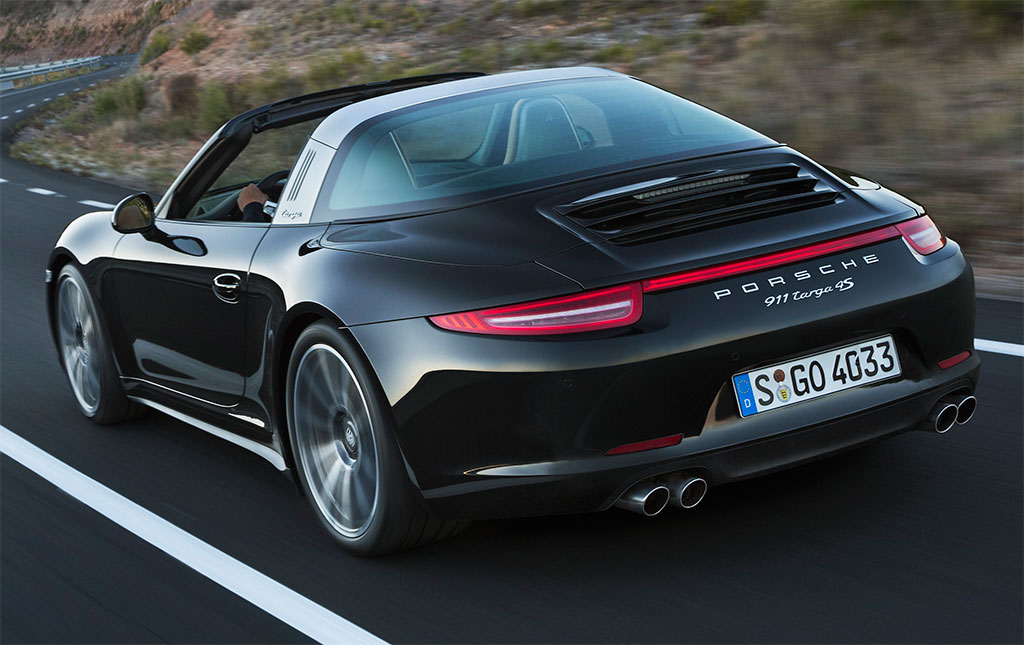
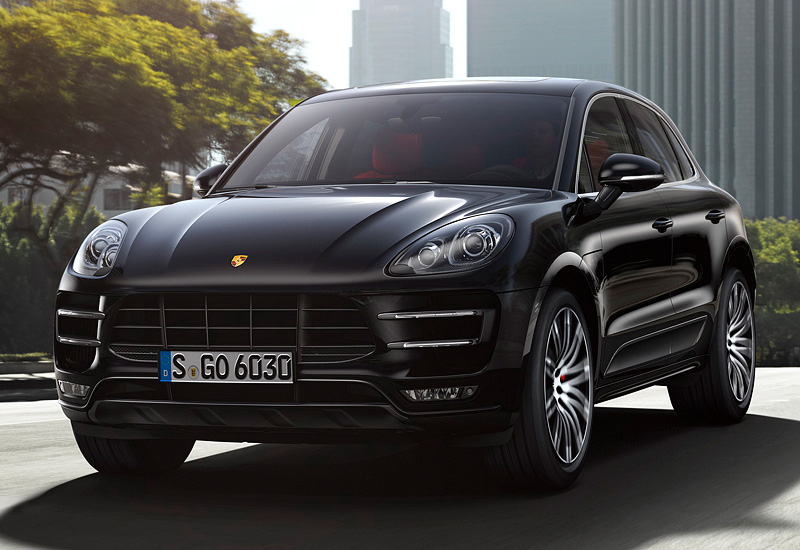
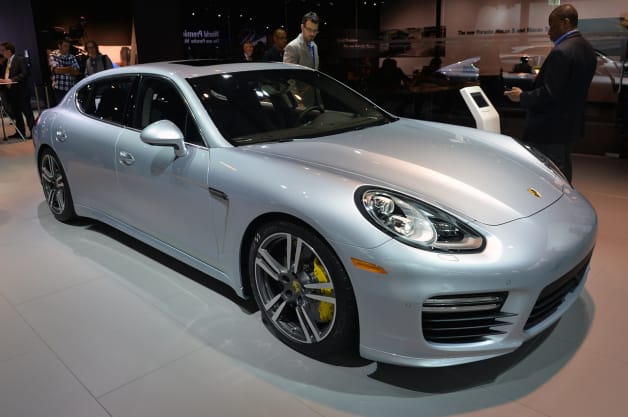
Porsche show significant gains across the world, with Panamera showing strongest growth.

Panamera sport sedan shows strongest sales growth
The Stuttgart-based sports car manufacturer has delivered 120,000 new vehicles to customers worldwide from January to August 2014, thus achieving an increase of 12 percent in comparison to the same period last year. In August 2014, Dr. Ing. h.c. F. Porsche AG delivered around 15,000 vehicles – a jump of 30 percent in comparison to the same month last year.
"Over the course of this year, we have achieved quite a strong growth worldwide,” Bernhard Maier, Member of the Executive Board Sales and Marketing of Porsche AG, stated. “We posted two-digit growth in Europe as well – despite existing uncertainties in several markets. The new Cayenne will provide further stimulus for growth during the next few months and support our qualitative growth strategy."

So far this year, Porsche has recorded similar growth rates in its three biggest sales regions. The sports car maker has announced an increase of 16 percent in Europe, with a little less than 39,000 new cars delivered to customers. In China, more than 28,000 vehicles were handed over in the period from January to August 2014, surpassing the figure of the previous year by 15 percent. In the U.S. market, the deliveries rose 12 percent, to reach a sales figure of nearly 32,000 units sold.
With an increase of 23 percent, the Panamera posted the highest growth in the on-going year: 16,700 sport sedans were delivered to customers all over the world. The second generation of the Cayman mid-engine sports car coupé was also very popular and outdid last year's figure by 16 percent, with 7,200 vehicle deliveries.
PORSCHE AG
Deliveries
AugustJanuary - August
20142013Variance (%)20142013Variance (%)

World
14,94311,48130.2119,814106,77712.2

Europe
3,4472,52636.538,62333,21116.3
   Germany1,5911,05051.516,04914,34511.9

America
5,4133,91838.237,39833,23012.5
   USA4,5403,32736.531,75928,45611.6

Asia Pacific, Africa and Mideast
6,0835,03720.843,79340,3368.6
   China4,1153,25026.628,24824,63814.7

Sunday, 10 August 2014

One in five of all new Ford's in Europe is powered by the award winning 1.0 litre EcoBoost engine.

  • One in five all-new Ford vehicles sold in Europe in first half of 2014 were equipped with the 1.0-litre EcoBoost; customers opt for 1.0-litre in a third of Focus and Fiesta cars  
  • Ford’s fuel-efficient and surprisingly powerful 1.0-litre EcoBoost engine is Europe’s best-selling turbocharged petrol engine
  • Compared with the first six months of 2013, Ford this year sold 15 per cent more vehicles equipped with 1.0-litre EcoBoost
  • The 1.0-litre EcoBoost is the first engine ever to win International Engine of the Year three times running
Fresh from an unprecedented third successive International Engine of the Year award, Ford’s small yet surprisingly powerful 1.0-litre EcoBoost engine is Europe’s best-selling turbocharged petrol engine for the first six months of the year, according to Ford figures.
So far this year, one in every five vehicles Ford sold in Europe was equipped with a 1.0-litre EcoBoost,* the engine block of which is small enough to fit on a sheet of A4 paper.  
From January through June 2014, Ford sold approximately 120,000 1.0-litre EcoBoost vehicles, compared with 104,000 during the first six months of 2013 – an increase of more than 15 per cent. For the first half of 2014, 1.0-litre EcoBoost models made up 47 per cent of all B-MAX multi-activity vehicles sold, 33 per cent of Focus sales, and 30 per cent of Fiesta sales.**

“Customers are clearly enjoying the benefits from a small engine that offers great fuel efficiency with no compromise to refinement or performance,” said Barb Samardzich, chief operating officer, Ford of Europe. “The range of models offering the 1.0-litre EcoBoost engine will rise to 11 when the all-new Mondeo is launched in the coming months, and the new 140 PS version in the Fiesta Red Edition and Black Edition shows there is even more potential.” 
The 1.0-litre EcoBoost engine was in June again named the 2014 International Engine of the Year for its drivability, performance, economy, refinement and technology – fighting off competition from premium brands and supercars.
“This year’s competition was the fiercest yet, but the 1.0-litre EcoBoost continues to stand out for all the right reasons – great refinement, surprising flexibility and excellent efficiency,” said Dean Slavnich, co-chairman of the 16th International Engine of the Year awards and editor of Engine Technology International magazine, who presented the award. “The 1.0-litre EcoBoost engine is one of the finest examples of powertrain engineering.”
The engine has now won 13 major awards. In addition to collecting seven International Engine of the Year awards in three years – including Best New Engine in 2012 – the 1.0-litre EcoBoost also has been awarded the International Paul Pietsch Award 2013 for technological innovation in Germany; the Dewar Trophy from the Royal Automobile Club in Great Britain; and in the U.S., the Breakthrough Award from Popular Mechanics magazine. Ford also is the first automaker to win a Ward’s 10 Best Engines trophy for a three-cylinder engine.
Launched in Europe in 2012 with the Ford Focus, the 1.0-litre EcoBoost is now available in the UK in a further nine vehicles: Fiesta, B-MAX, EcoSport, C-MAX and Grand C-MAX, Tourneo Connect, Grand Tourneo Connect, Transit Connect and Transit Courier.  In the UK, of the 211,722 Ford vehicle sold in the first half of 2014, 23 per cent, or 48,693 vehicles, were powered by the 1.0-litre Ecoboost engine.
Already available with power outputs of 100PS and 125PS, Ford recently debuted a new 140PS version of Europe’s best-selling sub-1.0-litre the engine in the new Fiesta Red Edition and Fiesta Black Edition models; the most powerful volume production 1.0-litre road cars ever, achieving 0-62 mph in 9sec, a top speed of 125mph and delivering 62.8mpg and 104g/km CO2. ***
More than 200 engineers and designers from Ford’s research and development centres in Aachen and Merkenich, Germany, and Dagenham and Dunton, U.K., spent more than five million hours developing the three cylinder 1.0-litre EcoBoost.
“Setting a new global benchmark in powertrain engineering, this 1.0-litre EcoBoost engine is proving a big success with the judges that matter most – our customers,” said Samardzich.