Purpose

I will try my best to provide detailed info on various cars and what is like to live with them, I have already produced a few for Jaguar-car-forums, I will do my best to be unbiased, but it will be hard for some cars. I will re-produce press releases and copy from other motoring news.
Showing posts with label 2.3 litre. Show all posts

Monday, 29 May 2017

The best selling sports car in the world in 2016 was the Ford Mustang, and sales are growing.

  • Ford Mustang became the best-selling sports car in the world in 2016, according to IHS Markit global automotive registration data, including more than 15,000 orders in Europe
  • Over 4,500 Mustang’s sold in U.K. since 2015 launch
  • Regions including Europe and China fuel global Mustang sales growth in 2016 with global sales up 6 per cent over 2015
  • Mustang is the best-selling sports car in European markets including France, Sweden, Poland, the Czech Republic, Hungary, Romania, Finland and Greece
Ford Mustang has been the best-selling sports car in the U.S. during the past 50 years, and now thanks to growing popularity in Europe and elsewhere, the iconic pony car is the most popular sports car in the world, according to Ford analysis of IHS Markit new vehicle registration data in the sports car segment.
Mustang expanded its sales lead in 2016 as the world’s best-selling sports car, with more than 150,000 Mustangs sold, according to IHS Markit new vehicle registration data. Overall global sales increased 6 per cent over 2015, fuelled by non-U.S. market growth up 101 per cent with almost 45,000 Mustang vehicles sold outside the U.S.
In the first full year of sales in Europe, customers ordered 15,335 Mustangs across the region.* Mustang was the best-selling sports car in European markets including France, Sweden, Poland, the Czech Republic, Hungary, Romania, Finland and Greece.
In the U.K., over 4,500 Mustangs have been sold to date, with over 3,250 of those in 2016 as the Mustang comfortably led the sales tables for sports cars over 250PS, following launch in late 2015.
“From the Arctic Circle to the Mediterranean, the Ford Mustang has topped the sports car sales charts in markets across Europe,” said Roelant de Waard, vice president, Marketing, Sales & Service, Ford of Europe. “European customers continue to play a significant role in the global success of Mustang. The iconic sports car’s popularity with drivers of all ages and backgrounds shows no sign of waning – we sold 3,600 Mustangs in the region during the first three months of 2017.”
Mustang’s ascension to best-selling sports car in the world in 2016 was driven largely by continued global rollout that saw big sales gains in markets including Germany and China, as well as the car’s introduction to smaller territories such as New Caledonia, Gibraltar and Bonaire.
Since launching in China in 2015, Mustang has become the best-selling sports car in the world’s biggest auto market. Mustang sales in 2016 were up 74 per cent over 2015, according to IHS Markit new vehicle registrations.
Mustang – with more than 8.4 million likes – is the most-liked vehicle on Facebook, and is now available in 140 countries across all continents other than Antarctica. The Ford Mustang in Europe is available with Ford’s 421 PS 5.0-litre V8 or 317 PS 2.3‑litre EcoBoost engines, and six-speed manual or automatic transmissions.
Ford recently introduced a new limited run special edition Ford Mustang model, with unique styling and premium specifications for customers in the U.K.
The Ford Mustang Shadow Edition is available with the 5.0-litre V8 engine, six-speed manual, in Race Red and Grabber Blue from £39,895. A unique bodystyling pack includes a black Pony emblem for the GT grille and exclusive black 19-inch Y‑spoke alloy wheels, in addition to a Shaker Pro audio system with SYNC 3 Navigation, climate controlled seats and reverse parking sensors, with optional black contrast roof.

Wednesday, 12 April 2017

Vauxhall to collaborate with the British Superbike Championship for 2017, with a couple of concepts.

Vauxhall Commercial Vehicles has unveiled two new concept vans, its first in over a decade, that have been specially-designed to celebrate Vauxhall’s commercial vehicle partnership for the 2017 MCE British Superbike Championship (BSB). 
Debuting at the first BSB race of the season this weekend at Donington Park (March 31st to April 1st), the Vivaro Race Van Concept and the Movano Race Van Concept will be on display at all UK BSB race meetings throughout the season.

VIVARO RACE VAN CONCEPT 

Based on the best-selling Brit-built Vivaro panel van, the Vivaro Race Van Concept was designed in consultation with industry experts including Sortimo. During the working week this Vivaro is completely functional as a mobile workshop supporting any number of trade professionals, however, on a non-working day it can be easily-transformed into a race day van to support track-day or even off-road motorcycling. 
The cargo layout is well-considered and appropriately flexible. Along the driver side the layout features a combination of fixed racking and removable lightweight mobile workstations. Decamping from the Vivaro into the pits or paddock couldn’t be easier. The passenger side has folding shelves to store additional kit. 
Emptied and folded up against the body, the space adjacent to the motorbike is maximised to help easier access in and out, and there is also space allocated for paddock stands, fuel, spare tyres, racing kit and a ramp. And for a long day at the track, there are also a number of built-in comfort features including a fold-down bench seat on the bulkhead, microwave, refrigerator and a 32-inch Smart television. 
The exterior is covered in an eye-catching livery that has been specially-designed by Motormode and features the Vauxhall Griffin riding a motorbike. 

MOVANO RACE VAN CONCEPT
Based on the popular Movano L2H2 panel, the Movano Race Van Concept was also designed in consultation with industry experts including Sortimo, with the purpose of providing support and transport for the smaller and more budget-conscious motorcycle racing teams. 
Unlike the Vivaro Concept, the cargo layout on the Movano is intended to be permanent. Along the driver’s side the layout features a combination of a workbench and fixed racking. The toolboxes in the workbench can be removed. The opposite passenger side has folding shelves to store additional kit. 
Emptied and folded against the body, space adjacent to the motorbike can be maximized to help get it in and out easily. There is also space allocated for paddock stands, fuel, spare tyres, racing kit and a ramp. 
The Movano Race Concept also features a sided awning to enable an all-weather enclosed work space adjacent to the van. This gives the team a viable workspace for a race weekend. 
A number of built-in comfort features include a fold-down bench seat on the bulkhead, microwave, refrigerator, wash basin and a 40-inch Smart television. 
“These two concept vehicles are the perfect way to celebrate our commercial vehicle partnership with BSB,” said Steve Bryant, Vauxhall’s Head of Commercial Vehicle Brand. “We can’t wait to take them up and down the country to all UK BSB events this season and gauge customer reaction to these versatile and stunning-looking vehicles. 
“We’d also like to thank Sortimo, Camperlands UK, Yamaha UK, Yamaha Tamworth, AMCA Yamaha Motorcross Experience and Motorsport Vision for their help in bringing these concepts to reality.” 

VIVARO RACE VAN CONCEPT FULL SPECIFICATION
Based on the new up-level Vivaro Limited Edition NAV L2H1 F2900 145PS BiTurbo S/S, its features include: 
  • FlexCargo
  • Dual passenger bench with fold-flat centre section
  • Air conditioning
  • Cruise control and rear parking sensors
  • NAVI50 Intellilink
  • Auto-lights
  • Auto-wipers
  • Black alloy wheels 
Racking
  • Provided and installed by Sortimo UK
  • Sobo Grip+ crash tested safety floor (9mm)
  • Sowa Flex wall, door upper and ceiling linings
  • Pro-Safe lashing rail with Pro-Safe straps (on bulkhead)
  • Drivers Side racking features:
    • Pro-Safe lashing rail on wall
    • Light Weight Globelyst Racking including - fuel can shelf to end of rack; component S-Boxes; Integrated front load fridge; lift up base cover; work top with two drawers; First-Aid kit and document holder to end of racking. All racking includes full Pro-Safe Lashing System with Pro-Safe Straps.
    • WorkMo mobile workstations include drawers; L-Boxes; PPE cupboard; tool holder trays on top
  • Passenger Side racking features:
    • Two-tier Flex Rack unit with full integrated Pro-Safe lashing system 
Weight of Sortimo equipment (including Fridge) = 220kg 
Other Equipment
  • Installed by Sortimo UK
  • 32-inch flat screen TV with wall bracket
  • BikeTek wheel chock with quick release baseplate
  • Upholstered bench seat on bulkhead
  • LED lighting
  • Small Breville 800W Microwave
  • Shore Power electrical system Including 2000 Watt isolation transformer, 240v-12v DC transformer, consumer unit & ancillaries
  • TRP688S Motor Cycle Ramp 
MOVANO RACE VAN CONCEPT FULL SPECIFICATION
The Movano Race Concept is based on one of the most popular Movano panel van configurations: the F3300 L2H2 powered by the new 2.3-litre CDTi (130PS) BlueInjection engine. It has been optioned with the Premium Pack (NAVI50 Intellilink, rear parking sensors, air conditioning, trip computer) and also a perimeter alarm has been fitted.
Racking
  • Provided and installed by Sortimo UK
  • Sobo Grip+ crash tested safety floor (9mm)
  • Sowa Flex wall, door upper and ceiling linings
  • Pro-Safe lashing rail with Pro-Safe straps (on bulkhead)
  • Driver side racking features:
    • Light Weight Globelyst Racking including - drop front shelf; fuel can shelf; tyre space with Pro-Safe Strap; open top shelf with matt & dividers; component S-Boxes; small open shelf; drawer with integrated wash basin and cupboard with waste/clean water containers; integrated front load fridge; lift up base cover; work top with 4 drawers; 2x LT Tool Boxes & lift-up base cover; First Aid kit & document holder to end of racking. All racking includes full Pro-Safe lashing system with Pro-Safe straps.
  • Passenger side racking features:
    • Two-Tier Flex Rack Unit with fully-integrated Pro-Safe Lashing System
Weight of Sortimo equipment (including fridge) = 240kg
Awning
  • Provided by Camperlands UK
  • Fiamma F65 320 awning with single end panel (Side W Pro). This gives a shaded area 3.1m in length along van, and extends 2.5m in depth
Other Equipment
  • Installed by Sortimo UK
  • 40" flat screen TV and wall bracket
  • BikeTek wheel chock with quick release baseplate
  • Upholstered bench seat on bulkhead
  • LED lighting
  • Small Breville 800W Microwave
  • Shore power electrical system Including 2000Watt isolation transformer, 240v-12v DC transformer, consumer unit & ancillaries
  • TRP688S Motor Cycle Ramp

Sunday, 19 March 2017

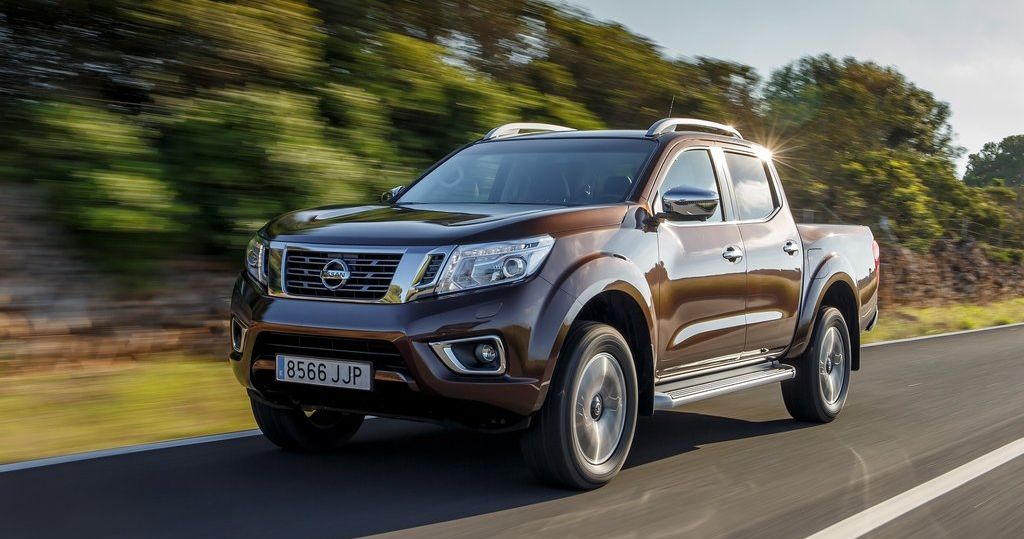
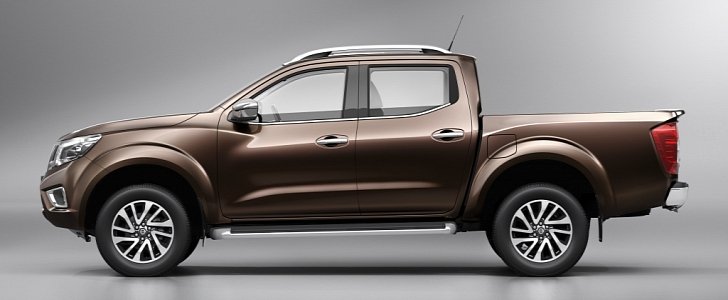
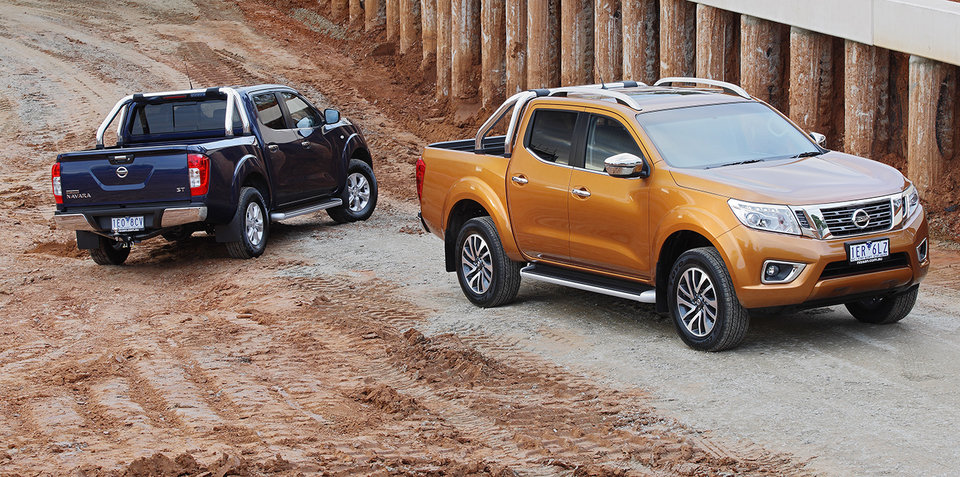
FLEET WORLD - The Nissan Navara takes Best Pick Up for the second year running.

The Nissan Navara has been crowned Best Pick-Up at the prestigious Fleet World Honours for the second year running.
Judges from the influential industry title put all models in the increasingly crowded segment through their paces before choosing the market-leading model as their outright winner.
They were impressed by the Navara’s range of powerful yet efficient engines, superior comfort, towing ability and wide range of trim levels.
The comprehensive five-year/100,000 miles warranty – offered across Nissan’s LCV range – was also singled out for special mention.
Dan Gilkes, Editor of Van Fleet World, said: “With so many new and improved trucks coming to the market last year, the big Nissan was certainly not short of competition.
“Yet despite some very strong new models, Navara remains the truck that we would buy if it was our fleet budget.”
He added: “A 3.5-tonne towing ability, powerful yet relatively frugal driveline and a wide range of trim levels from hard working Visia to luxurious Tekna, show that there is a Navara to suit most applications.”
Priced from £23,920 RRP, the Nissan Navara can be specified with either a double cab or a king cab and a 190PS twin-turbo or 160PS single turbo version of the new 2.3-litre dCi engine.
Many of the model’s advanced safety features – including a number of first-in-class technologies such as Forward Emergency Braking, Hill Start Assist and Hill Descent Control (on 4WD models) – come as standard.
Receiving the latest award, Darren Payne, Sales Director at Nissan Motor (GB) said: “We are thrilled the Navara has won this prestigious award for a second successive year.
“Despite a number of high profile competitors coming to market in the past year, Navara continues to set the benchmark in the pick-up sector.”

Saturday, 17 December 2016

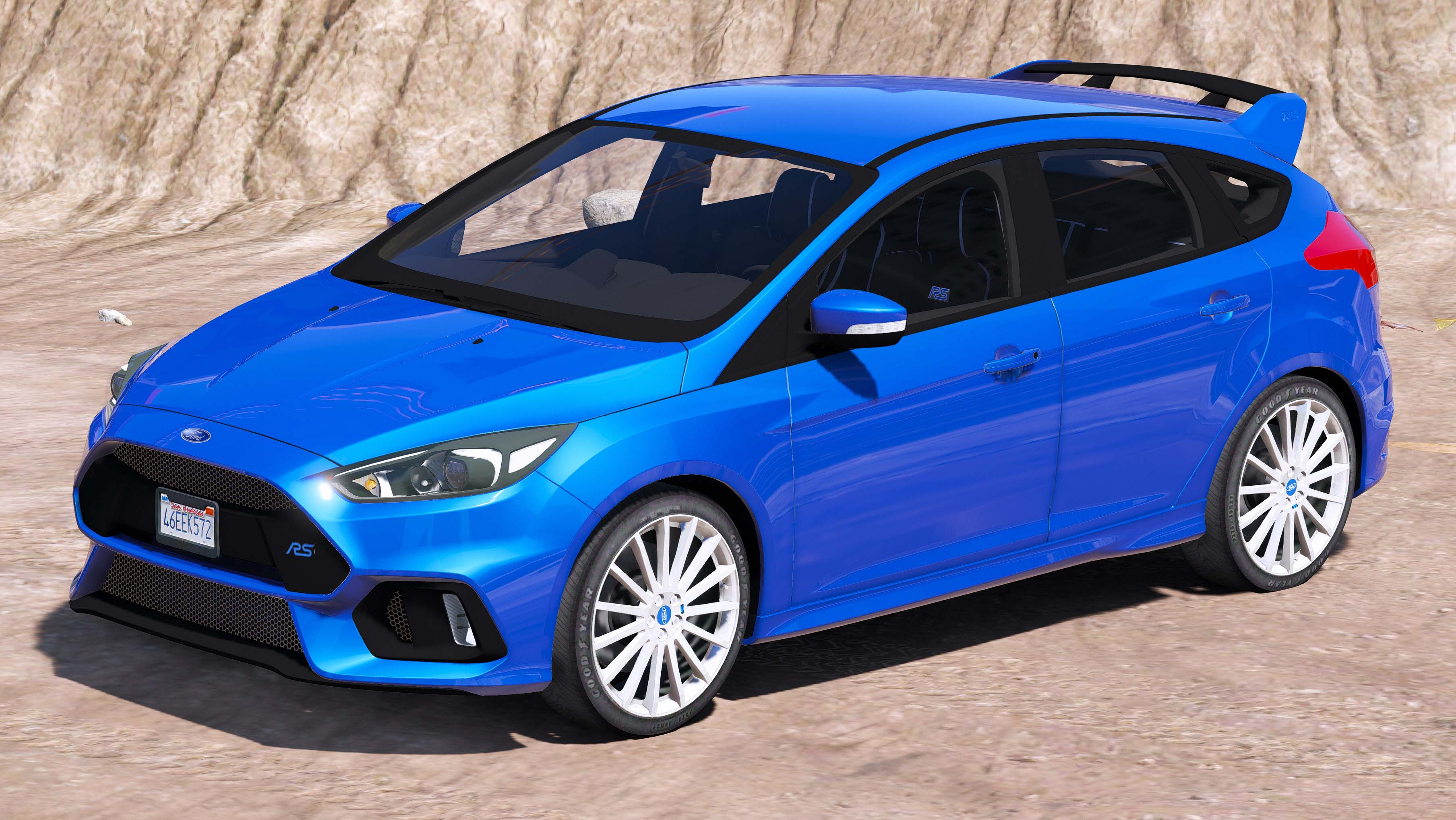
USA - The Ford Focus RS has been awarded one of the Wards 10 Best Engines.

The 2.3-liter EcoBoost® I-4 powering Ford Focus RS has earned the prestigious 2017 Ward’s 10 Best Engines award − the first time the specially engineered engine has taken home a prize.
Ford’s high-output 2.3-liter EcoBoost engine delivers 350 horsepower and 350 lb.-ft. of torque on 93-octane fuel. It features a bevy of tricks up its sleeve to offer a premium driving experience for customers of the performance hatchback.

Impressive engine output comes courtesy of an all-new, low-inertia twin-scroll turbocharger with a larger compressor wheel that delivers more airflow and power throughout the rev range – taking Focus RS from 0-62 mph in just 4.7 seconds. The hot hatch also offers four different drive modes, and pioneers innovative Ford Performance All-Wheel Drive with Dynamic Torque Vectoring for class-leading cornering speed and unsurpassed driver enjoyment.
The 2.3-liter EcoBoost engine is also available for the 2017 Ford Mustang. In that application, it churns out 310 horsepower and 320 lb.-ft. of torque.
Click here to learn more about the Ward’s 10 Best Engines award.

Saturday, 26 November 2016

30 years after the police tested the Ford RS200 rally car for motorway driving, they now trial the Focus RS.

The world’s most exclusive ‘police-car’ – based on the multi-award-winning Ford Focus RS – has been on test with police forces across the UK. The £31,250, four-wheel-drive, front-engined hyper hatch reaches 60mph from a standing start in under five seconds.

This special version of the Focus RS – on trial exactly 30 years after a Ford RS200 police car was put to the test - could be voted a ‘stunning hit’ by expert traffic policemen lucky enough to get behind the wheel, and is sure to intimidate would-be speeders.
Powered by a 2.3-litre turbocharged, 16-valve, four-cylinder Ford EcoBoost engine, the Focus RS develops 345bhp in standard road-going form – meaning that even the fastest Ford RS models of 30 years ago are no match for the Ford RS police cars of today.


The body was designed by Ford of Europe Design’s Ernesto Rupar, while the mechanical design and development was the responsibility of Ford Performance’s chief engineer, Tyrone Johnson. The Focus RS has won a host of awards since its launch, including Top Gear Magazine’s Car of the Year 2016.
Law-breakers would be relieved to learn that, due to limited production numbers, Ford does not expect many police forces to offer a patrol car capable of catching anything on the road. “But until they have tried it we won’t know whether it meets any specialist need”, said Terry Adams, Ford’s police sales manager.
Most forces will continue to rely on the standard Ford Focus and Ford’s biggest-selling police vehicle, the Transit Custom, for patrol duties. Ford supplies more than 1,500 vehicles to Britain’s police forces across the country, including the Ford Kuga and Ford Ranger in rural areas.
Unlike the RS200, the Focus RS includes most practicalities expected of a police patrol car, including rear doors for suspected criminal accommodation and a boot large enough for traffic cones.

Saturday, 1 October 2016

Happy Birthday to the Volvo C70, 20 years ago it was previewed at Paris, and a new future began.

The C70 represented a new niche in an important period for Volvo, a project that was driven by enthusiasm and a love of cars by a small and passionate team. Twenty years ago, it was first shown to the world.
When the Volvo C70 was first unveiled during the Paris Motor Show on 30 September 1996, it was not only the slender body that was brand new. It was Volvo's first "proper" coupé since the 1800 model, and the first time Volvo had cooperated with engineering firm TWR on a new car. Furthermore, it was to be built partly using new methods at a newly opened plant in the Swedish town of Uddevalla.
At the beginning of the 1990s, Volvo decided to expand its passenger car programme with a coupé and a cabriolet. The two versions would be developed in parallel and built on the technological base of the 850 model.

A small project group was formed in early 1994 and HÃ¥kan Abrahamsson was appointed project manager. Volvo had limited experience in developing such a characteristically niche product, and it was in quite a rush. Volvo therefore chose to cooperate with the British engineering firm TWR, Tom Walkinshaw Racing, who were already involved with Volvo's racing team in the BTCC.
"Without a doubt this was the most fun car project I've been involved with," HÃ¥kan Abrahamsson says today. Volvo wanted a project manager who was a little younger – preferably one who would be under 40 by the time the car was unveiled.
The team had just a couple of months during 1994 to define the project, and they got to work almost straight away with a comprehensive competitor analysis. The project group had to cancel their holidays and instead headed to the south to France to rent and try out coupés and cabriolets from their key competitors. 
Since they were supposed to be on holiday, they were allowed to bring their families, which turned out to be an unexpected success. Several comments were noted that would not have emerged if it had been only car designers who had analysed the competition. This was hugely beneficial during the continued design work and the team often returned to their experiences with their families.
A large part of the design and development work took place at TWR near Oxford in England. Volvo was responsible for the basic technical structure, and determined which characteristics the car was to have. TWR was responsible for design and production adjustment. A complete development team worked in a huge barn where Tom Walkinshaw, TWR's charismatic owner, also kept his car collection.
The project group were given an unusually free hand in terms of shaping the car, and head of design Peter Horbury wanted to change the idea that Volvo design was angular and boxy. When TWR's Ian Callum showed sketches of a coupé that featured a significantly arched roofline and sculpted sides, following proposals that had been considered "too Volvo", the matter was decided. The design would go on to remain almost unchanged right up to production.
The new car had the same wheelbase as the Volvo 850 and was the same length, but it still gave the impression that it was rather more dapper. Because it was already known from the beginning that the car would also be produced as a cabriolet, the development team ensured that the design worked both with and without a roof.
The development period for the C70 was brief – it took just 30 months from the first studies until the first cars were produced. The collaboration with TWR was crucial in achieving this, and the project costs were more manageable.
Volvo's then head of design, Peter Horbury, was clearly enthusiastic about the new language of design represented by the C70: "We threw away the box but kept the toy inside," he said after the first press viewing, where he had driven a Saffron Yellow C70 onto the stage.
The front clearly linked to Volvo, while the rest of the body was significantly curvier than anything previously released by the company – at least the first in a long time. The C70 heralded a new design direction that would characterise many future models.
Freedom of choice for the customer was important in a car like the C70, and there were 17 different paint colours to choose between, along with solid, metallic and pearl finishes. With 40 different interior combinations, with differences in material and colours, the choices were almost endless.
It was crucial that the speed matched the appearance. The C70 was therefore launched exclusively with five-cylinder turbo engines. The strongest engine, at 2.3 litres and 240 hp, was shared with the Volvo 850R. A calmer version, at 2.5 litres and 193 hp, was also released at the same time, and there were also 2.0-litre versions offering 180 and 225 hp respectively for markets where cylinder volume determines taxation levels.
Despite the C70 being very much an emotional car, where the design governed its function, there was plenty of room for four people and their luggage. And since Volvo developed it, the safety levels were high, featuring a side-impact protection system (SIPS), whiplash protection (WHIPS), belt tensioners and side airbags.
Together with TWR, Volvo formed a joint venture company, Autonova, in Uddevalla. Volvo had previously operated in Uddevalla, but production had ceased some years earlier. Now the factory was rebuilt and refurbished to incorporate the niche car. Production moved on from the assembly line principle, and instead a work team followed each car through several stages of production until the next team took over. The capacity of the new factory was 20,000 cars per year.
The news that the Volvo C70 Coupé would be joined by a cabriolet was announced at the same time as the coupé was launched. The C70 Cabriolet was unveiled one year later and it was the first convertible Volvo of the modern era. For many years, Volvo had been sceptical about cabriolets for crash safety reasons, but the C70 Cabriolet saw the introduction of features such as ROPS – Roll Over Protection System – with two protective frames behind the rear seats that were activated if the car rolled over. The windscreen frame was anchored to the base plate and manufactured from high-strength steel.
The design stood the test of time and did not change significantly during the nine years of life enjoyed by the first-generation model. The Volvo C70 Coupé was manufactured until 2002, while the C70 Cabriolet lived on for a further three years until April 2005. By this time, 76,809 C70s had been built, of which 27,014 were coupés and 49,795 cabriolets.
The second-generation C70 convertible, featuring a three-piece retractable hardtop and built by Pininfarina, was launched at the Paris Motor Show in September 2005.
10 things you may not know about the Volvo C70.
  1. The C70 had one of the world's best sound systems at the time. It featured loudspeakers from Danish prestige brand Dynaudio, along with Dolby Surround and an amplifier with up to 4x100 watts.
  2. The 17 different exterior colours were developed under the supervision of designer José Diaz de la Vega. He also led the design work for the interior, while Anders Gunnarsson played the same role for the exterior.
  3. In Sweden, there is a special club for C70 owners – the Swedish Volvo C70 club. They are organising a parade from the factory in Uddevalla to the Volvo Museum in Gothenburg in conjunction with the 20th anniversary. 
  4. The première in Paris could also be followed online – it was the first time this had ever happened in Europe.
  5. In 1998, the C70 was ranked as the best Volvo in J.D. Power’s customer satisfaction survey, and it came in fifth overall. 
  6. Finnish firm Valmet produced a proposal for a C70 cabriolet with a tin roof. This did not lead to production, but the C70's successor was given a roof of this type in 2005.
  7. Tom Walkinshaw, the man behind TWR, was an experienced racing driver, with three touring car world titles and two victories at the Daytona and Le Mans 24-hour races respectively to his name. 
  8. In 1999, Volvo acquired TWR from Autonova and continued production in-house. Later on, Volvo formed a company with Italian Pininfarina.
  9. In the film production of The Saint (1996), Simon Templar, played by Val Kilmer, drove a Garnet Red Volvo C70. The film was shot before the C70 had been unveiled, which meant a great deal of secrecy was called for.
  10. The preliminary prospectus for the C70 was sparse. It consisted of elegant pictures, a few technical facts and a three-line quotation from Peter Horbury: "I've tried to create a car that people will want, not a car people need."