Purpose

I will try my best to provide detailed info on various cars and what is like to live with them, I have already produced a few for Jaguar-car-forums, I will do my best to be unbiased, but it will be hard for some cars. I will re-produce press releases and copy from other motoring news.
Showing posts with label Head of design. Show all posts

Saturday, 1 October 2016

Happy Birthday to the Volvo C70, 20 years ago it was previewed at Paris, and a new future began.

The C70 represented a new niche in an important period for Volvo, a project that was driven by enthusiasm and a love of cars by a small and passionate team. Twenty years ago, it was first shown to the world.
When the Volvo C70 was first unveiled during the Paris Motor Show on 30 September 1996, it was not only the slender body that was brand new. It was Volvo's first "proper" coupé since the 1800 model, and the first time Volvo had cooperated with engineering firm TWR on a new car. Furthermore, it was to be built partly using new methods at a newly opened plant in the Swedish town of Uddevalla.
At the beginning of the 1990s, Volvo decided to expand its passenger car programme with a coupé and a cabriolet. The two versions would be developed in parallel and built on the technological base of the 850 model.

A small project group was formed in early 1994 and Håkan Abrahamsson was appointed project manager. Volvo had limited experience in developing such a characteristically niche product, and it was in quite a rush. Volvo therefore chose to cooperate with the British engineering firm TWR, Tom Walkinshaw Racing, who were already involved with Volvo's racing team in the BTCC.
"Without a doubt this was the most fun car project I've been involved with," Håkan Abrahamsson says today. Volvo wanted a project manager who was a little younger – preferably one who would be under 40 by the time the car was unveiled.
The team had just a couple of months during 1994 to define the project, and they got to work almost straight away with a comprehensive competitor analysis. The project group had to cancel their holidays and instead headed to the south to France to rent and try out coupés and cabriolets from their key competitors. 
Since they were supposed to be on holiday, they were allowed to bring their families, which turned out to be an unexpected success. Several comments were noted that would not have emerged if it had been only car designers who had analysed the competition. This was hugely beneficial during the continued design work and the team often returned to their experiences with their families.
A large part of the design and development work took place at TWR near Oxford in England. Volvo was responsible for the basic technical structure, and determined which characteristics the car was to have. TWR was responsible for design and production adjustment. A complete development team worked in a huge barn where Tom Walkinshaw, TWR's charismatic owner, also kept his car collection.
The project group were given an unusually free hand in terms of shaping the car, and head of design Peter Horbury wanted to change the idea that Volvo design was angular and boxy. When TWR's Ian Callum showed sketches of a coupé that featured a significantly arched roofline and sculpted sides, following proposals that had been considered "too Volvo", the matter was decided. The design would go on to remain almost unchanged right up to production.
The new car had the same wheelbase as the Volvo 850 and was the same length, but it still gave the impression that it was rather more dapper. Because it was already known from the beginning that the car would also be produced as a cabriolet, the development team ensured that the design worked both with and without a roof.
The development period for the C70 was brief – it took just 30 months from the first studies until the first cars were produced. The collaboration with TWR was crucial in achieving this, and the project costs were more manageable.
Volvo's then head of design, Peter Horbury, was clearly enthusiastic about the new language of design represented by the C70: "We threw away the box but kept the toy inside," he said after the first press viewing, where he had driven a Saffron Yellow C70 onto the stage.
The front clearly linked to Volvo, while the rest of the body was significantly curvier than anything previously released by the company – at least the first in a long time. The C70 heralded a new design direction that would characterise many future models.
Freedom of choice for the customer was important in a car like the C70, and there were 17 different paint colours to choose between, along with solid, metallic and pearl finishes. With 40 different interior combinations, with differences in material and colours, the choices were almost endless.
It was crucial that the speed matched the appearance. The C70 was therefore launched exclusively with five-cylinder turbo engines. The strongest engine, at 2.3 litres and 240 hp, was shared with the Volvo 850R. A calmer version, at 2.5 litres and 193 hp, was also released at the same time, and there were also 2.0-litre versions offering 180 and 225 hp respectively for markets where cylinder volume determines taxation levels.
Despite the C70 being very much an emotional car, where the design governed its function, there was plenty of room for four people and their luggage. And since Volvo developed it, the safety levels were high, featuring a side-impact protection system (SIPS), whiplash protection (WHIPS), belt tensioners and side airbags.
Together with TWR, Volvo formed a joint venture company, Autonova, in Uddevalla. Volvo had previously operated in Uddevalla, but production had ceased some years earlier. Now the factory was rebuilt and refurbished to incorporate the niche car. Production moved on from the assembly line principle, and instead a work team followed each car through several stages of production until the next team took over. The capacity of the new factory was 20,000 cars per year.
The news that the Volvo C70 Coupé would be joined by a cabriolet was announced at the same time as the coupé was launched. The C70 Cabriolet was unveiled one year later and it was the first convertible Volvo of the modern era. For many years, Volvo had been sceptical about cabriolets for crash safety reasons, but the C70 Cabriolet saw the introduction of features such as ROPS – Roll Over Protection System – with two protective frames behind the rear seats that were activated if the car rolled over. The windscreen frame was anchored to the base plate and manufactured from high-strength steel.
The design stood the test of time and did not change significantly during the nine years of life enjoyed by the first-generation model. The Volvo C70 Coupé was manufactured until 2002, while the C70 Cabriolet lived on for a further three years until April 2005. By this time, 76,809 C70s had been built, of which 27,014 were coupés and 49,795 cabriolets.
The second-generation C70 convertible, featuring a three-piece retractable hardtop and built by Pininfarina, was launched at the Paris Motor Show in September 2005.
10 things you may not know about the Volvo C70.
  1. The C70 had one of the world's best sound systems at the time. It featured loudspeakers from Danish prestige brand Dynaudio, along with Dolby Surround and an amplifier with up to 4x100 watts.
  2. The 17 different exterior colours were developed under the supervision of designer José Diaz de la Vega. He also led the design work for the interior, while Anders Gunnarsson played the same role for the exterior.
  3. In Sweden, there is a special club for C70 owners – the Swedish Volvo C70 club. They are organising a parade from the factory in Uddevalla to the Volvo Museum in Gothenburg in conjunction with the 20th anniversary. 
  4. The première in Paris could also be followed online – it was the first time this had ever happened in Europe.
  5. In 1998, the C70 was ranked as the best Volvo in J.D. Power’s customer satisfaction survey, and it came in fifth overall. 
  6. Finnish firm Valmet produced a proposal for a C70 cabriolet with a tin roof. This did not lead to production, but the C70's successor was given a roof of this type in 2005.
  7. Tom Walkinshaw, the man behind TWR, was an experienced racing driver, with three touring car world titles and two victories at the Daytona and Le Mans 24-hour races respectively to his name. 
  8. In 1999, Volvo acquired TWR from Autonova and continued production in-house. Later on, Volvo formed a company with Italian Pininfarina.
  9. In the film production of The Saint (1996), Simon Templar, played by Val Kilmer, drove a Garnet Red Volvo C70. The film was shot before the C70 had been unveiled, which meant a great deal of secrecy was called for.
  10. The preliminary prospectus for the C70 was sparse. It consisted of elegant pictures, a few technical facts and a three-line quotation from Peter Horbury: "I've tried to create a car that people will want, not a car people need."

Friday, 1 July 2016

Volkswagen releases the first skeches for the new designed Crafter Commercial Vehicle.

  • Functional: new exterior and interior design
  • Best in Class: lowest drag coefficient in its class
  • Optimum workplace space
The first sketches of the new Volkswagen Commercial Vehicles Crafter, which is due to be launched this autumn, have been revealed today. Clearly displaying Volkswagen’s design DNA and conceived as the ‘big brother’ of the T-series, the all-new Crafter promises innovation, plus a high level of functionality and quality.


The new Crafter is a completely new vehicle. Experts at Volkswagen Commercial vehicles have worked closely with current customers, frequently accompanying them during their daily routines, to explore their needs and find out their visions of what they wanted the new Crafter to be, allowing them to help shape the new generation.
This is now reflected in both the function and design: the approach, according to Albert-Johann Kirzinger, Head of Design at Volkswagen Commercial Vehicles (VWN), was thoroughly analytical: "In the commercial vehicle sector especially, design has got to work for lots of different customer groups."
At 0.33, the new Crafter has a best in class drag coefficient; and inside it combines great everyday practicality with optimum cargo space. The new design language shown on the Crafter will continue across all new commercial vehicle derivatives and models.
Kirzinger adds: “Volkswagen Commercial Vehicles' T-series, the 'Bulli', is effectively being given a 'big brother' through the introduction of the new Crafter. With the Crafter, a level of surface quality, robustness and at the same time high qualitative value are achieved that have never before been available in this commercial vehicle class.”

Thursday, 24 March 2016

USA - Kelly Blue Book names Chrysler the Best Car Styling brand 2016 - they do have some great cars now.


Today, Kelley Blue Book named Chrysler the “Best Car Styling Brand” as part of its 2016 Kelley Blue Book Brand Image Awards.

“When it comes to design at FCA, it isn’t just a job; it’s passion and creativity that our designers live and breathe every day,” said Ralph Gilles, Head of Design, FCA - Global. “We are enjoying the process of redesigning and reimagining the brand quite literally from the inside out.”


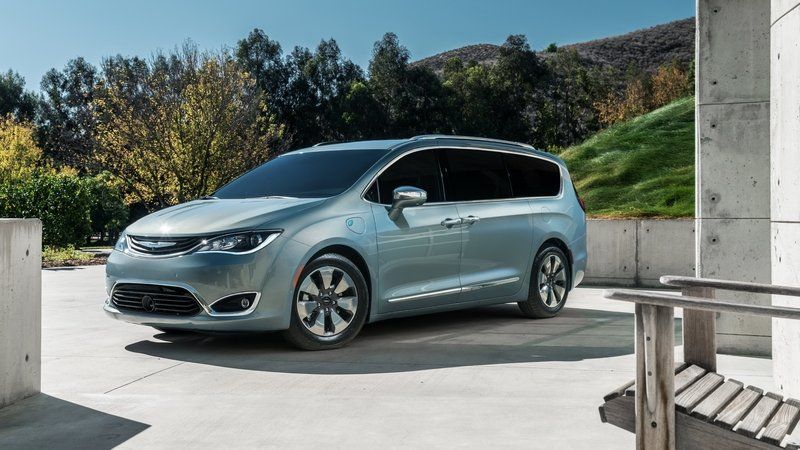
Chrysler brand vehicles include the all-new Chrysler Pacifica, 200, 300 and Town & Country.
“Receiving this award from Kelley Blue Book reaffirms the Chrysler brand’s long reputation as a leader in design, performance and innovative technology, all at a great value,” said Tim Kuniskis, Head of Passenger Car Brands - Dodge, SRT, Chrysler and FIAT, FCA - North America. “This award is an honor for Chrysler as it is based on consumer perceptions of our brand.”
The 2016 Kelley Blue Book Brand Image Awards recognize automakers’ outstanding achievements in creating and maintaining brand attributes that capture the attention and enthusiasm of new-vehicle buyers. Brand Image Award winners are determined by evaluating annual new-car buyer perception data and award categories are calculated among luxury, non-luxury and truck shoppers. 
According to the editors at Kelley Blue Book, “Chrysler won 2016 Best Car Styling Brand, driven by the 300.

Wednesday, 28 October 2015

TOKYO SHOW - The Vision Tokyo is the latest trailblazing spatial experience to come from Mercedes-Benz.

Mobile club lounge for young, urban trendsetters
The Vision Tokyo is the latest trailblazing spatial experience to come from Mercedes-Benz: its monolithic structure, futuristic design idiom and unique lounge ambience in the interior define it as luxurious, young and progressive – thus making it a fitting tribute to the sophisticated megacity and trendsetting metropolis that is Tokyo. 

Spatially efficient, versatile and intelligently connected, the Vision Tokyo – which is also capable of driving autonomously – is an urban transformer that reflects the growing youthfulness of the Mercedes-Benz brand. At the same time, this innovative five-seater continues a tradition of visionary design-study showcars that has included the Vision Ener-G-Force (Los Angeles, November 2012), AMG Vision Gran Turismo (Sunnyvale, 2013) and G-Code (Beijing, November 2014).  
Japan's capital city Tokyo represents home to some nine million people, in an area that is just 622 square kilometres in size – smaller than Paris but with more than four times as many people. This megacity represents a fascinating combination of tradition and contemporary high tech and is constantly defining new trends – making it the ideal location for the premiere of the Mercedes-Benz Vision Tokyo. It will be on display to an international audience for the first time at the Tokyo Motor Show (30 October to 7 November 2015).
Gorden Wagener, Head of Design at Daimler AG: "The Mercedes-Benz Vision Tokyo embodies the concept of an automotive lounge for a future generation of megacities. The purity and sensuality of the Vision Tokyo's styling defines a new interpretation of modern luxury from Mercedes-Benz." 
The conceptual message of the vehicle reflects the increasingly youthful appeal of the Mercedes-Benz brand and perceptions of it as a stylistically influential design brand. The Vision Tokyo is the brainchild of the designers working within Mercedes-Benz's global network of Advanced Design Studios.
Hot on the heels of the F 015 Luxury in Motion autonomously driving luxury saloon comes the Vision Tokyo, with which Mercedes-Benz aims to show how the car of the future can be turned into a hip living space – a chill-out zone in the midst of megacity traffic mayhem.
The Vision Tokyo is a homage to the urban Generation Z, the cohort of people born since 1995 who have grown up with the new media. 
The role of the vehicle has changed for this global generation: it is no longer simply a means of getting around, but a digital, automobile companion. 
The Vision Tokyo takes things another step further: innovative algorithms allow it to evolve constantly; Deep Machine Learning and an intelligent Predictive Engine mean that, with each journey, it becomes more and more familiar with its occupants, their likes and preferences. All of which makes the Vision Tokyo the perfect partner for Generation Z.
The spaciousness of the Vision Tokyo marks a new conceptual approach for Mercedes-Benz Cars. These proportions are emphasised by the monochrome Alubeam paintwork and by side windows screen-printed in the colour of the vehicle. These give the vehicle's occupants privacy, while at the same time allowing sufficient light to penetrate into the interior and an unimpeded view out.
Surfaces and lines illuminated in blue – among them the 26-inch wheels and the side skirts – provide unexpected colour highlights and are indicative of the concept car's emission-free electric drive system. A pointer to the potential for autonomous operation and the comprehensive system of vehicle environment sensors that this requires, including a 360-degree camera, is provided by the fin on the vehicle roof.
Instead of a conventional windscreen, the Vision Tokyo features a continuous stretch of glass panelling – similar to the glazed cockpit of a powerboat. As was the case with the AMG Vision Gran Turismo, the front headlamps are set well to either side and at an angle. The area across the front of the vehicle can be used to display a series of different lighting functions. If music is playing inside the vehicle the display will, for example, visualise a sound pattern, rather like a sound analyser. The rear window is set into a surrounding ring of red LED cubes, which gives it visual depth. Once again, the LED field can be put to good use – as an indicator display or as part of the analyser function.
The dimensions of the Vision Tokyo (length/width/height: 4803/2100/1600 mm) are comparable with those of a mid-series vehicle. Up to five passengers access the interior via the upward-swinging door on the left-hand side – ideal for the right-hand-drive traffic in Japan's megacity. The conventional seating arrangement in rows is thus redundant, while there is also no "front" or "back" here: passengers take their seats instead on a large, oval-shaped couch. 
This unique lounge-style arrangement allows everyone on board to enjoy the benefits of autonomous driving. For even though the members of "Generation Z" are frequent users of social media, they nevertheless prefer personal contact whenever possible. And it is for this face to-face communication that the seat layout has been optimised. As a contemporary-style club lounge, the Vision Tokyo brings people together. With the car in autonomous driving mode they are able to chill and chat, without having to worry about steering a way through the dense traffic.
Behind the passengers are large wraparound LED screens. The perforated seats are back-lit, giving rise to a high-tech ambience that presents an intentional contrast to the soft surface finish of the pale leather. Apps, maps and displays emanating from the entertainment system are presented as three-dimensional holograms within the interior space.
Should there be a requirement for the Vision Tokyo to be controlled manually rather than it driving autonomously, a seat facing in the direction of travel can be released from the centre of the couch at the front, rather like the "jump seat" in an aircraft cockpit. The steering wheel, too, is then moved from its standby position into driving position.
The bodyshell of the Vision Tokyo has been designed to allow the crash-protected integration of a fuel cell-powered electric drive system. This is based on the trailblazing F-CELL PLUG-IN HYBRID of the F 015 Luxury in Motion and combines the on-board generation of electricity with a particularly powerful and compact high-voltage battery that can be charged contactlessly via induction. The use of pressure tanks made from CFRP is envisaged for the storage of hydrogen in the concept car. The electric hybrid system has a total range of 980 kilometres, of which some 190 kilometres are courtesy of battery-powered driving and around 790 kilometres on the electricity produced in the fuel cell.
The Vision Tokyo continues a tradition of visionary design-study showcars that has included the Vision Ener-G-Force (Los Angeles, November 2012), AMG Vision Gran Turismo (Sunnyvale, 2013) and G-Code (Beijing, November 2014). Thanks to the global nature of the Mercedes-Benz Design function, these concept vehicles take cues from local trends in design, culture and mobility and make these the focal point of the respective mobility concept. At the same time these showcars are already looking well beyond the next generation of vehicles.
Global Advanced Design – the Mercedes-Benz Design Studios
When it comes to its Advanced Design activities, Mercedes-Benz relies on a global network: designers and modellers in five Advanced Design Studios in Carlsbad (USA), Sunnyvale (USA), Como (Italy), Beijing (China) and Sindelfingen (Germany) mull over ideas for the vehicles of tomorrow – and beyond.

Monday, 20 April 2015

SHANGHAI 2015 - Mercedes showcases new GLC Coupe concept at the China show.

Mercedes-Benz Concept GLC Coupé
In a flowing transition, Mercedes-Benz lands the next coupé: the Concept GLC Coupé is a near-production-standard study that carries the successful GLE Coupé formula over into a more compact segment. 
The dynamically expressive show car combines typical stylistic features of a coupé with the sensually pure design idiom of coming SUV generations. This emotively appealing fusion is further enriched with details that are strong in character. 
A twin-blade radiator grille, power domes on the bonnet and a four-pipe exhaust system form an aesthetic contrast to the harmonious, almost organic main body section. On the other hand, elements from the rugged off-road world, such as enormous 21-inch tyres, front and rear underbody protection, increased ground clearance and side running boards, are indicative of the off-road performance potential of the Concept GLC Coupé.

Gorden Wagener, Head of Design at Daimler AG, puts it in a nutshell: "With its modern and sensual design idiom, the Concept GLC Coupé gives a foretaste of future SUV models from Mercedes-Benz. At the same time, it embraces the typical values of tradition-steeped Mercedes-Benz coupés."
The same successful blend of the multifunctional SUV and the emotively appealing coupé world of Mercedes-Benz that was so enthusiastically welcomed with the GLE Coupé is now repeated with the Concept GLC Coupé. 
However, the near-production-standard show car inhabits a more compact segment, as demonstrated by the external length of 4.73-metres and the 2.83-metre wheelbase. These two dimensions, together with the striking and muscular main body section, elongated greenhouse and large 21-inch wheels, provide an ideal basis for the typical, almost dramatic proportions of the sportily youthful coupé generation with the characteristic off-road touch.
Distinctive front end, sculptural headlamp design 
At the front, a short, crisp overhang with upright radiator grille and twin-blade louvre – characteristic of sporty Mercedes-Benz models – gives a first indication of the sporty philosophy behind the Concept GLC Coupé. The credo "Born to race on every ground" is confirmed by the power domes on the bonnet, the sweeping lines of the A-wing below the radiator grille, the large side air intakes and the visually dominant underbody protection. 
Like all the trim elements on the concept vehicle, this typical SUV feature radiates in silver shadow to form an attractive counterpoint to the solar-beam paintwork and the all-round claddings in matt gun metal magno paintwork.
Reminiscent of light sculptures, striking LED headlamps decisively shape the expressive face of the Concept GLC Coupé. All functions are united in one housing: for illumination, the daytime running lamps and turn indicators use the upper strip inserts, dubbed "eyebrows" by the designers. Below them are three rotating lenses, which appear to positively float in the deep, three-dimensional space and which adapt to the situation to optimally illuminate the road or terrain. 
Of course, the headlamps are non-dazzling for oncoming traffic in lower beam, upper beam, cornering light or active light mode. This is achieved by blanking out the light cone in the area of oncoming vehicles.
Side profile with low-slung coupé greenhouse and large SUV wheels  
The perfection with which the intrinsically contrary design worlds of the coupé and the SUV have been brought into harmony with each other is revealed in particular by a side view of the just under 1.60-metre-high Concept GLC Coupé with the typical, elongated roof line of a sports coupé. Like the integrated roof rails and fully recessed door handles, the squat greenhouse with its frameless side windows blends perfectly into the vehicle's flanks to additionally underscore the coupé-like character. 
The interplay with the high beltline, wide shoulders and accentuated wheel lips gives rise to extreme proportions that lend the Concept GLC Coupé a thrilling dynamism. This highly charged interaction is given extra emphasis by the drawn-in waist between the dropping line and the lower, rearwards ascending light-catching contour.
A clear indication of the more prominent SUV genes is given by sill extensions reminiscent of the side running boards on a classic SUV. Flush with the outside edge of the body, wide 21-inch wheels with large, heavily profiled tyres combine with the relatively high ground clearance to endorse the sportily dynamic off-road ambitions of the Concept GLC Coupé.
Rear end with distinct coupé heritage 
The rear view of the precisely two-metre-wide Concept GLC Coupé in particular reveals the wide, muscular shoulders with harmoniously modelled wheel arches that house 53.3 cm (21-inch) wheels with 285/45 R 21 wide-base tyres. The four polished stainless-steel tailpipes of the exhaust system provide a visual highlight. Mounted in pairs above an A-wing similar to the one at the front and featuring characteristic underbody protection, the tailpipes underscore the sporty look of the coupé.
Overall, it is the styling of the rear end that most clearly accentuates the coupé genes of the concept vehicle. Narrow, split tail lights, centrally positioned brand star and a sharp spoiler lip emphasise a design line that made its debut with the S‑Class Coupé and which all Mercedes-Benz coupé models have since followed. 
Relocated to the lower section of the bumper, the number plate as well as the typical form of the rear window with its rounded upper area are among the further stylistic features.
The night design of the LED tail lights sets a new tone. Adapted from the headlamps, the strips at the top are home to the turn indicators, which use chasing lights to signal a change of direction. A circular rear light encloses a central lens that adaptively augments the brake lamp for even better visibility.   
Technical details provide a stimulating contrast
Hard technical details give an additional emotive appeal to the Concept GLC Coupé with its almost organic form of the main body section. For example, excitingly designed components such as two-part, open light-alloy wheels, wing-look exterior mirrors and the already mentioned four exhaust tailpipes set a deliberate stylistic contrast intended to underscore the technological claim of the show car. 
The same goes for the underbody protection with front and rear cooling ducts and the headlamps and tail lights, which resemble light sculptures.
Power aplenty: all-wheel-drive powertrain producing 367 hp
The drive technology aboard the Concept GLC Coupé matches the vehicle's looks. A V6 powerplant delivering 367 hp and 520 Nm makes for a highly sporty level of performance. 
Familiar from AMG sports models, the direct-injection biturbo engine is teamed with a 9G-TRONIC nine-speed automatic transmission and 4MATIC permanent all-wheel drive to provide the show car with emphatic acceleration while at the same time giving an acoustically audible note to the impressive performance. Depending on the transmission mode setting, the tailpipes give off either a commandingly subdued rumble or the passionate sound of a high-powered sports car. 
Extension to the SUV world of Mercedes-Benz
The SUV world of Mercedes-Benz has room for further models, such as a production version of the Concept GLC Coupé. The range would thus include seven models, allowing customers to order a tailor-made vehicle to suit their personal preferences. At the same time, the show car would enrich the trendsetting coupé world of Mercedes-Benz with a new all-rounder while providing a logical addition to models such as the four-door coupés and Shooting Brakes of the CLS and CLA series. 
In addition to spawning entirely new classes of vehicle, these model series have also exerted a considerable impact on the model policies of all manufacturers. They have also proved an outstanding success on the sales front. 
Overview of technical data:
  Concept GLC Coupé
Body type / construction Four-door, four-seater coupé concept vehicle, frameless side windows
Engine V6 biturbo, direct injection
Displacement cc 2,996
Output  hp at rpm 367 at 5,500
Peak torque (Nm) at rpm 520 at 1,400-4,000
Transmission Nine-speed automatic transmission
9G-TRONIC, DIRECT SELECT gearshift
Powertrain 4MATIC permanent all-wheel drive
Length mm 4,727
Width with/without mirrors mm 2,151/2,000
Height mm 1,593
Wheelbase mm 2,827
Track width front/rear mm 1,657/1,687
Wheels / tyres   front
rear
8 J x 21 / 255/50 R 21
9.5 J x 21 / 285/45 R 21