Purpose

I will try my best to provide detailed info on various cars and what is like to live with them, I have already produced a few for Jaguar-car-forums, I will do my best to be unbiased, but it will be hard for some cars. I will re-produce press releases and copy from other motoring news.
Showing posts with label 20th anniversary. Show all posts

Saturday, 1 October 2016

Happy Birthday to the Volvo C70, 20 years ago it was previewed at Paris, and a new future began.

The C70 represented a new niche in an important period for Volvo, a project that was driven by enthusiasm and a love of cars by a small and passionate team. Twenty years ago, it was first shown to the world.
When the Volvo C70 was first unveiled during the Paris Motor Show on 30 September 1996, it was not only the slender body that was brand new. It was Volvo's first "proper" coupé since the 1800 model, and the first time Volvo had cooperated with engineering firm TWR on a new car. Furthermore, it was to be built partly using new methods at a newly opened plant in the Swedish town of Uddevalla.
At the beginning of the 1990s, Volvo decided to expand its passenger car programme with a coupé and a cabriolet. The two versions would be developed in parallel and built on the technological base of the 850 model.

A small project group was formed in early 1994 and Håkan Abrahamsson was appointed project manager. Volvo had limited experience in developing such a characteristically niche product, and it was in quite a rush. Volvo therefore chose to cooperate with the British engineering firm TWR, Tom Walkinshaw Racing, who were already involved with Volvo's racing team in the BTCC.
"Without a doubt this was the most fun car project I've been involved with," Håkan Abrahamsson says today. Volvo wanted a project manager who was a little younger – preferably one who would be under 40 by the time the car was unveiled.
The team had just a couple of months during 1994 to define the project, and they got to work almost straight away with a comprehensive competitor analysis. The project group had to cancel their holidays and instead headed to the south to France to rent and try out coupés and cabriolets from their key competitors. 
Since they were supposed to be on holiday, they were allowed to bring their families, which turned out to be an unexpected success. Several comments were noted that would not have emerged if it had been only car designers who had analysed the competition. This was hugely beneficial during the continued design work and the team often returned to their experiences with their families.
A large part of the design and development work took place at TWR near Oxford in England. Volvo was responsible for the basic technical structure, and determined which characteristics the car was to have. TWR was responsible for design and production adjustment. A complete development team worked in a huge barn where Tom Walkinshaw, TWR's charismatic owner, also kept his car collection.
The project group were given an unusually free hand in terms of shaping the car, and head of design Peter Horbury wanted to change the idea that Volvo design was angular and boxy. When TWR's Ian Callum showed sketches of a coupé that featured a significantly arched roofline and sculpted sides, following proposals that had been considered "too Volvo", the matter was decided. The design would go on to remain almost unchanged right up to production.
The new car had the same wheelbase as the Volvo 850 and was the same length, but it still gave the impression that it was rather more dapper. Because it was already known from the beginning that the car would also be produced as a cabriolet, the development team ensured that the design worked both with and without a roof.
The development period for the C70 was brief – it took just 30 months from the first studies until the first cars were produced. The collaboration with TWR was crucial in achieving this, and the project costs were more manageable.
Volvo's then head of design, Peter Horbury, was clearly enthusiastic about the new language of design represented by the C70: "We threw away the box but kept the toy inside," he said after the first press viewing, where he had driven a Saffron Yellow C70 onto the stage.
The front clearly linked to Volvo, while the rest of the body was significantly curvier than anything previously released by the company – at least the first in a long time. The C70 heralded a new design direction that would characterise many future models.
Freedom of choice for the customer was important in a car like the C70, and there were 17 different paint colours to choose between, along with solid, metallic and pearl finishes. With 40 different interior combinations, with differences in material and colours, the choices were almost endless.
It was crucial that the speed matched the appearance. The C70 was therefore launched exclusively with five-cylinder turbo engines. The strongest engine, at 2.3 litres and 240 hp, was shared with the Volvo 850R. A calmer version, at 2.5 litres and 193 hp, was also released at the same time, and there were also 2.0-litre versions offering 180 and 225 hp respectively for markets where cylinder volume determines taxation levels.
Despite the C70 being very much an emotional car, where the design governed its function, there was plenty of room for four people and their luggage. And since Volvo developed it, the safety levels were high, featuring a side-impact protection system (SIPS), whiplash protection (WHIPS), belt tensioners and side airbags.
Together with TWR, Volvo formed a joint venture company, Autonova, in Uddevalla. Volvo had previously operated in Uddevalla, but production had ceased some years earlier. Now the factory was rebuilt and refurbished to incorporate the niche car. Production moved on from the assembly line principle, and instead a work team followed each car through several stages of production until the next team took over. The capacity of the new factory was 20,000 cars per year.
The news that the Volvo C70 Coupé would be joined by a cabriolet was announced at the same time as the coupé was launched. The C70 Cabriolet was unveiled one year later and it was the first convertible Volvo of the modern era. For many years, Volvo had been sceptical about cabriolets for crash safety reasons, but the C70 Cabriolet saw the introduction of features such as ROPS – Roll Over Protection System – with two protective frames behind the rear seats that were activated if the car rolled over. The windscreen frame was anchored to the base plate and manufactured from high-strength steel.
The design stood the test of time and did not change significantly during the nine years of life enjoyed by the first-generation model. The Volvo C70 Coupé was manufactured until 2002, while the C70 Cabriolet lived on for a further three years until April 2005. By this time, 76,809 C70s had been built, of which 27,014 were coupés and 49,795 cabriolets.
The second-generation C70 convertible, featuring a three-piece retractable hardtop and built by Pininfarina, was launched at the Paris Motor Show in September 2005.
10 things you may not know about the Volvo C70.
  1. The C70 had one of the world's best sound systems at the time. It featured loudspeakers from Danish prestige brand Dynaudio, along with Dolby Surround and an amplifier with up to 4x100 watts.
  2. The 17 different exterior colours were developed under the supervision of designer José Diaz de la Vega. He also led the design work for the interior, while Anders Gunnarsson played the same role for the exterior.
  3. In Sweden, there is a special club for C70 owners – the Swedish Volvo C70 club. They are organising a parade from the factory in Uddevalla to the Volvo Museum in Gothenburg in conjunction with the 20th anniversary. 
  4. The première in Paris could also be followed online – it was the first time this had ever happened in Europe.
  5. In 1998, the C70 was ranked as the best Volvo in J.D. Power’s customer satisfaction survey, and it came in fifth overall. 
  6. Finnish firm Valmet produced a proposal for a C70 cabriolet with a tin roof. This did not lead to production, but the C70's successor was given a roof of this type in 2005.
  7. Tom Walkinshaw, the man behind TWR, was an experienced racing driver, with three touring car world titles and two victories at the Daytona and Le Mans 24-hour races respectively to his name. 
  8. In 1999, Volvo acquired TWR from Autonova and continued production in-house. Later on, Volvo formed a company with Italian Pininfarina.
  9. In the film production of The Saint (1996), Simon Templar, played by Val Kilmer, drove a Garnet Red Volvo C70. The film was shot before the C70 had been unveiled, which meant a great deal of secrecy was called for.
  10. The preliminary prospectus for the C70 was sparse. It consisted of elegant pictures, a few technical facts and a three-line quotation from Peter Horbury: "I've tried to create a car that people will want, not a car people need."

Sunday, 11 September 2016

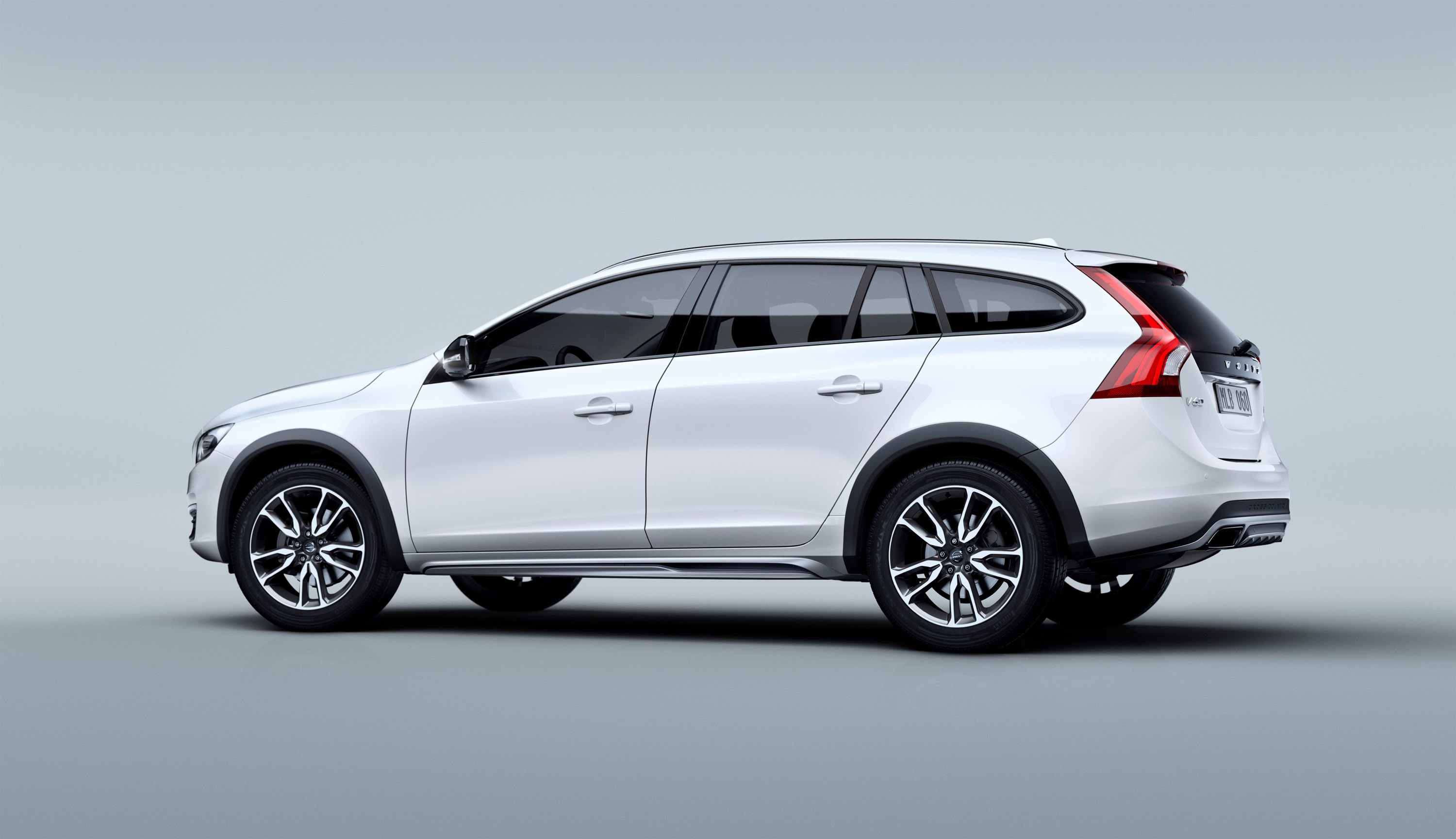
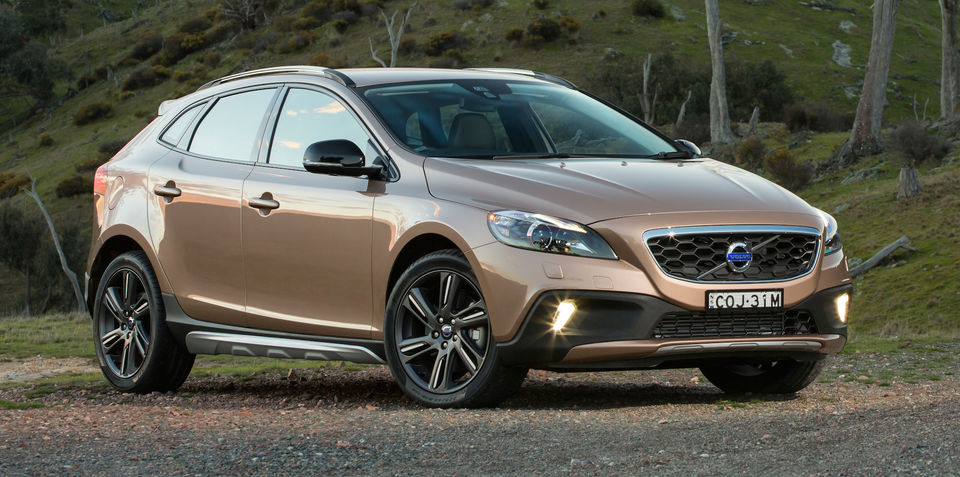
Volvo, 20 years ago launched the V70 CC, today that CC Range has been expanded to more models and bigger sales.

Volvo Cars’ instrumental role in defining the adventurous Cross Country segment is widely acknowledged. With the imminent reveal of the new V90 Cross Country, the Swedish car maker is set to cement its leading role as the most capable and comfortable premium all-roader on offer and complete its 90 series line-up.

“Cross Country has become the true expression of a Volvo car in many people’s eyes. It was a winning concept from the start, perfect for the tough climate and road conditions that we experience in Sweden,” said Håkan Samuelsson, President & CEO, Volvo Car Group.
Developed in 1996, the first Cross Country estate combined functional flexibility and rugged capability. Today, 20 years later, the Cross Country segment is a familiar sight across the premium car market, providing a capable yet comfortable driving experience.
Extreme climate capability
Designed to cope with the demanding requirements of an extreme Scandinavian climate, Cross Country models perform in all sorts of road conditions – from muddy tracks and knee-deep snow to long-distance motorway driving. 
Proving a popular choice with horse and boat owners thanks to its high ground clearance, pulling power and responsive All-Wheel Drive, Cross Country has cemented its position as a premium mainstay and a true all-weather alternative to the SUV.
“We were very careful from the very beginning to ensure that the Cross Country concept was not just an exercise in rugged styling. 
We placed high demands on real-world capability, and as we developed the segment, we added the comfort and convenience elements that Volvo drivers have come to expect,” said Dr Peter Mertens, Senior Vice President Research & Development at Volvo Car Group.
The eagerly awaited V90 Cross Country will be revealed in mid-September.
First generation, 1997 – 2000
Developed as a capable alternative to the SUV and front-wheel-drive cars, Volvo Cars’ first Cross Country – the V70 XC – grew in popularity as old-school SUVs began to morph into city jeeps. Cross Country offered a new, adventurous take on motoring that delivered a competent mix of capability, functionality and comfort. 
The V70 XC was an instant success, especially in the North American market.
Second generation, 2000 – 2007
In 2000, the second-generation V70 XC came with much bolder styling and higher ground clearance.
When Volvo’s first SUV – the XC90 – came in 2002, the V70 XC received a newer, more modern All-Wheel Drive system and changed its name to XC70 in order to align to its bigger brother.
Third generation, 2007 – 2016
The third-generation Volvo Cross Country arrived in 2007 with added elegance and luxury. The XC70 continued to be a North American love affair, accounting for almost half of the total volume produced.
In 2014, the XC70 gained recognition around the globe as Zlatan Ibrahimović’s car thanks to a Volvo Cars commercial featuring the Swedish footballer. Such was the impact that sales of the model grew markedly during its last years of production.

Saturday, 10 September 2016

5,000,000, 20 Years, three generations, two body styles, infinite combinations, thats the Octavia from Skoda Auto.

  • ​›First ŠKODA OCTAVIA rolled off production line at newly constructed plant in Mladá Boleslav two decades ago 
  • ›Modular vehicle design, advanced technology, high efficiency and ergonomics in OCTAVIA production 
  • ›Production figures rose by more than a third within a year 
  • ›ŠKODA OCTAVIA one of most successful model series in automotive world  
  • ›Undisputed bestseller in traditional brand’s 121-year history with more than five million units sold

​20 years ago, on 3 September 1996, former Czech President Vaclav Havel gave the starting signal for the production of the ŠKODA OCTAVIA in the newly opened part of the plant at the company's headquarters. 

This also marked the beginning of a unique success story: Over the following two decades, the ŠKODA OCTAVIA became a worldwide bestseller and is still the best selling model of the brand from Mladá Boleslav. The popular compact car paved the way for ŠKODA’s success.


​In February 1995 in Mladá Boleslav, the foundation stone for the new production line was laid, on which the first ŠKODA OCTAVIAs would be produced around 18 months later. 

For the new series ŠKODA built a modern production line in a 32,000-square-meter hall. In addition, a total of 2,500 square meters of office space and 3,000 square meters of social areas were created. In March 1996, the new paint shop was completed, where up to 1,800 bodies of model series ŠKODA FELICIA and ŠKODA OCTAVIA would be painted every day.


On 3 September 1996, former President of the Czech Republic Václav Havel inaugurated the new plant and also officially gave the go-ahead for the series production of the ŠKODA OCTAVIA. “The plant is beautiful, modern, really pretty. It would be great if all factories looked like this.” – Havel’s words of praise at the opening ceremony.

The development of the completely new OCTAVIA model series began in 1992, approximately one year after the traditional Czech brand joined the Volkswagen Group. The ŠKODA OCTAVIA was based on a Group platform which was completely new at the time. 

The robust body structure, which had been developed using the latest CAD (Computer Aided Design) technology, provided exemplary active and passive safety in combination with front airbags for driver and passenger. In addition, this was the first time that ŠKODA had offered the then new side airbags for the OCTAVIA.

With the clever liftback solution, the new compact featured an especially practical highlight: Thanks to the large tailgate of the hatchback model, customers benefited from excellent access to the 528-litre boot, which could be extended to as much as 1,328 litres by folding the rear seats down.

In 1996 – the first sales year – ŠKODA OCTAVIA customers could choose from two four-cylinder petrol engines or a turbodiesel drivetrain. In May 1998, the ŠKODA OCTAVIA COMBI extended the model range; from 1999 the estate version was also available with all-wheel drive. 

The last vehicle from the first generation rolled off the production line in November 2010. Between September 1996 and November 2010 around 970,000 saloons and more than 470,000 estates were delivered.

The second-generation ŠKODA OCTAVIA seamlessly continued the success story of its predecessor: Between 2004 and 2013, 1.6 million customers opted for the saloon, 900,000 buyers chose the ŠKODA OCTAVIA estate. 

The third generation of the ŠKODA OCTAVIA has been in production since November 2012. Today the bestseller is considered the heart of the brand and is extremely popular both as a family car and as a company vehicle. 

Since the start of production of the first generation on September 3, 1996, more than five million ŠKODA OCTAVIAs have left the production halls.  In addition to the main plant in Mladá Boleslav the compact is also manufactured at the ŠKODA plants in China, India, Russia and Kazakhstan.

Monday, 7 March 2016

SEAT celebrates the Alhambra's 20th Anniversary with a special edition.

  • Attractive special edition for the anniversary of the successful MPV
  • Unique design features, premium equipment
  • Innovative technology package for comfort, safety, connectivity 
The most spacious and versatile vehicle in the SEAT line-up celebrates its anniversary with a special edition. The first-generation SEAT Alhambra was presented 20 years ago – and quickly developed to become a successful model for family, hobbies and leisure, as well as for business and fleet customers. 
Nowadays, the dynamic MPV for active people counts among its strengths maximum variability, state-of-the-art technologies and assistance systems, powerful and efficient drives and universal connectivity. Added to that – in true SEAT fashion – is exceptionally high quality and perfection combined with excellent value-for-money.


The new SEAT Alhambra 20th anniversary special edition unites unique design features with an extensive package of technologies. The edition is immediately recognisable by its 17-inch alloy wheels in high-gloss black, which are complemented perfectly by the xenon headlamps, the tinted side and rear windows and the large panorama glass sliding roof. 
The interior is defined by distinctive, dark Alcantara upholstery with stitching in light corn silk. Those seated in the first row of the Alhambra 20th anniversary edition benefit from sports seats with massage function.
The technology package is equally extensive. Keyless entry opens the door to one of the most innovative vehicles in this segment – and even the tailgate can be operated hands-free by foot gesture. 
Like the tailgate, the two sliding doors also open and close electrically. 
The comprehensive package of safety and assistance systems includes the Lane Assist lane-departure warning system, Blind Spot Detection, traffic sign recognition and the light assistant. Likewise on board is the SEAT navigation system with the optional Full Link smartphone connection for perfect connectivity.
SEAT is the only company that designs, develops, manufactures and markets cars in Spain. A member of the Volkswagen Group, the multinational has its headquarters in Martorell (Barcelona), exporting more than 80% of its vehicles, and is present in over 75 countries. In 2015 SEAT achieved worldwide sales of 400,000 units, the highest figure since 2007.
SEAT Group employs more than 14,000 professionals at its three production centres – Barcelona, El Prat de Llobregat and Martorell, where it manufactures the highly successful Ibiza and Leon. Additionally, the company produces the Alhambra in Portugal, the Mii in Slovakia and the Toledo in the Czech Republic. 
The multinational has a Technical Centre, which operates as a knowledge hub that brings together 1,000 engineers who are the driving force behind innovation for Spain’s largest industrial investor in R&D. In line with its declared commitment to environmental protection, SEAT undertakes and bases its activity on sustainability, namely the reduction of CO2 emissions and energy efficiency.

Friday, 4 March 2016

GENEVA - SEAT launches all new SUV and celebrates the 20th Anniversary of the Alhambra MPV.

  • New model, Ateca, to become the third pillar of the brand
  • The company steps into a steadily growing sub-segment
  • Brand sales worldwide grow in the first two months of 2016
  • Alhambra celebrates the 20th anniversary with a special edition  
SEAT has unveiled its first SUV at the Geneva Motor Show 2016. The new Ateca is a unique combination of distinctive design, dynamic driving fun, urban versatility and compelling utility. First-class connectivity, innovative assistance systems and highly efficient drives are among its technology highlights and make the Ateca one of the most innovative SUVs in the segment. 
Outstanding quality, precision production and very attractive value-for-money make it a true SEAT, and something that will make every day and every mile that little bit more enjoyable.
The new SEAT Ateca is named after a Spanish town to retain the tradition and to give true brand and authentic Latin flavour, character and personality. It has been 100% designed and developed in Barcelona. 

“The essential role of this car will be to help the brand take a further step forward in terms of image” says Luca de Meo, Chairman of the Executive Committee of SEAT, S.A. “Ateca will cover a steadily growing sub-segment in Western Europe in recent years.”
"The Ateca shows a clear evolution of SEAT’s characteristic design language and the Ateca also stands for emotion and functionality." says Dr.Matthias Rabe, Executive Vice President for Research and Development. 
"This car offers outstanding off-road capabilities and guarantees an exceptional driving experience in all kinds of conditions with perfect traction. The Ateca also includes innovative technology, for example in terms of lighting and connectivity."
The SEAT Ateca will be available before the summer in Germany and Spain and progressively after in other markets, including the UK in September. It will come with petrol and diesel engines ranging from 115 PS to 190 PS,  2WD and 4WD versions, and manual and DSG gearboxes. The extensive array of technology options extends from full-LED headlights to a broad portfolio of assistance systems, like an innovative Traffic Jam Assist and new Emergency Assist, to a package of latest-generation infotainment systems with eight-inch touchscreens and Full Link connectivity. Three trim levels offer colours and top-quality materials to suit every taste. 
Brand Sales
SEAT continues to post positive sales gains in the first two months of the year compared to the same period in 2015, as global sales to date got close to 1%. Luca de Meo also underlined that for the third consecutive year SEAT increased sales.
In 2015, brand deliveries exceeded 400,000 vehicles (400,037; +2.4%), and this figure accounts for an increase of 25% in the last three years since 2012, its best sales result since 2007. 
Alhambra 20th Anniversary
The most spacious and versatile vehicle in the SEAT line-up celebrates its anniversary with a special edition. The first-generation SEAT Alhambra was presented 20 years ago – and quickly developed to become a successful model for family, hobbies and leisure, as well as for business and fleet customers. The new SEAT Alhambra 20th anniversary special edition unites unique design features with an extensive package of technologies. The new addition is immediately recognisable through its 17-inch alloy wheels in high-gloss black, which are complemented perfectly by xenon headlamps, tinted side and rear windows and a large panoramic sunroof. The interior is defined by distinctive, dark Alcantara upholstery with stitching in light corn silk. Those seated in the first row of the Alhambra 20th anniversary edition benefit from sports seats with massage function.

Wednesday, 2 September 2015

Special Events to commemorate the achievements of the late and definitely great Colin McRae.

  • 20th anniversary of McRae’s crowning moment
  • Super Scot became Britain’s first WRC champion in 1995
  • Special displays and cavalcades at Wales Rally GB
  • Jimmy McRae to contest Network Q WRGB National Rally 
The 20th anniversary of Colin McRae being crowned as Britain’s first ever World Rally Champion driver is being celebrated at this year’s Wales Rally GB (12-15 November).
It will be exactly two decades previously that on Wednesday 22 November the legendary Scot won Britain’s concluding round of the 1995 FIA World Rally Championship – then the Network Q RAC Rally – to make motor sport history. It’s an historic milestone that will be honoured with a number of special displays and parades at the 2015 event.

Sadly Colin lost his life in a tragic helicopter accident in 2007, but his father Jimmy McRae – himself a five time British Rally Champion – will be part of the celebrations. Not only will Jimmy be providing the title-winning Subaru Impreza 555 from the family’s personal collection for public display at the Wales Rally GB Service Park in Deeside but he also will be rolling back the years by contesting the Network Q WRGB National Rally that shadows the main WRC event.
Back in 1995, Colin arrived in Chester – where that year’s event was based just over the border from Deeside – locked in a titanic two-way title battle with team-mate Carlos Sainz knowing whoever won the rally would take the World Championship. Sainz had the experience of winning two previous titles but, ultimately it was the swashbuckling Scot’s hunger and better knowledge of British stages which won the day by 36 seconds after four days of nail-biting competition at record speeds.
“That week down in Chester is still one of the highlights of our lives,” recalls father Jimmy from his home Lanarkshire. “It was such a proud moment for us all. What could possibly be better than Colin winning the World Championship on home soil? It’s now hard to imagine that 20 years has passed since that amazing day but it’s very thoughtful that Wales Rally GB will be marking Colin’s greatest moment later this year. I competed on last year’s National Rally and was absolutely amazed by the crowds – it really was like what I think of as the good old days. For all the obvious reasons I’m sure this year’s event will be even more special.”
Although Colin never claimed a second World Championship, his spectacular, flambouyant and totally committed driving style won the hearts of millions of fans all over the world. 
He did finish runner-up in the championship in both of the two following seasons and in doing so helped Subaru to a hat-trick of manufacturers’ titles. To this day he remains the sport’s youngest ever World Champion and his tally of 25 wins makes him Britain’s most successful rally driver. Indeed his final Safari Rally victory in 2002 was the last by a British driver right up until the moment his protégé Kris Meeke won in Argentina earlier in the current campaign.
“Colin McRae will forever be a true hero and not just to rally fans here in Britain,” remarked Ben Taylor, Managing Director of Wales Rally GB. “While obviously deeply saddened that Colin can’t be with us to celebrate the 20th anniversary of his crowning success, we are honoured that Jimmy will be with us to mark his son’s remarkable achievements. British rallying owes a tremendous debt to the whole McRae family and hopefully we can repay a little of that come Wales Rally GB in November.”      
While the championship winning Subaru will be on show in the Service Park throughout the event, owners of ex-Colin McRae rally cars are being invited to join special parades at venues such as Chirk Castle and the Great Orme. 
Fans wanting to experience these tributes can gain free access to the Service Park or take advantage of discounted Special Stage tickets by purchasing in advance.
The four-day World Rally Pass is the all-inclusive ticket for fans. It provides access to all the individual Special Stages as well as Thursday’s pre-event Shakedown. It is priced at £99 for adults (or just £1 for accompanied children aged 9-15) and comes with a desirable hard card and lanyard plus an event programme valued at £9.
Forest Passes offer a similar level of flexibility as the World Rally Pass but just for an individual day of the event. Again they include an official programme and can be purchased in advance for just £25 – a considerable saving on Single Stage tickets which will cost £30 on the gate. Tickets for the family friendly RallyFest at Chirk Castle again are available now for £25 with an even greater discount being offer to families. Full ticket information can be found on the WalesRallyGB.com website.