Purpose

I will try my best to provide detailed info on various cars and what is like to live with them, I have already produced a few for Jaguar-car-forums, I will do my best to be unbiased, but it will be hard for some cars. I will re-produce press releases and copy from other motoring news.
Showing posts with label mustang. Show all posts

Tuesday, 16 January 2018

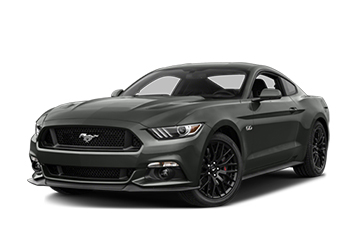
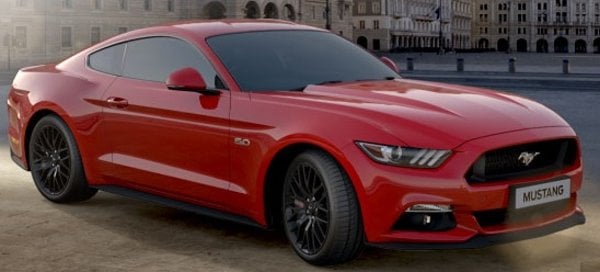
The original Mustang Bullitt car returns with the 2019 model year updated version.

  • All-new special edition Ford Mustang Bullitt™ and Ford Edge ST – Ford’s first SUV to be tuned by the Ford Performance team – star at North American International Auto Show
  • Mustang Bullitt™ is due out this summer in U.S. offering at least 481PS, saluting 1968 movie car with effortlessly cool appearance
  • Original 1968 Mustang GT fastback that starred alongside Steve McQueen in award-winning movie “Bullitt” drives onto Ford NAIAS stage, ending 40-year mystery of its whereabouts
  • All-new Ford Edge ST offers sports styling, 340PS 2.7-litre EcoBoost engine, eight-speed auto gearbox, Sport Mode and class-leading driver assistance tech
  • Ford Ranger pick-up for U.S. revealed, specially engineered to meet U.S. customers’ needs with 2.3-litre EcoBoost petrol engine and 10-speed automatic transmission
Ford Motor Company delivered global debuts for the third-generation, limited-edition Mustang Bullitt™* – celebrating the 50th anniversary of Steve McQueen’s classic film “Bullitt”; and all-new Ford Edge ST – Ford’s first SUV to be tuned by the Ford Performance team, at the 2018 North American International Auto Show (NAIAS).
The new Ford Mustang Bullitt™, due out this summer for Ford customers in the U.S., is powered by an upgraded 5.0-litre V8 engine that will deliver at least 481PS and 569Nm of torque, pushing the new Bullitt™ to a top speed of 163mph.
The original 1968 Mustang GT fastback that starred alongside Steve McQueen in the award-winning movie “Bullitt”, also drove onto the Ford stage at NAIAS, ending a 40-year mystery about the film car’s whereabouts.
Offered only for Ford customers in the U.S., the all-new Edge ST is the first version of the new Edge SUV to be unveiled by Ford. The new Ford Edge will be introduced for customers in Europe later this year in variants including Edge Vignale, ST-Line and Titanium, offering powerful new diesel engines**, sophisticated driver assistance technologies and enhanced styling.
Special Edition Mustang Bullitt™
The all-new Mustang Bullitt™ is equipped with a manual transmission, and the gear shifter features a white cue ball shift knob as a nod to the original. An active valve performance exhaust system is standard, and retuned to give the car a signature burble.
Other standard equipment includes a 12-inch all-digital LCD instrument cluster, identical in function to the cluster introduced on the all-new Mustang that goes on sale across Europe later this year, but with a unique Bullitt™ welcome screen that starts in green with an image of the car rather than the pony.
“This new Bullitt™ is, as Steve McQueen was, effortlessly cool,” said Darrell Behmer, Mustang chief designer. “As a designer, it’s my favourite Mustang – devoid of stripes, spoilers and badges. It doesn’t need to scream about anything – it’s just cool.”
Exterior paint choices are limited to Shadow Black and the classic Dark Highland Green – as worn in the movie. Other features that pay tribute to the car McQueen drove are subtle chrome accents around the grille and front windows, and classic torque thrust 19-inch aluminium wheels. Inside and out, the vehicle uses minimal badging; only the circular faux fuel-filler cap Bullitt™ logo on the rear centre is visible on the exterior.

The Original

Two identical 1968 Mustang GT fastbacks were used in the filming of the hit movie “Bullitt” that debuted in theatres on 17 October 1968. After filming, the cars went their separate ways: the hero vehicle driven by McQueen in the movie was sold by Warner Bros. to a private buyer, and the other – used in many of the jumps during the famous chase scene – was sent to a salvage yard. That jumper vehicle resurfaced in Baja, California, in early 2017, but the other was lost to history. Until now.
Sean Kiernan, owner of the hero vehicle, inherited the car in 2014 from his late father, Robert, who had purchased the vehicle in 1974. To fulfil his family’s lifelong dream, Sean contacted Ford and the two parties worked together to reveal his movie star car alongside the all-new Mustang Bullitt™ at the 2018 North American International Auto Show.
First Ford Performance SUV
The all-new Edge ST features the most powerful V6 engine available in its class, with a specially tuned 2.7-litre twin-turbocharged EcoBoost engine delivering 340PS and 515Nm of torque.
A quick-shifting eight-speed automatic transmission and ST-tuned sport suspension support dynamic handling. A new Sport Mode allows Edge ST drivers to experience more aggressive throttle response and shifting patterns and a more resonant exhaust tone.
“Edge ST puts a new animal on the road – a performance SUV with a track mentality,” said Hau Thai-Tang, executive vice president of Product Development and Purchasing. “From a performance standpoint, and with its SUV silhouette and versatility, it sets a new standard Edge fans will love to drive.”
Edge ST features new front and rear styling, a wide mesh grille for optimal cooling, deep side skirts and dual-exhaust outlets. Unique 21-inch wheels are available and the interior features a redesigned centre console with an all-new rotary gearshift dial that frees up space, allows easier access to the wireless charging pad and enhances the vehicle’s modern, sophisticated feel.

Monday, 29 May 2017

The best selling sports car in the world in 2016 was the Ford Mustang, and sales are growing.
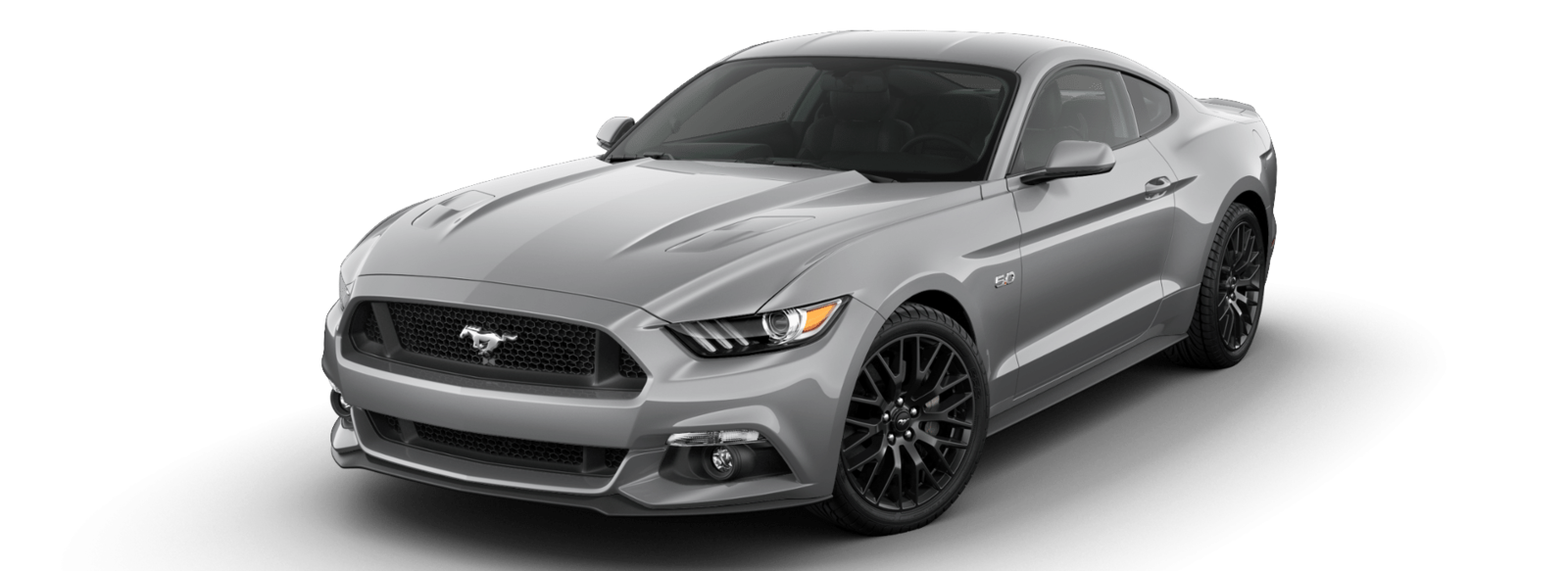
  • Ford Mustang became the best-selling sports car in the world in 2016, according to IHS Markit global automotive registration data, including more than 15,000 orders in Europe
  • Over 4,500 Mustang’s sold in U.K. since 2015 launch
  • Regions including Europe and China fuel global Mustang sales growth in 2016 with global sales up 6 per cent over 2015
  • Mustang is the best-selling sports car in European markets including France, Sweden, Poland, the Czech Republic, Hungary, Romania, Finland and Greece
Ford Mustang has been the best-selling sports car in the U.S. during the past 50 years, and now thanks to growing popularity in Europe and elsewhere, the iconic pony car is the most popular sports car in the world, according to Ford analysis of IHS Markit new vehicle registration data in the sports car segment.
Mustang expanded its sales lead in 2016 as the world’s best-selling sports car, with more than 150,000 Mustangs sold, according to IHS Markit new vehicle registration data. Overall global sales increased 6 per cent over 2015, fuelled by non-U.S. market growth up 101 per cent with almost 45,000 Mustang vehicles sold outside the U.S.
In the first full year of sales in Europe, customers ordered 15,335 Mustangs across the region.* Mustang was the best-selling sports car in European markets including France, Sweden, Poland, the Czech Republic, Hungary, Romania, Finland and Greece.
In the U.K., over 4,500 Mustangs have been sold to date, with over 3,250 of those in 2016 as the Mustang comfortably led the sales tables for sports cars over 250PS, following launch in late 2015.
“From the Arctic Circle to the Mediterranean, the Ford Mustang has topped the sports car sales charts in markets across Europe,” said Roelant de Waard, vice president, Marketing, Sales & Service, Ford of Europe. “European customers continue to play a significant role in the global success of Mustang. The iconic sports car’s popularity with drivers of all ages and backgrounds shows no sign of waning – we sold 3,600 Mustangs in the region during the first three months of 2017.”
Mustang’s ascension to best-selling sports car in the world in 2016 was driven largely by continued global rollout that saw big sales gains in markets including Germany and China, as well as the car’s introduction to smaller territories such as New Caledonia, Gibraltar and Bonaire.
Since launching in China in 2015, Mustang has become the best-selling sports car in the world’s biggest auto market. Mustang sales in 2016 were up 74 per cent over 2015, according to IHS Markit new vehicle registrations.
Mustang – with more than 8.4 million likes – is the most-liked vehicle on Facebook, and is now available in 140 countries across all continents other than Antarctica. The Ford Mustang in Europe is available with Ford’s 421 PS 5.0-litre V8 or 317 PS 2.3‑litre EcoBoost engines, and six-speed manual or automatic transmissions.
Ford recently introduced a new limited run special edition Ford Mustang model, with unique styling and premium specifications for customers in the U.K.
The Ford Mustang Shadow Edition is available with the 5.0-litre V8 engine, six-speed manual, in Race Red and Grabber Blue from £39,895. A unique bodystyling pack includes a black Pony emblem for the GT grille and exclusive black 19-inch Y‑spoke alloy wheels, in addition to a Shaker Pro audio system with SYNC 3 Navigation, climate controlled seats and reverse parking sensors, with optional black contrast roof.

Monday, 15 May 2017

Ford's sporty models attract buyers of a lower age range than the normal models.

  • Buyers of Ford’s sporty Fiesta ST, Focus ST, Focus RS and Fusion Sport models are three to 10 years younger than buyers of non-performance variants of these vehicles; younger customers give automakers a better chance of winning over repeat buyers
  • These younger, performance-hungry customers are also more affluent; the annual income of Fiesta ST and Focus ST customers is approximately 70 percent higher than that of regular Focus and Fiesta variants
  • Ford’s sporty car sales jumped 45 percent for the first quarter of 2017, bucking the trend of the overall U.S. industry that is seeing consumers shift from cars to SUVs
Customers of Ford’s sporty cars are not just young at heart; they’re actually younger on average, and more affluent, according to New Vehicle Customer Study data from MaritzCX.
Nowhere is this trend more evident than with Ford Fiesta ST. While the average age of a new Fiesta buyer is 45 years old, the average age of a Fiesta ST customer is a good 10 years younger. Buyers of Ford Focus follow the same pattern; the average age of a regular Focus buyer is 46, while the Focus RS customer is 41 on average and the Focus ST buyer is 36. Fusion customers are 48 on average, while Fusion Sport buyers are an average 45 years old.
These millennial buyers are important to Ford. Not only are they contributing to a significant increase in sporty car sales – a 45 percent increase for the first three months of the year – younger customers give the automaker a greater chance of winning over repeat buyers.
“With repeat customers making up around half of industry sales, capturing younger buyers while they still have many vehicle purchases remaining in their lives is good for business,” said Corey Holter, Ford car group marketing manager.
Millennial customers arrive at dealerships with money to spend. While household income for the average Fiesta buyer is $59,000, for Fiesta ST, that figure jumps to $102,000. The average Focus buyer has a household income of $63,000, while Focus ST and Focus RS customers show markedly higher household incomes – on average, $108,000 and $169,000, respectively (data for Focus RS is limited and not statistically significant).
And with car segments on the wane industrywide as buyers shift toward SUVs and crossovers, sales of Ford’s hot hatchbacks – Fiesta ST, Focus ST and Focus RS – are continuing to buck the trend, as the company reported late last year.
An interesting side note to this is that all of the performance models are EcoBoost®. In the case of the Fusion, many buyers opt for EcoBoost engines in non-performance vehicles, but even the EcoBoost Mustang has a younger buyer on average (41 years old) compared to non-EcoBoost Mustangs (44 years old).

Wednesday, 8 March 2017

GENEVA - Ford pulls out all the stops at this years Auto Show - and they have some stunning cars.

  • Next-gen Ford Fiesta ST – featuring all-new 200PS, three-cylinder 1.5-litre EcoBoost engine – makes global debut as Ford showcases Ford Performance line-up at Geneva
  • Ford GT ’66 Heritage Edition supercar livery on show for the first time in Europe. Ford GT race car set for return to Le Mans 24 Hours in 2017 following historic victory in 2016
  • European performance car sales including Ford Mustang, Focus RS, Focus ST and Fiesta ST grew 60 per cent to 43,800 last year
  • Ford celebrates connection between motorsports and accessible performance heritage in Geneva with iconic vehicles including 1966 Le Mans-winning Ford GT40
Ford today delivered its most exciting and comprehensive line-up of Ford Performance models ever.
Introducing an all-new 200 PS, three-cylinder 1.5-litre EcoBoost petrol engine that will deliver an unprecedented combination of power and fuel efficiency, the next generation Fiesta ST is developed using the same Ford Performance innovation mindset that delivered the Ford GT ultra-high-performance supercar, on show in Ford GT ’66 Heritage Edition livery for the first time in Europe at the Geneva Show.
Ford’s performance car offering in Europe also includes the Focus ST petrol and diesel models, the acclaimed Focus RS, and the iconic Ford Mustang. 


Ford performance car sales grew a further 14 per cent year-on-year in January, after recording a 60 per cent increase in 2016 – continuing the momentum from 2015 when performance car sales were up 62 per cent.
“Accessible performance is at the heart of what we do at Ford,” said Jim Farley, European chairman and CEO. “From the active aerodynamics of the Ford GT supercar to the Drive Modes of our next generation Fiesta ST, our Ford Performance models are developed using innovation that brings the driving thrill of our race cars to customers on the road.”  
Ford Performance serves as an innovation laboratory and test-bed to create unique performance vehicles, parts, accessories and experiences for customers. This includes developing innovations and technologies in aerodynamics, light-weighting, electronics, powertrain performance and fuel efficiency that can be applied more broadly to Ford products.
Next generation Fiesta ST
The third generation of Fiesta ST will be the first Ford Performance model ever powered by a three-cylinder engine and the first Fiesta ST to feature selectable Drive Modes.
Ford’s all-new 1.5-litre EcoBoost petrol engine will deliver 200PS, 290Nm of torque and anticipated 0-62mph acceleration in 6.7sec, using innovations including a new combination of port fuel injection and direct fuel injection, sophisticated turbocharging, and innovative new cylinder deactivation technology to deliver high power and responsiveness alongside reduced CO2 emissions.*
New Drive Modes will enable engine, steering and stability controls to be configured to Normal, Sport and Track settings for an optimised fun-to-drive experience, and adjust the model’s Electronic Sound Enhancement technology and active exhaust noise control valve to deliver an even more satisfying driving experience by amplifying the naturally sporty sound of the three-cylinder engine.
“Our next generation Fiesta ST is true to the philosophy of delivering cutting-edge technology to enhance every facet of the responsive Ford Performance chassis and powertrain,” said Joe Bakaj, European Product Development vice president. 
“With selectable Drive Modes and an all-new EcoBoost engine delivering an unprecedented combination of performance and fuel-efficiency, the new model will deliver the most versatile fun, engaging and rewarding Fiesta ST driving experience yet.”
The next generation Fiesta ST also will be offered with a greater variety of interior trim and personalisation options than ever before, and will be available in both three-door and five-door bodystyles from early 2018.
Ford GT road and race cars
The Ford GT is shown in limited edition Ford GT ’66 Heritage Edition livery in Geneva. The model honours Ford's 1966 Le Mans victory, offering a Shadow Black exterior in either gloss or matte finish with silver stripes and exposed carbon fibre; Frozen White #2 hood and door graphics; and 20-inch one-piece forged aluminium wheels in a gold satin clearcoat with black lug nuts.
All Ford GT supercars feature a state-of-the-art 10-inch digital instrument display. The customisable screen features text and race-inspired graphics intended to help reduce driver distraction, and automatically reconfigures itself based on five unique Drive Modes: Normal mode, Wet mode, Sport mode, Track mode and V-Max mode.
The Ford GT’s 3.5-litre V6 EcoBoost engine is SAE rated at 647hp and 550lb per ft of torque in U.S. specification. A top speed of 216mph makes the Ford GT the fastest Ford production vehicle on the track ever. The road-going Ford GT – featuring carbon fibre architecture and active aerodynamics – reflects the performance of the 2016 Le Mans 24 Hours-winning Ford Chip Ganassi Racing Ford GT race car, also on display in Geneva.
Ford made an historic return to Le Mans last year, taking victory in the LM GTE Pro class with the Ford GT race car – exactly 50 years after recording a 1-2-3 clean sweep at the 1966 race – and earlier this year announced four Ford GTs will compete at the 2017 Le Mans 24 Hours, June 17-18.
Ford and The LEGO® Group have joined forces to offer the 2016 Ford GT and 1966 Ford GT40 race cars as part of the exclusive LEGO® Speed Champions range of models, featuring iconic high performance road and racing cars.
Ford’s motorsport heritage
Performance and racing are deeply embedded in Ford’s DNA, dating back 116 years when Henry Ford won the Sweepstakes Race with his “999” race car, defeating Alexander Winton – at the time America’s greatest racer.
Ford is showcasing more than five decades of the company’s motorsports and performance history in Geneva with vehicles from the Ford Heritage Collection including:
  • A replica of the 1966 Ford GT40 Mk2 race car – powered by a 7.0-litre V8 engine –  driven to victory by Bruce McLaren and Chris Amon at the 1966 Le Mans 24 Hours
  • A replica of the 1970 London to Mexico World Cup Rally-winning Ford Escort Mk1, rebuilt with a 1.8-litre Ford Cosworth BDA engine delivering approximately 200 PS, and driven to victory in a 1995 re-run of the iconic 1970 rally by the original winning team of Hannu Mikkola and co-driver Gunnar Palm
  • A 1992 Ford Escort RS Cosworth homologated road car version of the Ford Escort World Rally Championship Group A rally car, featuring a 230 PS 2.0-litre turbocharged petrol engine and four-wheel drive
Ford this year also celebrates 50 years since the introduction of the Ford Cosworth DFV (double-four-valve) V8 racing engine that delivered 155 race wins and 12 driver’s titles in Formula 1 racing across 15 years, and two victories at the Le Mans 24 Hours – including for the 1975 Mirage GR8 race car on show in Geneva.
Light, compact and powerful – the all-aluminium, 3.0-litre engine was designed to function as part of a race car’s chassis, featured four valves per cylinder and two camshafts per cylinder bank.
The spirit of innovation that delivered the Ford Cosworth DFV engine is reflected 50 years later in Ford’s EcoBoost engines – from the all-new new three-cylinder 1.5-litre EcoBoost to the twin-turbocharged 3.5-litre V6 EcoBoost engine that powered the Ford GT race car to victory at Le Mans in 2016.  
“Motorsport has always been a driver of innovation at Ford,” said Dave Pericak, Ford Performance global director. “Today, our global Ford Performance team is responsible for developing vehicles from the Ford GT race car to the next generation Fiesta ST. Working as one unified team helps us better deliver our core fun-to-drive experience and democratise sophisticated performance-enhancing features for every customer.”  

Wednesday, 1 February 2017

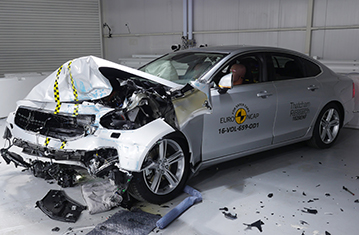
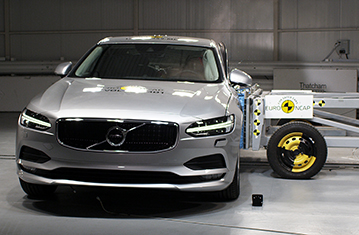
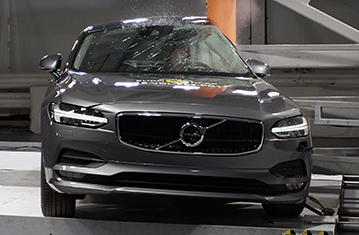
Volvo gets the full five stars as Ford fails miserably with just the two Euro Ncap Stars.

Today, Euro NCAP releases safety ratings for three cars: the Volvo S90 saloon and the V90 estate both achieve the maximum of five stars, while Ford’s Mustang scores two.

Launched last year, the S90 and V90 are the latest additions to the Volvo Cars line-up and the first cars to be tested against Euro NCAP’s 2017 test regime. 

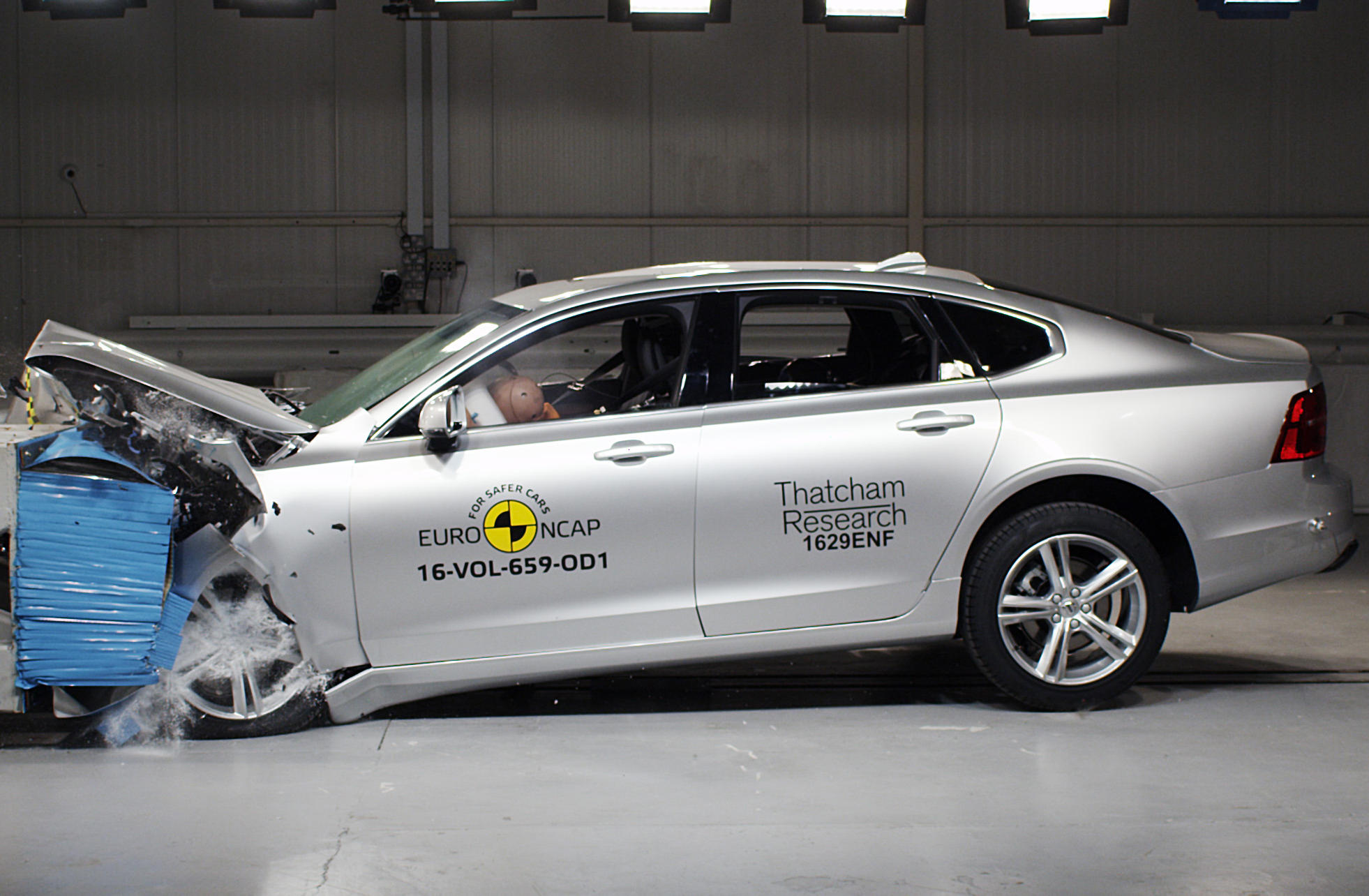
Both models take advantage of the many advanced technologies of the XC90 and made a big impression in all areas of Euro NCAP’s assessment. Standard-fit autonomous emergency braking for cars and pedestrians performed outstandingly well in Euro NCAP’s tests and the vehicles also offer lane and speed assistance.

The S90 and V90 results surpass the best overall score of any model tested last year and now make Euro NCAP’s top-3 best performing cars ever, all Volvo. 

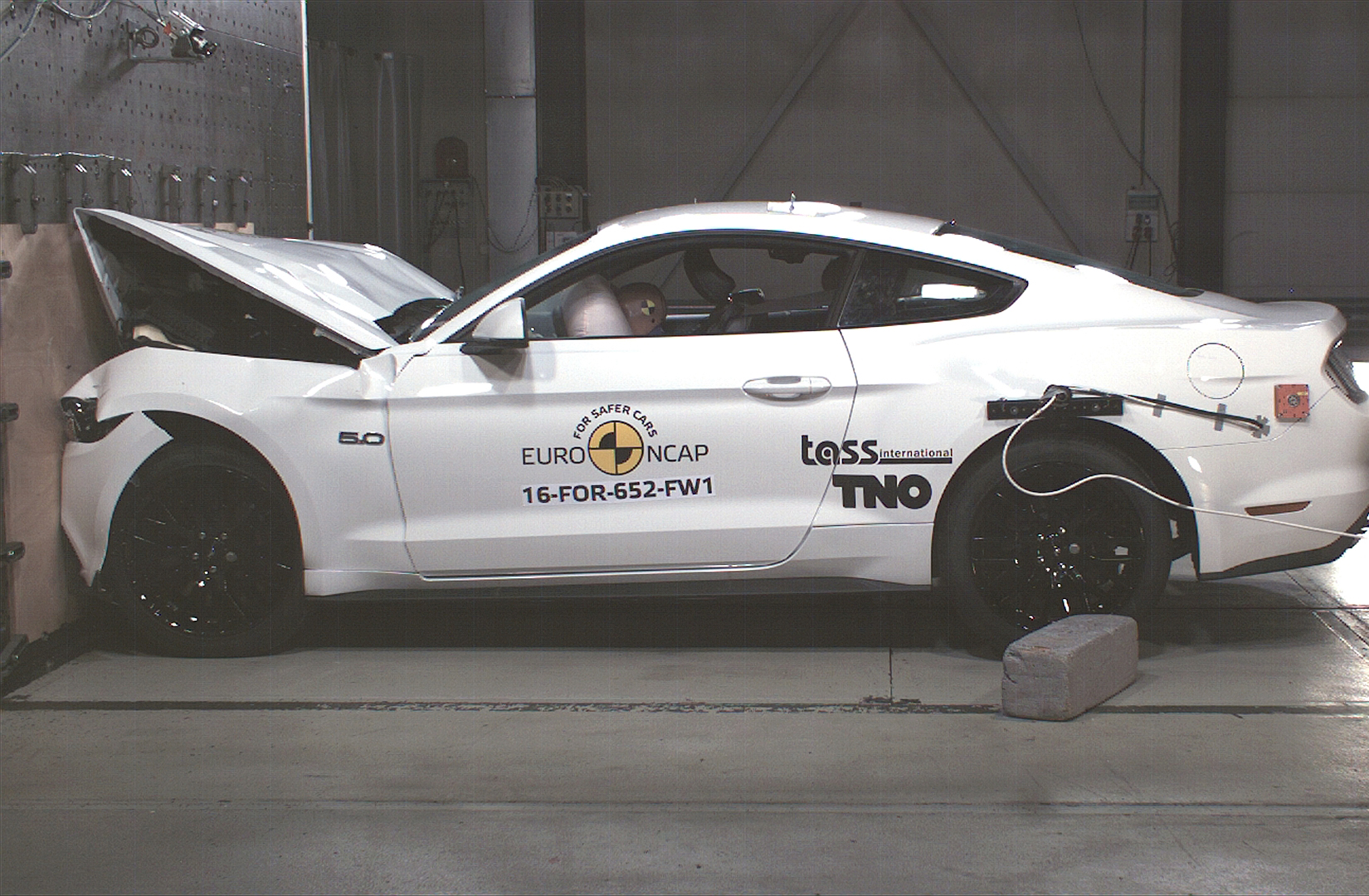
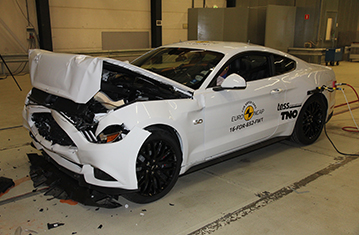
In contrast, Ford’s iconic muscle-car, the Mustang, has scored a two-star rating for overall safety, with concerns about its crash protection of adult and child occupants and a worrying lack of safety equipment commonly available on the European market. The results reveal the American “DNA” of the Mustang that is designed to score well in the less wide-ranging US consumer tests. The European variant has seen only those minor updates required to meet European (pedestrian) safety regulation and the Forward Collision Warning system was removed when it was introduced here.
In the frontal offset test, the airbags of both the driver and passenger inflated insufficiently to properly restrain the occupants. In the full-width frontal test, a lack of rear seatbelt pre-tensioners and load-limiters meant that the rear passenger slid under the seatbelt, implying higher risk at abdominal injuries in real life accidents. In the side impact crash, the head of the 10-year dummy contacted the interior trim bottoming out the curtain airbag

Monday, 30 January 2017

OH DEAR - Ford have been awarded ONLY 2 stars in the latest round of EURO NCAP Tests on the Mustang.

Thatcham Research, the independent automotive research centre, and voice of Euro NCAP in the UK, says that the Ford Mustang bucks the positive trend towards safer cars by not offering similar levels of safety in the UK as in the United States, and advises that there are safer choices as a result of the Two Star Euro NCAP rating it received today.

“We have not given a Two Star Euro NCAP rating to any of the top 10 car brands since 2008”, comments Matthew Avery, Director of Research at Thatcham Research. 
“This really bucks the trend. Car buyers are increasingly benefitting from improved safety functionality and features, and this applies equally to cars in the sports roadster category as to family cars. We have concerns about the Ford Mustang’s crash protection of adults and children which also makes it unsuitable for having rear passengers. On top this, it does not have basic life-saving technology like Autonomous Emergency Braking (AEB) that is available even on the Ford Fiesta, and the recently launched Ford Edge.
“What really concerns me,” continues Avery, “is that Ford has made a deliberate choice. The car has been designed to score well in less wide-ranging US consumer safety tests and only minor updates have been made to meet required European (pedestrian) safety regulations. This has resulted in poor adult and child protection scores and the high-tech radar collision warning system that is available to US consumers, not being available here in the UK. The Two Star Euro NCAP rating is the consequence.”
In the frontal offset test, the airbags of both the driver and passenger inflated insufficiently to properly restrain the occupants. In the full-width frontal test, a lack of rear seatbelt pre-tensioners and load-limiters meant that the rear passenger slid under the seatbelt, implying higher risk at abdominal injuries in real life accidents. In the side impact crash, the head of the 10-year dummy contacted the interior trim bottoming out the curtain airbag.
Ford say that a face-lifted Mustang will be available later this year with Pre-Collision Assist and Lane Keep Assist as standard. Euro NCAP expects to test the safety of this updated model when it is available on the European market.
Other sports roadster cars rated by Euro NCAP over the past few years include the Audi TT, BMW Z4 and Mazda MX-5.
In contrast, the VOLVO S90 and V90 receive Five Star Euro NCAP ratings today as a result of their class leading safety. Both cars follow the trend set with the XC90, with excellent occupant protection, and a full suite of AEB functionality that includes pedestrian and cyclist crash prevention technology as well as its unique AEB system that is capable of identifying large animals. The S90 and V90 results surpass the best overall score of any model tested in 2016, with Euro NCAP’s top-3 best performing cars ever, all now being Volvos.
“Despite being at a different price point to the Volvo XC90, the Volvo S90 and V90 have the same levels of safety as the XC90. It does make you wonder if anything rubbed off on Ford from the VOLVO/Ford partnership,” concludes Avery.
Thatcham Research is the independent voice of automotive safety & repair, advising motorists, insurers and vehicle manufacturers to help reduce accident frequency, severity and costs and to realise the vision of ‘Safer cars, fewer crashes’.
As well as its world leading crash and track research, Thatcham Research tests and accredits crash repair parts, vehicle repair technicians, and a number of other products and services within the collision repair industry for insurers, motor manufacturers, equipment manufacturers and suppliers.
A founder member of the international Research Council for Automobile Repairs (RCAR), Thatcham Research has also been a member of the European New Car Assessment Programme (Euro NCAP) since 2004.