Purpose

I will try my best to provide detailed info on various cars and what is like to live with them, I have already produced a few for Jaguar-car-forums, I will do my best to be unbiased, but it will be hard for some cars. I will re-produce press releases and copy from other motoring news.
Showing posts with label 3rd generation. Show all posts

Sunday, 7 May 2017

Skoda announces that it has produced the 1.5 millionth 3rd generation of its Octavia Hatchback and Estate.

  • Milestone vehicle rolls off the production line at the main plant in Mladá Boleslav
  • More than five million customers have opted for the ‘heart of the brand’ since 1996
  • Over 80,000 third-generation Octavia have been chosen by UK customers
  • The ŠKODA OCTAVIA is one of the most successful model lines in the automotive world
The ‘heart of ŠKODA’ has reached a special milestone: the car manufacturer’s employees at the main plant in Mladá Boleslav have produced the 1.5-millionth third-generation OCTAVIA. 
The comprehensively upgraded new version of the bestseller has continued the model range’s success story since the beginning of February. It impresses with redesigned front and rear sections as well as state-of-the-art solutions in terms of driver assistance systems, infotainment and connectivity. 
Since the first modern OCTAVIA generation was launched 21 years ago, over five million customers around the world have chosen the compact model from the long-established Czech brand. This makes the OCTAVIA model range one of the most successful in the automotive world.
“With the OCTAVIA, the rapid development of our company really gathered pace from 1996,” said Michael Oeljeklaus, Board Member for Production and Logistics. 
“It has been an important pillar of the ŠKODA portfolio for over two decades. With the third generation of our bestseller, we have seamlessly built on the success story of the first two editions. Much of the credit for the success of the OCTAVIA and the ŠKODA brand goes to our motivated and highly skilled workforce, which now has 1.5 million reasons to be proud of its achievements,” added Oeljeklaus.
With more than five million units sold, the ŠKODA OCTAVIA is the Czech car manufacturer’s bestselling model. The first generation alone, which rolled off the production line from 1996 until the end of November 2010, won over more than 1.4 million buyers. 
The second-generation OCTAVIA continued the success of its predecessor: between 2004 and 2013, ŠKODA sold a total of 2.5 million vehicles. The third generation of the OCTAVIA, which is considered to be the cornerstone of ŠKODA’s model range, has been in production since November 2012; its one millionth vehicle left the production halls in Mladá Boleslav at the end of March 2016. 
In total, almost 1.4 million vehicles from the third generation were produced by the end of 2016. Production of the comprehensively upgraded OCTAVIA commenced at the beginning of February 2017. ŠKODA makes the compact model at its main plant in the Czech Republic as well as in China, India, Russia, Ukraine and Kazakhstan.
ŠKODA offers the comprehensively upgraded third-generation OCTAVIA as a hatchback and an estate. With its redesigned front and rear sections, streamlined body and wider track, it comes across as even more dynamic than before. 
The new version of the compact model impresses with proven strengths and sets new standards in its segment in terms of the amount of interior space, functionality, technology for safety as well as comfort, and value for money. Customers have a choice of four trim levels: Active, Ambition, Style and L&K. 
Furthermore, they can also choose Scout and RS versions. The engine portfolio comprises state-of-the-art petrol and diesel units with power outputs ranging from 63 kW (86 PS) to 180 kW (245 PS). Depending on the engine version, the ŠKODA OCTAVIA is also available with advanced direct-shift transmission (DSG) and all-wheel drive.

Saturday, 11 March 2017

The Third generation Fiesta ST, comes with Ecoboost engines and a power boost.

  • Ford Performance delivers global public debut of Ford Fiesta ST – powered by an all-new 200 PS, three-cylinder, 1.5‑litre EcoBoost engine – at the Geneva Show
  • First three-cylinder Ford Performance model features Drive Modes adjusting engine, steering, stability controls and even exhaust sound for optimised driving fun in any scenario
  • Electronic Sound Enhancement and active exhaust valve amplify sporty sound of three-cylinder engine that also features cylinder deactivation for further reduced CO2*
  • Enhanced range of personalisation options and technology includes new styling packs, SYNC 3 connectivity with eight-inch touchscreen and B&O Play high-end audio
Ford Performance today reveals the next-generation Ford Fiesta ST at its 2017 Geneva Motor Show global debut.
Powered by an all-new three-cylinder, 1.5-litre EcoBoost engine, the next generation Fiesta ST will deliver 200PS, 290Nm of torque and anticipated 0-62mph acceleration in 6.7sec.
The third generation Fiesta ST will be the first Ford Performance model ever powered by a three-cylinder engine, and will be the first Fiesta ST to feature selectable Drive Modes – enabling engine, steering and stability controls to be configured to Normal, Sport and Track settings for an optimised fun-to-drive experience in conditions from motorways to track days.

Drive Modes will also adjust Fiesta ST’s Electronic Sound Enhancement (ESE) technology and active exhaust noise control valve to deliver an even more satisfying driving experience. 
The technologies amplify the naturally sporty sound of the new 1.5-litre EcoBoost engine that also features Ford’s industry-first cylinder deactivation system for a three-cylinder engine, for further reduced CO2 emissions of an anticipated 114g/km.*
Available from launch in early 2018 in both three-door and five-door bodystyles, the next generation Fiesta ST will be offered with a greater variety of interior trim and personalisation options than ever before, with bold and distinctive exterior styling that includes a unique race-car-inspired mesh grille and exclusive 18-inch alloy wheels.
“Our next generation Fiesta ST is true to the philosophy of delivering cutting-edge technology to enhance every facet of the responsive Ford Performance chassis and powertrain,” said Joe Bakaj, European Product Development vice president. 
“With selectable Drive Modes and an all-new EcoBoost engine delivering an unprecedented combination of performance and fuel efficiency, the new model will deliver the most versatile, fun, engaging and rewarding Fiesta ST driving experience yet.”
All-new 1.5-litre EcoBoost engine
Part of Ford’s EcoBoost range of petrol engines that also includes the multi-award-winning 1.0‑litre EcoBoost, the all-new 1.5-litre EcoBoost engine uses technology including turbocharging, high-pressure fuel injection and Twin-independent Variable Cam Timing to deliver optimised performance and fuel efficiency.
The engine’s three-cylinder architecture delivers naturally high torque at low rpm. Performance is further boosted by a new turbocharger that uses an optimised turbine design to build boost pressure faster and minimise lag for a more responsive and fun driving experience.
A new combination of port fuel injection and direct fuel injection technology helps deliver high power and responsiveness alongside reduced CO2 emissions,* with a particular increase in fuel efficiency under light engine loads.
Ford’s new cylinder deactivation technology – first announced for the 1.0-litre EcoBoost engine and a world first for a three-cylinder engine – will further improve fuel efficiency for Fiesta ST customers without affecting performance by automatically stopping fuel delivery and valve operation for one of the engine’s cylinders in conditions where full capacity is not needed, such as when coasting or cruising with light demand on the engine. The technology can disengage or re-engage one cylinder in 14 milliseconds – 20 times faster than the blink of an eye – to seamlessly deliver full performance on demand.
The all-aluminium engine also features an integrated exhaust manifold that improves efficiency by helping the engine reach optimal temperatures faster, and delivers torque more rapidly by minimising the distance exhaust gasses travel between cylinders and turbocharger. Gas particulate filter technology that reduces soot emissions will also feature.
New Drive Modes
Selectable Drive Modes add even more versatility for the next generation Fiesta ST, enabling drivers to optimise the driving experience to suit scenarios from school run to the race track:
  • In Normal mode, engine mapping, traction control, electronic stability control (ESC), ESE, exhaust sound and electronic power assisted steering (EPAS) are configured to deliver natural responsiveness and a connected feel
  • In Sport mode, engine mapping and throttle pedal response are sharpened, and EPAS settings adjusted to deliver more feedback and finer control for fast road driving. The active noise control valve opens and ESE is adjusted to intensify the sporty exhaust note and engine noise within the cabin
  • In Track mode, all vehicle dynamics features are tuned for the fastest possible lap times, traction control is disabled and ESC interventions are set to wide-slip mode for hard circuit driving
The agile and responsive Ford Performance-tuned chassis will be supported by enhanced Torque Vectoring Control technology that improves road holding and reduces understeer by applying brake force to the inside front wheel when cornering. Three-mode ESC will enable drivers to choose between full system intervention; wide-slip mode with limited intervention and full system de-activation.
Greater personalisation
The next-generation Fiesta ST will offer more personalisation options than ever before. Customers will be able to choose from a range of trim elements for the gear lever, steering wheel, door pulls and decorative dashboard spear, and select from distinctive styling packs.
The ergonomic Fiesta ST interior will feature supportive Recaro seats and a flat-bottomed steering wheel. Exterior colour options will include new Performance Blue and the Fiesta ST will feature exclusive 18-inch alloy wheels.
“Our ST models are designed to make a Ford Performance driving experience accessible to customers regardless of lifestyle,” said Matthias Tonn, Fiesta ST chief programme engineer. “With three- and five-door bodystyles and distinctive styling options that complement the model’s performance characteristics available from day-one, the next generation Fiesta ST will deliver a broader appeal for an even wider range of car-buyers.”
Ford’s SYNC 3 communications and entertainment system will enable Fiesta ST drivers to control audio, navigation and connected smartphones using simple, conversational voice commands. Compatible with Apple CarPlay and Android Auto™, SYNC 3 is supported by floating, tablet-inspired touchscreens up to 8-inches that can be operated using pinch and swipe gestures.
The next generation Fiesta ST also will be offered with a high quality B&O PLAY Sound System for a high-end audio experience – among features already announced for the next generation Fiesta.
Ford Performance
The Ford Performance global organisation serves as an innovation laboratory and test-bed to create unique performance vehicles, parts, accessories and experiences for customers.
This includes developing innovations and technologies in aerodynamics, light-weighting, electronics, powertrain performance and fuel efficiency that can be applied more broadly to Ford’s product portfolio.
“Next generation Fiesta ST customers will benefit from innovations developed by Ford Performance for the Ford GT supercar and Focus RS hot hatchback, including high power EcoBoost and Drive Mode technologies,” said Dave Pericak, Ford Performance global director. 
“Working as one unified Ford Performance team helps us better deliver our core fun-to-drive experience and democratise sophisticated performance-enhancing features for every customer.”

Thursday, 5 January 2017

The brighter more Jazzy, Honda Jazz shows that brght colours make for a happier driver.

  • Latest Honda colours brighten your life, but bold shades add more than flair
  • Orange and yellow cars are among the safest on the road
  • Bright cars statistically less likely to be in an accident
  • Strong hues also give moods a lift, especially in Winter
We all need a little sunshine in our lives, especially as the days grow shorter and the nights get longer and darker.
And that’s why brightly coloured cars such as the new Honda Jazz could make all the difference between a good day and a bad one – in more ways than one.
The Honda Jazz is already one of the warmest and most cheerful cars on the road, thanks to its strong character, high levels of owner satisfaction and rewarding driving dynamics, but drivers who choose colours such as the model’s bold Sunset Orange and Attract Yellow Pearl are likelier to be happier – and safer – than most.
Psychologists have shown a strong link between colour and personality, with hues such as orange and yellow most popular with extroverts and satisfied people. According to the psychology website  www.verywell.com* orange is a colour that brings to mind feelings of excitement, enthusiasm, and warmth, while yellow is cheery and also warm. According to the site’s expert psychologists, yellow can also increase the metabolism, making it the perfect choice of cars for those looking to shed a few pounds ahead of Christmas.
But it’s not only in terms of mood and cheerfulness that owners of brighter cars are better off, with studies outlining some very clear safety benefits.
In the biggest ever global insight into the relationship between accident rates and car colours, a report from Australia’s Monash University, Melbourne, found that orange cars were statistically least likely to be involved in an accident, with other light or bright shades such as yellow, white and silver also faring well. Black and grey cars, conversely, were considered less safe, with experts putting the higher accident rate down to the cars being less visible, especially in poor weather or low light.
Phil Webb, Head of Cars at Honda UK, commented: “The third generation Jazz is a car that already gives its owners a feeling of warmth and wellbeing, but colours such as Sunset Orange and Attract Yellow Pearl add more than just character. They’re statistically safer, much more visible on darker days, and they help lift the moods of everyone around them – another part of the Drive Happy culture that defines Jazz’s DNA.“
The colour isn’t the only thing about the Jazz that will brighten your day, either, with prices for the award-winning subcompact hatch starting at just £13,645 on-the-road, or with PCP packages from only £169 a month.

Monday, 21 March 2016

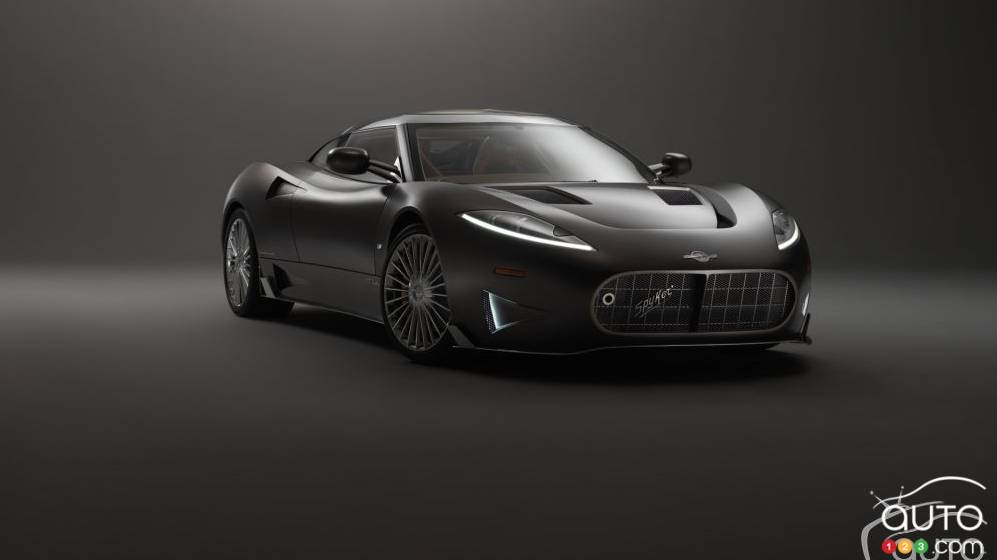
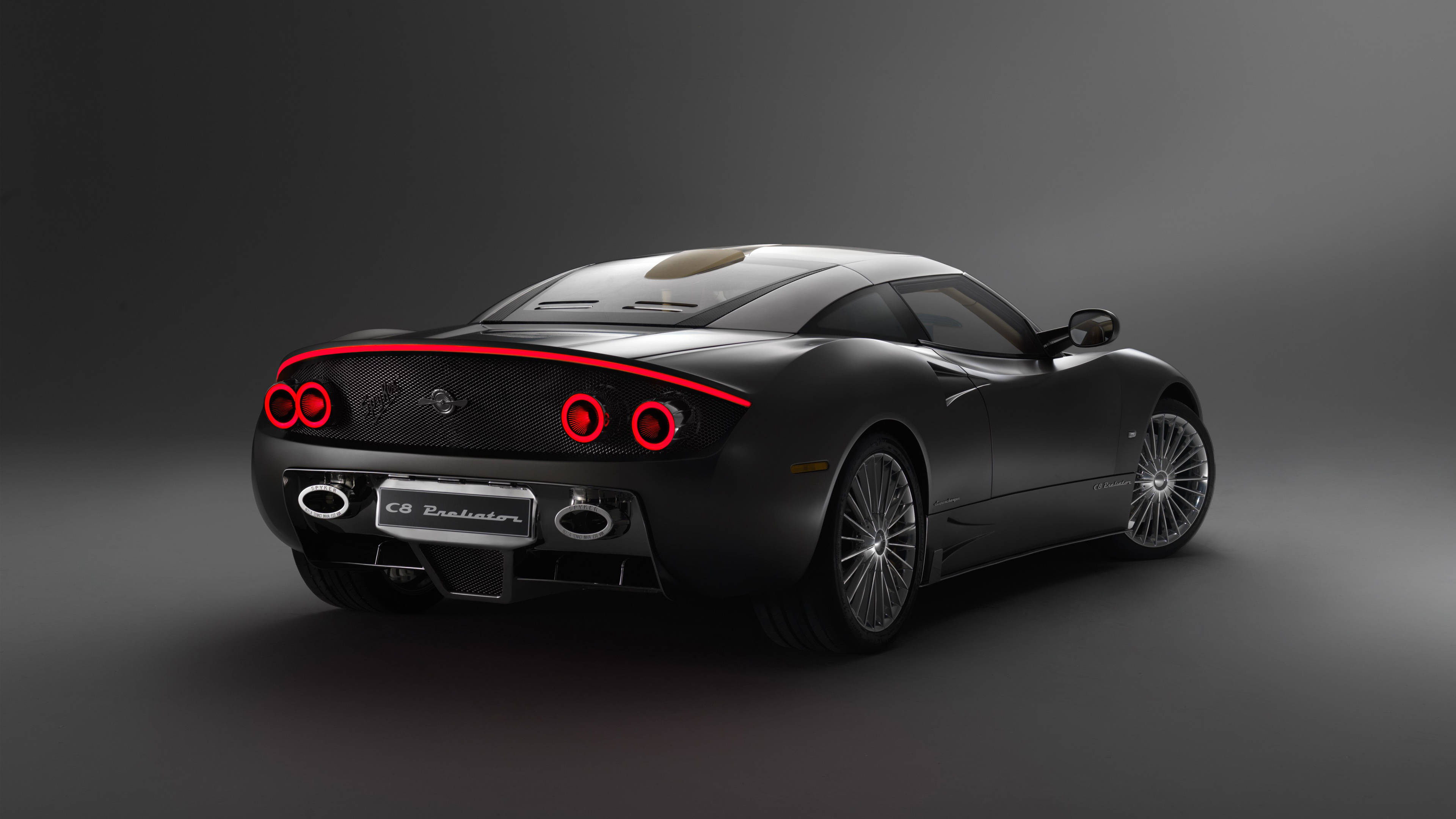
Spyker returns to the New York International Auto Show with the third generation Preliator Limited Edition.

Spyker, a creator of meticulously hand-built sports cars since 2000, will return to the 2016 New York International Automobile Show joining a list of other exotic supercars on display such as the Koenigsegg One:1 and the Koenigsegg Regera. 
The third-generation Spyker C8 Preliator will make its North American debut at the New York Auto Show on Thursday, March 24. Spyker will produce a mere 50 units worldwide. 

"We are delighted to be back at the New York International Automobile Show to unveil the new Spyker C8 Preliator in one of our most important markets," said Victor R. Muller, Spyker's Founder and Chief Executive Officer. "Historically, Spyker has sold half of its production in the US, with a very large number of cars sold through the company's first US dealer, Manhattan Motor Cars". 
The "Preliator" name, which means "fighter" or "warrior" in Latin, pays tribute to the company's aviation heritage: "Fighters" are warplanes as made by Spyker between 1914 and 1918. But even more so, "Preliator" symbolizes the uphill battles Spyker faced and won in the past couple of years. By mounting a supercharger to the Audi V8 engine, Spyker has improved the performance of the C8 Preliator significantly as compared to its predecessor. 
The Spyker C8 Preliator is made for discerning owners who appreciate the attention to detail and bespoke features that Spyker has offered them for over a decade and a half now.

Sunday, 30 March 2014

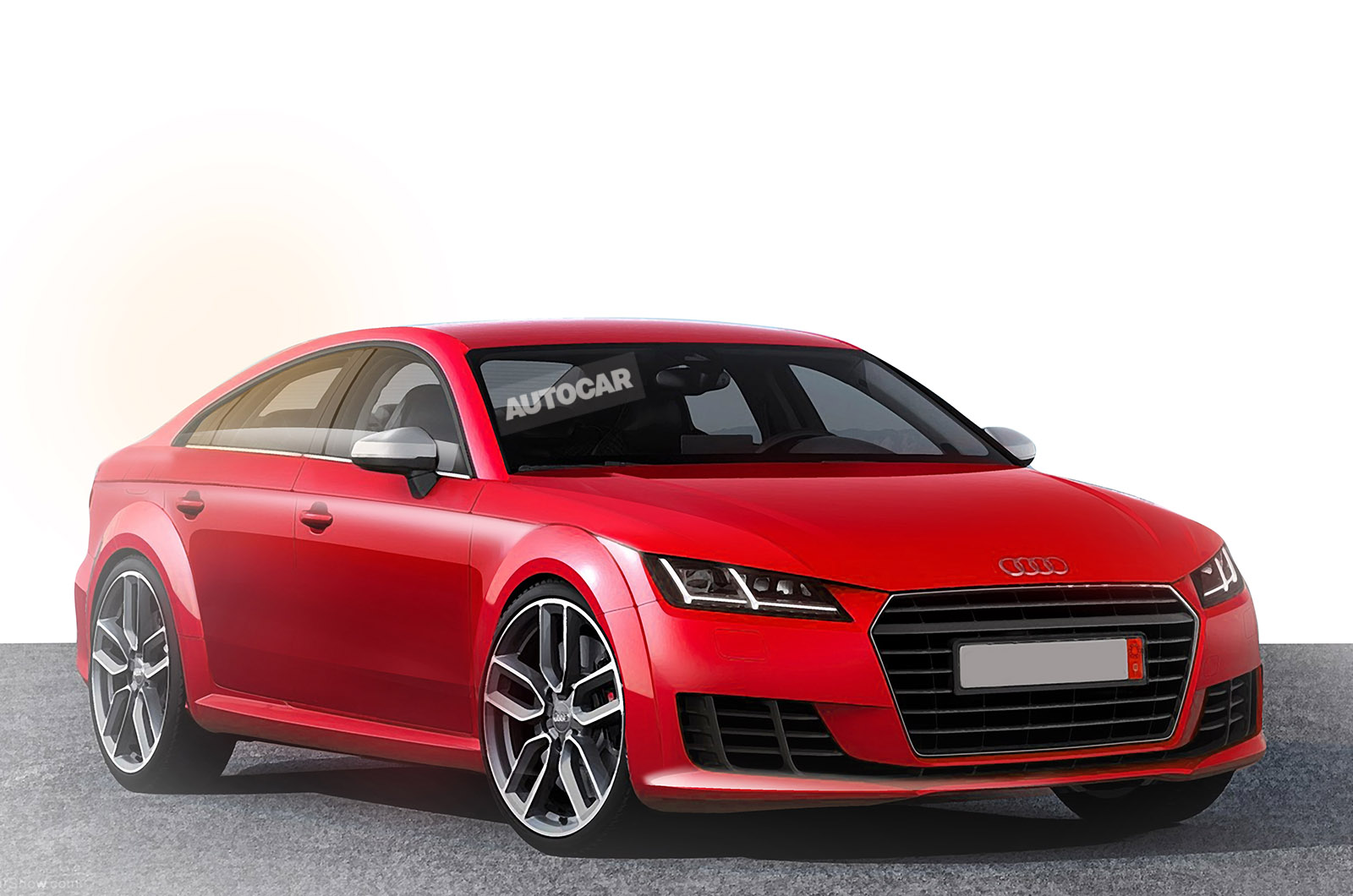
Audi's new TT line-up could be expanded to include the launch of a 'family car'.

According to Audi technical chief Ulrich Hackenberg, the company is “working on future derivatives of the TT” in addition to the established coupé and roadster versions. “We are looking to see if there is more we can do,” Hackenberg said. “Could the TT be extended as a family car?”
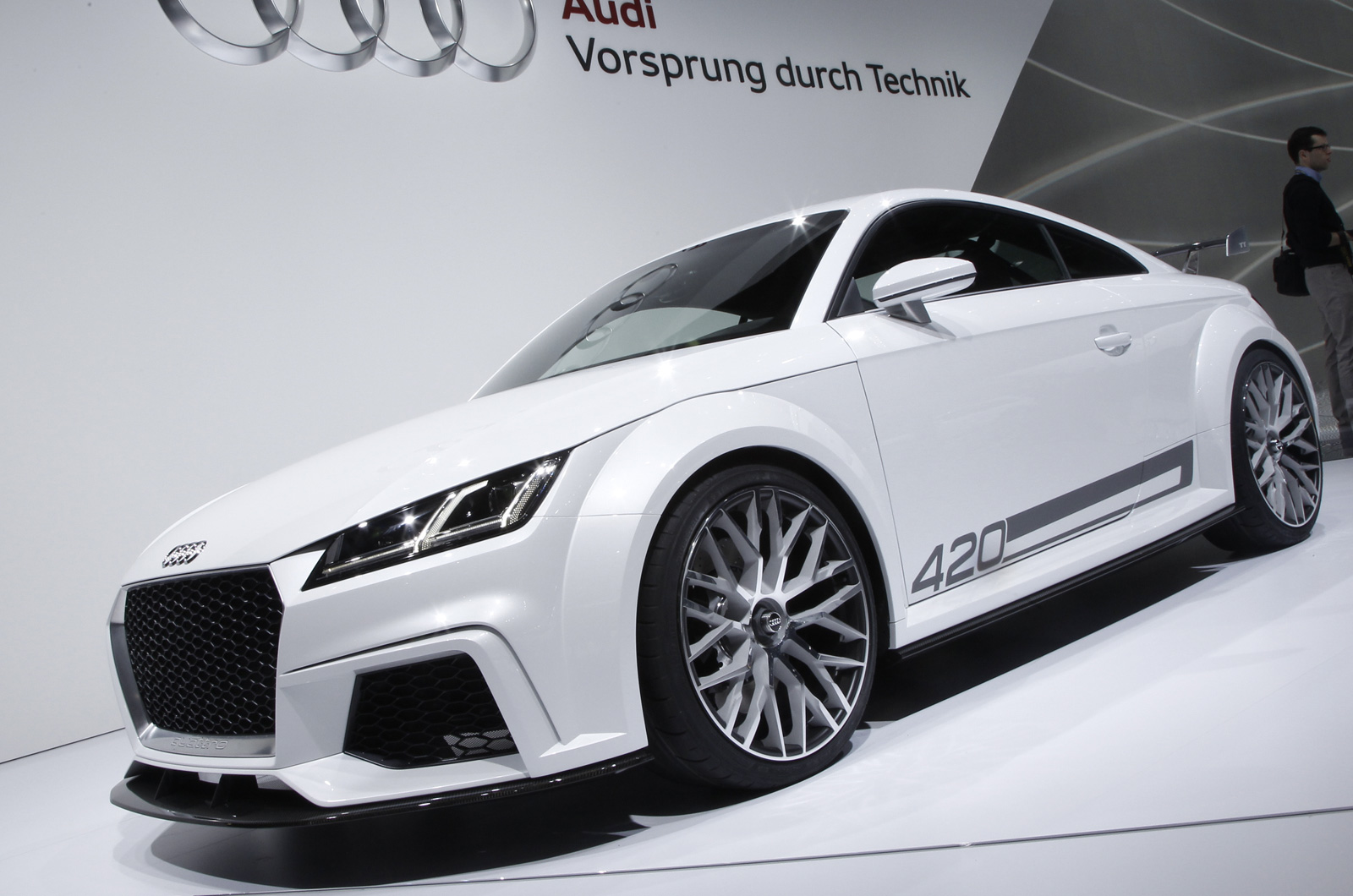
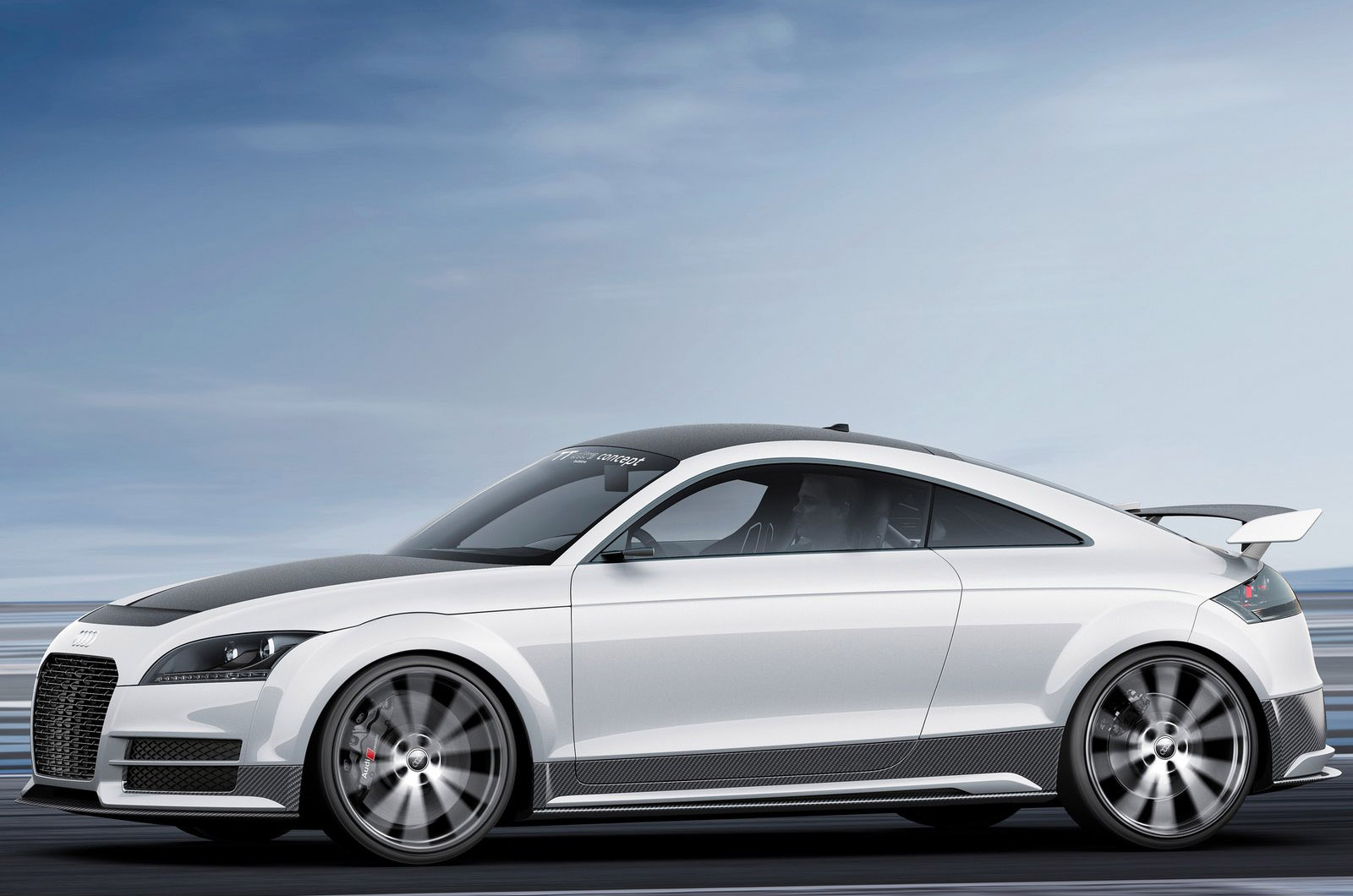
Audi has already shown two high-performance TT-based concepts - the TT Ultra and 414bhp TT Quattro Sport - in the past 12 months. It has also had a second stab at a TT shooting brake, unveiling a concept based on the recently revealed third-generation TT.


It’s thought that Audi’s decision has been triggered partly by a plan to move from today’s 49-model line-up to 60 models over the medium term. The TT has become a highly potent sub-brand thanks to its status as a design icon. But despite its high profile and a relatively affordable starting price of £25,000, the TT sold just 18,353 units last year (down from 21,880 in 2012) - a tiny fraction of the 1.6 million cars that Audi sold globally in the same period. 
Sales of coupés in general are suffering in today’s market. According to figures from automotive analyst JATO Dynamics, coupé sales fell by 31 per cent in Europe last year, making it the worst-performing segment. Premium coupé sales were also down by 21 per cent.

By contrast, sales of cars in compact premium sector rose by 24 per cent in Europe last year, second only to small SUVs and crossovers in the major market niches. 
Global sales of the Audi A3 jumped from 164,666 in 2012 to 221,097 last year, while sales of the Q3 compact SUV jumped from 106,466 to 152,163 over the same period.
These shifts in the new car market make it clear that the biggest opportunities for more mainstream derivatives of the TT lie in the compact premium sectors. A compact saloon or fastback to compete with the Mercedes-Benz CLA would be the most logical immediate extension of the TT family. 
The biggest question for the Audi board is whether a compact TT saloon would work based on the new A3 saloon’s MQB platform, rather than on a stretched version of the coupé’s expensive steel and aluminium hybrid architecture. The former platform would be essential if Audi wants to build a direct CLA rival.

Audi is running to catch up with the CLA, which has proved to be a smash hit, especially among the affluent under-40s new car buyers so sought after by premium car makers. Indeed, Scott Keogh, president of Audi US, said the market for entry-level luxury cars will “increase by 400 per cent” between now and 2020. 
Audi has commissioned a series of celebrity-endorsed advertisments in the US for the launch of the A3. Additionally, a 64-page guide to holding parties to attract ‘cool, young and urban’ customers was sent to Audi’s 280 US dealers.

The manufacturer wants to see the A3 being marketed to new car buyers aged from their mid 20s to early 40s. If it can get a firm foothold in this booming segment, a TT-inspired follow-up would be a huge help to Audi in the US.
The TT family so far
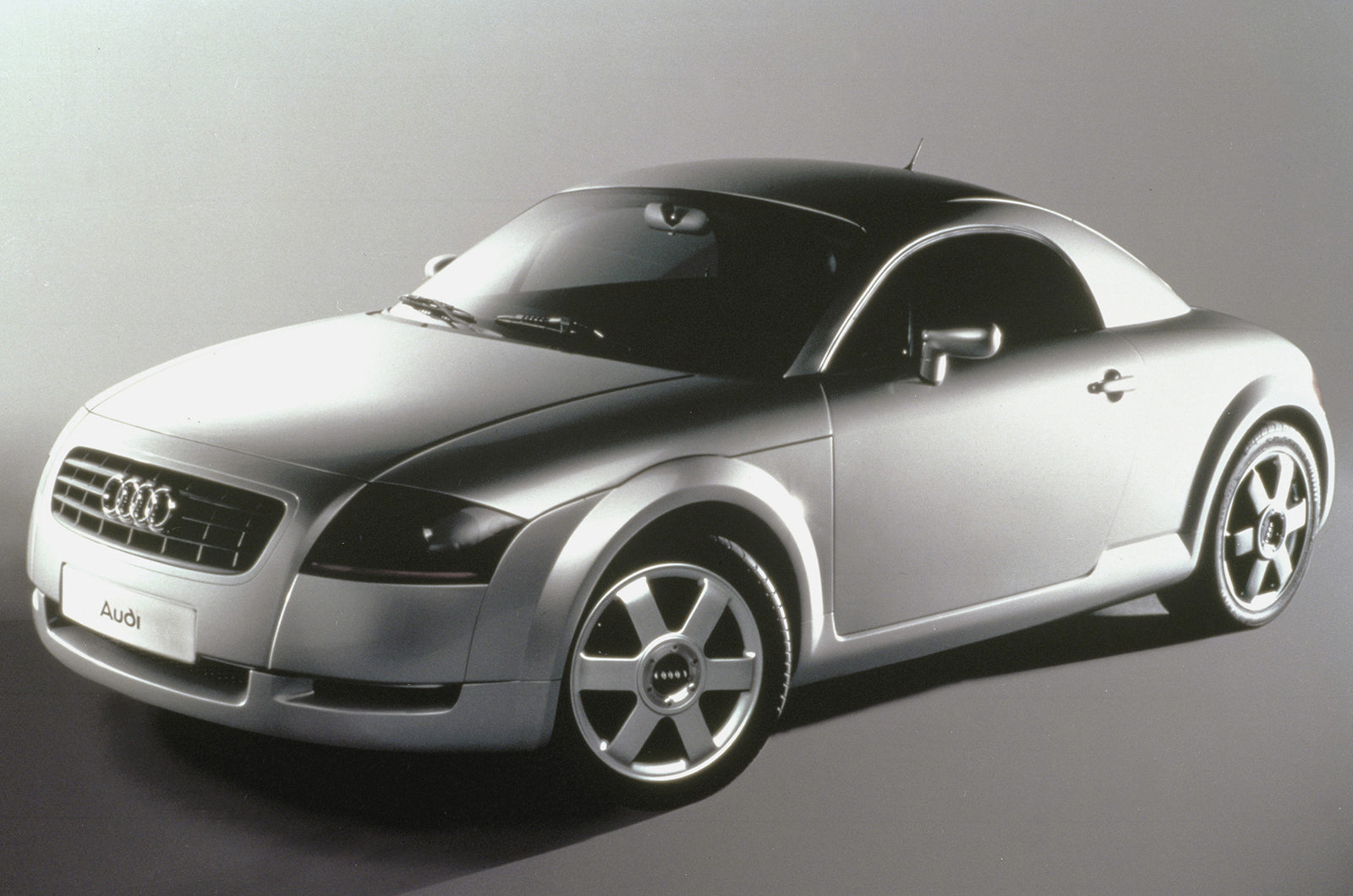
  • 1995 TT concept

The original TT concept was commissioned by Ulrich Hackenberg and realised in four weeks by J Mays and Freeman Thomas.

  • 2005 TT Shooting Brake

The second-generation TT — based on a sophisticated hybrid steel and aluminium platform — was previewed by the 2005 Shooting Brake.  

  • 2013 TT Ultra Quattro

The Ultra Quattro concept was 283kg lighter than the stock Mk2 TT thanks to the extensive use of carbonfibre in the structure.

  • 2014 TT Shooting Brake

Audi repeated its Shooting Brake concept trick early this year. This incarnation heralded the arrival of the third-generation TT.

  • 2014 TT Quattro Sport

Mk3 TT-based concept featuring a 414bhp 2.0-litre TFSI engine, giving a power-to-weight ratio of 308bhp per tonne. 

REPORT HERE

Thursday, 20 February 2014

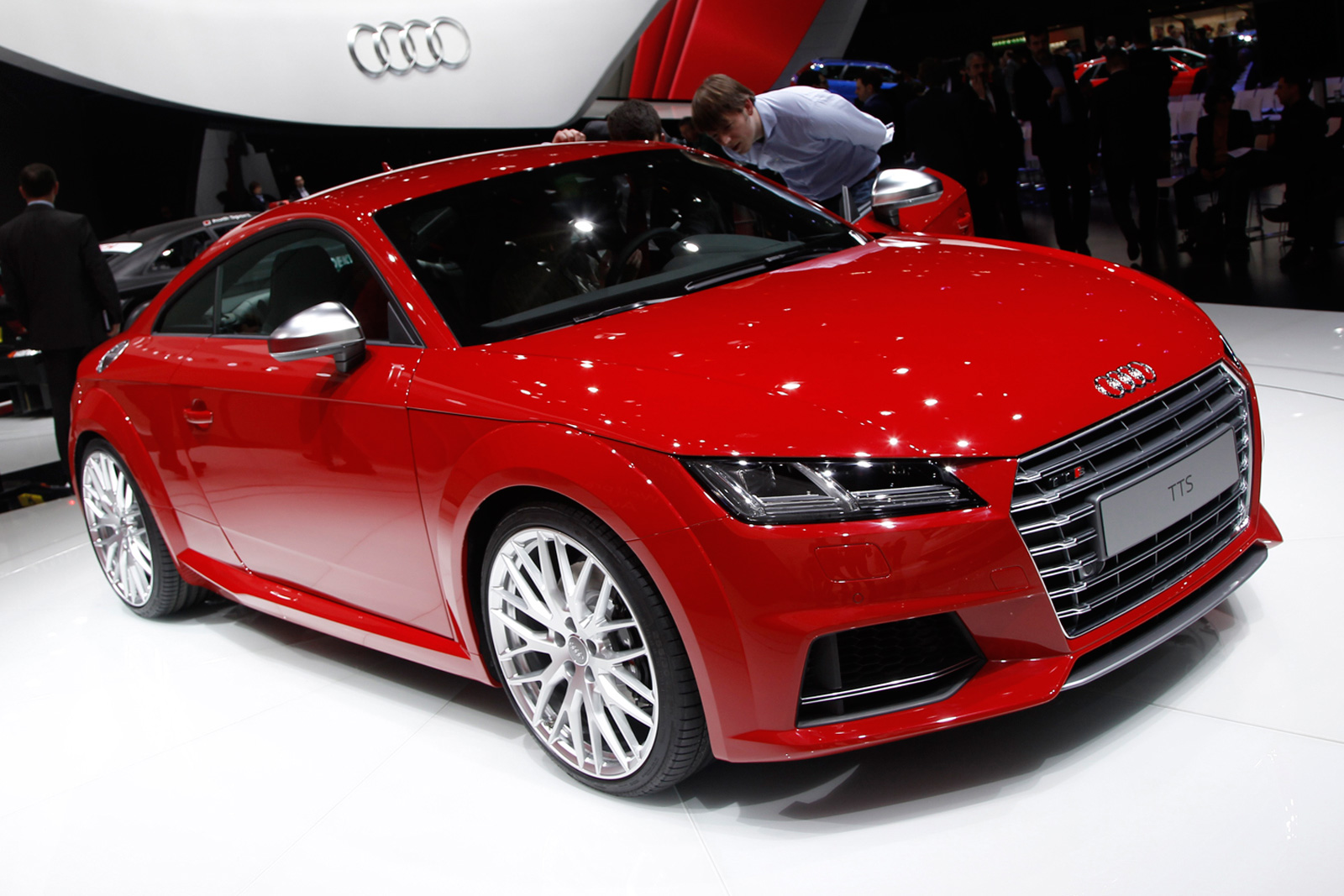
The 3rd Generation AUDI TT to shine at Geneva.

A new take on one of the most iconic Audi models in recent years will be unveiled next month.

  • Debut at Salon de L’Automobile Geneva, March 6-16 2014
  • Audi Press Conference on Press Day, March 4 at 9am CET
  • Design line reminiscent of the first model generation
  • Audi virtual cockpit and Matrix LED headlights are the technical highlights
  • Interior design with focused, minimalist styling

At next month’s Geneva Motor Show Audi will pull the wraps from a completely new iteration of the compact sports car that tore up the rulebook and changed the course of design in its class at its 1998 launch. For the third generation of the iconic TT, the designers have reinterpreted a host of ideas from that first, game-changing template.
The front end of the new Audi TT has dominant horizontals. The Singleframe grille is broad and flat. Two contours form a V-pattern over the bonnet. The position of the four rings is also new - they now sit centrally on the hood, echoing the R8.
Struts divide up the large air inlets. The headlights repeat this motif – they are structured with divider struts acting as reflectors for the daytime running light. Audi can supply the headlights as an option with LED technology or its pioneering Matrix LED technology, where controllable individual light-emitting diodes generate the main beam.

Many details of the new Coupé’s profile are reminiscent of the first generation’s classic design. The sill contour forms a powerful light edge and the wide wheel arches constitute distinct geometrical entities. At the front, the wheel arch intersects the bonnet join, which continues over the door as the tornado line and extends all the way to the rear. The flat greenhouse looks like an entity in its own right. The shape of the C-pillar, with a slight kink, gives the TT a powerful, athletic look and enhances the impression of tension.


At the rear, too, horizontal lines reinforce the wide and focused impression. The struts in the rear lights pick up on the headlights’ motif. They remain permanently on – another Audi innovation. The third brake light with a flat strip shape links the two units on either side. All engine versions have two large, round exhaust tailpipes in the diffuser. Like all Audi S models, the TTS features four tailpipes.


Inside, too, the styling is so light it almost seems to float, evoking the clean sports car character of the new Audi TT. The centre console and door trims have flowing, matching shapes. Seen from above, the dashboard resembles the wing of an aircraft. The round air vents, a classic TT feature, have a turbine-like look and incorporate the air conditioning controls. This solution – and the elimination of the central MMI monitor, now replaced by the Audi virtual cockpit – paves the way for the dashboard’s remarkably slim architecture.

Sharper lines and a more dramatic interplay between surfaces will be particularly notable features of the third generation of the Audi TT, but they only scratch the surface  of a pedigree sports car that has been systematically refined in every department, both inside and out.

Monday, 18 November 2013

More new MINI release info and picturers.

•  New edition of the premium small car segment original; new MINI with hallmark emotional design, further optimised balance between driving fun and fuel consumption, innovative networking technology and clever functionality; significant advances in the areas of spatial comfort, safety, equipment, quality of material and finish as well as sporty flair and ride comfort as the result of consistently and extensively refined product substance; new model generation now more than ever before the benchmark for driving fun, premium quality and individual flair within its competitive environment.


•  Exterior design refined on an evolutionary basis with hallmark styling, proportions and body structure; characteristic design features such as hexagonal radiator grille, headlamps and rear light clusters with wide chrome surround, turn indicator element and peripheral body surround in black reinterpreted and given additional emphasis due to the surface design in each specific area; high-end details underscore the sophisticated nature of the new model; five exterior paint finishes, roof in contrasting colour available as an option at no extra charge.
•  Newly designed headlamps; daytime driving light; optional: LED headlamps including daytime driving ring with integrated direction indicator, adaptive light distribution and LED fog lamps; rear lights also optionally available in LED technology, optional lighting package with LED interior lights and orange-coloured ambient lighting.
•  Vehicle length increased by 98 millimetres, width by 44 millimetres, height by 7 millimetres, also longer wheelbase (+ 28 millimetres) and larger track width (front + 42 millimetres, rear + 34 millimetres) as compared to the predecessor model (differential figures relate to MINI Cooper); optimised spatial comfort on all four seats; new seat design with larger adjustment range at front and longer seat surface at rear (+ 23 millimetres); more shoulder room and foot space as well as increased comfort for rear passengers; luggage compartment volume increased by 51 litres to 211 litres; rear backrest foldable with 60 : 40 split; optional storage package including luggage compartment floor which can be locked into place at varying points.
•  New generation of engines with MINI TwinPower Turbo Technology; three model variants available as of market launch: MINI Cooper with 100 kW/136 bhp 3-cylinder engine, MINI Cooper S with 141 kW/192 bhp 4-cylinder petrol engine and MINI Cooper D with 3-cylinder diesel engine (85 kW/116 bhp); 6-speed manual transmission as standard, with optional 6-speed automatic transmission or sports automatic transmission, also newly developed; extensive MINIMALISM technology including automatic engine start/stop function likewise in conjunction with automatic transmission and optional GREEN mode; improved driving performance figures and reduced fuel consumption; biggest efficiency advance in the MINI Cooper with automatic transmission: acceleration from zero to 100 km/h 2.6 seconds faster, average fuel consumption 27 per cent lower; lowest fuel consumption and CO2 levels in the MINI Cooper D: 3.5 – 3.6 litres/100 km, 92 – 95 g/km (EU test cycle figures, dependent on tyre format selected).
•  Intensification of the typical MINI go-kart feeling with extensively revised suspension technology, reduced weight and increased rigidity; new single-joint spring strut axle with aluminium swivel bearing and also axle supports and wishbones made of high-strength steel; new multilink rear axle also in optimised lightweight construction and space-saving geometry; refined electromechanical power steering now with Servotronic as standard; Dynamic Stability Control (DSC) as standard including Dynamic Traction Control (DTC) and Electronic Differential Lock Control (EDLC), in the MINI Cooper S also including Performance Control; new spring and damper set-up with triple-path support bearings; Dynamic Damper Control optionally available for the first time in MINI; refined brake system, adapted to increased driving performance; light alloy wheels in 15-inch or 16-inch (MINI Cooper S) format as standard; light allow wheels optionally available up to 18 inches.
•  Variable vehicle set-up using the new Driving Modes option by means of rotary switch at the base of the gearshift or selector lever; in addition to the standard setting MID mode, the modes SPORT and GREEN can be activated; choice of mode influences the characteristic curve of the accelerator and steering, as well as the shift times of the automatic transmission and the Dynamic Damper Control where these features are fitted; GREEN mode in conjunction with automatic transmission enables coasting with decoupled drivetrain.
•  New display and operating concept: instrument cluster on the steering column showing road speed and engine speed, colour display for vehicle status details and fuel level; central instrument with new display elements and coloured lighting configuration including LED ring for visual feedback in response to numerous operating functions, 4-line TFT display as standard or optional colour display up to 8.8 inches in size; operation of navigation, entertainment, telephone and vehicle functions using MINI Controller in centre console with the relevant feedback provided on the on-board computer; start/stop button at the centre of the toggle switch bar on the centre console, can be activated without key insertion; power window lifts in the door trim panels; operating panel for lights in the dashboard.
•  Body structure weight-optimised and crash-optimised; standard safety features including front and side airbags, side curtain airbags, 3-point automatic seat belts on all seats, with belt tensioners and belt force limiters at front, ISOFIX children's seat mounting at rear, Run Flat Indicator and partially active engine compartment lid to optimise pedestrian protection; vehicle weight lower than in predecessor models and competitors in the segment in virtually all variants of the new MINI despite extended range of fittings; increased acoustic and vibrational comfort: optimised aerodynamic properties as appropriate to each specific model including active cooling air flaps, underbody trim panel and air ducting elements in the upper section of the C columns; best aerodynamic figures within the competitive environment: Cd value reduced to 0.28 (MINI Cooper, MINI Cooper D).
•  New MINI with significantly extended range of innovative driver assistance systems: MINI Head-Up-Display, Driving Assistant including camera-based active cruise control, collision and pedestrian warning with initial brake function, high beam assistant and road sign detection, parking assistant; rear view camera.
•  Newly structured MINI Connected in-car infotainment program with additional functions; Emergency Call and MINI Teleservices available for use with permanently installed SIM card; unique range of functions and the opportunity for ongoing expansion due to apps allowing integration in the car via smartphone; increased driving fun with typical MINI functions such as Mission Control, Dynamic Music, Driving Excitement and MINIMALISM Analyser; new MINI Connected XL Journey Mate with Real Time Traffic Information; online connection also allows the use of social networks such as Facebook, Twitter, foursquare and Glympse, the reception of RSS newsfeeds and entertainment features such as AUPEO!, Stitcher, Deezer, Audible, Napster/Rhapsody and TuneIn.

•  Extensive standard fittings and high-end options to increase comfort, premium characteristics and individual flair; these include: rain sensor, Park Distance Control, Comfort Access, electrically operated glass roof, roof rails, electrically heated and folding exterior mirrors, interior and exterior mirrors with automatic anti-dazzle function, seat heating, 2-zone automatic air conditioning, rear spoiler in John Cooper Works design; large selection of decorative roof and exterior mirror options, bonnet stripes, seat upholsteries, interior surfaces and Colour Lines; MINI navigation system, MINI Radio Visual Boost, harman kardon hi-fi speaker system.
•  Engine variants:
MINI Cooper S: 4-cylinder petrol engine with MINI TwinPower Turbo Technology (turbo charging, direct injection, fully variable valve control, variable camshaft control),
capacity: 1 998 cc, output: 141 kW/192 bhp at 4 700 – 6 000 rpm, max. torque: 280 Nm at 1 250 – 4 750 rpm
(300 Nm with overboost),
acceleration (0–100 km/h): 6.8 seconds (automatic: 6.7 seconds),
top speed: 235 km/h (233 km/h),
average fuel consumption*: 5.7 – 5.8 litres (5.2 – 5.4 litres)/100 kilometres,
CO2 emissions*: 133 – 136 g/km (122 – 125 g/km), exhaust emission standard: EU6.

MINI Cooper: 3-cylinder petrol engine with MINI TwinPower Turbo Technology (turbo charging, direct injection, fully variable valve control, variable camshaft control),
capacity: 1 499 cc,
output: 100 kW/136 bhp at 4 500 – 6 000 rpm,
max. torque: 220 Nm at 1 250 – 4 000 rpm
(230 Nm with overboost),
acceleration (0–100 km/h): 7.9 seconds (automatic: 7.8 seconds),
top speed: 210 km/h (210 km/h),
average fuel consumption*: 4.5 – 4.6 litres (4.7 – 4.8 litres)/100 kilometres,
CO2 emissions*: 105 – 107 g/km (109 – 112 g/km).

MINI Cooper D: 3-cylinder diesel engine with MINI TwinPower Turbo Technology (turbocharger with variable turbine geometry, common rail direct injection, max. fuel injection pressure: 2 000 bar),
capacity: 1 496 cc,
output: 85 kW/116 bhp at 4 000 rpm,
max. torque: 270 Nm at 1 750 rpm,
acceleration (0–100 km/h): 9.2 seconds (automatic: 9.2 seconds),
top speed: 205 km/h (204 km/h),
average fuel consumption*: 3.5 – 3.6 litres (3.7 – 3.8 litres)/100 kilometres,
CO2 emissions*: 92 – 95 g/km (98 – 99 g/km), exhaust emission standard: EU6.

* Fuel consumption depends on the selected tyre format.

•  Exterior dimensions:
Length: 3 821 millimetres (MINI Cooper S: 3 850 millimetres)
Width: 1 727 millimetres)
Height: 1 414 millimetres)
Wheelbase: 2 495 millimetres