Purpose

I will try my best to provide detailed info on various cars and what is like to live with them, I have already produced a few for Jaguar-car-forums, I will do my best to be unbiased, but it will be hard for some cars. I will re-produce press releases and copy from other motoring news.
Showing posts with label Captain Woolf Barnato. Show all posts

Tuesday, 20 December 2016

Silverstone classic 2017 see's the return of the Bentley Boys to give an all out racing experience.

  • Kidston Trophy for Pre-War Sports Cars makes welcome return
  • Evocative 50+ car grid takes festival-goers right back in time     
  • Aston Martins, Bugattis, Frazer Nashes and Lagondas
  • Significant discounts available with Early Bird tickets
Next summer’s Silverstone Classic will feature more than eight decades of glittering motor sport history, with confirmation that the acclaimed Kidston Trophy for Pre-War Sports Cars is returning to the packed on-track programme in 2017.
The inaugural Kidston Trophy was a real crowd-pleaser when introduced for the event’s special Silver Jubilee celebrations in 2015. 
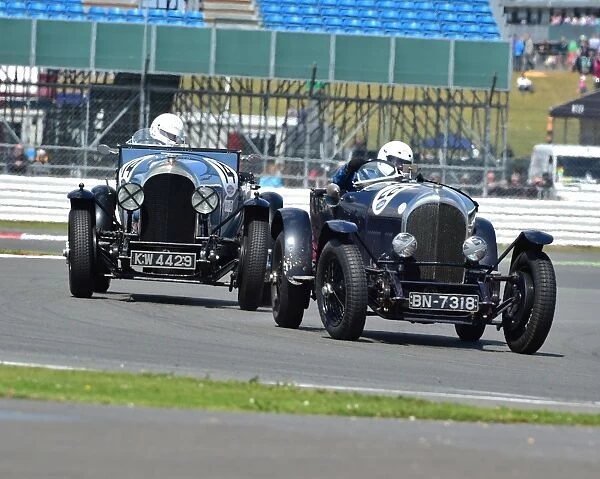
A captivating grid of more than 50 eye-catching entries dating right back to the dawn of circuit racing took to the world-famous Silverstone Grand Prix Circuit for a dazzling 40-minute showdown, complete with a mandatory pit-stop and optional driver change. 

It was an enthralling spectacle featuring legendary marques such as Alvis, Aston Martin, Bentley, Bugatti, Frazer Nash, Invicta and Lagonda that – by popular demand – will be repeated on Saturday morning at the 2017 Classic.
Though victory went to the Frazer Nash Super Sports shared by experienced racers Fred Wakeman and Pat Blakeney-Edwards, it was the sight of a dozen iconic Bentleys that really caught the imagination of the 100,000 festival-goers – rightly so, as the Kidston Trophy was named in honour of one of the famed ‘Bentley Boys’ of the late 1920s.
Glen Kidston was a real life Boy’s Own hero. Back in 1914, he survived being torpedoed twice in the same morning when serving as a Lieutenant Commander in the Royal Navy. 
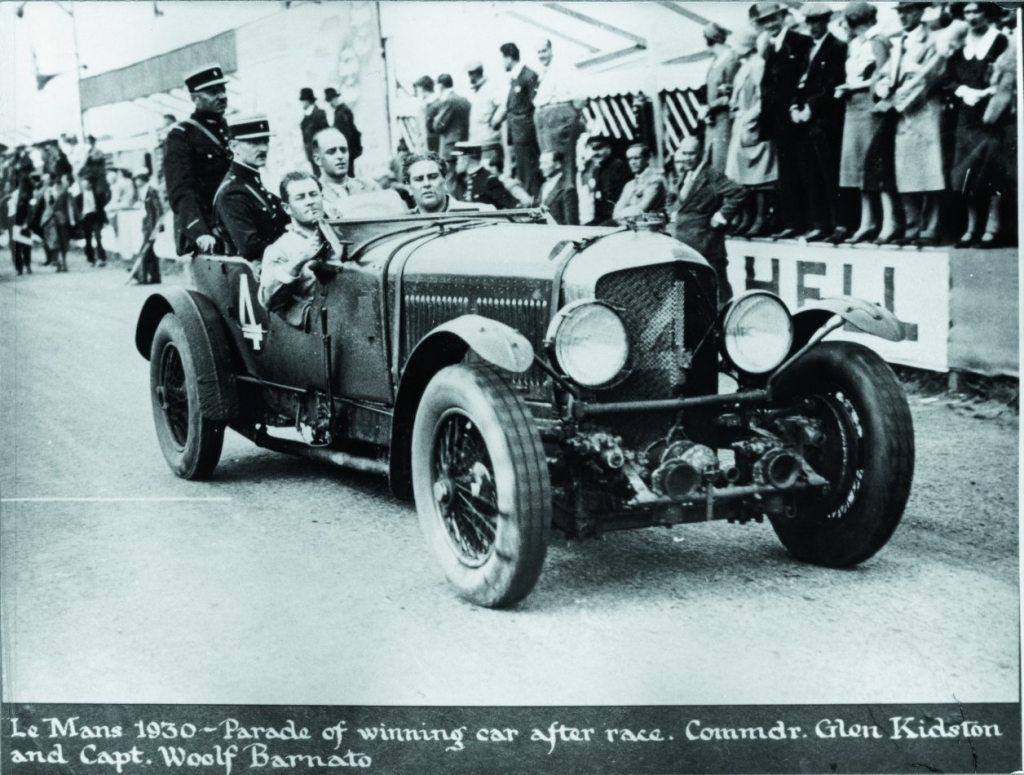
By the mid-1920s, he was a submarine Commander himself and when not at sea he set records as an aviator, hill climbed, conducted motorcycle speed trials on sand and raced cars, winning the 1930 Le Mans 24 Hours in the Bentley Speed Six he shared with Woolf Barnato. 
Having survived several serious scrapes, Kidston sadly lost his life less than a year later when the de Havilland Puss Moth he was flying broke up in mid-air during a dust storm over the Drakensberg Mountains in southern Africa.
 
It took quite a grid to represent such a buccaneering character, but Motor Racing Legends succeeded in 2015 and its chairman, Duncan Wiltshire, is predicting another amazing turnout in July.

“We were completely blown away by the fabulous entry last time,” admitted Wiltshire. “The amazing quality and quantity of these wonderfully evocative cars proved incredibly popular both when on display in the paddock and when racing out on the track. 
They may not lap quite as fast as some of the slightly more modern machines from later epochs competing at the Silverstone Classic, but they are certainly every bit as spectacular.”
“It’s hard to beat the magnificent sight of so many intrepid drivers sawing away at their wooden steering wheels, fighting for grip on such narrow tyres,” agreed Nick Wigley, CEO of Silverstone Classic organiser Goose Live Events. 
“It’s not something fans of modern motor sport ever experience and is one of the many marvellous reasons that historic motor racing today is becoming more and more popular with those of all ages. 
We’re delighted to have these epic Pre-War Sports Cars back on the bill – they really do add yet another incredible dimension to what is always a fantastic show.”   
The return of the Kidston Trophy is just one of the many on-track highlights already announced for the 2017 Silverstone Classic. Full details can be found on the silverstoneclassic.com website together with information on how to take full advantage of the Early Bird tickets currently on sale. 
Adult admission starts from just £35 and the cost of the three-day weekend ticket has been frozen at £99 if purchased before the end of March. Family tickets, camping and VIP Hospitality packages are also available. All tickets must be booked in advance of the event.
Full information about the 2017 Silverstone Classic entertainment programme – including more exciting new races, special car club celebrations and live music performers – will be announced in the coming weeks. All the latest news will be available at silverstoneclassic.com and via its social media platforms.

Thursday, 3 September 2015

Bentley to showcase some of its most rare and valuable models at the Holyroodhouse Concours d'Elegnace.

  • Historical Bentleys star at prestigious Edinburgh event
  • 1952 R-Type Continental, ‘Blue Train’ and 8 Litre among line up
  • ‘Bentley Sunday’ highlights best of British brand’s historic range
Scotland’s historical seat of power, the Palace of Holyroodhouse, is playing host to the 2015 Concours of Elegance from 4 to 6 September, with an impressive array of Bentley models taking centre stage.

The prestigious, invitation-only event – which showcases 60 of the world’s rarest and most valuable cars – will feature six Bentley models ranging from a 1927 6 ½ Litre Vanden Plas tourer to a 1960 S2 Continental with H.J. Mulliner Fastback coachwork.


Not only is the Mulliner name still closely associated with Bentley today, but it also has historical ties with the Scottish capital. In December 1909 John Croall & Sons Ltd of Edinburgh purchased a controlling shareholding in H. J. Mulliner & Co, which it held until 1959, where after the coachbuilding company officially became part of Bentley Motors Ltd.

Other Bentley models on display at the Concours of Elegance include the famous ‘Blue Train’ Speed Six, the Team Blower, a 1930 8 Litre, a 4 ¼ Litre Vanden Plas tourer from 1937 and a 1952 R-Type Continental.

As Bentley is an official partner of the Concours of Elegance, Sunday 6 September is called ‘Bentley Sunday’. 

On the final day of the event a dedicated area in front of the Palace of Holyroodhouse will display all of the Bentleys in attendance. A ‘Trophy of Elegance’ will also be presented to the best customer Bentley parked in the brand’s dedicated car park.

Continental R-Type
It was the R-Type which first brought the Continental name into Bentley lexicon in 1952. With a top speed of 120 mph this was the fastest four-seater in the world at the time. Many of the 208 examples produced were coach built by Mulliner.

‘Blue Train’ Bentley
This year is the 85th anniversary of that most famous Bentley Boy adventure – the Blue Train race.

In 1930 Captain Woolf Barnato, Chairman of Bentley Motors, was staying in Cannes when he accepted a wager that not only could he beat the Calais-MediterranĂ©e Express (or ‘Blue Train’) back to Calais, but that he could be at his club in London before the train even reached the English Channel.
He was, and the remarkable victory has resonated with Bentley enthusiasts ever since. 

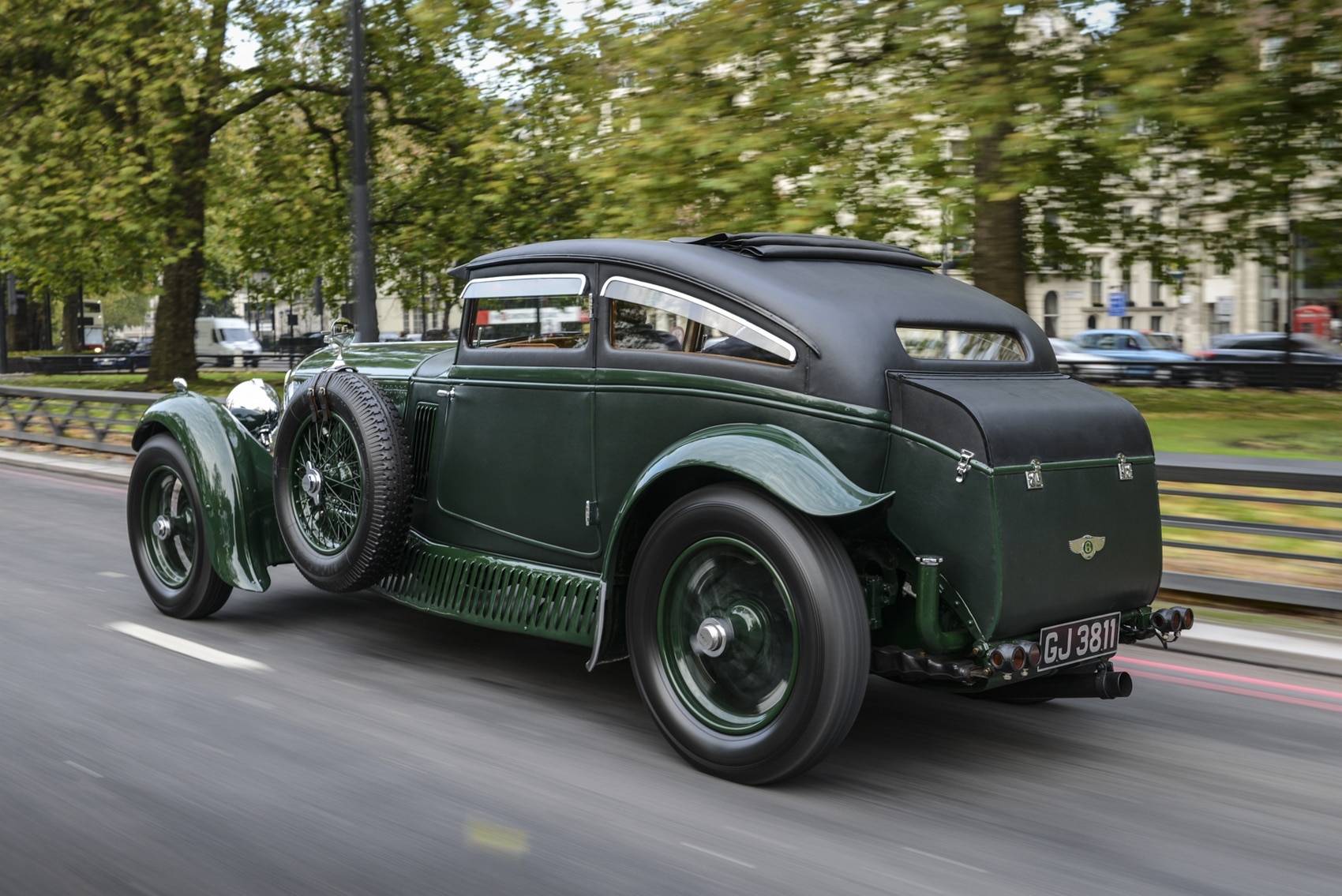
The car that was believed to have accomplished the feat was the iconic Gurney Nutting two-door fastback coupe. In recent years evidence has emerged to suggest Barnato drove his Mulliner saloon-bodied Speed 6, however, it is the coupe that will forever be known as the ‘Blue Train’ car.

Team Blower
One of just five cars built for racing, the 4 ½ Litre Supercharged ‘Team Blower’ was used by the original Bentley racing team of the late 1920s, and is still performing over eight decades later.

This year marks the 85th anniversary of the Woolf Barnato and Glen Kidston Le Mans victory in 1930. While the Blower wasn’t the winning car that day, with Tim Birkin at the wheel its heroic performance embodies the true spirit of the vintage racing era.

8 Litre
Launched in 1930, only 100 Bentley 8 Litres were ever produced. Extremely luxurious, yet with a top speed of 100mph, the 8 Litre combines craftsmanship with performance, drawing parallels with Bentley’s current flagship, the Mulsanne.

Sunday, 17 May 2015

1930 failed "Bentley Boy" Mille Miglia, will, 85 years later have a second attempt, this time they will succeed.

  • Historic Bentley takes on epic thousand-mile test of endurance
  • This year marks 85 years since Birkin and Barnato’s aborted attempt
  • 1930 4½-litre supercharged Blower one of just 55 ever produced
In 1930, ‘Bentley Boy’ Tim Birkin claimed his aborted attempt on the Mille Miglia in his legendary Blower was due to a lack of “due preparation”. 85 years on, Bentley has ensured all plans are in place for a successful Blower run in the 2015 event.

‘Bentley Boys’ the Hon. Sir Henry (Tim) Birkin and Bentley Chairman Woolf Barnato were to be the first British drivers to attempt the thousand-mile Italian test of endurance, in a supercharged ‘Bentley Blower’ known as the No. 2 ‘Birkin Blower’. 

According to contemporary media reports, however, ‘much disappointment was felt at the news of the Bentley withdrawal from the Brescia Thousand Miles Race’.


This year, Bentley’s original 1930 4½-litre supercharged Blower is aiming to finish what its sibling never started, taking on the world-renowned cross-country route between 14 and 17 May.

Director of Royal and VIP Relations, Richard Charlesworth, who will be piloting the historic Blower, said: “When the Blower was built in 1930 the Mille Miglia was uncharted territory for British racers. 

Some 85 years on and the Bentley is now a familiar sight – this year will be the Blower’s fifth entry. Last year we achieved the best result ever for Bentley, and this year we are hoping to continue that success.”

One of just 50 examples built for the road, the 85-year-old Blower features its original Vanden Plas Open Sports Four-Seat body. It was described by Autocar magazine in September 1930 as having ‘the appeal of immense power, linked with great docility’ – qualities the team will be hoping to exploit in Italy.

Built for racing, all Blowers featured the legendary supercharger installation developed by Amherst Villiers. The car running the Mille Miglia this year started life in 1930 as one of the company’s first showroom demonstrators, and is still performing eight decades on. 

With its classic British Racing Green livery and distinctive exhaust note, the Blower is one of the most instantly recognisable cars of all time.

Sunday, 19 April 2015

Historic ‘Blue Train’ race commemorated with 85th anniversary Mulsanne Mulliner Limited Edition

  • Historic ‘Blue Train’ race commemorated with 85th anniversary Mulliner Limited Edition
  • Mulliner artisans pay homage to famous 1930 Speed Six with bespoke features and intricate historical references
  • Total of four examples to be hand-crafted in Crewe for continental European customers
  • Mulsanne Speed is world’s fastest ultra-luxury driving experience
Bentley Motors is commemorating the historic ‘Blue Train’ race won by the Bentley Speed Six in 1930 with a Mulliner Limited Edition – the Mulsanne Speed ‘Blue Train’.

Debuting this week at the Techno-Classica show in Essen, Germany, just four examples will be hand-crafted in Crewe for customers in continental Europe.

85 years ago, Captain Woolf Barnato, Chairman of Bentley Motors and pioneering ‘Bentley Boy’, was staying in Cannes at the Carlton Hotel. 

He accepted a wager that not only could he beat the Calais-MediterranĂ©e Express or ‘Blue Train’ back to Calais, but that he could be at his club in London before the train even reached the English Channel.

He was, and the remarkable victory has been talked about ever since.


The ‘Blue Train’ Limited Edition is produced by the skilled craftsmen and women of Bentley’s bespoke coachbuilding division, Mulliner. Each features a number of delightful historical references and modern interpretations of  design details from the original Speed Six.

For example, the fluting pattern in the door panels and the rear quarter inserts echo the interior of Barnato’s original car. The dashboard facia features an expertly crafted veneer image of the original Bentley ‘Blue Train’ Speed Six. 

Meanwhile, the treadplate plaques bear the wording ‘Blue Train 85 Years’ and the front grille features a square mesh design inspired by original Speed Six.

Richard Charlesworth, Head of the Bentley Heritage Collection, comments: “The Blue Train is one of the most famous and celebrated cars in the world, and it perfectly embodies the racing spirit of the Bentley. 

Woolf Barnato was a three-time Le Mans victor, but winning the Blue Train race captured the public’s imagination, and fuelled the legend of the Bentley Boys. By beating the Calais-MediterranĂ©e Express he forever guaranteed the Speed Six’s place in automotive history.”

The first ‘Blue Train’ Limited Edition delivered will also feature a personalised hamper, trimmed with Burnt Oak and Camel hide to perfectly match the interior of the car. 

Mulliner has crafted beautiful leather cutlery holders and a leather rug wrap-around, both featuring ‘Blue Train’ embroidery. The hamper contains exclusive Robbe & Berking silver plated cutlery, Haviland Limoges porcelain crockery, LINLEY crystal champagne flutes and a 100 percent Angora picnic rug, woven in Scotland.

Robert Engstler, Regional Director Europe, added: “The fact that we are producing just four of these Limited Editions is highly significant, as Barnato famously made it to the club in London four minutes before the train arrived in Calais. The unique design elements bring back nostalgic memories of one of the most legendary Bentleys of all times.”

The Mulsanne Speed Blue Train by Mulliner can be seen at the Techno-Classica Show in Essen (Hall 7). from the 15th to the 19th of April 2015.

Mulliner – Rare by design

Mulliner exists to respond to the requirements of Bentley’s most discerning customers. Mulliner Limited Editions reflect carefully chosen and inspirational themes. Individually these might have special significance for customers in specific markets, but what they all share is the highest standards of Mulliner craftsmanship – taking the concept of Bentley luxury and pushing it even further.

Mulliner Limited Editions are rare by design and, as a result, they all have the potential to become instant classics, desired by many but driven only by a fortunate few.

Thursday, 5 February 2015

The extraordinary Bentley “Blue Train” car to appear at RĂ©tromobile 2015

  • The extraordinary “Blue Train” car to appear at RĂ©tromobile 2015
  • The 1930 Bentley 6½ Litre Speed Six with Gurney Nutting coachwork, starts its 85th anniversary in style
Bentley Motors is delighted to announce that the legendary Speed Six Bentley known as The Blue Train will celebrate the start of its 85th anniversary with an exclusive first appearance at the RĂ©tromobile Exhibition this week in Paris (Hall 1, Stand P43).

In 1930, Captain Woolf Barnato, Chairman of Bentley Motors, and also a true “Bentley Boy” having entered and won the Le Mans 24 hours three times, was staying in Cannes at the Carlton Hotel with his golfer friend, Dale Bourn. He accepted a wager that he could not only beat the Blue Train to Calais, as had been done before, but could be at his club in London before the train reached Calais.


On the day of the race, he finished his drink in the bar at the Carlton hotel when he heard the train had departed at 17.54. He had arranged for fuel stations to remain open through the night in Aix-En-Provence and Lyon, and a tanker lorry in Auxerre, and despite a puncture near Paris, he reached Boulogne with an hour to spare. 

He arrived at the Conservative Club in St James, London for a celebratory drink having passed the clock at Victoria Railway Station at 15.30 the next day, four minutes before the train was due to arrive in Calais, having averaged 43.43 mph driving on pre-motorway roads. He won the £100 wager, although the Automotive Club de France attempted to fine him £200 for an un-authorised race in France.

Richard Charlesworth, Head of the Bentley Heritage Collection, comments: “We are most grateful to Bruce McCaw for the loan of his legendary Bentley Speed Six. There are many exciting plans for the car to mark its 85th anniversary, including a recreation of the original run from Cannes to London.”

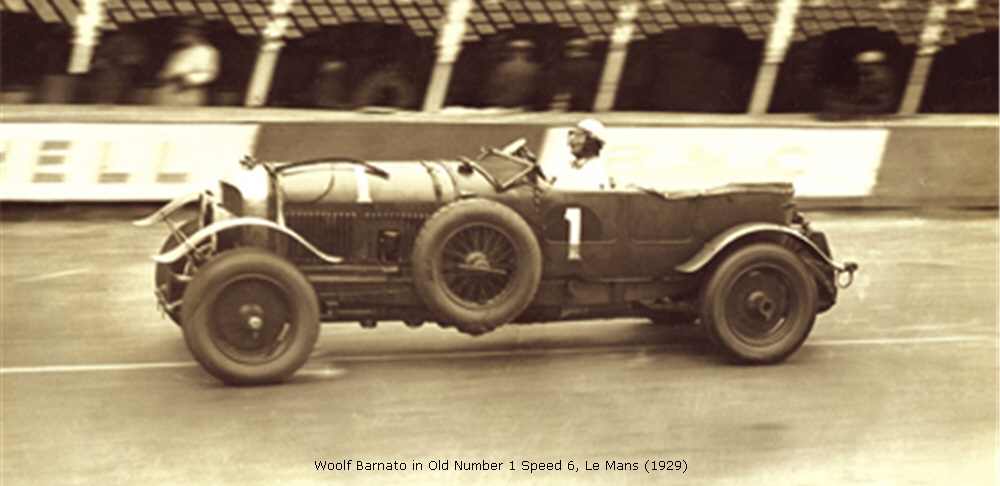
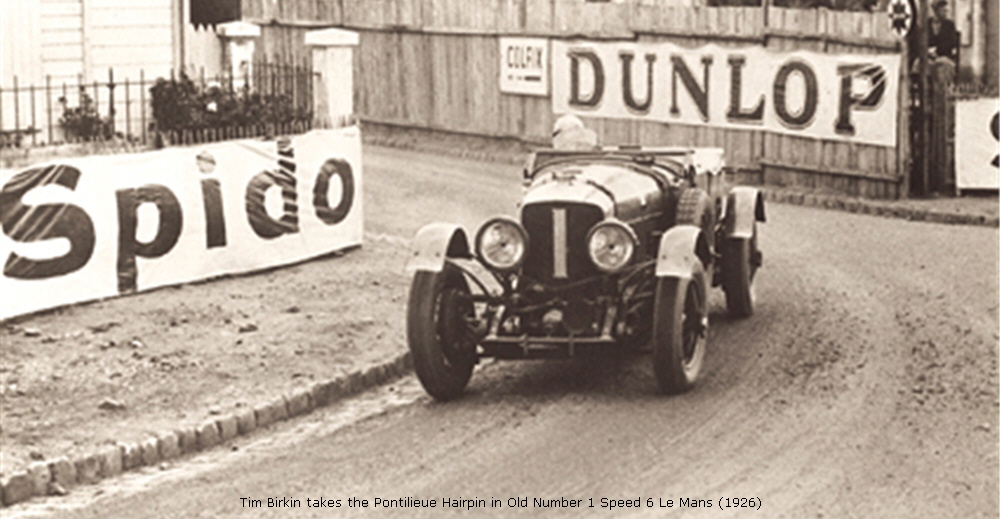
The Speed Six evolved in 1929 as a racing version of the 6½ Litre, introduced in 1926. The first car raced as No 1 at Le Mans in 1929 where it won, and returned as ‘Old No 1’ to win again in 1930. A total of 182 Speed Sixes were built between 1929 – 1930 with a variety of body styles and types from several coachbuilders. Speed Six Chassis No HM 2855 was delivered to Bentley Chairman Woolf Barnato by Coachbuilder Gurney Nutting in May 1930. Barnato had many Bentleys personally commissioned to suit his requirements, all were bespoke, ‘one off’ vehicles.

In recent years evidence has come to light that suggests that although the car appeared in the Terence Cuneo painting of the race, it may be that it was in fact another Speed Six with a Mulliner Saloon body, also owned by Barnato, that actually accomplished the feat. It remains a mystery, the truth will never be known for sure, but this unique car remains one of the most striking, stylish and famous vintage Bentleys from that era.
Introduction first registered May 1930

Body Gurney Nutting Speed Six

Engine 6-cylinders, in-line; front; 100 mm x 140 mm, 6597 cc; compr 5.3:1; 180 bhp (134.23 kW) @ 3500 rpm; 27.8 bhp (20.34 kW)/L

Engine Structure 4-valves, double springs; 8-bearing camshaft, 3-throw coupling rod drive; cast iron cylinder block with stainless steel jacket plates; single port block; 2 vertical HVG5 SU carburettors; two champion plugs per cylinder; Bosch magneto and Delco-Remy coil; Autovac fuel system; 8‑bearing camshaft, with damper; water-cooled

Transmission rear wheel drive; sdp clutch; 4-speed C-Type gearbox, right hand change; spiral bevel final drive 3.53:1

Chassis pressed steel frame 0.188 in (4.77 mm), 7 cross-members; semi‑elliptic leaf springs; Bentley and Draper friction dampers; self-wrapping, Dewandre servo mechanical brakes, front Bentley-Perrot; 15.75 in (40 cm) drums; worm and sector steering; 25 gal (113.6 1) fuel tank; Dunlop tyres 21 x 6.00, rear 21 x 7.00; Rudge-Whitworth centre lock wire wheels

Dimensions wheelbase 140.5 in (356.87 cm), track 56 in (142.2 cm), length 187 in (474.9 cm), width 68.5 in (173.99 cm), ground clearance 7.25 in (18.4 cm), turning circle 47.5 ft (14.5 m)

Equipment Smith & Jaeger instruments, white figures black faces, German silver parallel-sided radiator shell; Green Label badges. Zeiss headlamps; Bosch electrics; Hobson fuel telegauge; brake vacuum gauge

Performance maximum speed 92 mph (147.7 km/h) – 100 mph (160.9 km/h), fuel consumption 15 mpg (18.83 l/100 km)

Price Chassis £1800

Production 1