Purpose

I will try my best to provide detailed info on various cars and what is like to live with them, I have already produced a few for Jaguar-car-forums, I will do my best to be unbiased, but it will be hard for some cars. I will re-produce press releases and copy from other motoring news.
Showing posts with label paris. Show all posts

Saturday, 11 February 2017

The Renault TreZor scoops the Most Beautiful Concept Car of the Year 2016.

  • The Renault TreZor scoops the Festival Automobile International’s award for the Most Beautiful Concept Car of the Year 2016
  • The Renault TreZor is an all-electric GT that embodies the styling cues and technologies set to feature on upcoming Renault models
AWARD-WINNING RENAULT TREZOR
The 32nd Festival Automobile International at the Hôtel des Invalides in Paris, France, has singled out the Renault TreZor as the Most Beautiful Concept Car of 2016.
“I would like to thank the jury for this award which inspires us to continue to pursue our design strategy,” says Laurens van den Acker, SVP Corporate Design, Renault. 
“The TreZor’s powerful, sensuous lines pave the way for the styling and technologies that will be features of our upcoming models. It also marks the beginning of a new cycle of Renault concept cars.”
“The jury decided this award should go to the TreZor because of the extreme beauty, sensuality and elegance it exudes,” observes Rémi Depoix, President of the Festival Automobile International. 

“It is the epitome of a concept car and we were notably won over by the cohesion of its overall design and the attention that has been paid to the details. It is a fine creative work which, we hope, will inspire Renault’s future roadgoing models.”
A POINTER TO THE STYLING PHILOSOPHY OF UPCOMING RENAULTS
The lines of the Renault TreZor are warm, sensuous and refined, while its assertive front end incorporates signature C-shaped lights. In terms of their styling, Renault’s upcoming models will draw their inspiration from the TreZor’s DNA as their forms become even more fluid and mature.
The TreZor’s interior design, meanwhile, places the emphasis on driving enjoyment and features a large enveloping touchscreen display that reinforces the cockpit feel. 
This customisable, connected interface juxtaposes warming, prestige materials like wood and leather. The interiors of upcoming Renault models will take their inspiration from these increasingly refined styling trends and connected technologies.
For the duration of this year’s Festival International de l’Automobile, the Renault TreZor will be on display at the Hôtel des Invalides alongside other concept cars selected by the jury. This display will be open to the public from 1-5 February 2017.

Tuesday, 26 July 2016

Camouflaged SKODA KODIAQ leads the charge at the final stretch of this years Tour de France.

  • Camouflaged SKODA KODIAQ rehearsing on Champs-Elysées home straight
  • SUV from Czech Republic was at the Tour finale in Paris
  • Former cycling professional Stephen Roche led the field of riders  
The ŠKODA KODIAQ has been getting familiar with the Tour de France’s home straight in Paris. In the concluding stage of the race around France the new SUV by ŠKODA took over the lead of the pack. Behind the steering wheel was former Tour winner Stephen Roche.
The night before the KODIAQ’s high-profile appearance, ŠKODA was getting familiar with the local conditions, as on the last day of this year’s Tour the new ŠKODA KODIAQ was set to lead the racer field. With a start in Chantilly and finish in Paris, the stage stretches over 113 kilometres.


For its Tour premiere the new SUV by ŠKODA got a brand new camouflage cover in red, grey and black. The special camouflage foil with facets made of crystal-like elements matches the look of the Red Car, the ŠKODA Superb in Corrida Red. The Red Car serves as a mobile control centre of the Tour de France and is used by the race Director Christian Prudhomme.
Behind the steering wheel during the first public appearance of ŠKODA KODIAQ was former cycling professional Stephen Roche. The Irish rider triumphed in the 1987 Tour de France and currently represents the Czech manufacturer as a brand ambassador. 
ŠKODA is supporting the Tour de France for the thirteenth consecutive time as the official partner. The brand is also the sponsor of the Green Jersey worn by the leader of the points classification for the second time. Simultaneously, ŠKODA acts as the official vehicle partner of the race, providing a total of 250 cars as organisational and support vehicles as well as more than 50 team cars.
The ŠKODA KODIAQ is set to make its next appearance in Paris in late September as a guest of the motor show, this time without a camouflage cover. Going on sale in early 2017, the SUV marks the beginning of ŠKODA’s world-wide SUV offensive and will be promoted under the caption ‘Discover new grounds’.
The ŠKODA KODIAQ represents all the strengths of the Czech brand, featuring a distinct design full of character, exceptionally spacious interior, high level of functionality and numerous Simply Clever solutions. At 4.7 metres in length the SUV offers the largest boot space in its class and a customisable third row of seats. Other highlights of the new ŠKODA KODIAQ include extensive connectivity options, modern driver assist systems and a future-oriented infotainment system.

Wednesday, 22 June 2016

The iconic London Taxi is being reborn with the TX5, and a $400 Million Investment Program to expand the product.

London's iconic black cabs aren't waiting for the U.K.'s vote on European Union membership, seeking their own Brexit by pitching an electric version for Paris and other major European cities.

London Taxi Co., a U.K. subsidiary of Zhejiang Geely Holding Group Co., 
showed the TX5 prototype in Paris last Thursday.


The car is powered by electric motors with an on-board gasoline-fueled generator for extra range. The goal is to offer the vehicle to cabbies in the French capital by 2018 and then expand to cities such as Barcelona, Oslo, Amsterdam and Berlin.

London Taxi is counting on its cab's spacious passenger seating and extended range to find buyers on the continent amid uncertainty over the U.K.'s future if the country votes to leave the European Union later this month.

The traditionally styled cab is designed for urban centers, where air quality is a growing problem. Paris is set to ban vehicles more than 20 years old starting next month.

"Most of the major cities in Europe have an air-pollution problem," said Peter Johansen, head of the taxi manufacturer that was bought by China's Zhejiang Geely Holding Group Co. in 2013. The limited range of existing models "is what has stopped until now the adoption of electric vehicles as the mainstay of taxis."

App competitors

London cabs aren't the only ones going green. France's leading taxi company, Taxis G7, and Uber Technologies Inc. allow French users to order electric and hybrid vehicles on their apps. Since December, tourists also can visit Paris aboard a retrofitted vintage Citroen 2CV car with an all-electric engine.


The rollout of the TX5 is part of a $400 million program that includes a new factory near Coventry, England. In addition to targeting traditional cabbies, London Taxi also plans to offer the car to ride-sharing apps such as Uber and its competitors.

London Taxi said the cost of owning the vehicle will make it attractive but declined to provide details about price or range.

"We are offering a global product that will be a global beater," said Johansen, who says the car can reach European markets even with a Brexit. The country is "so much part of Europe now

Saturday, 30 April 2016

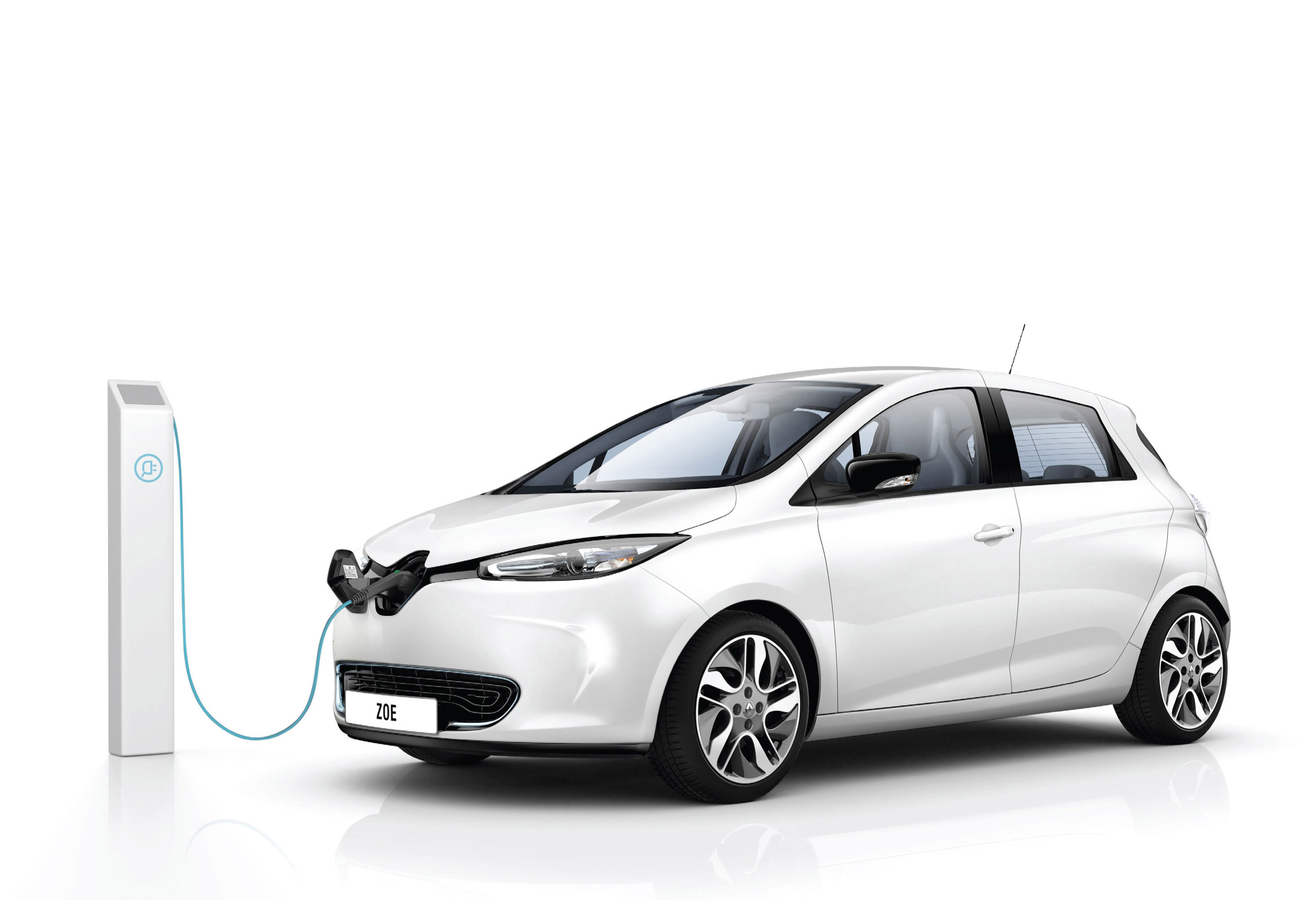
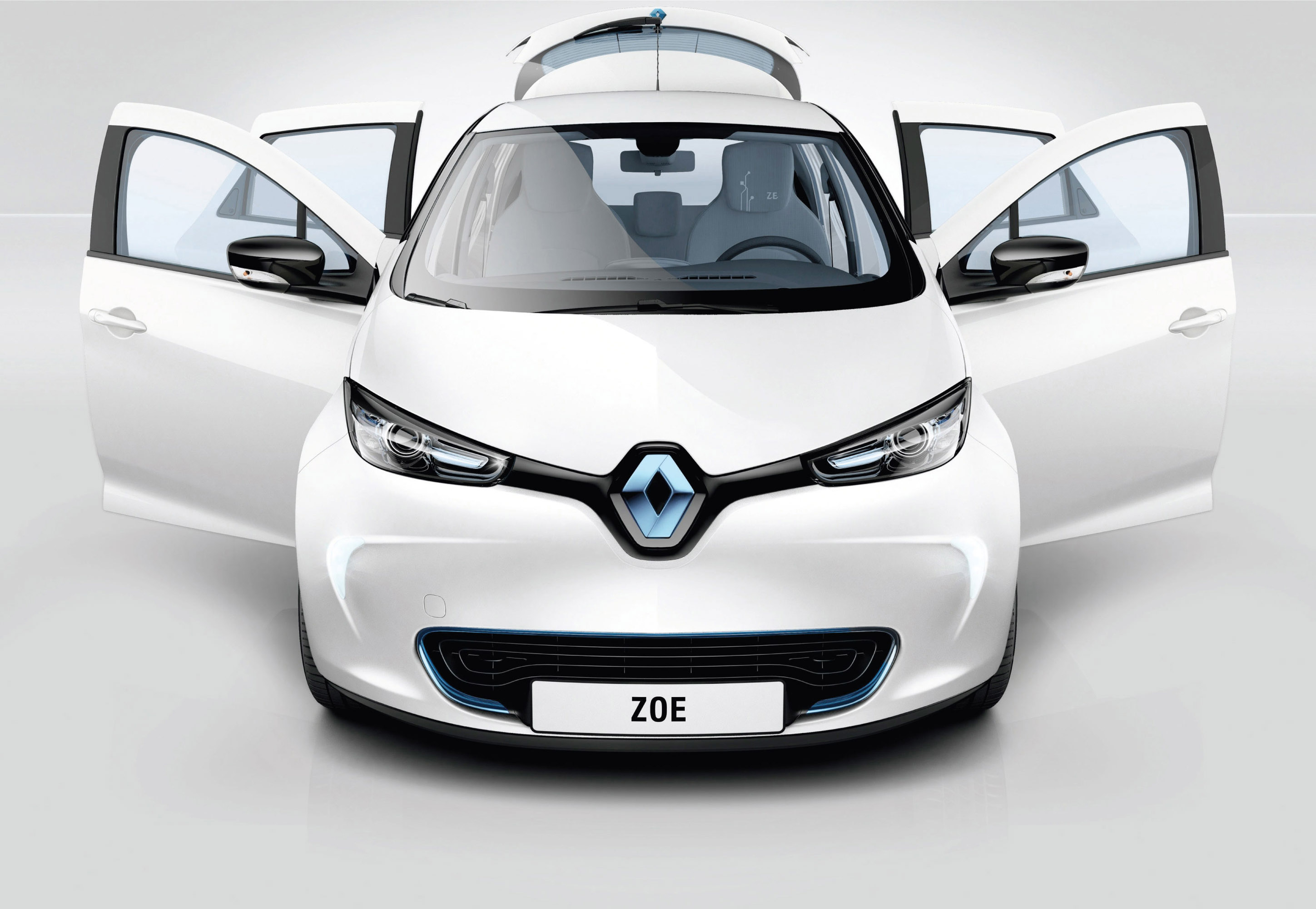
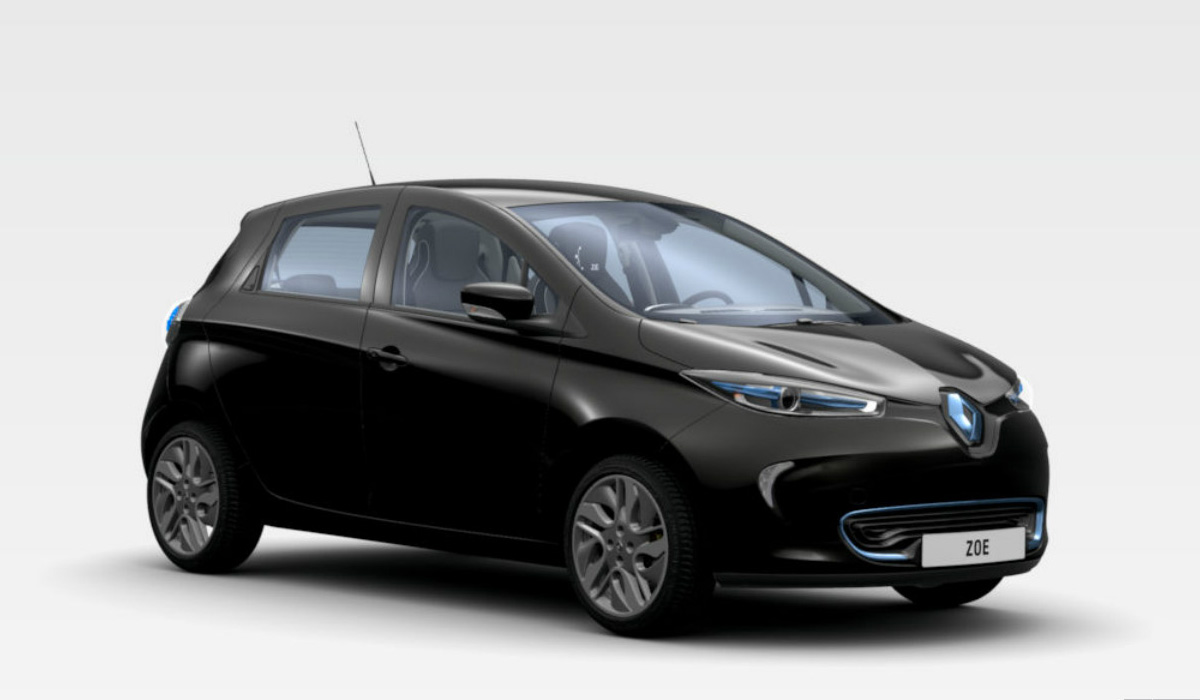
Groupe Renault celebrates the 50,000th ZOE Zero Emissions car being produced at it's Flins Facility near Paris.

  • Renault has produced its 50,000th all-electric ZOE
  • Europe’s best-selling electric vehicle just three years after the launch
  • Every three minutes, somewhere in the world, somebody purchases an electric vehicle
The 50,000th Renault ZOE has rolled off the production line at its specialist plant at Flins. The milestone vehicle was sold to Sylvie, a French citizen from Saint Cloud, Paris. Guillaume Berthier, Electric Car Sales and Marketing Director, presented Sylvie  with the keys to her ZOE at the Flins plant near Paris, the only ZOE site for global distribution. 

It was Sylvie’s children who encouraged her to choose a ZOE and she intends to use it every day. With 50,000 people now proud owners of the ZOE, Renault has found that 98% of customers are satisfied with their 100% electric-in-use vehicle.
Since 2013, Renault has been the only carmaker to have a complete all-electric vehicle range with Twizy, ZOE and Kangoo Z.E. Since then, the EV market has grown rapidly, expanding by 48% worldwide in 2015. A total of 18,500 ZOE vehicles were sold last year for a market share of 20% in Europe and over 55% in France. In the UK, 4,058 ZOEs have been sold since launch, with sales up in 2015 by 102% compared to 2014.
Most recently, the ZOE was voted second best vehicle overall in the Auto Express Driver Power survey – one of the largest motoring consumer surveys in the UK, and has also been crowned What Car?’s ‘Best Electric Car under £20,000’ for three consecutive years.
Charging a ZOE couldn’t be easier thanks to the continuing rollout of new infrastructure. Today, more than 60,000 charge points are available to the public in Europe.

Wednesday, 30 March 2016

Renault announces a massive recall of around a quarter of all production of the ZOE Electric car.

Renault is recalling 10,649 Zoe electric cars to remove the potential risk of rupture to brake fluid hoses.
The vehicles were built between the car's launch in 2012 and Oct. 6, 2014 at the company's Flins factory, near Paris. A total of 42,300 Zoe cars have been built.

A Renault spokesman said the carmaker was preventively checking the position of certain brake hoses and replacing them if necessary, adding that it had not been notified of any accidents relating to the fault.

Monday, 1 February 2016

PSA continues it's push back into Iran with a €400 Million investment to produce new models.

During President Hassan Rouhani's state visit to Paris, PSA Peugeot Citroën, which has operated in Iran for more than 30 years, and Iran Khodro signed a joint venture agreement to produce latest-generation vehicles in Iran.

This 50/50 joint venture lays the foundations for a strategic partnership between the two companies. This joint venture is expected to invest up to €400 million over the next five years in manufacturing and R&D capacity. This investment will contribute to facilitating the development of a competitive manufacturing base for producing, launching and marketing Peugeot 208, 2008 and 301 models, fitted with latest-generation engines.
The agreement provides for:
  • The restoration of contractual relations concerning the manufacture of Peugeot-branded vehicles currently produced in Iran
  • The creation of a joint venture on an industrial site in Tehran to produce new latest-generation Peugeot vehicles on a platform that will also be used by Iran Khodro to develop its own vehicles
  • The capacity to export JV products across the region
Coming one week after international sanctions were lifted, this agreement marks the beginning of a new chapter for both partners. The agreement, which will be backed up by technology transfers and significant levels of local content, will come into effect once it is implemented, i.e., around mid-2016.
The first vehicles will roll off the production line at the Tehran plant in the second half of 2017.
The Iranian market reached a peak of 1.6 million vehicles in 2011. It should regain this level within 2 years to reach 2 million vehicles a year by 2022. Current estimates put the number of Peugeot cars on the road in Iran at more than 4 million.
Iran is a key component of PSA development strategy in the Middle East & Africa region, which is PSA Peugeot Citroën's third-fastest growing international market. The Group sold 180,200 vehicles in the region in 2015, up 6.4%.
In turn, Iran Khodro plan to capitalize on the technology transfer.
Commenting on this new agreement, Carlos Tavares, Chairman of PSA Peugeot Citroën's Managing Board, said: “This strategic agreement turns the page on the period of international sanctions and enables PSA and Iran Khodro to start a new chapter in their 30-year history of co-operation. Our shared ambition is to offer our loyal customers high-tech products to deliver mobility that meets the highest comfort, safety and environmental standards.”
Dr: Hashem Yekehzare, President and CEO of IKCO states: “The strategic partnership with PSA will serve as a unique platform, for both parties to capitalize on each other’s competitive advantages; especially given the scale, technology and long term outlook that the parties are able to bring to their co-operation. A particular benefit of this partnership is to bring cost effective and the best automotive technology to the customers.”

Sunday, 12 April 2015

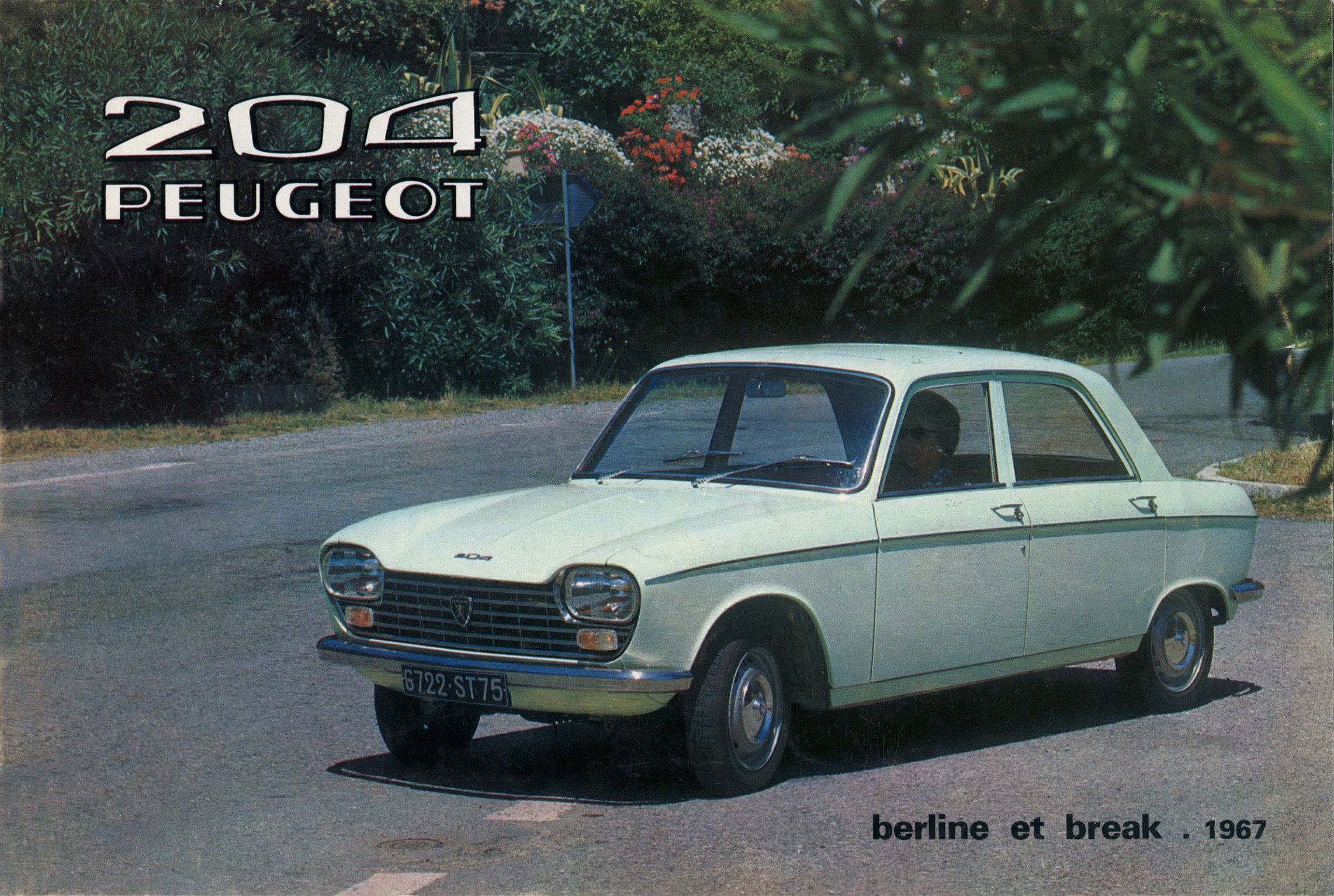
Happy 50th Birthday to the Peugeot 204 - The car that defined a new segment.

  • The car that returned PEUGEOT to the principles that define it today
  • A revolution on continental roads as the first front-wheel drive PEUGEOT
  • Stylish saloon that helped define the small mid-sized segment
Fifty years ago a car was launched that heralded the birth of the stylish, high quality small cars that PEUGEOT is famous for today. We take front-wheel drive cars for granted now, but half a century ago they were out of the ordinary, revolutionary even. 

That meant the 204 was at the forefront of automotive innovation when it was revealed to surprised PEUGEOT Dealers in Paris on 22nd April, 1965.

Although the stylish Pininfarina designed saloon appeared relatively conservative, its four-door shape cloaked some true innovations. 

After nearly eight years in development, the 204 was the first PEUGEOT to have the driven wheels at the front. It became the first production PEUGEOT to have disc brakes at the front and there was independent suspension all round. But arguably the biggest revolution was in the car’s size.


From the end of World War Two, PEUGEOTs had gradually grown in dimensions. By the 1960s the French firm was known principally as a large car maker. 

The models were chic and sophisticated but their price put them out of reach of buyers with more modest budgets. The 204 changed that and brought PEUGEOT back to its basic principles with characteristics that still define its range today: stylish, high quality and fun to drive cars that are affordable.

At less than 4m long, the 204 was touted as one of the first examples of the ‘small-medium’ sized segment. It was a car that promoted downsizing, long before the concept became a motoring phenomenon. The aim was to offer the space of a family car in a smaller package. 

The resulting segment has gone on to spawn popular models such as today’s 308.

The reason that the 204 managed to combine generous interior space with smaller exterior dimensions was helped in part by the layout beneath the bonnet. 

The transversely mounted engine had a transverse gearbox located beneath it. This liberated sufficient space for the car to be front-wheel drive. The 1130cc single overhead camshaft petrol engine was made from pressure-moulded aluminium. This kept both cost and weight down. 

Three years after launch a 1255cc diesel engine joined the range. It is believed to have been the smallest capacity diesel engine in a production car and it certainly made the 204 one of the most efficient cars of its era.

The results saw the PEUGEOT 204 praised by independent reviewers in the UK for its lively performance, positive, accurate steering and good fuel economy. 

The 204 also went on to be offered in two-door cabriolet, three door ‘coupe’, five-door estate, and three-door van body shapes, as well as the four-door saloon it was launched as. Between 1969 and 1971, the 204 became the best-selling car in France, the first time a PEUGEOT had ever held that title.

Len Dacruz from South London has owned a 204 for 44 years. He said: “In its day the 204 was a very popular car. It still feels stable, comfortable and fun to drive. It’s very robust too. 

I found out about the 204 model because I lived in South Africa during the 1960s. Just after its launch, it was entered in the East African Safari Rally where it won its class. Those cars were then shipped back to France where they were stripped down and any problem parts were modified, which helped to make the 204 even more reliable. 

It really is a great car to own.”

Journalists wanting to drive or photograph a 204 should contact the PEUGEOT press office and we can put you in touch with Len.

From the very beginning, the PEUGEOT Brand has inspired technological efficiency.  The ‘20’ series range started with the ‘201’, at the time the 201st Peugeot design and it was followed over time by the 202, 203, 204, 205, 206 207 & 208.  This compact range of cars has long since been the company’s best-selling models and continues to demonstrate unrivalled innovation today.

Thursday, 5 February 2015

Renault will celebrate the 50th anniversary of the Renault 16 at the 40th edition of Salon Rétromobile.

  • Renault will celebrate the 50th anniversary of the Renault 16 at the 40th edition of Salon Rétromobile, which will take place from 4-8th February at Porte de Versailles in the French capital, Paris.
  • Two pre-war Renault models and two concept cars will join seven Renault 16s in illustrating the marque’s expertise in the realm of family cars.
Visitors to the 2015 Salon Rétromobile will be able to admire the following cars on Renault Classic’s 700-square metre stand in Hall 1 (Stand 1G64):
  • Seven Renault 16s, including a US version and a 1963 prototype
  • Two pre-war family cars: a Type G from 1902 and a Type NN from 1925
  • Two concept cars: the Scénic (1991) and R-Space (2011), two recent propositions in the domain of family cars
  • Three Alpines, from the very first Alpine to the latest offering, via the iconic Berlinette (a rare ‘Interlagos’ version).
In a new twist this year, two Renault 16s will be offered for test-drives in front of Hall 1. For further information or to sign up, visit the Renault Classic stand.


THE CARS ON DISPLAY ON THE RENAULT STAND:
Renault 16 Coupé Cabriolet (uncompleted project)

This story began in 1958 when the Frégate was given a facelift. Then Renault President Pierre Dreyfus launched a new project based upon a status-enhancing car equipped with a six-cylinder engine – the 114 initiative that he halted at the beginning of 1961: “For the overall good of Renault, we need to adopt a different approach – in several areas,” he declared.

The goal, therefore, was to design a high-end mid-sized car that would set itself completely apart from the opposition: a family car adapted to every aspect of modern life, boasting the functionality and versatility of an estate while delivering the comfort and elegance of a saloon car.

A coupé cabriolet was also evaluated, but with the majority of this version’s body parts being different to those of the saloon, production costs would have been too high to pursue the project.

Renault 16 Super (1970): The Renault 16 was selected as ‘European Car of the Year’ ahead of the Rolls-Royce Silver Shadow!

The Renault 16 stood out for its extraordinary cabin space. Intended as a voiture à vivre (a car adapted to every aspect of life) – in the same mould as the Renault 4 – the Renault 16 went even further than merely offering a tailgate and folding rear bench seat. The interior space was organised around a boot area that could be reconfigured according to different types of use, endowing the Renault 16 with the comfort of a limousine and a level of versatility that – discounting van versions – no rival model could match.

In scoring 98 points, the Renault 16 saw off the Rolls-Royce Silver Shadow (81 points) to be crowned ‘European Car of the Year’ – something of a culture shock in the automotive world!

Renault 16 TA: Automatic!

Four years after the launch of the Renault 16, the TA version – fitted with an automatic gearbox – was unveiled at the 1969 Geneva Motor Show. This was no ordinary gearbox… 

The first of its kind to be designed in France, it incorporated an electronic control device that made it smoother, faster and more efficient to use while at the same time maintaining sensible fuel consumption. A calculator determined the most appropriate of the three available gears after analysing the speed of the vehicle, the revs and the pressure applied to the accelerator pedal.

Renault 16 TL, US Version (1972): Out to conquer the world

The Renault 16 – a car that some journalists had described as “typically French in the best sense of the word” – went on to enjoy considerable success on the international stage, which accounted for nearly 50 per cent of its total sales.

Although the majority of sales of the Renault 16 were logically within Europe, the model proved to be a significant hit across the globe, too. The car was sold as far afield as South Africa, Australia, the USA and Canada. Indeed, the Renault 16 was sold in the USA from 1968 to 1972 under the well-marketed tag of a Sedan-Wagon which highlighted its unique characteristic as a cross between a saloon (sedan) and estate (station wagon).

Renault 16 TS Automatic (1974): Astonishing modularity!

Intended to be a voiture à vivre in the same mould as the Renault 4, the Renault 16 benefitted from interior space organised around a boot area that could be reconfigured according to different types of use, endowing the vehicle with a degree of modularity and versatility that no competitor model could match.

The Renault 16 offered no fewer than six seating arrangements that responded to the requirements of different ways of life – from holiday needs to a weekend away in the country or for carrying jumble back from a car boot sale.

Renault 16 TX (1975): A sporty family vehicle

Top of the Renault 16 range was the TX version presented in 1973. It applied the same recipe as the TS to a European road network becoming increasingly populated by motorways and a looming oil crisis: the 16 TX seamlessly blended performance, durability and equipment.

The TX version benefitted from a new 1,647cc engine developing 93hp DIN. Beyond the palpable performance (top speed: 108mph), the most significant new addition was the adoption of a five-speed gearbox that reduced revs on the motorway and, consequently, fuel consumption. This version was similarly distinguished by its premium equipment level.

Renault 16 TL: Air Force driving school vehicle (1980)

Another voiture à vivre, the Renault 16 was targeted above all at baby boom families, to whom it offered an innovative concept that met their needs and aspirations. That said, its inherent attributes also made the model popular amongst other types of clientele. 

Many French government departments opted to use the Renault 16 as an official car in a plain black colour scheme, while the military similarly adopted it as a long-distance liaison vehicle (the example on show has the distinction of being a driving school version equipped with dual controls).

Renault Type G (1902): A family car offering four proper seats and a 200km range

Louis Renault was on the verge of designing his own engines when the Type G appeared. Although still running with a single-cylinder De Dion powerplant, the car’s design was more accommodating than previous models, offering four comfortable seats and, underneath the front passenger seat, a fuel tank that allowed for a range of 124 miles. The brakes received particular attention, with the rear drums operated by a lever in addition to a pedal that activated a transmission-mounted system.

An “attractive and solid car that lives up to the reputation that the Renault brothers have established in the automotive sector”, remarked the press at the time.

Renault Type NN1 (1925): The first mass-produced car to be affordable for families

In 1922, the Type KJ marked Renault’s first footsteps in the world of small 6CV engines. Two years later, it was replaced by the NN, which inherited the same qualities of frugality and strength. A popular entry-level model, the NN represented the development of Renault’s mass production efforts: between its launch and 1929, almost 120,000 units were manufactured!

Renault Scénic concept car (1991): In-car comfort, relevant technologies, safety and responsible performance

Unveiled in 1991 at the Frankfurt Motor show, the Scénic concept car’s name was an acronym of Safety Concept Embodied in a New Innovative Car.

Designed to appeal to a family clientele attracted by the idea of travelling in a ‘cocoon’, the Scénic concept car majored in spaciousness, modularity and safety: this compact MPV concept was capable of comfortably accommodating a family, courtesy of a new way of managing its shape and interior space. The sliding doors offered easy access to the vehicle, while seat belts specially adapted for children and a drowsiness detection device ensured that safety was a leading priority.

This study prefigured the introduction of the Renault Scénic, the first compact MPV to hit the market (in 1996), going on to be selected as ‘European Car of the Year’ in 1997.

Renault R-SPACE concept car (2011): Space for everybody

During the 2011 Geneva Motor Show, Renault took the wraps off its R-SPACE concept car, which illustrated the ‘Family’ element of the Design strategy based on the cycle of life.

The brief given to the car’s designers was to imagine a simple, sensuous and welcoming family vehicle, which would set the tone for Renault’s upcoming offering in the realm of MPVs. The result was a compact MPV, measuring just 4.25 metres in length, with a strong, flowing and sporty silhouette.

The tapered profile of the side windows emphasised the dynamic profile, while its large windscreen and panoramic roof transformed the passenger compartment into a cosy cocoon of shade.

The original pioneer of the MPV, Renault’s proposal with the R-Space was to push back the boundaries even further in this domain. In order to do so, its designers set out from the starting point of what had made the MPV so successful in the past: the intelligence of the concept. The modern re-interpretation of this idea was “to generate a visual and extremely functional contrast between the driver’s environment – whose design inspired driving enjoyment – and a totally fresh and unexpected rear passenger compartment, fashioned in the form of a children’s play area”.