Purpose

I will try my best to provide detailed info on various cars and what is like to live with them, I have already produced a few for Jaguar-car-forums, I will do my best to be unbiased, but it will be hard for some cars. I will re-produce press releases and copy from other motoring news.
Showing posts with label concours d'elegance. Show all posts

Monday, 22 August 2016

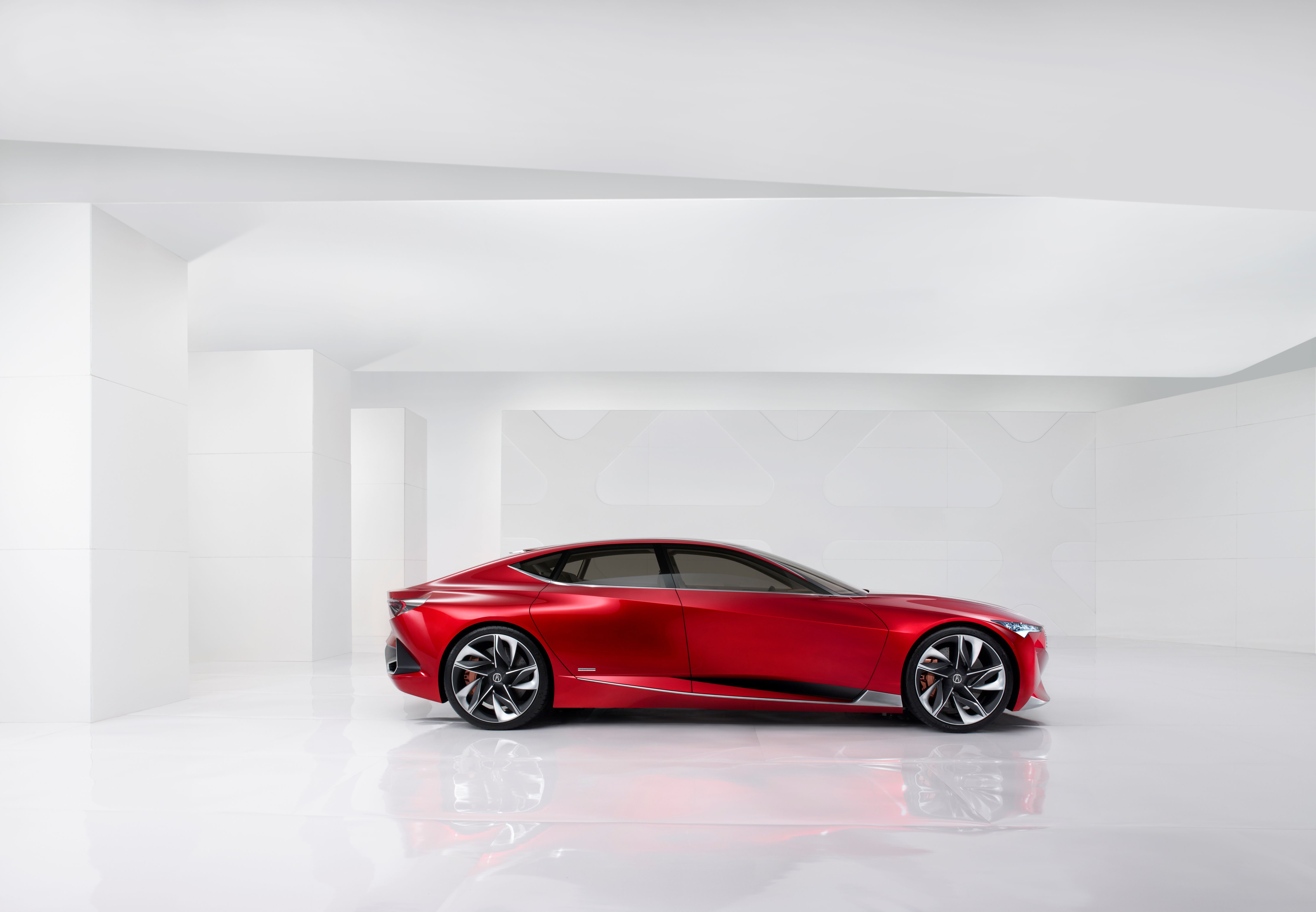
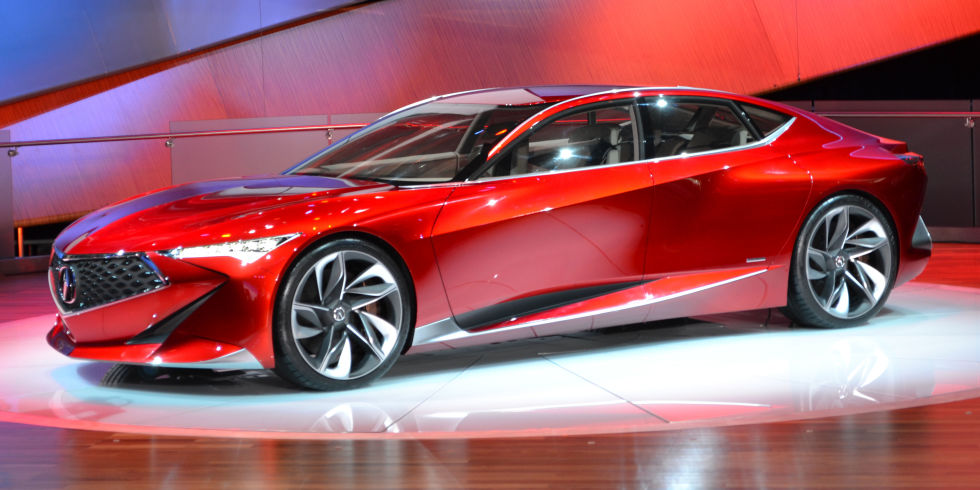
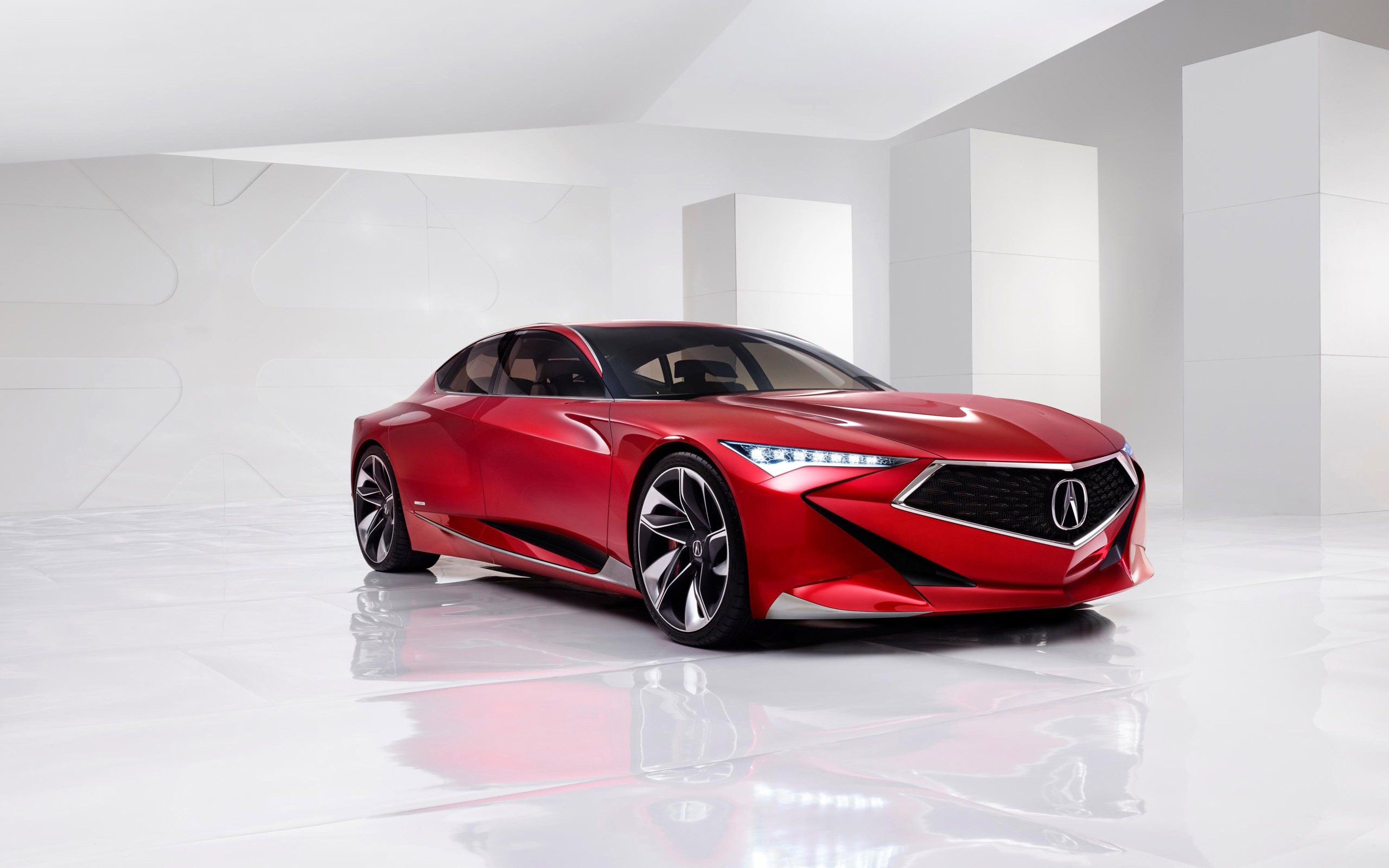
Acura stuns the crowd at the weekend with the Precision Concept, the future design direction of the brand.

Concept model expresses performance direction of Acura design
"We're proud to have the Acura Precision Concept featured among the most prestigious vehicles in the world at the Pebble Beach Concours d'Elegance," said Jon Ikeda, vice president and general manager of the Acura Division.  
"More than a concept, the Acura Precision Concept is the blueprint for Acura's future styling direction and manifests our commitment to delivering Precision Crafted Performance in every element of the Acura experience."
The Acura Precision Concept's crouched and athletic stance is further emphasized by its deeply sculpted side surfaces pouring over swelling rear wheel arches covering 22-inch wheels and tires. 
The forward-looking concept also features signature lighting designs – in front with its Jewel Constellation LED headlights composed of organically arranged fractal elements, and in back with floating LED taillights.
A key design theme, dubbed "quantum continuum," is seen in the seamless transition of materials and structure from the exterior to the interior of the vehicle, which is further highlighted by the absence of a b-pillar. 
The large door rocker panel flows into the interior side sill, transitioning into a cantilever for the floating rear seats. The rear center high-mounted stoplight becomes an architecture element piercing the rear glass and then flowing down to help form the structure for the metal airfoil shape of the rear headrests.
The elegant and powerful exterior is matched by its dramatic interior design, where cantilevered surfaces meet with striking tones, expressive surfacing and modern detailing. 
Of particular note are the double-layered instrument panel, the high-contrast front seat surfaces, the ultra-thin "floating" rear seats, evoking the look of modern lounge furniture, and the hand-crafted audio speaker grilles made of exotic wood.
The driver's space is highlighted by a compact, race-inspired, sports steering wheel with paddle shifters and Integrated Dynamics System (IDS) controls, a floating center meter, a driver's head-up display, a cantilevered center stack and an ultra-wide, thin and curved center display screen. 
New Acura HMI Concept

The Acura Precision Concept also explores a new approach for Acura's digital human-machine interface (HMI), enabling a more intuitive, advanced and seamless connection between man and machine. 

The ultra-wide and curved center screen is operated by a floating touch pad suspended on the cantilevered center stack. Upon entry, the system scans each occupant and selects personalized features and functions, including maps, audio and customized vehicle performance settings.

Acura Precision Concept Dimensions

Width
84 inches
Length
204 inches
Height
52 inches
Wheelbase
122 inches
Wheels/Tires
- 5-spoke machined wheels
- 22-inch Michelin Pilot Super Sport Summer Tire

Thursday, 3 September 2015

Bentley to showcase some of its most rare and valuable models at the Holyroodhouse Concours d'Elegnace.

  • Historical Bentleys star at prestigious Edinburgh event
  • 1952 R-Type Continental, ‘Blue Train’ and 8 Litre among line up
  • ‘Bentley Sunday’ highlights best of British brand’s historic range
Scotland’s historical seat of power, the Palace of Holyroodhouse, is playing host to the 2015 Concours of Elegance from 4 to 6 September, with an impressive array of Bentley models taking centre stage.

The prestigious, invitation-only event – which showcases 60 of the world’s rarest and most valuable cars – will feature six Bentley models ranging from a 1927 6 ½ Litre Vanden Plas tourer to a 1960 S2 Continental with H.J. Mulliner Fastback coachwork.


Not only is the Mulliner name still closely associated with Bentley today, but it also has historical ties with the Scottish capital. In December 1909 John Croall & Sons Ltd of Edinburgh purchased a controlling shareholding in H. J. Mulliner & Co, which it held until 1959, where after the coachbuilding company officially became part of Bentley Motors Ltd.

Other Bentley models on display at the Concours of Elegance include the famous ‘Blue Train’ Speed Six, the Team Blower, a 1930 8 Litre, a 4 ¼ Litre Vanden Plas tourer from 1937 and a 1952 R-Type Continental.

As Bentley is an official partner of the Concours of Elegance, Sunday 6 September is called ‘Bentley Sunday’. 

On the final day of the event a dedicated area in front of the Palace of Holyroodhouse will display all of the Bentleys in attendance. A ‘Trophy of Elegance’ will also be presented to the best customer Bentley parked in the brand’s dedicated car park.

Continental R-Type
It was the R-Type which first brought the Continental name into Bentley lexicon in 1952. With a top speed of 120 mph this was the fastest four-seater in the world at the time. Many of the 208 examples produced were coach built by Mulliner.

‘Blue Train’ Bentley
This year is the 85th anniversary of that most famous Bentley Boy adventure – the Blue Train race.

In 1930 Captain Woolf Barnato, Chairman of Bentley Motors, was staying in Cannes when he accepted a wager that not only could he beat the Calais-Mediterranée Express (or ‘Blue Train’) back to Calais, but that he could be at his club in London before the train even reached the English Channel.
He was, and the remarkable victory has resonated with Bentley enthusiasts ever since. 

The car that was believed to have accomplished the feat was the iconic Gurney Nutting two-door fastback coupe. In recent years evidence has emerged to suggest Barnato drove his Mulliner saloon-bodied Speed 6, however, it is the coupe that will forever be known as the ‘Blue Train’ car.

Team Blower
One of just five cars built for racing, the 4 ½ Litre Supercharged ‘Team Blower’ was used by the original Bentley racing team of the late 1920s, and is still performing over eight decades later.

This year marks the 85th anniversary of the Woolf Barnato and Glen Kidston Le Mans victory in 1930. While the Blower wasn’t the winning car that day, with Tim Birkin at the wheel its heroic performance embodies the true spirit of the vintage racing era.

8 Litre
Launched in 1930, only 100 Bentley 8 Litres were ever produced. Extremely luxurious, yet with a top speed of 100mph, the 8 Litre combines craftsmanship with performance, drawing parallels with Bentley’s current flagship, the Mulsanne.

Monday, 24 August 2015

Aston Martin aims to launch 800-hp, all-electric Rapide in two years time says CEO Dr Andy Palmer.

Aston Martin is betting that even James Bond won’t mind an 800-hp electric car.
The longtime builder of British sports cars will bring an all-electric version of its four-door Rapide to market in two years, CEO Andy Palmer confirmed to Automotive News.
Speaking at Sunday’s Pebble Beach Concours d’Elegance -- a target-rich environment for a high-end brand such as Aston Martin -- Palmer said the electric Rapide would be followed by an all-electric version of the DBX crossover by the end of the decade. Palmer’s confirmation comes several months after he indicated Aston was considering an electric Rapide in April.


It's too early to confirm powertrain specifics, Palmer did reveal his eye-watering expectations for the Rapide: all-wheel drive, around 800 hp and a 200-mile range.
Two key factors
This newfound emphasis on electric cars is driven by two key factors.
“If you want to keep making V-12 engines, then you’ve got to do something at the opposite end of the spectrum,” Palmer said of the company’s defensive strategy. Emissions-free models are necessary in the immediate future to balance out the emissions of its powerful V-8 and V-12 sports cars, especially in markets such as China.
At the same time, Aston is also going on the offensive, noting an opportunity for a powerful, seductive electric car that’s positioned well above a loaded version of Tesla’s most powerful Model S. The P90D currently tops out around $142,000 before any incentives.
“What Tesla clearly shows you is we haven’t hit the ceiling in terms of price,” Palmer said. “But I think it’s hard, though not impossible, for them as a relatively new brand to keep pushing up and to go into that super premier area.”
Palmer declined to be specific about the price of an electric Rapide, but hinted it would be in the $200,000 to $250,000 range (a current gasoline-powered Rapide starts at $205,000). Buyers in that range are looking for “something beyond a pure technology play, they start now looking for legacy,” Palmer said. 
And he didn’t mince words about Tesla’s recently announced “Ludicrous mode” upgrade that drops the Model S 0-to-60 mph acceleration time to 2.8 seconds.
“We don’t do Ludicrous because Ludicrous speed is stupid,” Palmer said.
“I think that the fact that you could drive a few laps of a decent race course or race it around the Nordschleife [famed track in Germany] is much more interesting than doing 500 meters in Ludicrous mode.”
The electric Rapide will use batteries sourced from an “established supplier” such as LG or Samsung -- though not Panasonic -- according to Palmer. Production will be in the hundreds annually, and none of the Rapide’s components will be shared with any Mercedes, which owns 5 percent of Aston Martin and is currently developing engines in conjunction with Aston.
With a goal of starting production within two years, Aston already has an all-electric Rapide test mule on the road.
Several years after the Rapide EV goes on sale, an all-electric DBX will join it. The four-door, awd crossover coupe will be introduced around 2019 as a plug-in hybrid, then a gasoline model, and finally the all-electric version.
DBX EV
It’s too early to know whether the DBX EV would use the same (or similar) powertrain as the Rapide, or whether it would use a new system, Palmer said. He did confirm that Aston was considering a two-door version of the DBX as well.

Aston will use the DBX range to broaden its customer base, particularly in markets such as China and Russia -- something Bentley, Lamborghini and Rolls-Royce are also planning with future SUV models.
The DBX models will be the second of three pillars Aston is relying on to become a profitable company with a sustainable business model selling around 7,000 vehicles a year (the company sold around 3,400 globally in 2014). The first pillar is revamping its lineup of two-door sports cars, the first of which is the successor to the DB9 expected to debut in 2016, likely as the DB11.
The third pillar will be cash from Aston’s burgeoning Lagonda sub-brand of high-margin, custom-built models, as well as two specialty models a year -- like the track-only Vulcan hypercar and the Vantage GT12 introduced this year.
007 better clear some room in his garage.
David Undercoffler

Thursday, 20 August 2015

Bugatti celebrated in style at this years Concours d'Elegance at Pebble Beach.

  • The most successful racing car ever built, the Type 35, and the fastest production car in the world, the Veyron 16.4 Super Sport, are two of the record holders featured in the Bugatti line-up
  • Other highlights include a Type 57SC Roadster and Type 55 Super Sport Roadster
  • Super sports cars past and present form the basis of the brand’s future and the next Bugatti super sports car
  • Bugatti complements the sold-out Veyron fleet with the “Bugatti Certified” program
Bugatti staged a parade of special vehicles from its history as part of this year’s Monterey Car Week (10 to 16 August). The French luxury brand presents two record holders at the prestigious automotive events “The Quail, A Motorsports Gathering” on Friday and “Pebble Beach Concours d’Elegance” on Sunday. 

The first is the Type 35, which is the most successful racing car of all time with nearly 2,000 victories and podiums. The second is the Veyron 16.4 Super Sport, which drove 431.072 km/h (268 mph), making it the fastest production car in the world. 

Another two exceptional examples of Bugatti’s super sports car heritage will also be included: a Type 57SC Roadster and a Type 55 Super Sport Roadster. 

The French car maker’s attendance at this event underlines its commitment to the ideals of company founder Ettore Bugatti, which finds a modern interpretation in the brand values of “Art, Forme, Technique”. 

In keeping with tradition, all vehicles will be exhibited in blue, the historic racing colour of France. Bugatti has also shown its commitment to preserving the Veyron’s status as a coveted collector’s item and investment through the “Bugatti Certified” program.

“Monterey Car Week is an event that Bugatti will not miss under any circumstances,” according to Wolfgang Dürheimer, President of Bugatti Automobiles S.A.S. 

“Bugatti is one of the acclaimed highlights of the annual event, which features the most exclusive and valuable classic automobiles in the world. We meet a huge number of customers and admirers of our brand. North America is one of our key markets.”

Bugatti successfully completed the first chapter of its recent history with the sale of the 450th and final Veyron earlier this year. 

When Bugatti introduced this vehicle full of superlatives a decade ago, it created a new vehicle segment. Never before had there been a production sports car with more than 1,000 horsepower under the hood and a top speed in excess of 400 km/h (248 mph). 

Bugatti currently holds two world speed records, one for the fastest production car at 431.072 km/h, set in 2010, and another for the fastest production roadster, which reached 408.84 km/h (254 mph) with its roof down in 2013. 

The market segment that Bugatti created was also new, because the starting price of €1 million was a real sensation at the time. The average price of the vehicles sold to date was €2.3 million.

“The Veyron is an amazing success story in the automotive world”, said Dürheimer. “Now, having sold all 450 vehicles, a new chapter has begun for the Veyron fleet, which we will actively support with the “Bugatti Certified” program.

It will enable us to achieve our commitment to maintaining the high standards of Bugatti for the complete lifecycle of a Veyron, both for the brand and for our customers.”

Bugatti launched the “Bugatti Certified” program in 2014 as a way to provide a full service for owners of a new or used Veyron. This includes the technical inspection and preparation of vehicles, technical updates and an extended warranty of at least one year. 

With the “Bugatti Certified” seal, the vehicle owner is not only guaranteed visibly and technically flawless condition of the vehicle, but also the certainty of having contributed to the long-term value of the car.

In addition, the French luxury brand is using its appearance in Pebble Beach to look to the future. Dürheimer continues, “Bugatti will showcase amazing vehicles to represent its impressive super sports car tradition. We intend to continue this tradition as a matter of course.”

“The next Bugatti will once again be the epitome of a super sports car and will redefine the segment”, Dürheimer announced. “The vehicle will be in a class of its own, with impressive power statistics, performance and design. We plan to stay at the top.”

The Bugatti line-up in Pebble Beach – a parade of superlatives 


Type 57SC Corsica Roadster – one of the fastest roadsters of its era 


Bugatti has undoubtedly brought a highlight of its history to Monterey in the shape of the Type 57SC Corsica Roadster (chassis 57531). 

The two-seater roadster, whose body was engineered by renowned French company Corsica, belonged to Sir Malcolm Campbell, who played a key role in co-designing the body and took ownership of the car on 22 April 1937. 

The model is the sporty version of the standard Type 57 touring car and was launched at the Paris Motor Show in 1935. The chassis was 32 cm shorter and sat lower, the “S” in the model name stands for “Surbaissé”, which is French for “lowered”. The “C” stands for “Compressor”.

As a successor to the Type 55, the last of which was delivered in July 1935, only 43 Type 57S vehicles were manufactured until production ceased in 1938. The most interesting detail of this car was undoubtedly the rear axle, which passed through the chassis rather than riding under the longitudinal frame members, as in the standard Type 57. 

The front axle was also new. It was split down the middle and can be considered a precursor of front single-wheel suspension.

In terms of powertrain technology, the S-versions differ from the standard versions as the 57S engines have dry sump lubrication. Instead of a standard coil ignition with a vertical distributor, a Scintilla magneto driven by the left camshaft was housed in the bulkhead. 

The Type 57S engine also had a higher compression ratio of 8:5:1 rather than 6:7:1, resulting in greater power. With a displacement of 3,257 cm3 at 5,500 rpm, the engine delivered an impressive 170 PS. 

The top speed was 200 km/h, which was extremely impressive for a roadster at the time. The car nicknamed “Bluebird” has been in the possession of a Californian car collector since October 2002.


Type 55 Super Sport Roadster – the acceleration marvel


Bugatti will also be showcasing a Type 55 Super Sport Roadster (chassis 55208) at the Pebble Beach weekend. The Type 55 succeeded the Type 43 in 1931 as a touring car with a Grand Prix engine. Ettore Bugatti used the relatively lightweight Type 51 engine and the extremely rigid chassis from the Type 47, which was capable of holding a heavy engine. 

In the process, he combined the ingredients to create one of the most finely honed Bugatti chassis. The brakes and wheels on the 55 were identical to those of the Type 51. The transmission was carried over from the Type 49, but the Type 55 had a newly developed housing featuring long cantilevers mounted on the side members to further increase the rigidity of the chassis.

The acceleration of the Type 55 was impressive, taking less than ten seconds to get from 0 to 100 km/h. At 5,500 rpm its 10-cylinder engine achieved a solid 135 PS. 

This vehicle is still considered to be an unbeatable combination of Grand Prix racing car performance with the luxurious and comfortable driving characteristics of a touring car. A total of 38 Type 55s were built between 1932 and 1935, of which 28 are still in existence.

The displayed chassis 55208 was ordered by Parisian Bugatti agent Dominique Lamberjack in February 1932 and delivered in April of the same year. 

The buyer was the amateur racing driver Charles Brunet, who commissioned a “Roadster Luxe” body by coachbuilder Georges Gangloff and actively competed in races with it. The vehicle has been in the possession of the Mullin Automotive Museum in Oxnard, California since 2012.


Type 35 – the most successful racing car in automotive history 


The third vehicle in the Bugatti parade is a Grand Prix racing car in its purest form: a Type 35 from 1926. With over 2,000 victories and podium positions, the Type 35 is one of the most successful racing cars in automobile history. 

Between the mid-1920s and 1930s, it won all the major races, including five consecutive victories in the Targa Florio, which was the toughest road race in the world at the time. 

In keeping with the philosophy of “Race on Sunday, sell on Monday”, company founder Ettore Bugatti sold countless Type 35s directly to wealthy customers following successful race weekends. 

This business idea brought commercial success for the Molsheim car maker. In its time, the Type 35 was the only car that could be driven both on the race track and on the roads.

The Type 35 is powered by a 120 PS 2.3l in-line eight-cylinder engine. Its 750 kilogrammes are distributed perfectly across the axles (50 to 50 per cent), giving the car incredible dynamics. The vehicle on display in Monterey comes from the car manufacturer’s own archive.


Veyron 16.4 Super Sport – the fastest production car in the world 


Bugatti will also showcase the Veyron 16.4 Super Sport, the youngest member of the super sports car range. The car was manufactured at the company’s historic Molsheim headquarters in 2011. In 2010, the 1,200 PS Super Sport set a world record for the fastest production car with a top speed of 431.072 km/h, and remains unbeaten to this day.

The Veyron 16.4 Super Sport is the 1,200 PS derivative of the 1,001 PS Veyron 16.4, which marked the beginning of Bugatti’s most recent success story in 2005. Only 450 Veyrons were built, of which 300 were coupés and 150 were roadsters. 

As of the start of this year, all vehicles have been sold. No other automotive manufacturer has previously managed to sell an exceptional vehicle of this kind in a comparable price/volume range.
The development of the Veyron was one of the most significant technical challenges ever undertaken by the automobile industry. 

It was the first production car with over 1,000 PS, the first to exceed 400 km/h and accelerate from nought to one hundred km/h in less than three seconds – while remaining suitable to drive to the opera in comfort and style in the same configuration. 

Even ten years after it was launched, the Veyron is a superlative in every respect. When developing the Veyron, the designers also strove to continue the aesthetic tradition of Ettore Bugatti. And they certainly succeeded. 

The exterior has a modern style which incorporates Bugatti’s classic design features. The Veyron is an example of timeless automotive design and at the same time an automotive work of art. The vehicle shown here is on loan from a customer in the USA.