Purpose

I will try my best to provide detailed info on various cars and what is like to live with them, I have already produced a few for Jaguar-car-forums, I will do my best to be unbiased, but it will be hard for some cars. I will re-produce press releases and copy from other motoring news.
Showing posts with label MSO. Show all posts

Wednesday, 4 January 2017

McLaren expands the aftermarket options for owners of the 12C, 650S and 675LT

  • McLaren expands the range of aftermarket personalisation options for owners of the 12C, 650S and 675LT
  • Available for all Qualified pre-owned McLaren Super Series models
  • Range now includes a wide selection carbon fibre accessories produced by McLaren Special Operations under its MSO Defined portfolio
Current and future McLaren Super Series owners can now refresh the design of their cars through a range of dramatic McLaren Special Operations (MSO) Defined accessories. 
Offered and installed through McLaren retailers, the options can now be widely applied to any McLaren Super Series models from the 12C to the 675LT and at any point in the car’s ownership.  
The accessories enhance the dramatic design of the car and in true McLaren fashion, also frequently bring a performance advantage, as a result of weight saving.

Among the exterior embellishments in the MSO Defined Super Series collection are a Carbon Fibre Rear Diffuser, which reduces weight and enhances airflow, and Carbon Fibre Mirror Arms which can be coupled with matching mirror casings.  
The range also includes Carbon Fibre Louvered Front Fenders, which take inspiration from McLaren historic race cars, such as the renowned 1970 Can-Am winning McLaren M8D to save 0.5 kilograms over the standard equivalent. 
They feature vented wheel arch liners, to remove turbulent air from under the wheel arches giving more grip over the front axle. 
Also available is a carbon fibre bonnet that is finished in visual carbon fibre for increased impact, as seen on the limited-edition McLaren 650S Can-Am model. 
Interior enhancements begin with MSO Defined Carbon Fibre Vent Bezels. Carbon Fibre Sill Tops highlight the driver-focused design of the cabin, as well as protect the sills of the MonoCell structure.  
While likely to interest the track day enthusiasts are a Carbon Fibre Steering Wheel, which can be trimmed in leather or Alcantara®, and Extended Carbon Fibre Gear Shift Paddles. 
Carl Whipp, Aftersales Director at McLaren Automotive, commented: “The growing MSO Defined portfolio gives customers an opportunity to further personalise their cars and significantly expands our wider accessories portfolio.  We have experienced significant interest in the MSO Defined range on Super Series cars being ordered new and we are now very pleased to be bringing these features to a wider group of customers as a retrofit choice.”  
The aftermarket enhancements in the Super Series MSO Defined range are available for existing owners and new customers purchasing through the Qualified programme.

Friday, 19 August 2016

McLaren Automotive has released details of the new McLaren 570GT by MSO Concept debuting at Pebble Beach.

McLaren Automotive has released details of the new McLaren 570GT by MSO Concept ahead of its debut on the famed 18th fairway of Pebble Beach Golf Course at the Pebble Beach Concours d’Elegance, the world’s highest-profile competitive display of collector’s cars.  
The McLaren 570GT by MSO Concept will be displayed on the concept lawn where McLaren has previously displayed many of its concept and future models, most recently the McLaren P1TM.
The McLaren 570GT by MSO Concept further accentuates the McLaren interpretation of a GT car.  

Previewing a collection of enhancements created by McLaren’s bespoke division MSO, which was itself launched at Pebble Beach in 2012, the car is the first example of the recently-introduced 570GT to receive the attention of McLaren’s finest team of craftsmen and designers.  
They have added styling, feature and material enhancements such as an Electro-Chromic Roof that are all destined to become available through the MSO Defined portfolio. 
Firstly, the McLaren 570GT by MSO Concept delivers an improved aural experience both for the driver and onlookers thanks to its new MSO Exhaust system. 
Manufactured from titanium and consequently 30 percent lighter than the standard stainless steel system, the MSO Exhaust takes learnings from the McLaren 675LT project, delivering a progressively richer and more characterful tone more immediately as the revs rise than the standard exhaust.  
The MSO Exhaust’s heat shields are also finished in a golden titanium nitride tint, visible through the rear air ducts, which naturally change color to a blue/purple as the system heats and cools through its cycle.
Externally, the McLaren 570GT by MSO Concept is finished in Elite ‘Pearl White’ paintwork.  Complementing the Pearl White finish is an MSO Piano Black package, delivering a deep gloss black finish to exterior details including the wheels, side skirt, front and rear and door inserts, as well as interior details.
Recognizing the heat of the Californian summer, the McLaren 570GT by MSO Concept features an Electro-Chromic Roof.  Currently in development for the 570GT, the Electro-Chromic Roof takes the standard-fit glass roof with UV-protective interlayer and adds a further electro-chromic interlayer.  
Using a touch-sensitive headlining, the Electro-Chromic Roof can be adjusted through five defined points from almost clear to a rich, dark tint, adding a further level of comfort, privacy and protection for occupants.
Completing the exterior treatment of the McLaren 570GT by MSO Concept are MSO Defined Full-Length Sill Panels in Gloss Carbon Fiber. These beautifully complex, gloss-lacquered option cover the entire length of the 570 GT’s sills.
Internally, the 570GT by MSO Concept features a ‘By McLaren’ luxury interior in Saddle Tan with an integrated 12-speaker Bowers and Wilkins Hi-Fi system.  
Harmonizing with the enhanced exterior carbon fiber content, the Concept features the MSO Defined Carbon Fiber Interior Pack in Gloss Lacquer. To complete the bespoke nature of the Concept, interior components, interior door inserts and tunnel sides are all finished in a rich gloss lacquer.
Paul Mackenzie, Executive Director of McLaren Special Operations, commented: ‘This is the second consecutive year that McLaren Special Operations has used the Pebble Beach Concours d’Elegance to demonstrate our capabilities on Sports Series cars. 
Last year, soon after the launch of the 570S, we showed the 570S ‘by MSO’ which featured the uniquely formulated Mauvine Blue paint finish coupled with a bespoke interior finished in Carbon Black leather with coordinating detailing, carried through from the exterior color. 
This year, closely following the reveal of the GT addition to the Sports Series family, we showcase the breadth of McLaren Special Operations personalization work, this time focussing on bespoke engineering design and components. With its Electro Chromic Roof especially, the McLaren 570GT by MSO Concept would be well suited to the needs and demands of customers in sunnier and warmer climates.’
The McLaren 570GT by MSO Concept builds upon the recently-introduced 570GT – the most luxurious and refined McLaren to date. Offering up to 13 cubic feet (370 liters) of storage, plus a suspension and steering that’s finely-tuned to deliver longer-distance comfort, the 570GT is the most road-biased McLaren to date with a focus on day-to-day usability.
The front luggage area provides 5 cubic feet (150 liters) of stowage, while a further 8 cubic feed (220 liters) of space is available behind the seats on the leather-lined Touring Deck. 
This additional space is accessed via the side opening Glass Hatch bringing the total storage space for the 570GT to 13 cubic feet (370 liters). The Glass Hatch opens on the curbside whether left- or right-hand drive and is framed by carbon fiber providing significant torsional rigidity.
Under the skin, the long-distance comfort is created by fine tuning of the suspension, including a reduction in spring rate stiffness of 15 percent at the front and 10 percent at the rear. 
Independent adaptive dampers can be dynamically adjusted through Normal, Sport and Track settings. In addition, the electro-hydraulic steering system offers a two percent reduced ratio, specifically designed to smooth out driver inputs at high cruising speed.
The 570GT is fitted with the McLaren-developed 3.8-liter twin turbo V8 M838TE engine. Power and torque output is 562bhb (570PS)and 443lb ft (600 Nm) respectively and power is delivered to the rear wheels via a seven-speed seamless-shift transmission with adjustment through Normal, Sport and Track settings to produce one of the most rewarding and engaging driving experiences in the sports car class.
In common with all McLaren models since the introduction of the MP4-1 Formula 1™ car in 1981, the 570GT uses a carbon fiber chassis. The MonoCell II debuted in the 570S Coupe, and is shared across the Sports Series models. Weighing just 165lb (75kg), the lightweight yet extremely stiff chassis contributes to a dry weight of 2,976lb (1,350kg).
This delivers breathtaking performance more commonly seen in the supercar segment: 0-62 mph (0-100 km/h) in 3.4 seconds, 0-124 mph (0-200 km/h) in 9.8 seconds, with a top speed of 204 mph (328 km/h). Despite supercar performance figures, there have been no sacrifices to the everyday drivability and practicality of the 570GT which returns 26.6 mpg (10.7 l/100 km) on the EU combined cycle and emissions of 249 g/km.

Sunday, 12 June 2016

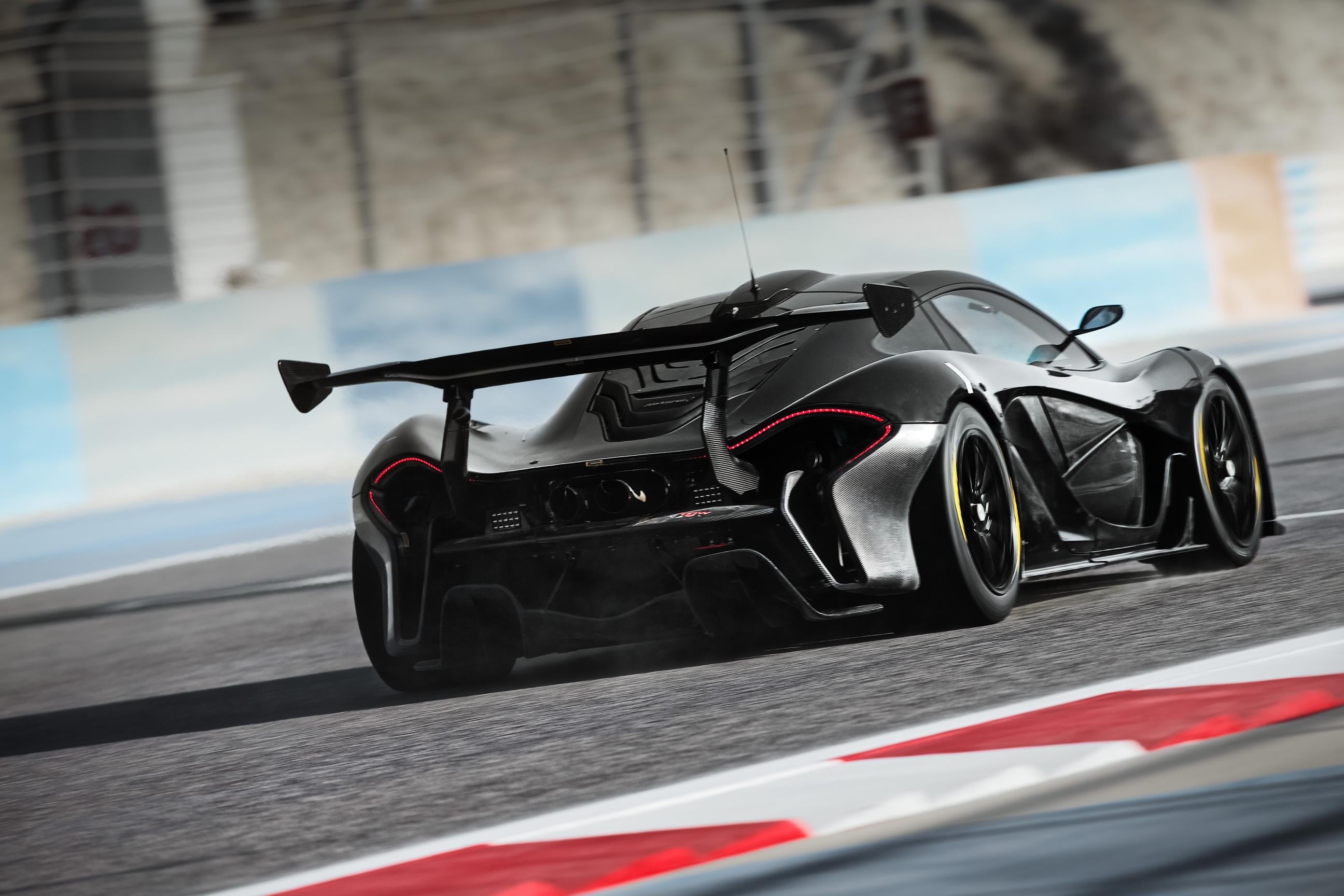
Goodwood will play host to a pair of ultra cars, the McLaren P1™ GTR has 1,000hp and goes like noting else.

  • 2016 Goodwood Festival of Speed to host two different incarnations of the ultra rare McLaren P1™ GTR
  • Entrants by both McLaren Automotive and Lanzante Ltd.
  • Lanzante Ltd. modified McLaren P1™ GTR to attempt record Hill time for a road car
Not one, but two examples of the extraordinary McLaren P1™ GTR will be in action on the Hill over the Goodwood Festival of Speed weekend, between them producing nearly 2,000 horsepower. 
The first is entered by McLaren Automotive as part of the Supercar Run and is being fitted with a special livery inspired by James Hunt’s famous race helmet, in honour of the 40th anniversary of his Formula 1™ championship win. The second is entered by Lanzante Ltd. and is an extensively modified version of the original which was initially created by McLaren Special Operations (MSO). 

The most obvious difference between them is that the Lanzante entrant is street legal, meaning the Lanzante team will attempt to set the fastest time of the weekend for a road car with 1999 Indy 500 winner and McLaren test driver, Kenny Bräck, behind the wheel.
The McLaren P1™ GTR is the car that McLaren never intended to build. But when deliveries began of the road legal McLaren P1™, its first recipients called for an even more extreme version dedicated for track use. The bespoke division of McLaren Automotive, MSO, obliged confirming limited production of the car at the International Geneva Motor Show in 2015. 
For the near £2 million purchase price, their clients also had automatic entry into the ultimate McLaren ownership experience, the McLaren P1™ GTR Driver Programme, including exclusive events at international Formula 1™ circuits, access to the McLaren Racing driver simulator, and their own team of race technicians. 
To celebrate the 40th anniversary of James Hunt’s Driver’s Championship, as well as the fourth owners’ gathering for the McLaren P1™ GTR earlier this week at Silverstone, a one-off livery has been created by McLaren for the entry of the car in this year’s Festival. Its base colour of black teamed with red, yellow and blue stripes echo those of James Hunt’s race helmet, colours resembling his school colours. 
And among those gripping its Formula 1™-inspired steering wheel over the weekend will be McLaren P1™ GTR Driver Programme Mentor, Bruno Senna. 
Lanzante Ltd. has extensive history with McLaren, not least as the company that ran the semi-works McLaren F1 GTR that won the 24 Hours of Le Mans in 1995. 21 years later, Lanzante is renewing its link to those evocative letters with a car that it says will bring together the best of the McLaren Ulimate Series, combining the track-focused McLaren P1™ GTR and its road car sibling in one. Lanzante has so far completed an experimental prototype and it is this which will take to Goodwood’s Hill in Class 25 for Modern GT Racers.  
Visually, the Lanzante car resembles a McLaren P1™ GTR but with modifications for road use. These updates have been designed and developed by Lanzante Ltd.
In addition to a presence in both the Supercar and F1 paddocks, McLaren House will once again return to the lawns of the Goodwood Estate with iconic racers displayed alongside the full range of modern-day McLarens from across the Sports Series, Super Series and Ultimate Series. 
The broad selection of cars, spanning more than 50 years of the McLaren name, will be the most extensive display the company has ever showcased...including the new 570GT.

Wednesday, 8 June 2016

Following excited customer reaction to the carbon fibre bodied McLaren P1™, MSO applies it to 675LT Spider.

  • Following excited customer reaction to the visual carbon fibre bodied McLaren P1™, MSO applies same treatment to 675LT Spider
  • Further 40 percent of body panels created in carbon fibre, all with a unique gloss finish
  • Strictly limited to 25 units for global sale, all pre-sold
McLaren Special Operations, the bespoke division of McLaren Automotive, has announced the creation of the MSO Carbon Series LT. Strictly limited to 25 units globally – all already sold – and based on the 675LT Spider, the Carbon Series LT has been produced in response to requests from McLaren customers captivated by the visual carbon fibre bodied McLaren P1™displayed recently at the International Geneva Motor Show. 

Staying true to the ‘Longtail’ ethos, established by the McLaren F1 in the late 1990s, the MSO Carbon Series LT has been developed with a focus on light weight and optimised aerodynamic performance. Applying gloss carbon fibre to the entire body of the car further extends its appeal to bring a brutal beauty to the existing 675LT Spider body, showcasing the skills of the McLaren bespoke division.
As with the 675LT Spider, the front bumper with larger splitter and end plates, front under body, side skirts, side intakes, lower side intakes, rear bodyside lower, rear fenders, rear deck, rear bumper, diffuser and ‘Longtail’ Airbrake are all carbon fibre but with a gloss finish revealing the inherent weave of the material. 
In addition, the MSO Carbon Series LT is fitted with a gloss finished carbon fibre electrically retractable roof and tonneau, A-pillars, bonnet and rear deck, side blades, complete front and rear wings, and even fuel filler flap. 
The McLaren Track Telemetry pack, which includes three track cameras, is fitted as standard equipment. The front wings also feature GT3-inspired functional louvres. 
In total, the MSO Carbon Series LT features around 40 percent additional carbon fibre parts over the standard car, requiring significant additional development work by the team of MSO craftsmen. It is therefore not possible to retro-fit the gloss carbon fibre body to an already ordered 675LT Spider and the 25 units supplement the previously announced 500 editions of the standard car that sold out in weeks after the car’s debut on December 4, 2015.
The MSO Carbon Series LT is only the third model to wear the LT badge. The first, the 675LT Coupé, arrived last year resurrecting the ‘Longtail’ name after nearly 20 years. The 675LT Coupé focused on light weight, enhanced aerodynamics, increased power and track-focused dynamics, and this limited-run model quickly sold out before the first deliveries commenced. Sharing these key characteristics, McLaren Automotive added the most focused, fastest and exhilarating open top model to ever wear a McLaren badge with the 675LT Spider, further strengthening the ‘LT’ brand.
Under the gloss carbon fibre skin of the MSO Carbon Series LT sits the heavily-revised 3.8-litre twin turbo V8 powertrain from its Coupé sibling, ensuring performance figures are worthy of the LT badge. The power output and torque figures remain unchanged, with 675PS (666bhp) delivered at 7,100rpm and 700Nm (516lb ft) available between 5,000-6,500rpm. The changes to the powertrain saw more than 50 percent of the components replaced to ensure optimised levels of power, torque and drivability. These include new, more efficient turbos, detail design changes to the cylinder heads and exhaust manifolds, new camshaft and lightweight connecting rods, and a faster-flowing fuel pump and delivery system.
Acceleration from 0-100 km/h (0-62 mph) takes just 2.9 seconds, and 200 km/h (124 mph) is achieved in 8.1 seconds – giving away only 0.2 seconds to the more aerodynamically optimised and lighter Coupé. Controlled torque delivery in first gear manages torque to 600Nm (443lb ft) to ensure maximum acceleration, and minimising wheel slip. Top speed is 326 km/h (203 mph).
Production of the MSO Carbon Series LT begins this autumn with first deliveries expected before the end of 2016.

Sunday, 21 February 2016

McLaren Special Operations (MSO) pays carbon fibre tribute to the outgoing McLaren P1™.

  • McLaren Special Operations (MSO) pays carbon fibre tribute to the outgoing McLaren P1™
  • MSO crafts carbon fibre-themed 675LT Spider as fastest ever, street legal convertible McLaren, which makes its public debut at Geneva after selling out in weeks
  • Full McLaren model line-up on display showcasing the Sports Series, Super Series and Ultimate Series
  • New stand location at the Geneva Motor Show, Stand 6040, Hall 6
McLaren Automotive will attend the Geneva Motor Show for the fourth time this year with its largest ever stand in a new location, showcasing the largest range of models from the full three-tier model line-up.  
Among the headlines, McLaren Special Operations (MSO) will pay a carbon fibre tribute to the McLaren P1™ which recently ceased production.  MSO has also created a bespoke version of the 675LT Spider which makes its first public appearance at the show after selling out in weeks. 

They will line up alongside the recently-confirmed 650S GT3 racing car and a still-to-be-announced addition to the Sports Series family on Stand 6040, Hall 6. It will be the largest motor show presence of McLaren to date, underlining the growth of the proudly independent British sports car brand.  
The latest customer project completed by the team at McLaren Special Operations, through its MSO Bespoke division, showcases the craftsmanship and levels of tailoring available to all McLaren owners. 
The McLaren P1™ by MSO, one of the 375 road legal versions produced, is presented with a full visual carbon fibre body which has been hand-laid, with a bespoke ‘Lio Blue’ tinted lacquer. 
The Geneva Motor Show marks the first time the full visual carbon fibre body conversion has been displayed publicly after it was made available to McLaren P1™ customers earlier this year. 
Other key upgrades completed by MSO include a gloss black finish to the wheels, an extensive retrim of the interior with carbon black Alcantara® and contrasting blue stitching, and a 24-carat gold exhaust heatshield in a homage to the McLaren F1.
Making its public debut at the Geneva Motor Show, the 675LT Spider is limited to only 500 examples worldwide, with each model already accounted for. 
The team at MSO has developed a one-off example of the track-honed Spider finished in Ceramic Grey from the MSO Defined range with even greater levels of carbon fibre than the standard model.  The satin carbon fibre retractable hardtop and tonneau can be operated at speeds up to 40km/h (25mph) and saves 1kg, while the front wings include carbon fibre louvres. 
The ‘Longtail’ Airbrake is finished in body colour on the upper surface with the lower plane shows the natural carbon fibre weave, while the aerodynamic front bumper end plates, side skirts, side intakes and rear bumper are also finished in visual carbon. A pair of black Alcantara® trimmed racing seats include contrasting Xenon Yellow contrast stitch with the rotary Handling and Powertrain controls on the Active Dynamics Panel finished in Solis, a unique colour to the 675LT Spider. 
The gold detailing is also visible through the exposed engine bay with a 24-carat gold heatshield around the titanium exhaust system.
Performance for the 675LT Spider by MSO remains unchanged, with the 3.8-litre twin turbo V8 engine generating 675PS (666bhp) and 700Nm (516lb ft) of torque. These figures accelerate the 675LT Spider from zero to 100km/h (62mph) in 2.9 seconds, zero to 200km/h (124mph) in 8.1 seconds and on to a top speed of 326km/h (204mph). 

Friday, 11 December 2015

An end of an era, the final McLaren P1 comes of the production track to complete the 375 model Limited Edition.

  • 375th and final example of the McLaren P1™ produced
  • Completion of the first production model in the McLaren range-topping Ultimate Series
  • First full-body visual carbon conversions now in build with McLaren Special Operations (MSO)
The final chapter in the production of the McLaren P1™ has now been written as the 375th and final example was completed, bringing the curtain down on the most technologically advanced and dynamically accomplished supercar ever made.  From launch, the groundbreaking model was designed with one key goal: to be the best drivers’ car on road and track.

Since headlining the debut motor show appearance for McLaren Automotive at the 2012 Paris Motor Show as a design study, the first model in the McLaren Ultimate Series has been writing headlines, breaking lap times and thrilling owners the world over.
Production commenced during the summer of 2013, with all cars sold prior to the first car being delivered, and the first car – finished with Ice Silver paintwork and extensive levels of visual carbon fibre – rolled off the production line during the 50th anniversary celebrations of McLaren in September 2013. A fitting tribute to Bruce McLaren; the man whose dream it was to produce the ultimate drivers’ car. 
Following this, each and every car was custom-built to the exacting specifications of its owner, in consultation with the team at McLaren Special Operations (MSO), ensuring that no two cars are the same. Running at full capacity, the bespoke Ultimate Series production line within the McLaren Production Centre (MPC) finished one car per day, with each individual model taking 17 days to complete on average.
The final production example of the McLaren P1™ is finished extensively in stunning pearlescent orange, achieved through a unique tinting process. 
The colour echoes the shade of the 64th and final McLaren F1 roadcar, chassis #075, which went on to inspire Volcano Orange, available today across the McLaren Automotive range. It features subtle styling elements in raw carbon fibre weave, with the finish only visible externally on the splitter, diffuser and the aerodynamic blades along the lower body, while the super-lightweight wheels are finished in silver. 
A blend of refinement and purposeful intent is evident inside the cabin with bespoke styling touches by the team at McLaren Special Operations (MSO) including gloss black detailing for the switchgear, instrument bezels and air conditioning vents. 
The lightweight carbon fibre-shelled racing seats include further MSO craftsmanship, with the final McLaren F1 roadcar again the inspiration for the final design. Upholstered in black and orange Alcantara®, the contrasting details are carried across to the stitching on the steering wheel. 
Mike Flewitt, Chief Executive Officer at McLaren Automotive commented: ‘The McLaren P1™ has achieved more than we ever expected of it since it was first previewed little over three years ago, both as a new generation of supercar, and in enhancing the McLaren brand globally.
‘As the direct ancestor to the fabled McLaren F1 – and the first in a new breed of hybrid-powered supercars – it had big shoes to fill, and it has more than succeeded. It has established itself as a true contender, proving to be more than a worthy rival on both road and track against long established rivals. 
It has done a fantastic job of becoming the halo product for the McLaren Automotive brand as we have grown the business into the three tiered, profitable outfit that we are today.’
THE McLAREN P1™: THE ULTIMATE SUPERCAR

Combining a highly efficient petrol engine and lightweight electric motor, the McLaren P1™ was the first of a new breed of supercars, debuting in production form at the 2013 Geneva Motor Show. 

The strictly limited production supercar was the first model in the exclusive Ultimate Series, which crowns the recently announced three McLaren model tiers, above the Super Series and the Sports Series. It rewrote the rulebook and challenged what people believed was possible, as the iconic McLaren F1 had done 20 years previously.

The McLaren P1™ introduced a number of new technologies to the supercar world, using techniques and developments from the world of motorsport to enhance performance. Through the pioneering use of weight-saving technologies and materials, including the extensive application of carbon fibre, the McLaren P1™ has a dry weight of just 1,450kg. 
The carbon fibre MonoCage chassis – which incorporates the roof and lower structures, roof snorkel air intake, battery and power electronics housing – weighs just 90kg making it one of the lightest carbon fibre full-body structures used in any road car to date. 
The aerodynamic design, coupled with the groundbreaking RaceActive Chassis Control suspension system, offers a stiffer and more track-focused set up at the press of a button. ‘Race’ mode stiffens the suspension by 300 percent, pulls the car 50mm lower to produce ground effect aerodynamics, and extends the large active rear wing by 300mm. 
The result is 600kg of downforce at well below its maximum speeds (257km/h / 161mph) , which is considerably higher than most other high performance supercars, and more in line with the levels of downforce generated by a GT3 racing car. This downforce improves cornering ability, especially in high speed corners. 
The powertrain comprises a 3.8-litre twin turbo V8 petrol engine with a lightweight, highly powerful electric motor which, together, produces 916PS (903bhp) at 7,300rpm, and 900Nm (664lb ft) of torque. Through the seamless integration of the 179PS (176bhp) electric motor, 130Nm (96lb ft) of torque is available immediately, providing  ‘torque fill’ to offset any turbo lag as a result of the larger turbos fitted to the combustion engine. 
Through this innovative approach, the McLaren P1™ is propelled from a standstill to 100km/h (62mph) in 2.8 seconds, with 200km/h reached in 6.8 seconds and 300km/h achieved in just 16.5 seconds – a full five seconds quicker than the legendary McLaren F1. 
Top speed is limited to 350km/h (217 mph). This performance is kept under control through a bespoke braking system, developed specifically for the McLaren P1™, using materials previously used on the Ariane space programme. 
Formula 1™ technology and expertise ensure optimal performance in every area, providing progressive and predictable braking in the most extreme of conditions, such as high speed track work. 
The groundbreaking powertrain also excels with regards to efficiency, returning 34.0mpg (8.3l/100km) on the EU combined cycle with CO2 emissions of just 194g/km. The McLaren P1™ can also run solely on electric power, with a range of 11km (6.8 miles) and emissions reducing to zero. As with all models in the three McLaren model tiers, the McLaren P1™ is exempt from gas guzzler tax in the US.
THE MOST BESPOKE McLAREN TO DATE

Since the first production example was completed at the McLaren Production Centre (MPC) in 2013, the McLaren P1™ has proved to be the most popular vehicle with regards to bespoke tailoring. 

The specification of every one of the 375 production models has been built in consultation with the team at McLaren Special Operations (MSO). The world-class levels of craftsmanship ensured owners’ requirements could be realised – whether it was an individual interior colour scheme or a highly detailed exterior paint finish.

Paul Mackenzie, McLaren P1™ Programme Director and Executive Director - McLaren Special Operations, explains: ‘The McLaren P1™ has proved itself to be the most individualised model ever produced by McLaren Automotive. 
In the same way the engineering and design teams have pushed what is possible in terms of performance, our customers have pushed MSO to challenge what is possible and ensure that each example is finished to their specific tastes and exacting requirements. 
The level of bespoke work, paint finishes and tailoring has ensured that no two cars are the same, making every one truly unique.’
In a fitting coincidence, as the finishing touches were being made to the 375th production model, the team at MSO has started work on the first full-body visual carbon fibre examples. This specialised conversion will see all painted panels replaced, with the finish being an example of the highest level of craftsmanship.
THE ULTIMATE TESTING PROGRAMME

As the most extreme model in the McLaren line-up, it was only fitting that the testing programme for the McLaren P1™ was the most extreme. 

The three stages of development prototype – eXperimatal (XP), Validation (VP) and Pre-production (PP) – were tested extensively on the frozen lakes in Northern Sweden during an Arctic winter at temperatures of as low as -30˚C before being baked in the desert heat of Arizona, California and Nevada. Temperatures soared as high as 52°C / 126°F, as the western coast of America experienced some of the hottest temperatures on record.

The development programme also saw the McLaren P1™ testing extensively on circuits across the world. The testing phase was focused on durability, refinement and performance, and the final challenge of the development programme was arguably the toughest of the entire programme – a lap time of the fearsome Nürburgring-Nordschleife in less than seven minutes. 
The Nürburgring provides the ultimate test of any car, all 20.8 kilometres (13 miles) of twisting and undulating tarmac, and to achieve a sub-seven minute lap, an average speed in excess of 178km/h (111mph) is required – along some of the longest straights, tightest bends, steepest inclines, and more changes in road surface than any other circuit. 
In achieving this final objective, the McLaren P1™ joined the exclusive sub-seven minute club, underlining the goal of being the ultimate drivers’ car on road and track.
Chris Goodwin, Chief Test Driver explains: ‘The testing and development programme for the McLaren P1™ was one of the most rigorous and challenging, but also one of the most rewarding. 
We had learnt a lot through previous projects, and coupled with the unparalleled experience in motorsport, this programme truly was the culmination of everything McLaren has ever achieved. 
The integrated IPAS petrol-electric powertrain has been developed to provide seamless power delivery, while the latest in aerodynamics, lightweight materials and technology has been used to create a car which is as at home in the city as it was setting lap times.’
Overall, during the development programme, the McLaren P1™ covered in excess of 620,000 kilometres (385,250 miles) of testing, equivalent to more than 15 times around the world. With a focus on both road and track, more than a third of these test kilometres were on tracks around the world.
THE ULTIMATE SERIES: THE FUTURE
With the completion of the final McLaren P1™, the Ultimate Series continues in production with the limited-edition McLaren P1™ GTR. Production of the track-only, 1,000PS (986bhp) model is due to complete early in 2016.

Commenting on the next stages of the top model tier within the McLaren range, Mike Flewitt concludes: ‘We are in the final stages of production for the McLaren P1™ GTR, with the last car due to complete build in the coming weeks. 
The McLaren P1™ has already established itself as an icon and any car that is to continue the lineage of the Ultimate Series will need to be a worthy successor - a significant step change in technology or performance is required to ensure this is the case. The future is undecided at this stage, which is an exciting proposition.’
THE McLAREN P1™  IN NUMBERS
Number built:  13 x eXperimental Prototype
 5 x Validation Prototype
 3 x Pre-Production
 375 x production cars
Build time800 hours
Number of people involved in the build  105
Paint 5-8 litres of base coat colour (dependent on colour). 8-9 litres of lacquer
Paint process duration up to 5 days depending on specification
Most popular colourVolcano Yellow
Development mileage620,000kms – 15.5 times around the world
Global splitThe Americas – 34 percent 
 Europe – 26 percent
 Middle East & Africa – 13 percent
 Asia Pacific – 27 percent