Purpose

I will try my best to provide detailed info on various cars and what is like to live with them, I have already produced a few for Jaguar-car-forums, I will do my best to be unbiased, but it will be hard for some cars. I will re-produce press releases and copy from other motoring news.
Showing posts with label twin turbo. Show all posts

Thursday, 24 August 2017

The next Ultimate McLaren is as quick as the P1, Lighter and more aggresive.

  • New road legal hypercar set to be faster than all but the P1 GTR on track
  • Second model in firm’s Ultimate Series after the P1, powered by an 800PS version of McLaren’s 3.8-litre twin-turbo V8
  • Extremely light at 1,300kg with race-inspired pared-back interior
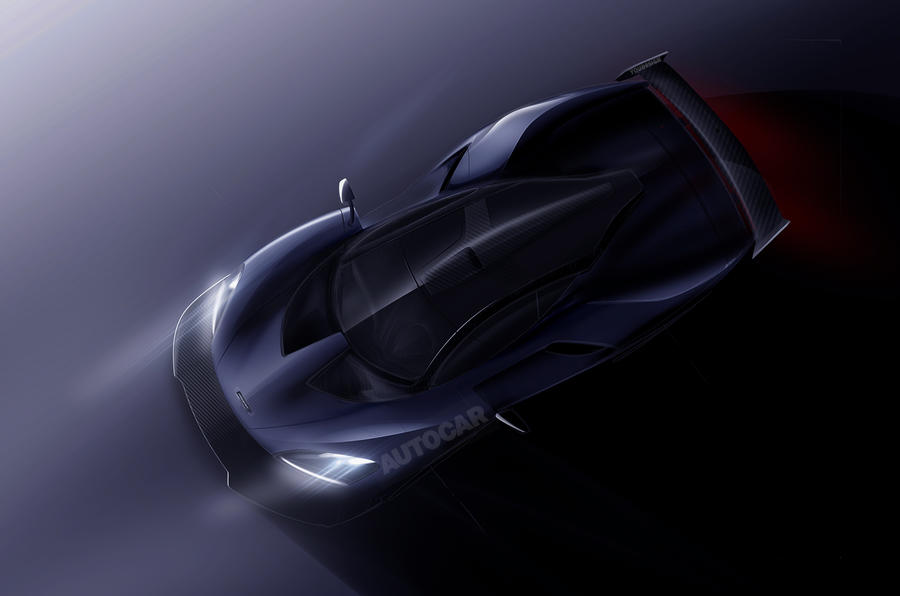
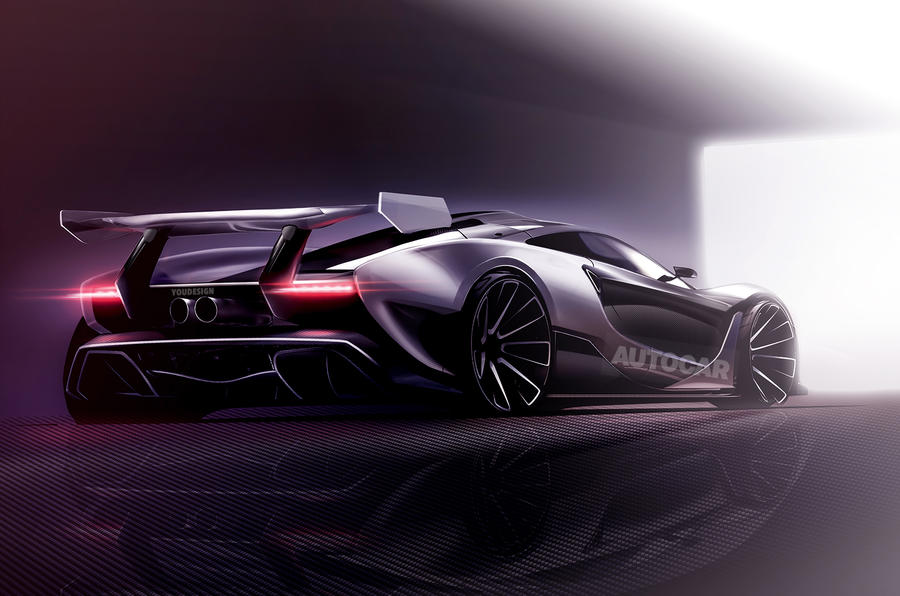
  • Autocar images point to how the new extreme machine could look, featuring function-led all carbon bodywork
  • More extreme than legendary F1 and P1, the full story on this incredible machine is in today’s Autocar magazine and online at http://bit.ly/2uu2L2Z
The most extreme road car in McLaren’s history is set to make its debut later this year – and Autocar has the full exclusive story.
Codenamed ‘P15’ and said to feature an 800PS engine with a strippedout interior and overall weight of less than 1,300kg, the new model will be the second in McLaren’s Ultimate Series range after the hybrid P1.
Designed to be the most extreme, track-ready but still road legal car in the line-up, McLaren’s engineers have reportedly been given the freedom to prioritise performance over everything else and the P15 is said to be faster on a racing circuit than any McLaren, bar the track-only P1 GTR.
At its heart is a tweaked version of McLaren’s 3.8-litre twin turbo V8 said to produce around 800PS (789bhp) – making it more powerful than the 727bhp produced by the road-going P1’s engine, but below the 903bhp peak achieved when the P1’s electric motor is also in operation.
However, the car’s weight is said to have been slashed by the use of McLaren’s latest Monocage II one-piece carbonfibre tub (which now includes the roof structure), and when combined with a race-inspired two-seater interior and no P1-style electrical powertrain, that should mean the P15 tips the scales at less than 1,300kg.
Against the 1,547kg P1, that would give the P15 an even better power-to-weight ratio, a crucial factor in achieving the goal of outstanding performance on the track. Straight-line performance is expected to match, if not beat, the P1’s figures of 0-60mph in 2.7 secs and a quarter mile time of 10.2 seconds. 
The car’s brutal styling is said to be the ultimate distillation of form following function with carbon bodywork used only where it delivers a performance, rather than aesthetic, benefit. Active aerodynamics, with self-adjusting spoilers (knowledge gleaned from McLaren’s F1 experience), not to mention a huge diffuser are also expected to dominate. Autocar has produced a set of images to give a first glimpse at how the P15 could look.
The official reveal will take place later this year, restricted to existing McLaren customers and potential buyers, followed by an official public debut at March 2018’s Geneva Motor Show. A price tag of around £700,000 plus tax (£840,000 in the UK) is mooted with production set to be limited to just 500 cars.
While other McLaren models such as the 675 have spawned Longtail (LT) and Spider open-top variants, the track focused natured of the P15 has ruled these out. However, as it will be a road car, there is the potential for a track-only GTR version as McLaren did with the P1 and P1 GTR.
Autocar editor Mark Tisshaw said: “McLaren has always been relentless in the pursuit of performance – but with Aston Martin’s upcoming Valkyrie and the Mercedes-AMG Project One set to redefine the rules of the hypercar market, it has to keep ahead of the game. Hence the P15.
“There’s no doubt that this will be an incredible machine, but what McLaren has learned of late is to create a car with a broad dynamic brief. With track performance as its goal, the P15 will obviously be outrageous on a racing circuit, but with that low weight, pared-back cabin and non-hybrid powerplant, it promises to be exceptional on the road too. If it does that, it will have created arguably an even better car than the P1 - some achievement.
“These are certainly exciting times for the Woking-based firm as the P15 will also joined by a three-seat, F1-inspired hyper-GT – another story broken exclusively by Autocar. Codenamed BP23, the car will be revealed next year and arrive in 2019.”

Saturday, 22 July 2017

The all New Porsche 911 GT2 RS - race bred, for the road, the best 911 ever.

  • New 2018 911 GT2 RS with 700 hp, rear-wheel drive, race-bred chassis, and rear axle steering
The fastest and most powerful street-legal 911 model ever is ready for launch: The new 2018 Porsche 911 GT2 RS is celebrating its official world premiere at the Goodwood Festival of Speed in the UK from June 30th to July 2nd. 
At the heart of this high-performance sports car is a 700-horsepower twin-turbo flat-six engine. Weighing in at 3,241 pounds with a full tank of fuel, the lightweight two-seater accelerates from zero to 60 miles per hour in 2.7 seconds. 
The new 911 GT2 RS can reach a top track speed of 211 miles per hour, and it surpasses the 2011 911 GT2 RS by 80 horsepower. The 2018 911 GT2 RS delivers 553 lb.-ft. of torque, an increase of 37 lb.-ft. compared to the previous 911 GT2 RS.

 
The 3.8-liter engine in the GT2 RS is based on the power plant found in the current 911 Turbo S model. In order to increase performance further, larger turbochargers push an increased volume of air into the combustion chambers. 
A new additional cooling system delivers optimum cooling at peak loads by spraying water on the intercoolers when the intake air temperature reaches a determined threshold. 
This reduces the inlet temperature under boost and allows for optimum power output, even under extreme conditions. The customized GT seven-speed double-clutch Porsche Doppelkupplung (PDK) transmission in the new GT2 RS enables maximum efficiency with uninterrupted torque transfer. 
The specially developed lightweight titanium exhaust system weighs around 15 pounds less than the system used in the 911 Turbo and delivers a particularly emotional sound.
Porsche Design is celebrating the debut of this very special high-performance sports car by releasing a special-issue watch. Offering a nod to the world of motorsport, the Porsche Design 911 GT2 RS watch is exclusively available to owners of the new vehicle and can only be ordered in conjunction with the new GT model.
Race-bred chassis for exceptional cornering
The 2018 911 GT2 RS has exceptional dry grip thanks to its race-bred chassis with rear axle steering and Ultra High Performance (UHP) tires. 
The stability management system is tuned for spirited driving in the new 911 GT2 RS. The PSM can be deactivated in two stages using the ESC OFF and ESC+TC OFF functions. Large air intakes and outlets and the striking rear wing underscore the emphasis on aerodynamics and down-force. 
The large, wide wheels with 265/35 ZR 20 tires at the front and 325/30 ZR 21 tires at the rear help ensure outstanding braking and cornering potential. The 911 GT2 RS features Porsche Ceramic Composite Brakes (PCCB) as standard. 
The front fenders, wheel housing vents, outer shells on the Sport Design exterior mirrors, air intakes on the rear quarter panels, and parts of the rear are made from carbon fiber reinforced plastic (CFRP), as are many of the interior components. 
The front luggage compartment lid is also made from carbon fiber to make the vehicle as light as possible, while the standard roof panel is made from magnesium. Both of these body panels feature a visible recess in the center, a design element previously used on the 2016 911 GT3 RS.
Optional Weissach package saves 40 pounds of weight
The optional Weissach package reduces weight by nearly 40 pounds, further enhancing the vehicle dynamics of the 911 GT2 RS. The package includes magnesium wheels and numerous elements made of carbon fiber. 
For instance, with this optional package, the roof and anti-roll bars are made of carbon fiber, as are the end links on both axles. The 911 GT2 RS forged magnesium wheels reduce both overall and unsprung weight by over 25 pounds, complementing the vehicle's handling characteristics. 
When equipped with the Weissach Package, the carbon fiber weave of the luggage compartment lid and the roof are left largely exposed, and are painted with a centrally placed decorative strip in the vehicle color for a distinctive look. 
The Weissach package is optionally available with an MSRP of $31,000.
A truly sporty interior
The interior of the 911 GT2 RS is dominated by red Alcantara®, black leather, and carbon fiber trim pieces as standard. 
The GT2 RS Sport steering wheel with shift paddles is also included as standard. Drivers and passengers can experience the driving dynamics of the high-performance sports car in Full Bucket Seats with carbon fiber reinforced backrests, which offer a high level of comfort and lateral support. 
As in every 911 model, Porsche Communication Management (PCM) serves as the central control unit for audio, navigation, and communication. Porsche Connect Plus and the Porsche Track Precision app are also included as standard, enabling detailed recording, display, and analysis of driving data on a smartphone.
The optional Chrono Package expands the PCM functions to include a performance display, which can be used to display, save, and evaluate lap times. The package also includes a stopwatch on the dashboard featuring an analog and digital display. 
The Chrono Package on the 911 GT2 RS also provides preparation for the lap trigger available from Porsche Tequipment. When using the Porsche Track Precision app in conjunction with the infrared transmitter placed at the side of the track, the lap trigger receiver enables drivers to record lap times with a higher level of precision.
Porsche Design has teamed up with Porsche Motorsport to develop the 911 GT2 RS Chronograph exclusively for 911 GT2 RS owners. 
The timepiece housing is made of lightweight titanium. At its heart is the first clock movement developed by Porsche Design, the product of three years' work. The caliber 01.200 includes a flyback function, a load-path-optimized movement bridge, and an official COSC certificate of authenticity.
The flyback function is inspired by motorsport and represents a special feature of the Porsche Design GT2 RS watch. On a traditional chronograph, the buttons must be pressed three times in order to measure consecutive time intervals: 
The first press stops the chronograph, the second resets it, and the third restarts the measuring process. On chronographs with a flyback function, these processes happen automatically and in rapid succession. 
The stop function and the ongoing time display are clearly separated using yellow markings. Many of the details on the timepiece are based on the design details of the GT2 RS. The tungsten winding rotor is modeled after the rims of the 911 GT2 RS. The clock face is made of carbon fiber, while the design of the time display matches the instrument cluster and the tachometer.
The 911 GT2 RS and its watch counterpart are exclusively available at authorized Porsche dealers worldwide. The vehicle and watch are produced and customized in line with each customer's wishes and are delivered together.
Pricing and availability
The 2018 Porsche 911 GT2 RS model is available to order with a base MSRP of $293,200, excluding the $1,050 delivery, processing and handling fee. It will reach U.S. dealers in early 2018.

Sunday, 9 July 2017

Ferrari takes home a haul of awards at this years Engine Of The YEar ceremony including the overall prize, again.

  • The 3.9-litre twin-turbo takes two categories as well as the overall Engine of the Year Award
  • The F12tdf’s 6.3-litre V12 takes its second consecutive Above 4-litre title
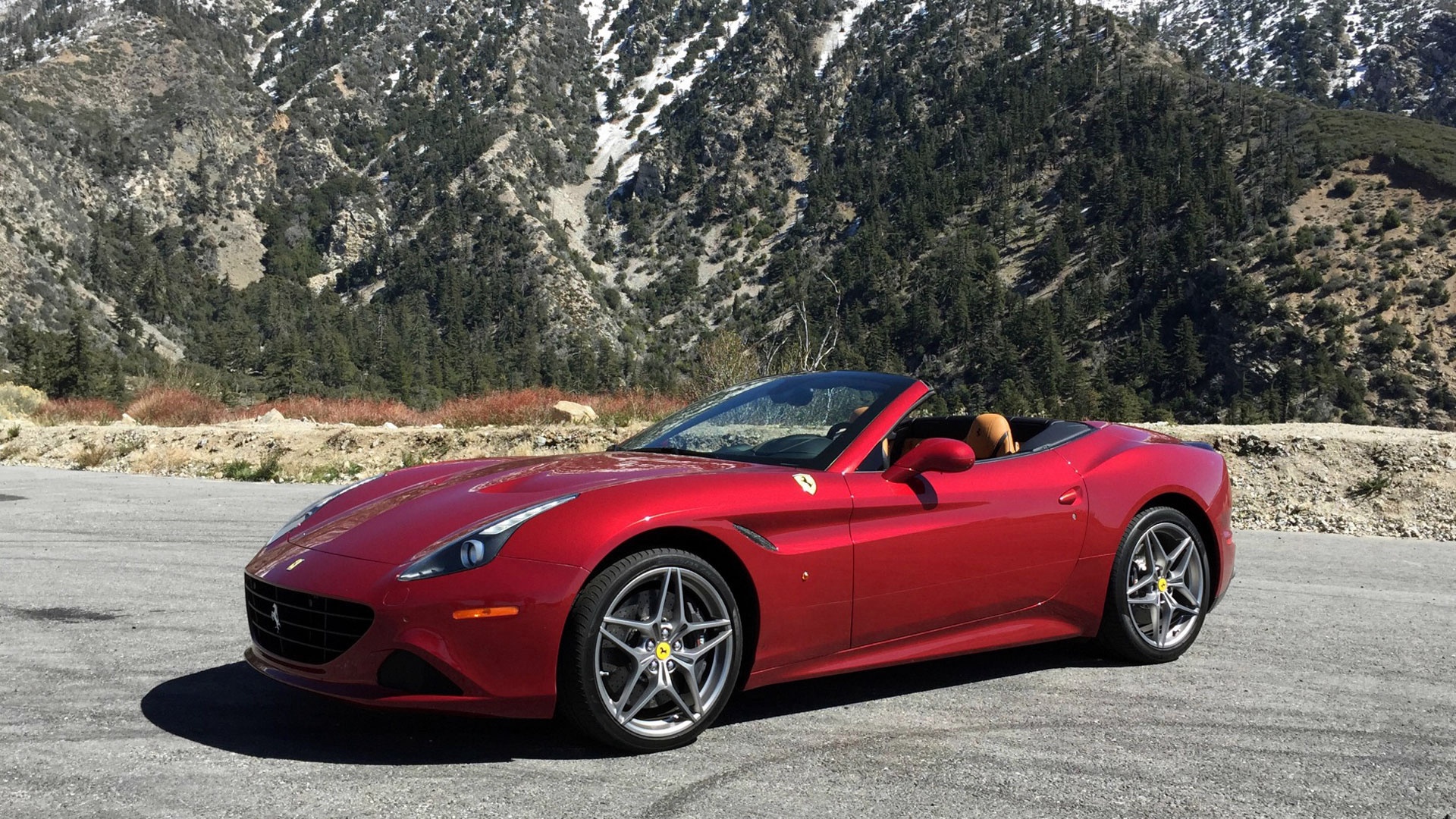
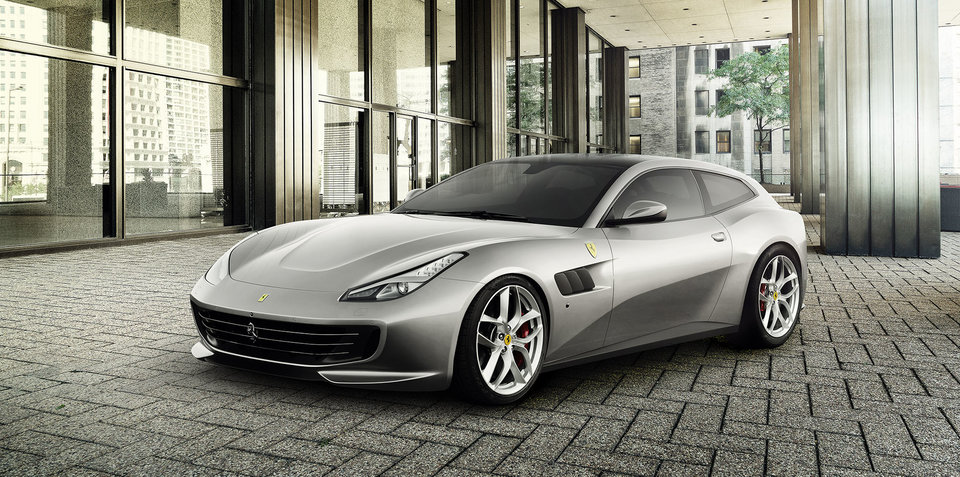
For the second year running, the 3.9-litre twin-turbo V8 that powers the 488 GTB, 488 Spider and with a slightly smaller displacement the California T and GTC4Lusso T, has taken the outright International Engine of the Year Award along with the Performance Engine class and the 3-litre to 4-litre displacement category.
Since its introduction in 1999, the International Engine of the Year Award has become one of the industry’s most coveted honours. As well as dominating the Award’s Above 4-litre and Performance Engine categories in the past six years, Ferrari has now taken a record number of wins for any high-performance sports car manufacturer.
This year also saw Ferrari’s naturally-aspirated 6.3-litre V12 engine, that powers the F12berlinetta and F12tdf, receive the Above 4-litre award for the second year consecutively, and for the third time after the distinction awarded in 2013. This result for the V12 is even more significant this year, as it is this power unit that hailed the start of the glorious Prancing Horse story 70 years ago in 1947.
A concentration of uncompromising engineering solutions, Ferrari’s return to twin-turbo technology for the V8 range has set a new benchmark for turbo-charged engines. Zero turbo lag and a progressive delivery of power and torque throughout the rev range maintain unprecedented levels of driver involvement.
According to Tony Robinson, founder of the International Engine of the Year Awards, “This is only the second time in the history of the IEOTYA that such a powerful performance engine has taken the overall honours two years consecutively  and won the most coveted, outright IEOTYA title. The Ferrari V8 is all about amazing power delivery, precision, driveability and a wonderful soundtrack, too.  One day soon it'll be a classic in its own right; indeed I think it is already!”

Thursday, 22 June 2017

The new 2018 911 Turbo S Exclusive Series Coupe from Porsche is the most powerful 911 Turbo S ever.

  • Intricately refined 911 Turbo S Coupe limited to 500 units worldwide
The new 2018 911 Turbo S Exclusive Series Coupe from Porsche is the most powerful 911 Turbo S ever. The Coupe makes 607 horsepower and is limited to 500 units worldwide. 
In addition to an increase of 27 horsepower, the 911 Turbo S Exclusive Series distinguishes itself from other 911 Turbo S models with its unique design, specialty materials, and luxurious details. 
The sports car is being meticulously finished by hand in the new Porsche Exclusive Manufaktur at Porsche AG's headquarters in Stuttgart-Zuffenhausen. 
Previously known as "Porsche Exclusive," the in-house workshop specializes in customization and is responsible for limited-edition vehicles. For the first time ever, Porsche customers can have the optional matching chronograph from Porsche Design configured in the same specification as their car.
Increased power and performance
The 3.8-liter, twin-turbo flat-six engine with a power kit delivers a maximum torque of 553 lb.-ft. between 2,250 and 4,000 rpm. 

This results in the 911 Turbo S Exclusive Series Coupe accelerating from 0 to 60 mph in 2.8 seconds, and it takes 9.6 seconds to cross 124 mph making it 0.3 seconds faster than the standard 911 Turbo S. The top track speed is 205 mph. 
The 911 Turbo S Exclusive Series comes standard with 20-inch center-lock wheels painted in black, with highlights carefully finished in Golden Yellow Metallic using a new laser technology. For the first time, the brake calipers for the Porsche Ceramic Composite Brake (PCCB) system are available in black with the Porsche logo in Golden Yellow Metallic. 
The active sports chassis with Porsche Active Suspension Management (PASM) and the Sport Chrono package are included as standard. Rear-axle steering and Porsche Dynamic Chassis Control (PDCC) further enhance handling and stability.
Exceptional design
What makes the 911 Turbo S Exclusive Series Coupe so distinctive is the exclusive Golden Yellow Metallic paint finish and various carbon fiber components, including the front trunk lid, roof, and side skirts. The two carbon-weave strips that contour the roof and front trunk lid accentuate the sporty look of the car. 

The rear view is characterized by the rear wing of the Turbo Aerokit, a new rear fascia, and the exhaust system with twin tailpipes which are finished in black. The fenders are decorated with Porsche Exclusive Manufaktur plates. In addition to Golden Yellow Metallic, the vehicle is offered in other select exterior colors.
Interior craftsmanship
The interior is both elegant and unique. The 18-way adjustable sports seats are covered in perforated leather. The inside layer has two stripes in Golden Yellow, creating a unique effect. 

The seams and the Turbo S lettering stitched into the headrests are also finished in Golden Yellow, and the roof lining is made of Alcantara with a Golden Yellow double-stripe look. Fine copper thread is integrated into the trim strips of the carbon fiber interior package. 
The plate featuring the limited-edition number on the passenger's side underlines the car's exclusivity. The door sill guards, also finished in carbon fiber, include illuminated Exclusive Series lettering.
Truly hand-crafted
For more than 30 years, Porsche customers have been able to enjoy extensively customized individual components. With the introduction of this new limited production vehicle, Porsche is beginning a new chapter: Porsche Exclusive will now be presented across the globe with the new "Porsche Exclusive Manufaktur" brand. 

This in-house workshop specializes in custom Porsche modifications. The range of services available also includes customer consultation, developing special equipment options for each model range, and producing limited production cars.
Exclusive Chronograph from Porsche Design to match the vehicle
The Porsche Design Chronograph 911 Turbo S Exclusive Series represents the first occasion where Porsche Design has released a Chronograph for limited production car customers with design features corresponding to those used in the vehicle. 

The exclusive Chronograph combines the characteristic features of Porsche Design watches with the character of the 911 Turbo S Exclusive Series Coupe. Its housing is made of lightweight titanium, and its black titanium carbide coating emphasizes its sporty design. The carbon dial is taken from the striking carbon weave stripes on the 911 Turbo S Exclusive Series and finished in the paint color used on the vehicle. 
The rotor design is modeled after the rims on the 911 Turbo S Exclusive Series and is painted in the same color. The winding mechanism features a typical Porsche center-lock with the Porsche crest on the movement.
High-quality accessories
Customers can also enjoy the unique Exclusive Series design outside their vehicle with the leather Exclusive Series luggage set that has been developed especially for customers who buy a vehicle from the limited production vehicle. 

The visual details on the luggage set as well as the dimensions of the two weekender bags, the handbag, and the garment carrier, are the perfect fit for the luggage space available in the 911 Turbo S Exclusive Series Coupe.
Pricing and sales launch
Suggested retail pricing for the 2018 911 Turbo S Exclusive Series Coupe will start from $257,500. The Porsche Design Chronograph 911 Turbo S Exclusive Series will be optionally available at Porsche dealerships for those who buy the vehicle, and can be ordered to the customer's requirements at the same time they order the vehicle. 

U.S. pricing for the watch has yet to be determined. The five-piece luggage set costs $6,324 and is available to owners of the 911 Turbo S Exclusive Series Coupe in conjunction with delivery at the factory for customers who select European Delivery, or from the Porsche Tequipment range available for ordering at any Porsche dealership.

Tuesday, 30 May 2017

AUTOCAR GAME CHANGER - The Aston Martin DB11 takes an award at this years ceremony.

Aston Martin has claimed top honours at this year’s prestigious Autocar Awards, taking home the ‘Game Changer’ award with its bold new addition to the illustrious ‘DB’ bloodline, the DB11.
The award, which celebrates cars that bring new, higher standards to their classes, or defy convention in a way that brings benefit to buyers, cements the importance of DB11 to the brand’s Second Century Plan; the British marque’s ambitious challenge of launching seven key new products in the same number of years.
The DB11 showcases a fresh and distinctive design language, pioneering aerodynamics and powered by a new 600-BHP in-house designed 5.2-litre twin-turbocharged V12 engine. 
Built upon a new lighter, stronger, and more space efficient bonded aluminium structure, DB11 is the most powerful, most efficient and most dynamically gifted DB model in Aston Martin’s history and the Autocar judging panel recognised the company’s achievement with this award.
Mark Tisshaw, Editor of Autocar said, “The DB11 is as comfortable as new Aston GT cars will get, but what’s just as important as how excellent it is, is what it’s made of: it is the first in a new-generation of aluminium platforms that is more advanced yet just as flexible as the previous architecture from a production perspective. There’s a new factory in Wales, too, which will supplement production at Aston’s base in Gaydon. While there’s exciting plans all round for the company, it’s the DB11 we’ll remember as the car that started its new era, earning it one of this year’s ‘Game Changer’ awards”.
Andy Palmer, Aston Martin President & Chief Executive Officer said, “We are honoured that Autocar recognises the strides that we have made with the Aston Martin DB11. This is just the start of our second century plan, but this model already begins to redefine who we are. We will continue to pursue the same levels of quality, performance and pioneering excellence as we have done with DB11 and we look forward to the launch of many more exciting new models in the coming years”.
Aston Martin DB11 pricing starts from £157,900 RRP in the UK.

Wednesday, 5 April 2017

The Storming Ford F-150 Raptor has landed on UK shores with a right hand drive conversion.

  • Twin-turbo 3.5-litre V6 petrol engine produces 444bhp and 510lb ft of torque
  • Two cab options: SuperCab with rear-hinged coach doors, SuperCrew with full size doors
  • 2017 model available from £78,000 (incl. VAT)
  • Optional Sutton Bespoke right-hand-drive conversions, and tuning package taking power to over 590bhp
  • Tax-free sales for export outside of the EU
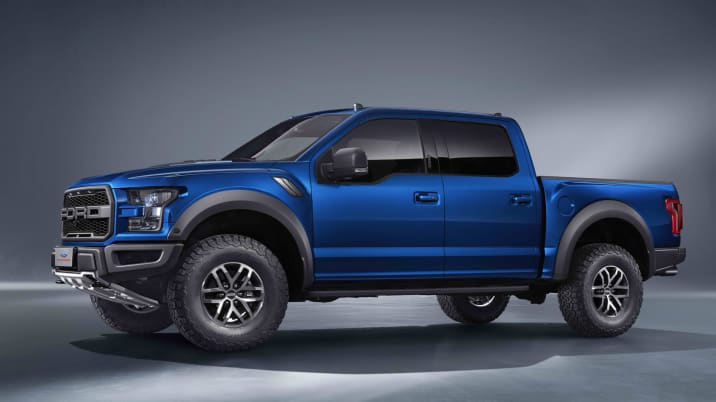
The 2017 Ford F-150 Raptor has arrived in the UK, with delivery-mileage examples of the 444bhp ‘super truck’ available from Clive Sutton, one of London’s leading supercar and luxury car dealers. 
The car sourcing specialist has initially acquired five left-hand drive examples of the latest F-150 Raptor, with three already snapped up by long-standing clients. 
vehicle can be viewed now by appointment at Clive Sutton’s premises in St John’s Wood, with on-the-road prices starting from £78,000 (incl. VAT).
Ford’s latest F-150 Raptor has been widely anticipated in the UK since the end of production of the previous truck in 2014. Significant features include a lightweight aluminium body, an efficient and powerful twin-turbo 3.5-litre V6 petrol engine producing 444bhp and 510lb ft of torque, and a 10-speed automatic gearbox. 
High-performance Fox Racing shock absorbers are fitted as standard, giving the Raptor incredible off-road agility.
Customers interested in right-hand-drive vehicles can commission a conversion of the new F-150 Raptor through Sutton Bespoke’s specialist programme, at a cost of £36,000 (incl. VAT). Sutton’s right-hand-drive conversions use precision-sculpted mouldings of interior components, before specialist craftsmen use a blend of both traditional and modern techniques to ‘mirror’ the dashboard appearance and steering assembly.
Further personalisation of the new F-150 Raptor can be achieved through Sutton Bespoke’s supercharging package, taking the truck’s V6 petrol engine to over 590bhp, priced at £10,800 (incl. VAT), and an active sports exhaust option from £3,200 (incl. VAT). Clive Sutton is also able to offer tax-free sales for export outside of the EU.
Clive Sutton can source vehicles with specific optional extras on request. The raft of factory extras available for the F-150 Raptor include: 10-way electrically adjustable and heated seats, dual-zone climate control, a 360-degree camera system, twin-panel ‘moonroofs’, and a trailer towing package with Ford’s Backup Assist technology.
Two examples of the F-150 Raptor are available to view by appointment at Clive Sutton’s facility in St John’s Wood, London – are a SuperCab in Lightning Blue and a SuperCrew in Shadow Black. The latter is the more spacious variant, with larger rear doors and more room for occupants inside. The SuperCab model has rear-hinged coach doors that open to reveal a pillarless cabin aperture.
Sutton Bespoke offers a complete 'tailor-made' service to its customers, affording the opportunity to create a truly unique vehicle. Numerous upgrade packages and specialist customisation options can be supplied and fitted, either to modify a car already owned by the client, or as a complete service with the base vehicle sourced as well. Attractive funding options are available to enable the car and the upgrade package to be financed together.

Monday, 13 March 2017

McLaren debuts the all new 720S Super Series at the 87th Geneva Motor Show.

  • McLaren 720S introduces the second-generation Super Series, the supercar product family at the heart of the McLaren brand
  • Stunning new interpretation of McLaren design language and dedication to aerodynamic principles, personifying the brand’s extreme performance DNA
  • Carbon fibre chassis based around Monocage II central structure  key to the 1,283kg lightest dry weight and unparalleled interior space and visibility
  • Luxurious, driver-focused cabin, featuring the finest leathers and aluminium switches
  • New 720S delivers outstanding driver engagement, with best-ever Super Series aerodynamic efficiency and new generation of McLaren’s active chassis system, Proactive Chassis Control II
  • Widest breadth of dynamic capability of any McLaren, ranging from precise, controlled comfort to the most extreme handling prowess
  • New, twin-turbocharged 4.0-litre V8 engine produces 720PS and 770Nm, with power-to-weight ratio of up to 561PS per tonne
  • 0-60mph in 2.8 seconds (0-100km/h 2.9 seconds), with 0-200km/h (124mph) reached in 7.8 seconds and maximum speed of 212mph (341km/h)
  • Braking from 200 km/h to standstill in 4.6 seconds, covering 117m
  • Deliveries of McLaren’s new supercar will commence in May: prices start at: £208,600 (UK)
The new McLaren 720S makes its global debut today (March 7) at the 87th Geneva International Motor Show, introducing the second-generation of McLaren’s Super Series and simultaneously raising previously accepted limits of performance in the supercar sector.
Super Series is the core of the McLaren business and personifies the blend of extreme performance, crafted luxury and unparalleled driver involvement that is the McLaren heartlandThis is the first time we have replaced a product family and the new 720S is absolutely true to McLaren’s pioneering spirit in being a revolutionary leap forwards, both for our brand and the supercar segment.
Mike Flewitt, Chief Executive Officer, McLaren Automotive

The unveiling of McLaren’s new supercar confirms both the 720S name and 720PS horsepower of the first model in the second-generation McLaren Super Series, details which have been teased online in recent months. 
The Surrey, England-based manufacturer of luxury, high-performance sports and supercars, has issued a series of six press releases since January, each accompanied by an image or film containing a numerical reference - and it can now be revealed that 1 x 2 x 3 x 4 x 5 x 6 equals 720…
The new 720S is lighter, faster and even more dynamically capable than its McLaren 650S predecessor, with unparalleled levels of interior space and sophistication and a breadth and depth of abilities that will engage and exhilarate the driver.  One glance at the 720S identifies it as a bold reinterpretation of McLaren’s design language; rooted in aerodynamic principles, the beautiful form has nothing superfluous about it: immediately and undeniably a McLaren, the new 720S is arguably the most distinctive and remarkable McLaren yet.
One of the key points in the design of the new Super Series is the absence of radiator intakes on the side of the car; this function is carried out instead by the unique ‘double-skin’ aerodynamic form of the dihedral doors, which channel air to the high-temperature radiators that cool the mid-mounted engine.
The new M480T engine powering the 720S continues the lineage of McLaren’s multiple-award-winning, twin-turbocharged V8 engine series. The 4.0-litre engine, which has 41 percent new part content compared to the 3.8-litre engine that continues to feature in the McLaren Sports Series, generates a maximum of 720PS and 770Nm of torque.
Performance is truly astonishing: standstill to 100km/h (62mph) takes less than 3 seconds and just 5 seconds later the car has passed the 200km/h (124mph) mark on its way to a maximum speed of 341km/h (212mph). Braking is equally impressive, the new 720S coming to a halt from 200km/h (124mph) in just 4.6 seconds, covering 117m. Additionally, the extreme efficiency of the engine also goes beyond mere velocity: the new McLaren 720S delivers 10.7 litres/km combined fuel economy and CO2 emissions of just 249g/km in the New European Driving Cycle (NEDC).
McLaren’s expertise in carbon fibre structures – every road car built by the British manufacturer since the McLaren F1 in 1993 has had a carbon fibre chassis – underpins the construction of the new 720S; the architecture of the car is based around a new carbon fibre ‘tub’ and upper structure, the McLaren Monocage II. This technology delivers extreme strength and rigidity in a lightweight structure and is the ideal base for any supercar. A range of aluminium alloys are also used extensively in the chassis, as well as for some body panels.
A new generation of McLaren’s Proactive Chassis Control, new suspension and the established excellence of McLaren’s power-assisted, electro-hydraulic steering, all combine to deliver huge reserves of grip, balance and performance and an unmatched breadth of dynamic capabilities.
The hand-crafted luxury inherent in a McLaren, with the authenticity of fine leathers and machined aluminium, is complemented by the revolutionary new McLaren Driver Interface, which comprises a Folding Driver Display and Central Infotainment Screen. In combination with a cabin environment that establishes new standards in the supercar segment for visibility, space and comfort, these attributes give the new McLaren 720S an incredible degree of usability and validate its claim to be the most complete supercar on sale today.
The new McLaren 720S is now available to order from McLaren retailers, with the first customers scheduled to receive their cars in May.  Three grades of specification are offered, with Performance and Luxury trims extending above the standard level, all complemented by a range of option packs. 
McLaren 720S
Technical specification
Engine configurationM840T engine, 4.0-litre twin-turbo V8, 3,994cc
Drivetrain layoutLongitudinal mid-engined, RWD
Power PS (bhp/kW @ rpm720 (710/537) @ 7,500
Torque Nm (lbs ft) @ rpm770 (568) @ 5,500
Transmission7 Speed SSG
SuspensionIndependent adaptive dampers, dual wishbones, Proactive Chassis Control II (PCC II)
BrakesCarbon Ceramic Discs (F: 390mm R: 380mm)
Wheels (inches)Front: 9J x 19; Rear: 11J x 19
TyresF: 245/35/R19 93Y (XL); R: 305/30/R20 103Y (XL)
Length, mm (inches)4,543 (179)
Wheelbase, mm (inches)2,670 (105)
Height, mm (inches)1,196 (47)
Width, with mirrors, mm (inches)2,161 (85)
Width, mirrors folded, mm (inches)2,059 (81)
Width, without mirrors, mm (inches)1,930 (76)
Lightest dry weight, kg (lbs)1,283 (2,828.5)
DIN Kerb weight, kg (lbs) [fluids + 90% fuel]1,419 (3,128)
Luggage capacityFront: 150l; Rear: 210l
Performance data*
ACCELERATION
0 -60mph2.8 seconds
0-100 km/h (0-62mph)2.9 seconds
0-200 km/h (0-124mph)7.8 seconds
0-300 km/h (0-186mph)21.4 seconds
0-400 m / ¼ mile10.3 seconds
Maximum Speed341km/h (212 mph)
200 – 0 km/h (124mph – 0) braking4.6 seconds/117 m
100 – 0 km/h (62mph – 0) braking2.8 seconds/29.7 m
EFFICIENCY
CO2 emissions [NEDC]249 g/km
Fuel consumption – EU mpg (l/100km)
Combined
Urban
Extra urban

10.7 l /100km
15.8 l /100km
7.9 l /100km
* All figures subject to confirmation. MPG (UK/US) not yet available.