Purpose

I will try my best to provide detailed info on various cars and what is like to live with them, I have already produced a few for Jaguar-car-forums, I will do my best to be unbiased, but it will be hard for some cars. I will re-produce press releases and copy from other motoring news.
Showing posts with label New Engine Range. Show all posts

Tuesday, 31 May 2016

Mercedes-Benz to introduce a new family of Diesel Engines at low, or below NOx emission levels.

Innovative solution for diesel and gasoline engines
  • New family of diesel engines fulfils future RDE requirements
  • DEKRA confirms particularly low and below-limit NOx emissions
  • Continuous technical improvements across all model ranges
  • Large-scale introduction of particulate filters for gasoline engines
With its completely newly developed family of diesel engines, Mercedes-Benz is the first manufacturer to put diesel vehicles on the market that already fulfil the stricter emission limits planned for the EU as of September 2017. This has been achieved through an integrated technology approach, which includes new stepped combustion chambers and further developed exhaust-gas recirculation. 
The new engine design also allows all components for exhaust-gas recirculation to be positioned directly on the engine, instead of under the car floor as previously. This significantly enhances the system’s overall effectiveness – largely independently of ambient temperatures and driving style.


The market launch of the completely newly developed four-cylinder diesel engine OM 654 is in the new E-Class. 
The E 220 d now consumes as little as 3.9 litres of fuel per 100 kilometres (combined according to the NEDC currently prescribed for all manufacturers), although the engine is more powerful than its predecessor [72.4 mpg] (143 kW/195 hp compared with 125 kW/170 hp). This corresponds with CO2 emissions of 102 grams per kilometre.
The new four-cylinder engine is the first member of a modular engine family that will be applied throughout the entire portfolios of Mercedes-Benz Cars and also at Mercedes-Benz Vans. Several levels of power output are planned, as well as longitudinal and transverse installation in vehicles with front-, rear- and all-wheel drive. 
In this way, Mercedes-Benz will equip its entire range of diesel cars in Europe with this latest engine generation including SCR technology (selective catalytic reduction) by 2019 at the latest.
“Our customers’ trust is very important to us and we take our responsibility to the environment very seriously,” explained Prof. Dr. Thomas Weber, Daimler Board of Management Member for Group Research and Mercedes-Benz Cars Development. 
“That’s why we decided five years ago to invest massively in the further development of diesel technology. But we are also continuously making our gasoline engines more efficient and more environment-friendly; because high-tech combustion engines will remain the backbone of individual mobility until the widespread market success of electric vehicles. 
For this reason, we are investing a total of about three billion euros to ensure further improvements in fuel consumption and emissions – in both future and current vehicles.”
DEKRA confirms particularly low and below-limit NOx emissions
In addition to their good fuel consumption, the new family of diesel engines also has the advantage of particularly low nitrogen-oxide emissions. 
That has now been confirmed by independent measurements by DEKRA, a German vehicle inspection company. The DEKRA experts carried out an extensive test program with a Mercedes-Benz E 220 d. The focus was on Real Driving Emissions (RDE), the method prescribed in the EU as of September 2017 in addition to measuring emissions on the test bench.
The RDE dynamic test program covers various stretches of road that include urban streets, country roads and freeways. The measurements were carried out at various temperatures between about two and 16 degrees Celsius, and with various numbers of occupants and varying loads. 
As a result, the E 220 d emitted less NOx than the limit of 80 mg/km on all applicable RDE routes. In some cases, the NOx emissions were at the very low level of between just 13 and 21 mg/km even at low ambient temperatures.
Continuous improvement also with current diesel engines
The Mercedes-Benz engineers made use of the newly gained knowledge from the development of the new family of diesel engines also to continually improve the emissions of current vehicle models. 
That includes optimisations with regard to turbochargingand the further development of fuel injection and intercooling, as well as the application of new materials such as chromised timing chains. 
The combination of these measures results in improved robustness of the parts and components that are subjected to particular stress by combustion and exhaust-gas recirculation. 
The operating range of exhaust-gas recirculation has been extended towards significantly lower temperatures. Another factor is the increased efficiency of the SCR systems. 
This has been achieved by modifying the design of the exhaust system and by applying new catalyst materials. This entire package of measures is now being successively applied in series production.
With the entry-level engines of the compact cars (A- and B-Class and the CLA and GLA) and with the V-Class, Mercedes-Benz is offering the recent improvements as a software update on cars already in customers’ hands in the context of a voluntary service action to be implemented in the coming months, starting with the V-Class in June.
Gasoline engines with particulate filters in the future
Thanks to a large number of development advances, diesel engines’ emissions of particulate matter have been continually reduced in recent years. 
Also many of the modern Mercedes-Benz gasoline engines already emit lower levels of particulate matter than the limits to be introduced in the future. This is achieved by means of modifications within the engines as well as through the application of piezo injectors.
For the further improvement of environmental compatibility, Mercedes-Benz plans the large-scale use of particulate filters also for gasoline engines – the first manufacturer to do so. 
After more than two years of positive field tests with the Mercedes-Benz S 500, additional versions of the S-Class with gasoline engines are to be equipped with this new technology with the next model upgrade. 
That will be followed by gradual implementation in further new models, model upgrades and new engine generations. After that, particulate filters will also be applied in the current model ranges.

Monday, 22 February 2016

Vauxhall to have a range of all new products on display at this years Geneva Motor Show.

  • Purebread GT Concept reveals vision of future sports car
  • New Mokka X showcases muscular exterior and elegant interior
  • Astra success continues with new Astra Sports Tourer
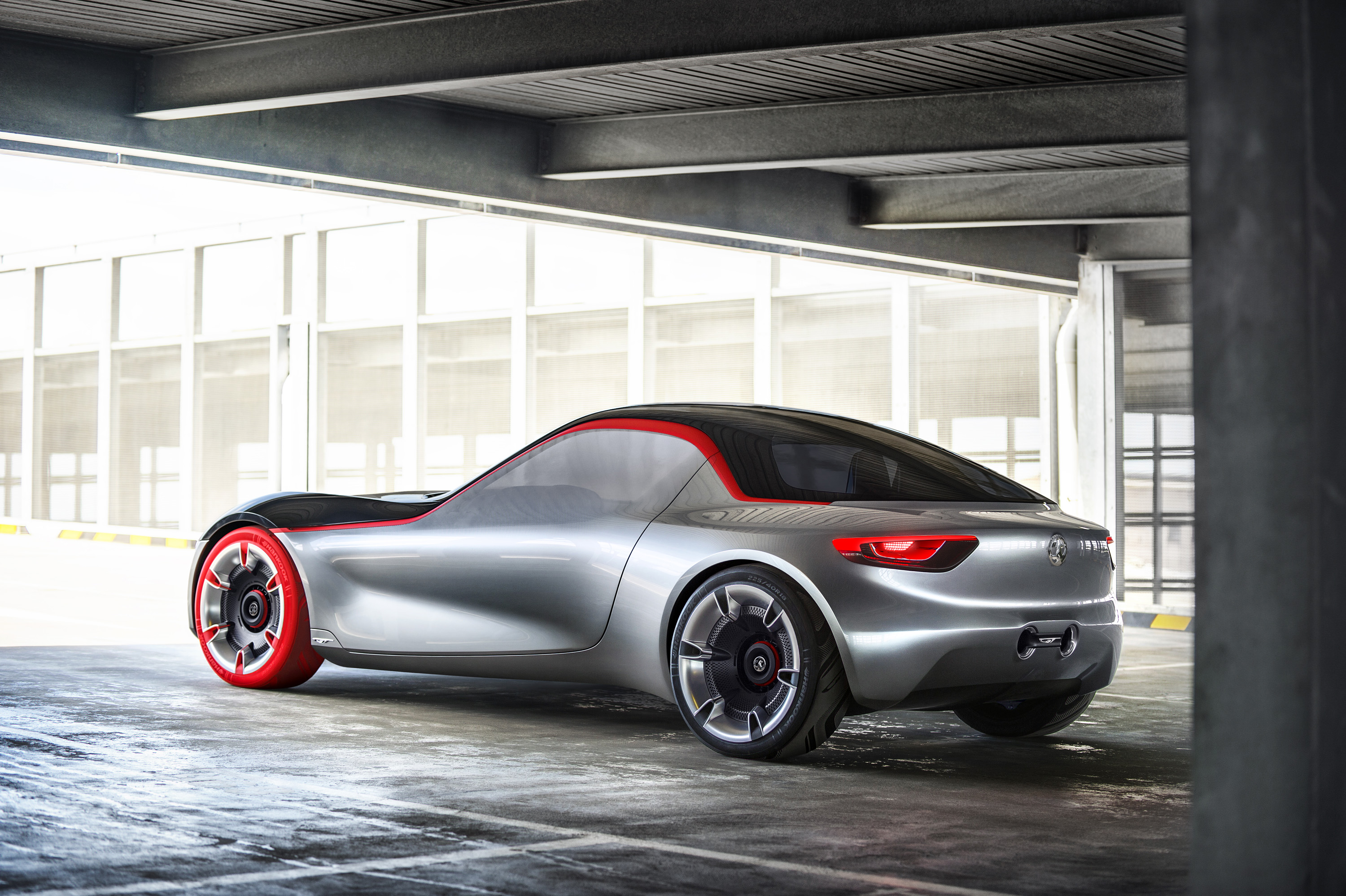
Vauxhall will unveil its GT Concept at the 2016 Geneva Motor Show, revealing a vision for the future sports car. There will also be a world premiere of the all-new Mokka X alongside the Astra range, including Sports Tourer, five-door hatchback models and a new BiTurbo engine.
As usual the show, which opens its doors to the public from 3rd to 13th March, begins with two press days. Opel Group CEO, Dr Karl-Thomas Neumann and his team are inviting all journalists to the Vauxhall/Opel press conference on 1st March at 11:00 CET on stand 2231 in hall number 2 of the Palexpo.

GT Concept
Purebred, pared down, yet unashamedly avant-garde, the GT Concept is even shorn of door handles and door mirrors, its breathtaking form clothing a classic front mid-engined, rear-wheel drive chassis that will appeal to driving enthusiasts.
While the GT Concept is forward-thinking, encapsulating Brit designer Mark Adams’ philosophy of ‘Sculptural Artistry meets Technical Precision’, its name mirrors that of the 1964 GT Concept, the first styling model to be produced by the nascent Vauxhall Design & Engineering Centre in Luton which opened the same year.
But importantly, it pays homage to two significant motor show cars: the 1966 Vauxhall XVR and the 1965 Opel Experimental GT, the first true concept vehicles to appear from the design houses of a European manufacturer. The 2016 GT Concept is also a logical step on from the innovative and beautiful Monza concept from 2013.
‘We created the GT Concept to capture the bold, emotional spirit of both the Vauxhall and Opel brands,’ said Mark Adams, Vice President, Design Europe. ‘It is dramatic, sculptural and full of innovations, which is our great tradition that we intend to continue. This coupe impressively demonstrates the continuous development of our design philosophy.’ 
A key innovation of the GT Concept is its large doors with integrated side windows that show a seamless transition from glass to painted surfaces. Both driver and front passenger gain access to the spacious interior after pressing a touchpad for the electric doors that is integrated in the red signature line of the roof. The doors cleverly open into the front arches, using a space-saving and patented mounting that allows a large opening angle for tight parking spaces in urban areas.
Two cameras mounted behind the wheel arches offer enhanced visibility, especially in city driving. They transmit their images to two monitors on the left- and right-hand side of the cabin, rendering external mirrors obsolete. The windscreen flows into a glass panorama roof, affording occupants a similar experience to that of a targa-topped car.
Mokka X
Vauxhall’s new Mokka X, which reaches UK showrooms late this year, debuts at the 2016 Geneva Motor Show with a fresh interior and exterior design, a new powertrain and featuring OnStar and Apple CarPlay.
With over half a million sold in Europe and nearly 100,000 in the UK, Mokka has seen huge success since its launch in 2012. The Mokka’s compact size (4.28m long), sporty looks and elevated seating position having wowed customers looking for an affordable SUV.
Incorporating cues from Vauxhall’s new design philosophy, the new Mokka X will be the first model to introduce the “X” segment identifier for future Vauxhall SUV and crossover vehicles.
The Mokka X’s bold new look is thanks to work carried out by a design team led by Brit Mark Adams. Its new front treatment is aligned with Vauxhall’s new design philosophy including a wing-shaped horizontal front grille and the dominant, sharp double-wing signature of the LED daytime running lights. At the rear is another double wing signature highlighted in the tail lamps, with LED technology an option. Vibrant new colours such as ‘Amber Orange’ and ‘Lava Red’ will also be available. On the inside, the Mokka X has a completely new dashboard inspired by the new Astra.
After introducing the much-lauded 1.6-litre ‘Whisper Diesel’ engine last year, the Mokka range is now extended further to include a new generation 1.4-litre Direct Injection Turbo (152PS) petrol unit which first appeared in the Astra. With a six-speed automatic transmission, adaptive all-wheel drive and start/stop, this Mokka achieves 42.8mpg* and CO2 emissions of 154g/km*.
In addition to the AWD system, Vauxhall engineers have once again made innovative technology available to a broad group of customers by introducing LED Adaptive Forward Lighting headlamps. The new AFL LED system adapts the headlights’ lighting patterns automatically to the driving situation so that the best possible light performance is given without dazzling other road users.
ASTRA RANGE
Following its world premiere at last year’s Frankfurt Motor Show, the new Sports Tourer will be on display at Geneva Motor Show in the same month it goes on sale in the UK, priced from £16,585 on-the-road.
Like its five-door hatch sibling, the Sports Tourer is based on an all-new lightweight vehicle architecture with a new design, powertrains and technology. The Sports Tourer is built at Vauxhall’s Ellesmere Port manufacturing plant in Cheshire.
The Sports Tourer further extends the dynamic lines of the five-door. It has the same exterior dimensions as the outgoing model yet offers much more space for passengers and luggage. The Sports Tourer’s total cargo capacity is now 1,630 litres, thanks to more efficient packaging.
Range highlights include the 1.0-litre three-cylinder Turbo Start/Stop ecoFLEX model priced from £17,285 on-the-road. The diesel offering includes the 1.6-litre ‘Whisper Diesel’ (110PS) Start/Stop ecoFLEX model (prices start at £18,785 on-the-road) that achieves 83.1mpg and CO2 emissions of 89g/km.
Technology includes OnStar, Vauxhall’s ground-breaking connectivity system, and IntelliLink infotainment system which allows users to get Apple CarPlay and Android Auto. And for the first time on a Vauxhall, the tailgate can be opened using a small kicking motion under the rear bumper, in combination with “Keyless Entry and Start”. A further kicking motion under the bumper will close the tailgate.
Also on display will be five-door hatch range, which is in UK showrooms now and an all-new turbocharged diesel engine. In combination with start/stop and six-speed manual transmission, the 1.6-litre BiTurbo CDTi in the Astra hatchback body style achieves 67.3mpg combined and 112g/km. Performance is not compromised with a top speed of 137mph and 0-60mph acceleration in 8.4 seconds.
*preliminary data

Wednesday, 17 February 2016

Infiniti today revealed the full lineup of new advanced engines for its Infiniti Q50 sports sedan at Chicago.

Infiniti today revealed the full lineup of new advanced engines for its Infiniti Q50 sports sedan at the 2016 Chicago Auto Show, including 300-horsepower and 400-horsepower versions of the advanced 3.0-liter V6 twin turbo engines and a 2.0-liter 4-cylinder turbo engine. 
The three new engine-equipped Q50 models – designated the Q50 2.0t, Q50 3.0t and Q50 Red Sport 400 – are on display at the country's oldest and best-attended auto show, along with the 2016 QX60 crossover and the all-new QX30 premium active crossover. It is the first time all of these new models have appeared together.

"We are completely transforming the Infiniti model lineup this year with all-new models like the QX30 and Q60 sports coupe, major makeovers such as the QX60, and cutting-edge powerplants like the Q50's three all-new turbocharged engines," said Tony Gardina, regional vice president, Infiniti North, Infiniti USA. 
"We can't think of a better venue to showcase our full-scale product renaissance than the Chicago Auto Show, which attracts more than one million visitors annually."
Public days for the 2016 Chicago Auto Show, held at McCormick Place, run from Saturday, February 13 through Sunday, February 21.
The new compact, lightweight 3.0-liter V6 twin-turbo engine is the most advanced V6 engine that Infiniti has ever offered, striking an ideal balance between drivability, efficiency, and performance. The new VR-series engine will be first available in the Q50 Red Sport 400 beginning in early spring, followed by the 300-horsepower Q50 3.0t in late spring.
The third new Q50 powerplant is a 2.0-liter turbo inline 4-cylinder, producing 208 horsepower and 258 lb.-ft. of torque. Offered in conjunction with Daimler and assembled at Infiniti's engine plant in Decherd, Tennessee, this engine is available in the Q50 2.0t model in both rear-wheel and all-wheel drive and goes on sale later this winter. 
It will be joined by a fourth Q50 powertrain choice, the Q50 Hybrid with Infiniti's proven 3.5-liter gasoline-electric hybrid system with a net 360 horsepower.
Along with the new Q50, other new Infiniti models expected to draw consumer interest at the Chicago Auto include the redesigned QX60 luxury crossover, which adds to its already strong suite of advanced safety technology with Forward Emergency Braking (FEB) with pedestrian detection – a first for Infiniti and the brand's exclusive Predictive Forward Collision Warning (PFCW) system. 
The new 2016 QX60 arrives in Infiniti showrooms next month. Also on display is the all-new 2017 Infiniti QX30 premium active crossover. The QX30 line is offered in three unique versions – QX30, QX30S and QX30 AWD – in the U.S. and Canada. It is scheduled to go on sale in mid-2016.

Friday, 25 September 2015

Ford guarantees the future of it's Bridgend Engine Facility, Wales, with a £181 Million Investment for new engines.

Ford has approved an investment of £181 million at its Bridgend Engine Plant in South Wales to produce a family of all-new, technologically-advanced, fuel-efficient petrol engines. The investment includes Welsh Government support of £14.67 million, with production planned to start in late 2018.
The Ford announcement was welcomed by Welsh Economy Minister Edwina Hart: “Ford is a Welsh Anchor Company and the Bridgend Engine Plant plays a key role in the economy of South Wales. In a climate of stiff global competitiveness, we have been actively seeking to win a share of this investment for Wales and so we are delighted with today’s announcement.

“Ford’s decision to manufacture its new innovative engine here in Wales is a tribute to the reputation of the local management team and the quality and loyalty of the Welsh workforce and will safeguard more than 750 skilled Welsh jobs for many years.”
Teams from the Ford Dunton Technical Centre in Essex, as well as Ford’s Technical Centre in Merkenich Germany, and the Ford Research and Innovation Centre in Aachen, Germany, have worked together on the design and development of the all-new engine family.
Earlier this year, Ford built its 5 millionth vehicle worldwide equipped with a fuel-efficient EcoBoost petrol engine, and in Europe more than one-in-four of all Ford vehicles sold are fitted with an EcoBoost engine. The 1.0-litre EcoBoost engine – winner of the International Engine of the Year for an unprecedented three years in succession – is the most popular EcoBoost version in Europe, with one-in-five vehicles sold in the region being equipped with the engine.
Notes for Editors:
  • The Bridgend Engine Plant has benefitted from a total £1.8 billion investment since it opened in 1980.  It builds six-cylinder and eight-cylinder engines for customers and, together with Ford four-cylinder engines, total production is currently 3,400 engines a day, or one every 24 seconds off the busiest line.
  • Bridgend’s success has been encouraged through a partnership with the Welsh Government who have committed to maximising the potential of Ford’s own investment.  The Welsh Government supports the plant with an annual grant for training of £50,000.
  • Ford Bridgend total production now exceeds 19 million engines and its products power the Ford Fiesta, B-MAX, Focus, C-MAX, Kuga and Mondeo models. 
Plant OpenedMay 1980
Number of Employees1,860
2014 production701,392 total
Plant size141,702 sq m on 60 acres
Plant managerIan Pearson