Purpose

I will try my best to provide detailed info on various cars and what is like to live with them, I have already produced a few for Jaguar-car-forums, I will do my best to be unbiased, but it will be hard for some cars. I will re-produce press releases and copy from other motoring news.
Showing posts with label Uber. Show all posts

Saturday, 17 December 2016

UBER and Volvo collaborate to utilise driverless cars in San Francisco, USA.

Uber, the ride-sharing technology company, is expanding its self-driving pilot to San Francisco, California, using specially converted self-driving Volvo XC90 premium SUVs.
The move marks the next phase in a deepening alliance between Volvo and Uber after the two companies signed an agreement in August 2016 to establish a jointly owned project to build base vehicles that can be used to develop fully autonomous driverless cars. These cars were initially tested in Pittsburgh, Pennsylvania.

The latest cars to be used in San Francisco have been built by Volvo and sold to Uber, after which Uber’s own self-driving hardware and software package has been added, most visibly in the roof-mounted control apparatus.
These cars will drive around the streets of San Francisco autonomously, but as part of the pilot programme they will at all times have an Uber technician on board to supervise the car’s operation.
“The promise of self-driving ride sharing is becoming a reality,” said MÃ¥rten Levenstam, vice president product planning at Volvo Cars. “Volvo is proud to be at the forefront of the latest developments in the automotive world alongside our partners at Uber.”
The alliance with Uber forms one part of Volvo’s three-part plan to develop autonomous driving (AD) technologies.
In January 2017, Volvo will begin a project entitled Drive Me, which will be the world’s largest autonomous driving test in which up to 100 AD cars will be given to members of the public to be driven on real roads around Gothenburg, Sweden. Their experiences will be used to co-develop Volvo’s AD cars.
The second part is a joint venture with Autoliv, the leading automotive safety technology company, to set up a new jointly owned company to design and manufacture separately branded AD and driver-assistance software technology packages for sale to third-party OEMs. The new company will have its headquarters in Gothenburg, Sweden, and an initial workforce taken from both companies of around 200, increasing to more than 600 in the medium term. The company is expected to start operations in the beginning of 2017.
The third part is the ongoing relationship with Uber to build and co-develop base vehicles for AD cars. This deal reduces Volvo’s development costs, gives it a chance to develop cutting-edge technology and could ultimately boost sales significantly.
The base vehicles are manufactured by Volvo and then purchased from Volvo by Uber. Volvo Cars and Uber are contributing a combined USD300m to the project. Both Uber and Volvo will use the same base vehicle for the next stage of their own autonomous car strategies.
The cars to be used in San Francisco are developed on Volvo Cars’ fully modular Scalable Product Architecture (SPA). SPA is one of the most advanced car architectures in the world and is currently used on Volvo Cars’ top-of-the-line multiple-award-winning XC90 SUV, as well as the S90 premium saloon and V90 premium estate.
SPA has been developed as part of Volvo Cars’ USD11bn global industrial transformation programme, which started in 2010, and has been prepared from the outset for the latest autonomous drive technologies as well as next-generation electrification and connectivity developments. It is these capabilities that attracted Uber to Volvo.

Thursday, 1 September 2016

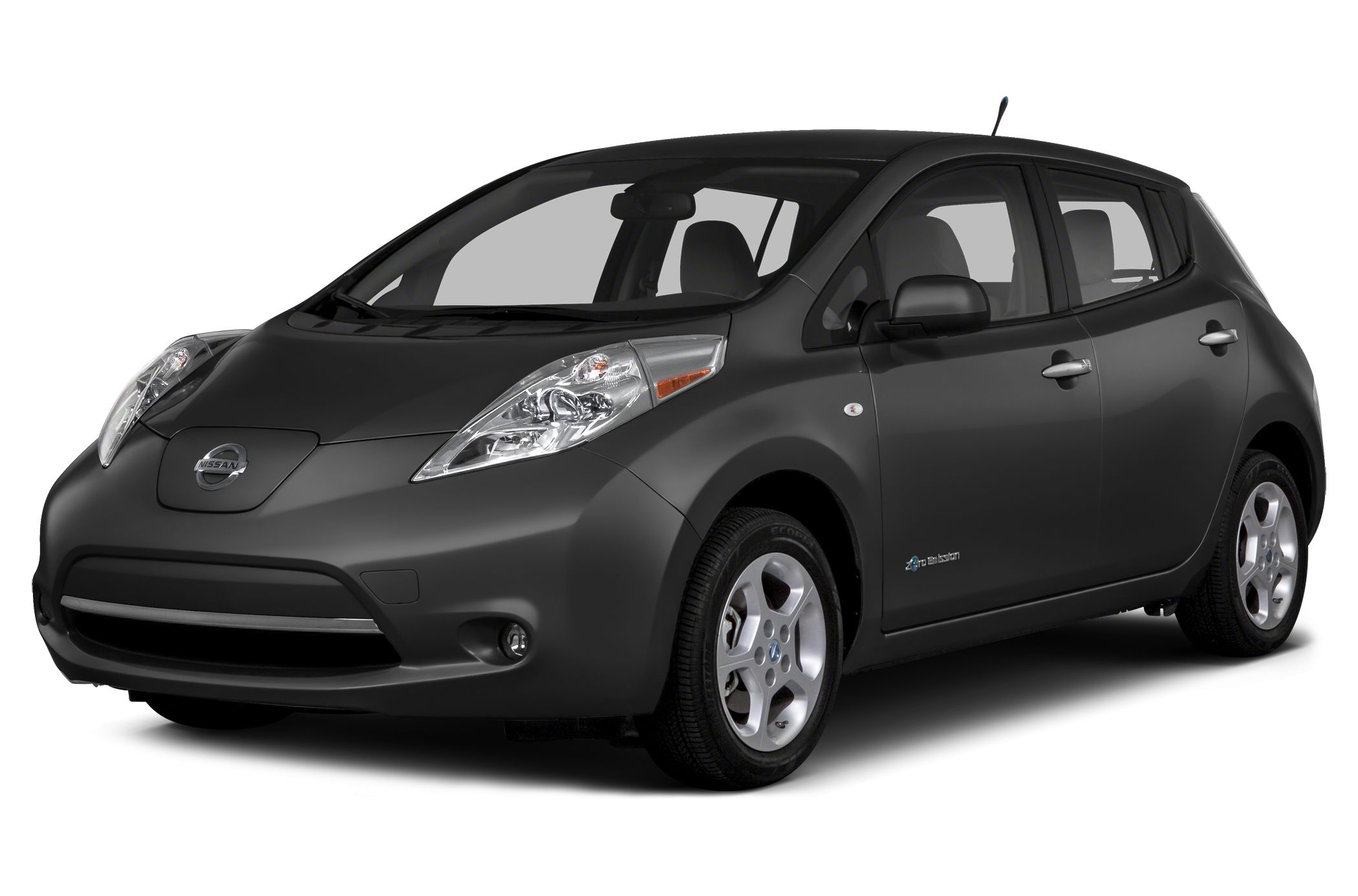
Nissan Motor Company and UBER collaborate with the addition of 20 LEAF vehicles added to the Car Hailing fleet.

  • 20 all-electric Nissan LEAFs supplied for trial with car hailing service Uber
  • Run in partnership with the Energy Savings Trust, study will look into feasibility of running electric private hire vehicles in the UK
  • First time fully electric vehicles have been available in the UK via the Uber app
Nissan is working with the car hailing service Uber as it embarks on a new, major electric vehicle (EV) project as part of its commitment to tackling air pollution in London and across the UK.
The carmaker has supplied a fleet of 20 all-electric Nissan LEAFs to Uber for use as part of an extensive EV trial in the capital that gets underway today. It is the first time pure EVs have been available for hire through the Uber app in London.

Gareth Dunsmore, Head of Electric Vehicles, Nissan Europe, said: ‘We are delighted to be working closely with Uber on what is a very exciting project that could ultimately lead to major improvements in air quality in London and across the UK.
‘We are confident this trial will prove a success and that Uber will join scores of taxi and private hire operators across the UK and wider Europe in recognising the financial and environmental benefits of Nissan’s market-leading electric vehicles.
‘With the impact of poor air quality remaining a cause for concern, the trial could prove to be a pivotal moment for tackling the challenges in London.’
Run in partnership with the Energy Savings Trust (EST), the study will look into the feasibility of running large numbers of electric private hire vehicles in the UK.
The EST will research the experience, driving patterns and economics of private hire drivers using electric cars and the capacity of London’s current network of charging points to support these vehicles.
Already 60 percent of Uber journeys in London are made in hybrid vehicles, but the company is keen to explore the environmental and economic benefits of going fully electric ahead of the introduction of the capital’s Ultra Low Emissions Zone in 2020.
Nissan forged the EV market in 2010 with the launch of the first generation Nissan LEAF. Fast forward to 2016 and it remains the world’s best-selling EV with more than 230,000 on the road globally. With a focus on bringing Intelligent Mobility solutions to the masses, Nissan recently introduced a new 30 kWh battery model that delivers 26 percent more range versus the previous generation model, and up to 155 miles of driving range on a single charge*.
With running costs as low as two pence per mile*, the Nissan LEAF and the larger Nissan e-NV200 Combi have already proved their worth as taxis and private hire vehicles. In fact, hundreds are now in operation in towns and cities, having clocked up tens of thousands of fares and more than three million pure EV miles.
Jo Bertram, Regional General Manager of Uber in the UK, said: ‘People already associate Uber with hybrid cars, but we now want to go a big step further with fully electric cars on the road from today.
‘We are determined to use technology to help tackle the challenge of air pollution in London and across the UK. Our car-sharing service has already saved 1.2 million miles and 211 metric tonnes of CO2. With electric vehicles - and more people sharing their journey and leaving their own cars at home - there's even more we can do.’

Saturday, 20 August 2016

Volvo Cars and Uber are joining forces to develop the next generation of autonomous cars.

Volvo Cars, the Swedish premium car maker, and Uber, the world’s leading ride-sharing company, are to join forces to develop next-generation autonomous driving cars.
The two companies have signed an agreement to establish a joint project that will develop new base vehicles that will be able to incorporate the latest developments in AD technologies, up to and including fully autonomous driverless cars. The base vehicles will be manufactured by Volvo Cars and then purchased from Volvo by Uber. Volvo Cars and Uber are contributing a combined USD300m to the project.

Both Uber and Volvo will use the same base vehicle for the next stage of their own autonomous car strategies. This will involve Uber adding its own self-developed autonomous driving systems to the Volvo base vehicle. Volvo will use the same base vehicle for the next stage of its own autonomous car strategy, which will involve fully autonomous driving.
The Volvo-Uber project marks a significant step in the automotive business, with a car manufacturer joining forces with a new Silicon Valley-based entrant to the car industry, underlining the way in which the global automotive industry is evolving in response to the advent of new technologies. 
The alliance marks the beginning of what both companies view as a longer-term industrial partnership.
HÃ¥kan Samuelsson, president and chief executive of Volvo Cars, said: “Volvo is one of the most progressive and contemporary car makers in the world. 
It is a world leader in the development of active safety and autonomous drive technology, and possesses an unrivalled safety credibility. We are very proud to be the partner of choice for Uber, one of the world’s leading technology companies. This alliance places Volvo at the heart of the current technological revolution in the automotive industry.”
The new base vehicle will be developed on Volvo Cars’ fully modular Scalable Product Architecture (SPA). SPA is one of the most advanced car architectures in the world and is currently used on Volvo Cars’ top-of-the-line multiple-award-winning XC90 SUV, as well as the S90 premium saloon and V90 premium estate.
SPA has been developed as part of Volvo Cars’ USD11bn global industrial transformation programme, which started in 2010, and has been prepared from the outset for the latest autonomous drive technologies as well as next-generation electrification and connectivity developments. It is these capabilities that attracted Uber to Volvo.
The development work will be conducted by Volvo Cars engineers and Uber engineers in close collaboration. This project will further add to the scalability of the SPA platform to include all needed safety, redundancy and new features required to have autonomous vehicles on the road.
Travis Kalanick, Uber’s chief executive, said: “Over one million people die in car accidents every year. These are tragedies that self-driving technology can help solve, but we can’t do this alone. That’s why our partnership with a great manufacturer like Volvo is so important. Volvo is a leader in vehicle development and best-in-class when it comes to safety. By combining the capabilities of Uber and Volvo we will get to the future faster, together.”