Purpose

I will try my best to provide detailed info on various cars and what is like to live with them, I have already produced a few for Jaguar-car-forums, I will do my best to be unbiased, but it will be hard for some cars. I will re-produce press releases and copy from other motoring news.
Showing posts with label development. Show all posts

Tuesday, 5 December 2017

The new Audi A8 is the first car in the world developed for conditional automated driving at Level 3.

  • Conference for artificial intelligence in California
  • Audi innovation project: Neural network generates highly precise 3D models of the environment
On the road to autonomous driving, Audi continues powering ahead at top speed: The company is exhibiting an innovative pre-development project at the world’s most important symposium for artificial intelligence (AI) – the NIPS conference in Long Beach, California (USA). The project uses a mono camera that uses AI to generate an extremely precise 3D model of a vehicle’s environment. The conference is co-sponsored by Audi and takes place December 4 to 9.
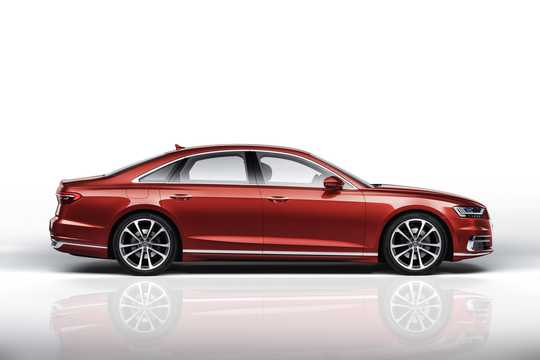
The new Audi A8 is the first car in the world developed for conditional automated driving at Level 3 (SAE). The Audi AI traffic jam pilot handles the task of driving in slow-moving traffic up to 37mph, provided that laws in the market allow it and the driver selects it. A requirement for automated driving is a mapped image of the environment that is as precise as possible – at all times. Artificial intelligence is a key technology for this.
A project team from the Audi subsidiary Audi Electronics Venture (AEV) now is presenting a mono camera at the Conference and Workshop on Neural Information Processing Systems (NIPS) that uses artificial intelligence to generate an extremely precise 3D model of the environment. This technology makes it possible to capture the exact surroundings of the car.
A conventional front camera acts as the sensor. It captures the area in front of the car within an angle of about 120 degrees and delivers 15 images per second at a resolution of 1.3 megapixels. These images are then processed in a neural network.
This is where semantic segmenting occurs, in which each pixel is classified into one of 13 object classes. This enables the system to identify and differentiate other cars, trucks, houses, road markings, people and traffic signs.
Utilising neural networks
The system also uses neural networks for distance information. The visualisation is performed here via ISO lines – virtual boundaries that define a constant distance. This combination of semantic segmenting and estimates of depth produces a precise 3D model of the actual environment.
Audi engineers had previously trained the neural network with the help of “unsupervised learning.” In contrast to supervised learning, unsupervised learning is a method of learning from observations of circumstances and scenarios that does not require pre-sorted and classified data. 
The neural network received numerous videos to view of road situations that had been recorded with a stereo camera. As a result, the network learned to independently understand rules, which it uses to produce 3D information from the images of the mono camera. The project of AEV holds great potential for the interpretation of traffic situations.
Along with the AEV, two partners from the Volkswagen Group are also presenting their own AI topics at the Audi booth for this year’s NIPS. The Fundamental AI Research department within the Group IT’s Data:Lab focuses on unsupervised learning and optimized control through variational inference, an efficient method for representing probability distributions.
Finally, the Audi team from the Electronics Research Laboratory of Belmont, California, are demonstrating a solution for purely AI-based parking and driving in parking lots and on highways. In this process, lateral guidance of the car is completely carried out through neural networks. The AI learns to independently generate a model of the environment from camera data and to steer the car. This approach requires no highly precise localization or highly precise map data.
In developing autonomous driving cars, Audi is benefiting from a large network in the artificial intelligence field of technology. The network includes companies in the hotspots of Silicon Valley, in Europe and in Israel.
In 2016, Audi became the first automobile manufacturer to participate at NIPS with its own exhibition booth. The brand appears again this year as a sponsor of NIPS and is seeking to further develop its network in California. AI specialists can also learn about employment opportunities with Audi there.

Monday, 17 October 2016

Vauxhall-Opel opens a €210 Million 7-floor testing and development building for propulsion systems of the future.

  • Seven-floor testing and development building for propulsion systems of the future
  • €210 million investment at Rüsselsheim, Germany headquarters
Only two years after the ground breaking ceremony the new, ultra-modern Global Propulsion Systems Center at Opel headquarters in Rüsselsheim, Germany is ready to go into service. The Opel Group includes the Vauxhall brand representing its largest market.
More than 800 engineers and technicians will develop the propulsion systems of the future in the complex with a surface area of around 36,000 square metres. 


The complex not only has a technology centre and office space but also 45 latest generation test dynamometers.
The €210 million invested in the new Global Propulsion Systems Center is the biggest single investment in buildings in Rüsselsheim since the inauguration of the new production plant in 2002.
“The new development centre will make our work even faster and even more efficient. It not only strengthens Opel but also Rüsselsheim and the entire GM development network,” said Dr. Karl-Thomas Neumann, Opel CEO.
“This new centre is a very important strategic investment. We will develop the propulsion systems of the future here by using ultra-modern tools and a total of 45 new dynamometers. GM decided to build this centre in Rüsselsheim for good reason. It is a sign of appreciation for the performance and the know-how of our highly-qualified Opel engineers. The global network makes GM and Opel especially strong”, said Dan Nicholson, Vice President GM Global Propulsion Systems.
This new construction is part of the €230 million investment in new testing and development facilities at the International Technical Development Centre (ITDC) and at the Development Centre in Rodgau-Dudenhofen announced two years ago, with most of the total amount being invested in Rüsselsheim.
The facility is integrated in the global development system of GM Global Propulsion Systems. The output can be optimally evaluated and implemented thanks to the internationally standardised testing procedures and software.

Saturday, 24 September 2016

The Lotus 3-ELeven can humble a car vastly more expensive, and it looks awesome too, watch the vids around the Nurburgring.

  • Visceral ride around the infamous Nordschleife circuit
  • Never seen footage of most powerful production Lotus
  • Experience the car’s test & development laps with two new videos

Marking the anniversary of its landmark lap times when testing at the Nürburgring Nordschleife, two new videos of the Lotus 3-Eleven in full flight have been released, allowing enthusiasts to experience the car’s visceral, white-knuckle ride around the “Green Hell” for themselves.
Offering never-seen-before views, the 60 second videos provide a car’s eye view of the fascinating track, as it’s piloted by Nordschleife expert and professional racer Marc Basseng, during its Nürburgring testing and development programme.
The videos not only show the car’s blistering straight-line speed, but also how fast and composed it is when cornering, thanks it to its advanced aerodynamics. At 150 mph (240 km/h) the Road version produces 150 kg of downforce, while Race version with its twin front canards and adjustable rear wing produces 215 kg.
Since the car’s appearance at the Nürburgring, deliveries of the hypercar-humbling Lotus have begun with the first lucky owners finding out what this road-legal racer is truly capable of. Speaking about the car’s Nordschleife debut, Jean-Marc Gales, Chief Executive Officer, Group Lotus plc said, “The 3-Eleven’s time on the track gave us the perfect opportunity to demonstrate its phenomenal pace. It’s the fastest, most focused production road car to ever leave the Lotus factory, and remains true to our values of intelligent and efficient engineering. However, you don’t need to be a professional racing driver in order to tap its potential, and it will embarrass so-called hypercars with six-figure price tags. It remains the perfect template for how we will approach the design of all Lotus sports cars in the future”
With lightweight carbon composite bodywork as standard, the Lotus 3-Eleven has a dry weight of 890 kg and maximum power of 460 hp (Race version). This provides an enviable power-to-weight ratio of 517 hp per tonne, and the car is capable of sprinting from 0 to 60 mph in 2.9 seconds ahead of a maximum speed of 180 mph (290 km/h). The Road version with a dry weight of 925 kg and a maximum power of 410 hp reaches 60 mph in 3.3 seconds before reaching a top speed of 174 mph (280 km/h).
The videos also show how driver Marc Basseng had to deal with other cars also on the Nordschleife circuit during the evening public sessions. In what was its first turn of a wheel outside of Lotus’ Hethel HQ, Marc was one of three different drivers helping to develop the car – each one with individual areas of expertise and focussing on aerodynamics, engine calibration, chassis tuning and suspension geometry.
The Lotus 3-Eleven is the most powerful road car to wear a Lotus badge and Hethel’s quickest ever road car. It joins the ranks of those rare cars that can reach 60 mph in under three seconds and 100 mph in six seconds. To complement these figures, the Lotus 3-Eleven possesses a purity of the driving experience and the benchmark handling for which all Lotus cars are renowned.

Saturday, 20 August 2016

Volvo Cars and Uber are joining forces to develop the next generation of autonomous cars.

Volvo Cars, the Swedish premium car maker, and Uber, the world’s leading ride-sharing company, are to join forces to develop next-generation autonomous driving cars.
The two companies have signed an agreement to establish a joint project that will develop new base vehicles that will be able to incorporate the latest developments in AD technologies, up to and including fully autonomous driverless cars. The base vehicles will be manufactured by Volvo Cars and then purchased from Volvo by Uber. Volvo Cars and Uber are contributing a combined USD300m to the project.

Both Uber and Volvo will use the same base vehicle for the next stage of their own autonomous car strategies. This will involve Uber adding its own self-developed autonomous driving systems to the Volvo base vehicle. Volvo will use the same base vehicle for the next stage of its own autonomous car strategy, which will involve fully autonomous driving.
The Volvo-Uber project marks a significant step in the automotive business, with a car manufacturer joining forces with a new Silicon Valley-based entrant to the car industry, underlining the way in which the global automotive industry is evolving in response to the advent of new technologies. 
The alliance marks the beginning of what both companies view as a longer-term industrial partnership.
Håkan Samuelsson, president and chief executive of Volvo Cars, said: “Volvo is one of the most progressive and contemporary car makers in the world. 
It is a world leader in the development of active safety and autonomous drive technology, and possesses an unrivalled safety credibility. We are very proud to be the partner of choice for Uber, one of the world’s leading technology companies. This alliance places Volvo at the heart of the current technological revolution in the automotive industry.”
The new base vehicle will be developed on Volvo Cars’ fully modular Scalable Product Architecture (SPA). SPA is one of the most advanced car architectures in the world and is currently used on Volvo Cars’ top-of-the-line multiple-award-winning XC90 SUV, as well as the S90 premium saloon and V90 premium estate.
SPA has been developed as part of Volvo Cars’ USD11bn global industrial transformation programme, which started in 2010, and has been prepared from the outset for the latest autonomous drive technologies as well as next-generation electrification and connectivity developments. It is these capabilities that attracted Uber to Volvo.
The development work will be conducted by Volvo Cars engineers and Uber engineers in close collaboration. This project will further add to the scalability of the SPA platform to include all needed safety, redundancy and new features required to have autonomous vehicles on the road.
Travis Kalanick, Uber’s chief executive, said: “Over one million people die in car accidents every year. These are tragedies that self-driving technology can help solve, but we can’t do this alone. That’s why our partnership with a great manufacturer like Volvo is so important. Volvo is a leader in vehicle development and best-in-class when it comes to safety. By combining the capabilities of Uber and Volvo we will get to the future faster, together.”

Sunday, 21 February 2016

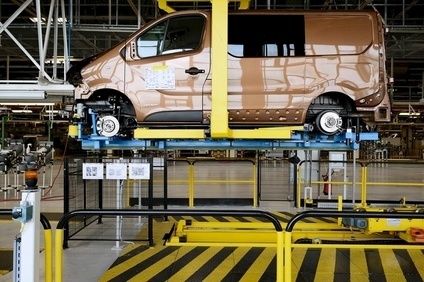
Nissan's new NV300 van to be built at Renault's Sandouville Plant, at the rate of 10,000 units per year.

  • Renault develops and manufactures new NV300 model for Nissan, which will boost Sandouville plant production by 100,000 units between 2016 and 2026
  • Three-year, €230 million investment transforms Sandouville into key plant for light van production for Renault and partners
  • NV300 and Trafic engines manufactured at Groupe Renault’s Cléon plant in Normandy
  • Groupe Renault engineers and produces not only for its own brands but also for several other manufacturers.
Groupe Renault today announced that its Sandouville plant in northwest France will build the next-generation light commercial vehicle for Nissan. Nissan NV300 production shall increase the factory’s output by 100,000 units between 2016 and 2026.
There are currently NO pictures of the new van available.
Once they are released i will replace some of these ones with the actual product.


A three-year work and €230 million investment have transformed Sandouville, near Le Havre, into a centre of excellence for van production. The Nissan NV300 will be made on the same line as the new Renault Trafic.
“The production of the Nissan NV300 at the Sandouville plant is a win-win for Renault and for Nissan. We maximise Renault manufacturing expertise and Nissan gets a top quality production site in the heart of the European market,” said Carlos Ghosn, Renault Chief Executive Officer.
Sandouville also produces a version of Vivaro for Opel and Vauxhall. The plant will soon begin production of the next-generation Fiat mid-size van.
Nissan and Renault are also developing a one-tonne pickup for Renault that will share select architectural features of the Nissan NP300.
LASER FOCUS ON LIGHT COMMERCIAL VEHICLES (LCV)
Sandouville produced 93,000 Trafic LCVs last year. The plant produces more than 460 vans per day for Renault and its partners. Renault is adding 183 new positions at the plant.
The Renault Agreement: “Contract for a new dynamic of Renault growth and social development in France”, signed on March 2013, between Renault and union representatives, paved the way for increased efficiency at Renault’s plants throughout France. It opened the door to strategic partnerships that promote growth like the production of Nissan NV300 in Sandouville plant.
Engines for Trafic and Nissan NV300 are produced by Groupe Renault’s Cléon plant in Normandy, which specialises in high-precision powertrain production.
In 2015, Renault was Europe’s best-selling LCV brand for the 18th consecutive year.
Renault’s expertise has earned recognition in the demanding and growing LCV segment. Groupe Renault engineers and produces not only for its own brands but also for other manufacturers.
Mercedes Citan and Renault Kangoo are produced at the Renault factory in Maubeuge (North of France). At the Batilly plant, Renault manufactures vans for Nissan (NV400), Opel and Vauxhall (Movano) as well as Master for Renault and Renault Trucks.

Friday, 2 October 2015

WEEK ONE - The first of eight weekly episodes to showcase Ford Performance,

  • First of eight weekly episodes goes live today at 1pm UK time on Ford Performance YouTube channel
  • https://www.youtube.com/watch?v=4JVhgCqHr2g
  • Revisit Ford Performance on YouTube every Wednesday lunchtime for the next seven weeks to watch the series

From the searing heat of Arizona to the icy wastes of the Arctic, from design studio to the crash lab, Ford Motor Company is revealing the behind-the-scenes story of the all-new Focus RS.
“Rebirth of an icon” shows the development of the latest generation of an automotive icon through a “warts and all” video documentary series covering every stage of the vehicle’s evolution.

The inside story of the all-new Focus RS pulls no punches — following the car across the world as Ford Performance engineers and drivers put it to the test under the scrutiny of RS consultant and Gymkhana superstar Ken Block and Ford’s group vice president for Global Product Development and chief technical officer, Raj Nair.
Eight weekly episodes start today:
  • Episode 1: Project kick-off – Ken Block and Raj Nair debate what the car should deliver, from behind the wheel of an early prototype
  • Episode 2: Design and development – Crunching crashes put the new design to the toughest of tests
  • Episode 3: Hitting the road – A 1,600-kilometre (1,000-mile) drive through epic terrain takes prototypes from high in the Rocky Mountains to the Arizona desert
  • Episode 4: Test-track trials – Block heads for Ford’s top-secret test facility, and indulges in some “hooning”
  • Episode 5: Arctic extremes – Winter testing in Sweden, and the team is under pressure to improve performance
  • Episode 6: Power struggle – It’s all about performance, as the Ford manufacturing plant in Saarlouis, Germany, gears up for production
  • Episode 7: Close scrutiny – The day of the critical sign-off drive follows Block’s headline appearance at the Goodwood Festival of Speed
  • Episode 8: Final chapter – It’s time for the nail-biting management review
The all-new Focus RS is available to order now at £28,940 customer delivery in early 2016, with the UK’s waiting list already topping 500 prospective owners before prices were announced last week. The car debuts new Ford Performance All-Wheel Drive with Dynamic Torque Vectoring for outstanding traction and grip with unmatched agility and cornering speed, and features a specially engineered version of Ford’s new 2.3-litre EcoBoost engine delivering 350PS for 4.7-second 0-62mph acceleration.

Tuesday, 14 July 2015

SKODA to invests 11 Million Euro's to expand the Engine Centre at Mlada Boleslav

  • The investment is over 11 million; opened in July 2016
  • ŠKODA expands Engine Center opened in 2014
  • Objective: to significantly reduce fuel consumption and emissions of new models of the brand
  • 31 ŠKODA models are already below 100 g CO2 / km, and 103 below 120 g
  • 116 years of development and production of motors in ŠKODA
ŠKODA AUTO will build a new center in Mlada Boleslav emissions. In collaboration with the Volkswagen Group, the manufacturer will invest over 11 million euros in expanding Engine Center, opened in 2014. The inauguration of the new center is scheduled for July 2016. The new center will play a key role Emissions in reducing emissions from new ŠKODA models in the coming years.
The first stone of 'Emissions Centre South' at the headquarters of the Centre for Development of ŠKODA was laid in an official ceremony attended by Frank Welsch, a member of the Board of ŠKODA, Jaroslav Povsik, union president ŠKODA and others and representatives of Technical Development of the Volkswagen Group.


Of the more than 11 million total investment, 6.4 million will be spent on new construction, while nearly 5 million will be used to equip the center with the latest technology. 
In addition, the company has announced the creation of new jobs.
"In the coming years, ŠKODA will continue to grow with new models," explains Frank Welsch, Head of Technical Development Board of ŠKODA. "By developing new vehicles, look systematically reduce fuel consumption and emissions. 
Thus, the new Center of emissions is a key element in our growth strategy and other important investment for the ŠKODA brand. We have developed and manufactured engines in Mlada Boleslav for 116 years, with the opening of the new Center of Emissions, the powers of the company in this area will be strengthened even further. "
As part of the development department thrusters ŠKODA, the new Emissions Center is directly connected with the Center for Engines Mladá Boleslav, which opened in September 2014. These facilities, equipped with the latest measurement technology, ŠKODA may quantify emissions from vehicles with gasoline or diesel as well as alternative fuel. 
The two stations will include completely new measurement called biaxial testers brakes, rollers and analysis systems. Initially, each set of tests can be performed up to 15 measurements daily broadcasts, which will be increased up to 25 measurements per day. The temperature range of tests is -40 to 65 degrees.
Sustainability and environmental protection are key elements in ŠKODA's corporate strategy, which can be checked particularly clearly in the newly launched Skoda Superb. Thanks to the new lighter engines and optimized aerodynamics, the new model uses up to 30% less fuel and emits 30% less CO2 than its predecessor.
In ŠKODA brand models 31 and manage CO2 emissions below 100 g / km, and 103 emit less than 120 g / km. In addition to the GreenLine and Green tec models, natural gas vehicles are a cornerstone of sustainable product strategy of the company. The ŠKODA range includes two attractive models G-TEC: G-TEC Octavia and Octavia Combi G-TEC.
ŠKODA path is clearly defined: green mobility must remain affordable; both for the benefit of customers and the environment. With the launch of the new Skoda Superb in late May, the manufacturer and rides his entire European range with modern and environmentally friendly engines EU-6. 
Currently, all ŠKODA models are available with the latest gasoline and diesel engines, including the stop-start and brake energy recovery systems.
With the new Center for Emissions, ŠKODA again strengthen its development capabilities. The manufacturer has the fourth largest development center for the entire Volkswagen Group, which is also one of the most advanced in the car industry. ŠKODA is the only manufacturer in the Czech Republic not only produces vehicles and components, but also develops them. 
For this, the Technical Development department currently has around 1,700 specialists, engineers, designers and builders.
ŠKODA has 116 years of tradition in the development and manufacture of propellers. In 1899, four years after the creation of the production company bicycles-, ŠKODA's founders, Václav Laurin and Václav Klement (L & K) they added for the first time an auxiliary motor to one of their bicycle frames. 
In 1905, L & K developed the first automobile company under the name 'Voiturette A', powered by a water-cooled two-cylinder 7 hp and a displacement of 1,100 cc engine.