Purpose

I will try my best to provide detailed info on various cars and what is like to live with them, I have already produced a few for Jaguar-car-forums, I will do my best to be unbiased, but it will be hard for some cars. I will re-produce press releases and copy from other motoring news.
Showing posts with label autonomous driving experiment. Show all posts

Sunday, 11 September 2016

Volvo Cars has just released teh first car that will ultimately be used by a family for fully autonomous driving.

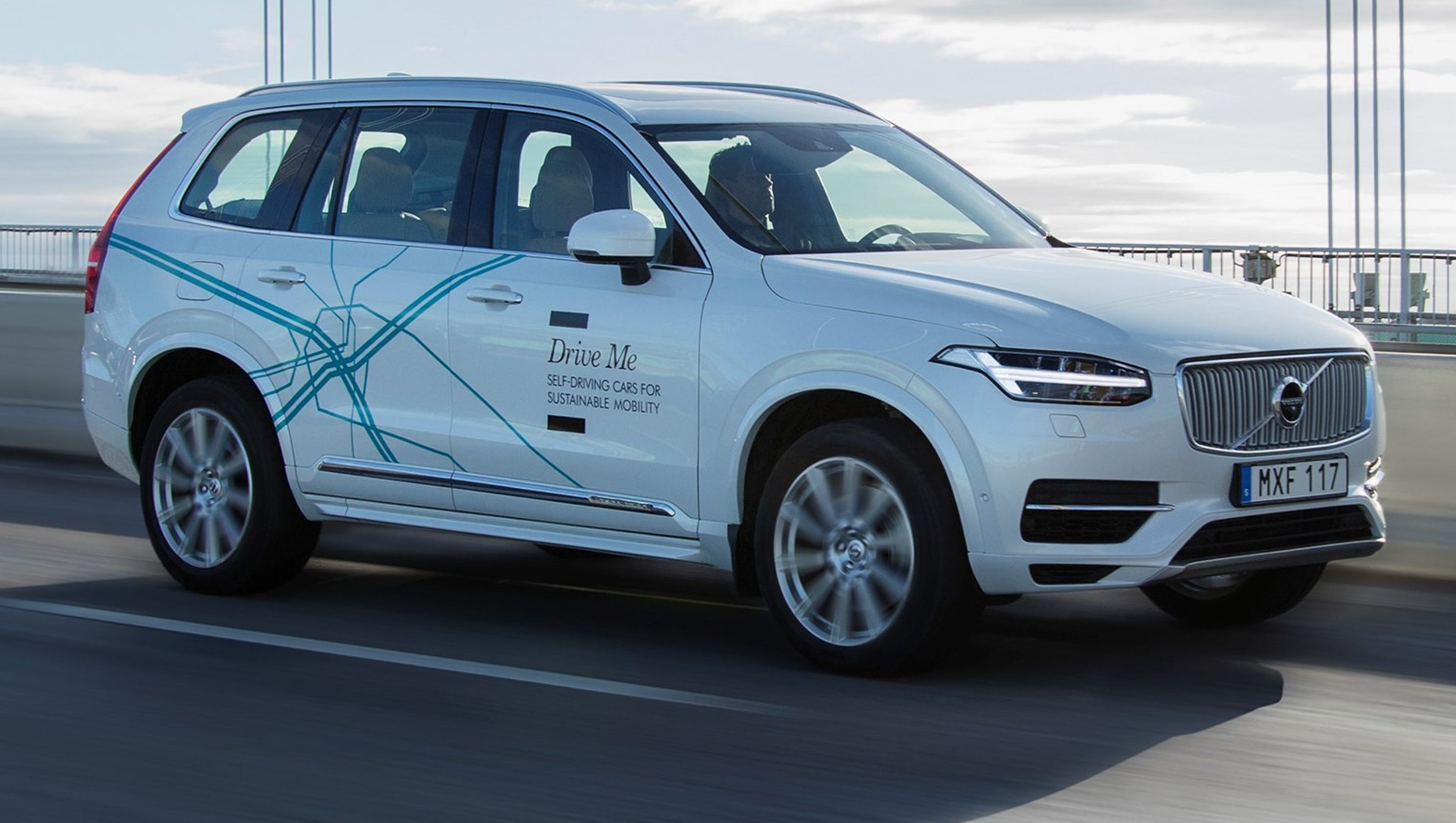
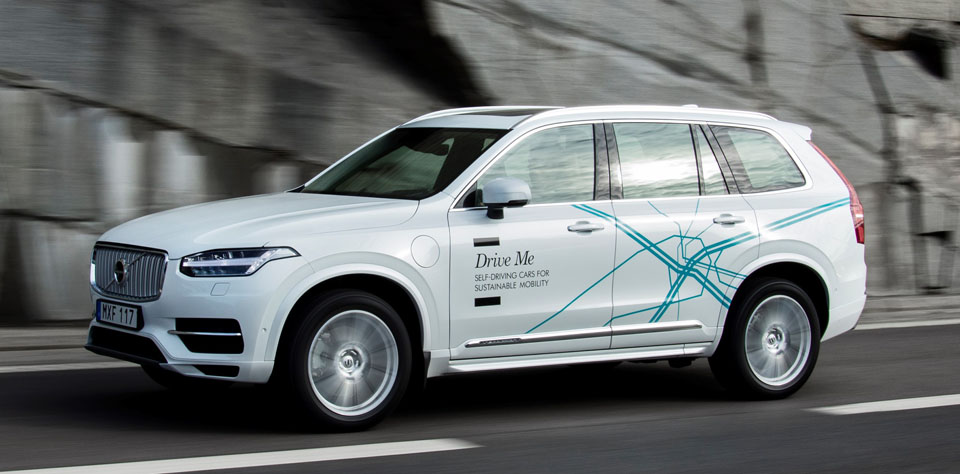
Volvo Cars, the premium car maker, has officially kicked off Drive Me, the world’s most ambitious and advanced public autonomous driving experiment. This morning it produced the very first autonomous car that will be used in the Drive Me project in Gothenburg.
The autonomous Volvo XC90 SUV was finalised in Volvo Cars’ special manufacturing facility in Torslanda this morning, and is the first in a series of autonomous cars that will eventually be handed to real families in Gothenburg to be driven on public roads.

Volvo is the industry leader in the area of automotive safety and believes that the introduction of AD technology promises to reduce car accidents. Furthermore, AD technology promises to free up congested roads, reduce pollution and allow drivers to use their time in their cars more valuably.


Volvo currently offers a semi-autonomous functionality called Pilot Assist on its 90 series cars. Pilot Assist gives gentle steering inputs to keep the car properly aligned within lane markings up to 80 mph without the need to follow another car. The Drive Me cars will add hands-off and feet-off capability in special autonomous drive zones around Gothenburg, powered by what Volvo calls the Autonomous Driving Brain.
The Swedish company, whose name has been synonymous with automotive safety ever since it invented the three-point seat belt in 1959, is pioneering the development of autonomous driving systems as part of its vision that no one will be seriously injured or killed in a new Volvo by the year 2020.
It is the customer-focused approach that sets the Drive Me project apart from other autonomous driving experiments. Instead of relying purely on the research of its own engineers, Volvo aims to collect feedback and input from real customers using these autonomous cars in their everyday lives.
By choosing this customer-focused approach, Volvo aims to further fine-tune its autonomous driving technologies and make its offering as relevant as possible to customers ahead of a commercial introduction around 2021.
“This is an important milestone for the Drive Me project,” said Erik Coelingh, Senior Technical Leader Active Safety at Volvo Cars, as he observed the final touches being put to the car. “Customers look at their cars differently than us engineers, so we are looking forward to learn how they use these cars in their daily lives and what feedback they will give us.”
After rolling off the production line, the Drive Me customer cars will undergo a rigorous testing phase to ensure that the cars’ advanced autonomous driving technologies function exactly as they should. Once this testing phase – overseen by Volvo’s highly capable engineers – is finalised, the cars will be handed over to the customers participating in the Drive Me pilot.
The Drive Me pilot project in Gothenburg is the first in a number of planned public trials with autonomous driving Volvo cars. A similar project to the one in Gothenburg will be launched in London next year, while Volvo is also assessing bids from interested cities in China to launch a Drive Me project there within the next few years.
Volvo also actively engages in strategic partnerships in the area of autonomous drive technology. Last month, it launched a new partnership with ride-sharing company Uber to jointly develop the next generation of autonomous driving cars. Earlier this week, Volvo revealed it will set up a new jointly owned company together with leading automotive supplier Autoliv to develop next-generation autonomous driving software.

Thursday, 5 May 2016

Volvo Cars, the premium car maker, is to begin the UK's most ambitious autonomous driving trial next year.

Volvo Cars, the premium car maker, is to begin the UK's most ambitious autonomous driving trial next year to speed up the introduction of a technology that promises to massively reduce car accidents as well as free up congested roads and save drivers valuable time.

The Swedish company, whose name has been synonymous with automotive safety ever since it invented the three-point seatbelt in 1959, is pioneering the development of autonomous driving (AD) systems globally as part of its commitment that no one will be seriously injured or killed in a new Volvo by the year 2020.
"Autonomous driving represents a leap forward in car safety," said Håkan Samuelsson, president and chief executive of Volvo Cars. "The sooner AD cars are on the roads, the sooner lives will start being saved."
Mr Samuelsson will make his comments at a seminar sponsored by Volvo and Thatcham, the insurance industry's research organisation, in London on May 3 entitled 'A Future with Autonomous Driving Cars – Implications for the Insurance Industry' at the America Conference Centre in London.
Volvo's UK-based test will be called 'Drive Me London' and will differentiate itself from other AD programmes by using real families driving AD cars on public roads.  
Volvo will source its data from these everyday users and use this data to develop AD cars that are suitable for real-world driving conditions, rather than the more unrealistic conditions found on test tracks. Thatcham Research will be providing the technical data analysis and any professional test drivers needed as part of the trial.  
Drive Me London will begin in early 2017 with a limited number of semi-autonomous driving cars and expand in 2018 to include up to 100 AD cars, making it the largest and most extensive AD testing programme on Britain's streets.  
The introduction of AD cars promises to revolutionise Britain's roads in four main areas – safety, congestion, pollution and time saving.  
Independent research has revealed that AD has the potential to reduce the number of car accidents significantly, in some cases by up to 30 per cent. Up to 90 per cent of all accidents are presently caused by driver error or distraction, something that should largely disappear with AD cars.  
"Vehicle manufacturers are predicting that highly autonomous vehicles, capable of allowing the driver to drop 'out of the loop' for certain sections of their journey, will be available from around 2021. Without doubt, crash frequency will also dramatically reduce. We've already seen this with the adoption of Autonomous Emergency Braking (AEB) on many new cars. Research in the US by NHTSA predicts that by 2035, as a result of autonomous and connected cars, crashes will be reduced by 80%. Additionally, if a crash unfortunately can't be avoided, then the impact speed will also drop as a result of the system's performance – reducing the severity of the crash," said Peter Shaw, chief executive of Thatcham Research.  
In terms of congestion, AD cars allow traffic to move more smoothly, reducing traffic jams and by extension cutting dangerous emissions and associated pollution. Lastly, reduced congestion saves drivers valuable time.  
"There are multiple benefits to AD cars," said Mr Samuelsson. "That is why governments globally need to put in place the legislation and infrastructure to allow AD cars onto the streets as soon as possible. The car industry cannot do it all by itself. We need governmental help."

Wednesday, 13 April 2016

Volvo to launch biggest Autonomous experiment ever in mainland China, starting with the XC90.

Volvo Cars, the premium car maker, plans to launch China’s most advanced autonomous driving experiment in which local drivers will test autonomous driving cars on public roads in everyday driving conditions. 

Volvo expects the experiment to involve up to 100 cars and will in coming months begin negotiations with interested cities in China to see which is able to provide the necessary permissions, regulations and infrastructure to allow the experiment to go ahead.

Volvo believes the introduction of autonomous driving (AD) technology promises to reduce car accidents as well as free up congested roads, reduce pollution and allows drivers to use their time in their cars more valuably.
The Swedish company, whose name has been synonymous with automotive safety ever since it invented the three-point seat belt in 1959, is pioneering the development of autonomous driving systems as part of its commitment that no one will be seriously injured or killed in a new Volvo by the year 2020.
“Autonomous driving can make a significant contribution to road safety,” Håkan Samuelsson, president and chief executive of Volvo will tell a seminar in Beijing on April 7 entitled 'Autonomous driving – could China take the lead?'. “The sooner AD cars are on the roads, the sooner lives will start being saved.”
Mr Samuelsson will welcome the positive steps China has taken to put in place to develop autonomous driving technologies, but will also encourage it to do more to try to speed up the implementation of the regulations that will oversee autonomous driving cars in future.
“There are multiple benefits to AD cars,” said Mr Samuelsson. “That is why governments need to put in place the legislation to allow AD cars onto the streets as soon as possible. The car industry cannot do it all by itself. We need governmental help.”
The introduction of AD cars promises to revolutionise China’s roads in four main areas – safety, congestion, pollution and time saving.
Independent research has revealed that AD has the potential to significantly reduce the number of car accidents. Up to 90 per cent of all accidents are also caused by human error, something that disappears with AD cars.
In terms of congestion, AD cars allow traffic to move more smoothly, reducing traffic jams and by extension cutting dangerous emissions and associated pollution. Lastly, reduced congestion saves drivers valuable time.
Mr Samuelsson will welcome moves by regulators and car makers in the US and Europe to develop AD cars and infrastructure, but he will also encourage all the parties involved to work more constructively together to avoid patchwork global regulations, technological duplication and needless expense.
“AD is not just about car technology. We need the right rules and the right laws,” Mr Samuelsson will say.
“It is natural for us to work together,” Mr Samuelsson will say. “Our starting point is that both the public and private sectors stand to benefit from new technologies and industries, so it is better to build bridges and work together than to all go in different directions.”