Purpose

I will try my best to provide detailed info on various cars and what is like to live with them, I have already produced a few for Jaguar-car-forums, I will do my best to be unbiased, but it will be hard for some cars. I will re-produce press releases and copy from other motoring news.
Showing posts with label Torslanda. Show all posts

Sunday, 11 September 2016

Volvo Cars has just released teh first car that will ultimately be used by a family for fully autonomous driving.

Volvo Cars, the premium car maker, has officially kicked off Drive Me, the world’s most ambitious and advanced public autonomous driving experiment. This morning it produced the very first autonomous car that will be used in the Drive Me project in Gothenburg.
The autonomous Volvo XC90 SUV was finalised in Volvo Cars’ special manufacturing facility in Torslanda this morning, and is the first in a series of autonomous cars that will eventually be handed to real families in Gothenburg to be driven on public roads.

Volvo is the industry leader in the area of automotive safety and believes that the introduction of AD technology promises to reduce car accidents. Furthermore, AD technology promises to free up congested roads, reduce pollution and allow drivers to use their time in their cars more valuably.


Volvo currently offers a semi-autonomous functionality called Pilot Assist on its 90 series cars. Pilot Assist gives gentle steering inputs to keep the car properly aligned within lane markings up to 80 mph without the need to follow another car. The Drive Me cars will add hands-off and feet-off capability in special autonomous drive zones around Gothenburg, powered by what Volvo calls the Autonomous Driving Brain.
The Swedish company, whose name has been synonymous with automotive safety ever since it invented the three-point seat belt in 1959, is pioneering the development of autonomous driving systems as part of its vision that no one will be seriously injured or killed in a new Volvo by the year 2020.
It is the customer-focused approach that sets the Drive Me project apart from other autonomous driving experiments. Instead of relying purely on the research of its own engineers, Volvo aims to collect feedback and input from real customers using these autonomous cars in their everyday lives.
By choosing this customer-focused approach, Volvo aims to further fine-tune its autonomous driving technologies and make its offering as relevant as possible to customers ahead of a commercial introduction around 2021.
“This is an important milestone for the Drive Me project,” said Erik Coelingh, Senior Technical Leader Active Safety at Volvo Cars, as he observed the final touches being put to the car. “Customers look at their cars differently than us engineers, so we are looking forward to learn how they use these cars in their daily lives and what feedback they will give us.”
After rolling off the production line, the Drive Me customer cars will undergo a rigorous testing phase to ensure that the cars’ advanced autonomous driving technologies function exactly as they should. Once this testing phase – overseen by Volvo’s highly capable engineers – is finalised, the cars will be handed over to the customers participating in the Drive Me pilot.
The Drive Me pilot project in Gothenburg is the first in a number of planned public trials with autonomous driving Volvo cars. A similar project to the one in Gothenburg will be launched in London next year, while Volvo is also assessing bids from interested cities in China to launch a Drive Me project there within the next few years.
Volvo also actively engages in strategic partnerships in the area of autonomous drive technology. Last month, it launched a new partnership with ride-sharing company Uber to jointly develop the next generation of autonomous driving cars. Earlier this week, Volvo revealed it will set up a new jointly owned company together with leading automotive supplier Autoliv to develop next-generation autonomous driving software.

Monday, 20 October 2014

Volvo Cars adds a third shift and 1,300 new jobs in the Torslanda plant

Volvo Cars will add a third working shift in its Torslanda, Gothenburg plant to meet the increasing customer demand for the company’s new cars. The expansion, planned for the first quarter of 2015, will be made in connection with the start of production for the all-new Volvo XC90 SUV.

Adding the third shift means the company will create approximately 1,300 new jobs and follows the opening of an entirely new body shop which lifted the production capacity in the Torslanda plant to 300,000 cars annually. This also means the total number of employees at Torslanda increases by close to 40 per cent.
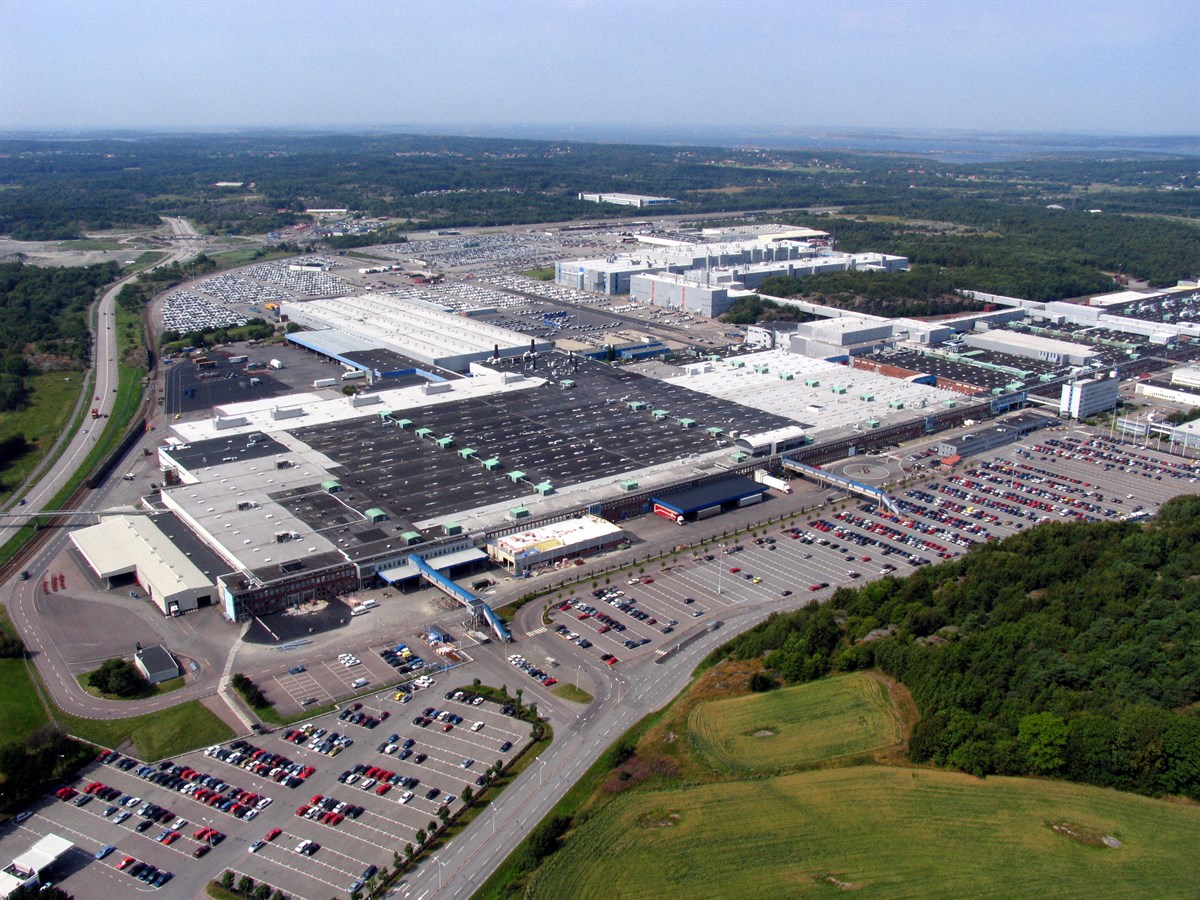
Volvo Cars Torslanda Plant, 2004
The all-new Volvo XC90 SUV marks the first car from the new in-house developed Scalable Product Architecture (SPA), which will form the base for a range of upcoming new Volvo models. The new platform as well as the expansion of the Torslanda plant are part of Volvo’s ongoing USD 11 billion investment program in new products and production capacity.

Volvo Cars global retail deliveries were up by 9.2 per cent during the first nine months of the year while the outlook for the full year is a total sales volume of approximately 470,000 cars representing a 10 per cent growth and an all-time high sales result for the company. The all-new Volvo XC90 SUV is expected to further grow the company’s sales volumes during 2015, creating a need for increased output from the Torslanda plant where the new car is to be produced. Deliveries from the Torslanda plant are expected to reach another all-time high in 2015.

In addition to introducing a third shift, the Torslanda plant will also implement a revised working agreement to further support higher production volumes. The new agreement increases the flexibility in production to meet customer demand.

The new working agreement will also be introduced in the first quarter of 2015 and when fully implemented, the Torslanda plant will employ 4,600 people. The plant, which earlier this year celebrated 50 years of car making, currently produces the Volvo S60, S80, V60, V70, XC70 and XC90 models.

Monday, 14 July 2014

An end of an era as the last Volvo XC90 rolls of the lines after 12 years.

  • After more than 636,000 cars, production of current XC90 stops today
  • Last XC90 out of Torslanda plant joins Volvo Museum collection
  • Torslanda plant now prepares for production of all-new XC90
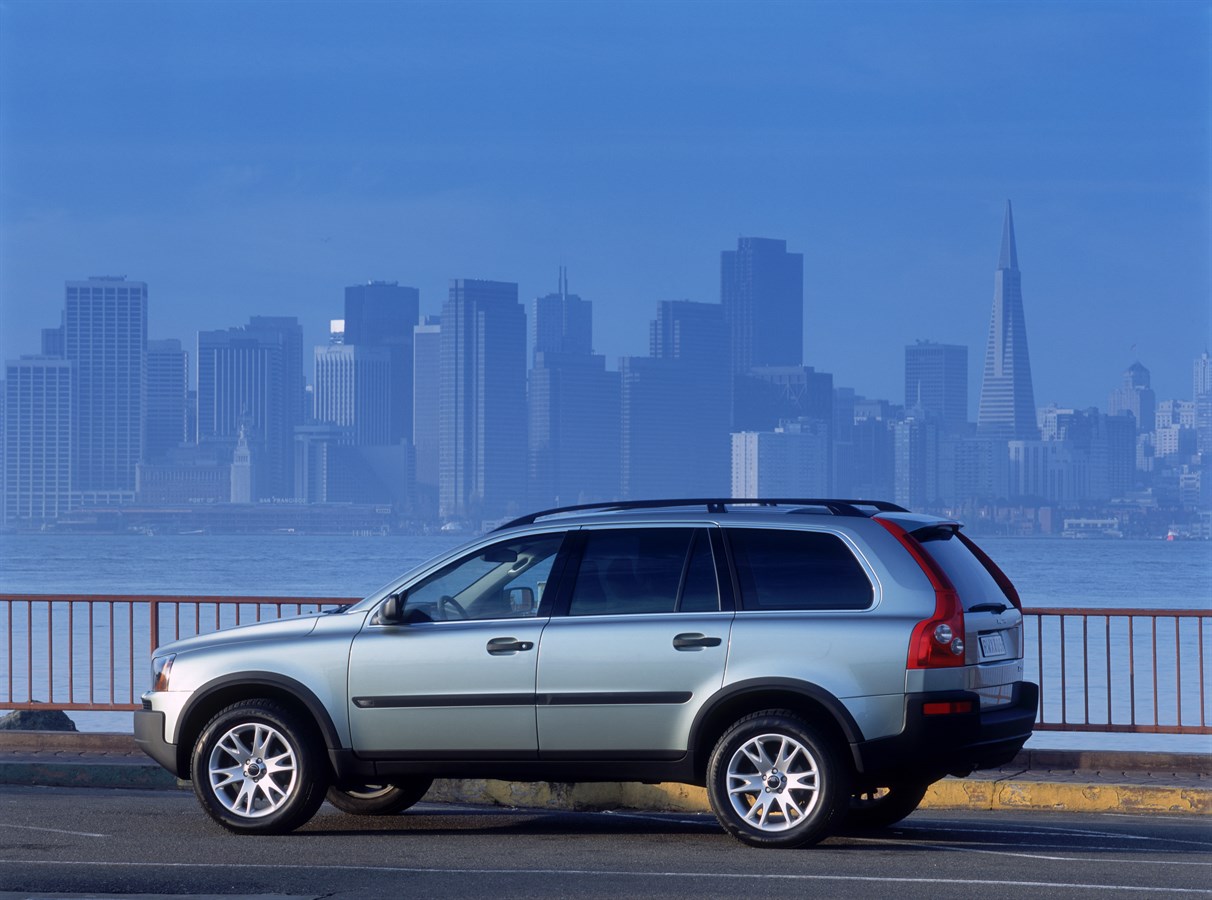
Today marks the end of an era for Volvo Cars as production in Sweden of the iconic XC90 – a car that revolutionised the global SUV sector – comes to an end after 12 highly successful years.
The story began on 7 January 2002, when Volvo Car Corporation launched an eagerly awaited new model at the Detroit Motor Show. It was a car that dealers and customers principally in America had been yearning for – the Volvo XC90. 

A car that would be awarded more than 100 international distinctions, including "SUV of the Year" as early as 2003, and that was named Sweden's most valuable export product, with an annual export value of more than SEK 40 billion in the peak years. Before sales started in 2003, Volvo's dealers had already received 15,000 orders.

Volvo XC90

636,143 XC90s produced

But all good things must come to an end. After producing 636,143 XC90s, a legend of the car world will leave the factory in Torslanda today to make room for the next generation of the XC90. The last XC90 made in Gothenburg will be driven directly to the Volvo Museum, also located in Gothenburg. However, production of the current XC90 will continue in Volvo's new car plant in Daqing later in the year, under the name of Volvo XC Classic, which will only be sold in China.
The all-new Volvo XC90 will also be produced in the Torslanda factory. The car, which will be revealed in August, will start production at the end of January 2015.
Hans-Olov Olsson, who is currently the Vice Chairman of Volvo Car Corporation's Board of Directors, was responsible for sales in the USA at the end of the 1990s. In 1998, he succeeded in convincing the company's then CEO, Tuve Johannesson, that the company should invest in an SUV.
In August 1998, Volvo Cars project director Hans Wikman was commissioned to develop a proposal for a modern, 7-seater SUV that was not too large. The car project was named P28, was to be based on the same platform as the Volvo S80 and should be launched in 2002. The aim was to sell 50,000 cars a year, a goal that would be beaten by a clear margin – during the peak years 2004-2007, around 85,000 cars were sold each year. The USA has been the largest single market for the XC90, with record figures achieved in 2004 (38,800 cars sold) and 2005 (36,200).
At the same time as drawing up three design proposals, two in California and one in Gothenburg, a female reference group was brought together in California, including Swedish actress Maud Adams, to contribute their wishes and comments, as American women would make up a large proportion of the intended target group.
The first Volvo XC90

41°C in the desert
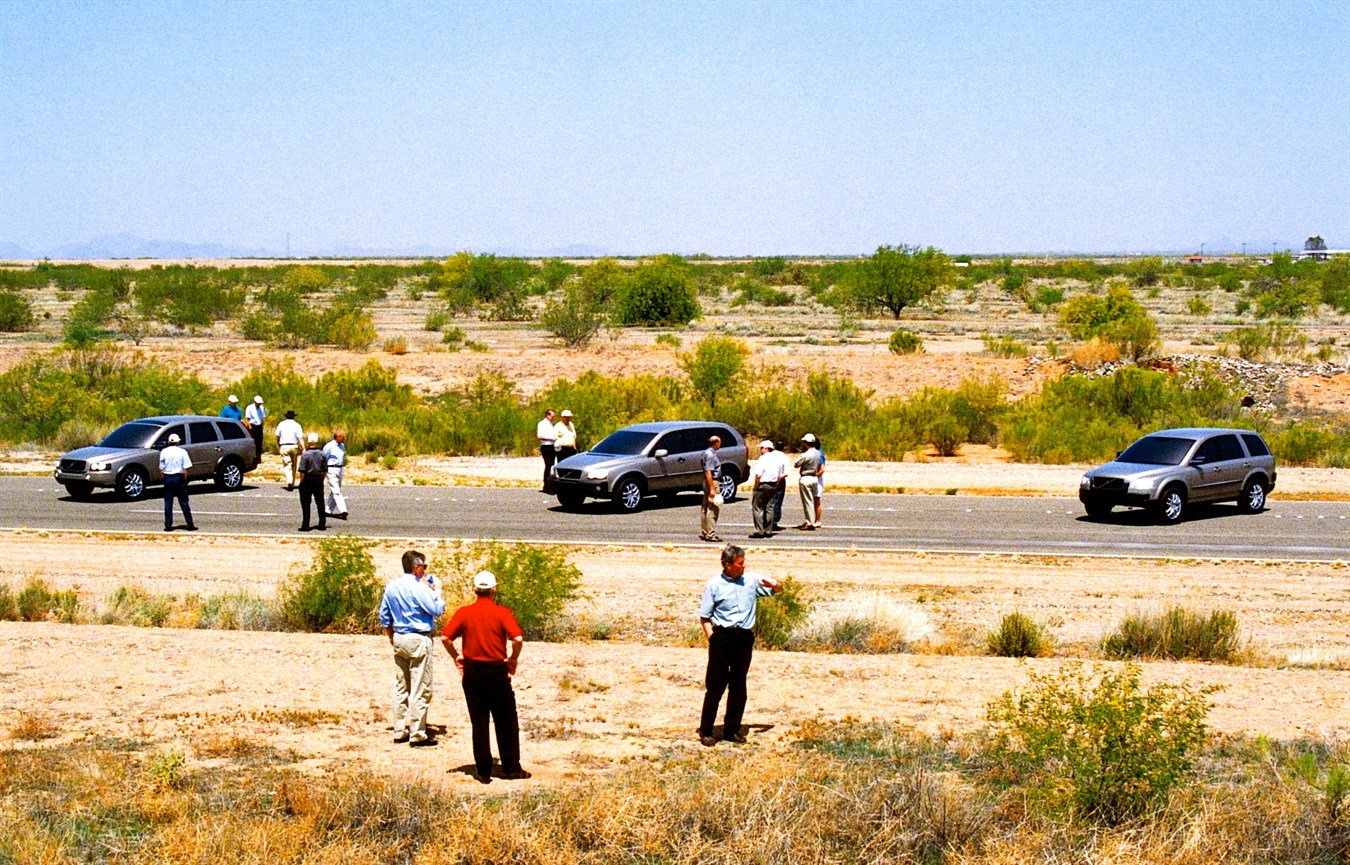
The 4th of May 1999 was an important day for the project. In temperatures of 41°C, the three design proposals were presented at Volvo Cars’ test track outside Phoenix, Arizona. Senior management and some members of the future project management attended the gathering, with the aim of reaching agreement on the focus of the design. The winning exterior proposal was designed by Doug Frasher from Volvo's Concept & Monitoring Center in California, who also designed the exterior of the Volvo S80.

Hans Wikman remembers the feeling when the management team inspected the three design alternatives under the burning desert sun:
"Everyone in the project team was a little tense. After all, the SUV programme had been put on ice a couple of times before. We now had our fingers crossed that the design and the planned content would be good enough so that the management would approve it with no reservations. And that is exactly what happened."
Shot in the arm for the SUV segment
However, many critics felt that Volvo Car Corporation was entering the SUV segment too late in 2002. However, the XC90 came to be a shot in the arm for the entire segment by resolving many of the problems experienced in earlier SUVs.

"We were using the working hypothesis 'The Next Generation SUV'," explains Hans Wikman. "In other words, in the XC90 we were going to show innovative solutions for the drawbacks for which the SUVs of the time were known”
These solutions included:
  • The potential to create a flat cargo floor behind the front seats;
  • Driving properties equivalent to those of a regular car;
  • Leading fuel economy within the segment.
Five global innovations
The Volvo XC90 also presented five global innovations when the car was introduced in 2002:
  • RSC (Roll Stability Control), a system that uses a gyro sensor to detect and counter the risk of overturning, and ROPS (Roll Over Protection System) to optimise the protection for everyone in the car in the event that, despite everything, it should still overturn.
  • Inflatable side curtains for all three rows of seats.
  • An integrated, adjustable booster cushion for children in the second row.
  • Seat belts with "tensioners" for all seats.
  • A lower crossbeam at the front, which had the task of activating the car's safety systems in the event of a collision.

More than a decade later, the American Insurance Institute for Highway Safety (IIHS) still ranked the XC90 as one of the safest cars on the market by naming it the 2014 Top Safety Pick+.

The Volvo XC90 was launched with a range of five and six-cylinder engines. All were transversely mounted in accordance with Volvo's powertrain concept. In 2004, the range was extended with a powerful, transversely mounted V8 engine made of aluminium, which was combined with a six speed automatic gearbox.
 "We have learnt a great deal from the first generation XC90"
Now the first generation XC90 will make room for the next, a car that has made advances in terms of development and content at least on a par with the first.
"I am convinced that our customers will be very pleased," says Dennis Nobelius, who is primarily responsible for the all-new XC90. "We have learnt a great deal about the important holistic approach for everyone in the car, when it comes to following up this success."
“Our all-new XC90 is not just a natural development from an incredibly successful car, it is also an excellent example of the transformation underway at Volvo Cars, both within the company and from a brand perspective,” says Lex Kerssemakers, Senior Vice President Product Strategy & Vehicle Line Management at Volvo Cars. “We look forward to a new era of success.

Thursday, 26 June 2014

First V60 Polestar cars leave Volvo's Torslanda plant.

The first Volvo V60 Polestar cars have left the Volvo Torslanda factory plant on their way to customers around the world as production has begun.
”We are very happy to see the first ever complete production cars from Polestar be built in the Volvo factory. It is a satisfying result after many hours of work by the people of Polestar and Volvo behind this,” said Henrik Fries, S/V60 Polestar Technical Project Manager.
Volvo Cars starts production of the new Volvo S60 and V60 Polestar
The Volvo factory in Torslanda celebrated 50 years recently with a total of over 6.8 million cars having been produced, starting with the Amazon model in 1964 and all the way to the new V60 Polestar today. The Polestar model also marks the first ever independent partner being introduced to the production process.
”We are delighted to see the first cars leave the factory and it has been an exciting journey together with Polestar to see these cars from the drawing board to the actual finalised product being produced with us on the factory line,” said Magnus Hellsten, Vice President Car Manufacturing Europe at Volvo Cars.
A total of 750 cars will be produced of the S60 and V60 Polestar model this year, heading to customers in Canada, the Netherlands, Japan, Sweden, Switzerland, United Kingdom and the USA.  The UK market is receiving the most with 125 cars, all of which will be fully specified with every factory option possible. In fact, the only option each customer has is what colour to choose. The V60 Polestar is available in the stand-out colour of Rebel Blue, Black Sapphire Metallic, Bright Silver Metallic and Ice White.  Although offering a fully loaded vehicle, complete with a bespoke package with racing technology for the road, pricing has been kept in line with the rest of Volvo’s product range. The on-the-road price of £49,775 offers great value for money for a unique vehicle with rarity and performance in abundance.
Volvo Cars starts production of the new Volvo S60 and V60 Polestar
”It is an exciting process as there are many new and unique Polestar components that need to work seamlessly in the Volvo factory without interrupting the production of other models. It was a truly proud moment to see the first Polestar blue cars on the production line together with the XC/V70, S80 and other models. The cooperation with Volvo works really well and we are looking forward to an exciting future together,” said Fries.
The new Volvo V60 Polestar features a thoroughly developed chassis with high performance dampers and brakes which in combination with four-wheel drive and 350 hp from a turbo charged 6-cylinder engine