Purpose

I will try my best to provide detailed info on various cars and what is like to live with them, I have already produced a few for Jaguar-car-forums, I will do my best to be unbiased, but it will be hard for some cars. I will re-produce press releases and copy from other motoring news.
Showing posts with label built. Show all posts

Friday, 24 July 2015

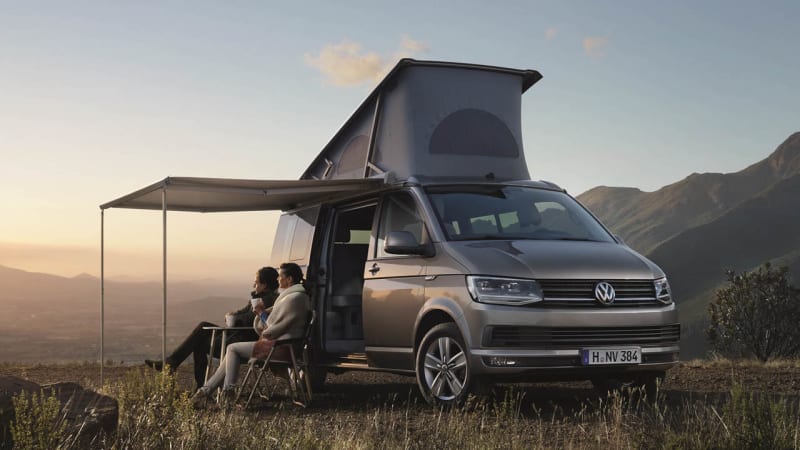
Prices and Specification announced for the new, latest generation, Volkswagen California

Volkswagen Commercial Vehicles has announced pricing for the latest generation California, ahead of UK dealers starting to take orders for the new campervan from 3 August and first deliveries before the end of the year. Prices start at £37,657 (RRP OTR inc VAT) for the Beach model. Continuing a campervan tradition which spans more than 60 years, the Volkswagen California is the only vehicle in its class to be designed, engineered and built in-house.

The new California is available in two trim levels – Beach and Ocean – and with a choice of three 2.0-litre engines ranging in power from 102 to 204 PS. All are EU6 compliant and feature BlueMotion Technology modifications to give fuel consumption and emissions figures which have been lowered by up to 15 per cent. A 4MOTION four-wheel drive version is also offered in conjunction with the 150 PS or range-topping 204 PS powerplant.
Entry to the California range starts with the Beach model which offers up to seven seats and sleeping space for four. The bench-seat easily folds to convert to a two-berth bed across the width of the vehicle, while a manual pop-up roof gives access to a further double bed. 
A fold-out table and chairs are cleverly stored in the sliding door and tailgate, while an integrated awning makes for a comfortable and practical camping experience. The Beach is available with a 2.0-litre 102 PS TDI engine with a five-speed manual gearbox, and a 2.0-litre TDI 150 PS with a six-speed manual or seven-speed DSG transmission.
The California Ocean replaces the SE model from the previous generation, with prices starting from £47,840 (RRP OTR inc VAT). Customers can choose from two engines with either 150 or 204 PS and six-speed manual or seven-speed DSG gearboxes. 4MOTION four-wheel drive variants mean the ultimate ‘home from home’ can go further and wider afield. The Ocean also adds an electro-hydraulic pop-up roof with lighting, plus a kitchenette with two rings, a fridge and sink.
The new generation California adds a host of safety, comfort and convenience features. These include a Driver Alert System, Brake Assist and an Automatic Post-Collision Braking System, as well as the option to add innovations such as Adaptive Cruise Control, Front Assist and City Emergency Braking for safer and more relaxed cruising. 
In the cabin the California gains a new ‘premium’ dashboard (optional on Beach) with wide centre console and car-like feel, plus the latest infotainment system, DAB digital radio, Bluetooth and new multi-function display. A new cupholder as well as new fabrics, leathers and plastics enhance the ambience inside.

Sunday, 18 May 2014

Renault hits the 2 million mark in Brazil - in just 15 years.

The two Renault plants (PC and LCV) making up the Ayrton Senna complex in Curitiba (Brazil) have reached a production landmark. A New Logan built today became the 2,000,000th vehicle built by the complex in fifteen years.
Fifteen years ago in December 1998, Renault opened its first plant in Brazil. Since then, the Group has continuously developed its industrial presence in this country.
This symbolic production figure reflects the success of Renault vehicles in Brazil, where brand development has outpaced the market in recent years. Brazil is now Renault’s second biggest market, behind France. The Group is aiming for market share of 8% in 2016.  

Thursday, 14 November 2013

Happy Birthday SEAT, 60 years and counting


  • Today marks 60 years since the first SEAT car, a 1400, was produced
  • SEAT 1400 saloon became an instant hit, with 10,000 orders after its debut
  • 98,000 1400 models were produced over a decade
  • SEAT has gone on to produce 16,000,000 vehicles and counting

Yesterday was a very special day for SEAT: exactly 60 years ago to the day, the company’s first car rolled off the production line at its Zona Franca factory in Barcelona. That car was the SEAT 1400, an elegant and luxurious saloon designed in the spirit of the most popular American sedans of the '50s.


SEAT had been established only three years earlier, and had developed the 1400 with a focus on the transport needs of government officials. Initially available as a saloon, SEAT would also create estate, seven-seat and commercial versions of the 1400; Spanish cabbies loved the 1400, and it remained a popular taxi well into the following decade.


With a price tag of 121,875 pesetas (€41,735 or £35,200 today), SEAT initially produced five cars per day, built by a workforce of 925 employees. The rear-wheel drive 1400 was powered by a front-mounted, water cooled 44 PS engine and came equipped with a four-speed manual gearbox.

It wasn’t until June of 1954 that SEAT gave the model its official debut, at the Barcelona Trade Fair. And with petrol rationing in Spain having come to an end in 1953, the company received a staggering 10,000 orders. That allowed SEAT to both increase production and drop the price, reducing it to 117,000 pesetas.

By the end of 1954, SEAT had delivered 945 1400 models, but by the end of the following year, annual production was closer to 3,000, with almost all of the 1400’s components manufactured in Spain. One year later and production had more than doubled, to 7,000 units, and by the end of the following year SEAT was producing 10,000 1400 models annually, with 42 leaving the factory every working day. By that stage the workforce had increased to 5,000.  

Production of the 1400 ended in 1964, with 98,000 cars having been produced in Zona Franca and Spain going from strength-to-strength economically. SEAT was at the forefront of that growth, and remains a key player in the Spanish economy today, designing, developing and manufacturing its cars in the ultra-modern Martorell facility on the outskirts of Barcelona; since 2010, SEAT has invested €35m in the ‘SEAT al Sol’ project, which has reduced factory CO2 emissions by 7,000 tonnes per year using solar panel technology.

Since the launch of the 1400, SEAT has built more than 16,000,000 vehicles, including icons like the 600, the 127, the Ibiza and the Leon. Today the company exports over 80% of its production, and has over 1,800 points of sale worldwide.

2013: a year of significant anniversaries

The SEAT 1400 was replaced by the 1500, which began production 50 years ago in 1963. Ten years later in 1973, its successor, the SEAT 132, came to market. A truly luxurious car, the 132 was the first SEAT to feature an automatic transmission, and later in its lifecycle it became the first available with air conditioning.

Forward another ten years to 1983 and the SEAT Ronda came to market, and ten years after that, SEAT introduced the second-generation Ibiza - the first car ever produced in SEAT's Martorell factory and a model that, now in its fourth generation, remains SEAT’s most popular car.

Wednesday, 7 August 2013

2nd Generation Hyundai i10 to give better levels of comfort and style


  • Comfort and safety equipment from segment above with best-in-class space
  • Dynamic exterior and interior styling matched to refined driving experience
  • Designed, developed and built in Europe, for European consumers

Hyundai Motor Europe has released the first picture of New Generation i10, the company’s completely-new European A-segment car.  Appearing five years after its predecessor went on sale, New Generation i10 demonstrates significant progress for Hyundai in the segment, possessing abilities and features typically only found in higher segments.  Generous levels of equipment, space and functionality, coupled with sophisticated design, refined ride qualities and a quiet cabin, set new levels of ‘true value’ for Hyundai.

Buyers of New Generation i10 will be offered the highest levels of comfort and safety equipment, with many features more common to segments above.  Available equipment such as automatic climate control, heated leather steering wheel and cruise control with speed limiter provide bigger-car comfort, while safety features include standard-fitment stability control and front curtain airbags.

Longer (+80mm), wider (+65mm) and lower (-50mm) than its predecessor, New Generation i10 provides best-in-class legroom and cargo capacity.  Front and rear passengers benefit from combined legroom of 1,890mm, while boot capacity has been boosted by more than 10% to 252 litres with all seats in place.

New Generation i10 is based on an all-new platform featuring a 5mm-longer wheelbase and relocated rear dampers that deliver more precise wheel control over all types of road surface.  To take full advantage of its enhanced dimensions, New Generation i10 has also been carefully tuned to deliver refined driving dynamics and low noise levels, for an experience close to the standard of B-segment cars.

The European Hyundai design team, led by Chief Designer Thomas Bürkle, has created a dynamic shape using fluidic sculpture, Hyundai Motor Company’s design philosophy, to emphasise the new car’s athletic proportions and generous external dimensions. The refined exterior is mirrored by a stylish interior that features high-quality materials on key surfaces.

Allan Rushforth, Senior Vice President and COO of Hyundai Motor Europe, commented: “New Generation i10 is another significant step forward for Hyundai Motor.  Every aspect of the car has been designed and rigorously developed to meet the demands and needs of European consumers.  New Generation i10 fully embodies Hyundai’s ‘true value’ proposition, bringing higher levels of features and functionality than many buyers would expect to find in a vehicle of this segment.”

As with 95% of Hyundai cars sold in Europe, New Generation i10 has been designed and developed at the Hyundai Motor Europe Technical Centre in Rüsselsheim, Germany.  New Generation i10 will become the first A-segment Hyundai to also be built in the region.
Set to enter production in September, New Generation i10 will be made at Hyundai’s factory in Ízmit, Turkey.  The annual capacity of the plant, which already produces the B-segment New i20 model, is rising to 200,000 cars, following a multi-million Euro investment in infrastructure in the region.  Once New Generation i10 goes on sale across Europe, 90% of Hyundai cars sold in Europe will be built in the region.

More information will be released ahead of New Generation i10’s debut at the Internationale Automobil-Ausstellung (IAA) in Frankfurt in September.