My thoughts on all things motoring, press releases, reviews & techie stuff, from around the world.
Please note that the pictures of vehicles within this blog are used as examples of the specific press releases, on occasions, due to the lack of available official pictures, examples are re-produced.
ANY AND ALL PROFANITIES WILL BE REMOVED AND THE PERSON/S RESPONSIBLE WILL BE BANNED, NO EXCEPTIONS.
Purpose
I will try my best to provide detailed info on various cars and what is like to live with them, I have already produced a few for Jaguar-car-forums, I will do my best to be unbiased, but it will be hard for some cars. I will re-produce press releases and copy from other motoring news.
Aston Martin confirms production of RapidE - the brand’s first all-electric model
Williams Advanced Engineering confirmed as lead engineering partner
RapidE will be based on the Rapide AMR
Limited build run of 155 cars with production set for 2019
Less than two years after being unveiled as a concept, Aston Martin is today confirming that the all-electric RapidE will enter production in 2019.
Set for a limited production run of 155 cars, RapidE is Aston Martin’s first all-electric model. As such it spearheads development of the brand’s low- and zero-emission vehicle strategy laid out by Aston Martin’s President and CEO, Dr Andy Palmer, in the company’s Second Century Plan.
RapidE sees a continuation of the collaboration with Williams Advanced Engineering who worked on the original RapidE Concept. Based in Grove, Oxfordshire, Williams Advanced Engineering will assist Aston Martin with the complex task of engineering integration.
Based upon the forthcoming Rapide AMR concept, RapidE will deliver four-door sports car looks and dynamics of the Rapide S powered by an all-electric powertrain replacing the six-litre V12 engine. More information will be revealed about the RapidE’s all-electric powertrain in due course.
The instantaneous delivery characteristics of electric motors means the RapidE will offer a unique driving experience of a kind not experienced before in an Aston Martin.
Aston Martin President and CEO, Dr Andy Palmer, said of the RapidE: “Having unveiled the RapidE Concept back in October 2015 we reach another milestone with the confirmation that we are now putting the first all-electric Aston Martin into production. RapidE represents a sustainable future in which Aston Martin’s values of seductive style and supreme performance don’t merely co-exist alongside a new zero-emission powertrain, but are enhanced by it.
The internal combustion engine has been at the heart of Aston Martin for more than a century, and will continue to be for years to come. RapidE will showcase Aston Martin’s vision, desire and capability to successfully embrace radical change, delivering a new breed of car that stays true to our ethos and delights our customers.”
Paul McNamara, Technical Director at Williams Advanced Engineering said: “Williams Advanced Engineering has always endeavoured to work collaboratively with its customers to meet their sustainability challenges and find energy efficient solutions.
For today’s car manufacturers, this is particularly important as legislation demands more energy efficient vehicles. This project with Aston Martin will draw on the extensive battery and EV experience we have accumulated and we are extremely pleased to be supporting this prestigious British company with their future electrification strategy.”
Aston Martin has commenced production of the highly anticipated DB11 for UK customers, the first core car launched under the luxury carmaker’s six year ‘Second Century Plan’. With the first DB11 coming off the Gaydon production line today, first deliveries to customers will take place during October.
Aston Martin President and CEO, Dr Andy Palmer, who will personally assure the quality by inspecting the first 1,000 cars, said: “It’s an exciting moment for the entire company when the first car of a new model goes into production.
The DB11 is a special car and it heralds the start of a new and exciting era for Aston Martin.”
The new DB11 is the first in a line of seven new models to be launched over the next seven years, in line with the company’s ‘Second Century Plan’, which takes the 103-year-old company into its next century of operation.
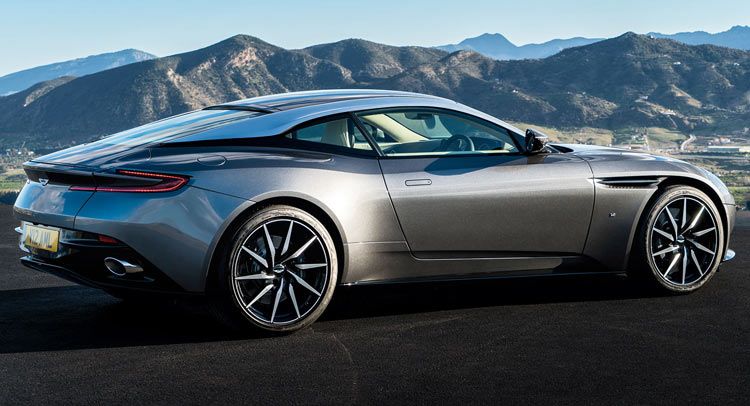
The DB11 is the latest model from the illustrious ‘DB’ bloodline for which Aston Martin is so famous. The Aston Martin DB11 has received rave reviews since its launch at the Geneva Motor Show in March.
To date, over 3,000 orders for the new DB11 have been received and they will all be hand-built at the company’s sports car production plant and headquarters, in Gaydon, Warwickshire.
Earlier this year, Aston Martin announced the company’s second UK manufacturing facility will open in St Athan in Wales where the new crossover will be built.
A new chapter in Aston Martin’s history began at the 86th International Geneva Motor Show with the unveiling of the DB11. The first product launched under the company’s ‘Second Century’ plan, DB11 is the bold new figurehead of the illustrious ‘DB’ bloodline and an authentic, dynamic sporting GT in the finest Aston Martin tradition.
The DB11 showcases a fresh and distinctive design language, pioneering aerodynamics and is powered by a potent new in-house designed 5.2-litre twin-turbocharged V12 engine. Built upon a new lighter, stronger, and more space efficient bonded aluminium structure, DB11 is the most powerful, most efficient and most dynamically gifted DB model in Aston Martin’s history. As such, it is the most significant new Aston Martin since the introduction of the DB9 in 2003.
Aston Martin Chief Executive Officer, Dr Andy Palmer said: “We aspire to make the most beautiful cars in the world. DB11 is the absolute embodiment of what an Aston Martin should be and we have worked tirelessly to ensure that DB11 combines both exceptional design with the latest technology throughout. A brand new bonded aluminium platform, clever aerodynamics, a new characterful twin-turbo V12 and class-leading infotainment systems are just a few aspects which make this the sports car that will proudly spearhead Aston Martin’s second century plan.”
Heralding a new design era for Aston Martin, DB11 is the latest landmark in a remarkable aesthetic journey; one that gave us icons such as the DB2/4, DB5 and, most recently, the DB10 developed specifically for James Bond. DB11 re-imagines the relationship between form and function with a series of fresh design signatures.
Foremost amongst these are the front-hinging clamshell bonnet, distinctive LED headlights and accentuated lines of the iconic Aston Martin grille. The profile is equally dramatic, thanks to the roof strakes that flow uninterrupted from A-pillar to C-pillar. The clean lines continue at the rear, with a sloping decklid that smoothly blends into boldly sculpted tail-lights to create a new and unmistakable graphic.
Innovative aerodynamics play their part in this aesthetic revolution with clever management of airflow both over and through the bodywork aiding stability while preserving the DB11’s uncluttered surfaces.
Front-end lift is reduced by the gill-like Curlicue which releases high-pressure air from inside the wheel arch via a concealed vent within the redesigned side-strake.
Meanwhile, rear-end lift is reduced by the Aston Martin AeroBladeTM; a virtual spoiler fed by discreet air intakes located at the base of each C-pillar. Air is ducted through the bodywork, before venting as a jet of air from the aperture in the rear decklid.
Like every Aston Martin, the heart of the DB11 is found beneath the bonnet, though unlike any Aston Martin before it, the DB11’s heart is a 5.2-litre twin-turbocharged V12.
Designed in-house this new engine develops 608PS1 (600BHP1) and 700Nm1 of torque, making DB11 the most powerful production DB model ever. Naturally, it’s the most dynamic and most accelerative too, with a top speed of 200mph1 and a 0-62mph time of just 3.9sec1. Thanks to intelligent bank activation and stop-start technology that potency is matched by greatly improved efficiency.
To exploit the advantages of its new body structure and harness the immense performance of the new twin-turbo V12 engine, the DB11’s chassis, suspension, steering and electronics have been re-imagined and key new technologies embraced.
Multiple driver-selectable dynamic modes - GT, Sport and Sport Plus - progressively intensify the response of the engine, 8-speed automatic ZF transmission together with the new electric power steering and Torque Vectoring by braking while increasing the firmness of the adaptive damping for a greater sense of agility.
The result is a driving experience that combines exemplary ride comfort and true sports car agility, for an extraordinary breadth of dynamic capability.
As a true 21st century Aston Martin the DB11 combines the very latest technology developed in conjunction with technical partner, Daimler AG, with the finest quality and hand craftsmanship.
Using a full-colour 12” TFT LCD display, the all-new instrument cluster presents primary vehicle information with absolute clarity, while a second, centrally-mounted 8” TFT screen is dedicated to infotainment. Controlled via an intuitive rotary control, with an optional touchpad offering character recognition, multi-touch and gesture support, the new satellite navigation and audio system have never been more effective, sounded better or been easier to operate.
A newly implemented auto-park assist feature and 360-degree birds-eye view camera helps provide safe maneuvering at slow speeds and is also operated via the car’s infotainment system.
With wider door apertures, significantly increased occupant space - especially head and legroom in the rear - fully integrated rear ISOFIX mounting points for a pair of child seats plus a luggage compartment large enough to accommodate two large holdalls plus carry-on baggage, the DB11 is a genuine Grand Tourer.
Thanks to an inspiring palette of colours and a vast array of detailing options, its interior can be perfectly in-tune with your unique personal style.
From calming, carefully co-ordinated tones to sharp contrasts in hue and texture, your choices are virtually limitless. Nexus quilting and Celestial perforation add layers of beautiful complexity and intrigue, while ornate leatherwork, such as intricate brogue detailing, creates areas of visual and tactile delight.
Dr Andy Palmer said: ““This is not only the most important car that Aston Martin has launched in recent history, but also in its 103-year existence. The DB11 rightfully places Aston Martin once again as a leading brand in the luxury automotive market”.
Recommended Retail Price from £154,900 in the UK2, €204,900 in Germany2 and $211,995 in USA3, first deliveries of the DB11 car are scheduled to begin during the fourth quarter of 2016.
Leading global technology company LeEco and luxury sports car brand Aston Martin today signed a Memorandum of Understanding (MOU) towards the creation of a partnership that will develop a production version of the Aston Martin RapidE electric vehicle concept.
It is anticipated that the partnership will see the two companies working together in developing and manufacturing RapidE, with potential for adding a range of next-generation connected electric vehicles on behalf of Aston Martin, LeEco and Faraday Future.
This new signing extends the existing collaboration between the two companies. In January 2016, LeEco and Aston Martin revealed the first results of their partnership – an Aston Martin Rapide S incorporating the latest Letv Internet of the Vehicle (IOV) system.
The second area of the partnership – the development of low-emission vehicle technologies – has been accelerated as they have developed their respective plans for launching a range of new electric vehicles during the second half of the decade.
The first model developed by this partnership will be the Aston Martin RapidE. The Aston Martin RapidE concept was created to explore how the company can take an existing production vehicle and create an all-electric sports sedan.
Since the creation of this concept vehicle, Aston Martin and Letv have been advancing the work on production feasibility including the identification of technology solutions for battery systems and powertrain. Both companies are now focused on bringing the RapidE to market in 2018 utilising the best technologies from the companies’ portfolios.
Commenting on the signing of the MOU, Mr. Ding Lei, co-founder and global vice chairman of SEE Plan, said, “Signing of this MOU ushers a new phase of the collaborations between Aston Martin and LeEco. LeEco’s SEE Plan is dedicated to build electric, smart, connected and socialized cars.
We have been targeting the highest standard in the auto industry in terms of design, R&D and manufacturing of our electric cars. We hope that, by strengthening collaborations with Aston Martin, our future models will provide premium qualities and delicate arts and crafts as good as those of Aston Martin.”
Aston Martin CEO, Dr Andy Palmer, said: “Aston Martin are dedicated to developing a range of cars with low emission technologies. We have been encouraged by the project speed and technical depth shown by Letv in the development of the RapidE concept towards full production. Bringing the RapidE to market by 2018 is an important milestone for both companies.”
Aston Martin is betting that even James Bond won’t mind an 800-hp electric car.
The longtime builder of British sports cars will bring an all-electric version of its four-door Rapide to market in two years, CEO Andy Palmer confirmed to Automotive News.
Speaking at Sunday’s Pebble Beach Concours d’Elegance -- a target-rich environment for a high-end brand such as Aston Martin -- Palmer said the electric Rapide would be followed by an all-electric version of the DBX crossover by the end of the decade. Palmer’s confirmation comes several months after he indicated Aston was considering an electric Rapide in April.
It's too early to confirm powertrain specifics, Palmer did reveal his eye-watering expectations for the Rapide: all-wheel drive, around 800 hp and a 200-mile range.
Two key factors
This newfound emphasis on electric cars is driven by two key factors.
“If you want to keep making V-12 engines, then you’ve got to do something at the opposite end of the spectrum,” Palmer said of the company’s defensive strategy. Emissions-free models are necessary in the immediate future to balance out the emissions of its powerful V-8 and V-12 sports cars, especially in markets such as China.
At the same time, Aston is also going on the offensive, noting an opportunity for a powerful, seductive electric car that’s positioned well above a loaded version of Tesla’s most powerful Model S. The P90D currently tops out around $142,000 before any incentives.
“What Tesla clearly shows you is we haven’t hit the ceiling in terms of price,” Palmer said. “But I think it’s hard, though not impossible, for them as a relatively new brand to keep pushing up and to go into that super premier area.”
Palmer declined to be specific about the price of an electric Rapide, but hinted it would be in the $200,000 to $250,000 range (a current gasoline-powered Rapide starts at $205,000). Buyers in that range are looking for “something beyond a pure technology play, they start now looking for legacy,” Palmer said.
And he didn’t mince words about Tesla’s recently announced “Ludicrous mode” upgrade that drops the Model S 0-to-60 mph acceleration time to 2.8 seconds.
“We don’t do Ludicrous because Ludicrous speed is stupid,” Palmer said.
“I think that the fact that you could drive a few laps of a decent race course or race it around the Nordschleife [famed track in Germany] is much more interesting than doing 500 meters in Ludicrous mode.”
The electric Rapide will use batteries sourced from an “established supplier” such as LG or Samsung -- though not Panasonic -- according to Palmer. Production will be in the hundreds annually, and none of the Rapide’s components will be shared with any Mercedes, which owns 5 percent of Aston Martin and is currently developing engines in conjunction with Aston.
With a goal of starting production within two years, Aston already has an all-electric Rapide test mule on the road.
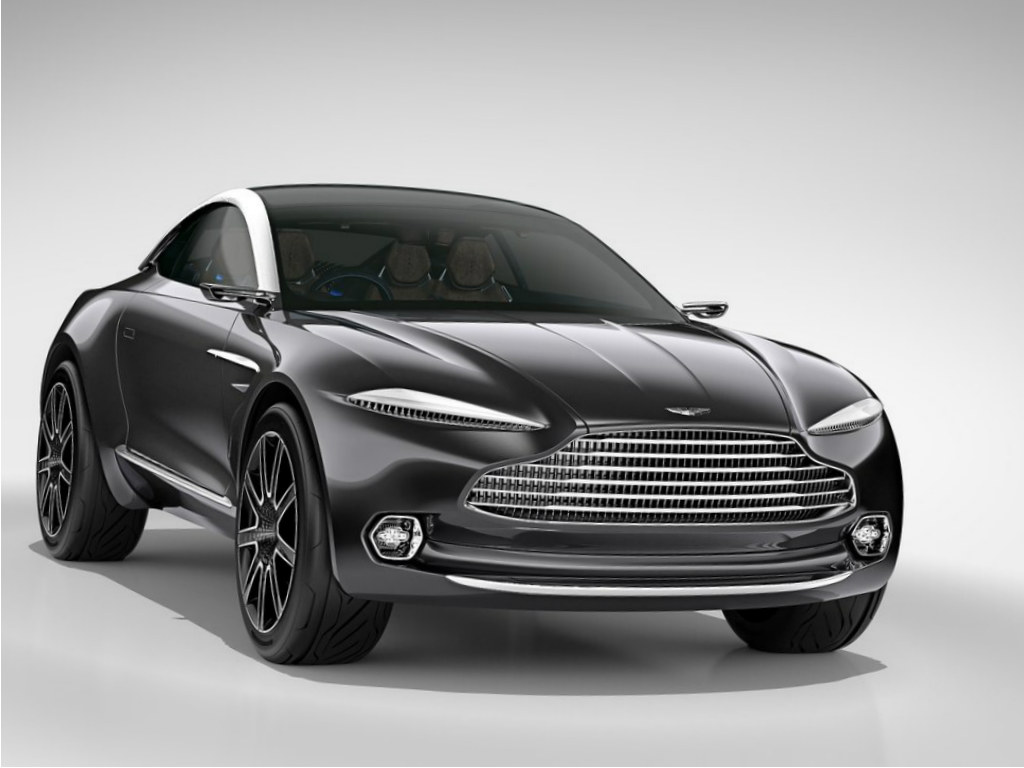
Several years after the Rapide EV goes on sale, an all-electric DBX will join it. The four-door, awd crossover coupe will be introduced around 2019 as a plug-in hybrid, then a gasoline model, and finally the all-electric version.
DBX EV
It’s too early to know whether the DBX EV would use the same (or similar) powertrain as the Rapide, or whether it would use a new system, Palmer said. He did confirm that Aston was considering a two-door version of the DBX as well.
Aston will use the DBX range to broaden its customer base, particularly in markets such as China and Russia -- something Bentley, Lamborghini and Rolls-Royce are also planning with future SUV models.
The DBX models will be the second of three pillars Aston is relying on to become a profitable company with a sustainable business model selling around 7,000 vehicles a year (the company sold around 3,400 globally in 2014). The first pillar is revamping its lineup of two-door sports cars, the first of which is the successor to the DB9 expected to debut in 2016, likely as the DB11.
The third pillar will be cash from Aston’s burgeoning Lagonda sub-brand of high-margin, custom-built models, as well as two specialty models a year -- like the track-only Vulcan hypercar and the Vantage GT12 introduced this year.
Aston Martin may modify its new sports car platform for its DBX crossover rather than use SUV underpinnings from industrial partner Daimler, CEO Andy Palmer said. Media reports have said that the DBX could use the same platform as the GLC SUV from Daimler’s Mercedes-Benz brand.
However, Palmer said that the DBX would be more crossover than SUV so Daimler’s SUV architecture likely would not be not suitable. Mercedes SUVs “clearly sit in a very different space to the one we want to go to.
They are very much an SUV and we don't want an SUV,” he told Automotive News Europe on the sidelines of a conference here organized by the Financial Times newspaper in London this week.
Palmer said the DBX needs to reflect the brand’s sports heritage rather than be an SUV. He said buyers should feel like they are sitting in the car rather than “on the car,” referring to SUVs’ high front seat position.
Aston Martin is developing a new architecture to replace the current platform that underpins its luxury sports car range. The first car built on the platform is likely to be the successor to the DB9 2+2 coupe. The car is likely to go on sale next year.
The company is investigating whether the platform can be adapted to fit the DBX. “It just depends how high off the ground it could go,” Palmer said. “I don't exclude the possibility of using some [Mercedes’] parts, but I would say very much the primary route is our platform.”
The new architecture will use extruded and cast aluminum to reduce weight, Palmer said.
Aston Martin said on April 30 that it has raised $315 million for the development of a crossover based on the DBX concept unveiled at the Geneva auto show in March, as well as other vehicles that fall outside its traditional lineup of luxury sports cars.
The DBX is expected to go on sale around 2019 and is aimed at attracting more women and younger buyers to the brand, which has traditionally relied on a small, male audience.
Aston Martin showed a Lagonda-badged SUV concept based on the Mercedes GL in 2009.
Daimler has a 5 percent stake in Aston Martin as part of an agreement for Daimler to supply electrical architectures and V-8 engines for the next generation of Aston Martin cars.
Investindustrial and Tejara Capital led a further £200 million in investment capital in the form of preference shares
Enables production of DBX luxury crossover, building on range of iconic luxury sports cars
FY 2014 revenues of £468 million and adjusted EBITDA of £66 million announced
Aston Martin Lagonda today announced that with the leadership of its major shareholders, it has arranged additional committed funding of £200 million, enabling the 102-year old luxury sports car manufacturer to develop significant new luxury models that will drive the future of the company under its strategic business plan.
The additional capital investment comes in the form of £200 million of preference shares; £100 million of which were issued on 29 April 2015 with the remaining £100 million – already subscribed for – to be issued in the next twelve months, and will further expand the previously announced investment plan.
This major investment in new luxury models is at the core of Aston Martin’s strategic vision. Under the plan, the company will expand into the luxury GT crossover market with the introduction of a new vehicle based on the DBX concept shown at the recent Geneva and Shanghai motor shows.
With the addition of new model lines, the company’s strategy will help drive future growth, always ensuring that Aston Martin builds the world’s most beautiful cars that deliver true sporting ability with passion and refined luxury.
Aston Martin Lagonda CEO Dr Andy Palmer commented: “This additional long-term funding, will enable us to add extra model lines and broaden our presence in the luxury market segment by the end of the decade.
The DBX concept, has generated interest far beyond our expectations. The additional investment announced today will allow us to realise the DBX and other new luxury vehicles that will form the strongest and most diverse portfolio in our history.”
“Our shareholders have shown their strong commitment and confidence in the management team to execute the strategic plan,” continued Palmer.
Separately, Aston Martin Holdings (UK) Limited today announces results for the 12 months ended 31 December 2014.
In 2014 the company delivered full year revenues of £468 million and adjusted EBITDA of £66 million whilst simultaneously increasing its product development spend by 45%.
In 2015, the company expects global demand for its luxury sports cars to remain high, whilst it continues to develop and expand its current range starting with first customer deliveries of the limited edition track-only Aston Martin Vulcan and the race inspired, Vantage GT12.




.jpg)
.jpg)