Purpose

I will try my best to provide detailed info on various cars and what is like to live with them, I have already produced a few for Jaguar-car-forums, I will do my best to be unbiased, but it will be hard for some cars. I will re-produce press releases and copy from other motoring news.
Showing posts with label fleet. Show all posts

Monday, 9 January 2017

The UK see's higher sales in 2016, but will 2017 carry on the growth with so much against it ?

  • Highest ever number of new cars demanded by UK customers, with 2,692,786 registered in 2016, up 2.3% on previous year.
  • Wide choice of new car models and affordable finance deals drives market to new high with fifth consecutive year of growth.
  • December only the second month of negative growth in 2016, as registrations dip -1.1% to 178,022 units.
The UK new car market achieved another record year in 2016, with annual registrations climbing for the fifth year in a row to almost 2.7 million, according to figures published today by the Society of Motor Manufacturers and Traders (SMMT). The market has experienced uplifts in 10 out of the last 12 months, albeit finishing with a December down slightly by -1.1% – with 178,022 new cars registered in the month.

Buyers were attracted by a range of new car models and attractive finance deals, pushing registrations up to 2,692,786 in 2016 – up 2.3% on the previous year and broadly in line with expectations. The UK new car market is one of the most diverse in the world, with some 44 brands offering nearly 400 different model types – and 2017 looks set to be another competitive year with almost 70 new launches already planned over the next 12 months. 
Fleets were responsible for most of the growth, with demand growing to a record 1.38 million units. The private market remains at a historically high level, with more than 1.2 million private buyers registering a new car in 2016, although demand did fall over the latter three quarters. The competitive range of affordable finance is a crucial factor driving private demand as consumers are able to take advantage of low interest rates and flexible payment options.
Diesel and petrol cars continued to be by far the most popular fuel types for consumers with market share at 47.7% and 49.0% respectively. However, alternatively fuelled vehicles (AFVs) experienced a strong uplift in demand, up 22.2% across the year. Plug-in hybrids and petrol electric hybrids, in particular, experienced significant growth, with demand up 41.9% and 25.1% respectively. Meanwhile, more than 10,000 motorists chose to go fully electric in 2016 – up 3.3% on 2015.
Mike Hawes, SMMT Chief Executive, said, “Despite 2016’s political and economic uncertainties, the UK’s new car market delivered another record performance as car makers offered an incredible range of innovative and high tech models. 2017 may well be more challenging as sterling depreciation raises the price of imported goods but, with interest rates still at historic lows and a range of new models arriving in 2017, there are still many reasons for consumers to consider a new car in 2017. Looking longer term, the strength of this market will rest on our ability to maintain our current trading relations and, in particular, avoid tariff barriers which could add significantly to the cost of a new car."

Monday, 5 September 2016

August see's more growth in the UK despite all the doom mongers and the withdrawal from Europe.

SMMT NEW CAR REGISTRATIONS

  • UK new car registrations increase 3.3% in August to 81,640 units, with YTD performance steady at 1.68m.
  • Fleet sector drives market, with demand in the month growing 7.7% as private registrations fall -0.2%.
  • Registrations of alternatively fuelled vehicles up almost a third (30.8%).
The UK new car market achieved modest growth in August, as registrations rose 3.3% against the same month last year, according to figures released today by the Society of Motor Manufacturers and Traders (SMMT). 81,640 new cars were registered in the month, with year-to-date performance remaining positive, up 2.8% to 1.68 million units.


The fleet sector drove the growth with demand, buoyed by attractive finance deals and discounts, rising 7.7% to 43,267, while private registrations fell slightly by -0.2%. Diesel demand also fell marginally by -0.2%, with petrol registrations edging ahead 5.3% and alternatively fuelled vehicles (AFV) seeing significant growth of 30.8%. Almost 54,000 AFVs have been registered so far in 2016, compared with just over 44,000 last year.
Mike Hawes, SMMT Chief Executive, said, “August is traditionally one of the quietest months as consumers look ahead to the September plate change, so growth, albeit small, is good news. With showrooms full of exciting models featuring the very latest technology and a raft of affordable finance options, it still makes economic sense to consider buying a new car. The key to maintaining this strong market is consumer confidence for which we look to government to deliver the conditions for economic growth.”

Wednesday, 27 July 2016

USA - After recent negative press reports about how FCA US LLC reports it's sales, they have explained their methods.


Recent press reports have raised questions about the manner in which FCA US reports vehicle unit sales data on a monthly basis. These reports have mistakenly suggested that potential inaccuracies in the monthly data somehow impact the integrity of FCA’s reported revenues in its financial statements.

This note is intended to explain how FCA US’s monthly sales reporting process has worked, recognizing the limitations inherent in a process that collects sales data entered by some 2,600 dealers until midnight of the last reporting day of a month and releases the aggregate data typically within 8 hours of the final data entries.

FCA US believes that its current process has been in place in more or less the same form for more than 30 years, with reporting previously being made every 10 days and eventually evolving into monthly cycles.


The vehicle unit sales data reported by FCA US is comprised of three main components: (a) sales made by dealers to retail customers; (b) sales of vehicles shipped directly by FCA US to fleet customers and (c) other retail sales including sales by dealers in Puerto Rico, limited deliveries through distributors and a small number of vehicles delivered to FCA employees and retirees and vehicles used for marketing. 

Dealer Sales

Retail sales data is collected from the dealers (through a reporting system called the New Vehicle Delivery Report, or NVDR). This system is primarily designed to capture the time of a retail sale for two purposes. 

First, the date of sale recorded in the NVDR system begins the retail customer’s warranty coverage on the vehicle. Second, the recording of the retail sale in the NVDR system triggers FCA US’s obligation to make any manufacturer’s incentive payments to the dealer. 

These incentives may be based on the particular model sold, the number of certain models sold in the period and the achievement of certain overall dealer volume objectives.

These retail sales are made by dealers out of their own inventory of vehicles. This inventory was purchased by the dealers from FCA US before any retail delivery to the customer. Consistent with other automakers’ practices, it is this initial sale -- by FCA US to the dealer -- that triggers revenue recognition in FCA US, and not the ultimate sale of the vehicle by a dealer to a retail customer. 

It is for this reason that the process of reporting monthly retail unit sales has no impact on the revenue reported by FCA in its financial statements.

It is possible for a dealer to “unwind” a transaction recorded in the NVDR system and return the vehicle to the dealer’s unsold inventory. 

This “unwind” results in the return by the dealer of any incentives paid by FCA US to the dealer for the sale and it cancels the beginning of the warranty period. These unwinds may, and in fact do, occur for a number of reasons including: inability of the retail customer to finalize financing for the purchase or a change in customer preferences, among others.  

It is admittedly also possible that a dealer may register the sale in an effort to meet a volume objective (without a specific customer supporting the transaction). 

There is, however, no obvious economic incentive for a dealer to do so, since FCA US’s policy is to reverse all incentives due or paid to a dealer that resulted from the unwound retail sales transaction.

When reporting monthly retail sales in the morning of the first day of the following month, a manufacturer cannot know which, if any, transactions may be unwound after the data is released. 

Because FCA US believes that most unwinds are recorded shortly following the time the initial sale is registered in the NVDR system, FCA US has not historically reflected either unwinds or the subsequent sales of these vehicles in its sales reporting. 

As a safeguard against double reporting, however, FCA US blocks the vehicle identification number (VIN) in its NVDR files to ensure that a subsequent retail sale of the vehicle does not enter into any tally of reported sales in any future month (i.e. a vehicle cannot be counted twice as a retail sale by the dealer).

Fleet and Other Retail Sales

The other component of the monthly reported unit sales has been vehicles that FCA US delivers directly, principally to fleet accounts, and retail and other sales consisting of limited deliveries through distributors and a small number of vehicles for company and marketing uses. Sales by dealers in Puerto Rico have also been included in other retail sales. 

It has been a matter of historical practice (going back many years before 2009 bankruptcy) for FCA US and its predecessors to maintain a “reserve” of vehicles in this category that had been shipped but not been reported as “sold” in the monthly sales reports. 

While the origin of this practice is unclear and is being looked into, FCA US believes that it was probably originally designed to exclude from the reported sales number vehicles that were in transit to fleet customers, as well as vehicles that were not yet deployed in the field (because, for example, they were being tailored by the fleet customer or a third party to the fleet customer’s specifications). 

The rationale for this exclusion, we believe, was to introduce some level of conformity in the reported monthly numbers, since the sales data was intended to reflect vehicles put in use during the month.

This “not-in-use reserve” has ranged in size from month to month, and resulted from a subjective assessment at month-end. 

A review of the data suggests that the reserve has always been positive, such that FCA US has always, in the aggregate, reported fewer sales than the aggregate number of shipped units on a running basis. 

Nevertheless, there appears to be no objective methodology for establishing and maintaining such a reserve and thus several plausible values exist for such a reserve. To the extent that the methodology historically used does not yield a unique value, the outcome is inherently arbitrary.

Our Evaluation of Past Practices and a Way Forward

Our review of industry practice has not revealed a standard reporting practice among OEMs in the U.S., although we believe that FCA US’s competitors have used broadly similar approaches in compiling monthly sales data.

The complexity of this compilation task is unique to the U.S. In Europe, for example, automakers generally report data generated by the national vehicle registration offices on the basis of the number of vehicles licensed by government agencies in a given month. 

The data is thus verified by a third party and is not subject to interpretation by the automakers. 

Due to the nature of the U.S. registration system involving 50 states with diverse recording and reporting practices, applying a registration-based system in the U.S. has never been thought to be feasible.

FCA US has seriously considered simply ceasing to report this sales data on a monthly basis, and to rely only on published quarterly financial statements as a gauge of improvement or deterioration in our U.S. activities. 

We understand the sales data are used by some market followers, the automotive press in particular, to opine about the state of the industry and we accept that our decision to suspend monthly reporting would impact those constituencies and possibly may impair their perception, and in turn the public perception, of FCA US.

FCA US has therefore decided to continue monthly sales reporting with a revised methodology.
 

  • Total sales will be comprised of
    • Dealer reported sales in the U.S.;
    • Fleet sales delivered directly by FCA US; and
    • Retail other sales including sales by dealers in Puerto Rico.
  • Dealer reported sales (derived from the NVDR system) will be the sum of
    • All sales recorded by dealers during that month net of all unwound transactions recorded to the end of that month (whether the original sale was recorded in the current month or any prior month); plus
    • All sales of vehicles during that month attributable to past unwinds that had previously been reversed in determining monthly sales (in the current or prior months).
  • Fleet sales will be recorded as sales upon shipment by FCA US of the vehicle to the customer or end user.
  • Other retail sales will either be recorded when the sale is recorded in the NVDR system (for sales by dealers in Puerto Rico and limited sales made through distributors that submit NVDRs) or upon receipt of a similar delivery notification (for vehicles for which NVDRs are not entered such as vehicles for FCA executives and employees).

The objective of this new methodology is to provide in FCA US’s judgment the best available estimate of the number of FCA US vehicles sold to end users through the end of a particular month applying a consistent and transparent methodology. 

It continues to include some level of estimation in respect of, for example, unwound transactions that straddle a month end and fleet deliveries, which may be placed into service at various times after shipment and delivery. 

FCA US believes, however, that the consistency in application and transparency of this new methodology provides the most appropriate data for the limited uses to which the monthly vehicle unit sales data should be applied.

FCA US has prepared unit sales reports going back to the beginning of 2011 using this approach, and has included the results in the attached Exhibit. The Exhibit also compares the data derived under this new methodology with previously reported US monthly sales data. This comparison yields the following results.
 

1. FCA US in March of this year last commented specifically about a “streak” of year-over-year monthly sales improvements since April of 2010.  

Applying this new methodology, during the periods presented below, year-over-year monthly sales would have declined in September 2013 (-3%), August 2015 (-1%) and May 2016 (-7%).  

The so called “sales streak” would have stopped in September 2013 (after 40 months) and would have had three additional periods of sequential year-over-year improvements of 22, 8, and 1 month(s).

2. Annual sales volumes under the new methodology for each year in the 2011-2016 period are within approximately 0.7% of the annual unit sales volumes previously reported.

3. The monthly adjustments to previously reported sales as a result of the  adjustment to deduct sales later unwound and add back sales attributable to previously unwound sales over the period January 1, 2011 to June 30, 2016 are a mix of positive and negative numbers which did not exceed 0.5% of the reported data in any month. 

The maximum numerical reduction from previously reported data was 770 units (0.5% of the month’s volume) in May 2015 and the maximum numerical addition to previously reported data was 437 units (0.4%) in September 2014. 

The total over the 2011 to 2016 period representing unwound transactions previously reported as sold for which vehicles remain in dealer stock at June 30, 2016, is approximately 4,500 vehicles, or 0.06% of the total volume reported over the period (7.7 million cars).

FCA US will report its July 2016 sales using the new methodology.

Saturday, 31 October 2015

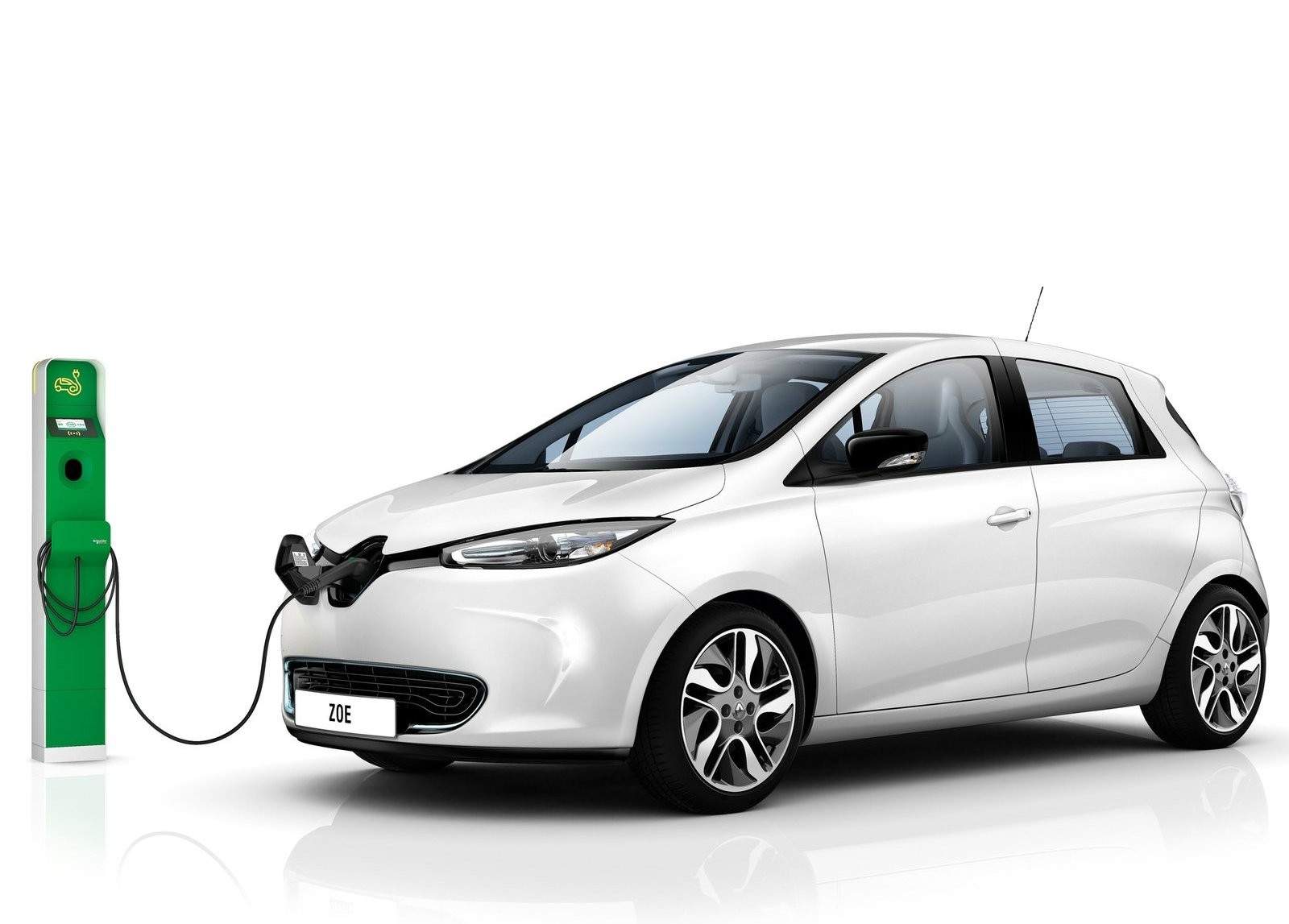
Car sharing club is on a charge thanks to a new fleet of All-Electric Renault ZOE Supermini's.

  • 20 electric Renault ZOE superminis added to Co-wheels fleet
  • New Renault ZOEs drive growth of Co-wheels to over 50 UK locations
  • 100% electric vehicle perfect for car sharing club model
  • ZOE is the most affordable car to hire from Co-wheels
A 20-strong fleet of 100 per cent electric Renault ZOEs has enabled the only independently owned national car sharing club to expand its social enterprise-focused operation to over 50 UK locations.

Co-wheels has introduced the innovative Renault ZOE to a number of new sites in Scotland this year, the most recent being in Aberdeen, Dumfries and Dundee. The club, which provides low emission, hybrid and electric cars on a pay-as-you-go basis for organisations and communities, has further locations for EVs in the pipeline with the ZOE confirmed as its electric car of choice.
The club chose the Renault ZOE against other electric cars due to the value it represents and also its driveability. Co-wheels are finding the five-door hatchback very easy to use and ideal for members who have never driven an electric car before. All of the club’s ZOEs have been bought outright or funded via Government grants.
Co-wheels customers can hire a Renault ZOE for only £3.75 an hour or £22.50 for 24 hours. As part of the club’s drive to encourage electric car use, Co-wheels does not make an additional charge for mileage – making the ZOE its most affordable car to hire.
Pierre Fox, Director, Co-wheels, said: “Feedback to the Renault ZOE has been excellent, customers liking how simple it is to drive and finding the controls to be very straightforward. It’s the ideal size too, and is the perfect vehicle for our car sharing model with 90 per cent of customers’ journeys being local.
“Using the ZOE also fits with us operating as a social enterprise with a commitment to improving society and the environment. We aim to help our members save money, reduce car ownership and create a cleaner environment by making lower impact transport options available, and because we have received grants for some of the cars, we are able to pass this saving onto our customers.
“Everyone who has driven one of our ZOEs has been very positive about the experience, so much so that when it comes to adding more electric cars at new or existing locations, it will be our preferred choice of vehicle.”
Ben Fletcher, Renault UK’s Electric Vehicle Product Manager, said: “Co-wheels’ decision to use the Renault ZOE as its number one electric car perfectly illustrates how more and more drivers are finding the versatile hatchback ideal for their requirements and how Renault is rapidly increasing its share of the growing EV sector. We’re very pleased that the ZOE is proving so popular with Co-wheels customers and is helping them to lower their motoring costs and also do their bit to help preserve their local environment.”
The Renault ZOE is an all-electric, five-door family hatchback available in three trim levels that comes with a very high level of standard specification, despite its competitive price-tag, which starts from £13,445 after the Government Plug-in Car Grant. Standard specification includes items such as climate control and sat-nav. 
ZOE is available with a number of features that make for seamless electric vehicle ownership including remote monitoring of the battery and pre-heating the cabin via your smartphone. ZOE also benefits from the patented Chameleon™ Charger that allows it to make the most of the widest range of power supplies and also keep charging times to a minimum – charging from zero to 80 per cent full in as little as 30 minutes.  The official NEDC range is 149 miles – Renault estimates that in real-world driving conditions that this equates to around 106 miles in summer and 71 miles in winter. Retail ZOE customers also enjoy the free installation of a fast-charging 7kW wall box at home, giving a standard charge time from 0-100 per cent of just 3-4 hours.
Awarded the titles of What Car? 2015 ‘Best Electric Car for less than £20,000’ and ‘Best Electric Vehicle’ in the Auto Express Driver Power 2015 survey, the Renault ZOE is an affordable route to zero emissions in-use motoring. 
In addition to the ZOE supermini, the Renault Z.E range also includes the Twizy urban runaround, an innovative open-sided two-seater vehicle, and the Kangoo Van Z.E that is perfectly suited to many commercial applications with its choice of four bodystyles and 106-mile range (NEDC).
In a UK electric car market up 54.5 per cent September year-to-date, sales of Renault electric vehicles in the UK were up by 92.4 per cent, to 1,316 vehicles, compared to the same period last year – dramatically outpacing the overall EV market of 54.4%.Renault Group UK sales for September YTD – comprising Renault cars, vans and Dacia vehicles – were up 17.4 per cent to 97,257 vehicles on the same period in 2014, again, significantly outpacing the overall market growth of 8.2 per cent. 

Friday, 18 September 2015

Volkswagen and British Gas continue it's partnership with a further 1000 Caddy Vans added to the fleet.

  • British Gas turns again to Volkswagen Commercial Vehicles to renew its fleet
  • 1,000 new Caddy 4 models to be supplied this year
  • New three year contract will see over 8,000 Caddy Maxi vans supplied
  • Whole life costs and aftercare package key to securing deal
The nation’s leading energy supplier, British Gas, has once again turned to Volkswagen Commercial Vehicles to renew its fleet, as part of the company’s planned vehicle replacement programme. The new three year contract will see the energy company become one of the first fleets in the UK to take delivery of Volkswagen’s new Caddy 4 model.

Over 8,000 Caddy Maxi vans will take to the roads in the iconic British Gas livery, comprising this year over 1,000 new Caddy 4 models. Compact yet remarkably capable, the Caddy Maxi’s fantastic drivability and ample load carrying capacity ensured it remained the number one choice for British Gas.


British Gas helps to keep the nation’s homes stay warm, working and safe, and the service provider wanted a manufacturer that could match its reliability. With city-friendly dimensions and a car-like drive, the most compact vehicle in the Volkswagen range was the ideal choice for British Gas engineers. 

The common-rail diesel engine of the Caddy Maxi will also help reduce the carbon footprint of the business due to its low CO2emissions.

The new three year deal was awarded to Volkswagen Commercial Vehicles thanks to the quality of vehicles and aftersales support already received by British Gas, which currently runs 8,500 Caddy models. With a sizeable, well-used fleet, whole life costs were essential to securing the new contract.

Converted to British Gas specification by Bri-stor, the fleet will be supported in the long term by Volkswagen’s extensive aftersales program. Engineers will be able to access any of the 71 Volkswagen Van Centres across the country for regular servicing to help reduce vehicle downtime, and ensure the business continues to run smoothly.

Colin Marriott, Fleet Manager at British Gas, commented: “In order to provide a fantastic service to our customers, we depend on our fleet to travel the length and breadth of the country. 

It was the reliability of Volkswagen’s engineering and aftercare support that was once again a key factor when it came to renewing the fleet, and we look forward to taking delivery of the vehicles.”

Chris Black, Head of Fleet at Volkswagen Commercial Vehicles UK, commented: “Securing a new three year deal with British Gas is a great success, and testament to the quality of the Caddy model and excellent service provided by the Volkswagen Van Centre network.

“British Gas will be one of the first fleets in the UK to take delivery of the new Caddy 4. We continue to work extremely closely with the team from British Gas and were extremely pleased that representatives from the company were able to visit the factory recently to see the first of their Caddy 4 models roll off the line, painted in their distinctive blue colour.”

Thursday, 16 July 2015

The VW Transporter must be good, the AA has just requested a supply of 500 units to assist motorists.

  • Volkswagen Commercial Vehicles secures new contract with the AA
  • Volkswagen to supply more than 500 Transporters to bolster AA fleet
  • Transporters chosen for reliability,  efficiency and servicing packages
Whether they’re suffering from a flat battery in Falkirk or a breakdown in Brighton, around 15 million people in the UK who rely on the AA for roadside assistance will soon welcome the sight of a full-equipped Volkswagen Transporter arriving to help get them back on the road. 

That’s because a new agreement will see more than 500 Transporters, including around 70 4MOTION all-wheel-drive versions, added to the AA’s patrol fleet – a move that will ensure  stranded motorists across the country are rescued by one of the most reliable and dependable vans on the road.
Key factors in the AA’s decision to add to its fleet of patrol vehicles included the Transporter’s payload capabilities, safety features and adaptable load area. Like all Volkswagen Commercial Vehicles, the AA’s new Transporters will benefit from Volkswagen’s award winning aftersales programme, and with more than 70 dedicated Volkswagen Van Centres across the UK, patrols will never be far away from warranty support.
The Transporters will be painted in the AA’s distinctive yellow trademark colour at the Volkswagen factory in Hannover. The vehicles will also be converted for purpose with specialist racking to accommodate the AA’s tow system, tools and additional equipment.
Sarah Millward, Commercial Director, AA Road Operations, commented: ‘Our members rely on us throughout the year for efficient roadside recovery, therefore when looking at manufacturers to bolster our fleet we took into account vehicle performance, value for money and servicing packages. The Volkswagen Transporter was an ideal fit for our fleet thanks to its drivability and load space combined with the reliability of Volkswagen engineering.’
Chris Black, Head of Fleet at Volkswagen Commercial Vehicles UK, added: ‘We work in partnership with the AA which offers exclusive round-the-clock support and care for Volkswagen Commercial Vehicle customers, and we are delighted that from 2015, AA members will receive roadside assistance from patrols in Transporter vehicles.’

Wednesday, 10 December 2014

Jaguar Land Rover expects a quarter of its sales will be to fleet and business users.

  • Jaguar Land Rover announces new global fleet and business sales strategy to meet and exceed the needs of large fleets and company car drivers
  • Major global investment made in fleet and business from retailer networks to on-the-ground business sales staff to digital marketing
  • Enhancements to compliment business-friendly product portfolio led by new Jaguar XE and Land Rover Discovery Sport
  • New Jaguar XE fleet highlights include 163PS 2.0-litre Ingenium diesel engine offering up to 75mpg and 99g/km of CO2
  • From UK launch in May, new Jaguar XE will offer business drivers the lowest total cost of ownership in the premium C-segment
  • According to CAP, Jaguar XE will retain 45 per cent RV after 3yrs/30,000 miles
  • New Discovery Sport launches in January – the most efficient production Land Rover ever
  • By 2020, Jaguar Land Rover estimates that up to 25 per cent of its total global sales will be to the fleet and business sector
With two of its most important new models ever arriving in 2015, Jaguar Land Rover announces an enhanced global fleet and business sales strategy, which will maximise sales in established markets, exploit opportunities in emerging markets and play a critical role in helping Jaguar Land Rover achieve a significant increase in fleet sales by 2020. 

At the heart of this enhanced approach are the Jaguar XE and Land Rover Discovery Sport – the most business-friendly models ever to be launched by Jaguar and Land Rover. Entering new segments in 2015, these two models will put Jaguar Land Rover onto more fleet and business choice lists than ever thanks to their dynamic design, class-leading technology and low ownership costs.


Together with this investment in product is an investment in Jaguar Land Rover’s global fleet and business presence. The global Jaguar Land Rover retailer network is intended to grow from 2,600 across 180 countries at present to over 3,300 by 2020, while specialist fleet and business centres will account for 20 to 25 per cent of total volume. Mirroring this will be a joint portfolio fleet and business sales approach, with corporate sales teams visiting clients as one collective brand, offering both Jaguar and Land Rover products. In line with this commitment Jaguar Land Rover aims to increase global fleet sales from 16 per cent to circa 25 per cent of total volume.

At the same time as improving the way it does face-to-face business, Jaguar Land Rover has invested in its digital marketing with a new international fleet and business website (http://www.fleet-business.jaguarlandrover.com) designed to channel customers in the most efficient manner possible. Jaguar Land Rover has also invested heavily in engaging with business customers on international networking social media site, LinkedIn.


This investment in retailers, corporate sales staff and digital infrastructure will see the proportion of global sales from fleet and business increase from 17 per cent to around 25 per cent by 2020, while the XE will be Jaguar Land Rover’s biggest global fleet and business seller.

Ken Forbes, Jaguar Land Rover global fleet and business sales director, commented:


“This is the biggest, most important global fleet and business strategy we have ever implemented. It is crucial in order for JLR to grow, as it will see us build on the incredible renaissance of the last six years, most of which has been focused on retail sales. The new Jaguar XE and Land Rover Discovery Sport further balance our product portfolio – and they will drive our global fleet and business sales across the world.


“We certainly won’t be applying a one-size-fits-all strategy to our markets, though. We will plant the best parts of our fleet sales business approach across markets. We have the expertise and the product to get it right.”


In the UK, the new Jaguar XE is expected to significantly increase Jaguar’s volume in a full twelve-month sales period. Some 45 per cent of XE sales will come from the fleet and business sector, which has resulted in significant investment in Jaguar Land Rover’s UK corporate sales structure. Now working across the Jaguar and Land Rover brands are four senior-level managers at head office, while the UK field-based sales team has grown from 16 to 22, implementing a new direct sales approach that will meet and exceed the needs of large fleets.

What’s more, the retailer network has also benefitted from significant investment with a new structure put in place that will serve the needs of SMEs and user choosers. Some 25 local fleet and business teams, selected based on their desire and opportunity to serve local businesses, have been appointed who will sell 80-100 cars locally. This dedicated retailer-based team will mean that small businesses and user choosers – who are often neglected by manufacturers – find they are treated in just the same way as retail customers.


The best-selling fleet and business model is set to be the XE 2.0d StopStart EU6 R-Sport Auto, anticipated to account for the majority of XE fleet and business sales. Not only will it offer business drivers the lowest total cost of ownership in the premium c-segment, it will retain an RV of 45 per cent after 3yrs/30,000 miles according to CAP. Jaguar Land Rover is committed to maintaining strong residual values for the long-term with very careful management of its fleet and business sales mix. Some 80 per cent of XE fleet sales will go to long-term business deals such as those with blue-chip companies and user-choosers.

Chris Newitt, Jaguar Land Rover UK sales director, explained:


“We will make sure that the short-term business for XE and Discovery Sport never goes above 20 per cent of the next year’s volume. We will not chase volume with our fleet and business sales. Jaguar Land Rover is about special products, cars that offer unique British essence giving customers something truly different.

“The contract hire and leasing market is now very wary indeed of premium manufacturers overpushing volumes and damaging RVs as a result. We are committed to exclusivity – and will bring stability as a result.” 


Further peace of mind for fleets comes in the form of two fixed price service plans for the XE. For those who cover 10,000 miles a year, the plan will cost just £475, while for higher mileage drivers who cover 75,000 miles over five years, the plan will rise to just £675. Further attractions for fleet and business customers are satnav available as standard and an intuitive new InControl Infotainment system with an eight-inch touchscreen.

Both the XE and Land Rover Discovery Sport have been designed and developed with Jaguar Land Rover’s global fleet and business team involved from the start. When it goes on sale in January, the Discovery Sport will be the most efficient production Land Rover ever, with competitive residual values and outstanding versatility for fleets thanks to a seven-seater option. Later in 2015, it will be available in 2WD eD4 form with CO2 emissions of 119g/km.


Jeremy Hicks, Jaguar Land Rover UK managing director said:


“The new Jaguar XE and the Land Rover Discovery Sport are the right products at the right time. Fleet and business drivers are desperate for some new life to be breathed into the market. With their brand appeal, driving dynamics, incredible efficiency and focus on technology, the Jaguar XE and Land Rover Discovery Sport will appear on more company car choice lists than ever before.

“These new products are supported by an enhanced new fleet and business sales structure that will see the needs of large fleets and user choosers not just met but exceeded. Factor in class-leading cost of ownership with our commitment to protecting residual values for the long-term and we believe Jaguar Land Rover has the formula for success for business drivers.”