Purpose

I will try my best to provide detailed info on various cars and what is like to live with them, I have already produced a few for Jaguar-car-forums, I will do my best to be unbiased, but it will be hard for some cars. I will re-produce press releases and copy from other motoring news.
Showing posts with label innovation. Show all posts

Monday, 26 June 2017

Jaguar Land Rover's subsidiary, InMotion invests in a anew mobility Services company.

  • InMotion invests in Lyft to collaborate on mobility services
  • Jaguar Land Rover to supply Lyft drivers with a fleet of vehicles
  • Technology collaboration will allow innovation and wide scale testing of new services
  • Lyft is the fastest-growing rideshare company in the US
  • InMotion Ventures is Jaguar Land Rover’s new mobility services business
InMotion, Jaguar Land Rover’s mobility services business, today announced a $25m (£19m) investment in Lyft, the fastest-growing rideshare company in the U.S.


This investment will support Lyft’s expansion and technology plans. It will also provide Jaguar Land Rover’s InMotion Ventures with the opportunity to develop and test its mobility services, including autonomous vehicles, and to supply Lyft drivers with a fleet of Jaguar and Land Rover vehicles.

Sebastian Peck, InMotion Managing Director, said, “We are excited to collaborate with a leading platform like Lyft not only on developing premium mobility solutions but also devising innovative solutions to the transport problems Jaguar Land Rover’s customers face.”
“Personal mobility and smart transportation is evolving and this new collaborative venture will provide a real-world platform helping us develop our connected and autonomous services.”
“We’re excited to join forces with Jaguar Land Rover and InMotion,” said John Zimmer, Lyft President and Co-founder. “Lyft envisions a future where shared mobility will transform cities and improve people’s lives.  This partnership will help us achieve that ambitious goal.” 
Hanno Kirner, Executive Director of Corporate and  Strategy, Jaguar Land Rover, said, “This is a strategic investment for both parties as we focus on innovating new mobility solutions for our customers. Collaborating with an expanding technology business like Lyft is going to help us both accelerate our ambitions.”
InMotion’s latest investment follows its recent seed investment in SPLT, the Detroit-based digital carpool business, which works with Lyft to provide non-emergency medical transport.
The Lyft investment was included as part of the company's most recent round of fundraising, which closed in April.

Wednesday, 25 January 2017

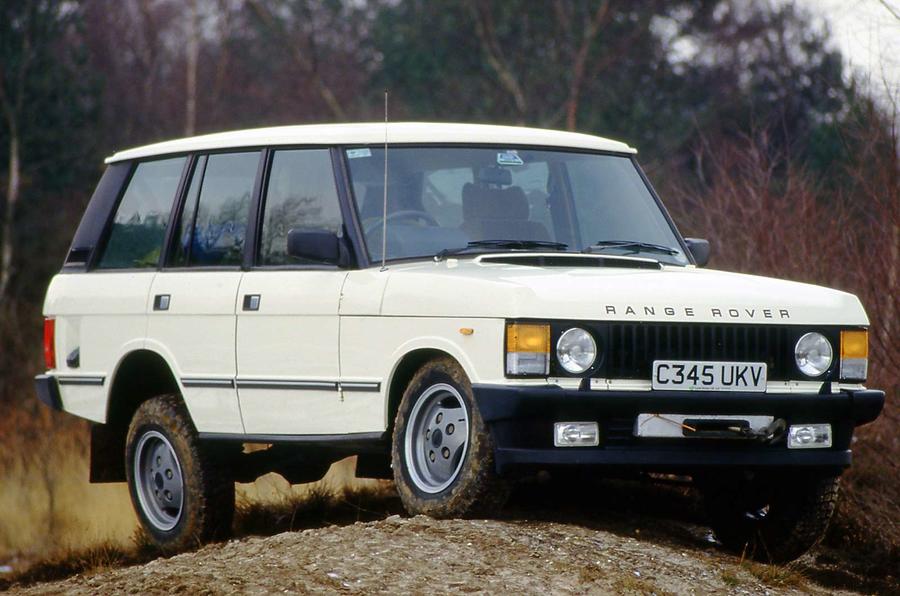
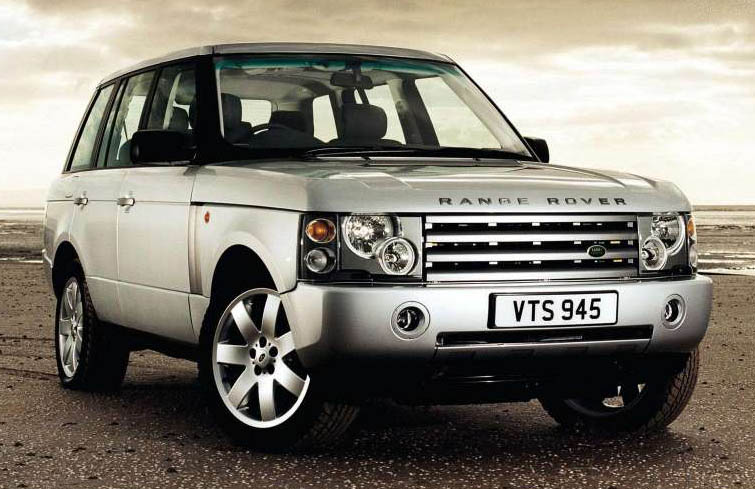
The Range Rover in two minutes, 4 generations from work horse, to luxury and far more.

  • New animation celebrates Range Rover’s enduring design and innovation over almost five decades
  • Trip through the generations begins with 1969 Velar prototype and concludes with 2017 Range Rover SVAutobiography Dynamic
  • Range Rover has introduced numerous first-to-market technologies, including electronic traction control and automatic electronic air suspension
  • Range Rover is the original luxury SUV, epitomising the best of British design
Two minutes is not long, but it’s enough time for Land Rover to celebrate a motoring icon. The Range Rover has pioneered design, refinement and engineering innovation since 1970 and Land Rover has showcased the evolution of its luxury SUV through four generations with a unique animation lasting only 120 seconds.
The specially commissioned visual has been created to mark key dates in the history of the legendary SUV, as production of the original two-door model ended 23 years ago this month (January) and SVAutobiography Dynamic goes on sale around the world.
The detailed animation shows how today’s Range Rover retains many of the design hallmarks established by the 1970 Classic and culminates with the latest derivative, SVAutobiography Dynamic.
Range Rover has evolved into the world’s most elegant and sophisticated SUV, achieving more than one million sales (1.7 million to date) along the way. Trademark features including its ‘floating’ roof, distinctive clamshell bonnet, continuous belt line and practical split tailgate all pay homage to the groundbreaking original.
The Range Rover story begins with the 26 pre-production models, which wore Velar badges in an effort to hide its identity – velare means to ‘veil’ or ‘cover’ in Italian – made up of letters from the ‘ALVIS’ and ‘ROVER’ badges that usually adorn the front and rear of a vehicle. Next comes the timeless Range Rover Classic two-door as the images showcase successive generations, finishing with the most powerful derivative, the 550PS SVAutobiography Dynamic built by Jaguar Land Rover’s Special Vehicle Operations (SVO) division.
Gerry McGovern, Land Rover Chief Design Officer, said: “Range Rover has, over time, achieved iconic design status through a progressive evolution of its unique DNA, culminating in a vehicle of peerless distinction. From its sense of evolution and sophisticated sensibilities inherent in its interior design to its understated yet powerful exterior proportions, Range Rover stands alone. There's simply nothing else like it.”
When it was first launched in 1970, Range Rover was one of the first vehicles to deliver permanent all-wheel drive while many others were still selectable. In 1971 the original model was cited as ‘an exemplary work of industrial design’ when it became the first vehicle to be displayed at the world-famous Louvre museum in Paris and it has been at the forefront of design and engineering innovation ever since.
The four-door variant was introduced in 1981, quickly followed by the first application of an automatic transmission in Range Rover in 1982. In 1989 the luxury SUV was the first 4x4 to be fitted with anti-lock brakes (ABS) and in 1992 it became the first SUV in the world fitted with electronic traction control and automatic electronic air suspension.
The engineering firsts continued in 2012, when Range Rover was the world’s first all-aluminium SUV. More recently, in 2014, the luxury SUV was the first vehicle to employ Land Rover’s advanced semi-autonomous All-Terrain Progress Control (ATPC) technology, effectively an off-road cruise control for autonomous control of speed on all terrains.
The last model included in the animation, the SVAutobiography Dynamic, shares its V8 engine with the acclaimed Range Rover Sport SVR and is specially calibrated to produce 680Nm of torque and 0-100km/h (0-62mph) in only 5.4 seconds. Interior enhancements including diamond quilted leather upholstery with contrast stitching deliver elevated refinement and desirability.
Since its launch 48 years ago Land Rover’s flagship has achieved more than 1,700,000 sales across the globe and earned a reputation as the ultimate luxury all-terrain vehicle. The legendary SUV’s unrivalled breadth of capability and elegance make it a favourite of royalty, business leaders, politicians and celebrities the world over.
Range Rover is designed, engineered and manufactured in the UK, and exported to more than 170 global markets.
The evolution of the Range Rover is visualised with the following models:
  • 1969    Range Rover Prototype (Velar)
  • 1970    Range Rover Classic (two-door)
  • 1973    Range Rover Classic (Suffix C)
  • 1981    Range Rover Classic (four-door)
  • 1994    Second-generation Range Rover (P38a)
  • 2001    Third-generation Range Rover
  • 2012    Fourth-generation Range Rover
  • 2014    Fourth-generation Range Rover Long Wheelbase
  • 2015    Range Rover SVAutobiography
  • 2016    Range Rover SVAutobiography Dynamic

Thursday, 5 January 2017

USA - Fiat 124 Spider also named finalist for “Best of 2017” Cars.com award.

  • Fiat 124 Spider also named finalist for “Best of 2017” Cars.com award
  • Experts from Cars.com determine the “Best of 2017” finalists by looking at quality, innovation and value in each nominee
  • The all-new Spider delivers the ultimate Italian roadster experience with driving excitement, technology and safety combined with iconic Italian design
Experts at Cars.com consider the all-new 2017 Fiat 124 Spider best in its segment, naming it the “Best New Convertible” of 2017. With the honor, the Spider is nominated for the “Best of 2017” Cars.com award.
The 2017 Best of Awards is the annual show Cars.com hosts in Detroit during the North American International Auto Show. This year’s categories include Best of 2017, Best Pickup Truck of 2017, Eco-Friendly Car of the Year, Family Car of the Year, Luxury Car of the Year and Play Car of the Year. 

Each car represented on the list excels in three key criteria; quality, innovation and value. All vehicles are 2017 models and Best of 2017 nominees must be all-new or fully redesigned.

According to Cars.com, “Look at this thing: It’s pretty. Next, drop the top, rev the engine, listen to the sweet 1.4-liter engine, find a twisty road and see if your cares disappear with the wind. We’re betting they will, and that’s why the Fiat 124 Spider is our Best New Convertible of 2017.”
The all-new 2017 Fiat 124 Spider brings classic Italian styling and proven performance to a new generation of buyers. Paying homage to the original 124 Spider, the all-new Spider delivers the ultimate Italian roadster experience with driving excitement, technology and safety combined with iconic design.
The roadster comes standard with the proven 1.4-liter MultiAir Turbo four-cylinder engine, the engine’s first application in a rear-wheel-drive vehicle. The engine delivers 160 horsepower and 184 lb.-ft. of torque on Classica and Lusso, 164 horsepower and 184 lb.-ft. of torque on Abarth, and is available with a six-speed manual transmission (26 mpg city/35 mpg highway) or a six-speed automatic transmission (25 mpg city/36 mpg highway).
The Fiat 124 Spider has a double-wishbone front suspension and rear multi-link suspension with stabilizer bars, and tuned electric-power steering system for enhanced handling and fuel efficiency. Available safety features include Blind-spot Monitoring, Rear Cross Path detection and ParkView rear backup camera. Available technology and convenience features include passive entry with keyless go, Bluetooth connectivity, heated seats, and FIAT Connect with access to Pandora, Stitcher and Aha apps.

Wednesday, 4 November 2015

WORLDWIDE - Biggest shock of the day, Hyundai to deliver a brand new brand, GENESIS, starting in December.

  • New ‘Genesis’ brand will compete with the world’s leading luxury car brands
  • Six-model line-up begins roll-out from December catering for ‘new luxury’ customers, delivering personalized and human-centered experiences
  • Refined performance, athletic elegance in design and human-focused innovation will elevate the Genesis brand
Hyundai Motor has announced an all-new global luxury brand – Genesis –that will deliver ‘human-centered’ luxury through a range of new models that feature the highest standards of performance, design and innovation.

Created for a new generation of discerning consumers, Genesis will be a stand-alone brand that operates alongside the company’s popular Hyundai marque. Capitalizing on its success in the fast-growing global car market, Hyundai Motor will launch six new Genesis models by 2020 and will compete with the world’s most renowned luxury car brands.
The Genesis brand seeks to create a new definition of luxury, one that will provide a new platform for future mobility centered on people. By anticipating human needs at every touch point, Genesis models will embody four key aspects: Human-focused innovation, refined and balanced performance, athletic elegance in design and hassle-free customer experience.
“We have created this new Genesis brand with a complete focus on our customers who want smart ownership experiences that save time and effort, with practical innovations that enhance satisfaction. The Genesis brand will fulfill these expectations, becoming a market leader through our human-centered brand strategy,” said Euisun Chung, Hyundai Motor Company Vice Chairman.
Genesis models will boast outstanding driving dynamics and design, with innovations tailored to closely-meet the needs of customers. The new model line-up will distance itself from the traditional technological overload of brand-focused competitors, concentrating instead on a personalized, hassle-free customer experience. Continuing the customer-oriented approach that flows through every Genesis model, sales and service staff will provide rapid and attentive service to customer’s requests.
To elevate and differentiate the Genesis brand from Hyundai, a distinct design identity, emblem, naming structure and customer service offering is being established.
Genesis models will be badged with a new wing-type emblem, redesigned from the version used on the current Genesis model to create an even more luxurious look. This emblem firmly cements the Genesis models as a collective family of luxury models under the Genesis nameplate.
The Genesis brand will also adopt a new alphanumeric naming structure. Future models will be named by combining the letter ‘G’ for Genesis with a number, 90, 80 or 70 etc., representing the segment.
Woong-Chul Yang, Head of Hyundai Motor R&D Center and Vice Chairman of Hyundai Motor said, “The Genesis models will provide technological innovation, excellent driving performance and luxury to customers. Every Genesis model will be created with the needs of our customers in mind, so the resulting car will perfectly meet their needs without any unnecessary burden or excess.”
Fitted with the latest proactive safety technologies, intuitive convenience features and IT connectivity, Genesis models are engineered to provide excellent ride comfort while retaining confident sportiness.
To develop a distinctive and differentiated design for the new Genesis brand vehicles, Hyundai Motor has created a Prestige Design Division. From mid-2016 Luc Donckerwolke, who was previously responsible for the design of Audi, Bentley, Lamborghini, SEAT and Skoda models at the Volkswagen Group, will lead this new division alongside his role as Head of the Hyundai Motor Design Center. The work of the new Prestige Design Division will be overseen by Peter Schreyer, as part of his group-wide design responsibilities as President and Chief Design Officer (CDO) of Hyundai Motor Group.
Peter Schreyer commented, “In creating the design signature of Genesis brand cars, we set out to display confidence and originality, creating highly desirable products that present new charm through innovative styling and proportions.”
The name ‘Genesis’, which also means new beginnings, hints at the new values and standards that the brand will bring to the global luxury car market. Initially on sale in the Korean, Chinese, North American and Middle Eastern luxury car markets, the Genesis brand will expand its reach to Europe and other parts of Asia as the model range grows to full strength.
Setting the brand’s cars apart from competitors, innovation will begin with the consumer, with customer requirements directing development. This philosophy echoes the vision of Hyundai Motor to be a ‘lifetime partner in automobiles and beyond’, with the ‘Modern Premium’ brand direction of Hyundai reinterpreted for the new Genesis marque.
Since the launch of its first cars in 1967, Hyundai Motor has grown quickly to become one of the world’s leading automakers. The strategic decision to create an all-new luxury car brand is recognition of the company’s strengths and its global ambitions. By introducing new customers to Hyundai Motor and elevating its competitiveness, the new Genesis brand will enable more people to experience the premium value of Hyundai Motor.

Wednesday, 17 December 2014

Renault picks up a trio of gongs at the What Van ? Awards.

  • Renault Trafic wins What Van? 2015 Best Medium Van
  • Innovation Award given to Trafic’s ‘Wide View’ passenger mirror
  • Electric Twizy Cargo picks up Editor’s Choice Award
Renault has won three awards at the What Van? Awards 2015, including two for the All-New Trafic, at a special ceremony held on Liverpool Street in London today.
The recently-launched Trafic was awarded the title of What Van? 2015 Best Medium Van and also picked up the Innovation Award for its simple-yet-effective Wide View Mirror that, built into the passenger vanity mirror, helps you to see into your blind spot.  The Twizy Cargo took home the Editor’s Choice Award building on the Highly Commended recognition it was awarded last year.
“The new Renault Trafic plays host to a series of innovations designed to make it the most user-friendly van in its class for those using it as a working environment,” said What Van? Editor Paul Barker. “It’s a clever vehicle that also features class-leading refinement and excellent new engines, making for an appealing all-round package.”

Commenting on the decision to award the Editor’s Choice Award to the Twizy Cargo, Barker said: “The Twizy Cargo is unlike any other light commercial vehicle, and there are certain applications where its abilities are unmatched.  It's got character unmatched anywhere in the industry, but there’s also substance behind the peerless style and character.”
Darren Payne, Sales Director, Renault UK commented: “2014 had already been an excellent year for Renault  – with van sales in the UK up 45 per cent and retaining our position as Europe’s number one LCV manufacturer.  Our aim is to cater for the needs of all van operators so we’re delighted that the judges at What Van? have recognised the talents of our diverse and innovative range with these three awards for All-New Trafic and Twizy Cargo.”
The What Van? Awards are decided by the expert editorial panel of What Van? Magazine, calling on their combined decades of experience in the light commercial vehicle industry.  The What Van? Awards seek to reward the best products, companies and services in the industry for their ability to make life easier, cleaner, safer and more efficient for light commercial vehicle operators in the UK.
The all-new Renault Trafic went on sale in the UK in September available in a choice of three bodystyles – Panel Van, Crew Van – to carry up to six people and equipment – and Passenger, which seats up to nine people in comfort.  All-New Trafic is available with a choice of four efficient turbodiesel engines.
All-New Trafic boasts the best load capacities on the market with clever solutions to make the loading area more practical. Innovative features such as keyless entry, touch-screen infotainment, mobile office storage and functionality and sophisticated stability control are available. 
The ultimate urban vehicle, Twizy Cargo is a zero-emission (in road use), all-electric vehicle, that is designed primarily for delivery or express firms who value its supreme practicality and want a vehicle with low running costs that stands out from the crowd.  Twizy Cargo is the professional version of Twizy and comes complete with a lockable 180-litre/75kg trunk, in lieu of the rear seat, and is priced from £7,795 on-the-road.

Tuesday, 15 April 2014

Land Rover and Virgin Galactic announces strategic partnership for future space flights.

  • Land Rover announces its New Age of Discovery in dramatic fashion in New York
  • Global reveal of Land Rover’s new Discovery Vision Concept car alongside SpaceShipTwo, the world’s first commercial spaceship
  • Land Rover is Virgin Galactic’s first global partner, bringing together two world leaders in adventure, innovation and exploration  
  • Partnership to be used to inspire young people across the globe to pursue careers in engineering, science and technology

Land Rover, the British brand synonymous with adventure, has revealed a long-term global partnership with Richard Branson’s pioneering commercial spaceline, Virgin Galactic.  
Demonstrating their shared vision of pioneering spirit, technological innovation and sense of adventure, the ground breaking partnership was announced against the backdrop of SpaceShipTwo, the world’s first commercial passenger carrying spacecraft, together with Land Rover’s new Discovery Vision Concept vehicle. The announcement illustrates the commitment that both brands share to iconic design and engineering excellence and a desire to push the boundaries of travel for the next generation.

The partnership will see Land Rover vehicles become part of daily life for the Virgin Galactic team and for all ‘Future Astronauts’, the space experience will now begin with Land Rover as they arrive in New Mexico for training, and continue to the moment they drive from the space terminal building to the waiting spaceship. Land Rover will base a fleet of vehicles at the Virgin Galactic test centre in the Mojave Desert, California and at its astounding operational New Mexico base, Spaceport America.
The exciting announcement was revealed in dramatic fashion on board USS Intrepid, a former aircraft carrier and now a museum dedicated to the exploration of sea, air and space and anchored on the Hudson River. Land Rover’s first act as exclusive partner was to bring a unique full-size replica of SpaceShipTwo VSS Enterprise to New York, where it joined the remarkable British Airways Concorde and its namesake Space Shuttle Enterprise upon the Intrepid. Like the Space Shuttle, SpaceShipTwo is the first of a revolutionary fleet of reusable human spacecraft. Having the vehicles in one place for the first time provided a powerful symbol of human ingenuity and the adventurous spirit of exploration and discovery.
Revealed alongside SpaceShipTwo was Land Rover’s Discovery Vision Concept, a vision of Land Rover’s future family of Discovery vehicles. The concept car previews dynamic new design language and an array of world first technologies. Building on Land Rover’s renowned all-terrain capability, the Discovery Vision Concept represents the ultimate SUV of the future. 

The vehicle uses augmented reality technology to display a ‘see-through’ view of the terrain ahead, making the front of the car ‘virtually’ invisible from inside the cabin. Gesture Control allows you to open the doors, operate the indicators or turn on the headlamps simply by moving your hand, while Laser Referencing projects visible markings, symbols and imagery onto the ground to aid low speed or tricky manoeuvres.
More than 200 VIP guests witnessed the two game-changing vehicles, which were revealed against a stunning Manhattan background and an awe-inspiring projection mapping sequence. 
Richard Branson, Founder of Virgin Galactic said: “We couldn’t be more delighted to have Land Rover join us on our incredible journey. It is hard to think of a brand which is more synonymous with exploration and adventure. The safety and engineering excellence of Land Rover’s vehicles, which have been the stuff of legend for more than 65 years, are attributes which also lie at the heart of Virgin Galactic. We look forward to crossing the final frontier together and to a long and fruitful partnership.”    

Phil Popham, Group Marketing Director of Jaguar Land Rover said: “This is a marriageof two of Britain’s most iconic brands which celebrate shared values, a pioneering spirit and a true sense of adventure.  Not only do we both share the same long-term vision to enable mankind to explore, but we also want to develop this partnership to inspire others. From our tens of thousands of employees and customers to schools and colleges, motivating more young people to pursue careers in engineering, science, technology and math - and explore new ways of travelling for future generations.
Land Rover’s heart beats ‘above and beyond’ – we are pioneers on land and Virgin Galactic is the pioneer of space. It’s a very special match of brands with a shared vision.” 

Both brands run significant and highly regarded community relations and STEM education programmes, which encourage young people to aspire to a future in science, technology, engineering and mathematics and together see the huge potential to develop this partnership to inspire others and motivate more young people to pursue careers in these vitally important fields.
Courtesy of Land Rover, SpaceShipTwo, will remain on display at Intrepid Sea, Air and Space Museum for the public to view between from 15th to the 22nd April.  It will sit alongside other game changing artefacts including the first ever space shuttle Enterprise, the prototype NASA orbiter that paved the way for the space shuttle programme and the record-breaking and revolutionary supersonic passenger airliner, the Concorde. 

The Discovery Vision Concept will be on display at the New York Auto Show, which opens on Wednesday 16th March.  
Follow the excitement as the story continues to unfold on Land Rover’s Facebook, Twitter and Instagram pages and join the conversation using #ReadyToDiscover.
To view a specially created film to mark the dawn of a new partnership for Land Rover and Virgin Galactic visit; https://www.youtube.com/watch?v=yhR3GCqT0Zg and to see Richard Branson comment on the partnership visit: https://www.youtube.com/watch?v=ghrQOWO5r1o

Wednesday, 20 November 2013

Nissan celebrates 80 years with new concepts.

“Co-creation” is the bridge to the next generation of vehicles to be developed in collaboration with the next generation of customers

On the 80th anniversary of Nissan's founding, a forward-thinking group of Nissan planners, engineers and designers gathered to grapple with a question: "How can we leverage Nissan’s heritage of innovation to engage digital natives — the new generation of ‘user innovators’ who value the experience of creative collaboration at least as much as actual products?"


One solution lay in the promise of creating attractive new products by proactively interacting with next-generation customers. In turn, this led to a new development framework in which Nissan could engage with young digital natives in building a new kind of relationship — a new, progressive way of making cars.

A New Take on Nissan’s “Innovation & Excitement for Everyone”

The bywords of the Nissan brand are innovation and excitement. Conventionally interpreted, this suggests that Nissan's innovations spark excitement by delivering, for example, responsive acceleration and tight handling. But excitement can also fuel innovation, particularly when it is the excitement of working with like-minded people on topics you care passionately about.


For digital natives — those born after 1990 — touchscreens and social connectivity are taken for granted. Not satisfied with the passive consumer role, they want to be part of the story. In user communities they share information and take an active part in finding creative solutions. Modifying electronic devices or using IT to communicate and interact with others is exciting and emotionally rewarding for them. It makes their interests even more rewarding for them personally, much as it did with previous generations and their own contemporary technologies.


This insight pointed the way forward: Nissan could appeal to digital natives by delivering on the promise of “Innovation and Excitement for Everyone” in a whole new way. To offer a new take on the product development process, Nissan offered a space for digital natives to participate in product creation. Their desire to change things and create new value could be activated not just in the technology sphere but in making cars. The way forward was tofind a way to involve them in the monozukuri story of making things and exposing them to fun and innovative ways of imagining cars.

Francois Bancon, division general manager of Product Strategy and Product Planning at Nissan puts it this way:

“We have always valued and respected customer input and sought to exceed customer expectations. Now we are taking this into a new dimension by having customers who are passionate about Nissan participate in the development process with collaborative creation. As members of the development team, customers will work together with specialists to co-create a new generation of Nissan vehicles that reflect our customers’ desires, insights and creativity at a more profound level than ever before.”

The Time is Right for a New Approach

Visitors to a motor show expect to see cars — provocative concepts, groundbreaking prototypes and bewitching new models. But as it commemorates its 80th birthday Nissan is daring to not just create cars, but involve talented members of the public in a whole new way of creating new cars. Nissan calls it "co-creation" — collaborative creativity applied to the process of developing new automobiles.

Why now? From creating artistic clothing designs to tackling global challenges, the Internet enables people to share ideas and participate in group projects through online communities. Professionals work with novices and academics. The one thing that ties them together is a passion for creative problem solving.

Looking at the big picture, these trends add up to a growing interest in Do-It-Yourself and fascination with the process of collaborative creation. The time is right to bring participative innovation to automotive design and engineering.


The Co-creation Process: How it Works

Up to now, vehicle development seemed a closed, specialist-only process. The advent of co-creation now blurs the line between producer and consumer. It starts with Nissan inviting passionate individuals to join the development team. A project begins with a topic or theme. Then the co-creation community, comprising Nissan and customers, rethinks everything — from the primary question of how the vehicle will be used to the car’s “personality.” The next stage is joint development of styling and engineering. Finally, Nissan manufactures the car. With co-creation, customers get an opportunity to interact with other passionate likeminded people and creative professionals. Through this exciting collaborative process they give birth to something great that is also meaningful to them on a personal level.

For the Tokyo Motor Show, Nissan is exhibiting two show cars, IDx NISMO and IDx Freeflow, as examples of the kind of output one could look forward to in an actual co-creation scenario incorporating the values of digital natives. Both cars have the same starting point – a generic platform that is easy to understand; it stimulates people to indulge their sense of play and gives free rein to their imagination.


The two show cars give a glimpse of how co-creation can generate completely different solutions depending on the theme and participants, while building off the same base. This is a flexible platform that allows diverse customers to contribute their ideas and realise their ideals, thanks to its relative simplicity and solid performance.

For Shiro Nakamura, Nissan’s senior vice president and chief creative officer, co-creation means exciting new possibilities for vehicle design.

“Nissan is recognised as a true pioneer in automotive design and is still creating whole new product genres. By reaching out to digital natives as collaborators in our vehicle design, we are looking to the future. They sense the purity of Nissan’s history and how the value we create transcends the times. The two IDx concepts have the silhouette of plain sedans. This elegance in simplicity is something Nissan rediscovered through our dynamic interaction with digital natives. We hope that this collaboration will reveal fertile new frontiers of vehicle styling for future exploration.”

Both concept cars on display use the same basic body construction, but appear to be completely different due to the divergent creative themes and the originality inculcated by the participating members of each team. With a product development process that


stresses flexibility, each platform becomes a springboard of expressing new ideas for collaborative communities, enabling an ideal to be realised in concrete form.

Forging a New Relationship between Nissan and Customers

For digital natives, the co-creation experience adds “cars” to the things which can stimulate their creativity. This fresh approach to collaborative work enables car lovers to help shape automotive development by combining their enthusiasm with the expertise accumulated by automotive experts. The result is not just vehicles that are relevant and optimised for future customers. By opening up the product development that had, until now, been limited to specialists, Nissan is building new relationships with its customers.

Looking ahead, Nissan is only at the beginning of its engagement with a variety of communities to stimulate and harness collective creativity… there is much more to come.

Sunday, 29 September 2013

JLR invests £100M in new research centre


  • Jaguar Land Rover confirms its commitment to research and development in the UK, with a multi-million pound investment in a new technology, innovation and education centre at the University of Warwick
  • National Automotive Innovation Campus (NAIC) construction begins September 2014

The facility will open in 2016 and Jaguar Land Rover will double the size of its advanced research team
Jaguar Land Rover has unveiled details of its future plans for advanced research and development in the UK which will now be focused on a new cutting-edge technology, innovation and education centre in Warwick.

The National Automotive Innovation Campus (NAIC) is designed to create a large-scale collaborative research environment. It will bring academics from the UK’s leading universities together with researchers and engineers from Jaguar Land Rover and our supply chain, in a single, multi-purpose, state-of-the-art research facility.

Jaguar Land Rover is the lead partner in the project investing £50m, along with Tata Motors European Technical Centre (TMETC), WMG (Warwick Manufacturing Group ) and the UK Government’s Higher Education Funding Council England (HEFCE).

Construction of the nearly £100m NAIC is scheduled to begin in September 2014 at the University of Warwick.  Around 1000 academics, researchers, technologists and engineers will work in the building, which will feature engineering workshops and laboratories, advanced powertrain facilities and the latest advanced design, visualisation and rapid prototyping technologies.

The development of the new facility, which will complement Jaguar Land Rover’s product creation centres in Gaydon and Whitley, will be co-ordinated by Dr Wolfgang Epple, Jaguar Land Rover’s  Director of Research and Technology. In this new board-level role, Dr Epple is leading Jaguar Land Rover's innovation and advanced research initiatives and has been appointed a Honorary Fellow at WMG.

Dr. Wolfgang Epple, Director of Research and Technology, Jaguar Land Rover, said: “Investing in collaboration, innovation, research and education is vital if we want to be on a par with our international competitors.  Our future sales success, the success of our global business – and the UK economy – lies in the engineering and innovation that will take place in NAIC.

“Creating a new national focus for automotive research and consolidating Jaguar Land Rover’s growing research and advanced engineering operations in one centre offers us huge potential. With a critical mass of research capability we will put the UK at the very centre of the global automotive industry – with the NAIC at its hub.”

The development of the NAIC project is the next stage in Jaguar Land Rover’s long-term research strategy and builds on the success Jaguar Land Rover has enjoyed as part of its long-standing relationship with WMG at the University of Warwick. Nearly 200 Jaguar Land Rover researchers and engineers are currently based at WMG, collaborating with university experts on a number of projects.

Jaguar Land Rover expects that it will more than double the size of its advanced research team to 500 people by the time the NAIC opens in 2016.

Antony Harper, Jaguar Land Rover’s Head of Research, said: “We will announce the details of the specific research projects on which our NAIC research team will collaborate in due course, but these will be long-term, multi-disciplinary challenges – such as electrification, smart & connected cars and Human Machine Interface – which will help us create some key new technologies that will deliver a low-carbon future.

“These collaborative research programmes will harness the best of UK engineering innovation, and with the extra capability the NAIC gives us, you can expect the number and range of new, fresh innovative ideas that we patent, and then take to production in the future, will increase significantly.”

As well as the skills and knowledge that will be developed within these research projects, NAIC will have a key role in developing the skills of school children and engineering students, who will be able to use NAIC’s laboratories and a dedicated engineering education facility.

Dr. Wolfgang Epple added:  “Economic growth can only be sustained if we and our suppliers can find the right quality and quantity of skilled people.  We need to ensure that we are inspiring people to consider engineering and encourage a passion for science, technology and maths from a young age.

“The NAIC will become a centre of training and skills to help ensure we have enough young people wanting to develop a career in engineering and manufacturing. NAIC will also play a key role in nurturing the next generation of engineers and technologists.”

Friday, 30 August 2013

McLaren unveils latest GREAT campaign liveried car with Jenson Button

The McLaren Group has today unveiled its latest GREAT campaign liveried car, which has been designed to support and inspire British innovation.

The high-tech McLaren 12C is emblazoned with the GREAT campaign’s graphics and the message ‘Innovation is GREAT’. As well as demonstrating McLaren’s ongoing support for the campaign, it is intended to highlight the UK’s world-leading and highly innovative technology sector.

The car was launched at the McLaren Technology Centre with the support of Vodafone McLaren Mercedes driver, Jenson Button.

The GREAT campaign aims to reaffirm Britain’s international reputation and deliver long-term economic benefits through additional tourism, investment and education.  The McLaren 12C is the ideal vehicle to showcase the UK as a hotbed of innovation – a key theme of the GREAT campaign.

Built entirely in the UK at the McLaren Production Centre, the car incorporates ground-breaking technologies taken directly from McLaren’s 50 years of experience in Formula 1, including a one-piece carbon fibre MonoCell chassis, which forms the core structure of the car and weighs just 75kg. The GREAT 12C is powered by a British made 3.8 litre V8 twin turbo engine, one of the most efficient high-performance engines ever built, and features numerous cutting-edge technologies including Brake Steer and a Proactive Chassis Control System.

The McLaren 12C demonstrates that there is a global market for British innovation; McLaren has established a global sales network and 80% of the cars it makes are exported.

Martin Whitmarsh, CEO of McLaren Group said:“McLaren is proud to be an ambassador for British innovation and to support the GREAT campaign.  The UK has led the world in the development of technologies which have changed people’s lives, from the jet engine to the internet.  I believe that we are now seeing a resurgence of that pioneering spirit and McLaren is playing its part.  The McLaren 12C is a tangible embodiment of technological creativity and I hope with that with its GREAT livery it will help draw international attention to what the UK’s high-tech industry is capable of, and inspire young people at home.”
The ‘Innovation is GREAT’ 12C, whose union-flag livery was designed by McLaren Racing’s graphics team, will be on tour over the coming months. After making its first appearance on 3rd September at an exclusive ‘McLaren 50’ screening of Formula 1 film ‘RUSH’, it will then lead a procession of rare cars from Buckingham Palace to Marlborough House Gardens in the St James’s Palace Concours d’Elegance.

The tour will be complimented by a social media campaign on McLaren Group’s Twitter page (@McLarenGroup) where we are asking the public to tweet where they have seen the car and upload their photographs using the hashtag #GREAT12C.

This is the second GREAT car that McLaren has produced and follows the 12C GT3 which made its debut at the 2012 Goodwood Festival of Speed.

The McLaren Group strives to be at the forefront of global innovation, whether in Formula 1, producing the world’s most exciting road cars or increasingly applying our expertise to support industries as diverse as pharmaceuticals, healthcare, public transport and energy.