Purpose

I will try my best to provide detailed info on various cars and what is like to live with them, I have already produced a few for Jaguar-car-forums, I will do my best to be unbiased, but it will be hard for some cars. I will re-produce press releases and copy from other motoring news.
Showing posts with label internet. Show all posts

Monday, 22 August 2016

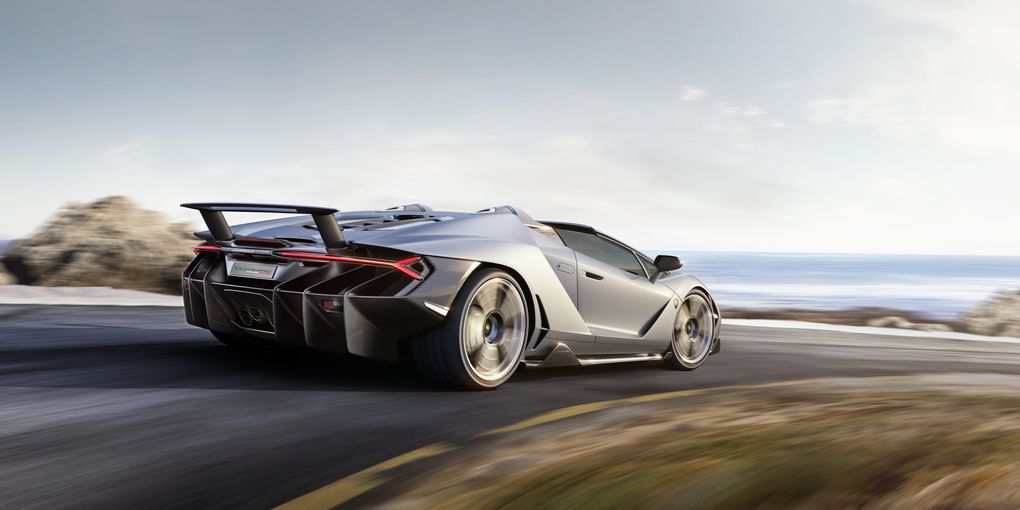
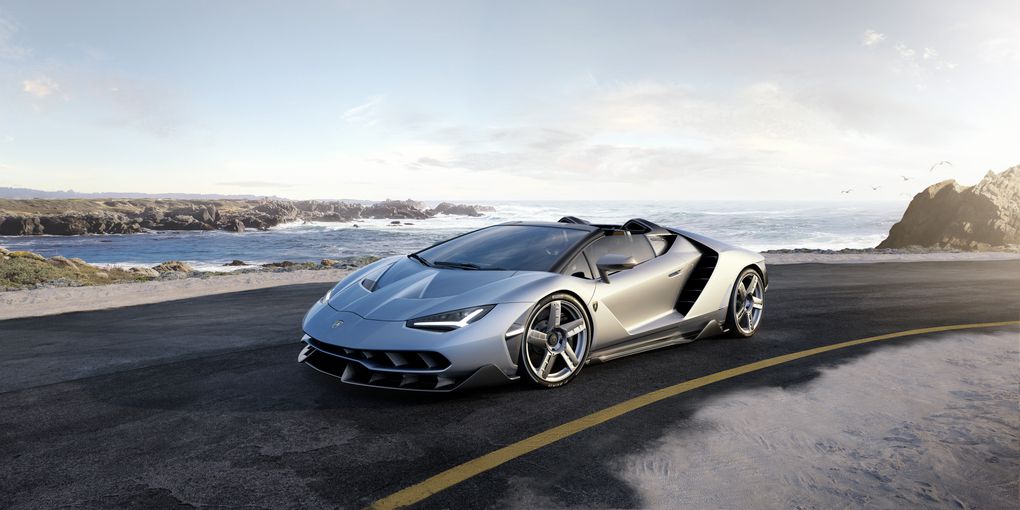
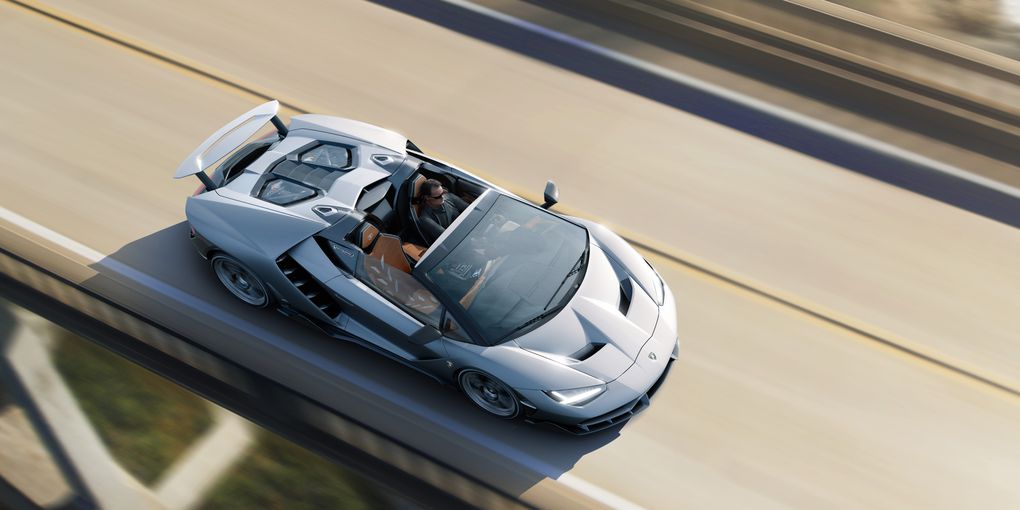
Lamborghini unveils the open version of its latest one-off creation to fervent collectors and enthusiasts at Monterey Car Week

  • One-off limited edition of 20 roadsters following the introduction of the coupé, all sold, at a starting price of 2 million euros plus tax
  • V12 naturally aspirated engine with 770 hp: most powerful built by Lamborghini, weight to power ratio 2.04 kg/hp
  • Lamborghini rear-wheel steering, carbon fiber monocoque and body, advanced aerodynamics
  • Touchscreen access to connected infotainment: internet, web radio, telemetry and Apple CarPlay
Following the introduction of the Centenario Coupé, Lamborghini unveils the open version of its latest one-off creation to fervent collectors and enthusiasts at Monterey Car Week in California in occasion of the event 
“The Quail, A Motorsports Gathering”. A natural successor to its coupé counterpart, the Centenario Roadster is also limited to 20 units worldwide and represents a true illustration of Lamborghini’s commitment to advance automotive design to new, inspirational heights.
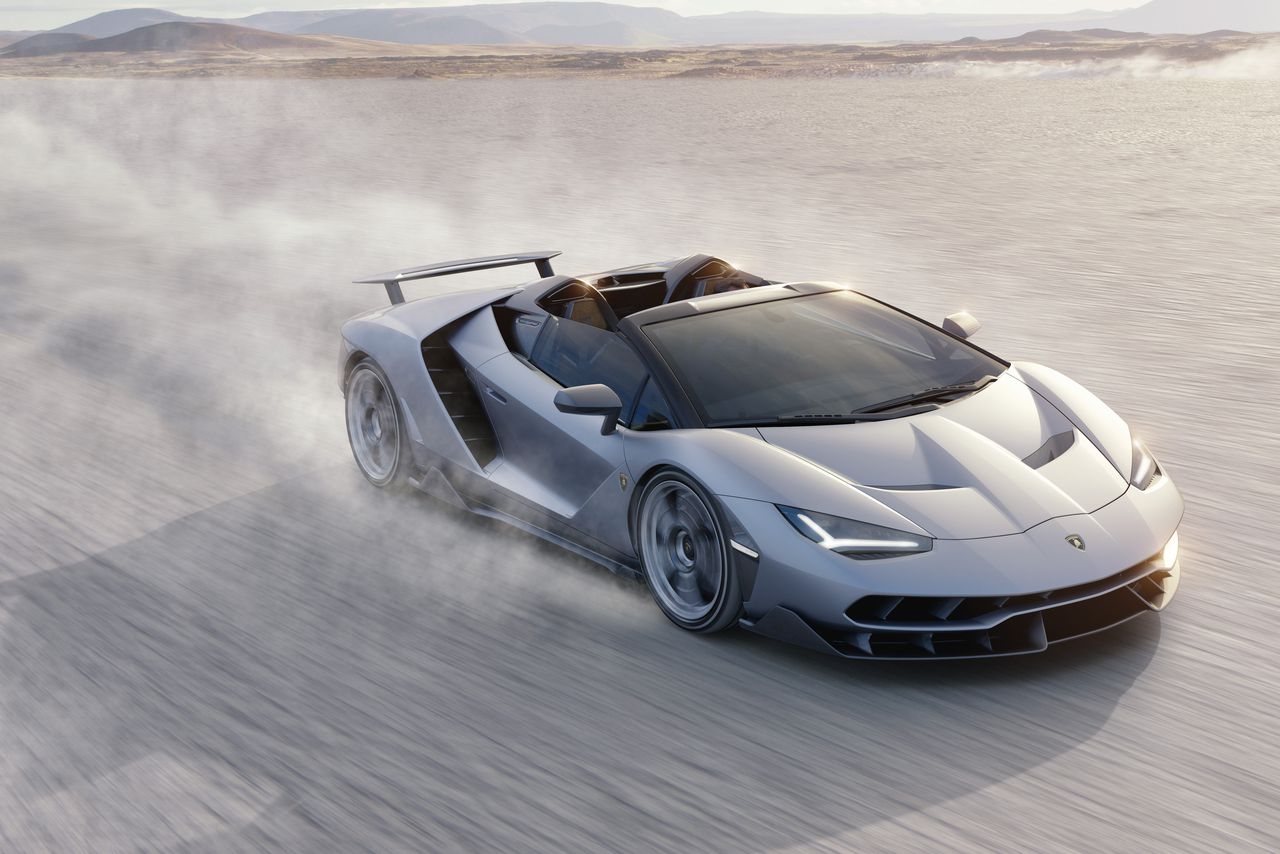
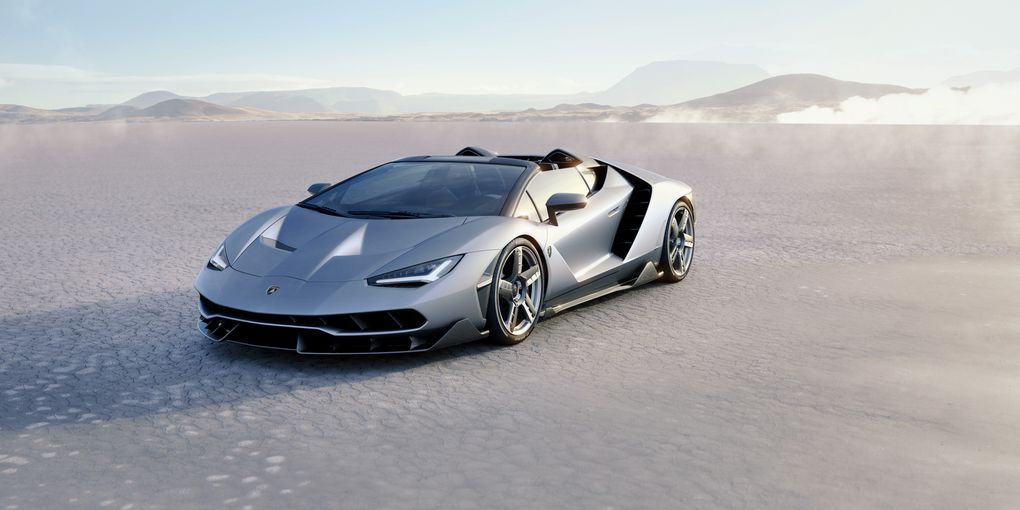
The Italian icon continues to honor the centenary of its dynamic founder, Ferruccio Lamborghini, with this special commemorative series. Designers were given the freedom to create an open design that embodies the progressive qualities of Lamborghini’s visionary founder and shines in an elegant environment. This next level Roadster embodies a new design direction for Lamborghini accentuated by clean surfaces and superb reflections as ‘form follows function’ – true to Lamborghini’s core design DNA. Centenario’s silhouette features low overhangs in the front and rear creating a clean, sensuous, mono-body shape.
“Lamborghini prides itself on the relentless pursuit of experimentation. We are proud to unleash Centenario’s further potential in the form of a classic roadster; the perfect harmony between innovation and timeless design. This unique engineering achievement is a befitting tribute to Lamborghini’s extraordinary past and a preview of its brilliant future. Centenario Roadster embraces the cutting edge characteristics of its coupé sibling and embraces the freedom of a true open-top super sports car for a pure drive experience” Stefano Domenicali, Automobili Lamborghini Chief Executive Officer, said.
Aperformance-driven model, this one-off open-top model is built on a carbon fiber monocoque and the body parts are made of carbon fiber.
Known for experimenting with new cutting edge colors, designers developed a special silver exterior color, called “Argento Centenario”, fashioned exclusively for the Centenario Roadster, accentuating its curvaceous profile. To achieve this signature matte finish, designers applied a new high-tech process dissolving the metal while diluting and diminishing the appearance of the metal grain giving it a silky and rich exterior finish.
The car’s enhanced aerodynamic design includes an extending rear wing providing more downforce at high speeds and is equipped with rear-wheel steering for increased agility and stability. A new fully connected infotainment and innovative touchscreen system includes internet browsing and Apple CarPlay for easy use.
Advanced aerodynamic studies were conducted also to achieve maximum comfort for the interior, specifically for the Roadster.Thefront windscreen is shaped to reduce turbulence for the cabin passengers, deflecting the air around and above their heads, keeping the level of ventilation within the cockpit to an optimal level for a sunlit environment. Sleek, frameless windows surround the interior, providing a light and airy effect whileimproving insulation.
Equipped with the most powerful engine produced by Lamborghini to date, the Centenario Roadster’s elegant exterior is matched with the unmistakable power of Lamborghini’s naturally aspirated V12 engine. Excellent power to weight ratio in combination with the optimized aerodynamic design allows toeasily reach 350 km/h, delivering superior balance and maximum stability.
Design and Aerodynamics
The Centenario Roadster is designed by the Centro Stile Lamborghini. Each component is stylistically relevant and actively participates in the improvement of performance in terms of drag, downforce and engine cooling.
Each detail has been refined to reach the best engineering solution for an optimal driving experience also in terms of cabin comfort. This optimal design and function is reached as well with the implementation in the rear wall, in the back of the headrest, of a channel with smooth flow of air from the cabin towards the rear of the bonnet to minimize air recirculation and turbulence within the passenger compartment. The rear wing then benefits from additional aero-load for increased rear downforce.
The body of the Centenario is defined completely in carbon fiber. The front bonnet, scissor door panels and open top roof line are fluent, aerodynamic and organic. The lower parts in shiny carbon fiber are functional, technical and dedicated to aerodynamic superiority, including the front splitter, side skirts, wheel arches and rear diffuser. Air flows through ducts within the front headlight casings and others in the sideskirts and around the wheel arches, improving airflow to the rear radiators and providing optimized cooling.
The prominent profile of the rear wheel arch accentuates the Centenario’s rear-wheel steering. Pirelli PZero tyres, developed specifically for rear-wheel steering, sit on exclusive 20”/21” front/rear rims in forged and milled aluminium. The spokes’ fan shape, accented in carbon fiber, mask ducts extracting hot air from the carbon ceramic brakes, finished with a central-locking wheel nut sporting the Lamborghini shield. 
The integrated rear diffuser dominates the back of the car, its substantial dimension optimizing air flow distribution, maximizing the car’s downforce and aesthetically emphasizing the importance of aerodynamics in the Centenario. The ‘Y’- shaped LED lights stretch the full width of the rear, distinguishing the Centenario day or night.
An extendable rear wing is integrated in body when stationary or at low speeds to preserve the minimalist lines of the Centenario. According to vehicle dynamic conditions and Driving Mode chosen, the wing extends to 150mm and rotates up to 15 degrees for optimal aerodynamic efficiency in high performance conditions.
Power and performance
The highly responsive V12 architecture delivers 770 hp (566 kW) with an engine speed regulator raised from 8,350 rpm to 8,600 rpm. Accelerating from 0-100 km/h in just 2.9 seconds the Centenario Roadster’s top speed is more than 350 km/h. Braking distance is equally impressive: from 100-0 km/h in just 31 m (102 feet).
Chassis and drive 
The body of the Centenario is built entirely in carbon fiber, with a monocoque and all other body parts and trims in carbon fiber. With a dry weight of just 1,570 kg (3,461 lbs), the Centenario achieves a weight-to-power ratio of 2.04 kg/hp.
The Centenario Roadster adopts Lamborghini’s new rear-wheel steering system. This system increases turning agility at low speeds and requires less steering angle, as well as a reduced turning radius. At high speeds the rear tires turn in the same direction of the steering angle which leads to a virtual increase of the wheelbase. As a result the rear-wheel steering provides increased stability and optimizes vehicle response. In the three Lamborghini driving modes, Strada, Sport and Corsa, the rear-wheel steering heightens the characteristics of each, particularly in lateral dynamics.
The Roadster is fitted with Lamborghini’s magneto rheological suspension and Lamborghini Dynamic Steering (LDS) providing optimal responsiveness and driver feedback. For a lightweight solution and faster gear shifting, it features an Independent Shifting Rod (ISR) gearbox.
Interior – luxury and functionality
Clients can specify their Centenario Roadster to include any color and finish from Lamborghini’s Ad Personam personalization program.
The Centenario Roadster on display features subtle and luxurious interiors in light brown Alcantara Terra di California with Bianco Polar leather inlets, stitching and piping as well as detailed cross-stitching on the seats, dashboard and rocker cover.
Functionality and connectivity are essential features including satellite navigation and a high definition 10.1 inch touchscreen. An advanced infotainment system allows for users to browse the Internet, connect to e-mail and social media and use other online applications such as web radio. Apple CarPlay is also included with full functionality for calls, navigation, music and iPhone integration. The infotainment system also includes a sophisticated telemetry function so drivers can record and compare speeds, times, lateral and G force data. Two optional interior cameras allow the drivers’ experiences to be recorded.
20 coupés and 20 roadsters
Just as the Coupé version the Centenario Roadster will be produced as a limited edition of only 20 units to be delivered through 2017. All 40 Centenario models are sold, to collectors and Lamborghini enthusiasts around the world at a starting price of 1.75 million euros for the Coupé and 2 million euros plus tax for the Roadster.
Shown in Monterey in the special exterior color, called “Argento Centenario”, clients can specify their Centenario to include any colour and finish, such as exposed carbon fiber from Lamborghini’s Ad Personam personalisation programme.
The Centenario continues Lamborghini’s strategy of producing one-off cars and exclusive limited editions, which allow scope for exploring design and technology possibilities while heightening brand awareness.  Starting with the Reventón and including the Sesto Elemento, Aventador J and Veneno, every car has proved its instant appeal, achieved iconic status, and increased in value. 

Wednesday, 9 March 2016

GENEVA - The stunning, outrageous and amazingly beautiful Lamborghini Centenario, 100 years of awesomeness.

  • A one-off limited edition of 20 coupés and 20 roadsters, all sold, at a start price of 1.75 million euros plus tax
  • V12 naturally aspirated engine with 770 hp: most powerful built by Lamborghini, weight to power ratio 1.97 kg/hp
  • Futuristic, pure, essential design encompassing technological innovations
  • New Lamborghini rear-wheel steering, carbon fibre monocoque and body, advanced aerodynamics
  • Touchscreen access to connected infotainment: internet, web radio, telemetry and Apple CarPlay
Automobili Lamborghini presents the Lamborghini Centenario at Geneva Motor Show, in the year the company celebrates the centenary of founder Ferruccio Lamborghini's birth. Only 20 coupé and 20 roadster versions of the Centenario will be produced and all 40 cars are already sold, at a start price of 1.75 million euros plus tax.


The Centenario continues Lamborghini's one-off strategy and demonstrates Lamborghini's innovative design and engineering competencies. Using the V12 architecture, the Centenario's naturally aspirated engine produces 770 hp and powers from 0-100 km/h in 2.8 seconds, and from 0-300 km/h in 23.5 seconds with a top speed of more than 350 km/h. Braking from 100 km/h to standstill is achieved in 30 meters. A monocoque and body in full carbon fiber provide a low weight of 1,520 kg and a weight to power ratio of just 1.97 kg/hp.

The car's aerodynamic design includes an extending rear wing providing more downforce at high speeds. The introduction of rear-wheel steering provides increased agility and stability, and an innovative touchscreen provides connected infotainment, including internet browsing and Apple CarPlay.

"The Centenario is a car that perfectly combines tradition and innovation. It looks to the future while honouring the legend that is Ferruccio Lamborghini," says Automobili Lamborghini President and CEO Stephan Winkelmann. 

"The Centenario is an opportunity for our designers and engineers to transcend some of the constraints of series car production to achieve an incomparable result: the Centenario has immediately proved itself as a desirable collectors' car, while demonstrating new Lamborghini technologies and outstanding performance. 

It is the most fitting tribute to Ferruccio Lamborghini in his centenary year: a man who created an exceptional brand, believed that anything was possible, and produced extraordinary, iconic cars. The Centenario is a super sports car for Ferruccio Lamborghini and the future he and we believe in today."

Design and aerodynamics
The Centenario is the truest expression of Lamborghini's commitment to new and inspirational design, allowing Lamborghini designers and engineers the freedom to create a technology demonstrator in the form of a limited edition.
The Centenario's pure and essential lines are evident in a new design language throughout, demonstrating the quintessence of Lamborghini's commitment to 'form follows function'. The car has a permeability, defined by the intakes, outlets and ducts that mark its aerodynamic superiority.
A mono line from front to back defines the recognisable Lamborghini contours, with long, low overhangs front and rear creating a clean, sensuous, mono-body shape. The Centenario measures 4.924 m long and 1.143 m high. Aerodynamic inlets made of several fins characterize both front and rear. Large air scoops in the front bonnet, while reminiscent of 1970s sports cars, are there for functionality: air is taken in through the car's front contributing to downforce on the front axle.
Furthermore, air flows through ducts within the front headlight casing and others in the sideskirts and around the wheel arches, improving the airflow to the rear radiators and providing optimized cooling. The roof including air scoops, takes its styling from aeronautic cues, enhanced by a hexagonal carbon fibre and glas engine cover.
The body of the Centenario is defined in a gloss carbon fibre. The front bonnet, scissor door panels (always reserved for V12 models) and roof line are fluent, aerodynamic and organic: the lower parts in matt carbon fibre are functional, technical and dedicated to aerodynamic superiority, including front splitter, side skirts, wheel arches and rear diffuser.
The irregular wheel arches, both front and rear, are a defining feature of the Centenario, as they have been in other Lamborghini models. Accented in matt carbon fibre and concealing airflow ducts, they highlight the aerodynamic design of the car. 
The profile of the rear wheel arch particularly attracts attention, accentuating the Centenario's rear-wheel steering. Pirelli PZero tyres, developed specifically for the rear-wheel steering, sit on exclusive 20"/21" front/rear rims in forged and milled aluminium. 
The spokes' fan shape, accented in carbon fibre, mask ducts extracting hot air from the carbon ceramic brakes, finished with a central-locking wheel nut sporting the Lamborghini bull logo.
The integrated rear diffuser dominates the back of the car, its substantial dimension optimising air flow distribution, maximising the car's downforce and aesthetically emphasising the importance of aerodynamics in the Centenario. 
Like many mechanical parts around the car, exposed to maximise heat exchange, the rear tyres are visible, while floating in the void above the diffuser are the Centenario's 'Y'-shaped rear lights. Seemingly suspended in air but attached at each end of the 'Y', the LED lights stretch the full width of the rear. The Centenario is as distinct at night as it is during the day.
An extendable rear wing is integrated in body when stationary or at low speeds to preserve the minimalist lines of the Centenario. According to vehicle dynamic conditions and Driving Mode chosen, the wing extends to 150mm and rotates up to 15 degrees for optimal aerodynamic efficiency in high performance conditions.
Power and performance
The Centenario takes Lamborghini's V12 engine as its powerplant, perfectly matching the dynamic potential of the car. The highly responsive engine, even at low revs, provides the unmistakeable resonance and characteristics that only a naturally aspirated engine can. 
Uprated to provide an output of 770 hp (566 kW) and with the engine speed limiter raised from 8,350 rpm to 8,600 rpm, the Centenario's is the most powerful engine produced by Lamborghini to date.
Accelerating from 0-100 km/h in just 2.8 seconds and from 0-300 km/h in just 23.5 seconds, the Centenario's top speed is more than 350 km/h. Braking distances are equally impressive: from 100-0 km/h in just 30 m and from 300-0 km/h in 290 m.
Chassis and drive
The body of the Centenario is built entirely in carbon fiber, with a monocoque and all other body parts and trims in carbon fiber. With a dry weight of just 1,520 kg, the Centenario achieves a weight-to-power ratio of 1.97 kg/hp and a torsional stiffness of 35.000 Nm per degree.
With permanent four-wheel drive, the Centenario adopts a new Lamborghini rear-wheel steering system. At low speeds the rear tires turn in the opposite direction of the steering angle which leads to a virtual reduction of the wheelbase. 
This provides increased turning agility at low speeds, requiring less steering angle and a reduced turning radius. At high speeds the rear tires turn in the same direction of the steering angle which leads to a virtual increase of the wheelbase. 
As a result the rear-wheel steering provides increased stability and optimises vehicle response. In the three Lamborghini driving modes, Strada, Sport and Corsa, the rear-wheel steering heightens the characteristics of each, particularly in lateral dynamics.
The Centenario is fitted with Lamborghini's magneto rheological suspension and Lamborghini Dynamic Steering (LDS), especially tuned for the Centenario's rearwheel steering and providing optimal responsiveness and driver feedback. 
Transmission is via Lamborghini's Independent Shifting Rod (ISR) gearbox, providing a lightweight and emotive solution to achieving the fastest gearshifts possible.
Interior - luxury and functionality
The luxurious interior can be finished to each Centenario client's specification. Sports seats in lightweight carbon fiber are included, with new stitching that features on the length of the dashboard, steering wheel, sunvisors, rocker covers, and the new inner door panels made of carbon fiber and Alcantara.
Functionality and connectivity are essential features of the Centenario. Including satellite navigation, a high definition 10.1 inch touchscreen connects the Centenario driver to both the car and the outside world. 
Users may browse the internet, connect to email and social media and use online applications such as web radio. Apple CarPlay is included, allowing a safe, effective way to make calls, request directions, play music and access the functionality of an iPhone.
The infotainment system includes a sophisticated telemetry function: the Centenario provides ultimate performance, both on road and, should an owner wish, on track: as evidenced by space for two helmets in the front trunk! 
The highly sophisticated telemetry allows speeds, times, lateral and G forces to be recorded and even compared between different occasions and different drivers. Two optional interior cameras allow the drivers' experiences to be recorded.
20 coupés and 20 roadsters
The Centenario will be produced as a limited edition, with only 20 coupés and 20 roadsters to be delivered from autumn 2016 and throughout 2017. 
All 40 Centenario models are sold, to collectors and Lamborghini enthusiasts around the world at a start price of 1.75 million euro plus tax. The company OPAC has been an important partner involved in the new model's construction together with Lamborghini's Research & Development department.
Shown in Geneva in an entirely carbon fiber finish, clients can specify their Centenario to include exposed carbon fiber or any colour and finish from Lamborghini's Ad Personam personalisation programme.
The Centenario continues Lamborghini's strategy of producing one-off cars and exclusive limited editions, which allow scope for exploring design and technology possibilities while heightening brand awareness. Starting with the Reventón and including the Sesto Elemento, Aventador J and Veneno, every car has proved its instant appeal, achieved iconic status, and increased in value.

Monday, 9 September 2013

Sleek new A3 Cabriolet takes A3 family to four models

Sleek new compact class soft-top adds easily accessible wind-in-hair driving pleasure to all-new A3’s long list of attributes

  • World debut at 2013 Frankfurt Motor Show (September 12-22), UK ordering from late October, first UK deliveries in March 2014
  • Fourth model in all-new A3 range
  • Automatic fabric roof opens and closes hydraulically in less than 18 seconds and is fully concealed from view when retracted
  • Three engines at launch – 1.4 TFSI 140PS with cylinder-on-demand, 1.8 TFSI 180PS, 2.0 TDI 150PS
  • First ever quattro-equipped Cabriolet models, and first ever S3 quattro Cabriolet, to follow
  • High-end equipment and advanced options including Audi connect with 4G/LTE high-speed internet connectivity

Drawing inspiration from the new Audi A3 Saloon with its flowing lines and finely balanced proportions, the all-new A3 Cabriolet makes its world public debut at the 2013 Frankfurt Motor Show. The compact class open-top will become available for UK ordering in late October, and will reach its first customers here in March 2014.

To achieve its sleeker profile and provide the capacity for complete soft-top concealment when in open mode, the new compact class cabriolet has grown compared to the previous model: its length has increased from 4.24 to 4.42 metres, its wheelbase from 2.58 to 2.60 metres and its width from 1.77 to 1.79 metres. Only its height (1.41 metres) is down on its predecessor, by 15 millimetres. Luggage capacity has also grown by 60 litres (2.12 cubic ft), and access to that space has been improved.

The front of the Audi A3 Cabriolet is characterised by the single frame radiator grille, which is flanked by flat headlamps that can light the way using either halogen or xenon bulbs depending on version, or using optional LED headlamp technology.

The rear overhang plays a key role in the harmonious proportions of the two-door car. The windscreen frame is made of aluminium – and an aluminum-look trim strip runs around the roof aperture. On the flanks, the design features a taut tornado line and contoured surfaces that take full advantage of light and shadow.

The soft top

The new A3 Cabriolet has a soft fabric roof that is stretched over a lightweight kinematic mechanism made of magnesium-steel, and it complements the car's design perfectly. At the press of a button, the top opens or closes electro-hydraulically in less than 18 seconds at speeds of up to 31mph. When retracted, the top – folded into three layers – rests in a tray that barely affects luggage capacity, which is 287 litres (10.14 cubic ft).

The acoustic soft top has a glass rear window and is available in black, grey and brown - its roof liner can be specified in black or lunar silver. The fully automatic acoustic hood has a thicker inner foam layer which further reduces the already low interior noise level of the A3 Cabriolet. A wind deflector and head-level heating for the front seats will be available from the options list. An active rollover protection system consisting of two spring-loaded plates that are recessed into the body protects the occupants in case of a rollover accident.

Body

The new Audi A3 Cabriolet is around 50 kilograms lighter than the previous model despite its larger size and improved comfort – the kerb weight of the entry-level version is just 1,365 kilograms. Even taking into account its special reinforcements, which deliver high torsional rigidity, the body-in-white with its aluminium bonnet weighs 30 kilograms less than previously. Weight was also significantly reduced in the interior and in the engines, contributing to best-in-class figures which bear testament to the Vorsprung durch Technik brand’s intensity of focus on lightweight construction principles.

Interior

Elegant lines, clean surfaces and typically uncompromising quality also mark out the interior design of the new Audi A3 Cabriolet. The instrument panel is lean and low, with a gently curved frontal section and a centre console angled slightly towards the driver. The large, round air vents with their ‘jet design’, the electrically retractable 5.8-inch colour monitor complemented by the Driver’s Information System with efficiency and rest recommendation assistants, the control panel for the air conditioning system and the three-dimensional trim strips help to maximise the air of premium class sophistication. So, too, do features such as the optional lighting package which for the first time includes a touch-sensitive switch for the reading lights.

The cabin offers enough space for four adults, and the seatbacks of the two rear seats can be folded down to create a wide through-load area. The steering wheel and seats are new designs, and the new electro-mechanical parking brake is operated by a button on the centre console. Depending on which of the three trim levels – SE, Sport and S line – is chosen by UK customers, the seats are finished in either cloth or a combination of cloth and leather, with full leather and an Alcantara/leather mix available on the options list.

Assistance systems

Highly developed optional assistance systems can also be specified to make day-to-day life in the A3 Cabriolet even more relaxed. They include adaptive cruise control, Audi side assist, Audi active lane assist, camera-based traffic sign/speed limit recognition, park assist with selective display and various feature levels of the Audi pre sense safety system.

Also extremely attractive is the line-up of infotainment components, which is headed by the Bang & Olufsen sound system and MMI Navigation plus. The latter combines an ultra-slim seven-inch monitor with a user terminal incorporating a rotary/push button control that is designed as a touchwheel to accommodate the MMI touch function – the touchwheel’s top surface is a touch-sensitive pad for inputting alpha and numeric characters.

To build on this, customers can also specify the Audi connect option, which allows occupants to more fully exploit the A3’s highly advanced computing potential by connecting it to the Internet, whenever possible via the fast 4G/LTE transmission standard (available from November). The integrated WLAN hotspot enables passengers to use their mobile devices to surf and e-mail freely, and by going online the car can also offer everything from navigation with Google Earth images and Google Street View to online traffic information and tailored social media access. The most recent addition to the lengthy list of valuable Audi connect features is a parking information function, which shows available parking spaces in public car parks.

Drivetrain

Three newly developed engines will be offered in the Audi A3 Cabriolet at its launch, all placing the emphasis as much on performance as on efficiency. The two TFSI engines produce 140PS and 180PS from 1.4 and 1.8 litres of engine displacement, respectively, while the 2.0 TDI develops 150PS; other engines will follow – ranging from the 1.6 TDI with 110PS to the 2.0 TFSI, which will power the Audi S3 Cabriolet with 300PS. All engines in the new Audi A3 Cabriolet employ direct injection and turbocharging and are backed up by a start-stop-system.

On average, the three launch engines bring a fuel economy improvement of around 12 per cent compared with their closest equivalents in the previous A3 Cabriolet range, despite also making performance gains. The 1.4 TFSI with six-speed manual transmission, for example, powers the new car from 0 to 62mph in 9.1 seconds, yet also achieves a very healthy 56.5 mpg with CO2 emissions of 114 g/km. Also contributing to this efficiency is Audi cylinder on demand (COD) technology, which deactivates two of the engine's cylinders in low load conditions.

The 1.8-litre TFSI is also a state-of-the art unit with an extensive package of high-end technologies, including dual injection into the combustion chambers and induction manifold. It is initially linked exclusively to a seven-speed S tronic twin-clutch transmission, and where the Audi drive select vehicle dynamics system is fitted, it offers a free-wheeling function that further improves fuel economy. According to the combined cycle test it is capable of returning up to 48.7 mpg with CO2 emissions of 133g/km.

Not surprisingly the manual transmission-equipped 2.0 TDI with 150PS remains the economy champion in the first phase of engines, offering combined fuel consumption of 67.3 mpg and CO2 emissions of 110g/km.

Chassis

The chassis of the new Audi A3 Cabriolet takes the much praised set-up employed by the rest of the A3 range as its technical basis. The MacPherson strut front and four-link rear setup includes lightweight aluminium elements, and the multi-link rear configuration is able to handle longitudinal and transverse forces separately. As with all other A3 models, Cabriolet models will offer a no-cost choice between comfort-oriented standard suspension and tauter sports suspension lowered by 15mm. S line versions will offer three choices – standard suspension, sports suspension and even more focused S line sports suspension lowered by a further 10mm over the sports set-up.

The power steering system features an efficient electromechanical drive, and to ensure that handling remains assured and safe but also adjustable right to the cornering limits the ESC stabilisation control system integrates an electronic limited slip differential. In support of this, powerful and durable brakes sit behind wheels ranging in size from 16 to 19 inches.

To tailor the A3 Cabriolet driving experience more completely to the preferences of the driver, the Audi drive select vehicle dynamics system will also be offered. It features a choice of modes governing the operating characteristics of the engine management, power steering, S tronic transmission and air conditioning. This control also extends to optional systems such as the adaptive suspension control system Audi magnetic ride, adaptive cruise control, adaptive light and progressive steering whose steering gear ratio becomes increasingly more direct when turning.

The Audi S3 Cabriolet (preliminary data)

The first ever S3 Cabriolet will follow shortly after the initial launch. Its 2.0 TFSI engine will deliver 300PS and transfer 380 Nm (280.27 lb-ft) of torque to the crankshaft. Equipped as standard with the six-speed S tronic transmission, it will be capable of completing the sprint from 0 to 62mph in 5.4 seconds, yet will also offer the potential to cover up to 39.8mpg.

The strikingly styled body with its trademark S quattro styling elements will sit 25mm lower than the standard car on S specific sports suspension, which will be complemented by quattro all-wheel-drive via an electronically-controlled hydraulic multi-plate coupling, and by the new progressive steering system with its more direct and progressive response.