Renault-Nissan CEO Carlos Ghosn remains confident that by 2018 his seven-brand alliance will rank as one of the world’s three largest automakers. He sees the alliance rising from No. 4 now despite big troubles in Russia and finishing about 1.4 million units behind No. 3 General Motors last year. Ghosn is confident because, he says: “A lot of things can happen in three years.” Ghosn shared his views on the sales race, the reasons for Dacia’s success and more during an interview with Automotive News Europe Editor Luca Ciferri.
Will economic downturns in markets such as Russia prevent Renault-Nissan from becoming one of the three largest automakers by 2018?
In the short term some of the emerging markets where we have significant capacity such as Russia are not moving in the right direction, but this will not last forever. Russia has a much bigger potential than what the market is showing today. When oil prices return to a more reasonable level - because today they are abnormally low - the Russian market will boom again. Russia falls very quickly but also recovers very rapidly. Brazil is much the same. India is one of the Asian markets with the highest potential for growth. We have made investments there and our product offensive is starting now.
.jpg)




Do you still believe the alliance will rise into the top three in three years?
Yes, I’m optimistic that the numbers will rise. We have headwinds in some markets, but we sold 8.5 million units last year. The No. 3 [General Motors] is 1.4 million units ahead of us, but in this industry, a lot of things can happen in three years.
Does the alliance need another partner to enter the top three?
We don’t need another partner. Partnerships are a matter of opportunity, synergies and complementarity. You don’t form partnerships just for the sake of additional volume. Scale is a problem, sure, but at 8.5 million units, we don’t lack scale. Somebody else needs to worry about scale, not us.
Are you planning any big changes to your cooperation with Daimler?
I don’t think we need to change anything. This cooperation in going very well. We are adding projects and, frankly, we are acclimating to each other very quickly.
And beyond Daimler?
Will there be more opportunity for cooperation with other carmakers? Without any doubt, because this industry is changing very quickly, not only in terms of technology, but also on product and the geographic footprint. There is always a configuration that makes more sense than the one you have today. I don’t rule out anything, but at the same time, we are not in a position where we need to find a partner for our survival.
What are the biggest opportunities for the alliance?
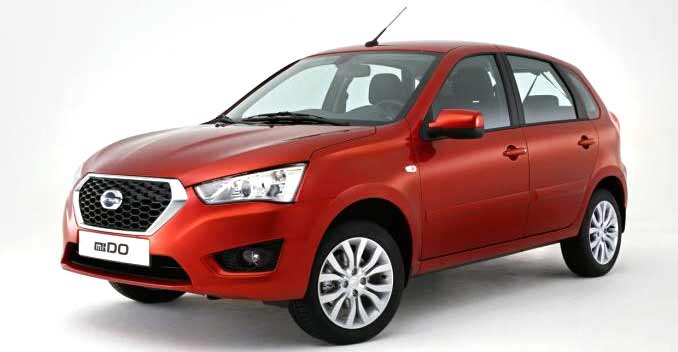
For Nissan, the biggest opportunity is [becoming more] premium and the development of Infiniti is a big part of that. At the opposite end of the product spectrum, Nissan is benchmarking Dacia to try to replicate its success with the Datsun range. For Renault, the biggest opportunity is geographical expansion. The first step is properly getting into China, where we plan a 3 percent market share, about 600,000 units a year, from about 30,000 units that we import now. The second step is to create an entry-level range for emerging markets. Another step at Renault is expanding the product line.
Why have none of your rivals been able to launch a serious rival to Dacia?
You should ask the competitors who said they were going to replicate the Dacia business model why they could not do it. What I can say is that Dacia is not just a car range. It’s a whole system, implemented with integrity in order to get the results in product, manufacturing, supply chain, marketing and sales. This may be something that is difficult to reproduce. I’m very happy that no one has been able to reproduce it yet.
Are Dacias and Dacia-badged Renaults still producing a double-digit operating margin?
Absolutely. Profitability in our industry is where people cannot copy you.
Renault has increased its operating margin from 0.1 percent in 2012 to 1.3 percent in 2013 to 2.2 percent last year. Will that number rise into the 3’s this year?
We need to be very prudent for a number of reasons, for example, Russia. We have the potential to deliver [an even higher operating margin], but the result will depend more on the external environment than on our performance.
What is the outlook for Europe?
Europe is not growing, it is recovering. There’s a big difference. The European market is still about 20 percent below its 2007 peak. I think the current situation is healthy and this slow recovery will continue in the coming years.
And in the U.S.?
The U.S. recovery is finished and we are on a new growth path. I don’t think the U.S. market has peaked yet. We will see moderate growth continuing. Probably not 5 percent year-over-year, but 2 to 3 percent, which is fine.
What about China?
China will continue to grow, but the pace is moderating, which is normal. I don’t think the world’s largest market could continue to grow by 70 percent a year. I do not envisage any risk of a bubble. There may be some excesses here or there, but nothing major is threatening the car industry in China.
Last year, the Renault Captur became Europe’s No. 1 small crossover replacing the Nissan Juke. Does that create a conflict within the alliance?
We’ve always said that the alliance should not be a handicap for any company. Renault and Nissan can launch any product at any time in any market. Also, we do not see direct competition in the market place. During consumer panels a Renault is seldom cross-shopped against a Nissan and the other way around. In Europe, Nissan is in a basket with Toyota, Honda, Hyundai ... mostly Asian brands. For Renault it’s mainly European brands.
Will you add or cut suppliers?
Every time we can reduce the number of suppliers, we do it. However, reducing the number of suppliers risks reducing competition. Therefore, you need to make sure that the guys who are supplying you become your partners. If not, you will find yourself in a very uncomfortable position: not having a big choice [of companies to work with] and not having long-term relationships.
Is there an ideal number of suppliers?
No, because all the new technology development taking place today adds new parts and new suppliers, so it’s impossible to have a cap.
Do you have a problem when a supplier’s margins are higher than yours?
No. I’m worried when a supplier has a much lower margin than mine, because he may not be interested in doing business with me. Also, when you come to ask him for competitiveness, he will tell you: “I don’t make enough money.” When your suppliers make more money than you, it puts you at ease to have a very balanced relationship.
You plan to retire before the end of the decade. You have said you would not recommend that one person runs both Renault and Nissan in the future. Has your opinion changed?
No. I don’t wish this on anyone. I’m doing it because of circumstances. That’s why I don’t think it would be fair to repeat something like this.
Who are your potential successors?
I’m not going to speculate on this because this is not a pressing matter. I have a new mandate with Renault that runs until 2018, so we still have three and a half years to go
Is 65 the right time to retire?
Retiring at 65 is mandatory at Renault. The issue came before the board and I voted in favor of this. Like most Japanese companies, Nissan does not have an age limit. In every country we operate, we follow the local rules. Those CEOs who think that they are still young and fresh enough to do the job at 65 can go and negotiate with their boards. I personally think that 65 is a very reasonable time for a CEO to step down.
How important is autonomous driving?
Renault-Nissan wants to be at the forefront of autonomous driving, which means empowering people in the car, giving them the possibility to drive or not to drive, to let the car do things for you under your guidance. It’s about re-establishing the pleasure of driving. What pleasure is there in keeping your eyes on the road and your hands on the wheel during a traffic jam? At the same time we are not interested in driverless cars. That is a completely different story.

 When will the investments in autonomous driving start to pay off?
Autonomous driving comes from modules and we are already installing some of them in our cars such as automatic parking, lane keeping and steer-by-wire. These and other pieces of technology are coming one after the other, so they are being amortized one by one. I would say that autonomous driving is a much easier technology to amortize than electric cars or fuel cells. With EVs and fuel cells, you don’t start to amortize until you sell the first complete car. In autonomous driving, you start to amortize by introducing each single module.
Are you cooperating with Daimler on autonomous driving?
Right now we don’t cooperate with Daimler, but it doesn’t mean we will not one day.
You can reach Luca Ciferri


