Purpose

I will try my best to provide detailed info on various cars and what is like to live with them, I have already produced a few for Jaguar-car-forums, I will do my best to be unbiased, but it will be hard for some cars. I will re-produce press releases and copy from other motoring news.

Monday, 14 December 2015

Nissan readies it's self to sell the 200,00th LEAF in five years, and is definitely the world EV Leader.

Nissan is celebrating five years at the forefront of the electric vehicle (EV) market with the record-breaking 100-percent electric vehicle Nissan LEAF. Having transformed the performance, practicality and public perception of EVs around the world since its launch in 2010, Nissan remains the undisputed leader in EV technology.

Five years of ground-breaking success
The Nissan LEAF is as advanced and innovative today as it was five years ago. No other manufacturer has produced as many electric vehicles or covered as much distance without producing any emissions. In fact, Nissan LEAF customers just surpassed the two billion kilometer mark (1.2 billion miles), which is equivalent to 2600 round trips from the Earth to the moon. This remarkable feat has helped keep 328,482 tons of CO  from entering the air, according to a five year sales-volume based assumption.
Also Nissan will deliver its 200,000th LEAF in January, officially making it the world’s most popular and successful electric vehicle. The U.S., Japan and Europe have accounted for 90 percent of total LEAF sales, with the U.S. leading the way with more than 90,000 sales, followed by Japan (50,000) and Europe (40,000).
Ever since the first Nissan LEAF rolled off the assembly line, it has been continually celebrated around the world, garnering more than 92 awards, including being named Car of the Year in Japan and Europe, not to mention winning the very prestigious World Car of the Year.
Nissan’s heritage with electric vehicles dates back 68 years with the Tama Electric Vehicle. Nissan, which has dedicated itself to in-house research and development of the EV battery, has taken it from zinc and nickel hydride to lithium-ion. The company successfully marketed the world’s first lithium-ion battery EV in 1996 with the Prairie Joy EV. The knowledge and experienced gained from this gave Nissan a big advantage over its competitors and resulted in the first mass-produced EV in history, the Nissan LEAF.
Nissan has announced that it has invested more than 500 billion JPY in EV projects, with bold plans to expand further as demand for clean, efficient and affordable electric cars continues to grow.
And it’s not just the LEAF that is showcasing Nissan’s EV engineering expertise and investment, as the company has reported that there are nearly 10,000 CHAdeMO Quick Chargers (QC) available worldwide. These QC can charge a LEAF from low battery alert to 80-percent capacity in just 30 minutes. Japan is taking the lead in developing this infrastructure with 6000 chargers throughout the country, making it the biggest QC network in the world.
Building a new EV future  The next five years
The 2016 Nissan LEAF went on sale equipped with a new 30kWh battery in the U.S. in November that extends the miles per charge by more than 20 percent, followed by Japan (December 2015) and Europe (January 2016).
As the level of electric vehicle technology continues to increase, Nissan believes that this shift towards cleaner, more efficient zero emission vehicles will contribute greatly in improving air quality and lowering noise levels.
“EV technology will continue to be at the heart of Nissan’s product development efforts. By combining our pioneering EV technologies and other intelligence and innovations, Nissan is moving closer to a zero-emission future for car transportation. With the technologies we are creating, mobility is becoming safer, cleaner, more connected and more exciting. That’s the power of innovation.  And that’s what you can expect from Nissan,“ said Nissan President and CEO Carlos Ghosn.
Nissan will accelerate its endeavors for the realization of a zero emission society by further developing and popularizing EVs as well as innovations utilizing EV-related technology and businesss.

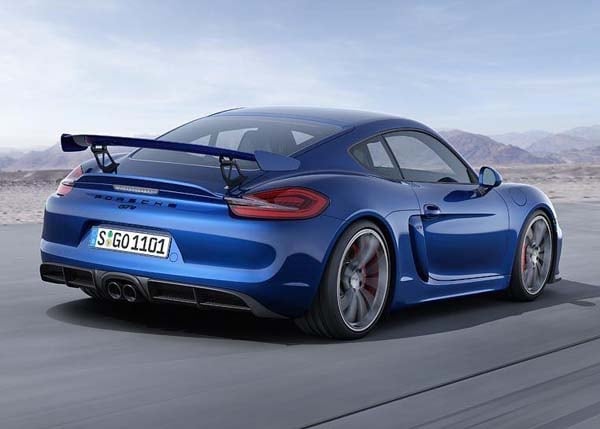
Porsche manages to shift over 200,000 cars so far this year to the end of November, for the first time ever.

New record set in November
Dr. Ing. h.c. F. Porsche AG has delivered 209,894 cars worldwide from January to November 2015. This corresponds to a 24% increase in comparison to the same period in 2014. Thus, for the first time in the history of the company, Porsche has handed over to customers more than 200,000 vehicles. 
As early as last year, the Stuttgart-based sports car manufacturer had set a record with a total of 189,849 deliveries the world over.

“With more than 200,000 Porsche models delivered, we have reached a milestone of our Strategy 2018 well ahead of schedule”, underlines Detlev von Platen, Member of the Executive Board, Sales and Marketing, Porsche AG, thanking the employees: “Porsche employees worldwide have joined forces to contribute to making this success possible. With our future-oriented products, our motivated staff and our powerful sales partners the world over, we are clearly well positioned for the future.”
In November, Porsche delivered a total of 18,110 new cars. The Cayenne is the clear leader here: with 6,579 vehicles delivered in November 2015, the delivery volumes rose 39% compared to the same period last year. The Cayenne has also been a best seller in the period of January to November 2015. All over the world, 68,029 models (a rise of 14%) were handed over to customers.
The strongest single market during the period of January to November 2015 was China: Porsche delivered 54,302 cars there. This corresponds to an increase of 34%. Right behind it was the United States, with 47,819 vehicles delivered (a 9% increase). The European market grew by 30% to 70,509 units sold.
PORSCHE AG
Deliveries
NovemberJanuary to November
20152014Difference
(%)
20152014Difference (%)
World18,11017,743+ 2%209,894169,205+ 24%
Europe5,6685,173+ 10%70,50954,455+ 30%
Germany2,0311,977+ 3%26,99222,221+ 22%
America5,2905,481- 4%57,39751,649+ 11%
U.S.4,4494,699- 5%47,81943,732+ 9%
Asia-Pacific, Africa
and Middle East
7,1527,089+ 1%81,98863,101+ 30%
China5,1124,483+ 14%54,30240,504+ 34%

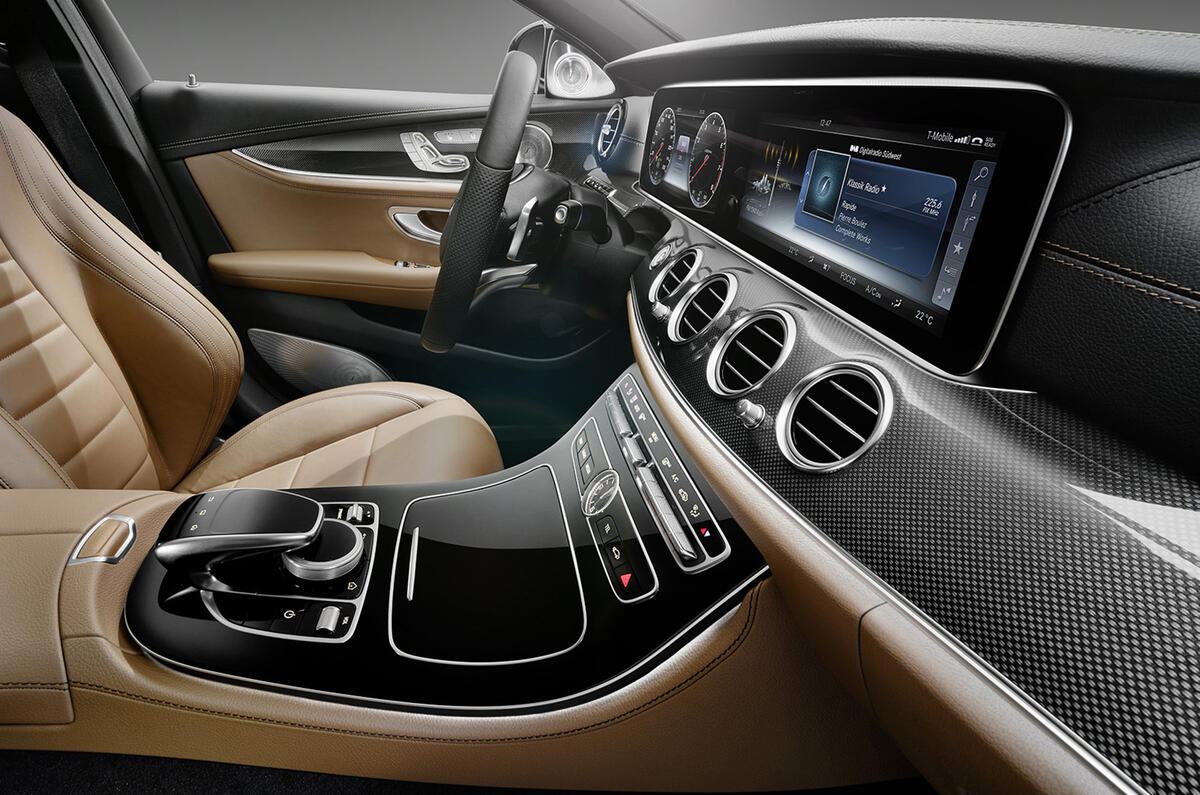
The New Mercedes-Benz, E-Class, In the fast lane with Active Lane Change Assist.

he next step on the road to autonomous driving
Mercedes-Benz will expand the new Driving Assistance package of the future E-Class for the market launch in spring with "Active Lane Change Assist" and will thereby make the business class saloon car even more intelligent. 
The radar- and camera-based assistance system supports the driver in changing lanes, e.g. when overtaking on multi-lane roads. The system thus offers a significant further increase in comfort and can help to prevent collisions.

Nearly 15 percent of all accidents on German roads happen between two vehicles travelling in the same direction, almost 20 percent of them resulting from collisions when changing lanes.
To defuse such risky situations, Mercedes-Benz has been offering Blind Spot Assist since 2007, which was further advanced into Active Blind Spot Assist in 2010. Apart from the visual and additional audible warning when the turn indicator is activated, Active Blind Spot Assist is able to intervene with one-sided brake applications to keep the vehicle in its lane.
Mercedes-Benz now takes another major step forward with Active Lane Change Assist. As part of DRIVE PILOT, it reduces the pressure on the driver in typical lane-changing situations, because the driver is thus better able to focus on what is happening on the road around them. 
Also, as an addition to Active Blind Spot Assist and Active Lane Keeping Assist, the system helps to prevent accidents.
"The new E-Class is even more in tune with the wishes of customers in the business class segment. 
With the help of numerous innovations, there is no loss of driving pleasure, even on monotonous and overfilled stretches of road. DRIVE PILOT and Active Lane Change Assist optionally support the motorist with driving tasks that are often not pleasurable," says Prof. Dr. Thomas Weber, Member of the Board of Management of Daimler AG with responsibility for Group Research and Mercedes-Benz Cars Development.
Automatic lane change
When the driver activates the turn indicator for more than two seconds to change lanes, Active Lane Change Assist steers the new E-Class into the adjacent lane. 
The vehicle will only change lanes autonomously if the sensors do not detect any vehicles in the relevant safety zone. It is inconsequential whether the car wants to change to the left lane for overtaking or wants to return to the right-hand lane. 
A long-range radar system and the stereo camera monitor the area in front of the vehicle, while multi-mode radar sensors permanently check the area to the rear and sides. Both factor-in the speed of detected vehicles in the vicinity. The driver themselves need only monitor the lane change. 
For Germany, the Federal Motor Vehicle and Transport Authority has already issued provisional approval for Active Lane Change Assist. The application procedure for EU-wide approval has been started.
The criteria for the operation of Active Lane Change Assist are:
  • operation of the turn indicator for longer than two seconds
  • the unoccupied zone detection system allows a lane change within three seconds
  • Steering Pilot is activated
  • vehicle travelling on multi-lane, motorway-like roads, detected via the navigation module integrated into COMAND Online
  • separate adjacent lane, detected via stereo camera
  • speed between 80 and 180 km/h
The active lane change is aborted by the system when the sensor system detects an obstacle, no longer sees lane markings, the driver countersteers or Steering Pilot is switched off.
Active Lane Change Assist is a sub-function of DRIVE PILOT and thus a component of the Driving Assistance package from Mercedes-Benz, which celebrates its world premiere in the new E-Class next year. The new E-Class will be launched in Germany in spring 2016.

Porsche to rename the Boxster and Cayman from the 2016 Model Year to 718 Boxster and 718 Cayman.

Mid-engine sports cars from Porsche get new names                          
The 718 Boxster and 718 Cayman – these will be the new names of the two-door mid-engine sports cars from Porsche effective with the introduction of the 2016 models. The Stuttgart sports car manufacturer’s 718 designation is a reference to the ground-breaking sports car of this type of the year 1957, which enjoyed much success in renowned car races of the period. 

718 Boxster and 718 Cayman are showing more similarities – both visual and technical. In the future, both will have equally powerful flat four-cylinder ‘boxer’ engines with turbocharging. And the roadster will be positioned at a higher price level than the Coupé – as is the case for the 911 models.
Porsche will introduce the 718 Boxster and 718 Cayman over the course of 2016.
The 718 model series is a continuation of the proven four-cylinder concept and the history of distinguished Porsche sports cars. The latest example is the 919 Hybrid LMP1 race car, which also has a highly-efficient, turbocharged four-cylinder engine with just 2 litres of displacement. 
So, not only did Porsche finish first and second in the 24 hours of Le Mans, but most recently it also won the manufacturer’s and driver’s championship titles in the WEC World Endurance Championship. With these victories, the 919 Hybrid has opened up the prospects for the performance potential of future sports car engines from Porsche.
History of the 718: four-cylinder flat engine has many car racing victories
Four-cylinder flat engines have a long tradition at Porsche – and they have enjoyed incredible success. 
In the late 1950s, the 718 – a successor to the legendary Porsche 550 Spyder – represented the highest configuration level of the four-cylinder flat engine. Whether it was competing at the 12-hour race in Sebring in 1960 or at the European Hill Climb Championship that ran between 1958 and 1961, the Porsche 718 prevailed against numerous competitors with its powerful and efficient four-cylinder flat engine. 
The 718 took first place between 1959 and 1960 at the legendary Italian Targa Florio race in Sicily. At the 24 Hours of Le Mans race in 1958, the 718 RSK with its 142-hp four-cylinder engine scored a class victory.
Porsche 919 Hybrid: technological front-runner for production cars
In 2014, Porsche returned to the top category of the famous endurance race in Le Mans and the WEC World Endurance Championship with the 919 Hybrid race car. 
The LMP1 vehicle, which was designed for extreme efficiency, is the most complex race car that Porsche has ever built. It serves as a platform for fundamental technology research for future production models – combining two different energy recovery systems with a two-litre four-cylinder turbocharged engine.

My two Vauxhall Astra's have got through 400 tyres in the last eight months.

Top F1 driver coach, Rob Wilson, isn’t the most sympathetic driver you’ll meet. Since Vauxhall loaned him two ex-press Astras last April in which to train some of the world’s leading race drivers, the cars have covered the equivalent of five Le Mans 24-Hour races, all completely flat-out at Bruntingthorpe Proving Ground in Leicestershire.

Rob Wilson is possibly one of the most important players in Formula One that you’ve never heard of, and is instrumental in carving split seconds from the lap times of at least 12 drivers who’ve been on the grid in 2015. Their skills are honed in two standard production Astras – a 1.6 CDTi 136PS diesel Sports Tourer and a 1.6T 200PS petrol GTC.

‘The Vauxhalls will do everything that an F1 car does dynamically, just at a far lower speed,’ said Rob. This allows me to explain the physics behind what the car is doing on the track in real time.’

But as Rob swapped his beloved Astras for three models from the all-new generation range, it wasn’t without some regret. ‘The Astras have been as tough as old boots. Between them, they’ve covered over 16,000 track miles at Bruntingthorpe in the hands of successive F1, GP2, WRC, DTM and Indycar drivers, and they haven’t missed a beat. They’ve chewed through 400 tyres and 40 sets of brake pads, but despite nearly 100,000 gearshifts and 43,000 severe braking manoeuvres, the cars are as nice to drive as they were on Day One.

‘I often have a driver’s race engineer in the back seat and everyone has commented how comfortable the cars are, and how predictable and stable their handling is. The cars have an unbelievably hard time out on our track, so I need to know that they’re not going to break. I have tried other makes of car, but they’ve always suffered some kind of breakdown. I’m really looking forward to spending next year in the new Astras.’

Rob is taking delivery of three new Astras this month – all SRi models, two 1.6 CDTi 136PSs and one 1.4T 150PS – and has already sampled one on track, taking a full three seconds off his best lap time in the outgoing car. ‘You can feel the benefits that up to 200kgs of weight-loss has brought straight away,’ said Rob. ‘My drivers are going to enjoy their training even more in 2016.’
So what have Rob’s Astras had to endure this year?
  • 16,000 track miles at full race speed
  • 7,250 laps of Bruntingthorpe Proving Ground
  • 2,250 corners on the limit
  • 43,000 hard-braking areas driven through
  • 95,000 manual gearshifts
  • 400 replacement tyres
  • 30 sets of front brake pads
  • 10 sets of rear brake pads
  • 10 front brake discs