Purpose

I will try my best to provide detailed info on various cars and what is like to live with them, I have already produced a few for Jaguar-car-forums, I will do my best to be unbiased, but it will be hard for some cars. I will re-produce press releases and copy from other motoring news.
Showing posts with label 150000 Units. Show all posts

Thursday, 10 September 2015

Brand new engine facility opens in Russia to produce new 1.6 Litre engines for Volkswagen & Skoda Group cars.

  • Volkswagen starts production of its mostmodern engines at Kaluga plant
  • Engines for Volkswagen brand and ŠKODA models
  • Production capacity of about 150,000 units per year
  • Volkswagen is the first foreign automaker with its own engine production facility in Russia
Following three years of construction, the Volkswagen Group today inaugurated its new engine plant at Kaluga in the presence of the Russian Prime Minister Dmitry Medvedev, Thomas Schmall, Member of the Board of Management of the Volkswagen Passenger Cars brand responsible for Components, and the Governor of Kaluga Region Anatoly Artamonov. 

In future, the plant will produce the newly developed 1.6-litre EA211 gasoline engine, representing the most modern engine technology of the Volkswagen Group. 

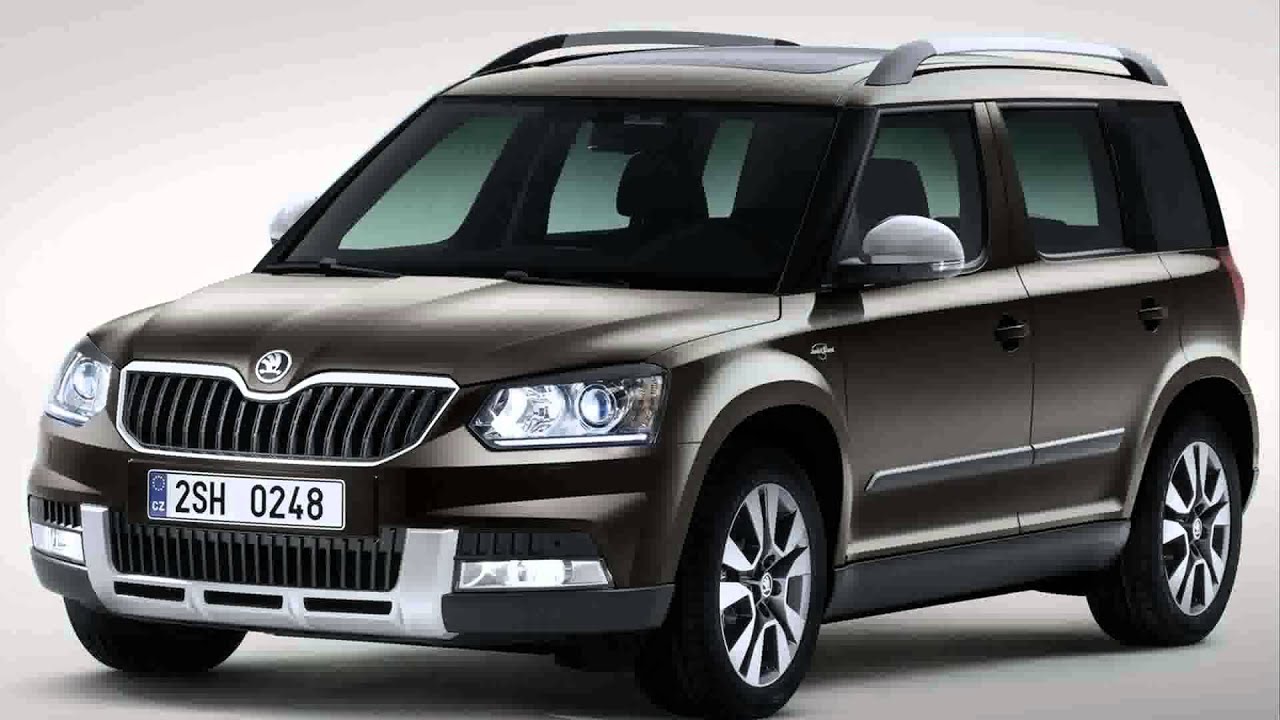
The engines are to be used for the Volkswagen Polo and the ŠKODA Rapid produced in Kaluga, as well as for the Volkswagen Jetta and the ŠKODA Octavia and Yeti, built jointly with GAZ in Nizhny Novgorod. The annual production capacity of the engine plant will be about 150,000 units. 


The total investment in the plant has been about €250 million and 400 jobs in the region have been created. Volkswagen is the first foreign automaker to operate its own engine plant in Russia.

Thomas Schmall, Member of the Board of Management of the Volkswagen Passenger Cars brand responsible for Components, underlined the commitment of Volkswagen to Russia: “The development of Volkswagen in Kaluga – starting with the vehicle plant and continuing with the engine plant – symbolizes the strength of this region. 

We intend to continue this development in future because we believe in the considerable potential offered by the Russian automobile industry.”

“With our new, modern engine plant, we will be supplying engines produced locally for our vehicles manufactured in Kaluga and Nizhny Novgorod.We will therefore not only be increasing the local content of our cars, we will also be making them more affordable for our Russian customers,” Marcus Osegowitsch, General Manager of Volkswagen Group Rus, explained.

Through the construction of the engine plant, Volkswagen is stepping up its industrial activities in Russia. 

In addition, the Group will be fulfilling its obligations under the ancillary agreement to Decree 166 reached with the Russian government at the end of May 2011.  This determines that, as of 2016, at least 30 percent of vehicles produced in Russia are to be equipped with engines manufactured locally.

The new engine plant has an area of 32,000 m² and is to produce up to 600 modern 1.6-litre gasoline engines of the newly developed EA211 series per day. 

This engine is especially efficient. At the same time as ensuring a higher output (110 PS), the weight and carbon dioxide emissions of the new engine have each been reduced by 10 percent compared with its predecessor. 

Another main emphasis is on energy-efficient production. For example, using highly advanced technologies in production, water consumption has been significantly reduced. In addition, Volkswagen has set extremely stringent quality standards for the engines from Kaluga and has invested about €8.6 million in modern quality assurance systems.

In order to ensure a smooth and trouble-free start of production, the new employees have completed comprehensive training at a dedicated training centre. For employee training, the new engine plant benefits from Volkswagen’s integrated worldwide system. 

About 60 percent of the employees at Kaluga have already completed training at other Group plants, for example the main ŠKODA plant at Mladá Boleslav, the German engine plants at Chemnitz and Salzgitter or in Polkowice, Poland.

Volkswagen also aims to expand and considerably strengthen its relations with local suppliers. A significant proportion of the components required for the new engine are to be purchased from local suppliers.

Sunday, 6 September 2015

Citroen CEO Linda Jackson announces that the brand will début Mehari-inspired concept based on the Cactus.

Citroen will preview a potential new model inspired by its iconic Mehari utility vehicle at the Frankfurt auto show next month. The concept will be based on the C4 Cactus compact.
In a statement, Citroen said the concept was a "fresh and invigorating" version of the C4 Cactus that "revisits the spirit of the legendary Mehari.”
MANY THANKS TO AUTO EXPRESS FOR THE PICTURES

Citroen CEO Linda Jackson told Automotive News Europe in June that the company was mulling a revival of the open-top Mehari sold between 1968 and 1987.
Jackson has previously said that the C4 Cactus will influence future models in the brand's lineup. The distinctive car, which went on sale last year, has underlined Citroen's intent to be the fun brand in PSA/Peugeot-Citroen's lineup.
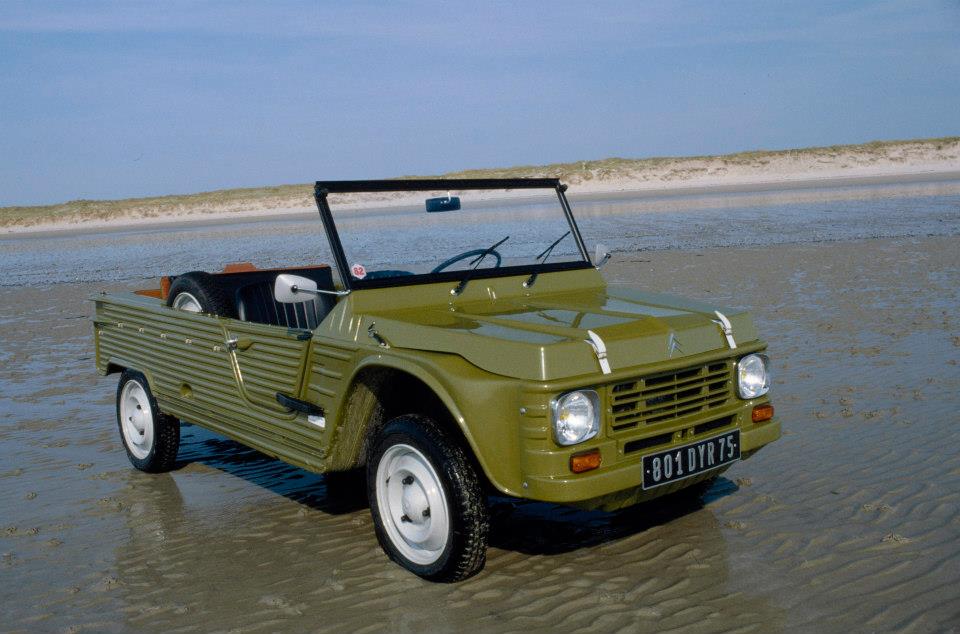
Citroen built 150,000 Meharis. It was bought by holidaymakers as a beach buggy and by farmers who used it to get around their fields. The Mehari was also used by the French army, which found its thermoplastic body made it light enough to drop by parachute from an airplane.
The original Mehari was based on the 2CV, another iconic Citroen car, but the brand has ruled out reviving this model.
Citroen's Frankfurt concept could preview an electric Mehari EV built alongside the Bollore Bluesummer convertible electric car.
Autocar reported that Citroen recently applied for the trademark on the e-Mehari name, suggesting the car could have an electric or hybrid powertrain.

PSA/Peugeot-Citroen will start building next month the Bluesummer at its factory in Rennes, western France.
Vincent Bollore, who heads the Bollore industrial group that developed the Bluesummer, has previously talked about the vehicle as a "beach car" in the vein of Mehari.
The Bluesummer will cost less than 20,000 euros and will be sold through Citroen dealerships.

Thursday, 18 June 2015

Citroen CEO, Linda Jackson, Hints that the Mehari Fun car could make a comeback !

Citroen is considering a revival of its iconic Mehari lightweight utility car to help give the brand a “fun” image, CEO Linda Jackson said.
Citroen built 150,000 units of the open-sided, canvas-roofed Mehari between 1968 and 1987. The car had a diverse customer base. It was used as a beach buggy by holidaymakers and by farmers to get around their fields. Its thermoplastic body also made it light enough for the French army to drop the car attached to a parachute from an airplane.

Jackson said Citroen’s new brand positioning is about selling cars that are fun and give people a happy feeling. “Maybe there is a place for the Mehari. It’s something we are considering,” Jackson told the Automotive News Europe Congress here on June 10.
PSA/Peugeot-Citroen CEO Carlos Tavares wants to reduce the number of cars sold by the company as part of his turnaround strategy for the automaker. His Back in the Race business plan includes reducing the Citroen lineup to seven core models by 2022, down from 14 now.

Jackson said the future core models would be “silhouettes” from which different variants could be produced so a modern Mehari could be developed as a variant of a future subcompact car.
The Mahari was based on the 2CV, another Citroen car that has iconic status. Jackson said the 2CV will not be revived. “The 2CV had its day," she said, "but that's not now."
Nick Gibbs