My thoughts on all things motoring, press releases, reviews & techie stuff, from around the world.
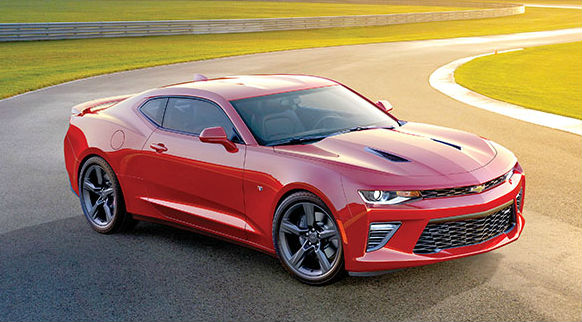
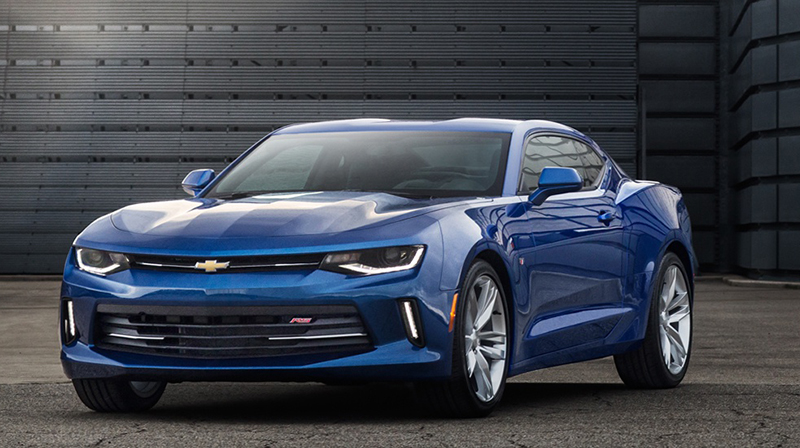
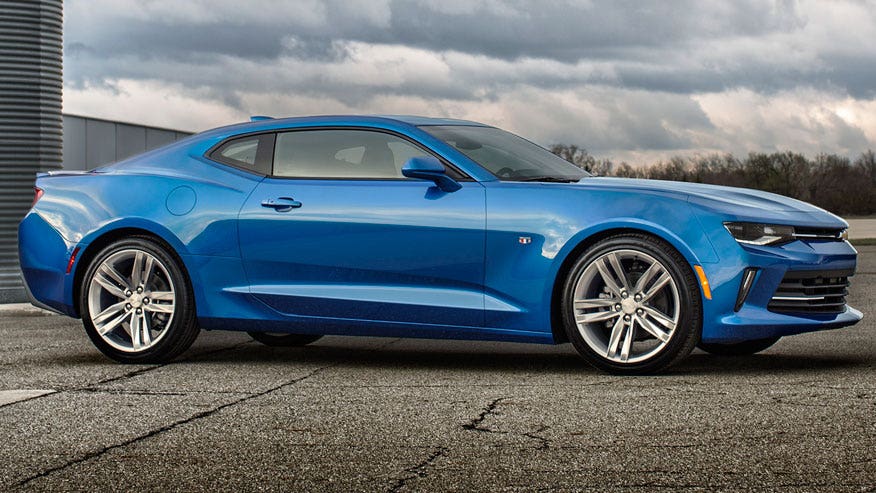
Please note that the pictures of vehicles within this blog are used as examples of the specific press releases, on occasions, due to the lack of available official pictures, examples are re-produced.
ANY AND ALL PROFANITIES WILL BE REMOVED AND THE PERSON/S RESPONSIBLE WILL BE BANNED, NO EXCEPTIONS.
Purpose
I will try my best to provide detailed info on various cars and what is like to live with them, I have already produced a few for Jaguar-car-forums, I will do my best to be unbiased, but it will be hard for some cars. I will re-produce press releases and copy from other motoring news.
Track package returns with more technology for V8 models, first time offered on V6
The Chevrolet Camaro 1LE performance package returns for 2017, poised to set new benchmarks for attainable track performance.
The package builds off the success of the previous-generation 1LE, offering increased handling and track performance. In response to customer demand, Chevrolet will offer two distinct 1LE packages, for both V6 and V8 models, each visually distinguished with a satin black hood, specific wheels and more.
For the first time, the 1LE package will be available on Camaro 1LT or 2LT coupes equipped with the 3.6L V6. Featuring more aggressive suspension tuning, standard Brembo brakes and Goodyear Eagle F1 tires, the LT 1LE delivers an estimated 0.97G in cornering grip. Available Recaro seats will keep you planted through the corners, and an available Performance Data Recorder will allow you to view and share your track experience.
The new 1LE package for Camaro 1SS models includes magnetic ride control, with a new FE4 suspension tuning and a new, segment-exclusive electronic limited slip differential (eLSD). Paired with massive Goodyear Eagle F1 tires, lateral acceleration will exceed 1G. Additional features available on the 1LE package include standard Recaro seats and a Performance Data Recorder (PDR), new to the Camaro lineup.
As a result, the 1LE package elevates the award-winning performance that earned Camaro the 2016 Motor Trend Car of the Year and Car and Driver 10Best awards.
“The Camaro 1LE packages follow a recipe any track-day enthusiast will appreciate,” said Al Oppenheiser, Camaro chief engineer. “Start with a lightweight, stiff structure and then add higher levels of suspension stiffness and damping, more aggressive tires, higher downforce, more powerful brakes and more cooling.
“The result delivers better performance in all measures,” said Oppenheiser. “In our development tests, the V-6 Camaro 1LE delivers lap times comparable with the previous-gen V-8 model. The 2016 Camaro SS 1LE sets the new benchmark for the segment, lapping the Big Willow track at Willow Springs three seconds faster than the standard Camaro SS.”
The new 1LE packages are available in late 2016, on 2017 Camaro SS and LT V-6 coupes equipped with manual transmissions. Pricing and performance data will be announced at a later date.
Camaro LT 1LE
The Camaro LT 1LE was developed to be the most track-capable sports coupe in its price class. Highlights include:
3.6L V-6 rated at 335 horsepower and matched with the six-speed manual transmission
FE3 suspension components (from the Camaro SS), including dampers, rear cradle mounts, ball-jointed rear toe links and stabilizer bars
Lightweight 20-inch forged aluminum wheels with Goodyear Eagle F1 245/40R20 front tires and 275/35R20 rear tires
Brembo 4-piston front brake calipers
Mechanical Limited-slip differential with 3.27 ratio
Standard track-cooling package, with engine oil, differential and transmission coolers
Suede steering wheel and shorter-throw shifter
Standard dual mode exhaust system
Camaro SS fuel system for higher-load cornering capability
Satin black hood, front splitter and unique three-piece rear spoiler
Unique high flow upper and lower grille with satin black accents
Available Recaro seats and PDR video/data recording system.
“With a curb weight under 3,500 pounds, excellent front-to-rear weight balance and the precision of the FE3 suspension, the Camaro LT 1LE offers unmatched capability in its class,” said Oppenheiser. “As a result, it offers incredible performance for Camaro V-6 customers.”
Camaro SS 1LE
The 2017 Camaro SS 1LE introduces the new FE4 suspension to the Gen Six Camaro – a performance-oriented chassis system with specific tuning for the Magnetic Ride dampers, springs and stabilizer bars. Additional highlights include:
6.2L LT1 V-8 rated at 455 horsepower, and six-speed manual transmission (automatic transmission not available)
Magnetic Ride Control
Segment-exclusive electronic limited-slip differential with 3.73 ratio
Unique forged aluminum wheels with 285/30ZR20 front tires and 305/30ZR20 rear tires
Goodyear Eagle F1 Supercar tires with a compound and construction developed exclusively for the Camaro – offering exceptional grip on the track
Brembo brakes with new six-piston monobloc front red calipers – featuring the 1LE logo – and two-piece rotors. Measuring 14.6 inches (370mm) in diameter, the front rotors are 7 percent larger than Camaro SS
Track-cooling package, with engine oil, differential and transmission coolers
Suede steering wheel with shorter-throw shifter
Dual mode exhaust system
Recaro front seats with aggressive bolsters optimized for shifting and steering comfort
Satin black hood, front mirrors and unique three-piece rear spoiler
Satin Graphite front splitter and rear diffuser
Available PDR video/data recording system.
FAST FACT: The 1LE package was developed in 1988 to make the Camaro more competitive in Showroom Stock road racing series and officially debuted in 1989. Four examples were reportedly built in 1988; with 111 built in 1989.The 1LE package was also featured on fourth-gen vehicles through the 1999 model year, returning to the fifth-gen Camaro in 2013.
Gen Six models rolling out of Lansing Grand River Assembly to dealers nationwide
The wait is over. Chevrolet announced today it will begin shipping the all-new 2016 Camaro to dealers. The first wave of production models will leave the plant by the end of this week and should arrive at dealerships for customer delivery by mid-November.
The Gen Six Camaro rolls off the line at GM’s Lansing Grand River Assembly facility, which received a $175-million upgrade in tooling and equipment to support its production.
“It is an exciting day for everyone involved in bringing the new Camaro from a concept to the assembly line,” said Mike Trevorrow, Lansing regional plant manager. “As the transporters head out to dealerships across the country, the hard work and pride of everyone at Lansing Grand River Assembly goes with them.”
The 2016 Chevrolet Camaro offers higher levels of performance, technology and refinement starting at $26,695 for the Camaro 1LT and $37,295 for the 1SS.
Six all-new powertrain combinations are offered, including a standard 2.0L Turbo and an available, all-new 3.6L V-6 in LT models, and the 455-hp LT1 6.2L V-8 in the SS – making it the most powerful Camaro SS ever. Each engine is available with a six-speed manual or eight-speed automatic transmission.
The first vehicles delivered to customers are coupes – SS or LT models with the 3.6L V-6. The Camaro Convertible and models with the 2.0L Turbo engine will begin shipping in early 2016.
Vehicle mass has been reduced between 223 and 390 pounds, depending on the model, creating a more nimble, responsive driving experience. The leaner, stiffer platform and slightly smaller dimensions are accentuated by a dramatic, sculpted exterior. Meticulously tuned in the wind tunnel, the new Camaro’s exterior contributes to performance through reduced aerodynamic lift for better handling while enhancing efficiency.
Inside, a driver-focused cockpit integrates class-leading technologies, including a new Driver Mode Selector, configurable instrument cluster and an available customizable ambient lighting feature. Standard connectivity features include Chevrolet MyLink with Apple CarPlay capability and OnStar 4G LTE with Wi-Fi hotspot.
“There has been a lot of excitement and anticipation around our community and throughout the world for the next-generation Camaro,” said UAW Local 652 President Mike Green. “We have received great products here because of the quality of work always performed by the Lansing autoworker, active and retired.”
FAST FACT: The original 1967 Camaro went on sale Sept. 29, 1966.
2016 Camaro SS delivers 0-60 acceleration in 4.0 seconds; 0.97 g cornering grip
Less weight and more power is the combination for performance success and engineers of the 2016 Camaro have the numbers to prove it. With weight savings of up to 390 pounds (177 kg), the all-new Camaro delivers performance numbers that reset the benchmark for the segment.
Chevrolet testing shows the all-new, 455-hp (336 kW) Camaro SS coupe – the most powerful Camaro SS ever – sprints from 0-60 mph in 4.0 seconds and covers the quarter-mile in 12.3 seconds, when equipped with the all-new eight-speed paddle-shift automatic transmission.
The other Gen Six Camaro coupe models are commensurately quick, with the 275-hp (205) 2.0L Turbo delivering 5.4-second 0-60 performance and a 14.0-second quarter-mile, with the six-speed manual. With the available, 335-hp (250 kW) 3.6L V-6 and eight-speed automatic, the Camaro zips to 60 mph in 5.1 seconds and down the quarter-mile in only 13.5 seconds.
“The performance of the Camaro 2.0L Turbo will challenge many of the iconic muscle cars from the 1960s, while the Camaro SS’s performance – including 0.97 g cornering – makes it one of the most capable 2+2 coupes on the market,” said Al Oppenheiser, Camaro chief engineer.
“The performance numbers only tell half of the story, because the lighter curb weight also makes the new Camaro feel more responsive and agile behind the wheel. It brakes more powerfully, dives into corners quicker, accelerates faster and is more fun to drive than ever.”
With standard 18-inch wheels and Goodyear Eagle Sport all-season tires, the 2.0L Turbo delivers 0.85 g in cornering grip and 60-0-mph braking in 129 feet. With the RS package, which includes 20-inch wheels and Goodyear Eagle F1 Asymmetric all-season run-flat tires, the 3.6L V-6 delivers 0.89 g in cornering and 60-0 mph braking in 124 feet.
The Camaro SS features Eagle F1 Asymmetric 3 run-flat summer-only tires, enabling 0.97 g in cornering and 60-0 braking in 117 feet.
2016 Camaro coupe
0-60 mph (sec.)
Quarter-Mile (sec. @ mph)
Grip (max. lateral)
60-0 mph braking (feet)
2.0L turbo w/18-in. tires
5.4 (man.) 5.5 (auto.)
14.0 @ 100 (man.) 14.0 @ 99 (auto.)
0.85 g
129
3.6L V-6 w/20-in. RF3 tires
5.2 (man.) 5.1 (auto.)
13.7 @ 102 (man.) 13.5 @ 103 (auto.)
0.89 g
124
6.2L V-8 w/20-in. RF4 tires
4.3 (man.) 4.0 (auto.)
12.5 @ 115 (man.) 12.3 @ 116 (auto.)
0.97 g
117
Lighter, stronger architecture
Much of the Camaro’s performance can be attributed to the development team’s focus on reducing vehicle mass and improving structural stiffness.
They invested 9 million hours of computational time looking for opportunities to make the chassis lighter and stiffer. That computer-aided engineering led to a modular architecture strategy that tailored the chassis to each model (see accompanying infographic).
“Every Camaro model offers exceptional chassis strength and rigidity, but the modular design made the architecture more adaptable and mass-efficient, because we didn’t have to compensate for the unique demands of, say, the SS convertible when building a 2.0L Turbo coupe,” said Oppenheiser.
“The result was an elegant engineering solution: 12 chassis components that could be combined to meet the structural requirements of each specific model, without adding unnecessary mass to other models.”
Consequently, the base curb weight for the 2016 Camaro is 368 pounds (167 kg) lighter than the previous model.
The 1SS model is 223 pounds (101 kg) lighter, while offering 29 more horsepower, for a 14-percent improvement in its power-to-weight ratio.
2.0L Turbo
3.6L V-6
6.2L V-8
2016 Camaro
275 hp / 295 lb-ft 3,339 lbs (auto) 12.1 lbs/hp
335 hp / 284 lb-ft 3,435 lbs (auto) 10.3 lbs/hp
455 hp / 455 lb-ft 3,685 lbs (man) 8.1 lbs/hp
2015 Camaro
N/A
323 hp / 278 lb-ft 3,729 lbs (auto) 11.5 lbs/hp
426 hp / 420 lb-ft 3908 (man) 9.2 lbs/hp
Change
390 pounds lighter than 2015 V-6
294 pounds lighter 12% lbs/hp improvement
223 pounds lighter 14% lbs/hp improvement
The 2016 Camaro goes on sale this fall, with a suggested retail price of $26,695 for the Camaro 1LT and $37,295 for the 1SS.
FAST FACT: The 2016 Camaro 2.0L Turbo’s 275 horsepower rating matches the output of the 1993-1995 Camaro Z28’s 5.7L V-8 – and offers comparable acceleration performance.
This car is one of the most important new cars that the General will launch this year, in fact the next few years, now I know that may sound rather dramatic but you have to remember that the recently launched Pony car from Ford, was a major step forward for the model and marque, so Chevy had to pull one out of the hat.
Unfortunately they have NOT pulled one out of the hat, they have pulled out a bloody big handful, This new Camaro, is Lighter, leaner, meaner and greener, and with the looks that make it "evil", this car will sell in bucket loads, or deserves too.
One of the things that Ford seems to have forgotten is the product placement, you really do not see that many cars from the blue oval on TV these days, but Chevy and GMC, they are everywhere, and if a sad motoring blogger in the United Kingdom notices this, then it must be very clear for all to see in the brand's home market.
Expect to see Danny "Book 'em Danno" Williams having the new Camaro in the next season of the show, along with a Silverado for McGarrett, a Caddy SUV for Deak's and Bligh (NCIS-LA) along with other GM products in Scorpion, Major Crimes, NCIS, NCIS New Orleans and so many more, it seems that The General has got the Product Placement sector well and truly sewn up, and that's great for the viewer, to see some really great cars.
Five-year segment leader is lighter, more powerful, with more advanced technology
The sixth-generation Chevrolet Camaro revealed today offers higher levels of performance, technology and refinement and is designed to maintain the sporty car segment leadership earned over the past five years. The Gen Six Camaro provides a faster, more nimble driving experience, enabled by an all-new, lighter architecture and a broader powertrain range.
Six all-new powertrain combinations are offered, including a 2.0L Turbo, an all-new 3.6L V-6 and the LT1 6.2L V-8, which is SAE-certified at 455 horsepower (339 kW) and 455 lb-ft of torque (617 Nm) – for the most powerful Camaro SS ever. Each engine is available with a six-speed manual or eight-speed automatic transmission.
Camaro’s leaner, stiffer platform and slightly smaller dimensions are accentuated by a dramatic, sculpted exterior. Meticulously tuned in the wind tunnel, the exterior contributes to performance through reduced aerodynamic lift for better handling while enhancing efficiency.
A driver-focused interior integrates class-leading control technologies, including a new Driver Mode Selector, configurable instrument cluster and a customizable ambient lighting feature.
“Redesigning the Camaro is thrilling and challenging all at once, but the secret is to offer something more,” said Mark Reuss, General Motors executive vice president of Product Development. “For Camaro enthusiasts, it retains iconic design cues and offers even more performance. For a new generation of buyers, the 2016 Camaro incorporates our most innovative engineering ideas with finely honed performance and leading design.”
Only two parts carry over from the fifth-generation Camaro to the new Gen Six: the rear bowtie emblem and the SS badge.
To make it not only the best Camaro ever, but one of the best performance cars available, Chevrolet focused on three pillars of development:
Performance
Vehicle mass has been reduced by 200 pounds or more, depending on the model, creating a more nimble, responsive driving experience
Most efficient Camaro ever, with a new 2.0L turbo SAE-certified at 275 hp (205 kW) and 295 lb-ft (400 Nm) – and delivers more than 30 mpg on the highway (GM-estimated), and 0-60 mph acceleration well under 6 seconds
Efficient performance in a new 3.6L V-6 featuring direct injection, continuously variable valve timing and – for the first time – Active Fuel Management (cylinder deactivation), offering an SAE-certified 335 hp (250 kW) and 284 lb-ft of torque (385 Nm), for the highest specific output of any naturally aspirated V-6 in the segment
The most powerful Camaro SS ever, with a new 6.2L LT1 direct-injected Small Block V-8 rated at 455 hp (339 kW) and 455 lb-ft of torque (617 Nm)
Magnetic Ride Control active suspension available on Camaro SS for the first time
With improved handling and performance, the Camaro SS delivers better lap times than the fifth-generation’s track-focused Camaro 1LE package.
Technology
All-new Drive Mode Selector, which tailors up to eight vehicle attributes for four modes: Snow/Ice, Tour, Sport and – on SS models – Track settings
Segment-exclusive, Interior Spectrum Lighting that offers 24 different ambient lighting effects on the dash, door panels, and center console
High-definition, configurable color displays – including available dual, 8-inch-diagonal screens.
Design
More athletic-looking, sculptured exterior that complements the tighter, leaner architecture – and offers all-new, modern lighting signatures, including light-emitting diode (LED) technology
Greater emphasis on customer personalization with wider range of choices, including 10 exterior colors, five interior color combinations, lighting options and a full complement of dealer-available accessories available at launch – including wheels, stripe packages and additional accessories
Aerodynamically optimized design that is the result of 350 hours of wind tunnel testing, reducing drag on LT models and improving downforce on SS
All-new, interior with shifter-focused center console, intuitive controls, flat-bottom steering wheel, and higher quality materials throughout
Unique control rings around the air vents used for temperature and fan speed adjustments, eliminating the need for conventional buttons
“We have had the incredible opportunity to meet literally thousands of Gen 5 Camaro owners who provided direct feedback on what they loved about their car and what they wanted for the next-gen Camaro,” said Al Oppenheiser, Camaro chief engineer. “As a result, the 2016 Camaro builds on what made the current Camaro such a success with more power, more agile handling and more technology.
“We expect it will set the new benchmark in the segment – and give a new generation of enthusiasts a reason to fall in love with Camaro.”
The Gen Six Camaro goes on sale later this year, offered in LT and SS models.
Lightweight architecture and chassis systems
Approximately 70 percent of the architectural components are unique to Camaro. Through extensive computer-aided engineering, structural rigidity was increased by 28 percent, while the body-in-white mass was reduced by 133 pounds (60.5 kg).
In their quest to make the 2016 Camaro as lean as possible, engineers and designers evaluated every aspect of its architecture – already the most mass-efficient ever created by GM – and supporting elements, saving grams here and pounds there that contributes to the car’s lower curb weight. As a result, the total curb weight for Camaro has been reduced by more than 200 pounds (90 kg).
Significant weight savings came from using an aluminum instrument panel frame instead of steel, which saved 9.2 pounds (4.2 kg). The use of lightweight components, including aluminum front suspension links and steel rear suspension links with lightening holes, in the new five-link rear suspension system contributed to a 26-pound (12 kg) reduction in the overall suspension weight. With the lighter, stiffer architecture and more powerful engines, the Gen Six Camaro SS delivers better lap times than the fifth-generation’s track-focused Camaro 1LE package.
“The driving experience is significantly different,” said Aaron Link, lead development engineer. “Immediately, you will notice how much lighter and more nimble the Camaro feels. That feeling increases when you drive the Camaro harder – it brakes more powerfully, dives into corners quicker, and accelerates faster than ever.”
The Camaro features a new, multi-link MacPherson strut front suspension with Camaro-specific geometry. The double-pivot design provides a more precise feeling of control, including more linear and communicative feel from the quick-ratio electric power steering system. At the rear, a new five-link independent suspension yields outstanding wheel control and reduces “squat” during acceleration.
In addition, the Magnetic Ride Control is available on the Camaro SS for the first time. Previously limited to the Camaro ZL1, the active suspension reads road and driving conditions 1,000 times per second, and automatically adjusts the damper settings to optimize ride comfort and control.
All Camaro models offer Brembo brakes – they’re standard on SS – optimized for the car’s mass and performance capability. On Camaro LT, the available brakes include 12.6-inch (320 mm) front rotors with four-piston calipers and 12.4-inch (315 mm) rear rotors with single-piston sliding calipers. Camaro SS employs 13.6-inch (345 mm) front rotors with four-piston fixed calipers and 13.3-inch (338 mm) rear rotors with four-piston fixed calipers.
Goodyear tires are used on all models: The LT features standard 18-inch wheels wrapped with Goodyear Eagle Sport all-season tires and available 20-inch wheels matched with Eagle F1 Asymmetric all-season run-flat tires. Camaro SS features standard 20-inch aluminum wheels with Eagle F1 Asymmetric 3 run-flat tires.
More powerful and efficient
The new Camaro will be offered with six different powertrain combinations, each designed to deliver improved performance and efficiency.
The Camaro LT’s standard engine is a new 2.0L Turbo, rated at an SAE-certified 275 horsepower (205 kW) and 295 lb-ft of torque (400 Nm). For power on demand, it offers a wide torque band with 90 percent of peak torque available from 2,100 rpm to 3,000 rpm, and maximum torque from 3,000 to 4,500 rpm. The 2.0L turbo will deliver 0-60 mph acceleration in less than six seconds and offer more than 30 mpg on the highway (GM-estimated), making it the most fuel-efficient Camaro ever.
An all-new 3.6L V-6 is available in the Camaro LT, producing and SAE-certified 335 horsepower (250 kW) and 284 lb-ft of torque (385 Nm), for the highest specific output of any naturally aspirated V-6 in the segment. The engine incorporates a trio of technologies for uncompromised efficiency and performance, including direct injection, variable valve timing and, for the first time, Active Fuel Management (cylinder deactivation), which disables two cylinders under light throttle applications to enhance efficiency.
The 2.0L turbo and 3.6L V-6 engines are offered with a six-speed manual transmission or the all-new Hydra-Matic 8L45 paddle-shift eight-speed automatic transmission. It’s based on the Hydra-Matic 8L90 eight-speed, but scaled for the performance envelope of the smaller engines and offering an estimated 5-percent efficiency improvement over a comparable six-speed automatic.
Camaro SS is powered by the 6.2L LT1 V-8 engine introduced on the Corvette Stingray. About 20 percent of the components are specific for the Camaro’s architecture, including new, tubular “tri-Y”-type exhaust manifolds. It also offers advanced technologies such as variable valve timing, direct injection and Active Fuel Management (on automatic-equipped models) to help balance efficiency and performance. Output is SAE-certified at 455 horsepower (339 kW) and 455 lb-ft of torque (617 Nm), making it the most-powerful Camaro SS ever.
The LT1 engine is available with a standard six-speed manual transmission – with new Active Rev Match technology that “blips” the throttle for perfectly timed downshifts – or the Hydra-Matic 8L90 paddle-shift eight-speed automatic.
Each engine has been carefully tuned for a distinctive performance sound. All 2.0L turbo models feature active noise cancellation, which uses sound waves to cancel unwanted cabin noise. Models equipped with the available Bose audio system also feature engine sound enhancement, which amplifies the native sounds of the 2.0L turbo engine – and can be disabled based on the driver’s preference.
Both the 3.6L V-6 and 6.2L V-8 feature mechanical sound enhancers – resonators that direct induction noise from the engine bay into the cabin. Both engines are available with a dual-mode exhaust, which features electronically controlled valves that bypass the mufflers under acceleration, delivering improved performance and greater sound levels. With the dual-mode exhaust, drivers can personalize the exhaust sound, from a “stealth” mode to the most aggressive “track” mode.
Compact, athletic design
The exterior of the Camaro is more sculpted and more muscular effect that makes the new car look significantly lower and wider than before, even though it is within two inches of the exterior dimensions of the current Camaro:
2016 Camaro
2015 Camaro
Length (in /mm):
188.3/ 4784
190.6 / 4841
Width (in / mm):
74.7 / 1897
75.5 / 1917
Height (in / mm):
53.1 / 1348
54.2 / 1376
Wheelbase (in / mm):
110.7/ 2811
112.3 / 2852
Front track (in/mm):
63 / 1601 (SS)
63.6 / 1616 (SS)
Rear track (in/mm):
62.9 / 1598 (SS)
63.9 / 1622 (SS)
“From every angle, you’ll never mistake this for anything but a Camaro,” said Tom Peters, design director. “We’ve taken that iconic design and amplified its proportions to reflect a more dynamic driving experience – like the T-shirt on a muscular physique.”
The front of the Camaro is defined by a cross-car grille/headlamp aperture, a signature cue that dates to the first generation. The new, expressive execution gives the Camaro a stronger, more determined face. It also displays a new, nearly fastback profile that flows into the pronounced haunches of the rear fenders, enhancing the wider, more aggressive stance.
A more expressive take on the taillamps blends the horizontal aesthetic of the first generation with a dual-element theme and aggressive tapers for a contemporary appearance. Additionally, SS models have a unique rear spoiler.
Standard lighting includes halogen projector beam headlamps and taillamps. RS and SS models add high-intensity discharge, or HID, projector-beam headlamps and LED “signature lighting” daytime running lights – including a sweeping LED lightpipe integrated in the headlamp and an LED light pipe integrated into the front fascia. RS and SS models also feature LED lighting for the rear taillamps, including auxiliary LED light guides that mirror the shape of the front signature lighting.
In many cases, the exterior design not only communicates the performance capabilities of the new Camaro, but contributes to them. For example, the teams spent more than 350 hours testing the Camaro in the wind tunnel, meticulously tailoring the exterior to improve cooling and reduce aerodynamic lift and drag.
Aerodynamic details include a subtle “air curtain” on the front fascia, which guides air around the wheels rather than into the wheelhouses, reducing drag. Also, the Camaro SS has a unique front fascia with integrated brake cooling ducts and a unique hood with functional air vents, which improve engine cooling and reduce front lift.
All models share a more pronounced, sculpted roof panel that improves the structural rigidity of the roof for greater refinement. The roof is assembled using laser brazing, eliminating the need for “ditch channel” seams and cover trim, giving the car a sleeker appearance while saving half a kilogram compared to traditional spot welding.
There’s also a new interpretation of the Camaro’s iconic red, white and blue “banner” insignia, displayed on the front fenders.
Driver-focused interior and technologies
Like the exterior, the interior is completely new yet instantly recognizable. The instrument panel, for example, is a departure from the previous model, but retains the Camaro’s familiar dual-binnacle-style instrument cluster hood.
“Given the level of technology and performance, the interior had to be modern and driver focused.” said Ryan Vaughan, interior design manager. “But although the interior is an all new design, it is still instinctively recognizable as a Camaro.”
The instrument cluster features analog instruments to provide the driver with essential performance information, as well as an available eight-inch-diagonal high-definition center screen that can be configured to provide additional information including navigation, performance, and infotainment features.
Another eight-inch screen, integrated in the center of the instrument panel, serves as the interface for the enhanced, next-generation MyLink system.
The new center console and center stack are designed with high performance driving in mind. For example, the heating and cooling controls are integrated into rings surrounding the air ducts. Eliminating the associated buttons makes the cabin feel more spacious, and makes adjusting the temperature easy while keeping your eyes on the road.
An electronic parking brake replaces the previous mechanical parking brake handle. This enabled the cup holders to be repositioned for improved range of motion when shifting in manual-transmission models.
An available, segment-first LED ambient lighting system, integrated in the dash, door panels and center console, offers 24 different colors, as well as fade and transition effects that spread across the interior. There’s even a theatrical “car show” mode that cycles randomly through the entire color spectrum when the Camaro is parked.
The ambient lighting is one of eight attributes the driver can adjust using the Camaro’s new Driver Mode Selector– accessed via a switch on the center console. The system enables the driver to tailor the look, sound and feel of 2016 Camaro to their preferences and driving conditions:
DRIVER MODE SELECTOR SETTINGS
Snow/Ice
Tour
Sport
Track (SS only)
Electronic throttle progression
SNOW/ICE
NORMAL
NORMAL
TRACK
Automatic trans. shift map
NORMAL
NORMAL
SPORT
TRACK
Automatic trans. Performance Algorithm Shift
N/A
N/A
AVAIL.
AVAIL.
Engine sound management (if equipped with dual-mode exhaust)
STEALTH
TOUR
SPORT
TRACK
Electric power steering calibration
TOUR
TOUR
SPORT
TRACK
StabiliTrak – Competitive Driving and Launch Control