Purpose

I will try my best to provide detailed info on various cars and what is like to live with them, I have already produced a few for Jaguar-car-forums, I will do my best to be unbiased, but it will be hard for some cars. I will re-produce press releases and copy from other motoring news.
Showing posts with label Brilliance. Show all posts

Wednesday, 13 April 2016

China, in 2015 saw growth running at 11% higher than the preceding year, thanks in part to sales from Tier 2 cities.

  • 18.9 million new passenger cars were sold in China in 2015, up 11% on 2014
  • Sales growth has slowed over the last two years
  • 55% of new registrations for foreign car brands were outside of China’s Tier 1 and 2 cities last year
  • SUVs were the biggest drivers of growth, with sales up by 45% on 2014 to 6 million units
China’s new car market continues to be affected by the economic slowdown and the introduction of car purchase restrictions in eight key cities, according to the latest analysis by JATO Dynamics. New passenger car registrations in the world’s largest market totalled 18.9 million in 2015, an 11% increase on 2014.  

Although new car sales growth for 2015 was still in the double digits, the rate declined for a second year in a row – dropping to 11% from 13% in 2014 and 16% in 2013.
Over the last few years Chinese authorities have introduced schemes to cap the number of new cars that can be bought by consumers and other measures aimed at tackling issues such as emissions and traffic congestion. These are now in place in eight main cities, including the three largest by population – Guangzhou, Shanghai and Beijing.
The introduction of these policies has created a significant market shift. The subsequent falls in new car registrations in cities with car purchase restrictions were both intended and expected. However, this has been combined with a surge in sales in unaffected tier 3 and 4 cities as average wages rise and more consumers buy their first car. Sales of new sedans were higher in these smaller cities than in the tier 1 and 2 cities in 2015 and SUV volumes were almost the same, at 2.59 million units, thanks to more rapid growth in the tier 3 and 4 cities over the course of the year. There are signs that manufacturers are adjusting their strategies accordingly – in 2011, 50% of new registrations of non-domestic brand cars were outside tier 1 and 2 cities, in 2015 this figure had risen to 55%.
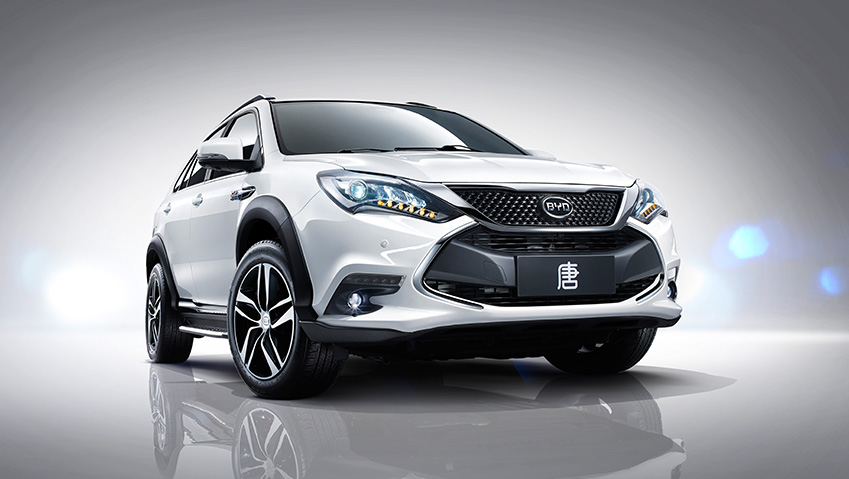
Just as in Europe and the USA, SUVs are the biggest driver of new sales. Year-on-year SUV sales in China increased by 33% in 2014 to over 4 million units, and by a further 45% in 2015 to 6 million units. SUVs accounted for almost one in three new passenger vehicles (32%) sold last year. This trend has particularly benefitted domestic brands with SUVs at lower price points. Baojun (+1.4), Haval (+1.22) and Geely (+1.14) all saw more than a percentage point increase in their market shares last year.
But while local players might be gaining ground, the largest international manufacturers still dominate the market by volume sold. Volkswagen remains the best-selling brand in China, with over 2.6 million new registrations in 2015, followed by Toyota (more than 1.1m) and Hyundai (over 1m). In contrast, Changan, last year’s best-selling Chinese brand, sold 694,000 new cars to take eighth place in the 20 top selling brands.
“Our analysis shows that the Chinese automotive sector is in a period of transition. Growth is coming from less mature cities and from newer segments such as SUVs. Regulators and manufacturers now face the challenge of finding a way to sustain such an economically important industry, while also addressing its environmental and social impacts,” commented Felipe Munoz, Global Automotive Analyst at JATO Dynamics.

Tuesday, 21 July 2015

Now the battle for Iran starts, which brands will succeed in the recently reopened country.

Carmakers are racing for Iran following the country's breakthrough nuclear deal with Western powers - pitting past market leader PSA/Peugeot-Citroen against challengers including Volkswagen Group and Renault.
Tehran has agreed to curb its nuclear program in return for an end to sanctions, although the deal still faces hurdles including a skeptical U.S. Congress amid frantic Israeli lobbying for its rejection.
But auto manufacturers, which stand to be among the early beneficiaries, have been positioning themselves with varying degrees of discretion since late 2013, when the latest talks were launched and a limited number of sanctions suspended.

Within hours of the announcement of a final deal, PSA had outlined plans for new Iranian production to reclaim and defend the leading market position it held before sanctions were tightened four years ago.
Volkswagen said on Thursday that it is monitoring the situation and “further steps will be determined by future developments.”
The accord drew no immediate reaction from PSA’s domestic rival Renault, but insiders say almost all of the industry's big names are active behind the scenes.
"Industry leaders are itching to get into Iran," said Thomas Wuelfing, chairman of Germela, a Hamburg-based consulting firm specialized in Middle East trade. As far as the auto industry is concerned, he said, "it's the last big emerging market."
Iranian car registrations approached 1.6 million cars at their 2011 peak before collapsing under the weight of sanctions. Domestic production fell by 1 million vehicles over the next two years, destroying more than 100,000 jobs.
In the partial thaw since 2013, sales have recovered to an expected 1.2 million this year, according to IHS Automotive. An end to sanctions would see the market bounce back to 1.6 million in 2016, the forecaster predicts - and many in the industry see potential for a further expansion to 2 million.
Chinese competition
Returning European carmakers now face a stiffer challenge from Chinese rivals such as Chery and Lifar, whose cut-price cars have gained ground under sanctions, said Michel Jacinto, an analyst with the firm.
But higher-quality brands should win back market share in a rising post-sanctions economy, he said, with Japanese carmakers also well placed to benefit.
"For Peugeot and VW, success in Iran is very important," Jacinto added. "It's the gateway to the wider Middle East."
Volkswagen, which previously built the Gol compact with Iranian partner Kerman Khodro, is in "early deliberations" over an offensive by its budget Skoda and Seat brands once the market reopens, a mid-level manager within the group, said.
"Old ties in the region give the French a certain edge," he said. "But we also see the potential of this lucrative market."
General Motors and Ford may have to wait longer to navigate a deeper layer of American sanctions that will continue to bar Americans and their banks from Iran trade. GM declined to comment on Tuesday's deal.
PSA now enjoys a head start despite its 2012 decision to stop supporting Iranian re-assembly of outdated European-made models under pressure from GM, then a shareholder.
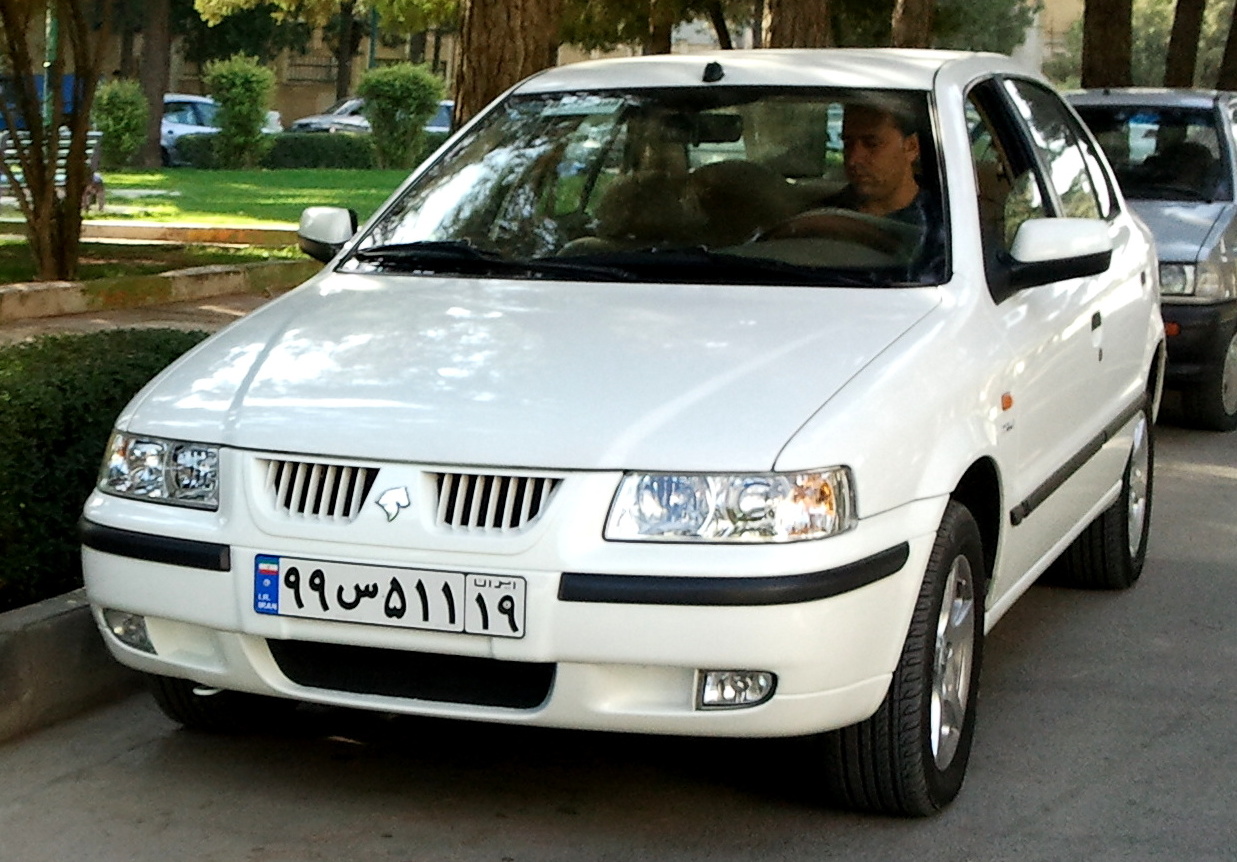
Manufacturing partner Iran Khodro, the country's biggest carmaker, instead began sourcing parts for the Peugeot 405 sedan and 206 subcompact from intermediaries - effectively restoring the brand's near-30 percent market share.
Iranian registrations of "unauthorized" PSA cars are currently running at about 350,000 annually, according to the French carmaker, which does not book the sales in its accounts.
To maintain that foothold as the market opens, PSA plans to invest in full Iranian production of new models using its latest architectures and engines, for domestic sales as well as export. Talks underway with potential partners are "most advanced" with Iran Khodro, the company told Reuters.
Renault, a smaller player in Iran with a 5.9 percent market share before sanctions were tightened, is also looking at more competitive successors to its first-generation Logan sedan model, still sold there as the Tondar.

"Iran is a market where we have ambitions, but we're not the only ones," Renault sales chief Jerome Stoll said last week. "We will need to come up with a response to real consumer demand, rather than a backward-looking response to demand that has been captive for years."
German ambitions
Germela, the trade consulting firm, is mobilizing its German carmaking clients with the help of a newly opened Tehran office.
Executives from Iran Khodro and second-ranked SAIPA will be on a 30-strong Iranian automotive delegation attending a September "matchmaking" seminar near Frankfurt with counterparts from across the German industry. The itinerary includes a visit to a Mercedes-Benz plant.
"The French don't sit around - they are always first when it comes to connecting commercial and political interests," Germela's Wuelfing said. "German carmakers would be well advised to hit the road."
Automotive News