Purpose

I will try my best to provide detailed info on various cars and what is like to live with them, I have already produced a few for Jaguar-car-forums, I will do my best to be unbiased, but it will be hard for some cars. I will re-produce press releases and copy from other motoring news.
Showing posts with label iran. Show all posts

Friday, 14 October 2016

PSA Group and SAIPA, have signed a joint-venture agreement to produce and sell Citroën vehicles in Iran.

PSA Group and SAIPA, Citroën's historic partner in Iran since 1966, have signed today a joint-venture agreement to produce and sell Citroën vehicles in Iran.
This 50/50 joint-venture lays the foundations for a strategic partnership between the two companies. It will cover the entire value chain, from the design stage right through to vehicle marketing, including purchasing. 

Manufacturing will take place at the Kashan plant in Iran, which will be 50%‑owned by PSA Group. This industrial site is the most modern of Iran with a flexible industrial process at the highest level of environmental standards (water-soluble paints for example).
The joint-venture will invest more than €300 million in manufacturing and R&D capacity over the next five years. The agreement will be backed up by technology transfers and a significant level of local content.
Consistent with the core model strategy deployed in the Push to Pass plan, the production in Kashan of three vehicles adapted to the heart of Iranian market will start in 2018. From early 2017, imported vehicles will be staging Citroën’s comeback in the country.
Citroën models will be sold throughout the country via a network dedicated exclusively to the brand. No less than 150 Citroën outlets will open in the next 5 years.
Commenting on the new agreement, Carlos Tavares, Chairman of the PSA Group Managing Board, said: "With more than 50 years of presence in Iran, PSA Group through this new strategic partnership is clearly committed to the deployment of a rich product plan that meets the expectations of Iranian clients."

Tuesday, 12 July 2016

FIRST HALF SALES - PSA Group tops the one million mark with all brands showing increases right across the world.

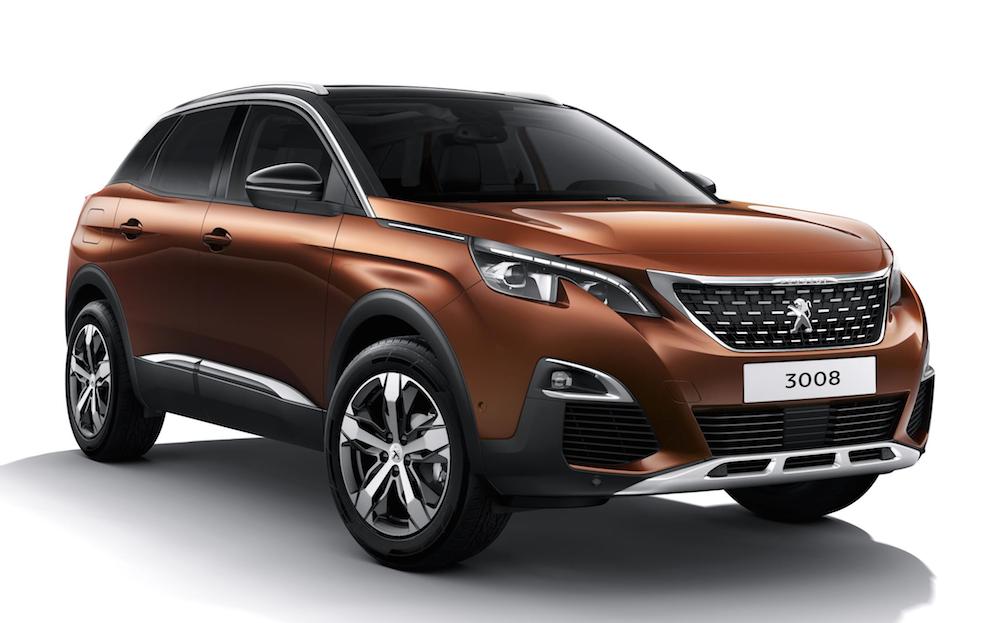
  • Product offensive launched in Europe with the all-new Peugeot Expert, Citroën Dispatch (UK), Peugeot 3008 and Citroën C3
  • Positions strengthened in Latin America, with growth of 16.4%
  • Return to Iran, with agreements signed for Peugeot and DS
First-half consolidated sales in Europe rose 7.4% year-on-year to 1,056,000 units.

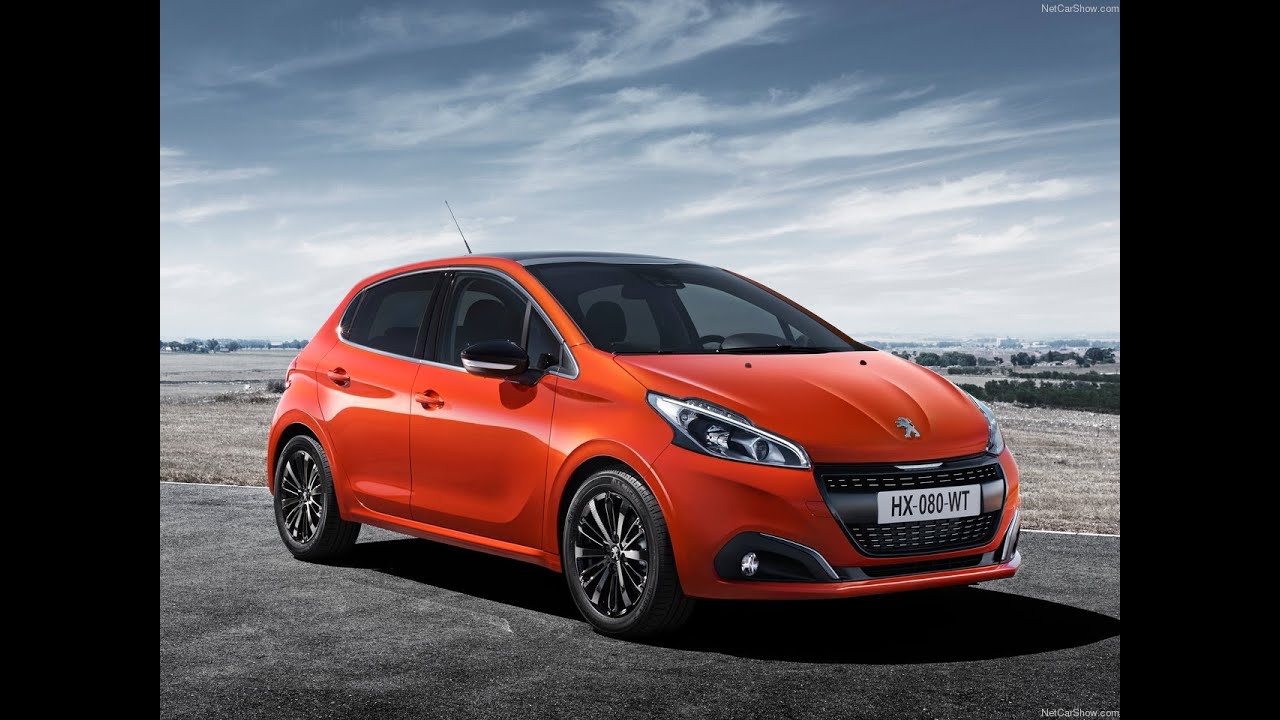
Peugeot sales climbed 7.9% to 601,000 units, led mainly by the Peugeot 2008 (up 16%, 99,900 units) and Partner (up 8%, 62,800 units), which were both ranked no.2 in their respective segments in Europe. 
The 208 and 308 models continued to advance, up 15% (157,800 units) and 10% (119,200 units), respectively. Sales of the brand were particularly impressive in Italy (up 17.4%), Spain (up 12.5%) and the Netherlands (up 8.8%). 
This excellent performance will be buoyed in the second half of the year by various new product innovations, including the new Peugeot 2008 SUV and 3008 SUV, the all-new Peugeot Traveller and all-new Expert.
Citroën delivered its best sales performance for five years, advancing 7.2% to 414,000 units. Its strong showing was powered chiefly by the C4 Picasso, the leading MPV in Europe, but also by the C4 Cactus and the C1, which each reported sales growth for the period. 
In the market for light commercial vehicles, the Berlingo also consolidated its success as leader of its segment. These solid performances enabled the brand to gain ground in its biggest markets (United Kingdom, Spain and Germany). The momentum should accelerate in the second half, driven by the new C4 Picasso, the all-new Dispatch, the SpaceTourer and the new C3, which will replace the brand's current best seller in the autumn.
Sales for the DS brand rose 0.7% to 40,900 units, with the new DS 3 and the new DS 3 Cabrio launched in March completing the brand's entirely revisited line-up. 
The DS 4 and DS 4 Crossback were highly successful, with the Crossback representing 28% of total sales from these two compact premium models due to its strong customer appeal. The brand continues to expand its dealer network, which included 21 DS Stores and 86 DS Salons in Europe at the end of June.
In the fast-changing China & Southeast Asia market, PSA Group sales were down 19.4% to 297,000 units.
Following the arrival of the DS 4S sedan at the end of April, the Group is preparing a marketing offensive in the second half of 2016 which will see it launch five SUVs in the next two years.
As part of its Blue Upper plan, the Peugeot brand is planning to launch 18 new models in China by 2020 and, before the end of 2016, revisit the 308 Sedan and the 3008, two of its three best sellers in the world's biggest market.
The Citroën C3-XR SUV consolidated its success, with sales surging 35%. The new Citroën C6 and C4 L models will be launched in the second half of the year.
To partner growth in the SUV market segment, the PSA Group will inaugurate a new plant in Chengdu in September 2016. The Group's Shenzhen facility already manufactures the DS 6 SUV, the DS brand's best-selling model in China.
The Middle East & Africa region had to contend with an unfavourable economic climate in the first half of 2016, with imports suspended and then subject to quotas in Algeria and restrictions placed on currency access in certain countries (Egypt and Tunisia). This situation weighed heavily on the Group's sales in the region, which fell 13.3%.
The Group prepared for its return to Iran, signing a joint venture agreement in June with Iran Khodro, a long-standing Peugeot partner. The DS brand was also launched in the country at the beginning of the year, in cooperation with a private investor.
In Latin America, the PSA Group strengthened its positions,with sales up 16.4% to 88,800 units in a market down by 8.2%. The Group reported its biggest-ever market share in Chile, at over 7%.
Peugeot saw sales surge 26%, powered by excellent performances in Argentina (up 45%), Chile (up 38%) and Brazil (up 2%) in a sharply declining market (down 25%). The brand capitalised on its latest product launches: the 2008 and the new 208.
Citroën maintained its positions during the first half of the year with impressive advances in Argentina (up 29%) and Chile (up 55%). After a successful launch in Brazil, the new Citroën C3 Aircross is now sold in Argentina and helped drive the brand's good performance.
In Eurasia, despite a sharply deteriorated economic environment and a declining market, particularly in Russia (down 14.7%), the PSA Group saw its sales stabilise (down 0.1%) and continued to focus on its margins.
The Group's performance in India-Pacific was led by the Japanese market, which accounted for 49% of the Group's sales in the region. The launch of the Citroën C4 Cactus and diesel models in Japan will be instrumental in helping to boost the Group's positions in the region.
Maxime Picat, Chief Executive Officer, Peugeot brand said: "This year, Peugeot has rolled out a global offensive in the SUV market with five new vehicles. The new-look Peugeot 2008 SUV and 3008 SUV come at a time when the brand's performance in these segments has already positioned it among Europe's leaders. In China, its offer is rounded out by major updates to the current 3008 which will be supported by two new and exciting SUVs in the coming months. This offensive will allow us to step up growth in our global sales, which edged up 0.5% over the first half of the year."
Linda Jackson, Chief Executive Officer, Citroën brand said: "Citroën stayed on track by consolidating its global sales volumes at over 600,000 units in the first half of the year. While maintaining prices at a very satisfactory level, we reported our best sales performance in Europe for five years, gained ground in Latin America and exceeded our objectives for the C3-XR SUV in China. This performance is anchored in our product offensive which will be stepped up in the second half, notably with the new C4 Picasso, which is the leading MPV in Europe, as well as the new C3, set to replace our current best seller."
Yves Bonnefont, Chief Executive Officer, DS brand said: "With the launch of the new DS 3 in the spring, our DS range has been completely revisited in less than 12 months in line with the brand's launch strategy. The brand unveiled the DS E‑Tense early in the year. This distinctive car featuring a high-performance electric powertrain embodies the future of the brand and gives a glimpse of what our future models will look like. A dealer network specifically for the DS brand is also being developed, with 234 sites across the globe. To find out all there is to know about this dedicated network offering customers a unique, bespoke experience, make sure you visit the Paris Auto Show."

Saturday, 25 June 2016

PSA Group & Iran Khodro signed the final joint venture agreement to produce latest-generation vehicles in Iran.

On Tuesday 21 June 2016, the PSA Group and Iran Khodro signed the final joint venture agreement to produce latest-generation vehicles in Iran.
The agreement not only marks the beginning of a new chapter in the two partners' history but will also open up new possibilities for customers in Iran, who will be offered vehicles built to the highest comfort, safety and environmental standards in this long-standing Peugeot market.

Commenting on the agreement, Jean-Christophe Quémard, Executive Vice-President, Middle East & Africa, said: "Today marks a crucial milestone in our project with Iran Khodro. The two partners conducted discussions as announced during President Hassan Rouhani's visit to Paris in January 2016. I am proud to be bringing the best in PSA Group technology to our Iranian customers."
This 50/50 joint venture is expected to invest up to €400 million over the next five years in manufacturing and R&D capacity. This investment will contribute to the development of a competitive manufacturing base for producing, launching and marketing Peugeot 208, 2008 and 301 models, fitted with latest-generation engines.
The agreement provides for:
  • The creation of a joint venture on an industrial site in Tehran to produce new latest-generation Peugeot vehicles, on a platform that will also be used by Iran Khodro to develop its own vehicles.
  • The capacity to export joint-venture products across the region.
  • The restoration of contractual relations for the production of Peugeot-branded vehicles currently sold in Iran.
The first vehicles will roll off the production line at the Tehran plant in the second half of 2017.
The Iranian market reached a peak of 1.6 million vehicles in 2011. It should quickly regain this level and reach 2 million vehicles a year by 2022. Current estimates put the number of Peugeot cars on the road in Iran at more than 4 million.
Iran is a key component of PSA's development strategy in the Middle East & Africa region, which is the PSA Group's third-fastest growing international market.

Monday, 1 February 2016

PSA continues it's push back into Iran with a €400 Million investment to produce new models.

During President Hassan Rouhani's state visit to Paris, PSA Peugeot Citroën, which has operated in Iran for more than 30 years, and Iran Khodro signed a joint venture agreement to produce latest-generation vehicles in Iran.

This 50/50 joint venture lays the foundations for a strategic partnership between the two companies. This joint venture is expected to invest up to €400 million over the next five years in manufacturing and R&D capacity. This investment will contribute to facilitating the development of a competitive manufacturing base for producing, launching and marketing Peugeot 208, 2008 and 301 models, fitted with latest-generation engines.
The agreement provides for:
  • The restoration of contractual relations concerning the manufacture of Peugeot-branded vehicles currently produced in Iran
  • The creation of a joint venture on an industrial site in Tehran to produce new latest-generation Peugeot vehicles on a platform that will also be used by Iran Khodro to develop its own vehicles
  • The capacity to export JV products across the region
Coming one week after international sanctions were lifted, this agreement marks the beginning of a new chapter for both partners. The agreement, which will be backed up by technology transfers and significant levels of local content, will come into effect once it is implemented, i.e., around mid-2016.
The first vehicles will roll off the production line at the Tehran plant in the second half of 2017.
The Iranian market reached a peak of 1.6 million vehicles in 2011. It should regain this level within 2 years to reach 2 million vehicles a year by 2022. Current estimates put the number of Peugeot cars on the road in Iran at more than 4 million.
Iran is a key component of PSA development strategy in the Middle East & Africa region, which is PSA Peugeot Citroën's third-fastest growing international market. The Group sold 180,200 vehicles in the region in 2015, up 6.4%.
In turn, Iran Khodro plan to capitalize on the technology transfer.
Commenting on this new agreement, Carlos Tavares, Chairman of PSA Peugeot Citroën's Managing Board, said: “This strategic agreement turns the page on the period of international sanctions and enables PSA and Iran Khodro to start a new chapter in their 30-year history of co-operation. Our shared ambition is to offer our loyal customers high-tech products to deliver mobility that meets the highest comfort, safety and environmental standards.”
Dr: Hashem Yekehzare, President and CEO of IKCO states: “The strategic partnership with PSA will serve as a unique platform, for both parties to capitalize on each other’s competitive advantages; especially given the scale, technology and long term outlook that the parties are able to bring to their co-operation. A particular benefit of this partnership is to bring cost effective and the best automotive technology to the customers.”

Thursday, 28 January 2016

DS Automobiles has announced that is officially launching within Iran now the sanctions are lifting.

DS brand is officially launched in Iran today. Together with country’s personalities, journalists and potential clients, Yves Bonnefont, DS Brand CEO and Daryoush Biria, president of ARIAN Group, inaugurated the DS STORE Tehran and announced the commercial launch of two models: DS 5 and DS 6.

Three and a half months after the announcement of its arrival in the Iranian market and its partnership with ARIAN Group, DS brand is officially launched today in Iran. The ceremony was attended by Yves Bonnefont, CEO of DS brand, Daryoush Biria, president of ARIAN Group and His Excellency Bruno Foucher, French Ambassador in Tehran.

"DS Brand is undergoing a major step in its international development! Iran is a key country for us and contributes to our ambition of radiating the French luxury know-how in automobile.” said Yves Bonnefont, CEO of DS brand," the experience of our partner Arian Group is a major asset for success. "
For Daryoush Biria, president of ARIAN Group, "The DS brand is synonymous with design, technology, refinement and French elegance. We are delighted to be the exclusive distributor of DS brand in Iran and I do not doubt that Iranian customers will be thrilled by these great cars. ". 
Nearly 200 people, journalists, local personalities and potential customers attended this important moment for both partners. A meeting held in Tehran DS STORE. Inaugurated at the same time, the DS STORE is located in the northern districts of the city on one of the most attractive avenues, the Andarzgou Boulevard. The DS Store is the first in the Middle East!
In a space of 275 m2, customers can now immerse themselves in the DS universe. Modern facade, sleek design, featuring the DS frame finish, lacquered furniture, plasma screens, photos depicting Paris, fashion, luxury or design, the atmosphere is cosy and high-end. The cars on display, up to six models, are turned towards the entrance to catch the eye of the visitor upon arrival. 
The commercial launch of the first DS cars started as launched. DS 5, the flagship of the brand, and DS 6, brand’s SUV with powerful and elegant style, are the starting bid. 
Two models are proposed in ‘Sport Chic’ version, the most upscale with equipment of powerful and efficient engines and 6-speed automatic gearboxes. The refinement and attention to detail are featured; all models have a Nappa leather or semi-aniline finish bracelet seats, the DS exclusive offer and full leather dashboards. 
The range will be enriched during 2016 with the arrival of DS 5LS, the statutory sedan and other models. 
Key figures :
  • Iran has approximately 80 million populations of which 70% live in urban areas and 15 million in the metropolitan area of the capital, Tehran.
  •  
  • Iran is the second population of the Middle East North African region.
  •  
  • 2/3 of the Iranian population is aged under 30.

  • Iran is rich in fossil resources, with 11% of the world’s oil reserves and 15% of its gas reserves.

  • The ARIAN Group, specializing in automobile distribution since 2011, stands out particularly in terms of service quality. Based in Tehran, the ARIAN Group imports, distributes and provides after-sales in Iran according to the standards of the brand.

Tuesday, 21 July 2015

Now the battle for Iran starts, which brands will succeed in the recently reopened country.

Carmakers are racing for Iran following the country's breakthrough nuclear deal with Western powers - pitting past market leader PSA/Peugeot-Citroen against challengers including Volkswagen Group and Renault.
Tehran has agreed to curb its nuclear program in return for an end to sanctions, although the deal still faces hurdles including a skeptical U.S. Congress amid frantic Israeli lobbying for its rejection.
But auto manufacturers, which stand to be among the early beneficiaries, have been positioning themselves with varying degrees of discretion since late 2013, when the latest talks were launched and a limited number of sanctions suspended.

Within hours of the announcement of a final deal, PSA had outlined plans for new Iranian production to reclaim and defend the leading market position it held before sanctions were tightened four years ago.
Volkswagen said on Thursday that it is monitoring the situation and “further steps will be determined by future developments.”
The accord drew no immediate reaction from PSA’s domestic rival Renault, but insiders say almost all of the industry's big names are active behind the scenes.
"Industry leaders are itching to get into Iran," said Thomas Wuelfing, chairman of Germela, a Hamburg-based consulting firm specialized in Middle East trade. As far as the auto industry is concerned, he said, "it's the last big emerging market."
Iranian car registrations approached 1.6 million cars at their 2011 peak before collapsing under the weight of sanctions. Domestic production fell by 1 million vehicles over the next two years, destroying more than 100,000 jobs.
In the partial thaw since 2013, sales have recovered to an expected 1.2 million this year, according to IHS Automotive. An end to sanctions would see the market bounce back to 1.6 million in 2016, the forecaster predicts - and many in the industry see potential for a further expansion to 2 million.
Chinese competition
Returning European carmakers now face a stiffer challenge from Chinese rivals such as Chery and Lifar, whose cut-price cars have gained ground under sanctions, said Michel Jacinto, an analyst with the firm.
But higher-quality brands should win back market share in a rising post-sanctions economy, he said, with Japanese carmakers also well placed to benefit.
"For Peugeot and VW, success in Iran is very important," Jacinto added. "It's the gateway to the wider Middle East."
Volkswagen, which previously built the Gol compact with Iranian partner Kerman Khodro, is in "early deliberations" over an offensive by its budget Skoda and Seat brands once the market reopens, a mid-level manager within the group, said.
"Old ties in the region give the French a certain edge," he said. "But we also see the potential of this lucrative market."
General Motors and Ford may have to wait longer to navigate a deeper layer of American sanctions that will continue to bar Americans and their banks from Iran trade. GM declined to comment on Tuesday's deal.
PSA now enjoys a head start despite its 2012 decision to stop supporting Iranian re-assembly of outdated European-made models under pressure from GM, then a shareholder.
Manufacturing partner Iran Khodro, the country's biggest carmaker, instead began sourcing parts for the Peugeot 405 sedan and 206 subcompact from intermediaries - effectively restoring the brand's near-30 percent market share.
Iranian registrations of "unauthorized" PSA cars are currently running at about 350,000 annually, according to the French carmaker, which does not book the sales in its accounts.
To maintain that foothold as the market opens, PSA plans to invest in full Iranian production of new models using its latest architectures and engines, for domestic sales as well as export. Talks underway with potential partners are "most advanced" with Iran Khodro, the company told Reuters.
Renault, a smaller player in Iran with a 5.9 percent market share before sanctions were tightened, is also looking at more competitive successors to its first-generation Logan sedan model, still sold there as the Tondar.

"Iran is a market where we have ambitions, but we're not the only ones," Renault sales chief Jerome Stoll said last week. "We will need to come up with a response to real consumer demand, rather than a backward-looking response to demand that has been captive for years."
German ambitions
Germela, the trade consulting firm, is mobilizing its German carmaking clients with the help of a newly opened Tehran office.
Executives from Iran Khodro and second-ranked SAIPA will be on a 30-strong Iranian automotive delegation attending a September "matchmaking" seminar near Frankfurt with counterparts from across the German industry. The itinerary includes a visit to a Mercedes-Benz plant.
"The French don't sit around - they are always first when it comes to connecting commercial and political interests," Germela's Wuelfing said. "German carmakers would be well advised to hit the road."
Automotive News

Thursday, 13 February 2014

Renault 2013 profit advances 59% on gains for Dacia brand

Renault said full-year earnings rose 59 percent as low-cost cars from the company's Dacia division pushed delivery growth and the automaker reduced costs.

Earnings before interest, taxes and one-time items advanced to 1.24 billion euros ($1.69 billion) from 782 million euros in 2012, the automaker said today in a statement.

Renault forecast today that 2014 revenue and operating profit will increase, and that the automotive division will achieve a positive free cash flow for the year.


Renault had 2.5 billion euros in cumulative free cash flow in the last three years, exceeding a target of 2 billion euros, the automaker said today. The company set a goal of generating annual positive free cash flow in the next three years.

New targets for the next three years also include boosting revenue to 50 billion euros and reaching a return on sales of more than 5 percent. The goal is underpinned by cost cutting, including a work force reduction and wage freeze that unions agreed to a year ago.

Europe growth

"The commitment of all Renault employees enabled the group to meet its 2013 objectives in an unfavorable environment," CEO Carlos Ghosn said in the statement. "Strengthened by this result, the group can begin the second part of its strategic plan with confidence."

Renault was the only carmaker of the top five sellers in Europe to report groupwide sales growth in the region last year, according to figures from the ACEA trade group.

The increase was the result of the Dacia nameplate's 23 percent surge, which more than made up for a 1.5 percent decline at the namesake Renault brand.

Renault said last month that industrywide demand in France and across Europe will increase 1 percent in 2014, with deliveries worldwide rising 2 percent.

Chinese venture

The French manufacturer, which owns 43 percent of Nissan, is pushing into emerging markets to make up for Europe's six-year plunge in demand for new cars to a two-decade low.


Renault outlined plans earlier this month to double its market share in India. The carmaker received approval in December from regulators in China, the world's largest auto market, to build its first plant in the country.

The Chinese factory, which will produce SUVs starting in 2016, is being set up in a joint venture with Wuhan-based Dongfeng Motor Group Co. The partner also builds vehicles with PSA/Peugeot-Citroen and is considering buying a stake in PSA.

The Dongfeng-PSA collaboration won't affect Renault's plans to work with the Chinese carmaker, Ghosn said today on a conference call with analysts.

Iranian market

The company's global sales, including the Dacia and Samsung brands, rose 3 percent last year to 2.63 million cars and light commercial vehicles. Growth was held back as Renault stopped selling component kits for assembly in Iran in line with trade prohibitions, costing the company 64,500 deliveries versus 2012, the manufacturer said on Jan. 21.

Like French competitor PSA, Renault has said it's willing to re-enter Iran once trade sanctions against the country are eliminated. The Iranian auto market is poised to grow by at least least 50 percent, Ghosn said in an interview on Jan. 23.

Nissan contribution

Renault and Nissan raised their goal for combined savings from cooperation by 7.5 percent in January to "at least" 4.3 billion euros by 2016 by intensifying joint projects in development, manufacturing, purchasing and human resources.

Renault is introducing a modular-production strategy with Nissan to build more vehicles together and lower spending, Renault said in June. Sharing underlying technology will help the carmakers cut engineering and development costs as much as 40 percent and reduce spending on parts more than 20 percent by 2020, Jean-Michel Billig, executive vice president of engineering and quality, said at the time.

Nissan contributed 1.5 billion euros to earnings last year, Renault said today. Currency effects cut operating profit by 619 million euros, Chief Financial Officer Dominique Thormann said.

REPORT HERE