Purpose

I will try my best to provide detailed info on various cars and what is like to live with them, I have already produced a few for Jaguar-car-forums, I will do my best to be unbiased, but it will be hard for some cars. I will re-produce press releases and copy from other motoring news.
Showing posts with label Compact MPV. Show all posts

Sunday, 13 August 2017

The new Hybrid Renault Scenic and Grand Scenic gives amazing MPG and very low g/km.

  • dCi 110 HYBRID ASSIST version of the fourth generation Scénic and Grand Scénic available to order now in UK
  • HYBRID ASSIST system improves emissions, economy and performance of the dCi 110 engine thanks to its 10kW electric motor powered by a 48-volt 150Wh battery
  • dCi 110 HYBRID ASSIST system achieves CO2 emissions of 94g/km with fuel consumption of up to 80.7mpg (NEDC)
  • Renault’s first foray into HYBRID ASSIST technology
  • Active Emergency Braking System (AEBS) with Pedestrian Detection as standard across the range – unique-in-class
  • Pioneering 20-inch alloy wheels as standard
  • 5-star Euro NCAP rating and high levels of Advanced Driver Assistance System (ADAS) equipment as standard
  • Available to order now priced from £25,055 on-the-road
  • All-New Scenic range priced from £21,605 on-the-road
Renault’s distinctive fourth-generation All-New Scénic and All-New Grand Scénic range is now available with a dCi 110 HYBRID ASSIST powertrain, offering a combination of even lower fuel consumption and emissions and high levels of driving enjoyment from the stylish compact MPV. The dCi 110 HYBRID ASSIST engine is available on both All-New Scénic and Grand Scénic and can be ordered now, priced from £25,055 on-the-road.
Harnessing the same qualities that make the All-New Scénic range a stylish and technologically-savvy compact MPV such as Active Emergency Braking System (AEBS) with Pedestrian Detection as standard, innovative 20-inch alloy wheels and an 8.7-inch portrait touchscreen, the dCi 110 HYBRID ASSIST versions provide even lower CO2 emissions and improved fuel economy – an MPG improvement of more than 10 per cent over the standard dCi 110 engine.
The All-New Scénic and Grand Scénic dCi 110 HYBRID ASSIST mark Renault’s first foray into HYBRID ASSIST engine technology. The dCi 110 HYBRID ASSIST engine features a 10kW electric motor located under the bonnet that works in combination with the internal combustion engine. The motor is powered by a 48-volt 150Wh battery located  behind the 2nd row seats for All-New Scénic or in the spare wheel housing for All-New Grand Scénic.
Alongside the economical benefits, it also improves pick-up at low speeds providing a boost of acceleration, particularly at low revs (even around 1,000rpm) regardless of the gear – the technology provides up to 70Nm additional torque in certain situations. During deceleration, the Motor Generation Unit (MGU) recovers energy for use by the vehicle’s electrical system and for storing in the system’s independent battery. It also works in association with the internal combustion engine when the driver re-accelerates – an indicator on the dash lets the driver know when the engine is deploying or recovering power.
Thanks to this innovation, the All-New Scénic dCi 110 HYBRID ASSIST’s CO2 emission figure of 94g/km makes it one of the best in class for economy. The technology dispenses with the need for a high-voltage battery thanks to the electric motor, a consideration that fits perfectly with Renault’s philosophy of delivering technology to the widest possible audience at an affordable price. The dCi 110 HYBRID ASSIST versions are priced £1,000 more than the equivalent dCi 110 variants in the All-New Scénic range, although benefit from a reduced first year VED rate of £110 due to its classification as an “alternatively fuelled” vehicle and a reduced standard rate of £130 thereafter.  
The Scénic and Grand Scénic dCi 110 HYBRID ASSIST range is available in three trim levels – Dynamique Nav, Dynamique S Nav and Signature Nav. Each version provides a comprehensive standard specification, rising to the truly luxurious at the top-of-the-range.
Available across the range, the Visio active safety system provides Lane Departure Warning, Traffic Sign Recognition and Automatic High/Low Beam headlights. An electronic parking brake, LED daytime running lights, roof rails (Grand Scénic only), automatic dual-zone climate control, automatic headlights and windscreen wipers, electrically adjustable heated and folding door mirrors, F1-style integrated fuel filler, leather steering wheel, 4 x 20W DAB radio with fingertip controls and an AUX input with Bluetooth® connectivity and a seven-inch touchscreen are fitted to every version. Cruise control, speed limiter, a two-way adjustable steering column, height adjustable driver seat, gear-shift indicator and a 12-volt front socket are all also standard.
The All-New Scénic and Grand Scénic have been given a five star safety rating by Euro NCAP. Passive safety features as standard across every version in the range include six airbags, seat belts with load limiters and pretensioners at the front, side impact protection bars and ISOFIX child-seat mounting points on the two outer rear seats. Active safety features on each version in the range include Emergency Brake Assist, ABS with Electronic Brake-force Distribution, ESC (Electronic Stability Control) with traction and understeer control and Hill Start Assist.
Dynamique Nav adds to this with further driver aids such as front and rear parking sensors, Fatigue Alert whereby the vehicle monitors steering control to detect tiredness and alerts the driver to take a break; and handsfree keycard with walkaway lock and welcome functionality. This convenience function enables the driver to walkaway without needing to press anything on the key and the car will lock, the door mirrors will fold in and the headlights will turn off. When the driver returns to the car with the key, the car will unlock, the door mirrors will unfold and the lights will turn on.
Renault’s Multi-Sense ambient lighting and driving mode selector enabling the driver to personalise their driving experience is also standard on Dynamique Nav and above. There are five modes to select within the unique system to alter the driving set up and interior ambiance – Neutral, Comfort, Eco, Perso and Sport. Multi-Sense can be used to modify the accelerator pedal and engine response, engine sound, steering weight, interior lighting ambience through a choice of five colours and – where fitted – the speed of the Efficient Dual Clutch (EDC) gear changes. The system is accessed via the R-LINK 2 display through a button on the centre console.
To the interior, Dynamique Nav gains a sliding centre console providing 13-litres of storage with four USB ports and AUX input shared between front and rear passengers, Arkamys 3D Sound 4x35W DAB radio and a seven-inch touchscreen housing the R-LINK 2 multimedia system providing satellite navigation with live traffic updates and Western European mapping.
Second row passengers are well-catered for with rear-mounted aviation-style tables on front seats, one-touch folding rear seats – activated either directly from a keypad inside the boot or via R-LINK 2 multimedia system in the front, LED reading lights, sunblinds and cupholders.
Puddle lighting under the door mirrors and chrome detailing along the side window line, tailgate and front grille help the Dynamique Nav to further stand out.
The Dynamique S Nav provides unique-in-segment features such as an 8.7-inch portrait touchscreen housing the R-LINK 2 multimedia system and a colour head-up display, rear parking camera, panoramic glass sunroof with electric sunblind, auto-dimming rearview mirror and extra tinted windows to the rear and tailgate.
The top of the range Signature Nav features Carbon Black leather upholstery with Nappa leather steering wheel, electrically-operated height and lumbar adjustment to driver and front passenger seats with a courtesy function, driver’s seat position memory function, full LED headlights with ‘See Me Home’ function and front fog lights with cornering function.
All-New Scénic and Grand Scénic dCi 110 HYBRID ASSIST versions are available with a range of safety and convenience features such as Adaptive Cruise Control, Blind Spot and Safe Distance warnings, Handsfree Parking and 360-degree parking sensors.
All versions are covered by Renault’s four year warranty. The car is protected for four years or 100,000 miles (first two years have no mileage limit). There is also a three-year paint warranty and 12 years’ cover against corrosion. Servicing is required once a year or every 16,000 miles for the dCi 110 HYBRID ASSIST.
UK ordering is now open with first customer deliveries arriving in August.
Technical Information
All-New Scénic
Power
(hp @ rpm)
Torque
(Nm @ rpm)
0-62mph (sec)
Top speed (mph)
Dynamique Nav dCi 110 HYBRID ASSIST
110
260 @ 1,750
12.9
112
Dynamique S Nav dCi 110 HYBRID ASSIST
110
260 @ 1,750
12.9
112
Signature Nav dCi 110 HYBRID ASSIST
110
260 @ 1,750
12.9
112

All-New Grand Scénic
Power
(hp @ rpm)
Torque
(Nm @ rpm)
0-62mph (sec)
Top speed (mph)
Dynamique Nav dCi 110 HYBRID ASSIST
110
260 @ 1,750
13.7
112
Dynamique S Nav dCi 110 HYBRID ASSIST
110
260 @ 1,750
13.7
112
Signature Nav dCi 110 HYBRID ASSIST
110
260 @ 1,750
13.7
112

Ownership Information & Pricing
All-New Scénic
MPG
(NEDC)
CO2 (g/km)
BIK
(band %)
VED (Yr 1)
Price (OTR)
Dynamique Nav dCi 110 HYBRID ASSIST
80.7
94
20
£120
£25,055
Dynamique S Nav dCi 110 HYBRID ASSIST
80.7
94
20
£120
£26,555
Signature Nav dCi 110 HYBRID ASSIST
80.7
94
20
£120
£28,055

All-New Grand Scénic
MPG
(NEDC)
CO2 (g/km)
BIK
(band %)
VED (Yr 1)
Price
Dynamique Nav dCi 110 HYBRID ASSIST
80.7
94
20
£120
£26,855
Dynamique S Nav dCi 110 HYBRID ASSIST
80.7
94
20
£120
£28,355
Signature Nav dCi 110 HYBRID ASSIST
80.7
94
20
£120
£29,855

Scénic and Grand Scénic Option Pricing
Pack
Price
Safety Pack – Lane Keeping Assist and Safe Distance Warning (Dynamique Nav and above)
£400
Parking Pack Premium – Handsfree Parking, 360 degree parking sensors and Blind spot warning (Dynamique S Nav and above)
£500
Look Pack Premium – Panoramic glass roof with electrically operated sunblind, windows - extra tinted rear and tailgate, and auto-dimming rearview mirror (Dynamique Nav)
£800
Leather Pack Premium Full leather upholstery, driver and front passenger seats with electric height and lumbar adjustment, heated front seats, driver seat with memory and courtesy function, front Passenger seat with ISOFIX and underseat storage (Dynamique S Nav)
£1,250
BOSE Pack – 11 speaker BOSE sound system with a digital amplifier and subwoofer (Dynamique S Nav and above depending on version)
£500

Thursday, 2 February 2017

Nissan celebrates 30 years of UK production as they announce production figures from the UK.

  • Nissan UK production above 500,000 vehicles in 30th anniversary year
  • New records for all-electric LEAF and 2nd generation Qashqai
  • New export routes launched from Sunderland to USA and China
Nissan recorded a significant 30th anniversary in the UK in 2016, with output of more than 500,000 vehicles, cementing its position as the largest British car plant in history, and major investments pointing the way to further growth.
Production in Sunderland of 507,430 vehicles last year was the second highest total in the plant’s history. Highlights included record volumes of the all-electric LEAF and the 2nd generation Qashqai, with the original crossover now made on both production lines for the first time.
And 2017 is set to be another big year for Nissan in Sunderland. Total volume at the plant is now approaching 9m since the first car rolled off the line in 1986. 

Other milestones on the horizon include the launch of a refreshed Qashqai, and the introduction of Autonomous Drive technology.
Kevin Fitzpatrick, Nissan Divisional Vice President, European Manufacturing, said: “Since the birth of our factory three decades ago, North East England has become one of the major international automotive centres. 
Britain is now home to Nissan’s best-selling and most technologically-advanced models in Europe, covering our market-leading crossover range, the world’s best-selling electric vehicle and two premium models for global export.
“This has been achieved through hard work, innovative thinking, ingenuity and strong partnerships with forward-thinking local companies. 
With future models secured and new facilities in development, congratulations to all of my colleagues in Sunderland and across the UK on another great year.”
Following the start of production of the Infiniti Q30 in late 2015, a second Infiniti model, the QX30, went into production for global markets in 2016 – which also represented the first time vehicles have been exported from Sunderland to the USA and China.
Other highlights in 2016 included the installation of 19,000 new solar panels alongside the plant’s existing 10 wind turbines, taking the contribution of renewables to 7% of the plant’s total electricity requirements.
Last year also saw the number of children to have taken part in the Nissan Skills Foundation go past 18,000, covering workshops, competitions and practical activities which use motorsports, electric vehicles and Nissan’s manufacturing prowess to inspire the engineers and manufacturers of the future.
Looking ahead, new facilities under development at the company’s Sunderland plant include a new £37m Extra Large Press line, due to start production in the coming weeks. Other investment announced in 2016 includes the £22m Qashqai capacity expansion and £26.5m in manufacturing a future generation of electric vehicle (EV) batteries in the UK.
In addition to the company’s £3bn annual injection into the British economy through suppliers, services and wages, £650m ongoing investment in new facilities and future models in Sunderland will take the total capital investment by Nissan in the plant since it opened to beyond £4bn.
Nissan’s continuing investment in the UK has been supported by several previously announced UK Government grants for innovation and energy efficiency projects, including future-generation EV batteries (£7.1m).
Employment in Nissan’s UK design studio (Paddington, London), technical centre (Cranfield Bedfordshire), manufacturing plant (Sunderland, Tyne and Wear) and sales and marketing operations (Maple Cross, Hertfordshire) now totals more than 8,000. A further 28,000 jobs in Nissan’s UK supply chain and 4,000 in its UK dealer network takes the total British jobs supported by Nissan to more than 40,000.
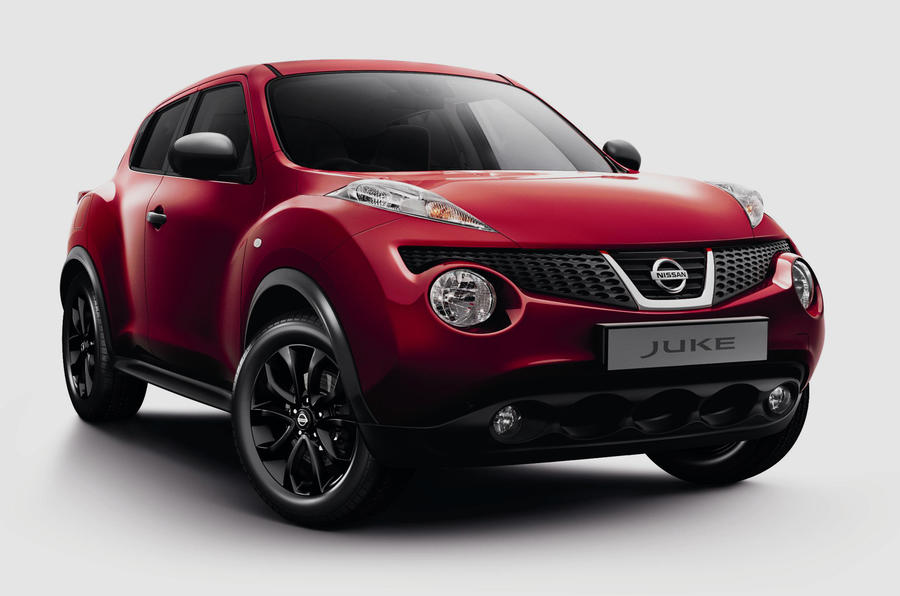
New models on the horizon for Sunderland include three next-generation crossover models, building on Nissan’s leadership in the segment. Not only have the future Juke and Qashqai been secured for UK production, but an additional model, the X-Trail, will in future be made in the UK for the first time.
Having played a crucial role in the development of the current models, the teams in Nissan’s European Design Centre in Paddington, London and European Technical Centre in Cranfield, Bedfordshire, will be instrumentally involved in the development of these new pioneering crossovers.

Friday, 9 December 2016

Kia now offers an updated and upgraded Kia Carens and Soul for UK customers.

  • Upgraded Soul crossover and Carens MPV now on sale in Britain
  • Both models feature revised exterior and interior styling
  • Restructured Soul range now headed by 201bhp Sport model  
  • State-of-the-art connectivity systems for both Soul and Carens   
  • Improvements in fuel economy and CO2 emissions
  • Soul pricing from £13,995; Sport introduced at £23,250
  • New Carens on sale from £18,995
Two of Kia's Paris Motor Show stars –­ the 2017 Soul crossover and Carens compact MPV – are now on sale in the UK. Both feature upgraded exterior and interior styling, improved standard equipment and, for the first time, state-of-the-art connectivity systems. 
The restructured Soul range is now headed by a 201bhp Sport performance model, while several versions consume less fuel and emit lower CO2 emissions.   
The Soul line-up now consists of grades 1, 2, 3 and Sport, bringing it closer into line with every other model in the Kia portfolio. Pricing starts at £13,995, with the Soul Sport introduced at £23,250. 
The revised Carens range is on sale from £18,995 to £27,790.
The 2017 Soul
The Soul is a five-door, five-seat, front-wheel-drive urban crossover, introduced by Kia long before most manufacturers had identified a market for this kind of car. For 2017 it has a new trim grading structure – badged 1, 2, 3 and Sport – to bring it into one with every other model in the Kia portfolio. Sport is an all-new version powered by a 201bhp 1.6-litre T-GDi (Turbocharged Gasoline Direct-injection) engine driving through a seven-speed dual-clutch (7-DCT) automatic transmission.  
Soul is based on the Kia Track'ster concept from the 2012 Chicago Auto Show – same upright stance, square shoulders, distinctive bumper flares, wraparound greenhouse and floating body-colour ‘backpack’ panel set into the tailgate. Links to the Track'ster concept are reinforced by the styling revisions to the 2017 model.
The Urban Styling Pack which was previously an option is now standard – but even this has been revised and improved. As a result, there is a cohesive range appearance from grade 1 through to grade 3.
The addition of the Urban Styling Pack brings a new lower front grille and foglights section with bright silver trims around the foglamps, echoed on the side sill trim. Roof rails are now standard and there are new 16-inch (grade 1) and 17-inch (grade 2) alloy wheels. Multi-focus reflector headlamps continue to feature on grade 1, while grades 2 and 3 have new projection headlamps with black interior bezels.
The all-new Soul Sport has a bespoke appearance, with red highlights above a skid plate beneath the front bumper and along the sides, a rear bumper with diffuser trim and twin exhaust tailpipes, xenon headlights and exclusive 18-inch alloy wheels. It is available in Quartz Black, Titanium Silver and new Wild Orange metallic paint finishes.
Themes from the Track’ster concept car are also to be found in the interior, especially in its circular patterns in the steering wheel-mounted audio controls, outer air vents which sit on the top of the fascia, deeply recessed instrument gauges and sculpted door panels. The Soul 3 and Soul Sport have 'floating’ tweeters with red mood lighting utilising LED technology to create a ripple effect.  
The 2017 Soul offers full connectivity with upgraded navigation and multimedia services on grades 2 and above. Kia Connected Services with TomTom is offered with Android Auto and Apple CarPlay once the system has been paired with a compatible smartphone. There is a 7-inch or 8-inch touchscreen display and 3D maps with SD upgrades.
Kia Connected Services with TomTom allows the driver to make phone calls, send and receive text messages and access music apps or audio books using Google Now or Siri voice commands, minimising distraction on the move. On grades 3 and Sport the multimedia system includes a JBL sound system with external amplifier and subwoofer.
Soul Sport has a bespoke interior, with orange stitching on the seats, gearlever, armrest and the dedicated D-shaped steering wheel, which has a high-gloss black bezel.
Standard features include USB and AUX ports, Flex Steer variable power-assisted steering (except Sport) and a tyre pressure monitoring system (TPMS). Also fitted to every model are body-colour bumpers, door handles and side mirror casings, a high-gloss black grille with chrome surround, keyless entry, air conditioning, all-round electric windows, electrically adjustable door mirrors, steering wheel-mounted controls, tilt and telescopic steering wheel adjustment, a luggage area cover, hooks and light, a trip computer and the refreshed Urban Styling Pack with roof rails.
Grade 2 adds navigation with a 7-inch screen linked to Kia Connected Services with TomTom and Apple CarPlay and Android Auto compatibility, 17-inch instead of 16-inch alloy wheels, heated door mirrors with high-gloss black casings, automatic light control, high-gloss black interior trim details and satin chrome interior door handles, a leather-covered steering wheel and gearshifter, cruise control with a speed limiter, privacy glass on the rear side windows and tailgate, projection headlamps, rear parking sensors, a reversing camera and automatic air conditioning.
Grade 3 supplements this with 18-inch alloys, chrome exterior door handles, front and rear parking sensors, a cooled glovebox, leather seats (front two heated), a luggage underfloor tray and boot power outlet, a portable LED luggage light, a TFT supervision cluster, an engine start/stop button, aeroblade windscreen wipers, mood lighting around the front door speakers, the JBL eight-speaker audio system, an 8-inch navigation screen and rain-sensing front wipers.  
Finally, the unique specification of the Sport model introduces unique 18-inch alloy wheels and larger (320mm) front disc brakes, a twin exhaust system, an electric tilting and sliding panoramic sunroof, LED front fog lights, Blind Spot Detection, Rear Cross Traffic Alert, High Beam Assist, red exterior embellishments, orange interior stitching, heated outer rear seats, 10-way driver's seat and 8-way passenger seat electric adjustment and a heated D-shaped steering wheel.
The three engines in Soul are direct-injection units which spray a fine mist of fuel into the cylinders through a high-pressure injection system. This ensures the engine uses only as much fuel as it needs for the load being put on it. The result is highly efficient combustion with excellent performance. Direct injection, with turbocharging in the case of the U2 diesel engine and the T-GDi, also helps to boost low-speed response and driveability.
For mainstream models, there are 1.6-litre GDi petrol and CRDi turbodiesel engines. The CRDi diesel is made at Kia's s manufacturing facility at Žilina, in Slovakia.  It develops 134bhp and 260Nm of torque, and 300Nm with the optional 7-DCT transmission. Acceleration from 0-60mph is achieved in 10.8 seconds with the six-speed manual gearbox, while the top speed is 112mph. The respective figures with the 7-DCT gearbox are 10.7 seconds and 113mph.
Manual versions have combined fuel consumption of 58.8mpg with CO2 emissions lowered to 127g/km, while the figures for the DCT have been improved to 56.5mpg and 130g/km.
Kia's 1.6-litre GDi (Gasoline Direct injection) Gamma petrol engine in Soul develops 130bhp and 161Nm of torque. The GDi-engined Soul accelerates from 0-60mph in 10.6 seconds and has a top speed of 115mph. Average fuel consumption has been improved to 43.5mpg, with CO2 emissions now down to 152g/m.
And now the Soul range offers the excitement of a 201bhp T-GDi engine in the Sport model. It develops its 201bhp at 6,000rpm, but what really gives the Sport its instantaneous response and rapid acceleration is the 265Nm of torque available without interruption from only 1,500rpm to 4,500rpm.
The Sport also contributes towards Kia’s goal of improving fuel efficiency and exhaust emissions thanks to its small 1.6-litre capacity, direct injection and exhaust-driven turbocharging. The combined fuel consumption is 40.9mpg, while CO2 emissions are 156g/km.
A number of factors contribute towards this exemplary driveability and efficiency. There is continuously variable valve timing on both the inlet and exhaust sides of the engine, electronic throttle control and light, low-friction moving parts. The twin-scroll turbocharger is integrated within the exhaust manifold.  The T-GDi engine eliminates the ‘turbo lag’ between the driver pressing the accelerator and the turbocharger building up boost pressure while simultaneously improving gas flow and reducing heat losses for maximum efficiency.
The Soul’s fun-to-drive handling characteristics are supported by a supple ride quality to cope with the deteriorating roads in many parts of the UK. The suspension bushing, suspension insulator at the front and suspension geometry at the rear are significant factors, aided by the car's structural rigidity.
The Soul has Kia’s Motor Driven Power Steering system with Flex Steer, the variable-assistance function which allows drivers to adjust the degree of assistance provided according to preference and where the car is being driven. It is standard except on DCT transmissions. For parking or manoeuvring in narrow town streets, the Comfort setting offers increased assistance, while for highway driving at speed the Sport mode reduces the amount of assistance to maximise feedback and stability. There is also a Normal setting that is suited to most everyday driving conditions. 
The 2017 Carens
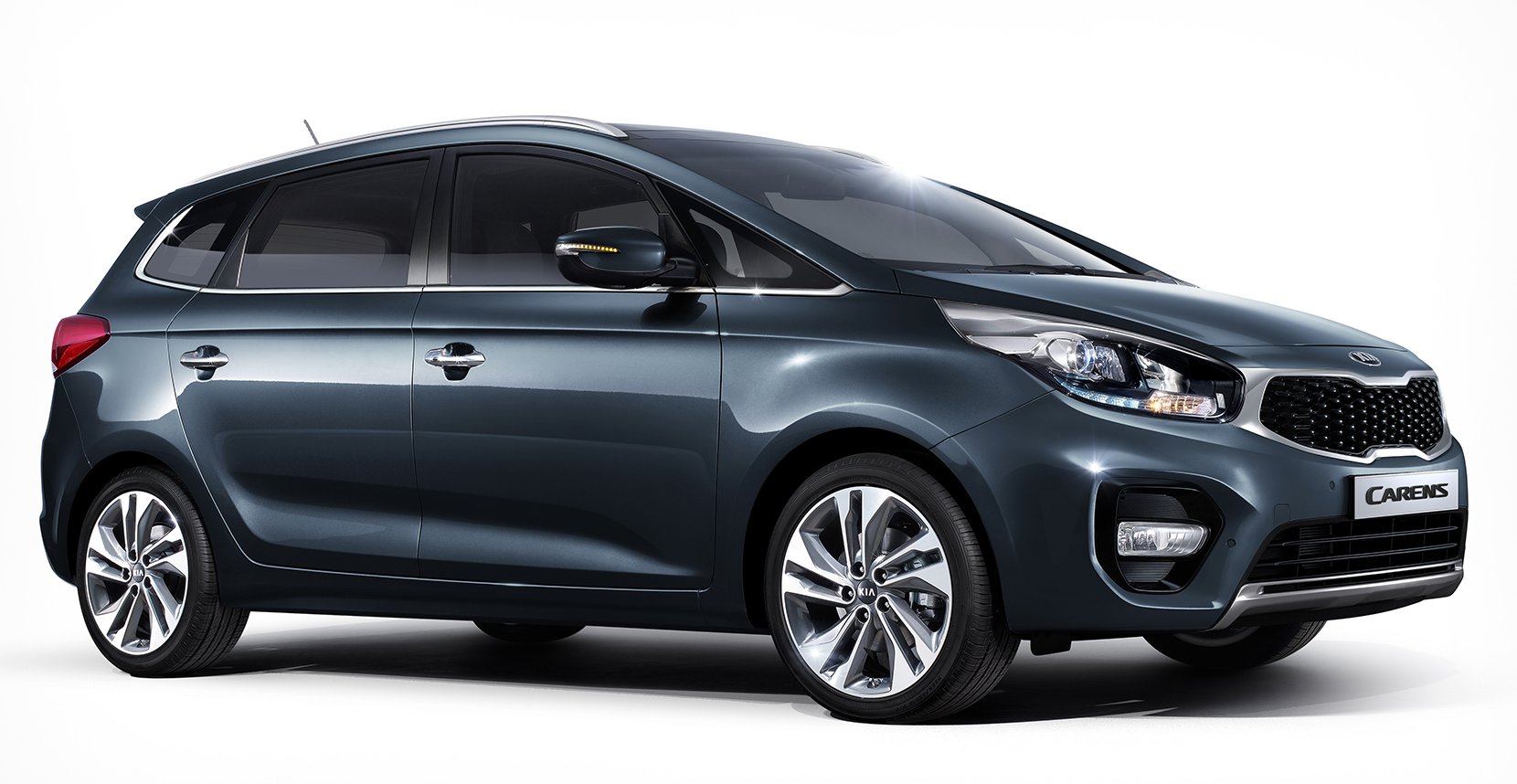
The Carens is Kia's five-door, seven-seat, front-wheel-drive compact MPV. It is a rarity in the world of compact MPVs – a car which provides all the practicality and versatility families need with style which they could only dream of. There are trim grades 1, 2, 3 and 4.
The upgraded 2017 model features new front and rear bumpers, new front grilles, new front fog lights on all but the entry-level version and new rear combination lamps. Front and rear skid plates embellish all models from grade 2 upwards, giving the Carens something of a crossover appearance. The trademark Kia 'tiger-nose' main grille is now wider and has a new black or high-gloss black mesh, with a chrome surround. The mesh patterns are repeated in the lower front grilles. There are new 16-inch or 17-inch alloy wheels on all grades.
The 2017 Carens is fully connected through Kia Connected Services featuring TomTom. This is standard from grade 2. The system is compatible with Apple CarPlay and Android Auto.
Kia Connected Services delivers additional, live information to that on the 3D navigation display through TMC (Traffic Messaging Channel). Drivers can be kept up to date about traffic jams, speed camera locations, weather reports and local points of interest information once the system has been paired with a compatible smartphone. When this has been done, the driver can make phone calls, send and receive messages and call up music apps and audio books using Google Now or Siri voice commands to minimise distraction while driving.
The Carens is a masterpiece of packaging – somewhere between the five-seat and seven-seat models from competitors in overall length, yet more than a match for any of them for space, with abundant head, leg and shoulder room in all three rows of seats. The car's height is one of the lowest in class.
There are three individual sliding and reclining centre-row seats and two separate seats in the rear, all of which fold flat to ensure the ultimate in passenger-to-cargo versatility. A long, wide and tall luggage area and an under-floor compartment to store the cargo screen add to practicality. The front passenger seat also folds flat to allow exceptionally long loads to be carried.
The 2017 Carens features new seat materials on models with cloth upholstery. There is a stylish black knit for the entry-level grade 1 and a smart woven pattern in either black or beige for grade 2. The leather upholstery for grades 3 and 4, again in black or beige, is unchanged. Beige upholstery is available only with the new Mysterious Blue metallic paint option.
The centre fascia has been redesigned to accommodate the new 7-inch or 8-inch touchscreen for the navigation, infotainment and connectivity system. This has made space for a neater arrangement for some of the minor controls and information displays: the centre door lock has been moved from the fascia to the door panel, and the air conditioning display is now incorporated within the centre screen rather than on the panel lower in the dash, which now shows airbag and seat-belt reminder details and incorporates the hazard warning light button.
Carens is available with a choice of three direct-injection engines – one petrol and two turbodiesels – which share the common characteristics of strong performance, outstanding fuel efficiency and excellent driveability and refinement.
The European-designed 1.7-litre CRDi turbodiesel engines develop either 114bhp with 260Nm of torque or 134bhp and 340Nm. Those high torque figures are maintained over a wide rev range, giving the Carens supreme driveability. The standard version now emits only 109g/km of CO2 (previously 117g/km) while fuel consumption improves by a 7.1mpg to 67.2mpg. The corresponding figures for more powerful option are 118g/km and 62.8mpg. The more powerful engine is also available with a seven-speed double-clutch (7-DCT) automatic gearbox, with highly impressive economy and emissions figures of 58.9mpg and 127g/km.
The petrol engine is a 1.6-litre GDi direct-injection unit which, with 133bhp and 165Nm of torque, ensures relaxed motorway performance and flexible responses in stop-start driving. Combined fuel economy is 45.6mpg, with comfortably more than 50mpg possible when cruising, while CO2 emissions are an impressively low 143g/km.
Kia’s Intelligent Stop & Go (ISG) engine stop-start system is standard on all models. This ensures no fuel is used and no CO2 is emitted when the car is stationary in traffic.
The suspension has been tuned to ensure precise handling and taut body control. This minimises undesirable lateral movement which can make passengers travelling in the middle and rear rows queasy. At the same time the suspension is supple enough to prevent the effects of bumpy and uneven roads from being felt in the cabin.
Kia’s Motor Driven Power Steering (MDPS) provides quick and direct responses and includes as standard the triple-mode Flex Steer function. This allows drivers to select a greater level of assistance (Comfort) to make parking easier or reduced assistance (Sport) for improved high-speed stability. There is also a default Normal setting.
The Carens is available with four trim and equipment packages, badged 1, 2, 3 and 4. Standard features include projection headlights with cornering lamps, LED daytime running lamps, electrically adjustable heated door mirrors, driver’s seat height adjustment and tilt and telescopic steering wheel adjustment, a leather-trimmed steering wheel and gearshifter, a centre console armrest, air conditioning, rear air ventilation, steering wheel-mounted controls, front and rear power windows, cruise control with a speed limiter, remote central locking and Bluetooth with voice recognition and music streaming. Trim grades 1 to 3 also have a rear conversation mirror, which is replaced by the controls for the panoramic sunroof on trim grade 4. The audio equipment in grade 1 is a six-speaker RDS radio/CD player with MP3 compatibility and USB and AUX ports. This model features 16-inch alloy wheels.
Mid-range 2 models now have a 7-inch touchscreen navigation system with Kia Connected Services featuring TomTom and Apple CarPlay and Android Auto connectivity, a rear-view camera, a DAB radio, privacy glass on the rear windows and tailgate, chrome window trim, front fog lights, roof rails, automatic headlight control, rain-sensing front wipers, electrically folding door mirrors with LED indicators and kerbside lamps, dual-zone automatic air conditioning, a luggage net, a portable LED luggage light, rear parking sensors and a reversing camera integrated into the centre fascia screen.
The 3 version is distinguished by 17-inch alloy wheels, leather upholstery, 10-way electric driver’s seat adjustment, heated front seats and a heated steering wheel, aeroblade-type front wipers with a de-icing system, second-row sun blinds.
The 4 versions have the same high level of equipment as the 3 with the addition of an 8-inch touchscreen, LED reading lights, a panoramic sunroof, a premium vision instrument cluster, an engine start/stop button, Parallel Park Assist System (PPAS) with Front and Rear Parking Sensors and the eight-speaker JBL audio system including an eight-channel external amplifier and a subwoofer.
Market, warranty and after-care
All versions are of the Soul and Carens are protected by a seven-year, 100,000-mile transferable warranty, Kia’s industry-leading demonstration of faith in the quality and reliability of its cars. For retail customers, Kia’s Care-3 and Care-3 Plus inflation-proof three- and five-year servicing packages are available. The servicing packages are also transferable if the car is sold before they expire.
The 2017 Soul line-up: 
ModelPower bhp
Torque
Nm
0-60 secMax speed mphComb. mpgCO2 g/km
Soul 1 1.6 GDi13016110.611543.5152
Soul 2 1.6 GDi13016110.611543.5152
Soul 2 1.6 CRDi13426010.811258.8127
Soul 2 1.6 CRDi 7-DCT13430010.711356.5130
Soul 3 1.6 CRDi13426010.811258.8127
Soul 3 1.6 CRDi 7-DCT13430010.711356.5130
Soul Sport 1.6 T-GDi2012657.512240.9156
UK Soul pricing:
ModelPrice
Soul 1 1.6 GDi£13,995
Soul 2 1.6 GDi£16,750
Soul 2 1.6 CRDi£18,350
Soul 2 1.6 CRDi 7-DCT£19,850
Soul 3 1.6 CRDi£20,750
Soul 3 1.6 CRDi 7-DCT£22,250
Soul Sport 1.6 T-GDi£23,250
The 2017 Carens line-up: 
ModelPower bhp
Torque
Nm
0-60 secMax speed mphAverage mpgCO2g/km
1.6 GDi grade 1 6-speed manual ISG13316510.911545.6143
1.6 GDi grade 2 6-speed manual ISG13316510.911545.6143
1.7 CRDi grade 2 114bhp 6-speed manual ISG11426012.711067.2109
1.7 CRDi grade 2 139bhp 7-speed auto DCT ISG13934010.911758.9127
1.7 CRDi grade 3 139bhp 6-speed manual ISG13934010.012062.8118
1.7 CRDi grade 3 139 bhp 7-speed auto DCT ISG13934010.911758.9127
1.7 CRDi grade 4 139bhp 6-speed manual ISG13934010.012062.8118
1.7 CRDi grade 4 139 bhp 7-speed auto DCT ISG13934010.911758.9127
UK Carens pricing:
ModelPrice
1.6 GDi grade 1 6-speed manual ISG£18,995
1.6 GDi grade 2 6-speed manual ISG£20,395
1.7 CRDi grade 2 114bhp 6-speed manual ISG£21,790
1.7 CRDi grade 2 139bhp 7-speed auto DCT ISG£23,290
1.7 CRDi grade 3 139bhp 6-speed manual ISG£24,300
1.7 CRDi grade 3 139 bhp 7-speed auto DCT ISG£25,800
1.7 CRDi grade 4 139bhp 6-speed manual ISG£26,290
1.7 CRDi grade 4 139 bhp 7-speed auto DCT ISG£27,290