Purpose

I will try my best to provide detailed info on various cars and what is like to live with them, I have already produced a few for Jaguar-car-forums, I will do my best to be unbiased, but it will be hard for some cars. I will re-produce press releases and copy from other motoring news.
Showing posts with label 2nd generation. Show all posts

Thursday, 2 February 2017

Nissan celebrates 30 years of UK production as they announce production figures from the UK.

  • Nissan UK production above 500,000 vehicles in 30th anniversary year
  • New records for all-electric LEAF and 2nd generation Qashqai
  • New export routes launched from Sunderland to USA and China
Nissan recorded a significant 30th anniversary in the UK in 2016, with output of more than 500,000 vehicles, cementing its position as the largest British car plant in history, and major investments pointing the way to further growth.
Production in Sunderland of 507,430 vehicles last year was the second highest total in the plant’s history. Highlights included record volumes of the all-electric LEAF and the 2nd generation Qashqai, with the original crossover now made on both production lines for the first time.
And 2017 is set to be another big year for Nissan in Sunderland. Total volume at the plant is now approaching 9m since the first car rolled off the line in 1986. 

Other milestones on the horizon include the launch of a refreshed Qashqai, and the introduction of Autonomous Drive technology.
Kevin Fitzpatrick, Nissan Divisional Vice President, European Manufacturing, said: “Since the birth of our factory three decades ago, North East England has become one of the major international automotive centres. 
Britain is now home to Nissan’s best-selling and most technologically-advanced models in Europe, covering our market-leading crossover range, the world’s best-selling electric vehicle and two premium models for global export.
“This has been achieved through hard work, innovative thinking, ingenuity and strong partnerships with forward-thinking local companies. 
With future models secured and new facilities in development, congratulations to all of my colleagues in Sunderland and across the UK on another great year.”
Following the start of production of the Infiniti Q30 in late 2015, a second Infiniti model, the QX30, went into production for global markets in 2016 – which also represented the first time vehicles have been exported from Sunderland to the USA and China.
Other highlights in 2016 included the installation of 19,000 new solar panels alongside the plant’s existing 10 wind turbines, taking the contribution of renewables to 7% of the plant’s total electricity requirements.
Last year also saw the number of children to have taken part in the Nissan Skills Foundation go past 18,000, covering workshops, competitions and practical activities which use motorsports, electric vehicles and Nissan’s manufacturing prowess to inspire the engineers and manufacturers of the future.
Looking ahead, new facilities under development at the company’s Sunderland plant include a new £37m Extra Large Press line, due to start production in the coming weeks. Other investment announced in 2016 includes the £22m Qashqai capacity expansion and £26.5m in manufacturing a future generation of electric vehicle (EV) batteries in the UK.
In addition to the company’s £3bn annual injection into the British economy through suppliers, services and wages, £650m ongoing investment in new facilities and future models in Sunderland will take the total capital investment by Nissan in the plant since it opened to beyond £4bn.
Nissan’s continuing investment in the UK has been supported by several previously announced UK Government grants for innovation and energy efficiency projects, including future-generation EV batteries (£7.1m).
Employment in Nissan’s UK design studio (Paddington, London), technical centre (Cranfield Bedfordshire), manufacturing plant (Sunderland, Tyne and Wear) and sales and marketing operations (Maple Cross, Hertfordshire) now totals more than 8,000. A further 28,000 jobs in Nissan’s UK supply chain and 4,000 in its UK dealer network takes the total British jobs supported by Nissan to more than 40,000.
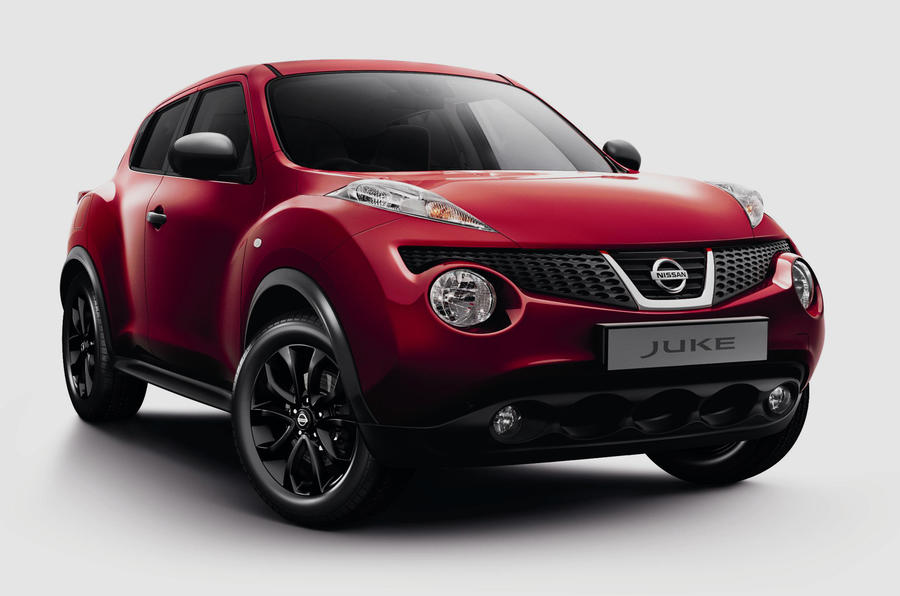
New models on the horizon for Sunderland include three next-generation crossover models, building on Nissan’s leadership in the segment. Not only have the future Juke and Qashqai been secured for UK production, but an additional model, the X-Trail, will in future be made in the UK for the first time.
Having played a crucial role in the development of the current models, the teams in Nissan’s European Design Centre in Paddington, London and European Technical Centre in Cranfield, Bedfordshire, will be instrumentally involved in the development of these new pioneering crossovers.

Sunday, 15 January 2017

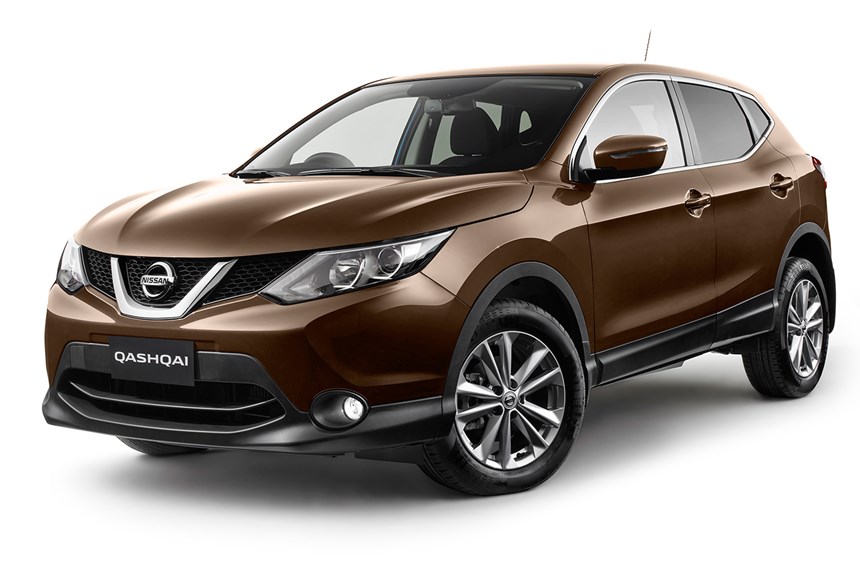
Nissan celebrates ten years of Qashqai with a host of special offers to tempt the buyer.

To mark the 10th anniversary of one its most successful models, the Qashqai, Nissan is running a special sales offer this January with up to £1254 in savings on the popular crossover.
Available on all grades, the offer includes an additional £750 Nissan Deposit Contribution on 3-year finance packages (on top of existing £1,500 deposit contributions for up to £2,250 deposit contribution) as well as 3 years free of charge servicing – a £349 saving.
The Crossover Pack, which includes contrast colour front and rear styling plates, is also available for a reduced price of £195, down from £350 – a saving of £155.
An example of the offer, a Qashqai DiG-T 115 2WD manual N-Vision on a 3-year PCP with 3.99% REP APR and 10,000 annual mileage is available with £2,250 Nissan Deposit Contribution, £5,325.49 customer deposit and £219 monthly payments.
On 0% REP APR, the same model is offered with £750 Nissan Deposit Contribution, £5,935.87 customer deposit and £199 monthly payments, also on a 3-year PCP and 10,000 annual mileage.
The first generation Nissan Qashqai went on sale in the UK in January 2007. It created and has since dominated the crossover segment – now one of the most popular varieties of car in Europe.
The second, and current generation, Qashqai was launched in 2014 and has continued to be in high demand with customers. In 2016 it was the UK’s fifth best-selling model.
The 10th anniversary offer runs from 9th to 31st of January.

Friday, 6 January 2017

A new era will begin for McLaren Automotive this March with the launch of the second generation of its Super Series.

  • New McLaren supercar will debut on March 7 at the 87th Geneva International Motor Show
  • Second generation of the Super Series is McLaren Automotive’s first-ever replacement of a product family and the first of the 15 new cars defined in the company’s Track22 Business Plan
  • New carbon fibre Monocage II body structure delivers extreme strength and contributes to the car’s light weight
A new era will begin for McLaren Automotive this March with the launch of the second generation of its Super Series at the 87th Geneva International Motor Show. 
The first of the 15 new cars cited in the company’s Track22 Business Plan, the second-generation Super Series is also the first replacement of a product family by the British manufacturer of luxury sports and supercars.
“Super Series is the core of the McLaren business and personifies the blend of extreme performance, crafted luxury and unparalleled driver involvement that is the McLaren heartland,” explained McLaren Automotive CEO, Mike Flewitt. 

“This is the first time we have replaced a product family and the new Super Series will be absolutely true to McLaren’s pioneering spirit in being a revolutionary leap forwards, both for our brand and the supercar segment.”
The new Super Series is created around an ultra-lightweight, carbon fibre central structure. Immensely rigid, yet weighing less than the carbon fibre and metal cockpit architecture of the first-generation Super Series, the Monocage II contributes to a lightest dry weight of just 1,283kg for the new car – lower than the closest competitor and 18kg lighter than a McLaren 650S with comparable specification.
The development of Monocage II has allowed McLaren to incorporate a wider cabin entrance and lower sill to improve access into a driver environment that will offer excellent all-round visibility. The new chassis structure also enables a lower centre of gravity, further sharpening the dynamic performance of the new Super Series. Owners wishing to showcase the carbon-fibre construction chassis can specify a ‘Visible Monocage’ option that exposes the material on the inside area of the A-pillar.
The Super Series lineage began in 2011 with the launch of the groundbreaking 12C. The 12C Spider followed in 2012 and in 2014 McLaren introduced the 650S Coupé and 650S Spider. The first generation of the McLaren Super Series was further expanded in 2015 with the launch of the limited edition 675LT Coupé and 675LT Spider.
Full details of the new, second-generation Super Series will be confirmed in March, when further images and pricing will also be available.

Thursday, 28 November 2013

Happy 20th Birthday to the Renault Twingo fun city car.

The original Twingo – “The car that didn’t exist”* – is celebrating its 20th anniversary this year. At the time of its launch, the model took the world by storm thanks to its bold design, innovative concept and playful demeanour, and ultimately racked up more than two million sales.
An ambitious project
In 1989, Renault asked project director Yves Dubreil to come up with a small car that was compact, practical, economical and comfortable – but not a direct rival to its big sister, Clio. Twingo’s conception was dictated by the ‘design to cost’ philosophy and the team’s mission was to propose a compact car, with pioneering, attractive styling at a reasonable price. To achieve that, the only solution was to take a completely different approach with the aim of making life easier... Strip out the superfluous and replace it with unique innovations such as the sliding rear seat.
A simple range
Unlike the diverse model ranges marketed many of its competitors, Twingo was unique inasmuch as it was available in a single version, with just one 1.2-litre, 55hp engine and one interior trim level which featured electric windows and apple green control stalks. Twingo was presented with four different body colour choices at its launch: Outremer Blue, Corail Red, Coriandre Green and Indien Yellow. Only two options could be specified: a folding canvas roof and climate control.
Small on the outside, spacious and versatile within
Twingo featured a monobox architecture which permitted a better distribution of space between the engine compartment and cabin. The wheels were pushed right out to the four corners of the vehicle and there was just one wheel size and a single engine. These attributes enabled the interior space to be optimised. At the time of its launch, Twingo topped its class in the small city car segment in terms of height, width and knee room – most notably thanks to its innovative sliding rear seat. All four seats could in fact be folded flat to create an impromptu double bed – a unique offering in its field that immediately underscored Twingo’s smart design and versatility.
“It'sup to you to invent a lifestyle that goes with Twingo!
This advertising slogan accompanied the launch of Twingo, dubbed by some as the ‘Frog from Billancourt’. The moniker Twingo – a blend of ‘Twist’, ‘Swing’ and ‘Tango’ – was emblematic of the unusual, dynamic and aesthetically-pleasing design of this vehicle which exuded optimism and joie de vivre. Twingo saw Renault take a totally fresh stance on the automobile. The deliberate polar opposite of a status-enhancing vehicle, it inspired a new type of consumption: people bought a Twingo for themselves, not to impress others. People appropriated Twingo for their own desires and invented a lifestyle that went with it.
A unique, engaging personality
Twingo was not a downsized version of Renault Espace. It boasted its own distinct personality, with a curvy, rounded exterior design that expressed strength and beauty with an almost human face. The design of the dashboard guaranteed perfect visibility and married simplicity, functionality (with the centre console) and a touch of humour with its hazard warning lights switch shaped like a clown’s nose.
Landmark dates
March 1993: Commercial launch of Twingo, following a preview several months earlier at the Paris Motorshow.
1994: A Frenchman covered 240,000km in a Twingo across the harsh Australian outback, demonstrating the reliability of this car whose talents were not restricted merely to city motoring. At the end of the journey, the car was painted by an Aboriginal artist.
1994: Launch of Twingo Easy equipped with a manual gearbox but no clutch pedal.
1996: Launch of the limited-edition Twingo ‘Benetton’ and Twingo’Matic versions, fitted with an automatic three-speed gearbox. Moreover, the engine was boosted by 5hp to reach 60hp.
1998: First major restyling of Twingo with upgrades to the chassis, seats, dashboard, lights and front bumper. Introduction of the limited-edition ‘Elite’ version.
1999: Launch of the top-of-the-range ‘Initiale Paris’ version.
2000: Launch of the 16V, 75hp powerplant and Quickshift sequential gearbox.
2005: Appearance of the ‘Kiss Cool’ limited-edition.
June 28, 2007:Production of the last Twingo 1 in Europe following some 2,075,300 sales over a career that lasted 14 years – an exceptional lifespan by car industry standards.
2012: Twingo continued to be manufactured in Colombia until 2012. Between 1995 and 2012, Twingo achieved tremendous success in the Colombian market, notching up sales in excess of 100,000. Twingo Tatoo was Twingo 1’s final limited-edition version.
* According to Christophe MIDLER, Research Director at CNRS – the French National Centre for Scientific Research– and author of ‘The car that didn’t exist’, published in 1994.
Sadly, the original Twingo never made its way officially to UK shores in right-hand-drive form, however, the second-generation did, arriving over here in September 2007. Today, following a relatively recent facelift to bring it in line with Renault’s new brand identity, it continues to be sold in Dynamique form, the pocket-rocket Renaultsport 133 having now ceased production in anticipation of the third-generation model.