Purpose

I will try my best to provide detailed info on various cars and what is like to live with them, I have already produced a few for Jaguar-car-forums, I will do my best to be unbiased, but it will be hard for some cars. I will re-produce press releases and copy from other motoring news.
Showing posts with label Frankfurt International Motor Show. Show all posts

Friday, 30 June 2017

The all new SEAT Arona, yet another new car from SEAT, as they continue to grow.

  • Arona is the perfect companion for the Ateca in SEAT’s growing SUV range
  • The second SEAT vehicle produced on the MQB A0 platform represents SEAT's entry into the compact crossover segment
  • Great height and width, compact crossover dimensions and the most advanced technology in safety and connectivity
  • Manufactured exclusively in Martorell, SEAT’s third release in 2017 represents another step forward in the Spanish brand's biggest ever product offensive
The New SEAT Arona is here, and just like the New Ibiza, is making its first appearance during a media event in Barcelona, in front of 250 international journalists. The New SEAT Arona will make its public debut at the Frankfurt International Motor Show in September.
The New SEAT Arona is the Spanish brand's third new release in 2017, after the upgraded Leon and the New Ibiza. This is yet another addition to the SEAT range in its biggest product offensive ever, which also includes the Ateca and the upcoming large size SUV that will be released in 2018.
The New SEAT Arona sits neatly within the SUV range as the younger brother in the family, combining the advantages of its compact dimensions in the city, with its crossover attributes once it is out of the city limits. 
It’s also the fact that the SEAT Arona is so elegant, spacious, practical and comfortable, both in the normal Monday to Friday working week and adventurous, robust, sporty and efficient at the weekend. All of this combined with applied safety and connectivity technology that is only seen in higher market segments, plus SEAT’s undoubtable attractive and distinct design, as well as with the sports DNA dynamism and finesse of the Spanish brand. 
The Arona, manufactured exclusively in Martorell - the plant with the largest production volume in Spain - will play a key role for SEAT, strengthening the brand and increasing sales.
"We at SEAT are very persistent. With our biggest product offensive, by the time the Large SUV reaches the market, SEAT will have launched, on average, a new vehicle every six months in two and a half years. SEAT has allocated a total of 900 million euros in investments and R&D expenditure to the Ibiza and Arona. These investments are a part of the total investment of 3.3 billion euros for the 2015-2019 period”, says Luca de Meo, President of SEAT. "The commercial launch of the New Ibiza is taking place this very month, and Arona will be premiered at the Frankfurt Motorshow".
The New SEAT Arona is the first SEAT model in the compact crossover segment, which has increased four-fold since 2015. Far from confining itself to a specific category, the Arona is a lesson in versatility. Thanks to its compact size and the sensations of safety and control offered by its high driving position and modern design, it is perfect for everyday city driving, but it’s not afraid to show its fun and adventurous side either.
The New SEAT Arona is designed for drivers looking for a sense of excitement, distinction and functionality. People who know that age is just a number, not an outlook on life. This is a car that fits their lifestyle, that works in both the city and the countryside, that is loaded with technology and that is comfortable, spacious, safe, dynamic and all-purpose. It is a car that's easy to get in and out of, and if that weren't enough, a car in which your luggage can fit easily with no hassle whatsoever.
Always ready for an adventure
When it comes to passive safety, the New SEAT Arona performs at the highest level in an environment that is much more demanding nowadays. “We’re certain that the New SEAT Arona is the perfect answer to the current demands of our customers, in terms of dynamic behaviour, comfort, safety and state-of-the-art technology. We are once again setting new standards in the segment” says Dr. Matthias Rabe, Executive Vice-President for Research and Development.
The New SEAT Arona has all of the driving assistance and infotainment systems you know and love from other SEAT models, such as Front Assist, Adaptive Cruise Control, Hill Hold control, Tiredness Recognition System, Auto lights and wipers, Multi-Collision Braking, Keyless Entry and Start System, precise and high-quality rear camera, premium 8-inch black panel touchscreen, and Connectivity Hub with Wireless Phone Charger and GSM signal amplifier. The Arona also offers an optional Rear Traffic Alert, Blind Spot Detection and Park Assistance System, which works for both parallel and angled parking.
Dimensions
In terms of its dimensions, the SEAT Arona is 4,138mm long, which is 79mm more than the New Ibiza. However, the real difference lies in its height, as the Arona is 99mm taller. As a result, the New SEAT Arona offers not only higher ground clearance for those off-road adventures, but also more front and rear headroom, and, above all, a larger boot, with a 400-litre capacity. 
Another important feature is the seat cushion, which is 52mm higher and gives it a dual advantage: firstly, a higher driving position for an impressive view of the road ahead; and, secondly, it makes it much easier to get in and out of the car. The passenger seats are also 62mm higher, while headroom is 37mm greater in the front and 33mm in the rear. The suspension has been increased by 15mm and the windscreen is slightly more vertical than in the Ibiza for an even roomier interior.
MQB A0 Platform
The MQB (Modular Quer Baukasten) A0 platform allows higher manufacturing flexibility, more robust implementation and different models with different body types within the same segment. Also different wheelbase configurations can be achieved within the same base platform. SEAT’s investments and R&D expenditure in recent years were partially allocated to adapt Line 1 at the Martorell factory to the new MQB A0 platform, allowing SEAT to be the first company of the Volkswagen group to use this technology.
Fully connected and with its own style
In terms of connectivity, Arona features Apple Car Play, Android Auto and Mirror Link.
Like the Ibiza, Leon and Ateca, the New SEAT Arona will offer the following trim levels (depending on market): Reference, Style, FR & XCELLENCE trims. The dual-coloured (red and white) ambient indoor LED light and dual-zone climate control with an aircare filter are also available on the Arona, while at the front, triangular headlights with attractive colour and excellent luminance make it instantly recognisable. At the rear, its tail lights are also LED and they provide extra visual width thanks to their dual nature. The FR trim includes dual-mode suspension, and the SEAT Drive Profile with four modes: Normal, Sport, Eco and Individual.
Multi-use without a single compromise
On the emotional side, Arona offers the thrill that drivers once looked for in three-door versions, with the advantage of the space offered by a family car body, and the enhanced capacity made possible by its higher frame. The Arona also shares features with the Ateca. After all, it is its younger brother within the SUV range, as we await the arrival of the family's biggest member, the large SUV scheduled for 2018. The Arona's robust front follows the same structure as the Ateca, with a three-dimensional look that's more pronounced, without being aggressive. Also, the license plate on the tailgate, allows a more robust bumper design and raises the car visually.
Alejandro Mesonero, Design Director at SEAT, says, "We wanted to give the New SEAT Arona the distinct feel of a crossover, a sturdy car for everyday life, for the urban jungle. That's why it features such strong protection in the bumpers, the wheel arches and the dark coloured rubber side skirts, as well as the roof rack and the aluminium look-like protection at the bottom of the bumpers". All of which makes it look tougher and taller. The 665mm larger diameter wheels also help to make the car higher.
The New SEAT Arona is very expressive. In addition to its rack, the roof features evoke the aesthetics of all-terrain vehicles. It has many aspects in common with the new design language shown in recent SEAT cars, although there is no doubt this car has its own personality. This is clear in its interior, which stands out not only in horizontal proportions that emphasise and enhance the car’s size, giving an even greater feel of roominess and space inside, but in its increased sophistication as well. Special care has been taken with the details to underscore the improvements made to the New SEAT Arona in terms of its perceived quality.
The High Console Concept also gives the console more prominence, which affects the safety and ergonomics, since every element is positioned such that the driver barely has to look away from the road while driving. The driver’s seat has been given particular attention, and all of the instruments are oriented toward the driver. Everything is within reach, allowing for easy adjustments and increased safety. The seats are more comfortable and provide a greater feeling of protection while holding the occupants in place more securely. The fabrics, shades and colours are exclusive to the New SEAT Arona, whose interior colours and trims offer many possibilities for personalisation (depending on market), with the console, for example, being painted to match the dashboard.
In this regard, the ability to personalise the Arona is very important. There has been a trend in customers demanding individualisation for their vehicles. Colour-wise, the Arona is divided into two: the lower body, on the one hand, and the roof, plus the A- and C-pillars, on the other. Added to the colour palette for the bodywork is Eclipse Orange. The roof can be grey, black, orange or the same colour as the body. Globally, there are 68 possible colour combinations. Prominent on the C-pillar is the ‘X’ graphic engraved in the sheet metal to highlight the Arona's crossover look. While every model in the SEAT line-up has a dynamic, versatile, technological and sporty character, the Arona maintains all of those features but has a more spacious interior and a wider range of possible uses.
The perfect companion
Strength nowadays lies in efficiency and reliability. All of the engines available in the New SEAT Arona range have direct injection, a turbocompressor, and feature an automatic stop & start system. There are three different petrol engines to choose from, all with an aluminium block. The first is the three-cylinder, 95PS 1.0 TSI, which is linked to a five-speed manual gearbox. Next we have this same engine but in a 115PS version, which comes with a six-speed manual gearbox or the dual-clutch seven-speed DSG transmission. The third is the new four-cylinder, 150PS TSI with active cylinder deactivation technology, which is exclusive to the FR trim and is connected to a six-speed manual gearbox.
As for diesel options, the efficient and reliable 1.6 TDI will be available with 95 and 115PS. The 95PS version can be paired with a five-speed manual transmission or seven-speed DSG, and the 115 PS with a six-speed gearbox.
SEAT sales are rising steadily. Between January and May, SEAT delivered 201,300 vehicles worldwide, an increase of 13.9% over the same period in 2016. Sales growth has increased SEAT's turnover by 20.2% in the first quarter of the year, reaching a record of 2.487 billion euros. Last year, the company posted the highest operating profits in its history. SEAT's operating profit reached 56 million euros in the first three months of 2017, 4.1% more than in the same period in the previous year.

Thursday, 25 February 2016

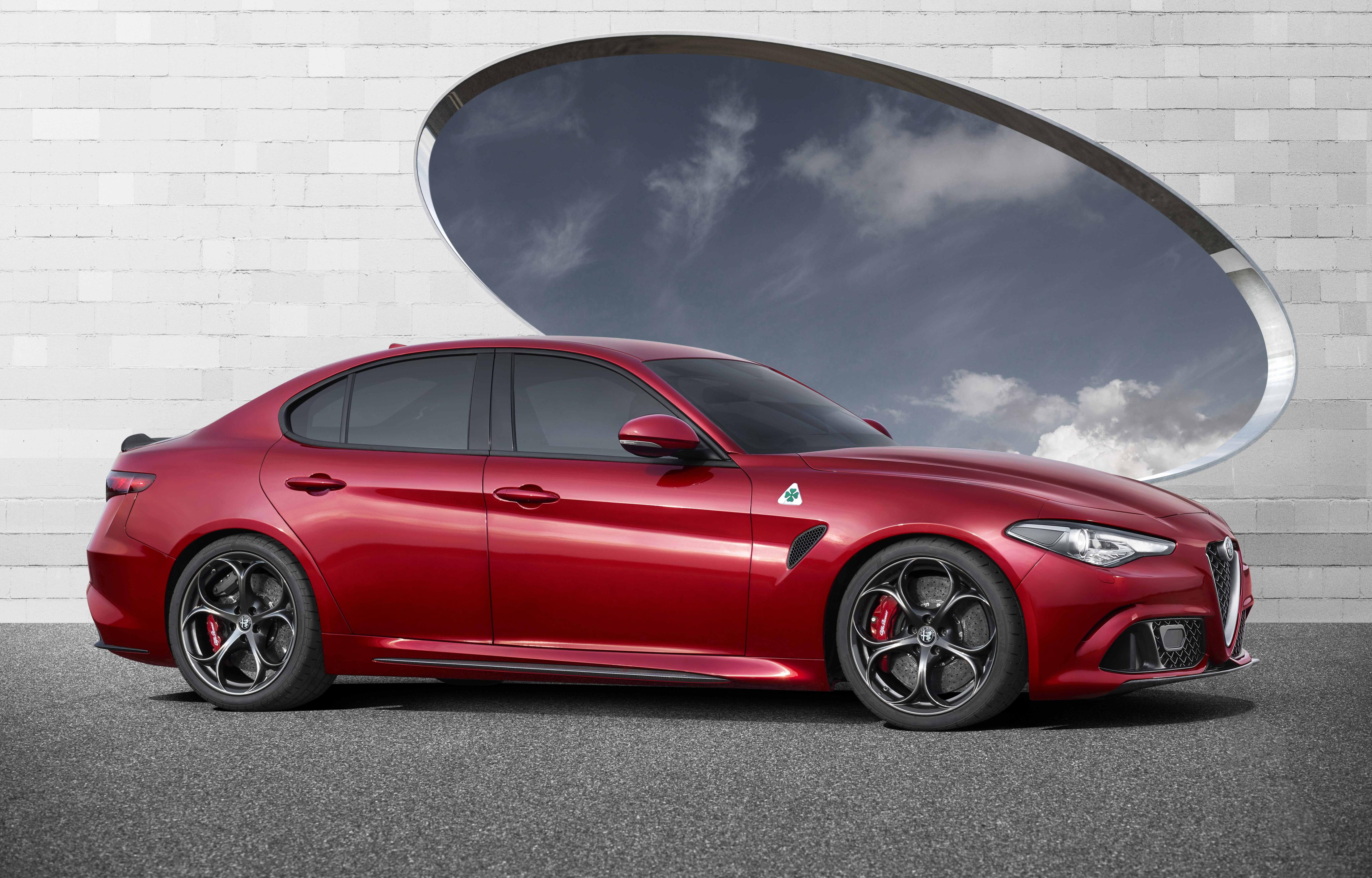
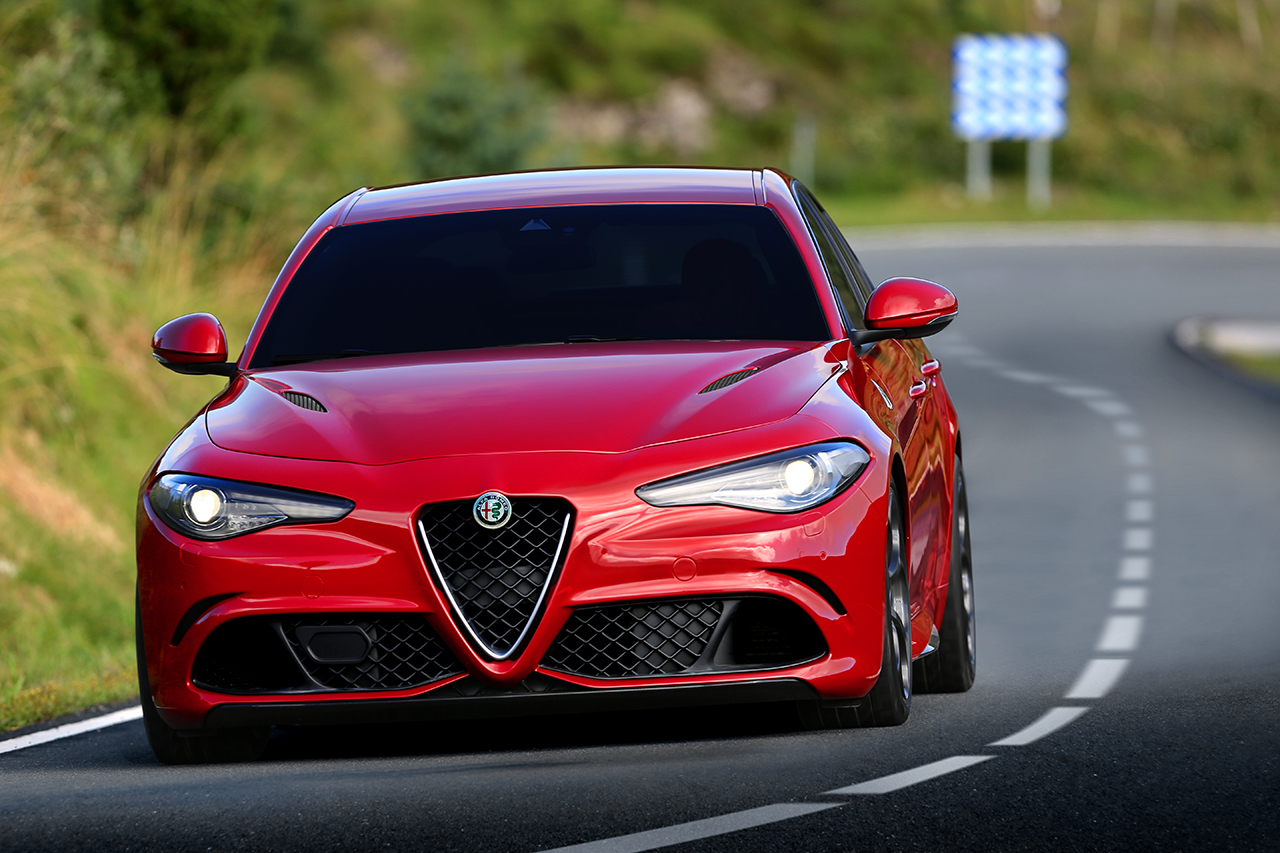
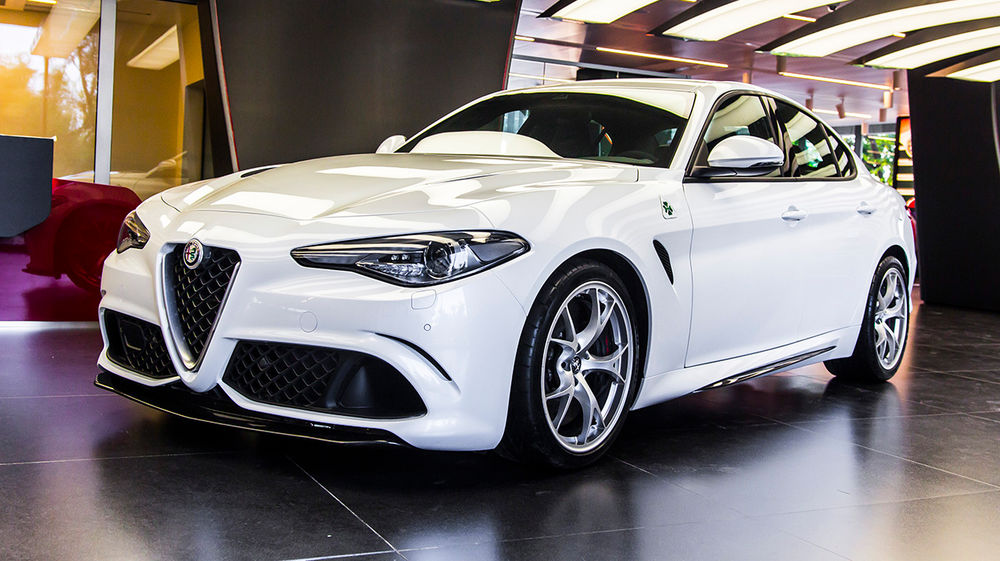
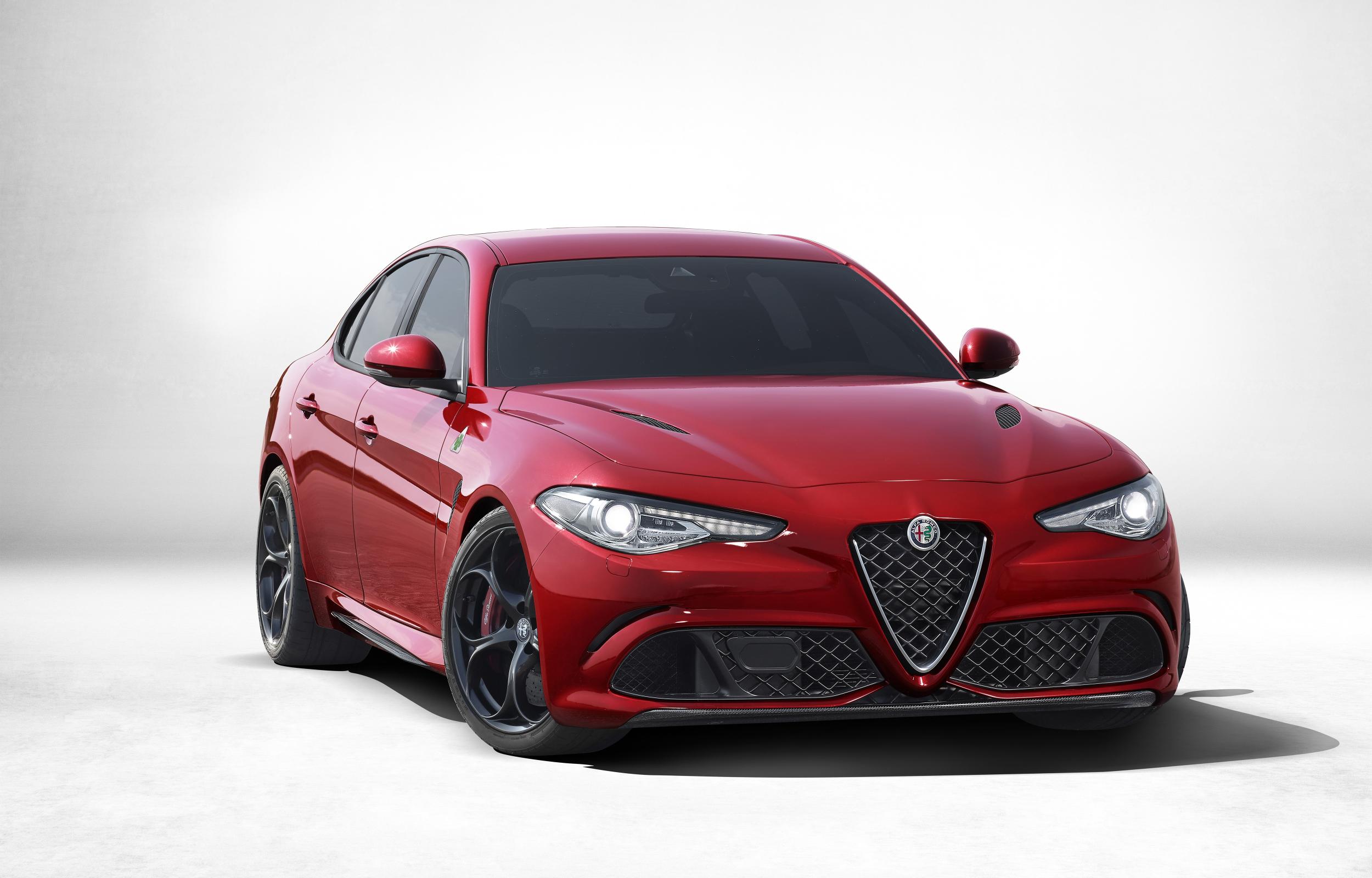
Alfa Romeo will launch the mainstream versions of its Giulia midsize sedan at the Geneva Auto Show.

Alfa Romeo will unveil the long-delayed mainstream versions of its Giulia midsize sedan at the Geneva auto show next week.
The debut follows presentation of the high-performance, top-of-the-line Giulia Quadrifoglio in Frankfurt last September.
The Giulia, a rival to the Audi A4 and BMW 3 series, will be shown with an entry-level 2.0-liter gasoline engine and a 2.2-liter diesel that is unlikely to be sold in the U.S. The Giulia Quadrifoglio has a Ferrari-derived 505-hp twin-turbocharged V-6.

U.S. sales of the Quadrifoglio will begin in the third quarter, with the 2.0-liter version arriving in U.S. showrooms by year end, Alfa has said. Originally, the Quadrifoglio was expected in the U.S. in the first quarter and the rest of the range by midyear.
The new 2.0-liter engine, a direct-injection, turbocharged four-cylinder, will be available in 180-hp, 250-hp and 330-hp versions. The engine also has FCA's MultiAir variable valve system.
The Giulia will also use a higher-output variant of a revised 2.2-liter diesel introduced last year on the Jeep Cherokee. The engine has a top output of 210 hp but also will be offered in more fuel-efficient 135-hp and 180-hp variants.
The Giulia, previewed at the Alfa Romeo museum in June 2015, has had a bumpy development. This month, FCA lured former Ferrari chief engineer Roberto Fedeli back from BMW Group to help fix mounting technical challenges at Alfa and Maserati.
The launch of the Giulia is months behind schedule. Supplier sources have told Automotive News Europe the Giulia failed to pass internal front, side and rear crash tests, which resulted in extensive re-engineering that has added about six months to the sedan's development time.

"We are not commenting in any way," said an FCA spokesman when asked about a delay. 
The Quadrifoglio version was due to launch in Europe by the end of last year with the base Giulia scheduled for a European debut in March, European dealers were told last June. 
The Quadrifoglio and the diesel are now set to go into production on March 31, with deliveries to Italian dealers to begin by late May or early July. The Giulia with the 2.0-liter gasoline engine is due in Europe by the end of the year.
Luca Cifferi
Automotive News

Wednesday, 9 December 2015

Porsche to deliver a new type of Electric Car, capable of high speeds, fast pull away's and long Journey's.

Porsche to invest around a billion euros - More than 1,000 new jobs
The first 100% electrically powered Porsche is on its way. The supervisory board of Dr. Ing. h.c. F. Porsche AG today gave the green light for the Mission E project. In the words of Dr. Oliver Blume, Chairman of the Executive Board, Porsche is thus "beginning a new chapter in the history of the sports car." 
The vehicle is due to be launched at the end of the decade.

With the Mission E project, Porsche is continuing to back sustainable growth. In Stuttgart-Zuffenhausen alone more than 1,000 new jobs are being created. The company will be investing around 700 million euros in its main site there. 
Over the next few years, a new paint shop and a new assembly plant will be built. The existing engine factory is also being expanded for the production of electric motors. In addition, the existing body shop is being enlarged. On top of that come other areas in which the company will be investing in this context, such as in the Weissach development centre.
The Mission E concept car celebrated its premiere at the Frankfurt International Motor Show (IAA) in September. Visitors were gripped above all by its highly emotional design. Living up to the buzzword of 'E-Performance', the technological trailblazer combines outstanding driving performance with trendsetting day-to-day practicality. 
The four-door car with four individual seats has a system power output of over 600 hp (440 kW). The vehicle will thus achieve both acceleration of 0 to 100 km/h in under 3.5 seconds and a range of more than 500 kilometres. 
Charged via an 800-volt charger unit specially developed for the car, which is twice as powerful as today's quick-charge systems, the lithium-ion batteries integrated within the vehicle floor have enough power again for 80 percent of the range after just 15 minutes. 
The vehicle can optionally be 'refuelled' wirelessly by induction via a coil set into the garage floor.
Dr. Wolfgang Porsche, Chairman of the Supervisory Board of Porsche AG: "With Mission E, we are making a clear statement about the future of the brand. Even in a greatly changing motoring world, Porsche will maintain its front-row position with this fascinating sports car."
Chairman of the Porsche Executive Board, Dr. Oliver Blume: "We are resolutely taking on the challenge of electric mobility. Even with solely battery-powered sports cars, Porsche is remaining true to its philosophy and offering our customers the sportiest and technologically most sophisticated model in this market segment." 
Blume added that the E Mission project underlines the importance of Stuttgart-Zuffenhausen as a production site, of Baden-Württemberg as a centre of technology and of the whole German automotive industry.
Uwe Hück, Chairman of the Central Works Council and Deputy Chairman of the Porsche AG Supervisory Board: "A day to celebrate! Yes, we did it! We brought Mission E to Zuffenhausen and Weissach where the future has tradition. 
The workers' side made the employer's side an offer that they couldn't refuse. This heralds the dawn of a new age in Zuffenhausen and Weissach. Digitalisation will be growing up with us. And Factory 4.0 will be a major challenge for the workforce, trade union and employer. 
We will be taking new approaches but not giving up on the social aspects. With today's decision, Porsche is driving flat out with no speed restrictions into the automotive and industrial future."

Friday, 25 September 2015

All New Sportage gets the rough treatment with extended hot testing in Death Valley, USA.

  • Extreme hot weather test for Sportage, in one of the hottest places on Earth
  • Comprehensive ‘Hot Test’ allows development of class-leading heating, ventilation and air-conditioning systems
  • All-new Sportage undergoes Kia’s most rigorous global test programme yet

Kia Motors has today revealed details of the intensive hot weather development tests for the all-new Kia Sportage – as part of the most extreme and rigorous vehicle testing programme ever devised by the company.

The all-new Sportage made its global debut at the 2015 Frankfurt International Motor Show earlier this month, and will go on sale globally in the first quarter of 2016.


Now entering its fourth-generation, Kia’s all-new compact SUV is undergoing the final stages of its development, with engineers testing the Sportage in Death Valley – one of the hottest places on Earth, with temperatures rising as high as 56ºC (132ºF) in the summer months.

This stage of testing means Kia can develop cars designed to operate in the harshest environments. For the all-new Sportage’s hot weather test, particular focus has been placed on developing its class-leading heating, ventilation and air conditioning (HVAC) systems.

Kia turns the heat up for class-leading air conditioning performance

Among the various individual hot weather testing methods, three gruelling tests are often employed by Kia’s vehicle test engineers, placing huge demand on the HVAC systems and the effects they have on engine and transmission cooling when used in the extreme heat.

The first of these tests is the up-hill climb, in which the vehicle is soaked in the midday sun for an hour to bring the cabin temperature over 50ºC (122ºF). The Sportage is then driven from sea level to almost 5,000 feet elevation through the aptly-named Furnace Creek area of Death Valley, a steady climb over 27 kilometres (17 miles) at 100 kph (62 mph). 

The test is designed to ensure that the additional load placed on the engine has minimum impact on the car’s ability to cool itself and its occupants.

The second test, the stop-and-go drive, simulates typical conditions in a congested urban centre. Engineers drive the all-new Sportage at 40 kph (25 mph) for two minutes through Furnace Creek, before stopping and idling for another two minutes. 

The process is repeated several times, and – again – is designed to put additional strain on the engine, transmission and HVAC systems and eliminate any possible flaws.

The final test devised by Kia’s engineering teams for the all-new Sportage is a slow drive, which takes place at the lowest point in North America, Badwater Basin – around 86 metres (282 feet) below sea level. 

After another one-hour heat soak, the all-new Sportage is driven at 40 kph (25 mph) for 30 minutes at a time, allowing vehicle engineers to verify – and improve – the capacity of the HVAC system when there is a dramatically reduced level of airflow to the air conditioning condenser unit.

Mojave Desert: Kia’s California proving ground

In addition to the demands placed on the car by the extreme conditions of Death Valley, Kia also carries out a series of hot weather tests at the company’s own North American testing facility – the Mojave Proving Ground. 

Located deep within the Californian Mojave Desert, the Proving Ground demonstrates the lengths to which Kia goes to ensure the quality and durability of every new car it creates, including the all-new Sportage.

Established in 2004, the Mojave Proving Ground is around 177 kilometres (110 miles) from Los Angeles. 

The 17.4 km2 (6.7 square miles) centre carries out extensive on- and off-road testing across numerous types of surface, and – in this notably hot, dry part of the world – the facility also enables development teams to put car materials and components through some of the most strenuous climatic conditions.

The Proving Ground is made up of 120 km (75 miles) of paved and off-road routes, including a 10.3 km (6.4-mile) high-speed oval, gravel off-road tracks, high-vibration road surfaces, brake test facilities and different gradients. Each of these enable engineers to evaluate and refine the ride, handling, brakes and NVH of prototype and production vehicles.

The Mojave site also houses a material weathering facility, where full cars and a variety of parts are exposed for a full year to the continuous UV radiation from the California sun’s intense rays. 

This exposure is accelerated through different testing equipment, ultimately ensuring that the various parts and components of Kia’s vehicles do not deteriorate under extreme heat, and remain intact throughout the whole life of a vehicle.

Kia’s most rigorous global testing programme yet

The fourth-generation Kia Sportage is almost at the end of a worldwide development programme, which has seen a fleet of development test vehicles subjected to numerous durability and reliability tests, equivalent to a cumulative mileage of more than 5.5 million kilometres – approximately 137 circulations of the Earth around the equator, and a far greater distance than many motorists will cover in a lifetime of driving.

Engineered to meet the needs of a global customer base, the Sportage has been subjected to high altitudes, sandstorms, monsoons, congested city centres, alpine passes, and extreme weather material testing covering temperatures as low as -35ºC (-31ºF) and as high as 110ºC (230ºF). Extensive testing carried out across the world’s diverse roads will make the Sportage a truly global car when it goes on sale.

All Kia models undergo testing to ensure the highest possible durability in all conditions, with the all-new Sportage undertaking the company’s most extensive – and intensive – testing programme to date.

As with every Kia sold in Europe, the all-new Sportage benefits from Kia’s unique 7-Year, 100,000 mile warranty.

Wednesday, 23 September 2015

The All-New Vauxhall Astra will be in dealerships from October, with new engines, new Tech and cheaper too.

  • All-new Astra in Vauxhall showrooms from October
  • Priced from £15,295 on-the-road
  • New powertrains and tech including OnStar and Apple CarPlay
The new Astra is now on sale, with first cars arriving in Vauxhall showrooms this October after its global debut at the Frankfurt Motor Show.

One of the UK’s top-selling and best-loved cars, Astra is a household name for British car buyers with almost three million sold in the UK over the last 36 years, including 50,000 in the last 12 months. More than 25 per cent of British motorists have either owned or driven an Astra, so reaction to a new model will always be felt across the market. 


New Astra is based on an all-new lightweight vehicle architecture with a new design, powertrains and technology, the Astra is built at Vauxhall’s Ellesmere Port manufacturing plant in Cheshire. It is the lead plant for the new model.

Accounting for 12 per cent of C-Segment sales, key rivals in this fiercely competitive sector include the Ford Focus and the Volkswagen Golf. The Astra has a very diverse customer profile appealing to people from all areas of society, male and female, young and old. The retail/fleet split is 70:30 in favour of company car drivers and fleet decision-makers.

Depending on the model and trim level it is up to 200kg lighter than its predecessor. The completely new vehicle architecture plays a major role in the weight reduction. Every component was checked for compact design and lightweight materials. The body shell weight alone was reduced by 20 per cent from 357kg to 280kg.

Additional, chassis-related measures resulted in a further 50kg weight loss. These include high-strength and ultra-high-strength low-weight steels, compact subframes as well as weight reductions to the front and rear axle.

The powertrain portfolio features petrol and diesel units ranging from 100PS to 200PS, including an all-new 1.4-litre (150PS) ECOTEC Direct Injection Turbo and the recently-launched 1.6-litre CDTi Whisper Diesel.

New Astra is also the first Vauxhall to feature OnStar, the ground-breaking connectivity technology now available across Europe. OnStar includes high-speed 4G LTE mobile network, emergency response notification and stolen vehicle recovery alert.

Astra is also one of the first vehicles from a mainstream manufacturer to get Apple CarPlay and Android Auto, available through a new version of the IntelliLink infotainment system.

"The all-new Brit-built Astra raises the bar in terms of quality, design and connectivity," said Tim Tozer, Vauxhall's Chairman and Managing Director. "Lighter than ever before, with new powertrains and cutting-edge technology, the new Astra is set to shake up the C-segment when it arrives in showrooms this autumn."

Wednesday, 16 September 2015

FRANKFURT - Jaguar Land Rover presents the cars that take a starring role in the new Bond film, SPECTRE.

  • Jaguar and Land Rover stunt vehicles Jaguar C-X75, Range Rover Sport SVR and Land Rover Defender make international debut in Frankfurt, Germany
  • SPECTRE cast members Naomie Harris and David Bautista attend star-studded event ahead of reveal at motor show
  • Guests entertained by British singer and musician John Newman
  • Jaguar Land Rover Special Vehicle Operations [SVO] as well as Jaguar and Land Rover Design worked with filmmakers on the conception and creation of the Bond
  • SVO is responsible for the most luxurious and highest performing cars that Jaguar Land Rover makes
  • Jaguar and Land Rover to release exclusive and interactive behind-the-scenes SPECTRE content on www.jaguar.com and www.landrover.com
Jaguar Land Rover celebrated their vehicles appearing in the new Bond adventure, SPECTRE. Cars, including the Jaguar C-X75, Range Rover Sport SVR and the iconic Land Rover Defender, stole the show as they were unveiled in public for the first time at the palatial Thurn und Taxis in Frankfurt.

Naomie Harris (Moneypenny) and David Bautista (Hinx) were guests of honour at the glamorous event showcasing special stunt vehicles used in the latest instalment of the James Bond series.  Guests were entertained by British singer and musician John Newman, who performed a number of top ten hits from his album.  
SPECTRE, the 24th James Bond film, from Albert R. Broccoli’s EON Productions, Metro-Goldwyn-Mayer Studios and Sony Pictures Entertainment, sees the Jaguar C-X75 drive through the moonlit streets of Rome in one of the movie’s most iconic high speed chase scenes.   Driven by Hinx, played by David Bautista, the C-X75 supercar, named the most advanced Jaguar ever created, was provided by Jaguar Land Rover Special Vehicle Operations (SVO) in collaboration with development partner Williams Advanced Engineering headquarters in Oxfordshire, England.  
SVO was created in June 2014 to focus on meeting the increasing expectations of today’s most discerning and enthusiastic Jaguar and Land Rover customers.  Working on the development of high performance versions of existing models, luxury bespoke commissions and limited run collector editions, it represents the very pinnacle of the two iconic brands. 

Specially modified Land Rover Defenders and the fastest, most powerful Land Rover ever, the Range Rover Sport SVR also star in major action sequences shot in Austria.  The highly capable Defenders were constructed by the JLR Special Operations division with huge 37-inch diameter off-road tyres and enhanced body protection to tackle the challenging terrain of the snow-covered mountain roads used for filming.
Actor David Bautista said, “To have the opportunity to be a part of an iconic chase scene in a Bond movie and to drive the C-X75 supercar was like a dream come true for me. It truly is a beautiful beast of a car that will go down in movie history.”
Naomie Harris, who will reprise the role of Moneypenny in SPECTRE said: “I made my Bond debut in the Defender, and I have so many fond memories shooting that sequence in Turkey. It’s such a special franchise to be a part of, and I’m thrilled to be here in Frankfurt with the Jaguar Land Rover team”.
Managing Director of Jaguar Land Rover Special Operations, John Edwards, said: "For Jaguar Land Rover to once again be a part of the iconic vehicle line ups in one of the most celebrated film franchises in the world represents a proud moment for us.   It’s an incredible opportunity to showcase production and concept cars alike and we look forward to continuing this relationship well into the future.”
Fans around the world will be treated to a host of exclusive behind the scenes SPECTRE content on Jaguar and Land Rover’s social channels and brand new websites, including special access to unseen footage and interviews with the design, SVO and stunt teams as well as a stunning 360 dynamic walk-around of the Jaguar C-X75.
SPECTRE is released worldwide from October.