Purpose

I will try my best to provide detailed info on various cars and what is like to live with them, I have already produced a few for Jaguar-car-forums, I will do my best to be unbiased, but it will be hard for some cars. I will re-produce press releases and copy from other motoring news.
Showing posts with label Kvasiny. Show all posts

Saturday, 17 September 2016

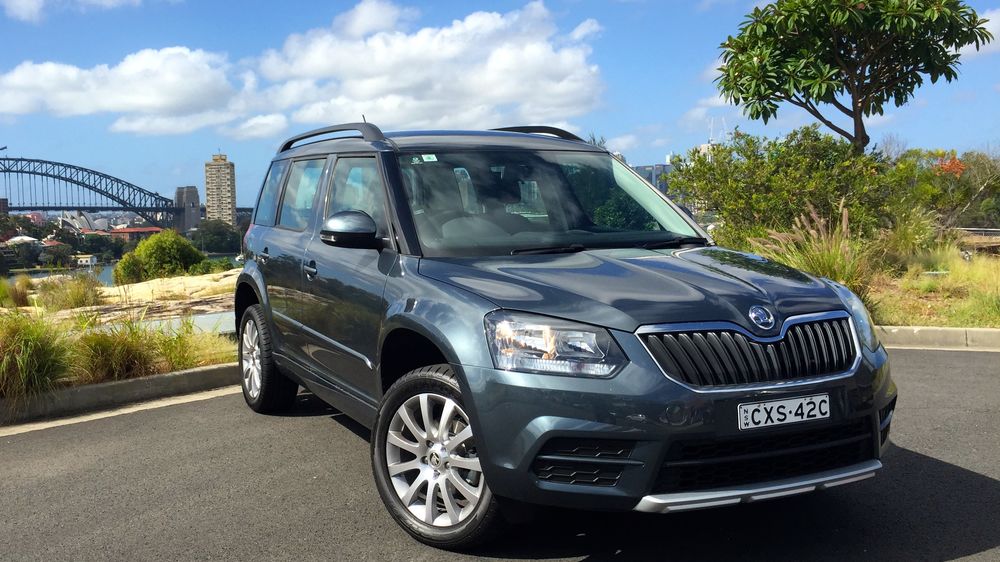
After 7 years Skoda increases production of the Yeti to meet unprecedented demand, not bad for a 7 year old car.

  • ŠKODA increases capacity for Yeti production due to high demand
  • Since the start of production in 2009, over 580,000 Yetis sold worldwide
  • UK accounts for over 10 percent of global sales
  • 2015 was a best-ever year for Yeti with over 13,000 registered in the UK
The recent world premiere of the new Kodiaq SUV may signal the start of ŠKODA’s broader SUV campaign, but the ŠKODA Yeti – the brand’s first SUV – is enjoying a rise in popularity. Now in its seventh production year, debuting in 2009, the ŠKODA Yeti has been one of the most successful compact SUVs ever.

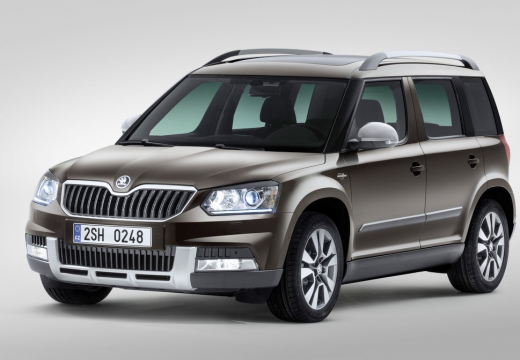
In total, ŠKODA has delivered more than 580,000 Yetis to customers worldwide, and due to continued high demand is expanding capacity for production. In the UK, ŠKODA has seen the Yeti’s popularity continue to rise, with nearly 60,000 registrations since its 2010 market introduction. In 2015 it had its best-ever year, with 13,306 examples being snapped up by UK customers.
“We are delighted to be able to deliver as many ŠKODA Yetis to our customers in Europe as they wish,” says Michael Oeljeklaus, ŠKODA Board Member for Production and Logistics. “By using the production capacities of another European plant within our international production network, we can respond satisfactorily to the high demand.”
The compact SUV is currently produced at four plants: In addition to Kvasiny in ŠKODA’s home country the Czech Republic, the model is manufactured at Solomonovo (Ukraine), Nizhniy Novgorod (Russia), Öskemen / Ust Kamenogorsk (Kazakhstan) and Anting (China). In order to meet the high demand for the Yeti models in Europe, ŠKODA is utilizing the additional production capacities at the Nizhniy Novgorod plant. The ŠKODA Yeti has been produced here since 2012 alongside the ŠKODA Octavia. Production in Nizhny Novgorod is carried out in partnership with the Volkswagen Group Russia and the Russian automobile manufacturer GAZ Group.
ŠKODA entered the compact-SUV segment with the Yeti in 2009. In Europe, the award-winning ŠKODA Yeti is one of the best-selling SUVs in its class and underlines the all-wheel-drive competence of the brand.
More than 580,000 ŠKODA Yetis have been sold to customers around the world to date. In 2015 alone, ŠKODA delivered around 99,500 Yeti models. Between January and August 2016, approximately 61,700 customers worldwide opted for a Yeti, with over 14 percent of those allocated to UK customers. 

Wednesday, 24 June 2015

SKODA produces the first production Superb Kombi at Kvasiny in the Czech Republic.

  • Ready to take off: the new Superb Combi leaves the production line at the plant in Kvasiny
  • A reference: spacious interior with cutting edge technology and dynamic design
  • Growth: the Skoda plant in Kvasiny has been modernized and expanded

  • ŠKODA has produced this week the first ŠKODA Superb Combi at its plant in Kvasiny, Czech Republic. The first model is a Superb Combi 2.0 TDI in white moon, a client of the local market will be delivered.


    In its segment, the new Skoda Superb Combi sets benchmarks in space, comfort, security, connectivity and ecology, and inspires its customers with full of excitement and dynamically elegant designs. The market launch is scheduled for September.

    "The new Skoda Superb Combi mark new standards in its segment," says Michael Oeljeklaus, Head of Production and Logistics Board of ŠKODA. 

    "Just fifteen weeks after the start of production of the new Superb sedan, we are proud to announce another successful start. The whole team did a great job, and now the Superb Combi out of production lines as planned."

    To accommodate production of the new ŠKODA Superb and Superb Combi, Skoda has made significant investments in plant Kvasiny, particularly in new production technologies and in the areas of assembly and logistics.

    The new Skoda Superb Combi looks the largest interior space in its segment. The total volume of the trunk is nearly 2,000 litres, a size which until now could only be found in higher segments. The use of modern technology Volkswagen Group MQB also enables a new level of comfort and safety. 

    The new Skoda Superb Combi also offers maximum connectivity and ecological character. In line with the new design language of ŠKODA, the latest model of the brand provides a captivating interplay of functionality, technology and emotion.

    Kvasiny is one of the three plants of ŠKODA in the Czech Republic, and employs nearly 4,500 people. In addition to producing the new Superb Combi, Superb saloon also has been coming out of its assembly lines since mid-March. Along with these models, the seat of Kvasiny also manufactures the ŠKODA Yeti. 

    Over the next years, the plant and facilities around it will modernize and expand further. 

    In  2018, the company expects to have created 1,300 additional jobs in  Kvasiny. The production capacity will increase to 280,000 vehicles per year. To do this, the company will invest about CZK 7,200 million over the next three years .

    Translated by Google - apologies for any errors caused.

Tuesday, 5 May 2015

SEAT pins future profitability on new SUV which could spawn a range of new SUV's for the Spanish Brand.

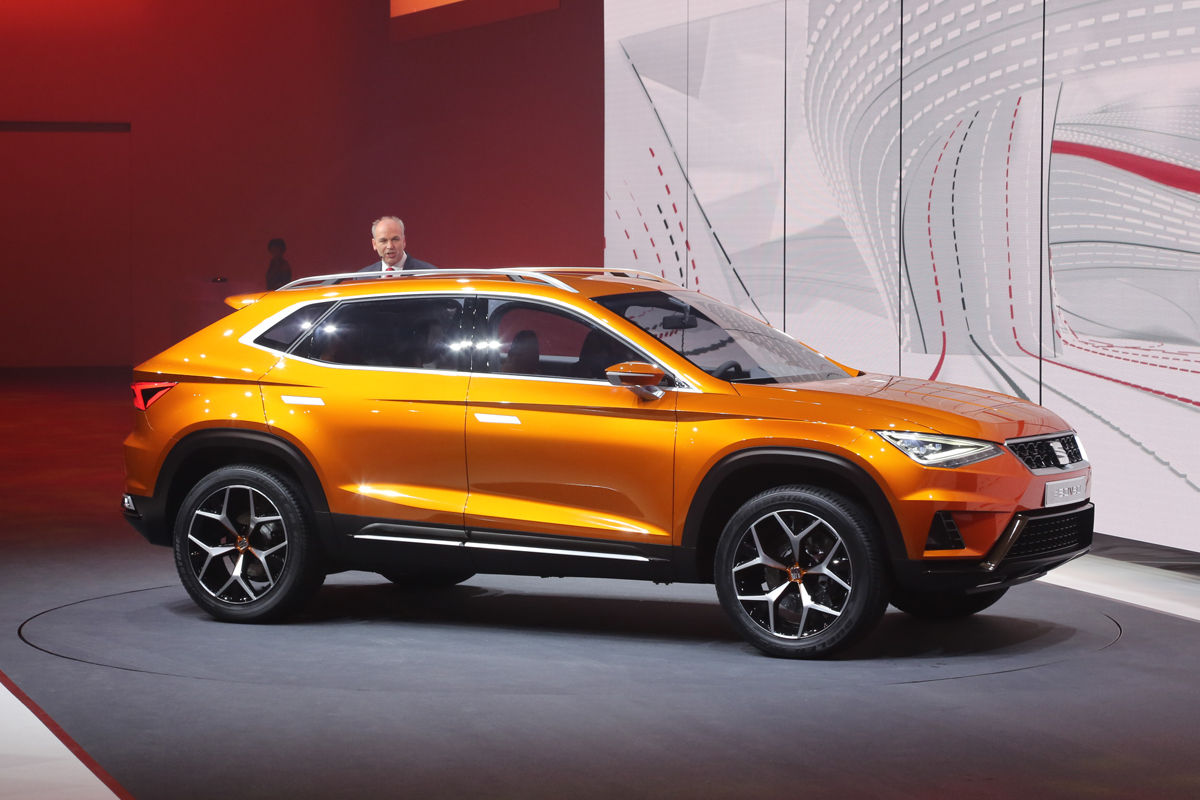
Volkswagen’s Seat brand is mulling a family of SUVs as it seeks to boost volume and become sustainably profitable. Seat CEO Juergen Stackmann said the brand could offer different designs as well as different sizes of SUVs, pointing to a possible coupe-styled crossover.
The brand’s first SUV will go on sale next year. The compact model will be based on VW Group’s MQB architecture that will also underpin the new-generation VW Tiguan. The Seat SUV will be built by sister brand Skoda in Kvasiny, Czech Republic, alongside a Skoda sibling.

Seat unveiled the 20V20 concept at the Geneva auto show last month previewing a larger SUV that could go on sale by 2020.
“We are starting with the core model next year, but also other expressions are absolutely possible,” Stackmann told Automotive News Europe. “We believe the crossover and SUV market are the perfect turf for the brand to create its new profile.”
At 4660mm in length, the 20V20 is close in size to the Audi Q5. The Seat concept also was designed to accommodate different drivetrains, including a plug-in hybrid, along with having four-wheel drive and room to accommodate five people comfortably, Seat said.
Currently, Seat relies on smaller cars -- the Ibiza subcompact, Leon compact and Mii minicar -- for the bulk of its sales. The brand sees the fast-growing, more profitable SUV/crossover market as a way to boost volume and end years of financial losses.
Stackmann said that the 2020 time frame for the larger SUV is because Seat customers currently would not accept such a large vehicle. “In order to create a customer group that will put Seat on the shopping list for this size of car we need time to develop the brand. If we get there earlier we will,” he said.
Increased sales of the Leon have shown customers are willing to buy larger cars from the brand, Stackmann said.

Helped by the success of the new Leon, Seat swung to a 33 million euro operating profit in the first quarter from a 36 million loss in the same quarter last year. The result was Seat's first quarterly profit in seven years.
Seat's vehicle sales grew by 10 percent to 102,700 vehicles, a brand record for the quarter. The Leon showed the highest sales growth with a 14.6 percent increase to 39,700 units, Seat said in a statement on April 16. The Leon is catching up with the Seat's best-selling car, the Ibiza subcompact, whose volume grew by 9.5 percent to 41,900 in the first quarter.
German media reports have said that Seat is also mulling a subcompact SUV that would rival models such as the Nissan Juke.
Nick Gibbs

Sunday, 8 February 2015

Skoda to extend production number for Fabia and Rapid amid growth in both models.

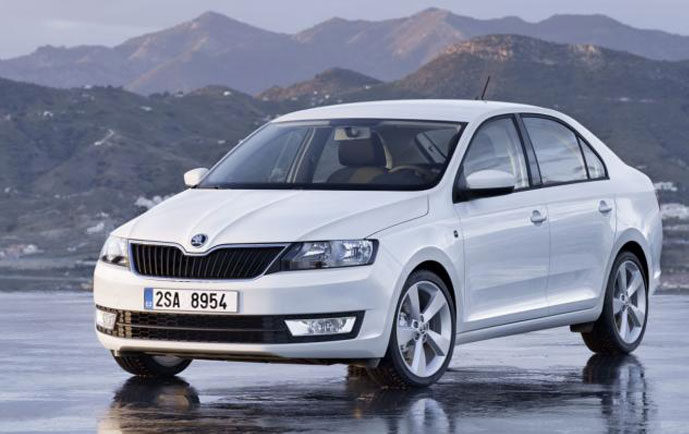
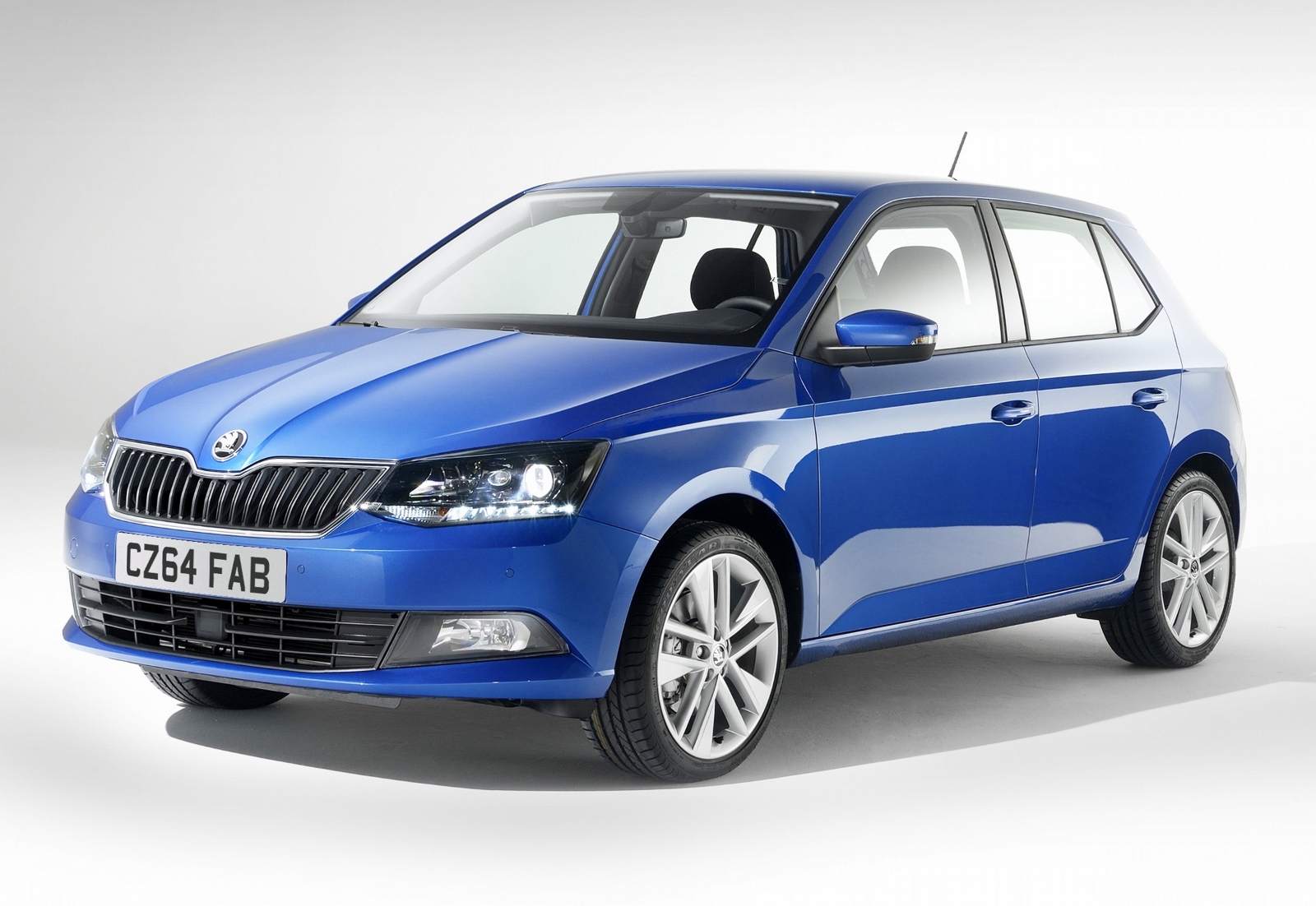
ŠKODA’s new models are doing exceptionally well. In 2014 the Czech carmaker sold more than one million vehicles for the first time in a single year.  Accordingly, ŠKODA production is now shifting up a gear: At the main plant in Mladá Boleslav, ŠKODA has recently upped the manufacturing capacities for the new ŠKODA Fabia and Fabia Combi (estate), as well as the ŠKODA Rapid Spaceback.  Up to 1200 of these models now run off the MBII production line every day in three shifts. Previously, a maximum of 800 vehicles could be produced on a daily basis in two shifts. ŠKODA has created an additional 800 new jobs to staff the third shift.


​“The young ŠKODA model range is doing exceptionally well on the market,” says ŠKODA Michael Oeljeklaus, ŠKODA Production Director. “Our production is at full throttle – especially at our main plant in Mladá Boleslav. Over the coming years, ŠKODA plans to increase sales to at least 1.5 million per year. To this end, we will continue to invest in our domestic and international production capacities.” 


The current expansion in production capacities at the MBII line in Mladá Boleslav were necessary due to the growing success of the Fabia and Rapid Spaceback. ŠKODA had begun expanding and technologically upgrading key areas of the Fabia production halls in Mladá Boleslav as early as summer 2014.   This was when the new, ultra-modern facility was finished, enabling the new assistance systems to be configured. The paint shop was also extended and partially redeveloped. 

ŠKODA operates two production lines in Mladá Boleslav: The Fabia, Fabia Combi (estate) and Rapid Spaceback are manufactured on the MBII line; the Octavia, Octavia Combi (estate) and Rapid saloon run off the other line.  The production capacity currently stands at 1200 cars per day.

By expanding their production capacities at the main plant in Mladá Boleslav, the Czech manufacturer is once again demonstrating their importance as an employer and major industrial investor in the Czech Republic. Since 1991, ŠKODA has invested more than 280 billion Czech Crowns into the manufacturing processes and factories at the locations of Mladá Boleslav, Kvasiny and Vrchlabí. In 2014, the respective investments totalled 362 million euros. Last autumn, ŠKODA and the Volkswagen Group invested 45 million euros alone in the newly opened ŠKODA Engine Centre – one of the largest industrial investments of recent years in the Czech Republic.


The Fabia’s market launch was extremely successful. The small car is setting standards in its segment, and has won a number of international awards; in the Czech Republic, the new ŠKODA Fabia was voted ‘Car of the year 2015’. In the UK, the model received the renowned title ‘What Car? Car of the Year 2015’. The ŠKODA Rapid Spaceback has also taken the consumer market by storm.  In 2014 sales of the Rapid Spaceback increased nine fold over the previous year, with a total of 72,000 sold around the world (2013: 8000). The brand’s first compact hatchback model offers fresh-dynamic designs, lots of room, a host of ‘Simply Clever’ ideas, the highest safety, low fuel consumption and is great value for money.

Saturday, 7 June 2014

Skoda to produce new SUV for SEAT

Volkswagen Group will build a Seat SUV at a plant run by Czech brand Skoda, using lower labor costs to accelerate a turnaround at its only unprofitable division.
"There was capacity available in Kvasiny [Skoda's Czech plant] and we're glad we can use it. It's a very cost-efficient factory," Jurgen Stackmann, Seat's CEO, said.
The decision confirms a report from Automotive News Europe sister publication Automobilwoche in March that quoted company sources as saying the SUV would be built in Kvasiny.
Seat plans to add the compact SUV to its lineup in 2016 to tap growth in a market segment the division estimates has increased more than 40 percent in the last five years in Europe. "It's an extremely important step for us to be present in the compact SUV segment," Stackmann said.
With the SUV design complete, the unit is now focusing on engineering preparations for production in the north-central Czech town of Kvasiny, where Skoda builds its Yeti compact SUV.

"Next to labor costs, capacity utilization is a significant factor," Daniel Schwarz, an analyst at Commerzbank in Frankfurt, said. "Volkswagen's modular production technology gives it the flexibility to optimize capacity use more than at other carmakers. They can produce Audi models at Seat factories and now, it seems, Seat vehicles at Skoda."
Expanding sales across Europe and abroad is vital to restoring Seat's earnings. The carmaker, which hasn't been profitable since 2007, narrowed its annual loss to 152 million euros ($207 million) in 2013 from 156 million euros a year earlier as deliveries rose 11 percent to 355,000 cars, driven by demand in Germany and the UK.
Hourly costs
The Kvasiny plant also builds Skoda's Superb sedan and station wagon, and the Roomster minivan. Labor costs in the Czech auto industry were 11.50 euros an hour in 2013, according to data from German industry association VDA. That compares with 26.66 euros in Spain and 48.40 euros in Germany.
A Skoda spokesman declined to comment on the number of jobs to be added in Kvasiny or provide an investment figure related to the Seat SUV.

The SUV is expected to be based on VW's MQB platform that underpins the Seat Leon, along with other group models such as the VW Golf, Audi A3 and Skoda Octavia.
Revamped lineup
Stackmann, who succeeded James Muir as head of Seat in May 2013, is betting on the revamped compact Leon vehicle line to increase sales further in 2014 and establish a second pillar for the marque in addition to the Ibiza subcompact. Seat added a Leon station wagon variant, dubbed the ST, at the end of 2013, and is rolling out a sporty Cupra version this quarter.
"We just added a third shift for production of the Leon family to keep up with rising demand," Stackmann said. "Customer response for the ST is exceeding expectations."
Seat also makes the Toledo sedan, the Altea compact minivan and the larger Alhambra minivan, and it's considering additional vehicles.
"It's important that our sales growth be sustainable," Stackmann said. "We're looking at both options -- developing more variants of existing models and bringing out new ones -- to broaden Seat's product line further."
The division is weighing whether to begin producing cars in China, the world's largest car market, in an expansion outside Europe. Seat is also planning to add to its presence in countries including Mexico, Turkey and Algeria to reduce dependence on western Europe, its main sales region. Even so, increasing Seat's presence in major European markets such as Germany, the UK and Spain will remain key for Seat's turnaround efforts.
The division estimates Europe's current SUV market at about 1 million vehicles annually.
"The brand is on a very good path, but a lot more hard work will be needed," Stackmann said.
Parent Volkswagen reiterated its support for Seat last month, dismissing doubts over the brand's future. "Spain and Seat are and remain cornerstones of our global growth strategy," VW CEO Martin Winterkorn said in a statement on May 22.

REPORT HERE