Purpose

I will try my best to provide detailed info on various cars and what is like to live with them, I have already produced a few for Jaguar-car-forums, I will do my best to be unbiased, but it will be hard for some cars. I will re-produce press releases and copy from other motoring news.
Showing posts with label Larry P. Vellequette. Show all posts

Sunday, 17 July 2016

In its 75-year history, Jeep never has been in better shape than it is right now.

In its 75-year history, Jeep never has been in better shape than it is right now.
The reason? Current owner Fiat Chrysler Automobiles has accomplished what a succession of previous owners only dreamed of: truly globalizing one of the world's most storied automotive brands.
Worldwide, Jeep's deliveries in 2015 topped 1.2 million vehicles, its fourth consecutive record year for global production and sales.

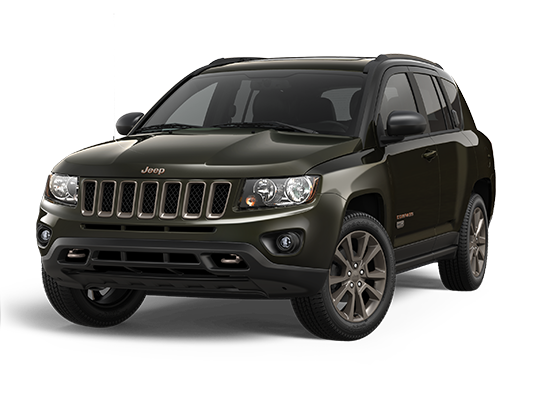
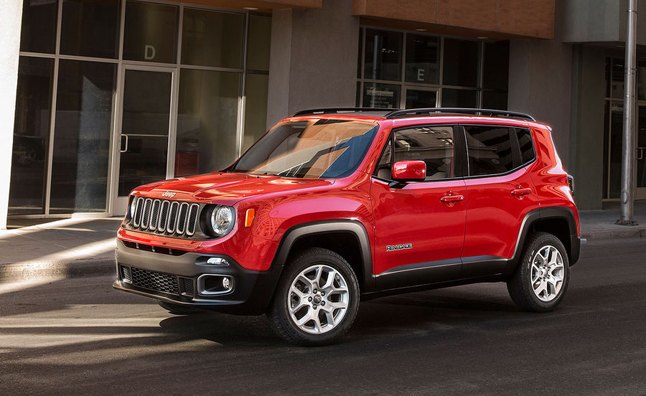
Jeep Renegades are now built in Europe (Italy), South America (Brazil) and Asia (China) for sale in those regional markets. By the end of the year, production of the replacement for the Jeep Compass will begin in Brazil and China, as well as Mexico. Jeep-branded vehicles also will soon begin rolling into India, with local production slated to begin in 2017.
Meanwhile, sales in Jeep's largest and most profitable market, the United States, are up 17 percent through June over record 2015 sales.
Jeep's lineup also is expanding. Brand head Mike Manley said last month that luxury full-size SUVs under the storied Wagoneer and Grand Wagoneer names will return with the development of a redesigned Jeep Grand Cherokee in 2019. On the other end of the size spectrum, a micro-segment Jeep, smaller than the Renegade, is under strong consideration, primarily for markets outside North America. 
Meanwhile, FCA is expanding production capacity of its profit-rich Wrangler by at least 50 percent, allowing the brand to fulfill what it sees as unmet domestic and international demand. The added capacity also will allow for the return of a pickup to the Jeep lineup for the first time since 1996. 
CEO Sergio Marchionne says Jeep is the engine that keeps his company going, no matter how tough the economic circumstances become. 
"One of the things that we've always faced in the United States in the production of Jeeps is to make this unfortunate Sophie's Choice about whether we sell in the U.S. or whether we sell overseas," Marchionne explained this year. "In the last probably three or four years especially, we've been forced to make choices about which markets get allocated product. 
"Even if there were to be a contraction of the U.S. market, there is unexplored potential in terms of outside U.S. markets, especially where we have not established local production," he said. 
"Anything which relates to either a Cherokee or a Grand Cherokee and eventually a Wagoneer or Wrangler will have additional means of expression in international markets."
Larry P. Vellequette
Automotive News Europe

Saturday, 16 April 2016

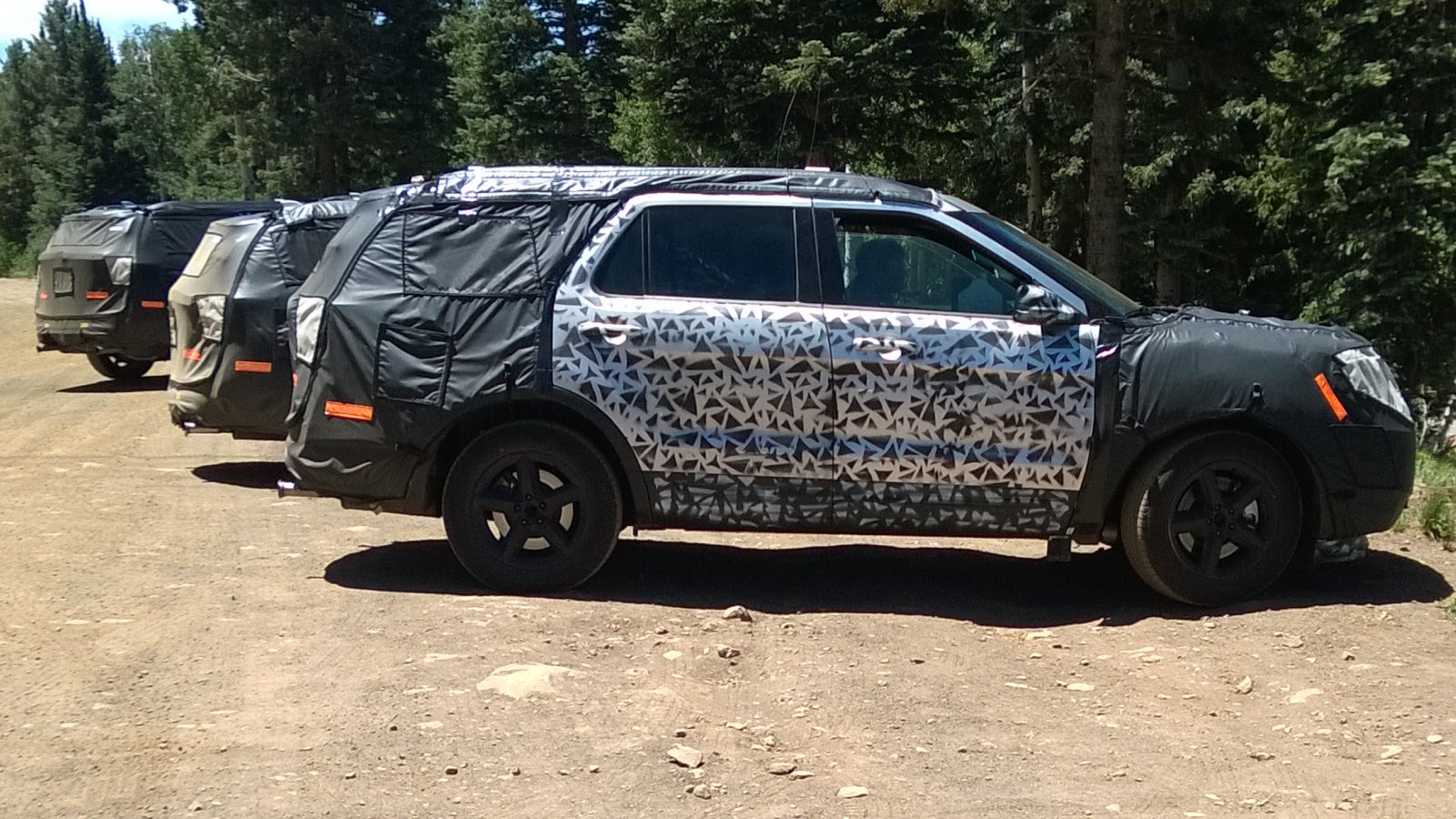
Spy shots of a heavily disguised Alfa Romeo Stelvio Crossover have been spied undergoing testing.

Spy photographers in Europe have caught glimpses of the Alfa Romeo Stelvio, a crossover being developed off a new Giorgio platform that features prominently in the brand’s plan for North America.
Details of the all-wheel-drive crossover’s design are limited, but it is expected to compete with the BMW X3 and the Audi Q5 when it arrives in North America in 2017.
Pictures courtesy of KGP Spy Photography
The Stelvio is the second new Alfa Romeo vehicle to result from Fiat Chrysler’s 5 billion euro investment to resurrect the Italian performance brand.
In 2015, Alfa introduced the Giulia sedan, which shares the same platform with the Stelvio. The Giulia went into production in Italy in March, but output earmarked for North America isn’t scheduled to begin until at least July.
FCA’s plans to resurrect Alfa Romeo and increase its annual sales to 400,000 vehicles globally by 2018 were amended last fall by CEO Sergio Marchionne because of a dramatic slowdown in luxury sales in China.
Marchionne said Alfa can still hit the sales goal. However, a larger share of the sales will have to come from Europe and North America than previously planned.
Larry P. Vellequette

Monday, 21 March 2016

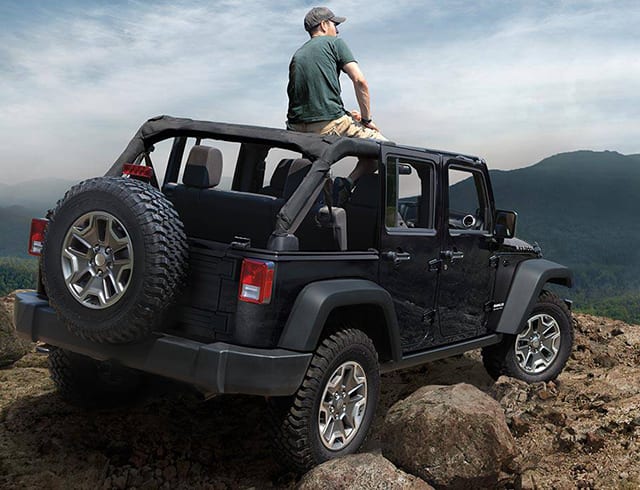
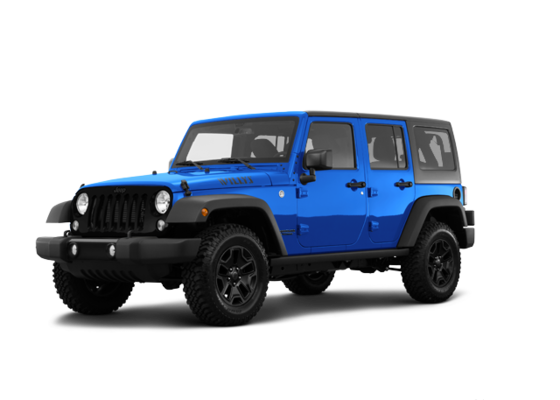
The next generation Jeep Wrangler is slated to be produced alongside the current model for some time.

Fiat Chrysler's plan to reconfigure its Toledo, Ohio, assembly complex next year to build the next-generation Jeep Wrangler will boost production of the popular SUV well beyond its current level, according to internal planning documents seen by Automotive News.
The new assembly plant for the Wrangler -- the Toledo factory that currently builds the Jeep Cherokee -- will be outfitted to produce about 350,000 Wranglers annually. That is roughly 50 percent more Wranglers than can now be produced.
And the company plans to continue making the current Wrangler into the first quarter of 2018, about six months after production of the new one is set to begin.
Together, the old and new Wrangler assembly lines will crank out Wranglers at the fastest pace in the off-roader's 75-year history.
Jeep brand head Mike Manley said this month that he wants to keep the balance between Wrangler supply and demand "at the right place, and to me that is supply just behind demand."
Toledo is the only plant in the world producing the Wrangler. In 2015, FCA chose to convert the Cherokee unibody plant in Toledo to body-on-frame production for the new Wrangler instead of adding capacity to the current line.
According to suppliers and planning documents, FCA intends for Toledo to continue building the unibody Cherokee until March 2017, when Cherokee production will move to Belvidere, Ill. Toledo's unibody plant will then go down for its conversion to body-on-frame production, expected to take about six months, while production of the current-generation Wrangler continues.
The current Wrangler -- likely to be marketed as the Wrangler Classic -- is scheduled to remain in production through March 2018.
A Wrangler-based pickup and a diesel-powered Wrangler, both expected to debut in 2018, are possible because of the extra production volume being added.
Manley declined to speculate on the level of global sales for the SUV when the capacity is added. But he said there is unmet demand today in North America, Asia-Pacific, Europe and Latin America.
"We've seen some weakness coming out of Asia, for the obvious reasons of where China is today," Manley said. "But we still see a strong order bank from the U.S., more demand from Europe, and still some residual demand from Asia that we can't fill."
Most Wrangler sales now are in North America, but it remains popular globally, Manley said.
"Wrangler is in demand in Europe because of what it stands for," he said.
"It is the incarnation of the most iconic American brand in the world, and the same thing [is true] in China, so demand continues to grow."
Larry P. Vellequette

Tuesday, 26 May 2015

New Jeep Wrangler will not go down the all Aluminium route like the Ford F-Series Pick-Up.

The next-generation Jeep Wrangler won't follow the 2015 Ford F-150's lead with an aluminum body. Instead, the off-roader will keep its steel body structure but add aluminum doors, fenders and other parts after Fiat Chrysler CEO Sergio Marchionne said last week that the costs of the switch outweigh the benefits.
"We've run the numbers and we've simulated mileage and the impact. Because of the difference in cost not just of the material but the actual assembly process, I think we can do almost as well without doing it all aluminum," Marchionne said.

It's a stark reversal for the man who acknowledged a year ago that there was no better vehicle in FCA's lineup to make from aluminum than the Wrangler. Internal sources with direct knowledge had told Automotive News that the next-generation Wrangler would have an aluminum body.
Now, instead of following Ford Motor Co.'s expensive switch from steel for the F-150, Wrangler will follow General Motors' lead of using aluminum strategically to minimize costs.
GM decided against an aluminum body for the latest redesign of the Chevrolet Silverado and GMC Sierra pickups last year. Ford spent $359 million and lost about two months of production at one plant converting its pickup plant in Dearborn, Mich., to aluminum.
The development is likely great news for Toledo, Ohio, which has been vying to keep the Wrangler in its ancestral home. A steel body means that the Wrangler plant won't have to be gutted to switch to aluminum body construction.
The redesigned Wrangler, due in 2017, still has to lose weight to get better fuel economy than its current rating of up to 21 mpg highway. It will do so by "hanging" lightweight aluminum doors and other panels on a steel structure, Marchionne said.
"It may go beyond hanging, but it's not phenomenally off hanging," Marchionne explained about the latest plans for the 2018 Wrangler.
Even if the Toledo plant can be used without massive retooling, capacity constraints still pose a potential problem. The FCA CEO said he still expects to make a final decision about expanding Wrangler production in Toledo within two months.
The Wrangler's 2014 sales reached a record 175,328 in the U.S., its largest market, and through April are up another 22 percent.
Toledo and Ohio have offered FCA an incentive package to expand Wrangler production locally. Toledo has acquired a large tract of land west of the plant for possible expansion of Wrangler production.
Marchionne's Wrangler reversal could be seen as a solid save for the steel industry.
Ford's sales success with the aluminum 2015 F-150 masked the fact that the changeover, which shed more than 700 pounds on some models with an aluminum body and inspired other structural changes, produced solid but modest improvements in fuel economy.
The 2015 F-150 achieves up to 26 mpg on the highway vs. a maximum highway rating of 23 for the 2014 model.
But Marchionne's main concern may be the production disruption and expense of switching the Wrangler plant to aluminum production.
Unlike Ford, which has two plants producing the F-150, FCA has only one plant in the world producing the Wrangler: Toledo Assembly complex.
Ford continued operating its Kansas City, Mo., plant while it switched its Dearborn factory to aluminum to keep the supply of F-150s flowing to dealers -- and profits flowing to its bottom line.
For FCA, shutting down Wrangler production would mean an immediate shortage and lost sales of one of its most profitable vehicles.
Also, Ford at its two F-150 plants replaced steel welding equipment with tools that assemble the pickup with rivets and adhesive.
But while Marchionne said that the next Wrangler's body won't be aluminum, he implied last week that the coming Jeep Grand Wagoneer's would be.
He said a different cost and benefit calculation regarding aluminum will apply to the full-size Grand Wagoneer.
The Grand Wagoneer will be a unibody SUV with three rows of seats and will share a platform and factory with the two-row Grand Cherokee. The Grand Wagoneer is due to arrive in 2018.

Marchionne said, however, that the Grand Wagoneer's development might mean a one-year delay in the redesign of the Grand Cherokee, which had been due in 2017.
"I think that development [of the Grand Wagoneer] needs to coincide with a complete relook at the Grand Cherokee architecture and effectively jointly develop them. And if there is a delay [in the Grand Cherokee], it's due to the joining of these two programs into something that makes sense," Marchionne said.
The Grand Wagoneer, he said, "needs to happen. There's a piece of the market that I think we have not accessed because of the nature of that [current Grand Cherokee] architecture and what it can offer," the CEO said. "I think we need to go there with the next version."
Larry P. Vellequette

Sunday, 10 May 2015

USA - FCA worker unfortunately dies whilst performing regular preventative maintenance.

An employee at Fiat Chrysler’s Jefferson North Assembly plant died accidentally this morning after being crushed. The UAW identified the victim as Donald Megge, 53, of Sterling Heights, Mich. 
The union said Megge, a millwright and wastewater operator, died while performing regular preventative maintenance during a shift that started at 5:30 a.m. He was working alone and was discovered at about 6:30 a.m.
An FCA spokeswoman said the incident occurred in the on-site wastewater treatment plant that services the 3-million-square-foot plant where the Jeep Grand Cherokee and Dodge Durango are assembled. 

The treatment plant is in a separate building from the assembly operations and production was not impacted.

"FCA US is deeply saddened by the tragic accident that took the life of an 18-year employee at Jefferson North this morning and our heartfelt condolences go out to his family," the company said in a statement.  
"The safety of our employees is our first priority, and we will continue to work in cooperation with the authorities, including (Michigan job safety regulators), to investigate the circumstances surrounding this terrible tragedy."
Jefferson North, built in 1991, employs more than 4,600 people, including about 4,400 hourly workers.
“Our heartfelt sympathy is extended to the family, friends and all of those who worked with UAW member Donald Megge,” Norwood Jewell, UAW vice president for the union’s FCA department, said in a written statement.
Jefferson North is the same assembly plant where an autoworker stabbed one of his co-workers to death in a dispute over a woman in September 2012. The alleged assailant fled and took his own life nearby.
Larry P. Vellequette