Purpose

I will try my best to provide detailed info on various cars and what is like to live with them, I have already produced a few for Jaguar-car-forums, I will do my best to be unbiased, but it will be hard for some cars. I will re-produce press releases and copy from other motoring news.
Showing posts with label Three Generations. Show all posts

Thursday, 8 December 2016

MINI Celebrates as it has hit the three million production mark at Plant Oxford.

  • MINI Plant Oxford has built three million MINIs since 2001
  • Three millionth car is a MINI John Cooper Works Clubman
  • 80 per cent of Oxford MINIs built for export around the world
  • Milestone comes in BMW’s Centenary year and 15th year of MINI production
Plant Oxford has celebrated the three millionth MINI to roll off the assembly line since production began back in 2001.
The three millionth Oxford-built MINI is a John Cooper Works Clubman - the first model to combine the latest John Cooper Works performance enhancements and a new ALL4 all-wheel drive system.

From around 300 cars a day in 2001 to around 1,000 built to order cars today, the 4,500 strong workforce at Oxford produce one new MINI almost every minute. Around 80 per cent of MINIs built here are exported to more than 110 markets across the world.
On Thursday, 1 December, the plant was visited by Oliver Zipse, member of the Board of Management of BMW AG, responsible for Production, who joined the team in Oxford to celebrate this major UK manufacturing milestone.
Oliver Zipse said: “It’s great to be back in Oxford to mark this fantastic MINI production milestone. Since we began building MINIs back in 2001 the car has proved to be hugely popular with customers right around the world. The passion and commitment that everyone here at the plant has for building a high-quality product is central to that success. The three millionth Oxford-built MINI is a remarkable achievement. Congratulations to everyone who has played their part in making this celebration possible.”
Frank Bachmann, Managing Director of Plant Oxford, said: “Hitting this milestone is a fantastic achievement for everyone on the team here at Oxford. Building the volume of high-quality cars that we have over the past 15 years is something everyone working here can be very proud of.”
Sales of MINI, both in the UK and internationally, have gone from strength to strength over the last 15 years. In its first year nearly 40,000 MINIs were sold worldwide. By 2015 this number had risen to nearly 340,000.
Three UK plants have a part to play in its production - Hams Hall near Birmingham makes engines, Swindon produces body pressings and sub-assemblies for MINI, and this all comes together at Oxford with body shell production, paint and final assembly. Together these plants have helped to generate and sustain employment for thousands of people directly and indirectly though the wider supply chain and retailers.
Since 2000 £1.75 billion has been invested by BMW Group at the three plants and at Oxford this has included a state-of-the-art paintshop, a high-technology body building facility, a new final assembly area, a new logistics centre, Quality and Engineering Centre and the MINIcademy, where the plant’s apprentices are trained.
Oxford, the heart and home of MINI production, has a rich motor manufacturing history. It has been building cars since 1913 when the great designer, entrepreneur and philanthropist William Morris (later Lord Nuffield), produced its first car, a “Bullnose” Morris, near today’s present state-of-the-art MINI production facility.
The classic Mini, designed by Sir Alec Issigonis and launched in 1959, revolutionised the automotive world and was produced at Oxford until 1968 with a peak output of 94,889 cars during 1966-7.
Models built at Oxford today include three and five door MINI Hatch, the MINI Clubman, including the Plant’s first all-wheel drive ALL4 model – and the high-performance MINI John Cooper Works Hatch.

Monday, 31 October 2016

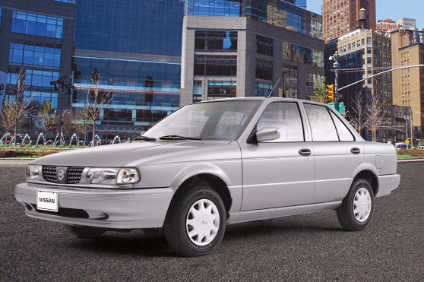
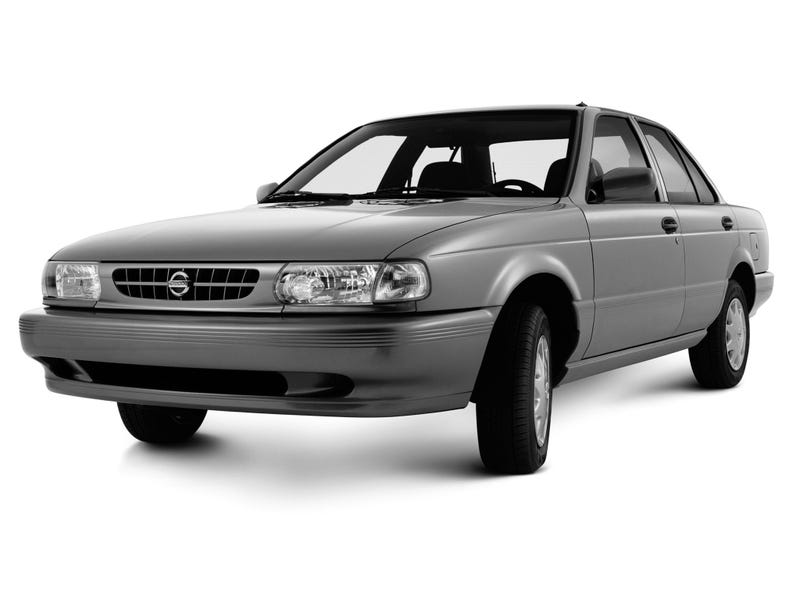
MEXICO - The Tsuru sedan that has sold 2.4 million units will end production with a special commemorative Edition.
  • Popular Nissan small car sold more than two million units in Mexico since 1984
Nissan confirmed today the end of production of the Nissan Tsuru in Mexico by May 2017. The popular Tsuru, with more than 2.4 million sales to date, has provided accessible, economical and dependable mobility for drivers across Mexico and other markets for more than three decades.
Tsuru has been an important product for Nissan to establish itself as one of the top investors and employers in Mexico. 
The company expects to continue its Mexican sales and production leadership despite ceasing production of the iconic sedan.
 "In the Mexican automotive industry, Tsuru is one of the top sales leaders," said Mayra Gonzalez, president and general director, Nissan Mexicana. "The majority of Mexicans have some history that binds us to the Nissan Tsuru. The sedan, which has a huge following, has provided families in Mexico high-quality, reliable and durable transportation since 1984."
Nissan also announced today a special commemorative version of the Nissan Tsuru will be sold beginning March 2017, with only 1,000 units available. The company will also continue to support Tsuru customers by offering service and parts for the repair and maintenance of its vehicles for the foreseeable future. 
Nissan confirmed that although no direct substitute for the Tsuru is planned, the company will direct customers toward models like the Nissan Versa, the industry's sales leader, as well as other models like Tiida, through their different available versions.
J.D. Power awarded Nissan Tsuru the highest level of customer satisfaction in its 2013 and 2014 Mexican Vehicle Ownership Satisfaction Study (MVOSS) that evaluated customer satisfaction in the subcompact category.
Nissan Mexico's overall production volume will not be affected by the Tsuru announcement due to production increases at the company's two Aguascalientes plants, including the recently introduced Nissan Kicks.
Additionally, the new Daimler and the Renault-Nissan Alliance joint-venture manufacturing complex, COMPAS (Cooperation Manufacturing Plant Aguascalientes), will start production in late 2017. The COMPAS plant will allow Nissan to surpass the 1 million manufacturing benchmark in Mexico before the end of the decade and, when it's at full capacity, the company will add an additional 3,600 employees to its 15,000 team members in Mexico.

Monday, 24 October 2016

Mitsubishi celebrates selling 1.5 million hybrid Outlanders over the last 15 years, with a significant portion in the UK.

  • Mitsubishi Outlander PHEV registrations have topped 25,000 accounting for half of all plug-in hybrids on the road in the UK
Mitsubishi Motors Corporation (MMC) is celebrating 15 years of its successful Mitsubishi Outlander crossover. Originally launched in the US in 2001, and in Europe in 2003, the Mitsubishi Outlander has accumulated 1.5 million sales over three generations, with each car representing a significant milestone on the automotive landscape.

The 2001 Mitsubishi Outlander was previewed by the “Active Sports Crossover” concept vehicle at the 2000 Detroit Motor Show, which introduced the term “crossover” for the first time to describe the emerging genre of vehicle, while the second generation vehicle employed MMC’s “Project Global” C/D flexible global architecture which underpinned numerous other vehicles in co-operation with other manufacturers.
Today, the third generation is renowned for its highly successful PHEV variant – the best-selling plug-in hybrid vehicle worldwide. The UK is the leading market in Europe for the third generation Outlander, which has seen the introduction of MMC’s new visual identity, dubbed “Dynamic Shield”. The new look combines protection and performance and informs the identity of forthcoming models across the Mitsubishi range.
The award-winning Mitsubishi Outlander PHEV has effectively defined the emergence of the UK's plug-in hybrid sector. In 2013, the year before its arrival, the total plug-in hybrid market across all marques stood at just 989, but Mitsubishi has sold more than 25,000 Outlander PHEVs in the UK since the pioneering 4x4’s launch here in 2014, making it the nation’s favourite plug-in vehicle.
The Outlander is the first of a new product offensive from Mitsubishi which will see SUVs take centre stage with the availability of either plug-in hybrid electric or full electric variants, distinguished by a strong and expressive design language.

Sunday, 11 September 2016

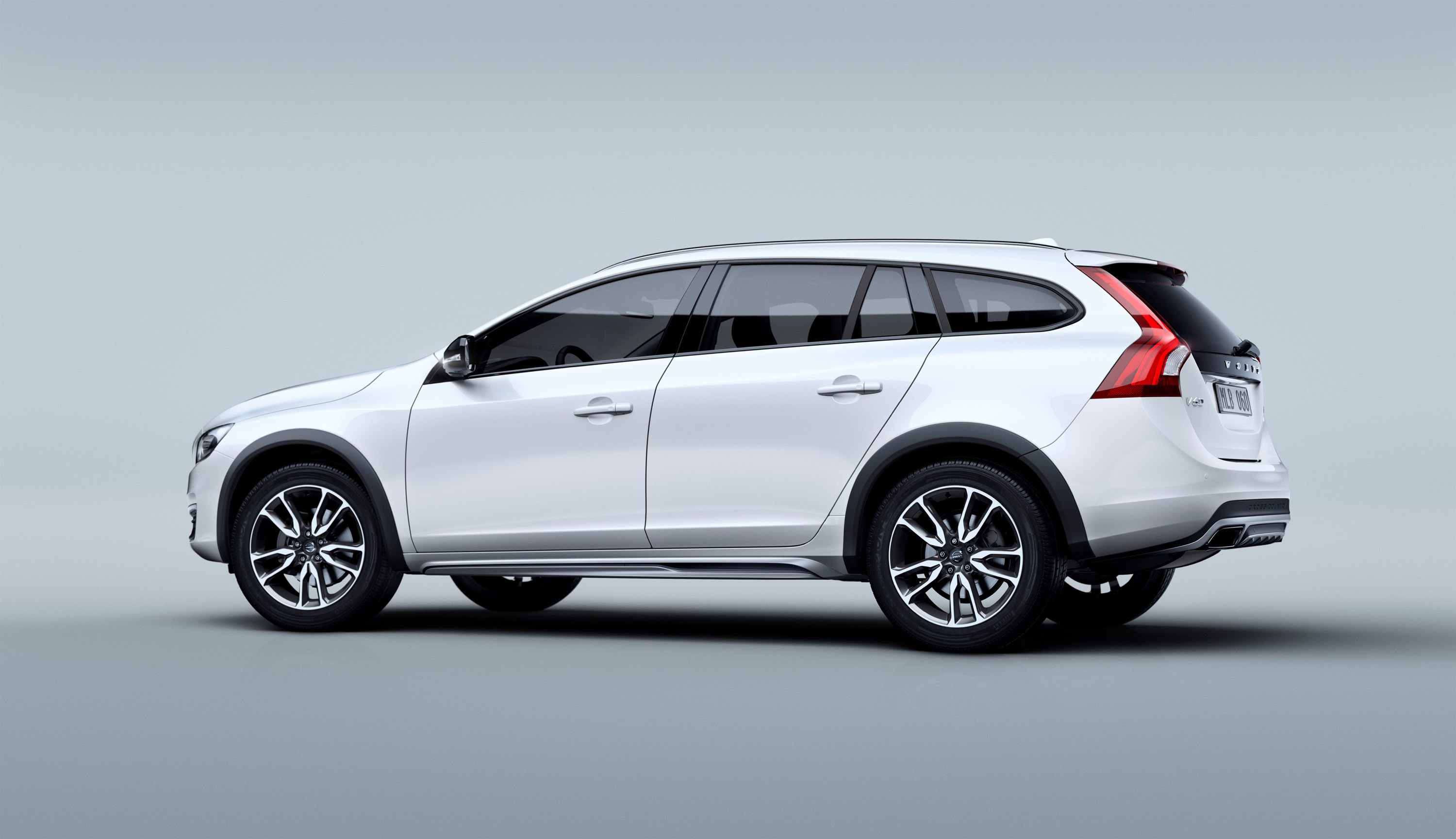
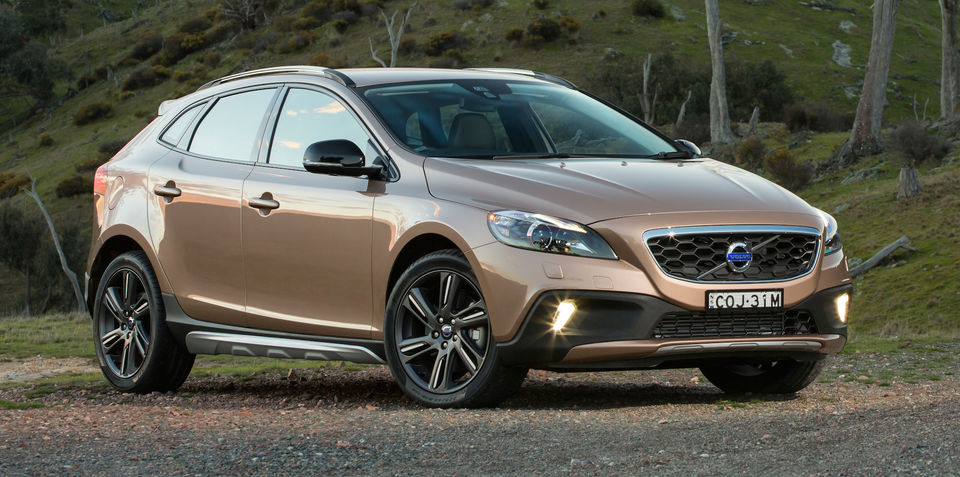
Volvo, 20 years ago launched the V70 CC, today that CC Range has been expanded to more models and bigger sales.

Volvo Cars’ instrumental role in defining the adventurous Cross Country segment is widely acknowledged. With the imminent reveal of the new V90 Cross Country, the Swedish car maker is set to cement its leading role as the most capable and comfortable premium all-roader on offer and complete its 90 series line-up.

“Cross Country has become the true expression of a Volvo car in many people’s eyes. It was a winning concept from the start, perfect for the tough climate and road conditions that we experience in Sweden,” said HÃ¥kan Samuelsson, President & CEO, Volvo Car Group.
Developed in 1996, the first Cross Country estate combined functional flexibility and rugged capability. Today, 20 years later, the Cross Country segment is a familiar sight across the premium car market, providing a capable yet comfortable driving experience.
Extreme climate capability
Designed to cope with the demanding requirements of an extreme Scandinavian climate, Cross Country models perform in all sorts of road conditions – from muddy tracks and knee-deep snow to long-distance motorway driving. 
Proving a popular choice with horse and boat owners thanks to its high ground clearance, pulling power and responsive All-Wheel Drive, Cross Country has cemented its position as a premium mainstay and a true all-weather alternative to the SUV.
“We were very careful from the very beginning to ensure that the Cross Country concept was not just an exercise in rugged styling. 
We placed high demands on real-world capability, and as we developed the segment, we added the comfort and convenience elements that Volvo drivers have come to expect,” said Dr Peter Mertens, Senior Vice President Research & Development at Volvo Car Group.
The eagerly awaited V90 Cross Country will be revealed in mid-September.
First generation, 1997 – 2000
Developed as a capable alternative to the SUV and front-wheel-drive cars, Volvo Cars’ first Cross Country – the V70 XC – grew in popularity as old-school SUVs began to morph into city jeeps. Cross Country offered a new, adventurous take on motoring that delivered a competent mix of capability, functionality and comfort. 
The V70 XC was an instant success, especially in the North American market.
Second generation, 2000 – 2007
In 2000, the second-generation V70 XC came with much bolder styling and higher ground clearance.
When Volvo’s first SUV – the XC90 – came in 2002, the V70 XC received a newer, more modern All-Wheel Drive system and changed its name to XC70 in order to align to its bigger brother.
Third generation, 2007 – 2016
The third-generation Volvo Cross Country arrived in 2007 with added elegance and luxury. The XC70 continued to be a North American love affair, accounting for almost half of the total volume produced.
In 2014, the XC70 gained recognition around the globe as Zlatan Ibrahimović’s car thanks to a Volvo Cars commercial featuring the Swedish footballer. Such was the impact that sales of the model grew markedly during its last years of production.

Saturday, 10 September 2016

5,000,000, 20 Years, three generations, two body styles, infinite combinations, thats the Octavia from Skoda Auto.

  • ​›First Å KODA OCTAVIA rolled off production line at newly constructed plant in Mladá Boleslav two decades ago 
  • ›Modular vehicle design, advanced technology, high efficiency and ergonomics in OCTAVIA production 
  • ›Production figures rose by more than a third within a year 
  • ›Å KODA OCTAVIA one of most successful model series in automotive world  
  • ›Undisputed bestseller in traditional brand’s 121-year history with more than five million units sold

​20 years ago, on 3 September 1996, former Czech President Vaclav Havel gave the starting signal for the production of the Å KODA OCTAVIA in the newly opened part of the plant at the company's headquarters. 

This also marked the beginning of a unique success story: Over the following two decades, the Å KODA OCTAVIA became a worldwide bestseller and is still the best selling model of the brand from Mladá Boleslav. The popular compact car paved the way for Å KODA’s success.


​In February 1995 in Mladá Boleslav, the foundation stone for the new production line was laid, on which the first Å KODA OCTAVIAs would be produced around 18 months later. 

For the new series Å KODA built a modern production line in a 32,000-square-meter hall. In addition, a total of 2,500 square meters of office space and 3,000 square meters of social areas were created. In March 1996, the new paint shop was completed, where up to 1,800 bodies of model series Å KODA FELICIA and Å KODA OCTAVIA would be painted every day.


On 3 September 1996, former President of the Czech Republic Václav Havel inaugurated the new plant and also officially gave the go-ahead for the series production of the Å KODA OCTAVIA. “The plant is beautiful, modern, really pretty. It would be great if all factories looked like this.” – Havel’s words of praise at the opening ceremony.

The development of the completely new OCTAVIA model series began in 1992, approximately one year after the traditional Czech brand joined the Volkswagen Group. The Å KODA OCTAVIA was based on a Group platform which was completely new at the time. 

The robust body structure, which had been developed using the latest CAD (Computer Aided Design) technology, provided exemplary active and passive safety in combination with front airbags for driver and passenger. In addition, this was the first time that Å KODA had offered the then new side airbags for the OCTAVIA.

With the clever liftback solution, the new compact featured an especially practical highlight: Thanks to the large tailgate of the hatchback model, customers benefited from excellent access to the 528-litre boot, which could be extended to as much as 1,328 litres by folding the rear seats down.

In 1996 – the first sales year – Å KODA OCTAVIA customers could choose from two four-cylinder petrol engines or a turbodiesel drivetrain. In May 1998, the Å KODA OCTAVIA COMBI extended the model range; from 1999 the estate version was also available with all-wheel drive. 

The last vehicle from the first generation rolled off the production line in November 2010. Between September 1996 and November 2010 around 970,000 saloons and more than 470,000 estates were delivered.

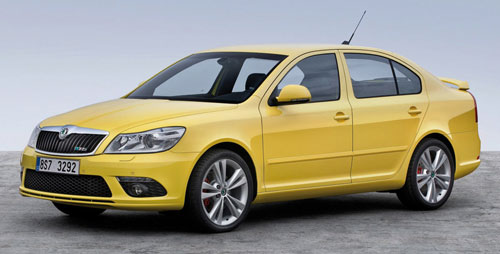
The second-generation Å KODA OCTAVIA seamlessly continued the success story of its predecessor: Between 2004 and 2013, 1.6 million customers opted for the saloon, 900,000 buyers chose the Å KODA OCTAVIA estate. 

The third generation of the Å KODA OCTAVIA has been in production since November 2012. Today the bestseller is considered the heart of the brand and is extremely popular both as a family car and as a company vehicle. 

Since the start of production of the first generation on September 3, 1996, more than five million Å KODA OCTAVIAs have left the production halls.  In addition to the main plant in Mladá Boleslav the compact is also manufactured at the Å KODA plants in China, India, Russia and Kazakhstan.

Monday, 25 April 2016

Uber Rare Vauxhall barn Find reunites with previous owners family and returns to Vauxhall Motors Heritage Centre.

  • 93-year-old 23/60 drives back to Luton to meet former owner’s family
A 1923 Vauxhall 23/60 made its first long journey after an 18-month mechanical restoration last weekend to be reunited with three generations of the previous owner’s family at Vauxhall Motors’ Heritage Centre in Luton.
Known as ‘Alice’, the vintage Vauxhall is now thought to be the most original of the c90 surviving 23/60s from a total production of 1,300 made at the famous Kimpton Road factory between 1922 and 1926.

Kay Lorenzato, whose late husband owned the car from the 1950s, was delighted to see it for the first time after its inaugural, post-resto drive from Leicestershire to last Sunday’s VBOA (Vauxhall Bedford Owners’ Association) meeting. Her husband, she said, would have been ‘proud to see Alice on the road again’ after he’d shared so many experiences with the car during the 1950s and ‘60s.
And Raymond Lorenzato certainly used the car extensively. A Grimsel Pass sticker on the windscreen and three tickets from a cinema in Lucerne found under the seat during restoration were evidence of just some of the European road trips he made in the ‘50s. The car also competed in various VSCC events, before being pushed into service as the Lorenzatos’ daily transport during the 1960s (including the harsh winter of 1962/63).
Alice was last seen in Luton in 1964 at a 30-98 Register meeting and was on the road for a further three years, before being retired to the family garage with a cracked block. Talking to Vauxhall staff at the VBOA meeting, Kay Lorenzato had fond memories of attending rallies in Alice with her husband in the early sixties – including one at Brooklands – and recalled how attached they both were to the car.
Well known restorer and vintage racer, Mark Walker, purchased Alice from Kay at a Bonhams Beaulieu auction and over the last year and a half has undertaken a full mechanical restoration. The block has been repaired and new high-compression pistons fitted, but wherever possible Mark has retained original components, with ‘conservation’ rather than ‘restoration’ being his mantra. And Alice’s appearance – which still shows the scars of a 93-year life – has carefully been preserved, with even the original leather trim being saved during the process.
‘In Alice, sixty mph at two-thousand rpm is still a comfortable and smooth cruising speed and the car keeps up well with modern traffic,’ said Walker. ‘Higher speeds are certainly possible, but with only rear brakes, probably not advisable! I intend to use the car as family transport and would love to recreate the trip over the Grimsel Pass one day.’

Wednesday, 6 April 2016

The Jubilee celebrations start now, 20 years, 5 Million Units, three generations, thats the Octavia from Skoda.

  • April 1996: Å KODA introduces the first generation Å KODA Octavia
  • Bestseller: five million Å KODA Octavias sold over two decades
  • Modern technologies guarantee safety, comfort and efficiency
One of the most successful model series in the automotive world made its debut 20 years ago: In 1996, Å KODA AUTO presented its Octavia saloon for the first time to international media representatives. Over the following two decades, the Octavia became a worldwide hit and is still the traditional Czech automaker’s best-selling model. The vehicle has been instrumental in the successful development of the Å KODA brand.
The Å KODA Octavia is celebrating an important milestone with impressive interim results: In the 20 years since the debut of the first Å KODA Octavia, five million customers around the world have opted for one of the various Octavia models offered. Its combination of above-average space,modern engines and safety features at an attractive price was to be the inspiration for all the brand’s later models.

Approximately one year after the Czech brand had joined the Volkswagen Group in 1991, the development of the completely new ŠKODA Octavia model series was underway. This was based on what was then an entirely new platform, developed at Group level in parallel with the conception of the Octavia. The engineers constructed a robust body structure with the help of modern CAD (Computer Aided Design) technology, while the ŠKODA design team created a timeless and unmistakable body shape, at the ŠKODA development centre in Mladá Boleslavled by Chief Designer Dirk van Braeckel.
The developers paid close attention to active and passive safety. In addition to front airbags, the brand offered side airbags for the first time. A special feature of the new compact was the practical liftback solution: The large rear door of the hatchback model allowed for excellent access to the 528-litre boot, which grew to as much as 1,328 litres by folding the rear seats down.
In 1996, the year the model was first released, customers could choose between two four-cylinder petrol engines and one turbo diesel drivetrain. The entry-level engine was the 1.6 MPI with 75 hp, the 1.8 20 V positioned above that brought it to 125 hp and the modern turbo diesel direct-injection 1.9 TDI generated an output of 90 hp, giving an average fuel consumption of over 55mpg. Å KODA gradually expanded its engine range to include the particularly economical 1.9 SDI with 68 hp and the 1.8 20 V turbo with 150 hp.
The first Octavia Estate celebrated its world premiere in March 1998 and quickly became a bestseller, particularly in Europe. In 1999 a four-wheel drive Octavia Estate made its debut.
The Octavia/Octavia Estate name refers to the successful model of the same designation,of which Å KODA produced approximately 364,000 units between 1959 and 1964 in Mladá Boleslav and Kvasiny. The Latin word ‘octavia’ means ‘the eighth’, relating to Å KODA’s eighth automobile of the ‘modern era’ with independent suspension following the debut of this technology in 1933.
For the new Octavia series, ŠKODA built a new production line in a 37,500-square-metre hall at the Mladá Boleslav plant, followed by a new paint shop processing up to 1,800 vehicles per day. The new production line commenced operations on April 3, 1996. The capacity of the main plant increased by 90,000 units to 350,000 vehicles annually and ŠKODA became the largest industrial company in the Czech Republic.
The last vehicle of the first series eventually rolled off Vrchlabí’s production line in November 2010. From 1996 to 2010, Å KODA delivered a total of 970,000 hatchbacks and over 470,000 estates to customers worldwide.
The second-generation Octavia continued unabated the success of its predecessor. Å KODA sold a total of 1.6 million hatchbacks and 900,000 estates between 2004 and 2013. Technologies, such as direct-injection petrol engines, and the directshift gearbox (DSG) made their debut in the Octavia II.
The third-generation Octavia,an important cornerstone of Å KODA’s model range, has been running off the production lines since November 2012. At the end of March 2016, the one millionth vehicle of this model generation was produced at Å KODA’s main production facility in Mladá Boleslav.
The traditional Czech brand has manufactured a total of five million Octavias since the ŠKODA Octavia was first launched in 1996. In addition to Mladá Boleslav, the ŠKODA Octavia is also produced in China, India, Russia and Kazakhstan.