Purpose

I will try my best to provide detailed info on various cars and what is like to live with them, I have already produced a few for Jaguar-car-forums, I will do my best to be unbiased, but it will be hard for some cars. I will re-produce press releases and copy from other motoring news.
Showing posts with label WEC. Show all posts

Wednesday, 1 February 2017

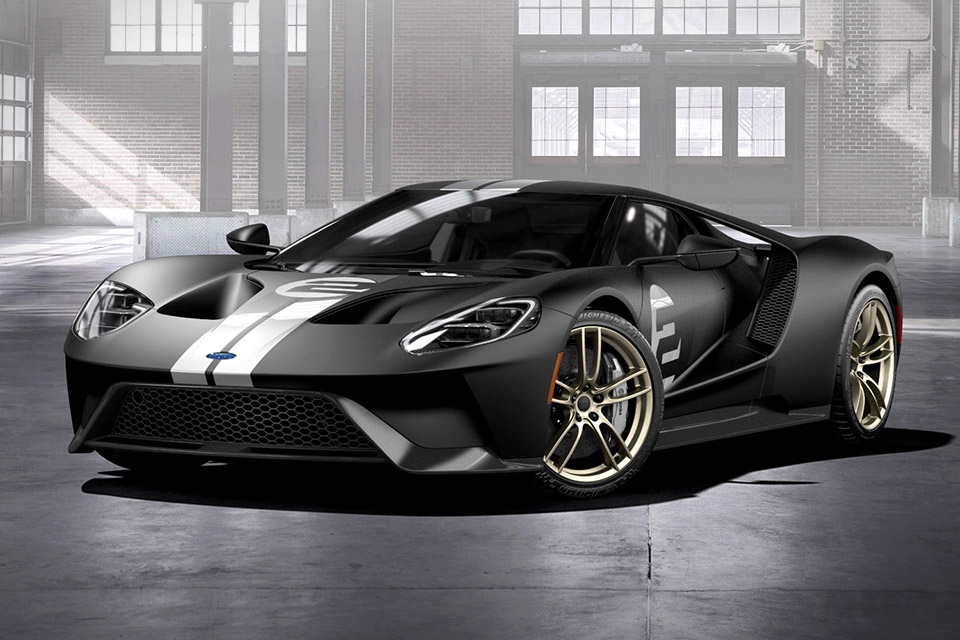
Ford GT Delivers the highest top speed with the fastest lap times on track of any Blue Oval Car.

  • Assisted by fully active dynamic systems, all-new Ford GT achieves top speed of 216 mph – the highest for any Ford production vehicle to date
  • Strong power-to-weight ratio coupled with the most advanced active suspension system in the segment gives Ford GT the edge in lap times versus the competition
  • Fully active dynamic systems provide optimum down force, drag and balance at any speed – making the car faster for drivers of all skill levels
Delivering the highest output of any EcoBoost production engine to date, the all-new Ford GT couples its extraordinary power with impressive aerodynamic efficiency and advanced active dynamics to achieve a maximum speed of 216 mph – making it the fastest Ford production vehicle on the track ever.
Capable of an exceptional top speed, Ford’s all-new supercar is designed and optimised for track performance to honour its racing heritage. 

In 2016 development testing, with all contenders track-prepped with new fluids, fresh tyres and optimal suspension settings, in identical conditions and with the same driver behind the wheel, Ford GT outperformed both the McLaren 675LT and Ferrari 458 Speciale at Calabogie Motorsports Park in Canada:               
Ford GT:   2:09.8
McLaren 675LT:2:10.88
Ferrari 458 Speciale:2:12.9
“The Ford GT is all about performance,” said Raj Nair, Ford executive vice president, global product development and chief technical officer. 
“We achieved considerable weight savings with the carbon fibre architecture. We then reinvested some of that savings into where it counts most – performance, specifically, the active dynamics. The result is an even faster car.”
SAE rated at 647 horsepower and 550 lb.-ft. of torque in U.S. specification, Ford’s new high-output 3.5-litre V6 engine produces the highest horsepower of any EcoBoost production engine ever, making Ford GT the fastest production car ever to wear the Blue Oval badge. The engine’s wide powerband produces 90 per cent of its peak torque from 3,500 rpm.
“Our expectation has always been that the EcoBoost V6 would perform exceptionally well in the Ford GT – both in terms of power as well as aerodynamic efficiency,” said Dave Pericak, global director, Ford Performance. 
“We tested and developed this powertrain through the Daytona Prototype race car that ran in IMSA for two seasons, last season racing with Ford GT. We are extremely pleased with how it performs, both on the track and on the road.”
Ford GT’s dryweight is less than 1,400kg, which places the supercar between its two primary competitors, the McLaren 675LT and Ferrari 488. Ford GT’s power-to-weight ratio is 2.14 kg per horsepower in U.S. specification.
The active dynamic systems – for both suspension and aerodynamics – are designed to make the car perform with optimum downforce, drag and balance at any speed, creating a faster setup regardless of driver skill.
Ford GT, with no excuses to give, has proven itself time and again, racing to class wins at Le Mans and numerous other tracks in both IMSA and WEC last season. The production Ford GT shares a great deal with the high-performance track version, with advanced aero and suspension features taking performance to new heights.

Monday, 14 November 2016

Later this month AUDI will finally cease taking part in the FIA WEC, 18 years & 106 victories mean nothing left to prove.

  • Audi to end its sports car program in Bahrain following 106 victories in 186 sports car races in 18 years
  • Successful track record of technology transfer between race cars and production models
  • Thanks go to FIA, WEC and ACO, and the strong competitors for a tremendous time
Audi is ending an era. On Saturday, November 19, not only the current season of the FIA World Endurance Championship (WEC) will end in Bahrain but also Audi ceasing its Le Mans sports prototype program after 18 years. 
Audi’s sports prototypes, from the Audi R8, the Audi R10 TDI and the Audi R15 TDI to the Audi R18, have shaped an entire racing era. 
They represent one of Audi Sport’s most successful periods and are symbols of the technical progress achieved by the brand with the four rings.
“The event in Bahrain will no doubt be a very emotional farewell for all of us,” says Head of Audi Motorsport Dr. Wolfgang Ullrich. 


The Austrian, who has been in charge of Audi’s motorsport activities since the end of 1993, has decisively shaped the brand’s sports car commitment. In 1999, the LMP race cars competed in the 12 Hours of Sebring for the first time, to date having clinched nine titles in the American Le Mans Series (ALMS), three in various European Le Mans series, plus two drivers’ and two manufacturers’ world championship titles in the FIA WEC. No less than 106 winners’ trophies are displayed in the showcases of AUDI AG and its teams, including 13 for victories in the Le Mans 24 Hours. A historically unique success is Audi’s “triple,” in other words three victories in succession, allowing the brand to keep the trophy.
“What this program means to the brand is hard to express in words,” says Dr. Ullrich. “To this day, the various rally models of the Audi quattro, with which everything began in 1981, have kept a special place in the hearts of the audience. I am sure that the sports cars, which are esteemed by a worldwide fan community, are going to continue to define the historic image of our brand for a long time.” 
In addition to the emotional value being associated with the sports cars from Ingolstadt, Neckarsulm and Neuburg an der Donau, the LMP race cars epitomize pure technology as well as having set many milestones of automobile development at Audi. 2001 saw TFSI gasoline direct injection debut in the Audi R8, its principle subsequently helping reduce emissions of millions of cars in road traffic. In 2006, Audi made history by clinching its first TDI victory at Le Mans. In 2012, the Audi R18 e-tron quattro was the first hybrid sports car to win the 24 Hours of Le Mans. The current generation of the Audi R18 uses 46 percent less fuel than the Audi R10 TDI did ten years earlier, while achieving faster lap times.
“This is pure efficiency,” says Dr. Ullrich. Safety innovations such as the tire inflation pressure control system, the Audi Matrix LED headlights or Audi Laser Light complement the long list of technology transfers taking place between motorsport and production in both directions.
The close interlinking of these two fields will be a key aspect in future activities as well. Audi is realigning its motorsport strategy and, beginning in 2017, will be involved in the first all-electric racing series, the FIA Formula E Championship, with a factory-backed commitment. This program perfectly fits the business decision made by the premium manufacturer based in Ingolstadt to offer new battery-electric automobiles year by year, starting in 2018.
Now, in Bahrain, the fastest, most efficient and most innovative Audi sports cars of all time are going to tackle their last competition. Following practice sessions on the desert circuit on Thursday, November 17, and Friday, November 18, the 6 Hours of Bahrain will start on Saturday, November 19, at 16:00 local time (14:00 CET). Like every year, the FIA WEC race is going to continue into the night. For Audi, the finale will be about clinching its final trophies in a sports car race and the vice-world championship title in the manufacturers’ classification.  
Eurosport will be offering free video live streaming of the entire race and airing live coverage of the final stage on Eurosport 1 (17:00–20:00 CET). Audi is going to keep its fans up to speed on Facebook (AudiSport) and Twitter (@audisport).
Standings after eight of nine rounds
Drivers’ standings                                                                  
1 Jani/Lieb/Dumas (Porsche), 152 points                                                
2 Conway/Kobayashi/Sarrazin (Toyota), 135 points                          
3 Di Grassi/Duval/Jarvis (Audi), 121.5 points                                         
4 Bernhard/Hartley/Webber (Porsche), 119.5 points
5 Fässler/Lotterer (Audi), 86 points
6 Imperatori/Kraihamer/Tuscher (Rebellion), 60.5 points
7 Tréluyer (Audi), 52 points

Manufacturers’ standings
1 Porsche, 301 points
2 Audi, 222 points
3 Toyota, 207 points

Saturday, 20 August 2016

USA - Ford announces that the All-New GT will get an extension in production for another two years.

  • Ford Performance will offer the all-new Ford GT for two additional production years, bringing the production commitment of the carbon fibre supercar to a total of four years
  • Potential customers who already applied to purchase Ford GT will only need to update their request when the next application window reopens in early 2018
  • Additional production supports Ford Performance decision to race Ford GT in both IMSA and World Endurance Championship (WEC) series for four years
Ford Performance is adding two more years of production for the all-new carbon fibre Ford GT supercar. The announcement comes on the heels of letters sent to potential customers notifying them of their application status to purchase one of their own, with more than 500 of those coming from the UK alone
The additional production supports the decision by Ford Performance to race Ford GT in both IMSA and World Endurance Championship (WEC) series events for four years, extending through to the 2019 season.

“While we can’t build enough Ford GTs for everyone who has applied, we are going to produce additional vehicles in an effort to satisfy more of our most loyal Ford ambassadors,” says Dave Pericak, global director, Ford Performance. “We want to keep Ford GT exclusive, but at the same time we know how vital this customer is to our brand.”
Year three of production will support applicants who were placed on the waiting list; previously deferred applicants and those who missed the initial application window will be served by production year four. The application process for fourth-year production will reopen in early 2018. Those who already applied to own the car will only need to update their request.
“Ford GT has racing in its blood,” says Raj Nair, Ford executive vice president, product development, and chief technical officer. “The road car and race car will live on, side-by-side, for the next four years – providing ample opportunity to test and prove innovative new technologies both on and off the track.”

Wednesday, 23 March 2016

Audi launches the new FIA World Endurance Championship racer, the more powerful, economical R18.

For the FIA World Endurance Championship (WEC) and the Le Mans 24 Hours, Audi is emphasizing focal areas in the 2016 season: The Audi R18 that has been redesigned from scratch has almost nothing in common anymore with its predecessor. 


It features a more radical aerodynamics concept, including a new safety cell, its hybrid drive system is battery-operated for the first time, the V6 TDI engine has been revised, and new system solutions have been added. 

As a result, Audi’s LMP1 sports car is a vehicle that is more powerful and – once more – clearly more efficient than its predecessor. 

While the new R18 is Audi’s strongest race car to date, it consumes less fuel than any of the generations before it.

Saturday, 12 March 2016

Signatech-Alpine has finalised its driver line-up for the 2016 FIA World Endurance Championship (WEC)

  • Signatech-Alpine has finalised its driver line-up for the 2016 FIA World Endurance Championship (WEC)
  • Nelson Panciatici is to join forces with David Cheng and Ho-Pin Tung in the N°35 car which will feature the colours of Baxi DC Racing Alpine
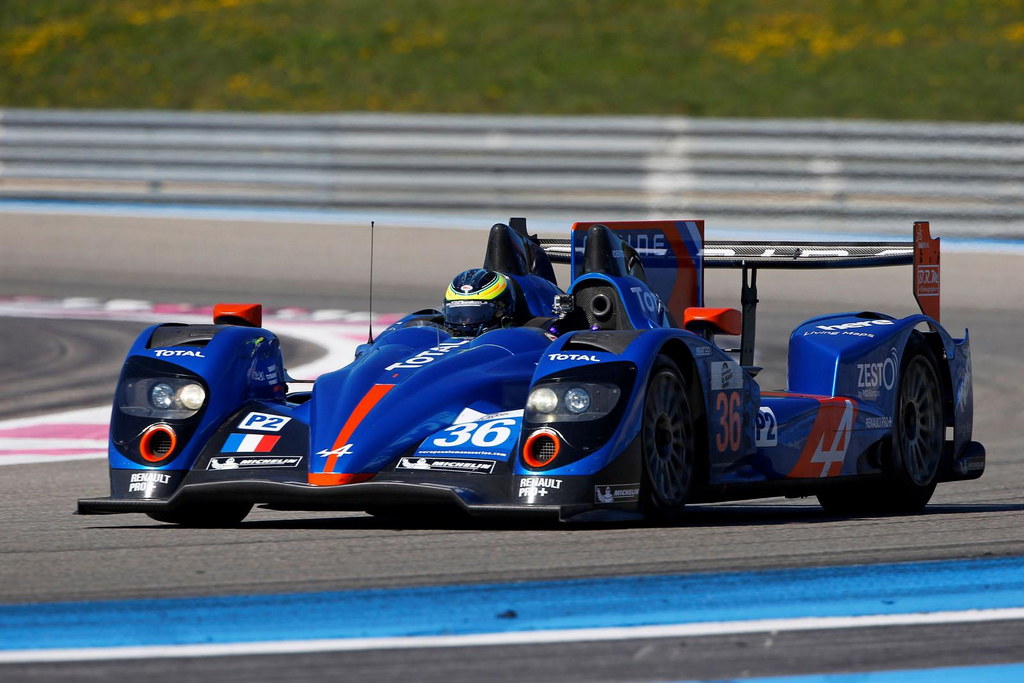
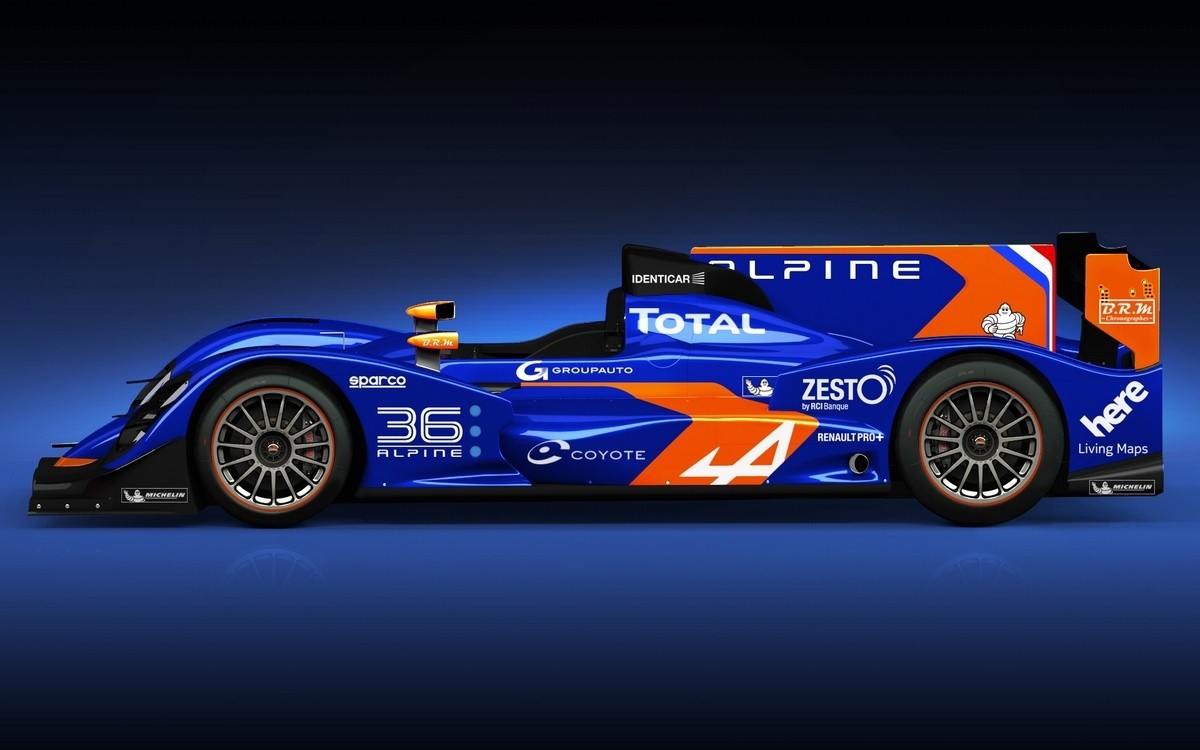
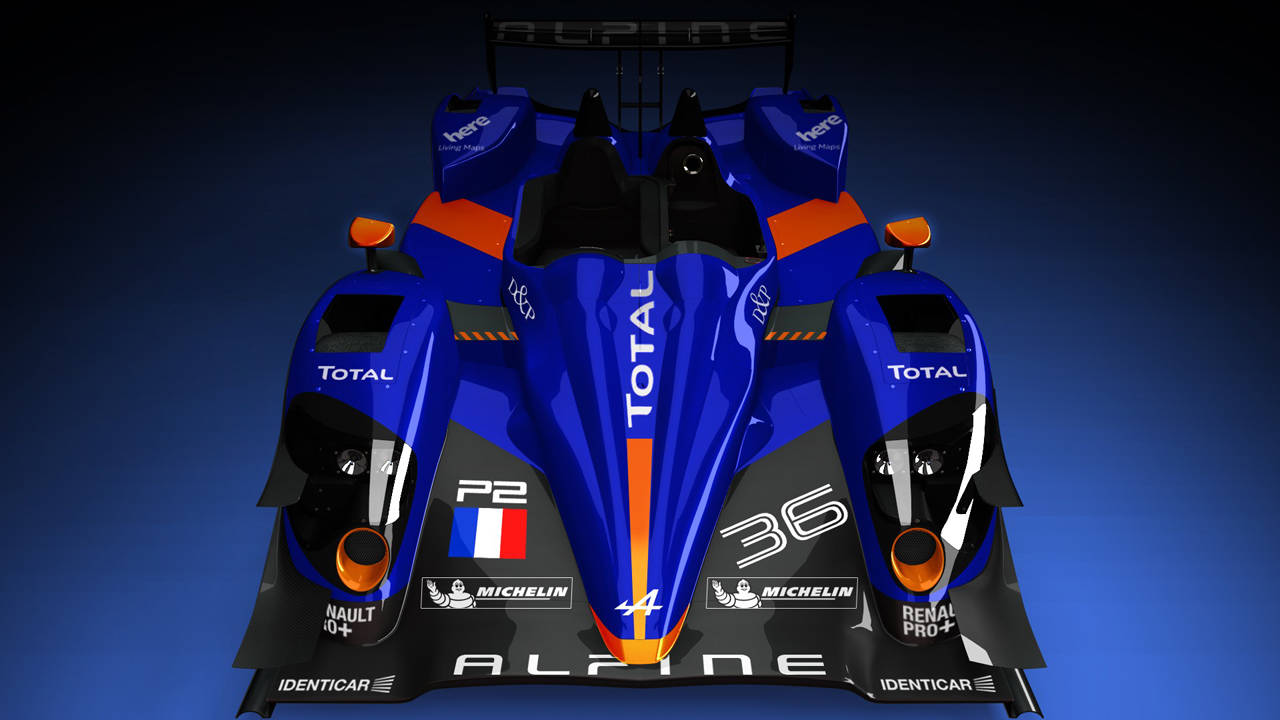
  • The N°36 car will be shared by Nicolas Lapierre and Gustavo Menezes, supported by Stéphane Richelmi
  • Both Alpine A460s will be presented at Le Castellet, France, on Thursday, March 24
Following the recent confirmation of the entry of two A460s for the 2016 FIA WEC, Alpine is pleased to be able to announce the complete driver line-ups. The six men will defend its colours during a season that will see it embark on a world tour, visiting venues as far afield as Mexico and Japan, not to mention the famous Le Mans 24 Hours on June 18-19.

Nelson Panciatici, a cornerstone of the team since Alpine’s return to motor racing in 2013, will compete in the N°35 prototype. The Frenchman’s experience and speed will benefit the DC Racing-led, Signatech-Alpine-run programme, and the 27-year old will share the car with David Cheng and Ho Pin-Tung. The newly-formed trio has set its sights particularly high.
The crew of the N°36 car – namely Nicolas Lapierre, Gustavo Menezes and the recently recruited Monegasque Stéphane Richelmi – has similarly lofty ambitions. After showcasing his skill in GP2 and GT racing, 25-year old Richelmi is a newcomer to prototype racing.
Signatech-Alpine will be able to count on the complementary skills and talent of these two crews in its bid to play a front-running role in the FIA WEC’s LMP2 class.
Following a three-day test at Motorland Aragón, Spain, on March 7-9, the two new Alpine A460s will be presented officially at Le Castellet, France (7pm, Thursday, March 24), before seeing where they stand in relation to rival cars at the 2016 FIA WEC Prologue test.
Philippe Sinault (Team Principal Signatech-Alpine): “We are thrilled to have Nelson Panciatici on board with us once more. He has won two ELMS titles with Signatech-Alpine and will bring his speed and experience to our association with DC Racing. It is also very satisfying to have enlisted the services of Stéphane Richelmi for the N°36 car. Our driver line-ups have now been finalised and I think they illustrate the determination behind Alpine’s racing programme for 2016. In their hands, the two A460s will be capable of fighting at the very front.
“The past few weeks have been quite intense, both for Alpine which recently presented the Alpine Vision show car in Monaco, and for the team which has been busy completing the build of our two cars. All six drivers have visited our base to get better acquainted with everyone, as well as to optimise their respective driving positions and to take part in technical meetings with our engineers. The squad is now raring to get on with what promises to be a challenging season!
“We are also pleased with and proud of DC Racing’s input. It’s an honour to have been chosen to run the technical, sporting and logistical sides of its programme. We are putting all our experience and know-how into making the project a success to a background of promoting Alpine’s reputation in China.
“Last but not least, I would like to express my disappointment at not having been able to keep Paul-Loup Chatin with us in 2016. He has contributed a great deal to the team and to our results these past two seasons. It was a hard decision to take but we hope we will be able to work with him again in the future because he is part of the Alpine family.”
ALPINE’S 2016 DRIVER LINE-UPS
N°35 Alpine A460: Nelson Panciatici / David Cheng / Ho-Pin Tung
N°36 Alpine A460: Nicolas Lapierre / Gustavo Menezes / Stéphane Richelmi
Nelson Panciatici
Born 26/09/88 in 
Reims (France)
French
www.nelsonpancia.fr

Nicolas Lapierre
Born 02/04/84 in Thonon-les-Bains (France)
French
www.nicolaslapierre.com

David Cheng
Born 21/07/89 in Beijin (China)
Chinese/American
www.dchengracing.com

    Gustavo Menezes
    Born 9/09/94 in Los             Angeles (USA)
    American
 
www.gustavomenezes.com

Ho-Pin Tung
Born 04/12/82 in
Velp (Netherlands)
Chinese/Dutch
www.hopintung.com
Stéphane Richelmi
Born 17/03/90 in Monaco
Monegasque
www.richelmi.it

2016 CALENDAR
March 25-26: Prologue – Circuit Paul Ricard (France)
April 17: 6 Hours of Silverstone (Great Britain)
May 7: WEC 6 Hours of Spa-Francorchamps (Belgium)
June 5: Le Mans 24 Hours Test Day (France)
June 18-19: Le Mans 24 Hours (France)
July 24: 6 Hours of Nürburgring (Germany)
September 3: 6 Hours of Mexico (Mexico)
September 17: 6 Hours of Circuit of the Americas (USA)
October 16: 6 Hours of Fuji (Japan)
November 6: 6 Hours of Shanghai (China)
November 19: 6 Hours of Bahrain

Friday, 1 May 2015

At the 6 Hours of Spa, the Audi R18 e-tron quattro debuts a new bodywork configuration.

At the 6 Hours of Spa, the Audi R18 e-tron quattro debuts a new bodywork configuration. It differs significantly from the version with which Audi won the FIA World Endurance Championship WEC season opener at Silverstone. Jan Monchaux, Head of Aerodynamics at Audi Sport, explains the background. 

In the meantime it has become a small tradition for Audi to develop different bodywork configurations to be perfectly equipped for the high-speed Le Mans circuit where average lap speeds exceed 240 km/h. To compare: on the track in Shanghai, which is scheduled for November, the drivers reach an average of only 180 km/h – this is an average of 25 percent less. 


While the visual changes in previous years were barely recognisable to the untrained eye, Audi has consistently followed a different path since 2013. “The long tail was an effective distinguishing feature for the public,” says Jan Monchaux. Together with his development team, he developed a bodywork version specifically for the 24 Hours of Le Mans. 

This configuration finished flush with the rear wing and at the same time contained many more detailed solutions. 

The goal: significantly lower drag by omitting downforce, in order to be better equipped for higher speeds. Downforce is the force that aerodynamic components create. It presses the race car onto the ground and, as a result, permits higher cornering speeds. 
When the version that creates less downforce runs for the first time this year at Spa, the differences to the sister specification, which generates higher downforce levels, are more apparent than ever before. A fundamentally different front fairing, modified sidepods, openings relocated on the inner surface of the rear fenders for venting the wheel arches, and the bodywork rear edge featuring an unusual rear wing support, characterise the newly developed race car.
“Because downforce at Le Mans is not as important as it is at other tracks, we developed other solutions and new body shapes,” says Monchaux. “In this way, we reduce the drag. All the turning vanes, wings and similar elements are no longer mounted so steeply in the airflow; the curvature of the wing profile is less.” In addition to the bodywork surfaces, the technology beneath is also affected. 

“The cooling system’s requirements are different. We were able to reevaluate and adapt the flow across the cooler, because at Le Mans less air mass flow is necessary due to the higher speeds,” he continues. New suspension solutions, which restrict the spring displacement on the car to a smaller range, provide additional help. In this way, the turbulent airflow under the race car is reduced. 
With the sum of all innovations, Audi further improves the efficiency of its hybrid sports car. “We expect to benefit from this and to be able to use these advantages on other race tracks,” says Jan Monchaux. 

Sunday, 1 March 2015

Could Aston build a better One-77, too damn right they can, and they have.

  • Geneva global reveal for limited edition, track-only, 7.0-litre V12 supercar
  • Motorsport-developed technology for extreme on-track performance
  • Expert tuition, technical support and experience programme for owners
Introducing the Aston Martin Vulcan – a track-only supercar and the British luxury brand’s most intense and exhilarating creation to date.

Born out of extensive motorsport experience – and using the brand’s acknowledged flair for design and engineering ingenuity – the 800-plus bhp, all-carbon fibre Aston Martin Vulcan promises truly extreme performance.

Uniquely for Aston Martin, the new supercar – limited to just 24 examples worldwide – will allow owners the opportunity to precisely tailor their track day experience through a graduating scale of detailed power and dynamic performance adjustments.


CEO, Dr Andy Palmer, said: “Aston Martin Vulcan is, by its very nature, a rare and thrilling supercar. Designed and engineered to deliver a genuinely bespoke driving experience that draws on our rich heritage, this car tailors its power and handling to both the capabilities of the driver and the characteristics of the track.

“A sports car for true sports car lovers, I believe the Aston Martin Vulcan – and the unique ownership programme that sits behind it – sets a whole new standard in the ultra-high luxury supercar class.”

Motorsport-inspired

Styled entirely in-house by the Aston Martin design team led by Chief Creative Officer Marek Reichman, and with a design language hinting at the next generation of Aston Martin sports cars, this supercar is powered by the most potent iteration yet of the company’s naturally-aspirated, 7.0-litre V12 petrol engine.

With its 800-plus bhp powerplant developed in conjunction with Aston Martin Racing, this front mid-engined, rear-wheel drive sports car draws extensively on the brand’s rich GT motorsport experience.

Utilising the techniques of world-class motorsport engineering, the supercar sees its power-to-weight ratio exceed those of the GTE cars which compete in the FIA’s annual World Endurance Championship.

Comprising cutting edge engineering including that sourced from the brand’s successful GT racing campaign, the car features a carbon fibre monocoque and body constructed by Aston Martin’s long-term specialist body engineering and manufacturing partner Multimatic, integral limited-slip differential, magnesium torque tube with carbon fibre propeller shaft and Brembo racing calipers acting on carbon ceramic racing disc brakes which measure 380mm in diameter at the front and 360mm at the rear.

Drive is channelled to the 345/30 x19 rear wheels and Michelin race specification tyres through a race-bred rear mid-mounted Xtrac six-speed sequential shift gearbox.

Track-derived pushrod suspension with anti-dive geometry is complemented by Multimatic’s Dynamic Suspension Spool Valve (DSSV) adjustable dampers and anti-roll bars front and rear, driver-adjustable anti-lock braking, and variable traction control.

The new track car will comply with all relevant FIA race safety requirements.

Aston Martin’s Director of Special Projects and Motorsport, David King, said: “Taking the extensive learning from our various successful racing programmes and applying it to this exceptional track car for customers has been an exciting and sometimes challenging task for the team here at Gaydon.

“Our deep and broad motorsport experience, allied to our renowned road car expertise, has allowed us to make the Aston Martin Vulcan the absolutely compelling proposition it is today.”

Fast-track training

Prior to taking delivery of their cars, owners will be offered the opportunity to take part in an extensive and detailed programme of intensive track driver training.

Experienced racers including Aston Martin Racing’s Le Mans-winning Darren Turner will support owners on their learning journey, offering them the chance to refine their track driving technique and increase their ability through a carefully-constructed series of practical and theoretical driver training events.

Using a number of exciting high performance Aston Martins including the V12 Vantage S and One-77 road cars and the Vantage GT4 race car, customers will gradually build experience and develop their track technique, before beginning their thrilling personal journeys into the immense performance potential of their Aston Martin Vulcan.

David King said: “We will be running a series of exclusive track day events commencing in 2016 that will offer the opportunity for these customers to explore their driving capabilities, and the car’s performance potential, on some of the world’s most famous and glamorous race circuits.”

There will also be the option of time in the virtual race car world of Darren Turner’s Base Performance Simulators, where buyers will have ample opportunity to further refine their driving style in the safety of the digital race track.

No longer the exclusive preserve of Formula 1, it is widely acknowledged that using a simulator can help prepare a driver for any race; improving technique and consistency as well as, ultimately, lap times.

Almost infinitely flexible in terms of colour and trim options, the exclusive new sports car will be offered to buyers through Aston Martin’s VIP sales programme, using the expertise and luxury customer service that is now a hallmark of the brand’s ‘Q by Aston Martin’ bespoke personalisation service.

Dr Palmer added: “We have already received strong interest from the customers we have spoken to about Aston Martin Vulcan.

“The cars will blend our traditional Aston Martin values of Power, Beauty and Soul with an unrivalled ownership experience; a unique combination that will guarantee their place in the brand’s rich and charismatic history.”      

Performance data, together with further technical details about the ultra-exclusive track-only supercar, will be released closer to its track debut later this year.