Purpose

I will try my best to provide detailed info on various cars and what is like to live with them, I have already produced a few for Jaguar-car-forums, I will do my best to be unbiased, but it will be hard for some cars. I will re-produce press releases and copy from other motoring news.
Showing posts with label carbon-fibre. Show all posts

Sunday, 5 March 2017

Lotus celebrates the First Esprit by emulating the Bond Esprit onto an Evora Supercar.

  • Unique, one-off Evora Sport 410 created by Lotus Exclusive
  • Tribute to one of Lotus’ most famous liveries
  • Lotus Sport 410 sales success continues
Representing the state of the supercar art, a one-off Evora Sport 410 has been commissioned through Lotus Exclusive as a tribute to one of its most famous ancestors, the Lotus Esprit S1.
Launched in October 2016, the Evora Sport 410 has wowed motoring press and customers with its combination of effortless pace and intuitive handling. With production limited to just 150 examples a year worldwide, the build schedule is filling up fast.
The benchmark was set by the original Lotus Esprit S1 as seen in the Bond film The Spy Who Loved Me, which celebrates its 40th anniversary this year, and Lotus’ in-house personalisation department has crafted a special, one-off Evora Sport 410 in commemoration.
Combining the latest in Lotus engineering with period details, the new pure-bred supercar takes design cues from the iconic Esprit and integrates them into a car with class-leading performance. Packing 410 hp into a car that weighs just 1,280 kg, it sprints from 0-60 mph in just 3.9 secs.
Jean-Marc Gales, CEO, Group Lotus plc said, “So many of us recall the impact of the Lotus Esprit when it hit the big screen in The Spy Who Loved Me, and we wanted to honour that with a special Evora Sport 410. It’s the perfect tribute to such an influential Lotus, but a world away in terms of its abilities and performance. 
Supremely fast and agile, rivals’ cars look overweight and underpowered in comparison. Lotus was founded on the principle of lightweight engineering and, even today, nobody does it better.”
Lotus Exclusive
The work of the in-house personalisation department, Lotus Exclusive, this one-off Evora Sport 410 features many unique design touches. A special, colour-coded bumper modifies the car’s front end, while the one-piece carbon-fibre tailgate is part keyed white to give the illusion of a traditional liftback. In addition to a black coach line, delineating the car’s waist, it sports a bespoke badge script on the B pillar - in the style of the original Esprit’s graphics.
Nods to the Lotus Esprit S1 from The Spy Who Loved Me continue inside, with the insert panels of the carbon-fibre sports seats and door cards trimmed in the popular heritage Tartan, while red contrast stitching complements the Alcantara® dashboard and console finish.
Beneath the personalisation, this unique car retains all the engineering elements that make the Evora Sport 410 so formidable. From the supercharged, 3.5-litre 6-cylinder engine, producing 410 hp at 7000 rpm and 420 Nm of torque at 3500 rpm, to the highly advanced aerodynamics, which deliver up to 64 kg of downforce, it’s designed to deliver both on road and track.
The Evora Sport 410 remains refined on B-roads, but blisteringly fast when needed. The use of hand-made carbon-fibre components has been key in keeping mass to a minimum, with each specifically designed to enhance the car’s performance. Covering the car from nose to tail, they include front splitter, revised front access panel, roof section, tailgate, rear quarter panels, as well as the rear diffuser.
These lightweight carbon components not only reduce the kerb weight of the Evora Sport 410 but also help lower the centre of gravity, allowing for the recalibration of the suspension which, along with re-valved dampers and a reduced ride height, provide better body and roll control - but not at the expense of comfort and composure.
This one-off Evora underlines the work of the increasingly popular Lotus Exclusive service. Combining traditional British craftsmanship with modern design, it inspires buyers to spend time tailoring the character of their Lotus with a comprehensive array of options. Jean-Marc Gales, CEO, Group Lotus plc continued, “Our customers have really embraced the Lotus Exclusive service, with 25% of new cars undergoing some form of personalisation. It is well established that Lotus cars come with benchmark performance as standard.  Now, thanks to the skilled team at Hethel, responsible for hand building all Lotus cars since 1966, you can specify a Lotus that perfectly reflects your personal tastes.”
The Lotus Evora Sport 410 is limited to a global production run of one-hundred and fifty vehicles per year, and is on sale in Europe and rest of world markets now. A Federal version of the Evora Sport 410 for the North American market will arrive this spring.

Monday, 28 November 2016

McLaren Automotive to produce five "Design Editions" exclusively based on the 570S.

  • New Design Editions exclusively for McLaren 570S.
  • Five expressions of perfect colour and trim harmony – as chosen by McLaren designers.
  • Available to order now.
Five exclusive Design Editions of the multi-award winning McLaren 570S are announced today, taking the popular ‘By McLaren’ personalisation themes a stage further with combinations of colour, trim and finish that are guaranteed to showcase the Sports Series coupe at its stunning best.
The Design Editions have been painstakingly created by the people who know McLaren’s array of personalisation options the best –McLaren’s own designers.

Every design element has been selected to be in perfect harmony, with McLaren’s signature colours coordinated with different finishes and materials such as the highest quality Alcantara and Nappa leather.  Each Edition comprises the designers’ choice on exterior paint, wheel style and finish, exhaust style, and calliper colour – along with what the designers have decided is the By McLaren interior package that most complements the exterior. 
Design Edition 1, for example, combines a Vermillion Red body with five-spoke wheels and diamond-cut finish, Stealth exhaust and red brake callipers. 
Inside, this 570S receives a By McLaren package of Carbon Black Alcantara and Apex Red Nappa leather seats, Jet Black Nappa leather upper facia, Apex Red Nappa leather lower facia, Slate Grey contrasting stitching, a dual colour co-ordinated steering wheel and a McLaren branded leather sill finisher.
As well as the most harmonious looks inside and out, ordering a McLaren 570S in this way makes financial sense for the customer. 
Previously these items could only be specified separately, meaning the Design Edition all-in option price of £8,500 represents a significantly lower price than the single option pricing.
Clients are still free to make further trim and equipment choices and add their own personal choice of carbon-fibre options. As well as Onyx Black, the other body colours of the five Design Editions are Vermillion Red, Storm Grey, Ventura Orange, and Silica White.
The Design Editions are available exclusively for the McLaren 570S with orders now being taken for first deliveries in 2017.

Tuesday, 11 October 2016

The final Lotus car in a trilogy has been announced to end the celebrations of 50 years producing cars at Hethel, Norfolk

  • Final anniversary edition celebrating 50 years at Hethel
  • Based on the exceptional Exige Sport 350
  • Distinctive lightweight options as standard, saving 26 kg
  • Weighs 1,099 kg and delivers 314 hp/tonne benchmark performance
Saving the hardest until last, the new Lotus Exige 350 Special Edition is a fitting completion to the trilogy of Lotus 50th celebration editions.
Based on the most extreme Exige to date, the Sport 350, the new special edition adds a number of lightweight, performance-enhancing features, as well as unique paint and interior options as standard.

 Long regarded as the enthusiast’s favourite, the new Lotus Exige 350 Special Edition takes the model’s benchmark handling and raw performance and adds a sense of occasion.  Packing a supercharged 345 hp, V6 3.5 litre engine, and weighing 26 kg less than the Exige Sport 350, the new Lotus Exige 350 Special Edition accelerates to 60 mph in just 3.7 seconds (0-100km/h in 3.9 seconds) before reaching a top speed of 170 mph (274 km/h). It’s also capable of the lapping the famous Hethel track in 1 minute 29.8 seconds.

Jean-Marc Gales, CEO of Group Lotus plc, commented, “The Lotus Exige is the quickest point-to-point sports car on the road; nothing can match its levels of accessible performance and grip. It’s lightweight, responsive and exceedingly fast, with the purity expected of a Lotus. It is a real beast that needs taming but it won’t bite back. ”
Complementing this class leading performance, the car receives a revised front access panel cover, as first seen on the Exige Cup 360, lightweight carbon-fibre sports seats, lightweight forged alloy wheels, and a Lithium ion battery as standard to keep kerb weight at a minimum. A choice of four colours help the Lotus Exige 350 Special Edition stand out, while the interior offers the choice between black leather or Alcantara upholstery with bespoke contrast stitching.
Helping to celebrate the company’s 50 years in Norfolk, the special edition coupe is limited to 50 examples, available on a first-come, first-served basis. Like the already sold out Evora 400 Hethel Edition and Elise 250 Special Edition, this Exige is built to mark 2016 as this anniversary year.
Jean-Marc Gales continued, “This Exige 350 Special Edition joins the Evora and Elise editions that we have already produced to celebrate our half century in Hethel and our connection to Norfolk. Judging by the demand for the other models, I expect that the Lotus Exige 350 Special Edition will sell out quickly as it combines exclusiveness and limited production wrapped up in a great design.”
Lotus Exige 350 Special Edition in more detail
The new Lotus Exige 350 Special Edition features a number of changes to the accomplished Exige Sport 350. Lighter and faster than its predecessor, the Exige S, it packs performance-enhancing components and styling features as standard. Substantially cheaper than a similarly equipped standard model, it provides an outstanding ownership proposition for those to demand the purest driving experience.
Weighing just 1099 kg, theLotus Exige 350 Special Edition has shed an impressive 77 kg, when compared to the previous generation Exige S. The result of a thorough re-evaluation, every component has been scrutinised in order for the car to possess the purity of drive and benchmark handling which all Lotus cars are renowned for.
Amongst the many enhancements, the use of a louvered tailgate panel, a lighter battery, lightweight engine mounts, a lightweight centre console featuring an exposed gearshift mechanism, lighter HVAC pipework and the optimised use of sound insulation have all contributed to the extreme Exige’s focused drive. A total of 26 kg has been excluded from the car through the careful application of performance components:a 5 kg saving from the use of forged wheels, 10 kg from theLi-Ion battery, 6 kg from the carbon seats and 5kg from the vented, two-piece brake discs.
To reflect its enthusiast-orientated personality, theLotus Exige 350 Special Edition is only available with a slick, six-speed manual gearbox. Aesthetically appealing, as well as technically accomplished, the distinctive exposed gear-change mechanism perfectly embodies Lotus’ lightweight ethos. Employing machined and cast aluminium components, the linkage uses precision engineering to deliver faster, more precise gear changes. Stopping power is provided by AP Racing four-piston brake callipers, front and rear.
The aerodynamics of the Lotus Exige 350 Special Edition have received careful attention, including the use of a revised front access panel. This sculptured component improves air flow exiting the car’s horizontally mounted radiator and the light weight louvered tailgate improves engine cooling. The rear wing, combined with the flat underside and rear diffuser, help contribute to the 42 kg of down force generated at 100 mph (160 km/h).
The Lotus Exige 350 Special Edition also features Lotus’ Dynamic Performance Management (DPM) which, selected via a dashboard switch, provides ‘Sport’ and ‘Race’ settings. Proportionally increasing throttle response, lowering traction slip thresholds and removing understeer recognition, it allows enhanced control before the system intervenes. DPM also utilises an engine exhaust bypass valve at mid-to-high engine speeds, increasing throttle responsive in both ‘Sport’ and ‘Race’ settings.
The new car retains the Exige Sport 350’s excellent suspension setup, including firmer dampers and optimised geometry to deliver more responsive handling. Key weight-saving features, including the louvered tailgate, not only cut weight but also lower the car’s centre of gravity, contributing to its sharpened dynamics.
Available in four of Lotus fans’ favourite colours, the new Lotus Exige 350 Special Edition comes in Essex Blue, Old English White, Dark Metallic Grey, or Motorsport Black, all finished with contrasting racing stripes. The car’s bright red brake calipers are offset with black forged alloy wheels and, as standard, the front splitter, rear wing, front access panel, roof panel, wing mirrors and rear transom are finished in matt black.
In addition to the special interior, Lotus Exige 350 Special Edition customers will enjoy cruise control and floor mats as standard. An integrated in-car entertainment system can also be specified, including iPod® connectivity and Bluetooth® functionality along with full carpets and enhanced sound insulation.
The Lotus Exige 350 SE is on sale now.
Manufacturer’s Suggested Retail Price
UK (Pound Sterling)£61,900
Germany (Euros)81,900
Japan (¥ Yen)¥11,690,000

Technical Specification:
PERFORMANCEMANUAL
Max power345 hp (350 PS, 258 kW) at 7000 rpm
Max torque400 Nm (295 lbft) at 4500 rpm
0-60 mph3.7 seconds
0-100 km/h3.9 seconds
Max speed170 mph (274 km/h)
Fuel Consumption mpg (l/100 km)
Urban
Extra Urban
Combined
19.5 (14.5)
37.2 (7.6)
28.0 (10.1)
CO2 emissions235 g/km

Thursday, 29 September 2016

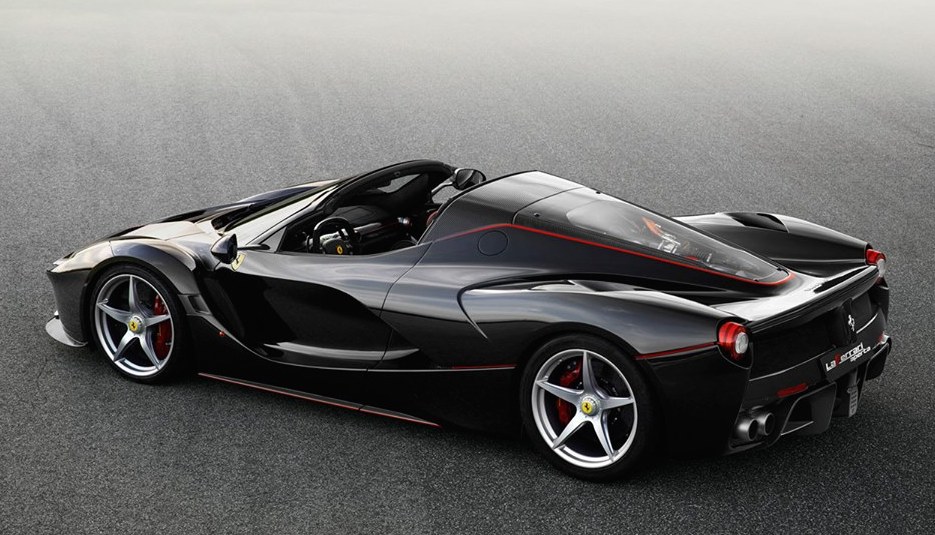
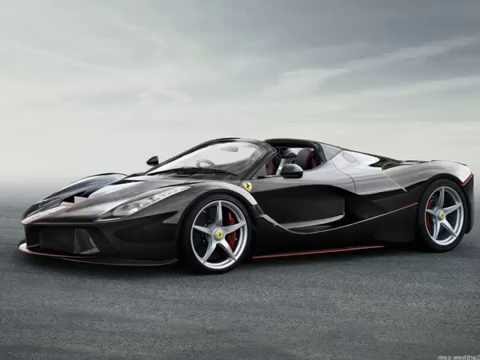
PARIS - 70 years and still the pinnacle of design and speed, now Ferrari launches the LaFerrari Aperta Limited Edition.

  • The World Premiere at the Paris Motor Show

Technological excellence, performance, style, exclusivity. These are Ferrari’s unique core values which are perfectly represented by the car launched to mark the 70th anniversary of the foundation of the company. 
Designed for Ferrari’s most passionate clients, the LaFerrari Aperta is the new limited-edition special series, an open-top version of the acclaimed LaFerrari supercar. 
Available with both a carbon-fibre hard top (optional) and soft top, the LaFerrari Aperta boasts the same specification and characteristics as the LaFerrari, combining extraordinary performance with the unique exhilaration of open-top driving. 

It is equipped with the same hybrid power unit as the coupé: an 800 cv 6,262cc V12 engine (specific power output of 128 cv/l, compression ratio 13.5:1) coupled with a 120 kW electric motor for a total power output of a 963 cv. The powertrain control software has been optimised to increase its overall efficiency thanks to the experience Maranello’s engineers gained with LaFerrari. The dynamic control systems integrated with the active aerodynamics remain unchanged. 
The biggest challenge involved in designing the LaFerrari Aperta was to produce a convertible that could be pushed to the same extreme limits as the coupé. The Styling Centre’s input was concentrated on retaining as much of the original LaFerrari aesthetic as possible. The flowing line that neatly divides the cockpit from the car body is unchanged with only those elements above the waistline modified. The resulting impact is of a carbon-fibre ‘flying bridge’ hunkered into the main volume. 
Engineering development focused on the chassis and aerodynamics and produced absolutely astounding results. The LaFerrari Aperta delivers the same top speed of over 350 km/h, accelerating from 0 to 100 km/h in in under 3 seconds and 0 to 200 km/h in 7.1 seconds. It also delivers the same torsional rigidity and beam stiffness characteristics, as well as dynamic performance levels. Modifications to the aerodynamic set-up ensure that, with the roof open and the side windows up, the drag figure is unaffected compared to that of the coupé.
Special attention was focused on the unique experience of open-top driving. The coupé’s blistering performance feels heightened to superb effect in the LaFerrari Aperta. The absence of the roof delivers a genuinely exhilarating experience with the hybrid power unit providing a heady soundtrack. A sophisticated wind-stop system, designed to improve aerodynamic and acoustic comfort, means occupants can easily carry on a conversation even at high speeds.
POWERTRAIN
The LaFerrari Aperta’s powertrain, which is the same as the LaFerrari’s, uses hybrid technology. It couples an 800 cv 6262cc V12 with a 120 kW (163 cv) electric motor for a total output of 963 cv. Thanks to the HY-KERS system, it is the most high-performance and efficient Ferrari ever built.
Making full use of Ferrari’s F1 expertise with KERS systems further evolved for use on road cars, the V12 is perfectly integrated with the electric motor, seamlessly blending the advantages of both. The high levels of torque available at low revs from the electric motor allowed the engineers to optimise the internal combustion engine’s performance at higher revs, thus providing exceptional, continuous power throughout the rev range and a maximum torque peak of 900 Nm.
Coupled with the F1 DCT, the electric motor was designed employing High Specific Power Density technology which enabled the engineers to drastically reduce weight and volume in relation to available torque. The result is performance figures comparable to those of the F1 car, with the same torque density and the same efficiency (94%) or, in other words, very limited power dissipation.
The batteries consist of 120 cells assembled into eight modules, with a power output that’s the equivalent of 40 traditional batteries but weighing just 60 kg. The batteries are charged in two different ways: under braking - even hard braking when the ABS intervenes, such as when driving on a track - and every time the V12 produces more torque than required, such as in cornering. The Hybrid Power Unit is essentially the HY-KERS system brain and controls power delivery from both the V12 and the electric motor via two inverters and two DC-DC converters. Variable-frequency control makes torque delivery rapid and precise.
An auxiliary engine also replaces the traditional alternator, shaving off further weight and reducing overall package dimensions. 
V12 ENGINE
The 6,262 cc V12 is the most powerful naturally-aspirated engine ever sported by a road-going Ferrari. It punches out 800 cv and spins to 9,250 rpm, to deliver absolutely extraordinary performance, driving thrills and an unmistakable Ferrari sound. These unprecedented results are the product of meticulous honing of the engine’s volumetric, mechanical and combustion efficiency.
To boost volumetric efficiency, the V12 employs continuously variable-length intakes - a mainstay in F1 engine technology until banned by rule changes – which optimise performance as a function of engine speed. Similarly, the torque and power curves are optimised across the rev range. The hybrid powertrain generates  total torque in excess of 900 Nm: the instantaneous torque from the electric motor is employed at lower revs and V12 engine power and torque is optimised at higher revs. The V12’s peak torque of 700 Nm is, in fact, developed at 6,750 rpm. 
Additionally, the entire intake system – from the dynamic air intakes on the top of the rear wheelarches to the intake plenum - was designed to maximise internal fluid-dynamics. The engine also boasts a very high 13.5:1 compression ratio for maximum combustion chamber efficiency.
The engine’s soundtrack plays a huge role in its emotional impact: meticulous tuning has resulted in a full, harmonious sound that’s more intoxicating than ever.  The equal-length 6-into-1 exhaust system was hydroformed using Inconel as in F1 to help keep overall weight down with the additional benefit of very high temperature and stress resistance characteristics.
CHASSIS
To retain the same running gear and performance as the LaFerrari coupé in this new open-top model, Ferrari’s engineers worked on two main areas: the chassis and aerodynamics.
With the chassis, the focus was entirely on the lower section which had to be reinforced because it is subject to different stresses caused by force lines which, in the coupé, converge in the upper part.
The elimination of the roof also demanded a review of the door rotation system. The Aperta has the same butterfly doors as the LaFerrari coupé although, when fully open, they are now at slightly different angle as a result of safety-focused re-engineering demanded by its open-top configuration. This in turn led to modifications to the geometry of both the wheelarches and flanks. Specifically, a carbon-fibre insert, which incorporates an aerodynamic vent, was added to  allow the doors to rotate. However, the insert itself has also become one of the Aperta’s signature styling elements, a flourish that, although absolutely distinctive, does not interfere in any way with the original LaFerrari lines. 
A string of targeted modifications which, despite a small increase in weight, allow the LaFerrari Aperta to deliver the same torsional rigidity figure as the LaFerrari, thus putting the Aperta at the top of supercar category in terms of dynamic performance. 
AERODYNAMICS
The greatest aerodynamic challenge for the Maranello technicians was to retain the coupé’s extreme performance capabilities. Their goal with the LaFerrari Aperta’s design was to achieve the same drag figure as the LaFerrari, even when driving without the hard top in place.
To effectively manage the hot air flow from the radiators through the bonnet, the angle of inclination of the radiators was modified. In the coupé, the radiators are angled to ensure that the air flow hugs the bonnet: in the LaFerrari Aperta, the radiating masses are angled backwards to direct the air flows out along the underbody. This solution results in complete separation of the hot air from the flow reaching the cockpit, keeping temperature levels for occupants comfortable.  
The new layout of the radiating masses made it necessary to create a duct that could channel air from the upper section of the front grille over the bonnet. This solution generates downforce depending on the variations in the flow momentum striking the car.
Furthermore, deflecting the hot air to the underbody also meant that the vortex generators needed to be redesigned. The front dam is now longer while the underbody surface around the longitudinal vortex generators has been lowered to boost the ground effect and thus the car’s ability to generate efficient downforce. 
The aerodynamic package is completed by two small L-shaped flaps on the upper corners of the windscreen which, in the absence of a hard top, generate a coherent vortex that interacts with the flow being deflected towards the rear header rail, diverting it upwards to reduce the compression on the rear section of the cabin, thereby reducing drag. This system ensures that the open-top car’s drag is similar to the coupé version.
In terms of open-top aerodynamic comfort, an innovative integrated system was developed. The high-speed air flow that would otherwise enter the cabin from the top of the windscreen is captured by an angled wind-stop fixed to the parcel shelf. The wind-stop is angled to channel the flow through spaces in the car’s interior structure before exiting at a slower speed behind the passenger seats.  This delivers a level of interior comfort in line with other convertibles in the Ferrari range without increasing drag. 
DESIGN
LaFerrari Aperta retains intact the avant-garde styling of the coupé, a model that represents the peak of the synergies between the engineering and development departments and Ferrari’s Styling Centre. The body’s shape is very sculptural and aerodynamically functional, with an innovative formal language. Its fluid forms lend a sense of huge power, while the F1-inspired nose and the muscular power of the tail section reveal the car’s extreme, sporty character.
Seen from the side the LaFerrari Aperta has a sharp, downward-sloping nose and a very low bonnet which emphasises its muscular wheelarches. The result is strongly reminiscent of the gloriously exuberant forms of late-1960s Ferrari sports prototypes, such as the 330 P4 , a model that was also built in open and closed coupé versions. The ratio of the front and wheelarch dimensions are also very much in line with Ferrari tradition.
The styling is underscored by a discrete model-specific livery with just a few graphic accents in a contrasting colour defining the main styling contours. Equally, the cabin features detailing that coordinates with the livery, as well as new seat upholstery in which leather is combined with Starlite Alcantara. 
LaFerrari Aperta
Technical specifications
HY-KERS system 
Total maximum power 963 cv
Total maximum torque>900 Nm
V12 maximum power* 800 cv @ 9000 rpm
Maximum revs 9250 rpm
V12 maximum torque700 Nm @ 6750 rpm
Electric motor output   120 kW (163 cv)
CO2 emissions340 g/km
  
Performance 
Maximum speedover 350 km/h
0-100 km/h  <3 sec
0-200 km/h<7 sec
0-300 km/h 15 sec
ICE 
Type 65-deg. V12
Bore and stroke 94 x 75.2 mm
Total displacement  6262 cc
Compression ratio13.5:1
Specific power  128 cv/l
  
Dimensions 
Length4702 mm
Width  1992 mm
Height1116 mm
Wheelbase  2650 mm
Weight distribution 41% fr, 59% r
Gearbox 
7-speed DCT 
  
Suspension 
Frontdouble wishbones
Rear multi-link
  
Tyres (Pirelli P-Zero) 
Front  265/30 - 19
Rear   345/30 - 20
Carbon ceramic brakes (Brembo) 
Front   398 x 223 x 36 mm
Rear   380 x 253 x 34 mm
  
Electronic controls 
ESC  stability control
High perf ABS/EBDPerformance anti-lock system/electronic brake balance
EF1-Trac F1 electronic traction control integrated with the hybrid system
E-Diff 3 third generation electronic differential
SCM-E Frs magnetorheological damping with twin solenoids (Al-Ni tube)
Aerodynamics active
* with dynamic ram effect