Purpose

I will try my best to provide detailed info on various cars and what is like to live with them, I have already produced a few for Jaguar-car-forums, I will do my best to be unbiased, but it will be hard for some cars. I will re-produce press releases and copy from other motoring news.
Showing posts with label hydrogen. Show all posts

Wednesday, 8 July 2015

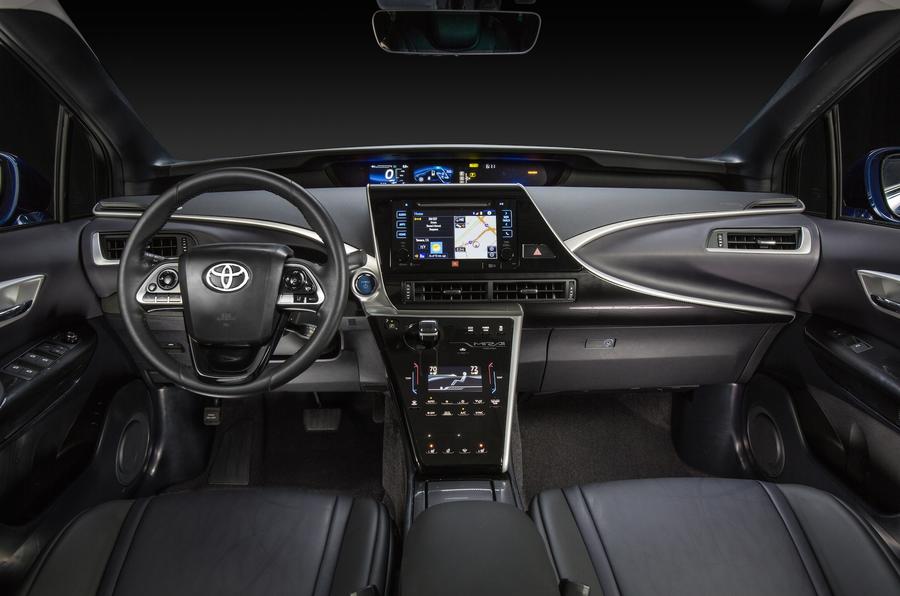
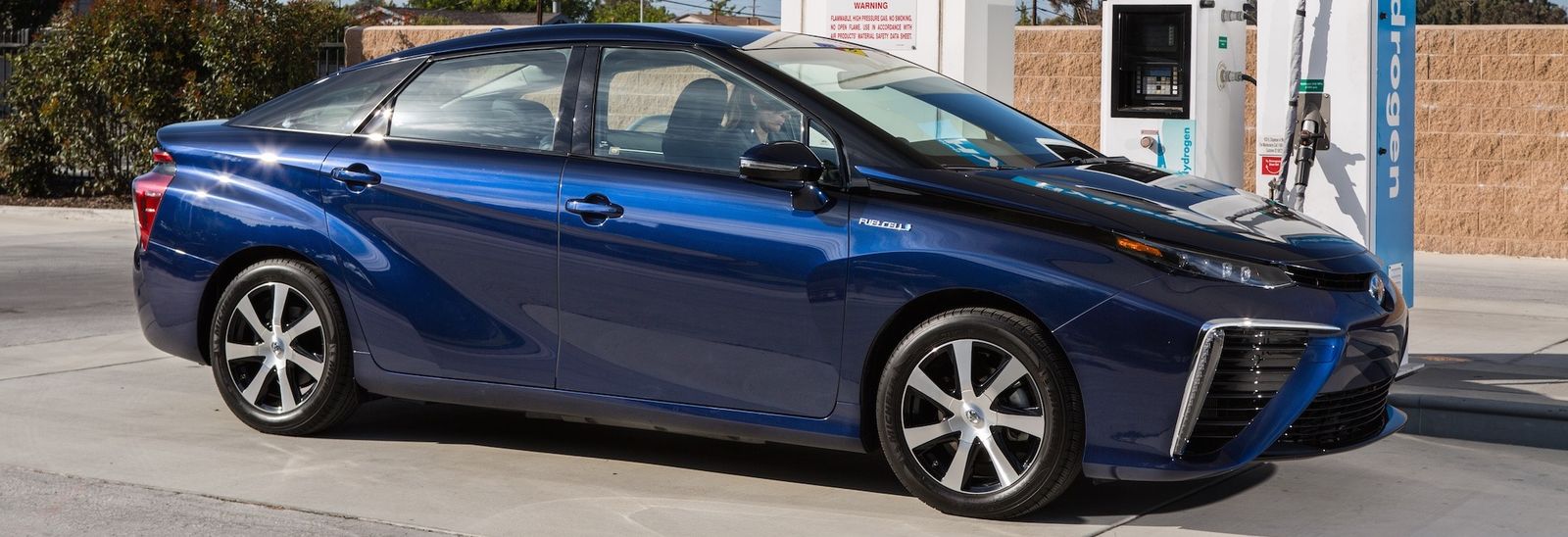
Toyota Mirai Hydrogen Fuel cell car goes the distance, achieving an amazing 67 USMPG.

Hydrogen fuel cell saloon sets record driving range for any zero-emissions car on the market

The new Toyota Mirai hydrogen fuel cell vehicle has proved it can go the distance, achieving  67 miles per gallon in official US combined city/highway driving calculations, and an estimated driving range of 312 miles on a single tank – a distance further than for any other zero-emissions car on the market.


Jim Lentz, Toyota North America CEO, announced the Environmental Protection Agency’s (EPA) fuel economy rating for Mirai at the Aspen Ideas Festival in Colorado this week. It confirms that Mirai is the only zero emissions electric vehicle on the market capable of exceeding 300 miles on one fill.

Lenz said: “Toyota realised in the early 90s that electrification was key to the future of the automobile. Just as Prius introduced hybrid-electric vehicles to millions of customers nearly 20 years ago, Mirai is now poised to usher in a new era of efficient, hydrogen transportation.”

Mirai is the world’s first mass-produced hydrogen fuel cell electric vehicle, a four-door saloon with performance that competes with traditional internal combustion engines. Instead of using petrol, Mirai runs on electricity created on demand by hydrogen fuel and oxygen. The only emission produced by this process is water vapour.

Toyota will introduce Mirai in limited numbers in the UK and other selected European markets later this year, following its launch in Japan and, from this summer, California.

Saturday, 28 February 2015

Toyota Mirai production line: Plant interior and parts selection, plenty of video to watch.

Toyota Mirai production line: Plant interior and parts selection

Toyota Mirai production line: Vehicle trim

Toyota Mirai production line: Chassis and fuel cell system assembly

Toyota Mirai production line: Final assembly

Toyota Mirai production line: Quality control and inspection

Press play to watch the first video, the second and so will carry on after the preceding one.


Toyota ushered in a new era in vehicle technology last November with the launch of production of its Mirai hydrogen fuel cell-powered saloon. The factory chosen for the task is the Motomachi plant in Toyota City, home to many landmark models, most recently the Lexus LFA supercar.

The small but dedicated facility is charged with producing Mirai with the same care and attention to detail that was paid to the LFA. Production of the Lexus V10 coupe was limited to just 500 examples, with the last model coming off the line just over two years ago; Mirai is being manufactured at a rate of around three cars a day.


A new series of short films goes behind the scenes at Motomachi to reveal key stages in the production process, right through to the final inspection every car undergoes before leaving the plant.

Production started at Motomachi in 1959 and in its 56-year history it has produced such renowned Toyotas as Publica, Corona, Cresta, Soarer, Supra and RAV4. Mirai is now on sale in Japan and will be introduced in limited numbers to the UK and other selected European markets during 2015.

Monday, 19 January 2015

Honda launches next generation FCA Concept in Detroit.

As the next-generation Honda FCV Concept makes its North American debut at the 2015 Detroit Motor Show. The Honda FCV Concept showcases the exterior and interior styling evolution of Honda’s next zero emissions fuel-cell vehicle, which is due to be launched in Japan in March 2016, followed by the U.S. and Europe.

The new model will feature a spacious cabin with seating for five passengers, a driving range estimated to be in excess of 300 miles, and an anticipated refuelling time of approximately three minutes at a pressure of 70 MPa. Its fuel cell stack, which fits entirely under the bonnet, is 33 percent smaller with a 60 percent increase in power density compared to that in the outgoing Honda FCX Clarity.


As the next progression in Honda’s dynamic FCV styling, the Honda FCV Concept features a low, wide aerodynamic body with clean character lines. The interior strives to achieve harmony between man and machine by taking advantage of new powertrain packaging efficiencies delivering even greater passenger space than the four-seater FCX Clarity. 

The Honda FCV Concept made its world debut in Japan on November 17th 2014, followed by an announcement at the Los Angeles Auto Show that Honda will provide FirstElement Fuel, in the U.S, with $13.8 million in financial assistance to build additional hydrogen refuelling stations throughout the state of California in an effort to support the wider introduction of fuel-cell vehicles.

The debut of this latest Concept continues more than a decade of Honda leadership in the development of fuel-cell vehicle technology. The original FCX became the first EPA- and CARB-certified fuel-cell vehicle in July 2002, going on to become the world’s first production fuel-cell vehicle when it was introduced to the U.S. and Japan in December 2002. 

In 2003 the FCX became the first fuel-cell vehicle to start and operate in sub-freezing temperatures, and the first FCV to be leased to an individual customer, in 2005. Honda’s commitment to fuel-cell development was further underlined in 2008 when it became the first manufacturer to build and produce a dedicated fuel-cell vehicle on a production line specifically made for fuel-cell vehicles, and the first to create a fuel-cell vehicle dealer network.   .

Friday, 21 November 2014

USA - VW launches their version of the new Hydrogen Fuel Cell vehicle, the Golf Sportwagen HyMotion.

  • Golf SportWagen HyMotion transfers fuel cell technology to high-volume production
  • Golf is the world's first car to offer all drive types that can be implemented today
Volkswagen has presented at the Los Angeles Auto Show the world premiere of the Golf SportWagen HyMotion – a progressive research vehicle with a fuel cell drive.

As the power source of the future, hydrogen andoxygen are combined in the fuel cell to form pure water. Energy is released in this "cold combustion" process – drive energy for an electric motor that turns with zero emissions. 

The front wheel drive Golf SportWagen HyMotion accelerates to 62 mph in 10.0 seconds. The hydrogen is stored safely in four high-tech carbon-fibre tanks, which are located in a space-saving way in the underbody. Their fuel capacity enables a driving range of 310 miles. Refilling ofthe fuel tank of the concept car takes just three minutes.

The key drive components of the Golf SportWagen HyMotion were developed by Volkswagen Group Research in Germany. The fuel cell system, which hasa driving power of 100 kW, was conceptualised at the Volkswagen Technology Centre for Electric Traction. 


In addition, the concept car has a high-voltage lithium-ion battery, which stores the kinetic energy recovered from regenerative braking, assists in the starting phase of the fuel cell and adds a dynamic boost to the maximum acceleration of the Golf SportWagen. The fuel cell andbattery drive an electric motor adapted from the e-Golf.

The mechanical design for this innovative car build is based on the modular transverse matrix (MQB) which was developed by Volkswagen and is used throughout the Group. Thanks to use of MQB, the current Golf hatchback versions and the new Golf SportWagen have advanced to become the world's first vehicle model series that can host all conceivable drive types. 

Today, the Golf is already offered with petrol engines  (TSI), diesel engines (TDI), a natural gasdrive (TGI)1, an electric drive (e-Golf)2 and a plug-in hybrid drive (Golf GTE)3. No other car offers such a variety of drive types.

Volkswagen is showing the Golf SportWagen HyMotion to demonstrate for the first time how a hydrogen fuel cell could be implemented based on the MQB as soon as research and development work has been completed and a solution could be developed whose price would be acceptable to new car buyers. 

Before market launch, a hydrogen infrastructure must first be created. This means not only a broad network of hydrogen fuel stations, but also the production of the hydrogen itself, because hydrogen only makes sense as a source of drive energy if the primary energy used to produce it comes from renewable energy sources.

Unlike many of its competitors, Volkswagen is following the strategy of implementing its alternative drives in high-volume production vehicles. Just as the all-electric e-Golf and the Golf GTE that is equipped with a plug-in hybrid drive are integrated in a production model that has everyday practicality, so future fuel cell drives would also be integrated into production models that have been optimally engineered and are offered at an attractive price. 

It was with this objective in mind that several research vehicles were built based on the American Passat, in which the same drive components from the Golf SportWagen HyMotion are used. The fleet of Passat HyMotion vehicles is currently being tested on the streets of California.

USA - AUDI to introduce its version of the Hydrogen Fuel Cell car, the A7 Sportback.

  • Expertise in fuel cell technology – A7 Sportback h-tron quattro technology demonstrator ready for real-life traffic
  • Long range – more than 300 miles
  • Plug-in hybrid concept with electric quattro
It covers 310 miles on one tank of fuel – and its exhaust emits nothing more than a few drops of water: The A7 Sportback h-tron quattro uses a powerful electric drive with a fuel cell as its energy source, in combination with a hybrid battery and an additional electric motor in the rear. 

Its drive configuration makes the emission-free Audi A7 Sportback h-tron quattro a quattro through and through, with 170 kilowatts of power at its disposal – a new departure in fuel cell cars. There is no mechanical connection between the front and rear axles. As an e-quattro, the A7 Sportback h-tron quattro features fully electronic management of torque distribution.

“The A7 Sportback h-tron quattro is a genuine Audi – at once sporty and efficient. Conceived as an e-quattro, its two electric motors drive all four wheels,” explained Prof. Dr. Ulrich Hackenberg, Member of the Board of Management for Technical Development at Audi. 

“The h-tron concept car shows that we have mastered fuel cell technology. We are in a position to launch the production process as soon as the market and infrastructure are ready.”


The “h” in the name h-tron denotes the chemical element hydrogen. In visual terms the technology demonstrators that Audi has brought along to the Los Angeles Auto Show basically resemble the production models. 

As the label with the h-tron signet reveals, this concept car now takes its place alongside the other Audi models with alternative drive principles, the e-tron and g-tron. Externally, there is no other evidence of the fuel cell that converts hydrogen into electrical power on board the vehicle.

The fuel cell

The crucial differences are beneath the bonnet of the A7 Sportback: The fuel cell in the Audi technology demonstrator is installed at the front, mirroring the conventional A7 Sportback with combustion engine. Because the exhaust system only has to handle water vapour, it is made of weight-saving plastic.

The fuel cell itself comprises over 300 individual cells that together form a stack. The core of each of these individual cells is a polymer membrane. There is a platinum-based catalyst on both sides of the membrane.

This is how the fuel cell works: Hydrogen is supplied to the anode, where it is broken down into protons and electrons. The protons migrate through the membrane to the cathode, where they react with the oxygen present in air to form water vapour. Meanwhile, outside the stack the electrons supply the electrical power – depending on load point, the individual cell voltage is 0.6 to 0.8 volts.

The entire fuel cell operates in the voltage range of 230 to 360 volts.

The main auxiliary assemblies include
  • a turbocharger that forces the air into the cells,
  • the so-called recirculation fan – it returns unused hydrogen to the anode, thus increasing efficiency, and
  • a coolant pump.
These components have a high-voltage electric drive and are powered by the fuel cell.

There is a separate cooling circuit for the essential cooling of the fuel cell. A heat exchanger and a thermoelectric, self-regulating auxiliary heating element maintain pleasant temperatures in the cabin.

The fuel cell, which operates across a temperature range of 80 degrees Celsius, places higher demands on the vehicle cooling than an equivalent combustion engine but achieves superior efficiency of as high as 60 percent – almost double that of a conventional combustion engine. Its cold-starting performance is guaranteed down to -28 degrees Celsius.

Plug-in hybrid

A special feature of the A7 Sportback h-tron quattro is its plug-in hybrid concept – this represents a logical evolution from the Audi A2 H2 and Q5 HFC test cars. It has a lithium-ion battery on board that can be recharged from the power socket by lead; with an 8.8 kWh energy capacity, it has been adopted from the A3 Sportback e-tron*. It is located beneath the boot and has a separate cooling circuit for thermal management.

This high performance battery makes the ideal partner to the fuel cell. It can store energy recovered from brake applications and supply considerable power for full load boosting. This paves the way for impressive acceleration, making the A7 Sportback h-tron quattro truly live up to quattro standards. 

Both the front and rear axles have no mechanical connections for the transmission of power. In the event of slip, the torque for both driven axles can be controlled electronically and adjusted continuously.

On battery power, the Audi A7 Sportback h-tron quattro covers as much as 31 miles. The battery in the rear of the plug-in hybrid can be recharged by lead. Depending on the voltage and current rating, a full recharge takes between two hours (industrial power socket/360 volts) and four hours (domestic power socket at 230 volts).

The battery operates at a different voltage level to the fuel cell. For that reason, there is a DC converter (DC/AC) between the two components. This tri port converter is located behind the stack. In many operating statuses it equalises the voltage, enabling the electric motors to operate at their maximum efficiency of 95 percent.

The power electronics in the front and rear of the vehicle convert the direct current from the fuel cell and battery into alternating current for the electric motors to drive the front and rear axles separately.

The two electric motors, which are cooled by a low-temperature circuit together with the voltage converters, are permanently excited synchronous machines. Each of them has an output of 85 kW, or even 114 kW if the voltage is temporarily raised. The peak torque is 270 Newtonmeters (199.1 lb-ft) per electric motor.

The electric motors’ housings incorporate planetary gear trains with a single transmission ratio of 7.6:1. A mechanical parking lock and a differential function round off the system.

The appeal of e-quattro

Driving in the Audi A7 Sportback h-tron quattro offers the full appeal of electric drive in conjunction with the new e-quattro. The silent propulsion is fully available from the off, and the fuel cell reaches its maximum output within one second at full load – a more dynamic response than a combustion engine because the entire drive system involves only a few mechanical components.

With 540 Nm (398.3 lbft) of propulsive power at its disposal the Audi A7 Sportback h tron quattro, which tips the scales at only around 1,950 kilograms, races from a standstill to 62 mph in 7.9 seconds. Its top speed is  111 mph – a top figure for its field of competitors. The e-quattro concept requires precise coordination of the electric motors – the technology demonstrator offers a dynamic, stable and high-traction drive that is comparable to a production car with mechanical quattro drive.

A power meter – in the place of the revolution counter in the instrument cluster – informs the driver of the momentary power flow. The outer sections show the fuel level in the hydrogen tank and the level of battery charge. 

Graphics on the MMI monitor visualise the energy flow. When the driver presses the EV button, the technology demonstrator drives solely on battery power.
Switching from automatic transmission mode D to S increases the level of energy recovery when braking, so that the battery is charged up effectively during sporty driving. Brake applications, too, are almost always accomplished fully electrically: 

The electric motors then act as alternators and convert the car’s kinetic energy into electrical energy that is stored in the battery. The four disc brakes only become involved if more forceful or emergency braking is required.

The tank flap is in the right side section of the five-door coupé, concealing a filler connector for the hydrogen. Fully refueling with H2 takes around three minutes, roughly as the same as a conventional automobile. The tanks communicate with the refuelling system by infrared interface and equalise the pressure and temperature levels.

Zero emissions

The four hydrogen tanks of the Audi A7 Sportback h-tron quattro are located beneath the base of the boot, in front of the rear axle, in the centre tunnel. An outer skin made from carbon fibre reinforced polymer (CFRP) encases the inner aluminium shell. 

The tanks can store around five kilograms of hydrogen at a pressure of 700 bar – enough to drive for around 310 miles. According to the NEDC cycle, fuel consumption is roughly one kilogram of hydrogen per 100 kilometers – an amount with an energy content equivalent to 76.4mpg combined.

It is already the case that the A7 Sportback h-tron quattro always travels with zero local emissions. By using the renewable fuel hydrogen, it can also be used globally as a zero emissions vehicle: 

Since 2013 Audi has been operating a pilot plant in which renewable wind power is used to produce hydrogen by electrolysis. At present, this hydrogen is still used in an additional production process to obtain synthetic methane (Audi e-gas). A future move to feed this hydrogen into a hydrogen supply and filling station network would make it available for refueling fuel-cell vehicles. This is a sound option for sustainable mobility with no emissions.

Monday, 17 November 2014

Toyota names it's Fuel Cell Vehicle (FCV) the Mirai, the future, now.

Akio Toyoda Announces Name of Fuel Cell Saloon.
Akio Toyoda has seen the future, and it’s called “Mirai”. That’s the name of Toyota’s new fuel cell vehicle, which the company’s president announced the day before the car’s official launch.
Mirai, which means future in Japanese, represents a turning point for the automotive industry, offering the promise of a world that is safer, greener and easier for everyone. This ground breaking vehicle has the cruising range of a conventional saloon, can be refuelled in less than five minutes and emits only water vapour. In Akio Toyoda’s words: “This is a car that lets you have it all with no compromises.”

Transcript of Akio Toyoda’s Announcement Video
Today, we are at a turning point in automotive history.
A turning point where people will embrace a new, environmentally-friendly car that is a pleasure to drive.
A turning point where a four-door sedan can travel 300 miles on a single tank of hydrogen, can be refuelled in under five minutes and emit only water vapour.
A turning point that represents many years and countless hours of work by our team to create a car that redefines the industry.
All of us at Toyota believe in a future that will be safer, greener and easier for everyone.
We imagined a world filled with vehicles that would diminish our dependence on oil and reduce harm to the environment.
It was a bold, but inspiring goal. And, today it is a reality.
Our fuel cell vehicle runs on hydrogen that can be made from virtually anything, even garbage!
It has a fuel cell that creates enough electricity to power a house for about a week.
This is a car that lets you have it all with no compromises.
As a test driver, I knew this new fuel cell vehicle had to be truly fun to drive – and believe me, it is. It has a low centre of gravity, which gives it very dynamic handling.
After surviving millions of miles on the test track and 10 years of testing on public roads in freezing cold and scorching heat…
After passing extensive crash tests…
And after working with local governments and researchers around the world to help make sure it is easy and convenient to refuel…
We are ready to deliver.
The name we’ve given to our new car is Mirai, which in Japanese means ‘future’.
We believe that behind the wheel of the Mirai, we can go places we have never been, to a world that is better, in a car that is better.
For us, this isn’t just another car. This is an opportunity–an opportunity to really make a difference. And making a difference is what Toyota is all about.
The future has arrived. And it’s called Mirai.

Tuesday, 21 October 2014

Hyundai recieves the first batch of Fuel Cell cars in the UK.

  • Six Hyundai ix35 Fuel Cell vehicles arrive for first UK customers
  • Arrival follows £11m government and industry funding to support hydrogen transport
  • ix35 Fuel Cell is world’s first series-production Fuel Cell car
  • Demonstrates Hyundai’s commitment to sustainable fuel technologies
The first ix35 Fuel Cell customer vehicles have arrived in the UK, continuing Hyundai’s global roll-out of the world’s first series-production hydrogen-fuelled car.
Hyundai is the first car manufacturer to supply these zero-emission vehicles to paying customers in the UK, paving the way for growth of the clean technology, having led its research and development since 1998.  
The arrival of ix35 Fuel Cell vehicles comes just days after Business Minister Matthew Hancock announced £11 million of UK government and industry funding to support hydrogen transport. This continued investment in the sector through 2015 will expand the nationwide hydrogen refuelling station network, boosting consumer confidence and increasing uptake of fuel cell vehicles.

Tony Whitehorn, President and CEO, Hyundai Motor UK, commented: “Making the first UK customer deliveries of hydrogen-powered cars is a huge landmark for the industry. Hyundai is the first company in the world to start series-production of a fuel cell vehicle and is committed to rolling-out this technology in line with government plans to grow the refuelling infrastructure.”
Among the first to enjoy operating the pioneering vehicles on UK roads are organisations including Air Products, ITM Power, Johnson Matthey and Transport for London.
The Deputy Mayor of London for business and enterprise, Kit Malthouse, said: “I firmly believe that hydrogen fuel cell technology will eventually replace the internal combustion engine but we have to show the public the vehicles, let them kick the tyres and demonstrate that it is more than just a science fiction story, it works and can be used in a very similar manner to the cars they are used to. That is why these new vehicles are so important, it is about putting the technology on the street and taking the first steps towards a viable hydrogen future both in London and nationwide.”
Promoting the adoption of fuel cell vehicles in the UK, Hyundai is part of a number of collaborative projects. These include London’s Hydrogen Network Expansion (LHNE), a project backed by Innovate, and Hydrogen For Innovative Vehicles (HyFIVE). Hyundai is also a supplier to HyTEC, which alongside HyFIVE is funded by the Fuel Cells and Hydrogen Joint Undertaking (FCH JU). In addition, Hyundai Motor UK is also a participant in the UKH2 Mobility project that has played a key part in advising government.
With no harmful tailpipe emissions, ix35 Fuel Cell can travel more than 350 miles in real-world driving conditions before refuelling, which is a quick and easy process similar to refuelling a petrol or diesel vehicle.
UK consumers can order ix35 Fuel Cell vehicles today by contacting Hyundai UK directly. Coordinating deliveries worldwide, Hyundai will fulfil new customer deliveries in early 2015.