Purpose

I will try my best to provide detailed info on various cars and what is like to live with them, I have already produced a few for Jaguar-car-forums, I will do my best to be unbiased, but it will be hard for some cars. I will re-produce press releases and copy from other motoring news.
Showing posts with label ion. Show all posts

Monday, 7 March 2016

Jato Dynamics announces that Peugeot has risen to #1 and Norway at #1 for the lowest average CO2 levels.

  • Peugeot climbs one place to claim the lowest average CO2 emissions for 2015 among volume brands in Europe at 103.5g/km
  • Europe’s average CO2 emissions for the year fell by 4.0g/km to 119.3g/km following strong falls in Norway, Switzerland and Czech Republic
  • Norway recorded the lowest average CO2 emissions of the 23 countries studied at 100.5g/km, a fall of 10.1g/km
Average CO2 emissions for new cars continued to fall across Europe during 2015, according to the annual CO2analysis carried out by JATO Dynamics. The analysis, which covered 23 European markets, concluded that average CO2 emissions fell by 3.2% across 2015 to finish at 119.3g/km. 

The result was 4g/km lower than the total seen in 2014 and 7.5g/km lower than the figure registered in 2013. 

The improvement is due to significant reductions coming from small and midsize markets including Norway and Switzerland, better results posted by big volume car makers and increasing numbers of electric vehicle registrations. Importantly, the reduction coincided with a 9.3% rise in registrations in the 23 markets studied across the same period, further emphasising the headway being made.

Peugeot was the new emissions leader for 2015, ahead of Citroën and Renault, with an outstanding improvement of 5.8g/km compared to 2014. The French brand’s total average CO2 emissions decreased from 109.3g/km in 2014 to 103.5g/km in 2015. Peugeot posted the second best improvement among the top 20 brands, buoyed by progress from the 1.0 and 3 cylinder petrol engines that power the Peugeot 108. The other Peugeot models that contributed to the overall improvement were the 308 with an average of only 97.8g/km (vs. 102.3 in 2014), and the Peugeot 208 at 99.3g/km.

Citroën, the other volume brand within the PSA Group, occupied second place with 105.7g/km, down 5.1g/km on 2014. This was driven by the higher volumes achieved by the Citroën C4 Cactus (+173%), the second best-selling Citroën in 2015 and the model that posted the second lowest average emissions for the brand this year.
Renault dropped two places to third in 2015, as the brand sold more SUV/Crossovers with bigger engines. The Captur’s registrations increased by 17%, while its average CO2 emissions increased from 105.7g/km in 2014 to 106.2g/km in 2015. The new Kadjar compact SUV, introduced in the second half of 2015, counted for 5.1% of Renault registrations with average CO2 emissions of 112.9g/km. The real progress was made by the Clio (-2.1g/km) and the Twingo (-6.1g/km).
Fourth place was claimed by Toyota, which managed to reduce its average emissions by 4.9g/km to 107.7g/km in 2015. Last year, Toyota’s hybrid vehicles counted for 29% of its registrations, three more percentage points than in 2014. Nissan stayed in fifth, posting the highest average increase in CO2 emissions among the top 20. The Japanese brand recorded a rise in the average emissions for its top-seller – the Qashqai - from 115g/km to 116.3g/km in 2015, due to increased sales of the 1.2 115hp and 1.6 120hp petrol engines.
Skoda was the most improved brand in the top 20, reducing its average CO2 emissions by 6.2g/km thanks to the new generation Fabia. The model included more efficient engines in 2015, allowing this subcompact to reduce its emissions from 121.6g/km in 2014 to 107.1g/km. Fabia sales rose 38% in 2015, and counted for 26% of Skoda’s registrations. Volkswagen, the largest car brand in Europe, posted the third best performance. Its average emissions dropped by 5.6g/km from 123.4g/km in 2014 to 117.8g/km in 2015. Volkswagen benefitted from the new Passat, which featured improved engines that allowed the model to improve its average emissions from 129.2g/km in 2014 to 114.1g/km last year.
Outside the top 20, it is important to mention the significant progress made by Land Rover (-11.4g/km), and Smart, whose average remained low – just 94.3g/km - despite the introduction of the larger Forfour model.
“There are a number of reasons for the improvements in CO2 emissions in 2015. The introduction of lighter models, more efficient engines, and increased sales of hybrid and electric vehicles, all contributed to a positive outlook for further emissions reductions in the future.” commented Felipe Munoz, Global Automotive Analyst at JATO Dynamics.
All segments recorded a reduction in average CO2 emissions in 2015 compared to 2014. The averages follow the expected patterns according to size, weight and engine type; for example, the city car segment posted the lowest average at 104.1g/km (-1.6g/km), followed by the subcompacts and compacts at 107.6g/km and 110.6g/km respectively. The midsize sedan/SW was fourth with 121.8g/km and then the small MPV was fifth with 122.6g/km. The average CO2 emissions recorded by SUVs remained behind the midsize and large sedan segments at 143.7g/km. Luxury and Sports cars registered the highest CO2 emissions average at 182.6g/km and 154.8g/km respectively. The biggest improvements came from the upper segments such as big MPVs (-10.5g/km), SUVs (-8.3g/km) and large sedans/SW (-7.7g/km).
Munoz added: “Despite the average emissions level in the SUV segment remaining high in 2015, the improvements made are promising for the industry and its future strategies for reducing emissions - especially given  status of SUVs as the best-selling segment in Europe.”
NORWAY OUTPERFORMS THE NETHERLANDS
Norway’s outstanding progress meant it overtook the Netherlands to record the lowest average emissions across Europe, with its emissions average falling from 110.5g/km in 2014 to 100.5g/km in 2015. Norway not only ranked first but recorded the highest reduction of all 23 countries. Last year zero-emissions car registrations increased by 42% and counted for 17% of total market. The Netherlands recorded an average of 101.3g/km, with hybrid and electric cars counting for 12% of the market in 2015 against 7.8% in 2014.
France recorded the lowest average CO2 emissions among the Big-5 European markets, but its reduction was only 3.0g/km. Last year the French market saw a 22% rise in SUVs and 12% in city cars, while the demand for subcompacts and compacts grew by only 1% and 4% respectively. On the other hand, Germany, with the highest average among the Big-5 and the third highest in the full ranking, recorded 127.3g/km. It was negatively affected by the big share of midsize sedans/SW (12% of total market) and by the performances of compact cars, the country’s largest segment.

Thursday, 15 January 2015

UK SALES - PEUGEOT - Growth over 2013 shows there is STILL life in the old Lion.

  • Peugeot Retail new car sales up 12%, outperforming the market, with over 52,000 registrations
  • December retail demand up 27% thanks to desirable new models such as 108, 2008 and 308
  • LCV sales up a massive 50% year on year, the highest growth of any van manufacturer
  • Strategy to further grow retail sales will continue during 2015
PEUGEOT’s drive to expand its retail share of the UK’s new car market has continued to pay dividend, with outstanding end-of-year figures for both Passenger Cars and Light Commercial Vehicles (LCVs).

Customer demand has been exceptional thanks to a model range that is the youngest in PEUGEOT’s history. It’s packed full of sophisticated design, exceptional value for money and high desirability.

The product range is also matched by customer experience with owners of the cars with the ‘Lion’ badge not shy about broadcasting the virtues of their vehicles either. PEUGEOT has recently joined forces with independent online customer review service Reevoo.


As part of an on-going commitment to customer satisfaction PEUGEOT publishes online assessments from genuine owners of its cars on www.peugeot.co.uk. Since March 2014, Reevoo has collected, collated and verified 2,063 reviews, with the average satisfaction rating an impressive 8.6 out of 10.

Total Sales:

Full-year total sales for 2014 stood at 135,834 – up more than 7% on the 2013 total; PEUGEOT’s 2014 total sales volume is the highest in seven years.

Passenger Car sales:

Full-year total retail new car sales for 2014 stood at 52,792 – a figure that’s up more than 12% on the 2013 total. It’s significantly higher than the industry average (+9.9%), and has seen PEUGEOT’s retail market share grow to 4.5% in 2014. Retail sales in December alone reached 2,679 units, a year-on-year rise of over 27%.

The sales growth is primarily thanks to exceptional retail sales performance from three critically acclaimed new models:
  • The all-new PEUGEOT 108 proved it has what it takes to succeed in the city car segment, selling 7,579 units in the first six months of its life.
  • Strong demand for the PEUGEOT 2008 Compact Crossover also continued to be exceptional with 17,419 sales in the model’s first full year.
  • The PEUGEOT 308, the reigning European Car of the Year, put in an outstanding performance, with sales of 14,697.
Light Commercial Vehicle sales:

Dealers have had stunning success in 2014 with PEUGEOT’s versatile and practical range of commercial vehicles. The grand total for the year was 32,268 vans sold – up a massive 50% on 2013.

It’s the biggest UK market growth of any LCV manufacturer during 2014. It means PEUGEOT ended the year as the fourth largest player in the market, a jump of two places compared to 2013. The Brand’s market share grew from 7.7% in 2013 to 9.8% in 2014.

PEUGEOT Partner was the number one choice in the compact van sector, while the PEUGEOT Boxer was a top three performer in the K3 (3.26t-3.5t) and K4 (3.5t-5.0t) sectors. PEUGEOT was also the number one brand in 2014 for sales to Motorhome converters.
PEUGEOT’s strategy throughout 2014 was to drive growth in the retail sector and carefully selected fleet channels. It was supported by a managed reduction in sales to certain high-cost corporate sectors.

The sales strategy has been hugely successful and will continue in 2015, with demand across the range spearheading more success.

Neil Moscrop, previously PEUGEOT’s Sales Director and newly appointed Brand Director, commented: “2014 was a superb year for Peugeot, our best sales performance for seven years, with retail demand for our cars up 12% and outperforming the market. Our Dealer Network has played a significant role in our success this year, delivering exceptional levels of customer service and excelling not just with retail customers, but with fleet and small business. That coupled with an excellent sales performance in light commercial vehicle shows that PEUGEOT is very much ‘Back In the Race’.”

He added: “Our strategy for retail sales is very simple. We have a very competitive list price with higher specification levels than the sector average, supported by improving residual values, and we try to be transparent in the way we treat our customers. PEUGEOT’s desire to drive demand in the retail sector will continue over the next 12 months, supported by new product launches and exceptional customer service.”

Thursday, 23 October 2014

UK RECALL #4 & #5 - Peugeot - Braking efficiency may be affected.

Vehicle Details
Reference :R/2014/119
Manufacturer Ref :ZSQ 
Make:PEUGEOT
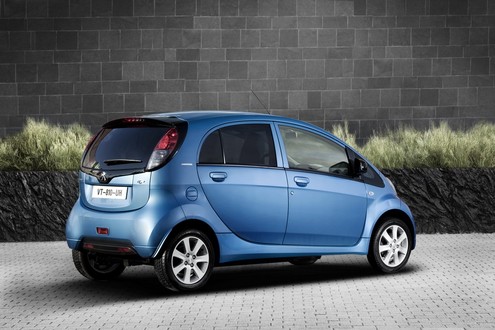
Model :ION
Launch Date :07/10/2014
Numbers Involved :98
Build Start Date :15/11/2010
Build End Date :26/02/2011 
Recall Details
Concern :BRAKING EFFICIENCY MAY BE AFFECTED
Description :The brake servo pump system could develop problems with malfunction indicator lamps and audible warnings accompanied by the vacuum pump stopping. This will require the driver to apply greater force on the brake pedal to stop the vehicle.
Remedial Action :Recall the vehicles that are likely to be affected to download the vacuum pump with a new version of the control software.
Vehicle Id :VF3******BU800323 to VF3******BU802590
Other Vehicles Affected (Click the vehicle to perform an extended search)

NUMBER 2

Vehicle Details
Reference :R/2014/117
Manufacturer Ref :ZSU 
Make:PEUGEOT
Model :ION
Launch Date :07/10/2014
Numbers Involved :133
Build Start Date :20/10/2010
Build End Date :27/07/2011 
Recall Details
Concern :BRAKING EFFICIENCY MAY BE AFFECTED
Description :The brake servo pump system could develop problems with malfunction indicator lamps and audible warnings accompanied by the vacuum pump stopping. This will require the driver to apply greater force on the brake pedal to stop the vehicle.
Remedial Action :Recall the vehicles that are likely to be affected to download the vacuum pump with a new version of the control software.
Vehicle Id :VF3******BU800241 to VF3******CU801165
Other Vehicles Affected (Click the vehicle to perform an extended search)

Wednesday, 8 October 2014

SEPTEMBER SALES - PEUGEOT - The Lion is definately going from strength to strength with higher sales.

  • Retail sales up 17% compared to September 2013
  • Over 22,000 Peugeot vehicles sold in September
  • Hugely popular 208 and 2008 spearhead a solid performance
  • Light Commercial Vehicle sales up 50% on 2013
PEUGEOT’s drive to substantially grow retail new car registrations has again proved the right strategy, with positive results for September.
Thousands of customers headed for PEUGEOT showrooms to buy a 64-plate car, spurred on by a range that is the youngest in PEUGEOT's history and packed full of sophisticated design, exceptional value for money and high desirability.
Almost 11,000 retail customers registered a new PEUGEOT in September, that’s a 17.2% rise on September 2013 in a market segment that was just 6% higher. It is a clear vindication of the Brand’s strategy to develop its retail business still further.
Selling 6,968 units across both retail and fleet, the PEUGEOT 208 was the ninth best-selling car overall in the month and number seven in the retail market.

PEUGEOT’s compact vehicle line-up has never been stronger, and demand for the 208 combined with sales of the versatile 2008 Crossover illustrates that point perfectly. Retailers have broken through the 40,000 registrations barrier already this year with these two key models. That’s a 23.5% increase on last year!
The all-new PEUGEOT 108 has made a strong start to its showroom life. Despite only being launched in July, sales of 2,797 units in September reveal early customer interest is translating into sales and order books going forward are very healthy.
Year-to-date sales of the new PEUGEOT 308 – expected to get an extra boost in the coming months thanks to the arrival of a performance-oriented GT derivative – are also up on the model it replaced.
Demand across PEUGEOT’s popular and practical LCV range is also very strong. Including the Bipper, Partner, Expert and Boxer families, PEUGEOT has sold 24,452 units YTD. Compared to just 16,282 last year, it’s an impressive increase of more than 50%.
Year-to-date new vehicle sales for PEUGEOT stand at just under 110,000 up 7.4% on the same period in 2013. This is even more impressive when it is understood that the Brand has deliberately reduced its fleet commitments in certain channels.
Director of Sales, Neil Moscrop said: “Retail demand for our cars is what we’ve actively targeted during 2014, and to be up more than 17% in the biggest month of the year is fantastic news. That coupled with an excellent sales performance in light commercial vehicle shows that PEUGEOT is very much ‘Back In the Race’.”

Tuesday, 27 May 2014

USA - 79 lawsuits filed for a total of $10 Billion against GM in Ignition switch recall.

Consumers have filed 79 lawsuits for a total of $10 billion for the lost value of their old GM cars due to the ignition switch recalls. According to a report from The Detroit News, in a U.S. Bankruptcy Court filing, GM has said it has been sued in an additional 20 ignition switch class-action lawsuits since April 30. Many of the lawsuits claim GM failed to properly warn owners that their cars were unsafe. 


Some of the lawsuits suggest the "old GM" knowingly withheld that information, and that the "new GM," which bought and operated the old GM, should be liable as it is a post-bankruptcy successor.

The GM ignition recalls involve Chevrolet Cobalts, Saturn Ions, and other models produced before the automaker's 2009 bankruptcy. GM has asked a judge to rule that it isn't liable for claims prior to its 2009 bankruptcy filing. Meanwhile, a panel of judges is likely to decide next week which courts should handle the lawsuits, and if they should be combined into one. 


This week U.S. Senators Richard Blumenthal, D-Conn., and Lindsey Graham, R-S.C., introduced a bipartisan bill requiring federal judges to consider public health and safety before allowing court records to be sealed per a party's request. GM had previously sealed cases tied to the ignition switches which prevented the public from knowing the dangers tied to the faulty vehicles.

REPORT HERE

Sunday, 16 March 2014

USA - Auto Safety Watchdog Says 303 Deaths Related to GM Ignition Recall.

An issue that resulted in a General Motors recall may be responsible for up to 303 deaths, according to an automotive safety watchdog. The Center for Auto Safety said it referenced crash and fatality data from the National Highway Traffic Safety Administration's Fatal Analysis Reporting System, according to a report in Reuters. The 303 deaths allegedly occurred when airbags failed to deploy in 1.6 million compact cars recalled by GM.

Those numbers are in stark contrast to the 12 deaths GM has reported in 34 crashes. In response to the watchdog's death toll claim, GM said the Center for Auto Safety created its report on "raw data," and added "without rigorous analysis, it is pure speculation to attempt to draw any meaningful conclusions." The faulty switch problem may shut off and deactivate the airbags while the car is in motion and traveling at high speeds.

Affected vehicles include the 2005-2007 Chevrolet Cobalt and Pontiac G5, 2003-2007 Saturn Ion, 2006-2007 Chevrolet HHR, and 2006-2007 Pontiac Solstice and Saturn Sky models. The U.S. automaker issued the recall in February, despite first learning about the faulty ignition switch in 2001. Clarence Ditlow, the center's executive director, believes action should have been taken long ago. 


"NHTSA could and should have initiated a defect investigation to determine why airbags were not deploying in Cobalts and Ions in increasing numbers." U.S. Transportation Secretary Anthony Foxx promised an "aggressive investigation," and would look at whether GM was slow in reporting the faulty ignition problems to the federal government. The U.S. attorney's office in Manhattan has opened a criminal probe, while House and Senate committees have pledged to hold hearings questioning GM and the NHTSA's handling of the situation. GM has said the investigation is "ongoing."

REPORT HERE

Wednesday, 26 February 2014

USA - RECALL - GM to expand recall notice to nearly 1.4 million cars for ignition issues.


  • Chevrolet HHR, Pontiac Solstice, and Saturn Ion and Sky included
  • Company Launches Process Review

General Motors is expanding the recall of certain 2003-2007 model year vehicles to correct a condition with the ignition switch that may allow the key to unintentionally move or switch to the “accessory” or “off” position, turning off the engine and most of the electrical components on the vehicle.


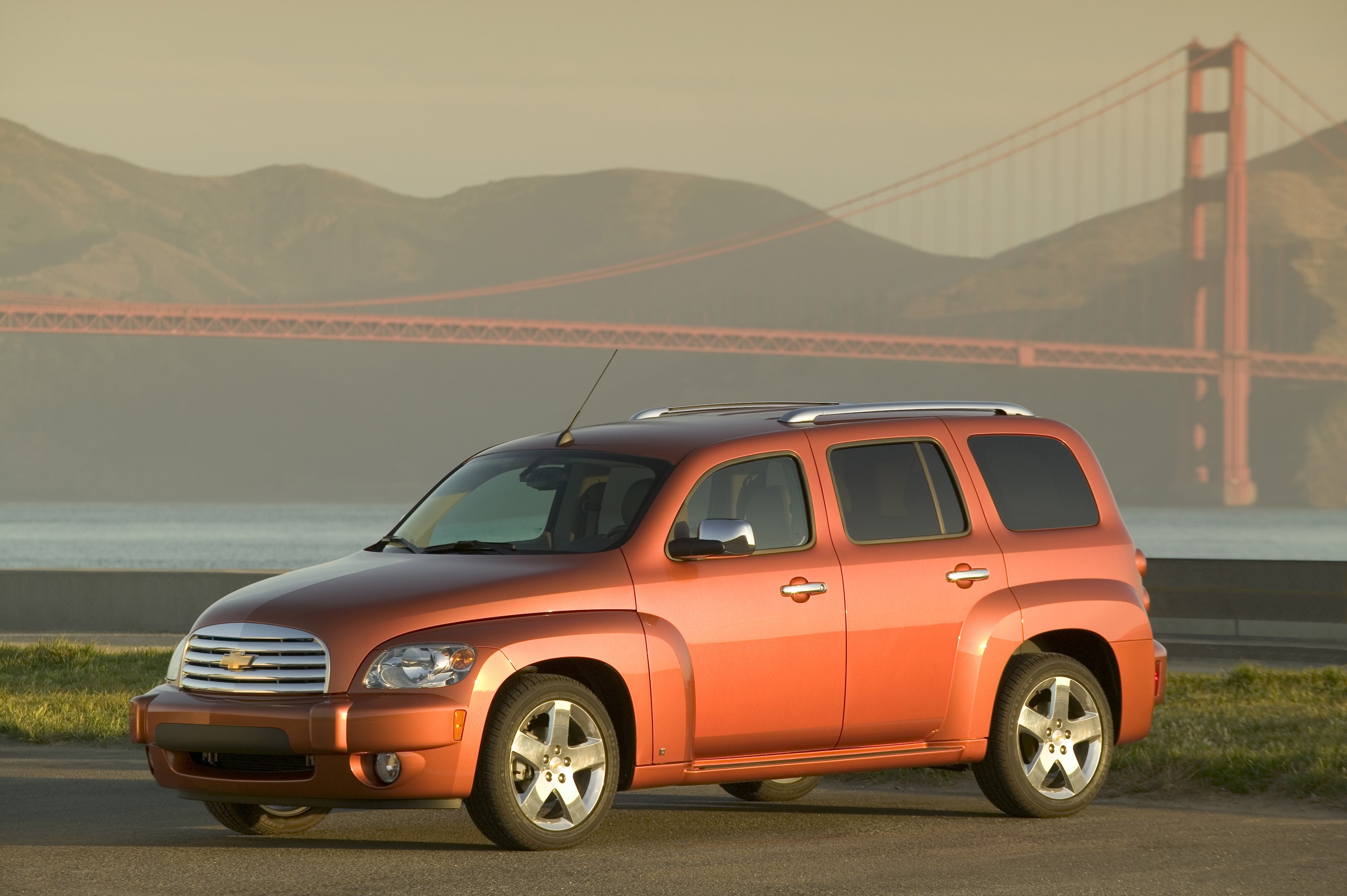
In addition to 2005-2007 Chevrolet Cobalts and Pontiac G5 and Pontiac Pursuit sold in Canada only, GM is separately recalling 2003-2007 Saturn Ions, 2006-2007 Chevrolet HHRs, and 2006-2007 Pontiac Solstice and Saturn Sky models. The affected U.S. vehicle population, including those vehicles recalled Feb. 13, totals 1,367,146.

This expanded vehicle population raises the number of reported incidents involving frontal crashes, in which the recall condition may have caused or contributed to the non-deployment of the frontal airbags, to 31 involving 13 front-seat fatalities.

As part of the recall, GM is taking steps to address customer concerns and working with its suppliers to increase parts production and accelerate availability.

GM will notify all affected customers that in addition to recalling their vehicles and performing repairs at no charge to them, GM and its dealers will work with customers on an individual, case-by-case basis to minimize inconvenience associated with the recall.

“Ensuring our customers’ safety is our first order of business,” said GM North America President Alan Batey. “We are deeply sorry and we are working to address this issue as quickly as we can.”

Going beyond required written notification, GM, through its customer care centers and social media teams, is using customer records and communications channels to notify affected customers of the recall and additional actions the company is willing to take to relieve their concerns and minimize inconvenience.

GM is recalling these vehicles because the ignition switch torque performance may not meet GM specifications. If the torque performance is not to specification, and the key ring is carrying added weight or the vehicle goes off road or experiences some other jarring event, the ignition switch may inadvertently be moved out of the “run” position.

The timing of the key movement out of the “run” position, relative to the activation of the sensing algorithm of the crash event, may result in the airbags not deploying, increasing the potential for occupant injury in certain kinds of crashes.

Dealers will replace the ignition switch to prevent the unintentional or inadvertent key movement.  Until this correction is performed, customers should use only the ignition key with nothing else on the key ring. As always, customers should drive responsibly and use their safety belts.


On Monday, the company submitted to the National Highway Traffic Safety Administration a detailed chronology associated with its initial recall of the ignition switch torque performance condition in Chevrolet Cobalts and Pontiac G5s and Pursuits. The chronology outlines events that happened during the time that elapsed between receiving the first field reports and issuing a recall.

“The chronology shows that the process employed to examine this phenomenon was not as robust as it should have been,” said Batey. “Today’s GM is committed to doing business differently and better. We will take an unflinching look at what happened and apply lessons learned here to improve going forward.”