Purpose

I will try my best to provide detailed info on various cars and what is like to live with them, I have already produced a few for Jaguar-car-forums, I will do my best to be unbiased, but it will be hard for some cars. I will re-produce press releases and copy from other motoring news.
Showing posts with label lane assist. Show all posts

Tuesday, 11 July 2017

The ŠKODA KAROQ: New compact SUV with lots of space and state-of-the-art technology

  • ​› Design: modern dynamic SUV design language
  • › Powertrains: four new engines, powerful and efficient TSI and TDI 
  • › Chassis: state-of-the-art technology, up to five driving modes and special Off-Road mode 
  • › Driver assistance systems: extended range for increased safety and comfort 
  • › ŠKODA Connect: infotainment with capacitive touch screen in glass design and Care Connect for assistance 
  • › Equipment: Full-LED headlights, digital instrument panel 
  • › ŠKODA drives SUV campaign forward with the ŠKODA KAROQ 

The ŠKODA KAROQ is a completely new compact SUV from the long-standing Czech brand. The emotive and dynamic design with numerous crystalline elements characterises ŠKODA’s new SUV design language. 

As a true ŠKODA, the ŠKODA KAROQ offers exceptional space, new driver-assistance systems, full LED headlights and – for the first time in a ŠKODA – a digital instrument panel. Five engine variants are available from 85 kW (115 PS) to 140 kW (190 PS), of which four are new. 

Typical of ŠKODA are smart ideas for the brand’s new compact SUV which include features such as the rear-seat VarioFlex system and the virtual pedal for the hands-free opening of the boot. 

Particularly long items can be comfortably transported in the interior of the compact SUV – this is made possible by the folding front passenger seat.


​It is clear from the exterior shape, modified lines and larger dimensions that this is a completely new vehicle. The ŠKODA KAROQ is a sports utility vehicle with character: The emotive and dynamic design with numerous crystalline elements characterises ŠKODA’s new SUV design language.
The compact SUV measures 4,382 mm in length, is 1,841 mm wide, and 1,605 mm high. The increase in size benefits the passengers. The kneeroom is 69 mm. The long wheelbase of 2,638 mm (all-wheel version: 2,630 mm) gives the ŠKODA KAROQ a comfortable stance on the road and provides an indication of the generously proportioned interior.

The ŠKODA brand stands for an exceptional package. This also applies to the new KAROQ. The luggage compartment has a capacity of 521 l with the rear seats in place. With the rear seats folded down, the volume increases to 1,630 l. The VarioFlex system consists of three separate seats, which can be individually adjusted and the seats can also be completely removed – and the SUV is then converted into a van with a maximum load capacity of 1,810 liters.
Segment leader: connectivity solutions
The ŠKODA KAROQ is at the top of its segment with innovative connectivity solutions. The infotainment building blocks come from the second generation of the Group’s Modular Infotainment Matrix, offering state-of-the-art functions, interfaces and equipped with capacitive touch displays. 

The top systems Columbus and Amundsen have a Wi-Fi hotspot. An optional LTE module is available for the Columbus system. The Internet connection is based on today’s fastest mobile radio standard, with which passengers can surf and access email freely with their phones and tablets.

The new mobile online services ŠKODA Connect are divided into two categories: Infotainment online services are used for information and navigation; the CareConnect services for assistance in case of breakdowns and emergencies. 
The Emergency Call button, which will be part of the standard equipment in Europe from 2018, is now available as an optional CareConnect service. Additional online services can be accessed via the ŠKODA Connect app. These can be used to remotely check, configure and find the parking place of your car using a smartphone.

The intelligent capability of pairing a car with a smartphone has reached a new level in the ŠKODA KAROQ. The SmartLink+ platform, compatible with Apple CarPlay, Android Auto and MirrorLinkTM, is available as an option for the basic infotainment system Swing. SmartLink+ comes as standard with higher infotainment systems. The Phonebox with inductive charging couples the smartphone to the roof antenna and simultaneously charges it wirelessly.
Reliable helpers: driver assistance systems
The ŠKODA KAROQ offers a comprehensive range of driver assistance systems. New comfort systems include Park Assist, Lane Assist and Traffic Jam Assist. Blind Spot Detect, Front Assist with predictive pedestrian protection and Emergency Assist serve to increase safety.

Additional driver assistance systems are available for the ŠKODA KAROQ to keep the car at a safe distance from the car ahead, to make it easier for the driver to change and keep in lane, to point out important traffic signs, and to assist when parking.

The freely programmable digital instrument panel is available for the first time in a ŠKODA. In the ŠKODA KAROQ, the cockpit displays can be set to the driver’s individual preferences.

Full-LED headlights with clear-lens optics are available as an option for the ŠKODA KAROQ from the Ambition trim level upwards. In the interior, new LED ambient lighting in the decorative door trims and the dashboard creates a pleasant atmosphere, which can be set to one of ten colours.

Powerful and agile: engines and chassis
The ŠKODA KAROQ offers state-of-the-art technologies for engines. Five engine variants – two petrol and three diesel engines – are on offer. The two petrol engines and two diesels are new in the line-up. 

The displacement ranges are 1.0, 1.5, 1.6 and 2.0 l; the power range is from 85 kW (115 PS) to 140 kW (190 PS). All powertrains feature turbo-charged direct injection units as well as start -stop- technology and brake energy recovery. 

They are extremely efficient and comply with EU 6 regulations. With the exception of the most powerful diesel, all drivetrains can be ordered with a 6-speed manual gearbox or 7-speed DSG. The 2.0 TDI with 140 kW (190 PS) comes as standard with 4×4 drive and 7-speed DSG. The new 1.5 TSI has the special feature of cylinder deactivation.

The ŠKODA KAROQ chassis also sets benchmarks in its segment and demonstrates its quality, even off the beaten track. From the Ambition trim level upwards, Driving Mode Select with the Normal, Sport, Eco, Individual and Snow (4x4) modes is available on request. The Off-Road mode with all-wheel drive improves the driving characteristics on rough terrain.

Monday, 20 February 2017

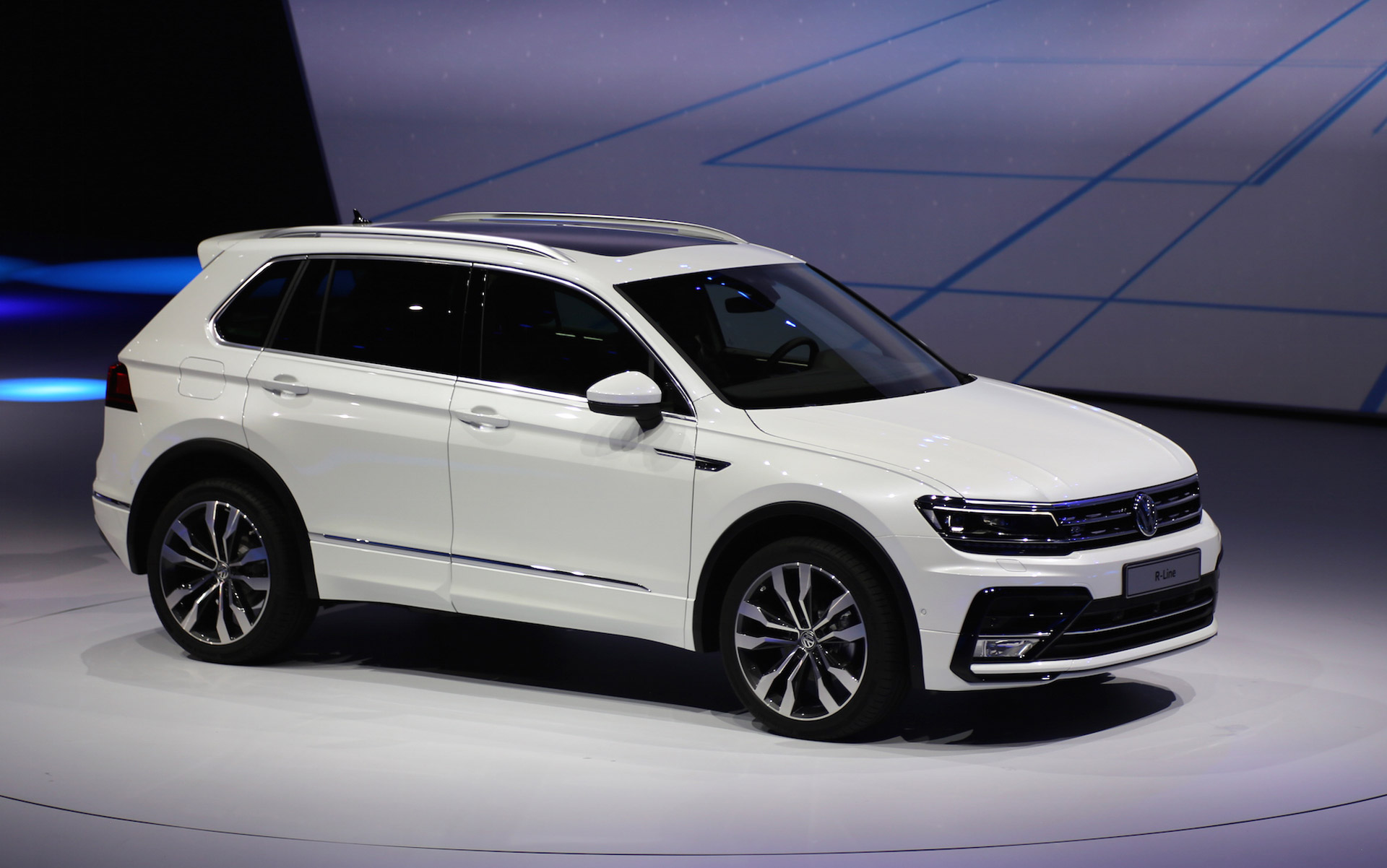
The Motability Scheme for disabled drivers now has the Tiguan added to the list of cars.

  • Volkswagen’s award-winning Tiguan is available with advance payments as low as £1,499
  • Stylish SUV combines advanced technology with strong performance and frugal economy
  • Tiguan joins the comprehensive Volkswagen offering on Motability
Volkswagen has added the desirable new Tiguan SUV to the Motability Scheme. All Tiguan models come with a high level of equipment and combine powerful performance with sharp styling.
Every Tiguan, from the S trim up, features a range of driver’s assistance systems including Lane Assist, which gently steers the car to keep it within its lane, and Front Assist, which uses radar sensing linked to the throttle and brakes at speeds of up to 19 mph, to control automatically the distance between the Tiguan and the car ahead.
Speed-sensitive power-assisted steering and features such as automatic windscreen wipers and lights add to the user-friendliness of the Tiguan. 
  the electronic handbrake is operated at the touch of a button to hold the car when it is paused on an incline.
Efficiency is a hallmark of the comprehensive Tiguan engine line-up.  The 2.0-litre diesel powerplant offered via the Motability Scheme is equipped with Volkswagen’s BlueMotion Technology. This includes a Start/Stop function which means that when the car is at a standstill the engine briefly switches off. In addition, Tiguans fitted with a DSG automatic gearbox use a coasting function that allows the car to de-select a gear when travelling downhill not under acceleration before seamlessly re-engaging the appropriate ratio almost instantly when the accelerator is pressed.
An appealing aspect of the Tiguan’s interior is the eight-inch colour touchscreen that takes pride of place in the dashboard. This enables intuitive access to the variety of features that are packed into the Composition Media infotainment system, which all Tiguans are equipped with as a minimum.
Composition Media includes a Bluetooth® telephone connection that enables two compatible mobile devices to be paired simultaneously. A DAB digital radio receiver and CD player also feature, as does an SD card reader and music title and cover art display. The audio output comes via eight speakers located throughout the car. 
The latest Tiguan benefits from a significantly enlarged boot when compared to the previous model. This five-door, five-seat SUV even includes an adjustable 40:20:40 split bench rear seat that can slide fore or aft by up to 18 cms, thereby maximising either rear legroom, or boot space. When the rear bench is upright and slid forward there are 615 litres of boot space. When the rear seats are folded this increases to 1,655 litres.
Safety is another area in which the Tiguan scores highly. In fact, the Tiguan has been awarded a full five stars from the Euro NCAP testing programme – and it topped the Small Off-Roader class in 2016. A suite of airbags, including driver’s knee and front seat side impact airbags, are factory fitted. With the Active Bonnet system, if the car is in collision with a pedestrian the bonnet is instantly raised 50 mm to potentially reduce the risk of injury. The hazard lights flash under heavy braking and all Tiguans are equipped with an XDS electronic differential lock for improved traction and handling.
The Tiguan SE is also available on the Motability Scheme. In addition to all the features above, this trim level includes electronic air conditioning and cruise control, two features that further establish the Tiguan’s driver-focused appeal. The standard equipment list continues with front and rear parking sensors, a multifunction colour display and exclusive 18-inch ‘Patagonia’ wheels.
The latest Tiguan is now available to people who receive the following Motability allowances:
  • The Higher Rate Motability Allowance
  • The Enhanced Rate of the Mobility Component of Personal Independence Payment
  • The War Pensioners’ Mobility Supplement
  • The Armed Forces Independence Payment
Other Volkswagen models available via the Motability scheme include the up!, Polo, Golf, Golf Estate, Beetle, Passat, Passat Estate, Scirocco, Touran and Sharan. 
Volkswagen Tiguan on Motability Scheme
ModelEngineTransmissionPower (PS)CO2 (g/km)DLA Holder Advance Payment
S2.0 TDI SCR BMT 2WDManual150123*£1,499.00
S2.0 TDI SCR BMT 4MOTIONManual150139*£1,999.00
S2.0 TDI SCR BMT 4MOTIONDSG150147*£2,749.00
SE2.0 TDI SCR BMT 2WDManual150125*£1,999.00

Sunday, 5 February 2017

20 years ago, the new safety standard was introduced, today we compare a car from 1997 to one today.

  • 182,000 killed and seriously injured car occupants saved in the UK since car testing began in 1997, primarily through the ground-breaking work of Euro NCAP
  • UK car occupant deaths and injuries down by 63 per cent over 20 years
  • Cars ‘safest ever’ with 9 out of 10 cars sold on the European market holding a Euro NCAP rating
  • 2,700 deaths and serious injuries in the UK could be saved every year if AEB that can sense both pedestrians and cyclists became standard on every new car
  • Consumers urged to ONLY buy Euro NCAP Five Star-rated cars with collision avoidance technology like AEB and Lane Assist systems
  • New tests in 2018 to address lane control, pedestrian night-time safety, junction crashes and cyclist protection
MORE than 182,000 killed and serious injuries have been saved on UK roads since revolutionary Euro NCAP car safety tests were launched 20 years ago. This equates to 15,000 per annum.
The tests, introduced in February 1997 and in the face of fierce motor industry opposition, exposed hidden dangers in top-selling family cars, forcing a fundamental rethink in the way vehicles were designed to prevent injuries and save lives.  Twenty years on, 9 out of 10 cars sold on the European market hold a Euro NCAP rating.

Today, as the results of a crash-test between two family cars built 20 years apart (a 1997 Rover 100 and a current Honda Jazz) underline major advances in vehicle safety, Thatcham Research, who conduct UK tests for Euro NCAP, estimates that advances driven by rigorous testing has helped deliver a 63 per cent reduction in car occupants killed and seriously injured, from 23,000 in 1997 to 8,500 in 2015.
Over the same period the number of pedestrians and cyclists killed or seriously injured has fallen by 40 per cent, from 14,500 in 1997 to 8,500 in 2015.
Demanding safety as standard
Thatcham Research is marking the 20th anniversary by urging consumers to further boost Britain’s road safety record by making a commitment to buy only models with a five star Euro NCAP rating and a collision avoidance technology like AEB and Lane Assist systems.  They also called on manufacturers to make AEB (Autonomous Emergency Braking) standard fitment, to prevent thousands of accidents.
The call came as Thatcham Research, which conducts Euro NCAP tests in the UK, estimated that if AEB that can sense pedestrians and cyclists became standard on every new car sold in the UK, it would save 2,700 pedestrian and cyclist deaths and serious injuries every year.  Over 20 years, this would mean 54,000 fewer.
“As we mark 20 years at the forefront of road safety, we are very proud that Euro NCAP’s programme of safety tests has achieved major, life-saving improvements in cars and has helped Europe reach the lowest road fatality rate for any region in the world,” said Euro NCAP’s Secretary General, Michiel van Ratingen.
“Euro NCAP has given millions of consumers the knowledge and confidence to choose the safest cars possible. Recent years have shown a slowdown in the progress rate, however, so we mustn’t take our foot off the gas. We want to ensure that Europe’s roads get even safer in the next 20 years, not just for car occupants but for all participants in traffic. We already test many more aspects of a car’s safety than we did when we started in 1997, and that is set to continue. Next year, we will test systems that recognise and avoid crashes with cyclists, and we’re lining up a very challenging roadmap for 2020 to 2025.”
Consumer outcry, manufacturers under scrutiny
Since 1997 Euro NCAP has assessed 629 different car models, resulting in nine out of 10 cars now sold in Europe holding an official Euro NCAP rating. Safety technologies that were non-existent or optional at best - such as driver and passenger airbags, side curtain airbags, seatbelt reminders and electronic stability control – are now standard on most cars sold in Europe.
Backed by the UK Government, the FIA (Federation Internationale de l’Automobile) and the Swedish and Dutch Governments, the first Euro NCAP crash test results were revealed on February 4 1997. Until then car makers had to meet only basic legislative crash test requirements for new cars. They conducted their own crash tests but they were not standardised - and the results were not published. It was impossible for consumers to compare the safety of one car with another.
Euro NCAP’s programme turned these principles on their head. 1997 was the first time that realistic, like-for-like tests had been conducted by independent experts and the results sparked outrage from consumer groups, the public and the media.
“Euro NCAP has fundamentally changed the way that vehicle buyers and vehicle manufacturers value safety,” said Peter Shaw, chief executive at Thatcham Research. “In 1997, many motorists were still choosing not to wear seatbelts. Only a few years later we were demanding airbags, side impact protection and other safety systems. You’re now twice as likely to walk away from a car cash compared with twenty years ago. These major changes in the way people and manufacturers prioritise safety are all thanks to Euro NCAP.
“The focus now is all about crash prevention. Making sure that Britain’s roads continue to become even safer, not just for car occupants but for every road user.  We have come a long way since the days when manufacturers met only the most basic, mandatory, safety requirements but we must continue to apply pressure.”
Major industry pushback
In the first test, of seven popular ‘super-mini’ sized cars, the Ford Fiesta and Volkswagen Polo each achieved three stars out of the then-maximum of four, based on protection levels offered to adult occupants.
The top-selling Rover 100 (formerly the ‘Metro’) achieved only one star while the Fiat Punto, Nissan Micra, Vauxhall Corsa and Renault Clio achieved only two stars. When pedestrian protection was assessed, no vehicle scored more than two points, suggesting that manufacturers were not designing front ends with vulnerable road users in mind.
Leading car manufacturers attacked the tests, claiming they were so severe that it was ‘impossible’ to achieve four stars. Five months later, however, Volvo’s S40 became the first four-star car for occupant protection. Manufacturers now compete to out-perform rivals in Euro NCAP tests - and regularly use the ratings in their advertisements.
Today, leading figures hailed the Euro NCAP tests as a major turning point in delivering safer cars. 
Max Mosley, the first Chairman of Euro NCAP and Chairman of Global NCAP said: “Twenty years on from what started as a controversial programme, rejected by manufacturers, and supposedly aiming for unrealistic safety standards, Euro NCAP is now firmly part of the automotive mainstream. Thousands of fatalities have been prevented, consumer demand for safety is high, manufacturers compete on safety rating results, and vehicle safety standards continue to improve.”
“The consumer awareness model deployed so effectively by Euro NCAP has not just fundamentally changed the European market, it has helped to catalyse other NCAPs across the world in middle and low income countries. Consumer pressure informed by crash tests is helping to make rapid changes in levels of safety in India, Latin America and the ASEAN region. Euro NCAP has truly had a global impact, a proud road safety legacy that has saved countless lives.”
Euro NCAP President and Thatcham Research Chief Technical Officer, Andrew Miller: “The impact of these tests cannot be overstated. Until Euro NCAP, consumers only had the manufacturers’ word for it. Now we have the safest cars ever and the safety levels of each car are there for all to see. This success could only be achieved by actively working together in Europe under one umbrella and by continuing to invest in better safety.”
Since 1997, Euro NCAP tests have become ever more demanding and cars can now achieve a maximum of five stars, awarded not just for how they protect occupants and pedestrians in a collision, but on the car’s ability to avoid a crash in the first place. The tests represent real-life accident scenarios that could result in the death or injury. Top achievers must demonstrate that their cars are fitted as standard with technology that avoids or mitigates such crashes and, where a crash is not avoidable, adequate protection is offered to car occupants and other road users.
New tests for 2018
Other new technologies being tested by Euro NCAP for inclusion in the 2018 rating system, include: Lane Assist systems to control steering if there are potential risks; tests to reduce crashes at junctions; Pedestrian AEB that works at night time and new AEB cyclist detection tests to encourage manufacturers to further enhance these important technologies.

Tuesday, 3 January 2017

TMW - The C4 Picasso, one of the best cars that money can buy, and one we will return too.

Citroen, since it launched the C4 Picasso many years ago has had a huge success story on its hands, and today, with the new version, it is a true, awesome product, the model that we had on test was the Flair, 130 PT, it came with a column gear change, something that any Merc auto owners would be aware of, but for us, this was a first, but you soon get used to the extra stalk on the column, and flicking it from drive to reverse and back etc came very easily after a couple of days.
The car itself was rather large, and this was not the Grand Picasso, there was so much space, and glass, that you never felt enclosed or like you were in a cocoon, the new look of the car which has minor facelifts to the front and rear, as well as being richly endowed with kit and toys, meant you were always feeling like the car could drive its self, and it does, Believe me, all will become clearer.

But lets start with the outside, the car in its basic shape was revamped to make this mark three version the best it has ever been, now, whether you consider the Xsara Picasso as MK1 or not, is irrelevant, because that car was so successful, and sold is huge numbers that it soon expanded into a C3 Picasso, C4 Picasso, and if rumour is right there may well, be yet another new one, but the car here was launched in 2006, reskinned in 2013 and given a facelift late in 2016, which is the model we have here.
The car is very much like a Tardis, especially in the blue colour of our test car, there is just so much space and room inside the car that any normal family will find this car perfect for their needs, the new lights on the outside with a few other tweaks and nips and tucks should be enough to take it to an all new model in the next few years, but it does not stop there.
The car is so well laid out, with all the buttons and switchgear all within easy reach, easy to understand and simple to understand what each one does, this car benefits from a central display, so that the steering wheel can be placed either side, with ease, well, for Citroen anyway, and with the central display always in the middle you soon get used to it, and forget that the vast majority of cars will have these displays right in front of you.

The vast amount of glass in the car gives it a very airy and light demeanour, from the extra big windscreen, the full length glass roof, and the big windows all around the car, the roof window comes with a dial for the "curtain" which will move it to certain specified positions, all cars should have the glass roof, it is a perfect option, well, until some person decides to try and break in.

The car comes seriously well equipped, with so many gadgets and toys, one being the road line monitoring sensors, now before i go any further i will say "DO NOT TRY THIS AT HOME", but for your benefit i tried it, at a steady speed, i removed my hands from the steering wheel, only just though, and as the car moved towards the lines in the road, either at the side or in the middle, the car took over and "nudged" back into the lane you were in, after a short while, it will bong at you and a message on the screen states that you should put your hands on the steering wheel.

But the system really does work well, even with the hands on the wheel, you can feel the force on the car moving you back into the middle of you part of the road, added in with one of the most simple and easy to use cruise control options, it keeps the car on the straight and narrow, but do be warned, any damage to the road markings, or being covered by detritus, and the system will get confused quickly.

Driving the car and you always feel like it is under control, at all times, it grips very well, and you never feel any under or oversteer, which you can get with other big cars, the auto box copes well at all speeds, and considering this car is ONLY a 1.2 litre, albeit turbocharged, you would be easily forgiven for thinking that this car has a far bigger engine, the computer stated at one point we managed to get nearly 43mpg, which was not bad considering that most of the journeys were short and of less than 5 miles, the brakes were also well upto the job, with it being able to stop on a penny if and when required.
Our car came well specified as already mentioned, but it did come with 
  • Massage front seats
  • electronic Multiple direction moving of front seats
  • manual moving of the rear seats
  • Cruise Control
  • Lane Assist
  • ABS with Electronic Brakeforce Distribution (EBD) and Emergency Braking Assistance (EBA)*
  • Front and rear electric windows with anti-pinch and one-touch operation*
  • Fan speed adjustment for rear seat passenger air vents*
  • Park Assist
  • Motorised rear tailgate
  • Blind spot monitoring system (with LED indicator in door mirrors)
  • Integrated retractable rear side window sun blinds
  • Aluminium front sill scuff protectors*
  • Three separate full size seats in row 2*
  • Adjustable recline angle on row 2 seats*
  • Individual fold flat rear seats in row 2*
  • Illuminated (and switchable) central storage compartment (housing aux-in, USB and 12v connections)*
  • Panoramic sunroof (with dark tinted glass and electric sliding blind)
  • Auto-dimming electrochrome interior rear view mirror
  • Panoramic windscreen
  • Front fog lights
  • LED daytime running lights
  • Automatic lights and windscreen wipers
  • Removable centre storage box with sliding lid*
  • Fixed centre storage box with sliding lid*
  • 12 inch Panoramic HD central display (full colour)
  • Front and Rear Parking Sensors


  • And this is just a small amount of the items that are fitted to our car, so, as you can see, this is a well specified car, at a reasonable price, yes £27,315 is a lot of money, but when you get this much car for the money, it becomes quite a bargain.

  • The 111g/km CO2 is not a bad figure for the size of the car, and its economy in fuel consumption is also not that bad either, again, considering it is only a 1.2 litre Turbo.
    • Urban Cycle 44.1mpg
    • Extra Urban 64.2mpg
    • Combined 55.4mpg
  • And i believe that these are achievable, and not just pie in the sky numbers that other brands release..

  • OVERALL

  • The Picasso is a brilliant car, in fact it is passed brilliant and onto a separate level where exceptional cars live, it does everything that you ask of it, and then far more besides, you can live with this car regardless of what you ask of it, its well priced, very well equipped, economical and cheap to insure and own.

  • Now, unless you have huge loads, this car will take everything you throw at it, it is like a massive cave, that just keeps on going, and the comfort, talk about armchair, even the passenger front seat has an extension so you can put your feet up, then you have the tech, from keeping the car in the right lane, to self parking, auto lights and wipers and so much more, this car has it all, and believe me when i say that we were so impressed by this car, that when we are due to change one of our own cars, which also happens to be a Citroen, a Cactus, the C4 Picasso will be one of the cars we return to.

  • So, if you are in the market for a car like this, then this is the one to go for, dont bother looking at any other brand, just stay here and get the Picasso, after all, in our opinion, it is far and away the best car out there.