Purpose

I will try my best to provide detailed info on various cars and what is like to live with them, I have already produced a few for Jaguar-car-forums, I will do my best to be unbiased, but it will be hard for some cars. I will re-produce press releases and copy from other motoring news.
Showing posts with label five stars. Show all posts

Sunday, 13 August 2017

The Insignia from Vauxhall gains the full five star result from Euro NCAP, both Saloon & Estate.

The all-new Vauxhall Insignia, in both Grand Sport and Sports Tourer body styles, has been awarded the maximum five stars from Euro NCAP making it one of the safest cars on the market. It achieved exceptionally high scores for its occupant protection for both adults and children, pedestrian protection and safety assist technology. 
In Vauxhall showrooms now, the Insignia has a number of new active and passive safety technologies available, and Euro NCAP made special mention of two of the car’s innovative safety features. The active bonnet, which lifts up in milliseconds in the event of a collision increasing the distance to the engine for improved pedestrian protection. Testers at Euro NCAP commented that it: “operated robustly for a variety of pedestrian statures and over a wide range of speeds.”
 
It was also noted that the Automatic Emergency Braking system, which can detect pedestrians and other vehicles, “performed well and showed good performance at highway speeds, with accidents avoided or mitigated.” 
“The five-star rating from Euro NCAP helps to demonstrate the design and innovation that can be found throughout the new Insignia, making it one of the safest models in its class,” said Dougie McColm, Vauxhall’s Brand Manager - Insignia. “The latest technologies included within the new Insignia work together to provide ultimate safety, not only for the car’s driver and passengers, but also for other road users and pedestrians.” 
The new Insignia features a wide range of intelligent safety technologies in addition to the active bonnet and Automatic Emergency Braking systems. One such technology is the next generation of Vauxhall’s innovative and award-winning IntelliLux LED matrix light, with 32 LED segments, all integrated in the new slimmer headlights of the Insignia. 
The increased number of LED elements enables the various light patterns to adapt to the prevailing traffic situation with seamless transitions between each mode. This results in an improvement in both the quality of light distribution and light intensity. 
New functions, including curve and spotlight illumination, improve long-range visibility especially when driving at night. If drivers find themselves taking a curve with the full beam engaged, the light intensity automatically rises based on the steering angle, in order to increase illumination and help the driver to see the road situation ahead. Each headlight also features a high-beam spotlight for additional illumination of up to 400m, further improving the Insignia Grand Sport’s long-range visibility. 
Head-up-Display technology is also available. This displays information on speed, traffic signs, speed limiter setting and navigation direction onto the windscreen in the driver’s direct line of sight ensuring that their eyes remain on the road. 
Available as part of the standard spec, the Lane Keep Assist with Lane Departure Warning (LDW) provides gentle steering wheel movements (and LDW alerts if necessary) to help drivers avoid accidents by unintentionally drifting out of their lane. The new Insignia is available with Adaptive Cruise Control (ACC), which measures the distance to the vehicle in front and adapts the speed accordingly. ACC will initiate automatic emergency braking if the distance decreases abruptly. 
The optional Rear Cross Traffic Alert system uses radar sensors in the rear bumper to detect objects coming from up to 20m at 90 degrees from the left or right side behind the vehicle. Forward Collision Alert assists drivers in avoiding or mitigating the impact of front-end collisions with situation-dependent emergency braking settings. If the Insignia nears the vehicle ahead too quickly, the system warns the driver with a loud audible alarm, a visual warning in the instrument cluster and an LED projection on the windscreen. 
Parking is easier too thanks to Advanced Park Assist. Ultrasound sensors on the Insignia’s front and rear bumpers identify suitable parking spaces and detect possible obstacles. When the parking spot is calculated, the system automatically parks the vehicle without the driver needing to touch the wheel, only requiring the driver control the pedals and gears.

Monday, 5 June 2017

The latest round of Euro NCAP results cover four cars which gain four or five stars.

Today, Euro NCAP releases the results of four new cars.  The MINI Countryman and Škoda Kodiaq are both awarded a five-star rating.  
Nissan’s new Micra gets four stars with standard equipment and five stars with the optional safety pack (1).  The Suzuki Swift is rated as three stars as standard and four stars with the optional safety equipment.
All cars reach the five star levels for adult occupant protection, child protection and pedestrian protection.  The differences come in the fitment of advanced driver assistance systems.  
The Škoda Kodiaq is equipped as standard with an AEB system that detects pedestrians as well as other cars.  The Kodiaq’s five-star rating continues Škoda’s recent good form: all recently tested Škodas have been rated as five stars. 
The MINI has AEB car-to-car as standard and pedestrian detection as an option.  Nissan put AEB pedestrian and lane assistance in the option pack (‘Euro NCAP 5* Pack’) of the Micra, nudging the four-star rating with standard equipment into five-star territory with the option pack fitted.  
Only the Suzuki Swift does not offer AEB pedestrian, with AEB car-to-car in its ‘Radar Brake Support’ option pack.
Euro NCAP Secretary General, Michiel van Ratingen, said, “Euro NCAP started rewarding AEB pedestrian systems last year and we have seen a rapid uptake of the technology.   
We hope to see as fast an adoption of AEB systems that detect cyclists when tests of those systems form part of the rating next year.  
For twenty years, Euro NCAP has been pushing manufacturers to fit new and better safety technologies: originally, such things as airbags and pre-tensioners and, nowadays, advanced driver assistance systems that will form the building blocks for the automated vehicles of tomorrow.”

Saturday, 22 April 2017

The latest round of testing for the Euro NCAP has taken place with results at either end of the star system.

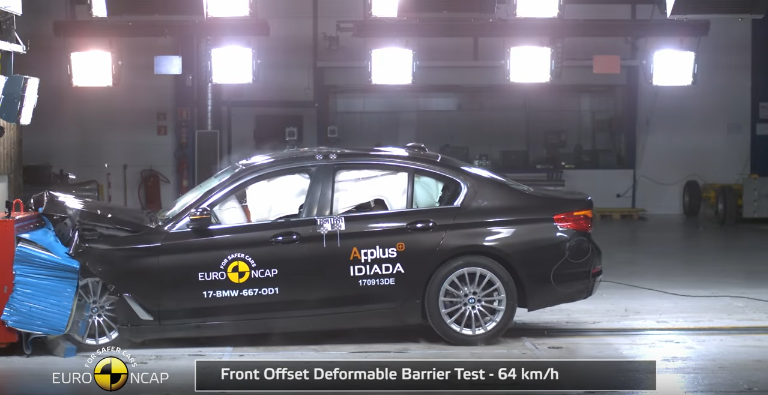
Euro NCAP releases the test results of two new cars. The BMW 5 Series gets a top five-star safety rating and FIAT’s made-over Doblò gets three stars.
Launched late last year, the seventh-generation BMW 5 Series continues its successful track record in Euro NCAP’s Executive Car segment. 
The car showed good all-round performance in crash protection and avoidance tests thanks to its new platform, body and updated safety features. 
Track tests demonstrated that the autonomous braking system can effectively assist the driver in avoiding or mitigating critical rear-end crashes with other cars and pedestrians. 
With an 81 percent score, the 5-series particularly impressed in pedestrian safety through its standard-fit “Person Warning” system and active bonnet.
Thirteen years after the tests on the original FIAT Doblò, Euro NCAP has taken another look at the versatile small MPV. The latest generation Doblò was already introduced in 2010 and is also sold by Opel and Vauxhall brands as Combo. 
The version tested by Euro NCAP is the 2015 Doblò facelift that includes, apart from small safety updates, cosmetic upgrades aimed at extending the lifecycle of the car. 
The three-star Euro NCAP safety rating, however, reveals the car’s true age and highlights the lack of ambition to compete on safety with other, more modern competitors in the segment. 
The Opel/Vauxhall Combo has not received a similar facelift, so would be expected to end up with even fewer stars, but Opel have their eyes fixed on the future.

Tuesday, 21 March 2017

Euro NCAP tests six new cars with ratings varying from 3 stars to the full 5 star rating.

Euro NCAP releases the results of six new cars. The Audi Q5, Land Rover Discovery and Toyota C-HR all get a top five-star safety rating; Citroën’s C3 gets four stars; and FIAT’s ageing 500 and Ford’s brand new Ka+ notched up three out of five stars apiece.    
The new Audi Q5 and Toyota C-HR showed good all-round performance in all areas of assessment to earn their five-star ratings. The Land Rover Discovery scored highly enough to merit a five-star rating, but not without problems. 
In the frontal offset test, the driver airbag bottomed out owing to insufficient pressure and, in the side barrier test, the driver’s door became unlatched.
Grateful thanks to Euro NCAP for the use of the pictures.
Euro NCAP’s Secretary General, Michiel van Ratingen, said, “Jaguar Land Rover has an ambitious programme of new model releases in the coming years. We hope that this challenging schedule and tight development times do not compromise the safety of the vehicles offered, and we hope that they will take our findings onboard”.
Still going strong more than 10 years after it first hit markets, FIAT’s reincarnation of the iconic 500 continues to be a popular choice in the supermini segment. Euro NCAP tested the recent facelift against the latest safety rules and benchmarked its performance with two newcomers in the same segment, the all-new Citroën C3 and the low-cost Ford Ka+. Superminis are extremely popular in the European new car market and the segment is very price-sensitive. To deliver attractive yet affordable cars, manufacturers are tempted to cut down on safety equipment, emphasising great looks and style instead. Case in point are the FIAT 500 and the Ford Ka+ that lack rear seatbelt pretensioners and load-limiters, by now standard on most cars on the market.
In the full-width frontal crash test, introduced in 2015, the 500 showed poor protection of both the driver and the rear seat passenger. In the Ka+, chest protection was rated as poor. Both cars also lack autonomous braking technology, already offered on half of new models today. The Citroën C3 on the other hand performed much more robustly: it narrowly missed a top five-star rating, falling only just short of the threshold in pedestrian protection.
Euro NCAP’s Secretary General, Michiel van Ratingen, said, “The 500 is an old car by now and the small improvements that FIAT have made on the facelift don’t hide that. Consumers may be better off waiting for the all-new 500 and hope that FIAT will take the opportunity to offer a vehicle that competes on safety with its competitors, as the original did 10 years ago. Unfortunately, high hopes for the segment are smashed by Ford by releasing a brand new Ka+ with mediocre safety performance. The car lacks the more sophisticated restraint systems offered by most of its rivals, let alone more sophisticated technology like autonomous braking. The new C3 shows that a respectful rating is achievable also for superminis.”               
Detailed results and crash test pictures of these cars are published on our website. All videos are available on our YouTube channel. For media requests, please contact Marie Brasseur at media@euroncap.com. More safety ratings will be released on April 12, 2017

Tuesday, 8 November 2016

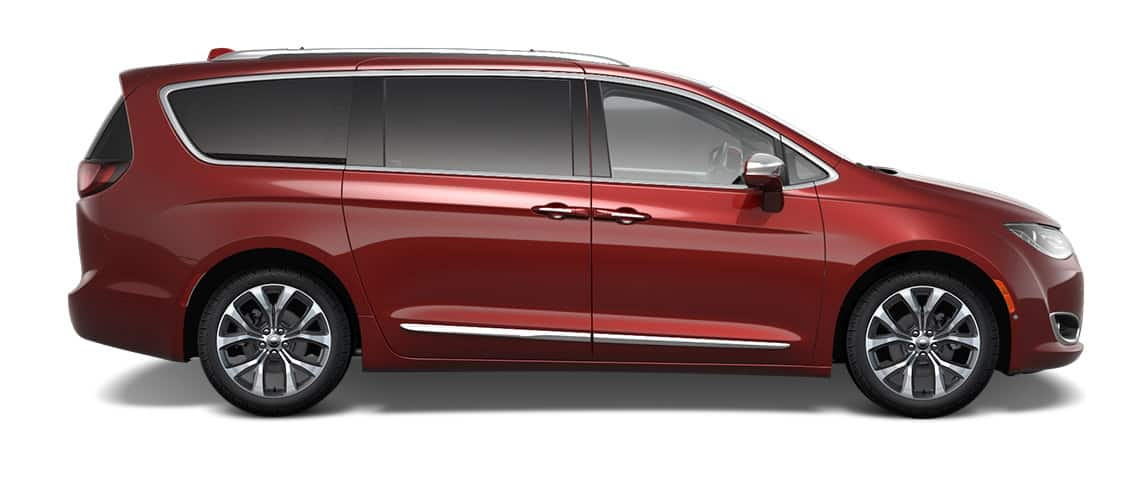
USA - The 2017 Chrysler Pacifica Minivan takes the full five stars at the NHTSA tests.

  • Five stars highest possible score in NHTSA’s safety rating program
  • All-new 2017 Chrysler Pacifica minivan achieves highest possible rating – five stars – in each of three individual crash tests performed by NHTSA
  • High-strength steel, which also contributes to fuel-saving weight reduction, accounts for 72 percent of new Pacifica’s body structure; 38 percent is Advanced High-strength Steel (AHSS)
  • 2017 Chrysler Pacifica checks boxes on all of NHTSA’s recommended advanced technologies – backup camera system, lane-departure warning and forward collision warning
  • Pacifica’s Parkview rear backup camera, which is standard equipment, among more than 100 available safety and security features
  • Available Forward Collision Warning-Plus enabled by sensor-fusion technology
  • NHTSA five-star rating complements Top Safety Pick+ status
  • All-new 2017 Chrysler Pacifica minivan starts at $28,595 (excluding destination)
The all-new 2017 Chrysler Pacifica has earned a five-star overall safety rating from the U.S. National Highway Traffic Safety Administration (NHTSA).

Five stars is the highest possible safety rating given by NHTSA.

The Chrysler brand’s all-new minivan also scored five stars – the highest possible rating – in each of the crash tests included in NHTSA’s safety assessment program.


The tests simulate:
  • Frontal collision
  • Side-impact simulating a two-vehicle collision
  • Side-impact simulating a single-vehicle collision with a pole

These latest test results complement the Top Safety Pick+ rating previously given to the 2017 Chrysler Pacifica by the Insurance Institute for Highway Safety (IIHS).**

“These results are a clear indicator of our unwavering commitment to engineering excellence,” says Mike Dahl, Head of Vehicle Safety and Regulatory Compliance, FCA – North America.

FCA US engineers conducted more than 8,500 simulated crashes and more than 80 full-vehicle impacts. These tests led to the development of a body structure that integrates 12 different steel grades.

High-strength steel accounts for 72 percent, of which 38 percent is Advanced High-strength Steel (AHSS).

And because these materials were used strategically, the new Pacifica’s body structure is also 250 pounds lighter than that of the vehicle it replaced – an enhancement that contributes to the vehicle’s class-leading 28 miles-per-gallon highway-cycle fuel-economy rating.

NHTSA’s rating system acknowledges the availability of three “recommended” safety features: rear-view cameras, lane-departure warning and forward-collision warning. The 2017 Chrysler Pacifica checks the box for each category:
  • ParkView rear backup camera: Standard equipment, it provides a wide-angle view of the area immediately behind the vehicle, giving the driver greater peace of mind before reversing at low speeds; features dynamic grid lines to aid the driver when maneuvering into parking spaces or narrow areas; image is displayed on the navigation screen when the transmission is shifted into Reverse
  • LaneSense Lane Departure Warning-Plus: Available as part of the Advanced Safety Tec Group, it leverages electronic power steering (EPS) to deliver a torque input to alert and assist the driver with corrective action
  • Available Forward Collision Warning-Plus: Available as part of the Advanced Safety Tec Group, it utilizes radar sensors and cameras to detect whether the Pacifica is approaching another vehicle or large obstacle in its path too rapidly, and warns or may assist the driver in avoiding/mitigating the incident

The blending of radar sensors and cameras is known as sensor-fusion technology. Such redundancy affords greater object-detection precision. Similar systems on competitive vehicles feature one technology or the other.

Once reserved for luxury-segment vehicles, FCA US currently makes sensor-fusion technology available across six vehicle segments – from small SUV to minivan. It is the Company’s technology of choice for driver assistance in crash mitigation.

Collision-warning systems are a prerequisite to earn Top Safety Pick+ status from the IIHS. Top Safety Pick+ status is contingent on the availability of such systems, provided they achieve ratings of “advanced” or “superior.”

The Pacifica’s system is rated “superior,” and its performance in each of the following IIHS crash tests was classified as “good,” the highest-possible rating. The tests simulate:
  • side impact with a large SUV or pickup truck
  • moderate-offset frontal impact
  • small-offset frontal impact
  • roof-deformation consistent with a rollover
  • rear collision capable of inducing whiplash

The all-new 2017 Chrysler Pacifica boasts more than 100 available safety and security features. It starts at $28,595, excluding destination charges.


** Designation applies to any 2017 Chrysler Pacifica produced after August 2016.

Wednesday, 19 October 2016

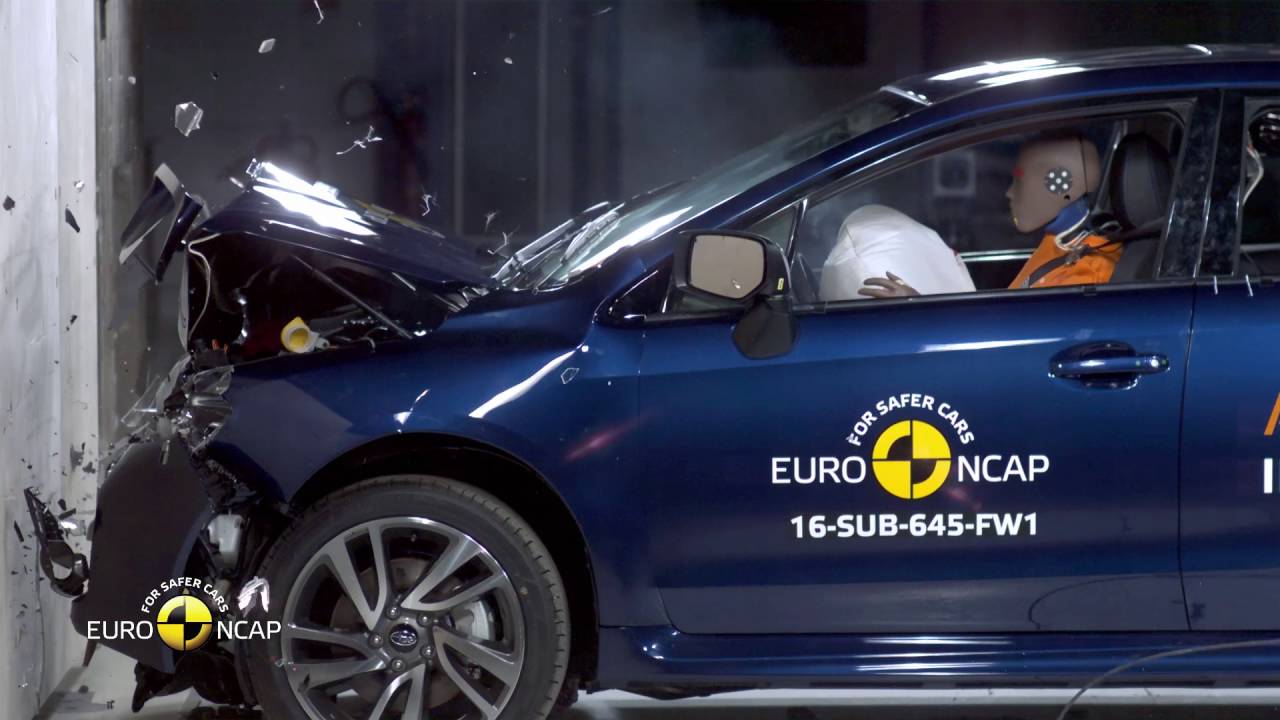
Subaru has improved the Levorgs safety systems with the addition of EyeSight, the collisions avoidance system.

Subaru Levorg just got even safer with the addition of EyeSight, Subaru’s advanced collision avoidance technology, contributing towards Levorg being the fifth Subaru model to score Euro NCAP’s prestigious five-star rating.  
Fitted as standard to every Subaru Levorg ordered in the UK going forwards, EyeSight features six technologies to maximise safety: Pre-Collision Braking, Pre-Collision Throttle Management, Adaptive Cruise Control, Lane Departure & Sway Warning, Pre-Collision Steering Assist, and Lead Vehicle Start Alert.
While systems from other manufacturers use various sensor technologies such as camera and radar or microwaves, EyeSight functions purely optically.  The Subaru technicians have placed two camera lenses to the left and right of the rear-view mirror that together create a stereoscopic image.
Pre-Collision braking can also reliably capture pedestrians in dark clothing in un-lit areas, as commonly found throughout rural areas of the UK, and when needed initiate emergency braking. Up to a speed of 28mph accidents can be completely avoided and the severity significantly reduced at higher speeds.
In 2015, Subaru released data from a survey of traffic accidents involving Subaru vehicles in Japan from 2010 to 2014. The data revealed a 61% reduction in crashes for vehicles equipped with EyeSight, compared to those without.
Euro NCAP awarded Levorg 92% in the Adult Occupant category, 83% in the Child Occupant category, and 75% in Pedestrian and 68% in Safety Assist, both new areas for the tougher 2016 test.

Sunday, 9 October 2016

USA - The 2017 Dodge Charger earns 5 stars overall, the highest single rating in NHTSA’s vehicle-evaluation program

  • 2017 Dodge Charger earns five stars overall, the highest single rating in NHTSA’s vehicle-evaluation program
  • Five-star rating applies to both rear-wheel and all-wheel-drive versions
  • 2017 Dodge Charger features available Full-Speed Forward Collision Warning-Plus, which benefits from advanced sensor-fusion technology; feature provides alerts, autonomous braking and is capable of bringing vehicle to a full stop
  • Lane Departure Warning with Lane Keep Assist also among 80+ available safety and security features
  • Charger has now achieved five-star overall score 10 times — every year NHTSA included the car in its annual ratings
The 2017 Dodge Charger has earned a five-star overall safety rating from the U.S. National Highway Traffic Safety Administration (NHTSA).

Both versions of the Charger, rear-wheel and all-wheel drive, were evaluated for frontal and side impacts, and rollover resistance. The overall result was the same for each: five stars – the highest single rating in NHTSA’s vehicle-evaluation program.

“This further validates the robustness of our safety engineering,” says Mike Dahl, Head of Vehicle Safety and Regulatory Compliance, FCA – North America. “But crashworthiness is only half the story. We are immensely proud of the investment we’ve made in the driver-assist technologies that help enable crash mitigation.”

In its assessment of the 2017 Dodge Charger, which recorded a year-over-year sales increase of 35 percent in September, NHTSA notes the availability of Full-Speed Forward Collision Warning-Plus.

The Charger’s crash-mitigation system benefits from advanced sensor-fusion technology. Sensor-fusion leverages the combined attributes of radar and cameras to help deliver greater precision when determining if a frontal impact may be imminent.

If camera and radar agree that a frontal impact with another vehicle appears imminent, the system pre-fills the Charger’s brakes and transmits audible and visual warnings for the driver to react. If there is no driver response, the system triggers a brief brake application as a tactile alert.

If the driver remains unresponsive and frontal collision risk remains, the Charger’s brakes are applied to slow the vehicle before impact. The system may bring the vehicle to full stop if an imminent frontal collision is detected at speeds below 25 mph.


Sensor-fusion technology was once reserved for luxury-segment vehicles. Today, FCA US makes it available across six vehicle segments – from small SUV to minivan.
Sensor-fusion is the Company’s technology of choice for crash mitigation.


“Our commitment to such advancements was made clear when we signed an industry-wide agreement to proliferate this capability across our lineup,” Dahl says. “It is part of our ongoing contribution to the democratization of driver-assist features.”

The 2017 Dodge Charger offers more than 80 available safety and security features, including Lane Departure Warning with Lane Keep Assist, which uses camera technology to help keep the driver aware of her/his vehicle position on the road. If the Charger veers toward a lane marker in a manner consistent with driver inattention, the system provides alerts and delivers automated steering inputs that help accommodate course correction.

A distinguishing element of Lane Departure Warning with Lane Keep Assist is that the level of steering input may be adjusted to suit an individual driver. The menu of choices is accessible through the Charger’s available 8.4-inch Uconnect center-stack touchscreen.

The fourth generation of Uconnect’s celebrated touchscreen makes its debut on the 2017 Dodge Charger, Challenger and Chrysler 300.

“The ability to fine tune such a feature helps improve driver comfort and confidence, both of which contribute to safe vehicle operation,” says Adam Chiappetta, Senior Manager – Active Safety and Driver-Assist Technologies at FCA US.

Since its launch in 2005, the Charger has been included in NHTSA’s annual ratings list on 10 occasions. Each time, it earned an overall score of five stars.

Saturday, 3 September 2016

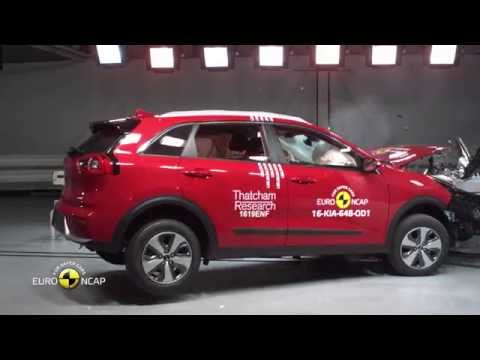
The latest batch of four cars that underwent testing have all received the full five star Euro NCAP rating.

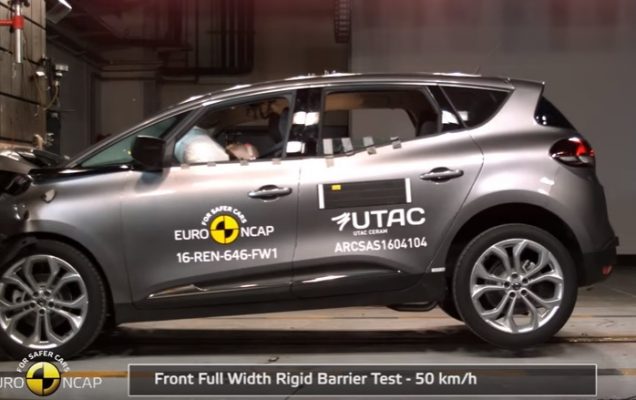
The safety ratings of four new cars are published by Euro NCAP today: the Kia Niro, Renault Scenic, Subaru Levorg and the Toyota Hilux.

The Renault Scenic and the Subaru Levorg, both equipped as standard with Autonomous Emergency Braking (AEB), achieved maximum five-star ratings.  Kia and Toyota opted for dual ratings for their cars, with AEB as part of an optional safety pack:  the Kia Niro gets four stars with standard equipment and five with the option pack*; and Toyota’s new Hilux gets a three-star rating with standard equipment and five with the pack**.
The Toyota Hilux and Kia Niro were tested under Euro NCAP’s new ‘Dual Rating’ system, which means that the default rating is based on standard safety equipment available throughout the range. Additional tests are done to determine what the result would be when an optional safety pack is fitted.

Euro NCAP Secretary General, Michiel van Ratingen, said, “It is always good to see safety equipment being fitted as standard, and Renault and Subaru deservedly get top safety ratings for their cars. The fact that Toyota are making advanced safety technologies available on pickups, even if only an option at this stage, shows that the Dual Rating scheme is a great way to encourage broader fitment of these systems across all types of vehicles.”
* “Advanced Driving Assistance Pack”: AEB City, AEB Pedestrian, AEB Inter-Urban
** ”Toyota Safety Sense”: AEB City, AEB Pedestrian, AEB Inter-Urban, Lane Assistance, Speed Assistance