Purpose

I will try my best to provide detailed info on various cars and what is like to live with them, I have already produced a few for Jaguar-car-forums, I will do my best to be unbiased, but it will be hard for some cars. I will re-produce press releases and copy from other motoring news.
Showing posts with label NCAP. Show all posts

Friday, 8 July 2016

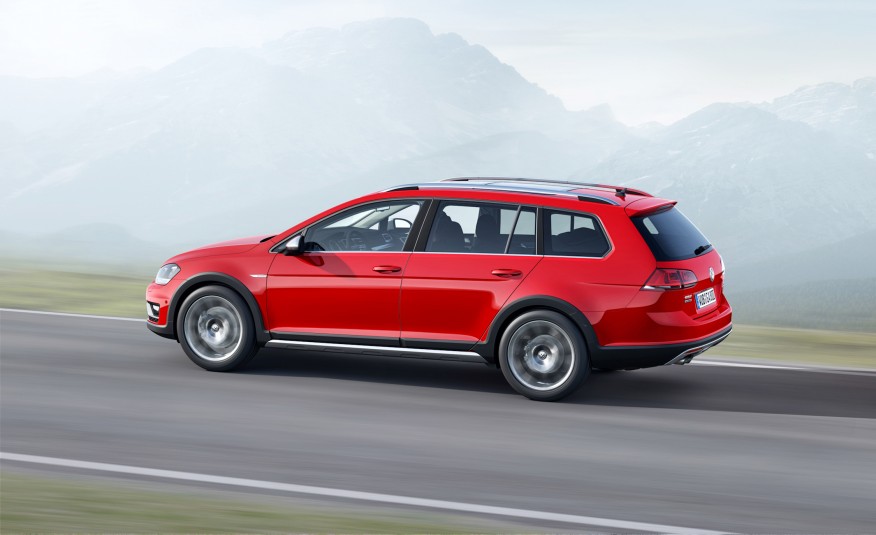
USA - Volkswagen of America announces the last model to complete the Golf line-up - The 2017 Golf Alltrack.

  • 2017 Golf Alltrack joins Golf family of vehicles with 5-star rating
  • 2017 Volkswagen 5-Star models include: Golf family, 2-door Beetle, Jetta and Passat 
Volkswagen of America, Inc. (VWoA) announced today that the 2017 Golf Alltrack has earned a 5-star overall safety rating from the National Highway Traffic Safety Administration (NHTSA), which runs the government's New Car Assessment Program (NCAP), and has provided consumers with vehicle safety information since 1978. 
The addition of the Alltrack, which hits showrooms this fall, will complete the Golf family of vehicles which includes the Golf, Golf GTI, Golf R and Golf SportWagen.  
The 2017 Golf Alltrack joins the Golf family as well as the Passat, Jetta, and Beetle coupe as 2017 Volkswagen models that have an overall 5-Star Rating.


NHTSA’s NCAP provides front, side, and rollover crash test ratings, all aimed at helping consumers in making their vehicle purchasing decisions. The rating results are relayed to consumers using an easily recognizable star rating system from one to five, with five being the best a vehicle can achieve. For details, visitwww.safercar.gov.

“Volkswagen is thrilled that the Golf Alltrack will come to market this fall having earned the highest 5-star overall crash test rating from the government,” said Joerg Sommer, Vice President Product Marketing and Strategy, Volkswagen of America, Inc. 

“The Alltrack was already highly anticipated, thanks to the combination of SportWagen design and all-wheel-drive performance, so this rating will add to the vehicle’s appeal and allow us to grow volume in the marketplace.”

Like the rest of the Golf line, the Alltrack provides a combination of both passive and active safety systems. It has been engineered to meet or exceed all current crash regulations and features no fewer than six airbags as standard along with a number of electronic safety systems. 
Alltrack models are equipped with standard Electronic Stability Control (ESC), the Automatic Post-Collision Braking System and an Intelligent Crash Response System. For added security, the vehicle features the latest version of Volkswagen’s 4Motion® all-wheel-drive system.
Driver assistance systems available on the Alltrack include: Adaptive Cruise Control (ACC), Forward Collision Warning and Autonomous Emergency Braking (Front Assist), Lane Departure Warning (Lane Assist), front and rear Park Distance Control (Park Pilot), and Parking Steering Assistant (Park Assist).

Thursday, 3 December 2015

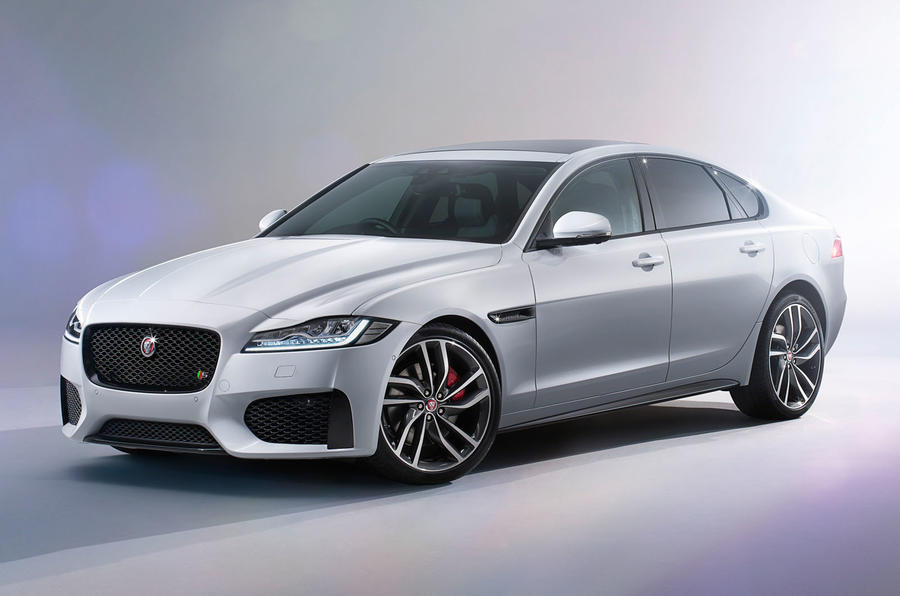
EURO NCAP - Jaguar takes a double award with both the new XE and XF saloons's getting the full Five Star awards.

The Jaguar XE and all-new Jaguar XF saloons have been awarded the maximum five star rating in Euro NCAP’s 2015 safety tests. XE and XF scored highly in every category – Adult Occupant, Child Occupant, Pedestrian and Safety Assist – and are among the most highly-rated models in their respective segments.

As well as outstanding crash protection, the XE and XF also benefit from a range of active safety systems including Autonomous Emergency Braking (fitted as standard in Europe), which uses a forward-facing stereo camera to detect vehicles which could pose a threat of collision: the system can give the driver visual and audible warnings and automatically apply the brakes if a collision is deemed imminent.
“The XE and XF were engineered without compromise: we placed just as much focus on safety as we did on dynamics, performance, refinement and efficiency, and our stringent in-house standards far exceed the requirements of legislative and consumer tests.
“Everything from the aluminium alloys we developed for the body structures to the state-of-the-art stereo camera at the heart of the Autonomous Emergency Braking system has been painstakingly optimised to deliver world-class levels of safety.”
Kevin Stride, Vehicle Line Director, Jaguar XE, XF, F-PACE
The XE and XF are developed from Jaguar’s Lightweight Aluminium Architecture: the inherently light yet stiff and strong body structures deliver exceptional occupant protection, further enhanced by driver and passenger airbags, side airbags and curtain airbags. In the event of an impact with pedestrians, deployable bonnets help to mitigate serious injuries.
Both models offer a full suite of active safety technologies and advanced driver assistance systems* including Dynamic Stability Control, Traction Control, Emergency Brake Assist, Lane Departure Warning, Blind Spot Monitoring, Closing Vehicle Sensing, Reverse Traffic Detection, Traffic Sign Recognition and Adaptive Cruise Control.
Additional features offered in the XF – and which will be offered in the 2017 Model Year XE – include Lane Keep Assist, Driver Condition Monitor and Adaptive Speed Limiter.

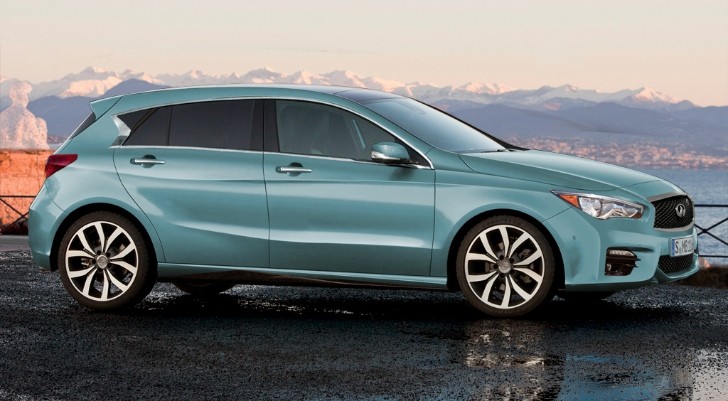
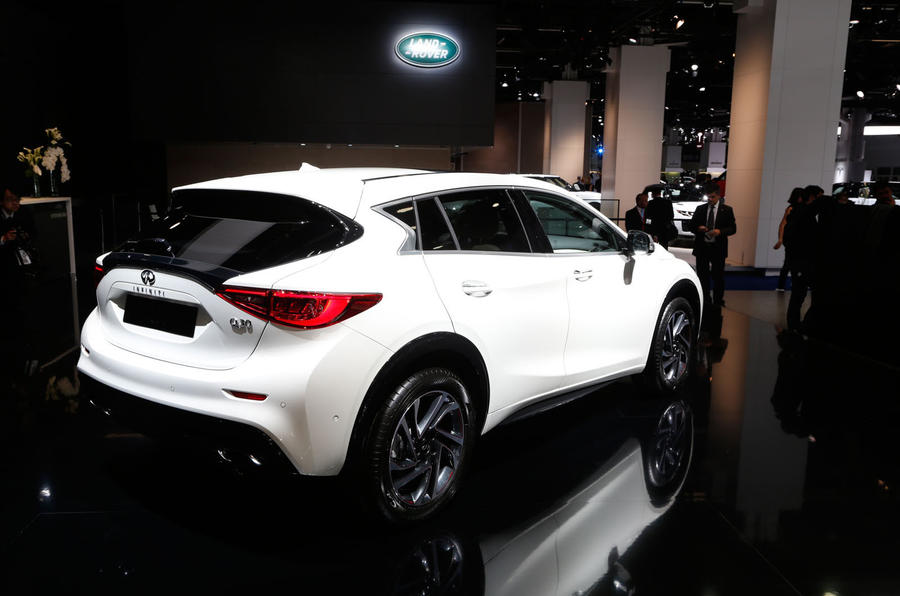
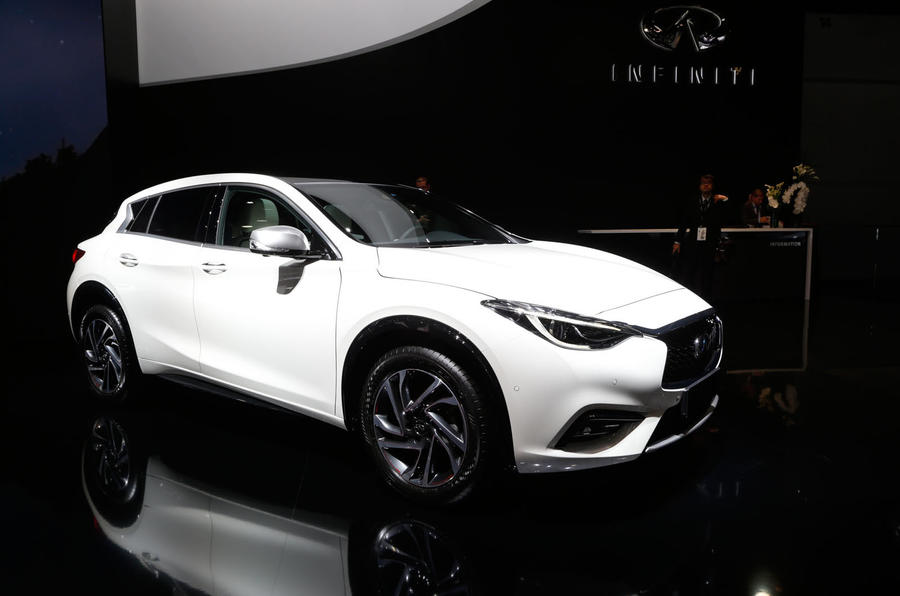
EURO NCAP - The All-New Infiniti Q30 hatchback also achieves the full five star Euro Ncap award.

  • New Infiniti Q30 achieves maximum five-stars safety rating
  • Top scores in all four testing areas
Rolle – The all-new Infiniti Q30 has received the maximum five-star rating by independent vehicle safety organization, Euro NCAP.
The Euro NCAP scoring system considers various aspects of vehicle safety, such as occupant protection, child protection, pedestrian protection and safety assist which is the availability and effectiveness of safety systems and driver aids.

As well as achieving the maximum five stars, the Infiniti Q30 gained top scores in each of these four testing categories.
Roland Krueger, President, Infiniti Motor Company, commented: “The Q30 offers a comprehensive technology package that enhances the car’s driving experience while providing maximum safety to all occupants. The five-star rating from Euro NCAP is testament to Infiniti’s advanced safety approach.”
Occupant protection scored highly in the rigorous test program with an 84 per cent rating for adult safety. As well as a driver knee airbag, the Q30 has driver-, passenger-, front hip-thorax side and front-to-rear curtain airbags.
Designed and engineered to offer the best possible levels of protection for children, an automated system in the front passenger seat will turn off the front passenger airbag when someone fits a rearward facing child seat.
For Pedestrian Protection, the Q30 scored 91 per cent, a score which is determined from tests to the most important vehicle front-end structures, such as the bonnet and windshield, the bonnet leading edge and the bumper. The Q30 is equipped with a sensor that detects a pedestrian’s legs contact with the bumper and causes the hood to pop up to give more clearance between the hood surface and the hard parts of the engine to protect pedestrians.
An 81 per cent score in the Safety Assist category was due to the latest safety technologies fitted to the Q30 as part of Infiniti’s acclaimed Safety Shield system. They include Forward Collision Warning, Lane Departure Warning and Speed Limit Alert.

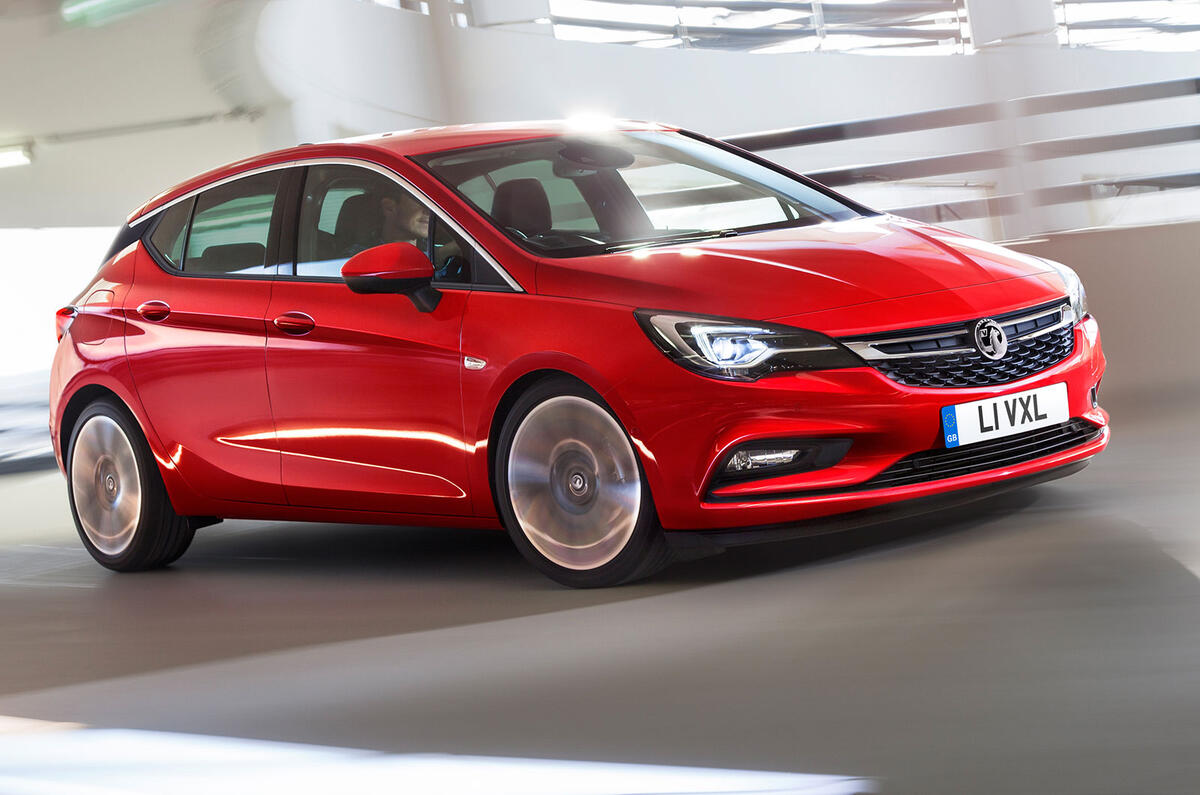
EURO NCAP - The New Vauxhall Astra gets high scores in all categories to achieve the full five star award.

  • High scores across all categories assessed by Euro NCAP
  • First compact car with front camera in volume sector
The all-new Brit-built Astra has been awarded the maximum five stars by Euro NCAP in its latest safety ratings published today. The compact five-door hatchback from Vauxhall achieved high scores in each of the categories assessed – adult occupant protection, child occupant protection, pedestrian protection and safety assist.

The new Astra realises Vauxhall’s safety objective for all passenger cars and light commercial vehicles of optimised protection in real traffic and collisions, achieved by the integration of its passive and active safety systems.
The interior of the Astra is designed to create the largest possible survival space in crash conditions. To accommodate the impact force in case of a crash, the front, sides and rear of the passenger compartment are surrounded by energy absorption zones that deform and protect in a controlled manner.
Inside the passenger compartment, the new Astra features a three-part approach for the airbag system consisting of front airbags for driver and co-driver, thorax-pelvis side airbags and full-length curtain airbags for the first and second seat rows. 
Combined with advanced retractors/pre-tensioners with load limiters mounted on the vehicle body, lap pre-tensioners attached to the seats and seat-integrated anti-submarining ramps, the Astra ensures maximum passenger protection and reduces injury potential.
The Astra’s high standards of adult, child and pedestrian protection are complemented by state-of-the-art active safety and driver-assistance systems.
Lane Departure Warning with Lane Keep Assist not only warns the driver, but also applies a gentle nudge of corrective steering if the Astra should stray out of its lane. Frontal collisions can be avoided or mitigated thanks to Automated Emergency Braking, Integrated Brake Assist, Forward Collision Alert and Following Distance Indication. 
The collision warning system is optimised by a row of flashing red LED lights, which are projected onto the windscreen in the driver’s field of vision if the distance to the vehicle in front gets too small and a collision is imminent. 
The data for these systems is collected by the new Astra’s front camera, installed at the top of the windscreen. The Astra is the first compact car with a front camera from a volume manufacturer and it is also the first Vauxhall providing assisted braking with data received only from the camera.
The Astra’s active safety and driver assistance systems are completed by Side Blind Spot Alert (which uses the ultrasonic sensors of the Park Assist system to warn of hidden dangers when changing lanes, overtaking or turning corners) and IntelliLux LED matrix headlights. This advanced lighting technology automatically adapts to the current traffic conditions and always offers the best possible illumination.
In addition to driver, occupants and other road users, the Astra also offers “five star” protection for the driver’s wallet and driving licence. Traffic Sign Assist continuously monitors the data provided by the mono camera and compares it with information from the embedded navigation of the Navi 900 Intellilink infotainment system. Speed limits are then displayed to the driver in the instrument cluster, reducing the risk of speeding tickets.

Tuesday, 3 February 2015

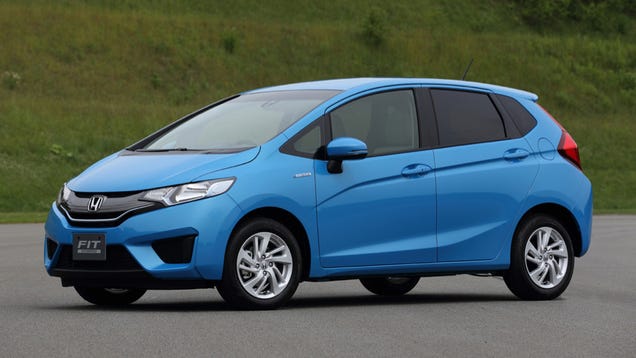
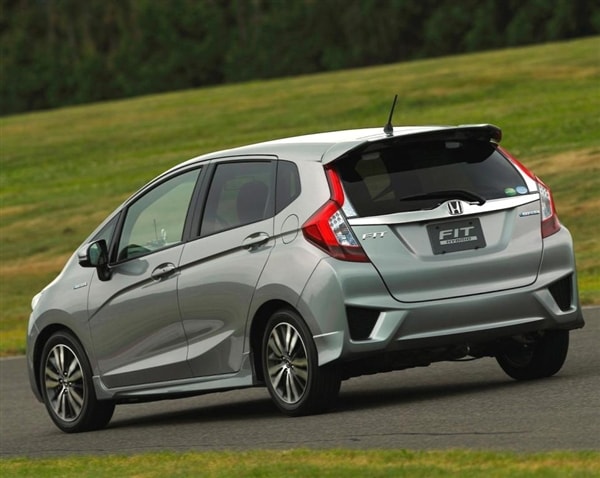
USA - All-New 2015 Honda Fit achieves highest overall vehicle score from the NHTSA.

  • Subcompact Fit achieves both an NCAP 5-Star Overall Vehicle Score and an IIHS TOP SAFETY PICKrating
  • Fit is the fifth Honda vehicle for 2015 to achieve top crash safety ratings from both from IIHS and NHTSA
The spacious, fuel-efficient and versatile 2015 Honda Fit (http://automobiles.honda.com/fit/), has received a 5-Star Overall Vehicle Score, the top score available in the National Highway Traffic Safety Administration (NHTSA) New Car Assessment Program (NCAP). The Fit, completely redesigned in 2014, earns both a TOP SAFETY PICK rating from the Insurance Institute for Highway Safety (IIHS) and a NCAP 5-Star Overall Vehicle Score from NHTSA for 2015, making it even more of a standout choice in its segment.


"The Fit shows that owning a smaller car doesn't mean you need to skimp on space, comfort or crashworthiness," said Art St. Cyr, vice president of auto operations at American Honda Motor Co., Inc. "Honda's commitment to the safety of our customers and other road users is second to none, and the Fit demonstrates this commitment in a powerful way."

Already the benchmark subcompact in terms of passenger and cargo space and innovative features, occupant safety features for the 2015 Honda Fit are further enhanced through the next-generation Advanced Compatibility Engineering™ (ACE™) body structure. The ACE™ body structure improves frontal crash energy management through a wider range of offset and oblique collision modes. In addition, other body reinforcements work in tandem with the strengthened body structure to better maintain the occupant compartment volume during frontal collisions by providing additional crash energy pathways to help mitigate the forces transmitted to the passenger compartment.

Key Safety and Driver-Assistive Features:


In addition to the next-generation Advanced Compatibility Engineering™ (ACE™) body-structure, the 2015 Fit features a host of standard active and passive safety features and offers many standard and available driver-assistive technologies:
  • Driver and Front Passenger SmartVent™ Side Airbags
  • Side Curtain Airbags with Rollover Sensor
  • Motion-Adaptive Electric Power Steering (EPS) – a feature of VSA
  • Hill Start Assist
  • Expanded View Driver's Mirror
  • Honda LaneWatchTM
  • Multi-Angle Rearview Camera with Guidelines
Standard safety equipment on all 2015 Honda models includes the next-generation of Honda's ACE™ body structure, Vehicle Stability Assist™ (VSA®) with traction control; an Anti-lock Braking System (ABS); side curtain airbags (some vehicles equipped with a rollover sensor as well); dual-stage, multiple-threshold front airbags; and front side airbags.

Wednesday, 17 December 2014

USA - AUDI Achieves 5 stars and Top Safety Pick+ for the A3/S3 Sedans.

- 5-star overall crash safety rating given by National Highway Traffic Safety Administration’s (NHTSA’s) New Car Assessment Program (NCAP)
- NCAP Program provides consumers with information about crash protection and rollover safety of new vehicles beyond what is required by Federal law
- The Audi A3 sedan is the only European premium compact segment model tested to receive a 5-star NHTSA and the Insurance Institute for Highway Safety (IIHS) Top Safety Pick+ rating

The all-new 2015 Audi A3 and S3 sedans have earned a 5-Star overall crash safety rating from the National Highway Traffic Safety Administration’s (NHTSA) New Car Assessment Program – the highest crash test rating available. The 5-star rating complements the IIHS Top Safety Pick+ rating the Audi A3 sedan (when equipped with Audi pre sense front) received earlier this year.


The NCAP 5-Star designation is limited only to vehicles that provide the greatest amount of crash protection and rollover safety beyond what is required by federal law. Vehicles are rated on a scale of one to five stars, one being the lowest rating and five being the highest.

“The Audi A3 and S3 exemplify the best in a long line of Audi vehicles designed to be premium, sporty and above all safe,” said Filip Brabec, Director, Product Planning, Audi of America. “Both vehicles establish a high safety standard with new and innovative features designed to help protect vehicle occupants as well as others on the road.”

The Audi A3 and S3 offer several advanced technology features which are new to the entry luxury segment, including standard Audi pre sense® basic system which helps detect when an emergency maneuver is being made and prepares the vehicle and its occupant restraint systems in advance of a possible collision. The A3 also introduces secondary collision brake assist and is the only vehicle to offer this system as a standard feature. The system automatically brakes the car after a collision so as to prevent a secondary collision with nearby or oncoming traffic.

Earlier this year, the Audi A3 was named an IIHS Top Safety Pick+ for models equipped with Audi pre sense front (part of the model’s optional Advanced Technology Package – which also includes Audi active lane assist and Audi adaptive cruise control with stop & go).

NHTSA’s New Car Assessment Program
Under NHTSA’s New Car Assessment Program, vehicles undergo rigorous frontal, side barrier, pole intrusion and rollover tests. Instruments measure force of impact to various body regions on crash test dummies to determine a rating. 5-Star Safety Ratings can be found on SaferCar.gov and are posted on the Monroney labels (window stickers) that are required to be displayed on all new vehicles.

IIHS Safety Testing Program
IIHS tests evaluate two aspects of safety: crashworthiness — how well a vehicle protects its occupants in a crash — and crash avoidance and mitigation — technology that can prevent a crash or lessen its severity.

To qualify for 2014 Top Safety Pick+, a vehicle must meet the Top Safety Pick criteria, plus earn a basic, advanced or superior rating for front crash prevention.

Friday, 5 September 2014

Latest Euro NCAP results, good for some, really bad for others.

The latest Euro NCAP results show that not all vehicles are meeting with the tougher safety requirements.  The following car models have recently undergone Euro NCAP crash tests:
Citroën BerlingoMercedes GLA
  
Nissan e-NV200 EvaliaRenault Twingo
  
Toyota Aygo 
The Mercedes-Benz GLA-Class reached Euro NCAP’s maximum award of five stars. The Renault Twingoreceived four stars and Nissan's new electric e-NV200 Evalia achieved three stars.
The Citroën Berlingo obtained three stars and has exactly the same platform, interior fittings and levels of safety equipment as the new Peugeot Partner. The three star rating therefore applies to both vehicles.
PSA Peugeot Citroën have demonstrated that the Peugeot 108 and the Citroën C1 are identical to the Toyota Aygo in every way likely to influence safety. Therefore, these cars share the Aygo’s four star safety rating.
The detailed results of the tested vehicles are published on the Euro NCAP website. The crash test footages, photos and datasheets are available on our Media Center. All videos are also available on ourYouTube channel. For media requests, please contact Marie Brasseur, Euro NCAP Communications Manager.

Friday, 31 January 2014

Global NCAP crash tests shows India's cars ARE unsafe.

The first-ever independent crash tests of some of India’s popular and important small cars have shown a high-risk of life threatening injuries in road crashes. All the cars selected by Global NCAP for testing in a frontal impact at 64km/h received zero-star adult protection ratings.

The models tested included India’s best-selling car, the Suzuki-Maruti Alto 800. The Tata Nano, Ford Figo, Hyundai i10 and Volkswagen Polo also underwent the safety assessment. Combined sales of these five cars account for around 20% of all the new cars sold in India last year. Global NCAP chose the entry-level version of each model and as a result none were fitted with airbags as standard. The results highlight major differences in the structural integrity of the vehicles tested.
Max Mosley, Chairman of Global NCAP, said: “India is now a major global market and production centre for small cars, so it’s worrying to see levels of safety that are 20 years behind the five-star standards now common in Europe and North America. Poor structural integrity and the absence of airbags are putting the lives of Indian consumers at risk. They have a right to know how safe their vehicles are and to expect the same basic levels of safety as standard as customers in other part of the world.”

In the Suzuki-Maruti Alto 800, the Tata Nano and the Hyundai i10, the vehicle structures proved inadequate and collapsed to varying degrees, resulting in high risks of life-threatening injuries to the occupants. The extent of the structural weaknesses in these models were such that fitting airbags would not be effective in reducing the risk of serious injury. The Ford Figo and Volkswagen Polo had structures that remained stable – and, therefore, with airbags fitted, protection for the driver and front passenger would be much improved.

Coinciding with the Global NCAP tests, Volkswagen has decided to withdraw the non-airbag version of the Polo from sale in India. Because of this, Global NCAP agreed to a request from VW to assess a version of the Polo that has two airbags fitted as standard as from now. Other manufacturers had the same opportunity. The protection proved much better and this airbag-equipped model received a four-star rating for adult occupant protection. Consumers are encouraged to check which version of the Polo they buy.

pic

Models also fail to pass UN’s basic safety test

Global NCAP also assessed the same models against the UN’s basic crash test. This 40% offset frontal impact test at 56km/h is now widely applied by major manufacturing countries and regions, including Australia, China, European Union, Japan and Malaysia. The Global Plan for the UN’s Decade of Action for Road Safety recommends that all Member States apply this standard, although it is not yet applied in India. All but one of the cars tested failed to pass even this minimum standard.

pic

Please note:

Ford Figo passed despite not having a driver airbag when the dummy’s head narrowly avoided hitting the steering wheel directly
Volkswagen Polo with two airbags was awarded a pass based on dummy readings from the 64km/h crash
Taken together the results highlight the vital combination of both sound structural integrity and airbags as standard equipment. These features are the sure way to exceed the minimum UN crash test standard at 56km/h. They also offer adequate levels of protection in a higher speed crash at 64km/h, the speed most commonly used by independent consumer crash test programmes.

Rohit Baluja, President of India’s Institute of Road Traffic Education (IRTE) said: “These results show that India would benefit enormously from the introduction of minimum crash safety standards and clearer information for consumers about the protection new cars offer. Many cars made in India for export meet these standards already, so it’s not a question of know-how or capability: India’s automobile industry just needs the right incentives. With the UN’s minimum safety standards and clear information for consumers, India can produce cars that are every bit as good as those in Europe and the US.”

Global NCAP has awarded a separate child safety rating to each car in order to highlight the different levels of protection vehicles provide to passengers on the rear seats. Because the only safe way for young children to travel is properly restrained in a child seat, the assessment checks how compatible the car is with the child seats recommended by the manufacturer, as well as the protection provided in the crash.

In the assessments, the child seats recommended by manufacturers were often found to be incompatible with their vehicle’s belt system. In the Tata Nano, there was no three-point seatbelt on the rear seats and no way to install a child seat or transport a small child safely.

“Vehicle manufacturers understand how important it is for young children to travel buckled up in a child seat that’s installed securely on the rear seat,” said David Ward, Secretary-General of Global NCAP. “They know what they need to do to make it as easy as possible for parents: it’s just a question of priorities. Indian families buying these cars expect their children to be given the same protection as children in other parts of the world.”

Comments on individual vehicles’ adult protection

Suzuki-Maruti Alto 800

In the 64km/h NCAP test, the Suzuki-Maruti Alto 800 achieved a zero-star rating for its adult occupant protection. The vehicle structure was rated as unstable, increasing the risk of life-threatening injuries and making the car unsuitable for the fitment of airbags.

Using the child seats recommended by Suzuki-Maruti, the Alto 800 achieved a two-star rating for child protection.

The Alto 800 was not able to meet the UN’s minimum safety requirements in the 56km/h crash test.

Tata Nano

In the 64km/h NCAP test, the Tata Nano achieved zero stars rating for its adult occupant protection. The vehicle structure was rated as unstable, increasing the risk of life-threatening injuries and making the car unsuitable for the fitment of airbags.

The car achieved a zero-star rating for its child protection as it was not possible to install child seats in the car.


The Nano was not able to meet the UN’s minimum safety requirements in the 56km/h crash test.

Hyundai i10

In the 64km/h NCAP test, the Hyundai i10 achieved a zero-star rating for its adult occupant protection. The vehicle structure was rated as unstable, increasing the risk of life-threatening injuries.

Using the child seats recommended by Hyundai, the i10 achieved a one-star rating for child protection. The three year-old dummy indicated a high risk of serious injury.


The i10 was not able to meet the UN’s minimum safety requirements in the 56km/h crash test.

Ford Figo

In the 64km/h NCAP test, the Ford Figo achieved a zero-star rating for its adult occupant protection. The vehicle structure was rated as stable, but without safety equipment such as airbags, too much of the crash energy was absorbed directly by the occupants.

Using the child seats recommended by Ford, the car achieved a two-star rating for its child protection.


The Figo was able to meet the UN’s minimum safety requirements in the 56km/h crash test as the driver’s head narrowly avoided direct contact with the steering wheel.

Volkswagen Polo

In the 64km/h NCAP test, the Volkswagen Polo without airbags achieved a zero-star rating for its adult occupant protection. The vehicle structure was stable, but without safety equipment such as airbags, dummy readings indicated a high risk of life-threatening injuries.


With two airbags (driver and front passenger), the Volkswagen Polo achieved a four-star rating for adult occupant protection in the 64km/h NCAP test. Thanks to the airbags, the protection offered to the driver and passenger head and neck was good.

Using the child seats recommended by Volkswagen, the Polo achieved a three-star rating for child protection.


Without airbags, the Polo was not able to meet the UN’s minimum safety requirements in the 56km/h crash test.

Global NCAP advises consumers to check carefully which version of the Polo they buy.