Purpose

I will try my best to provide detailed info on various cars and what is like to live with them, I have already produced a few for Jaguar-car-forums, I will do my best to be unbiased, but it will be hard for some cars. I will re-produce press releases and copy from other motoring news.
Showing posts with label slovakia. Show all posts

Saturday, 22 April 2017

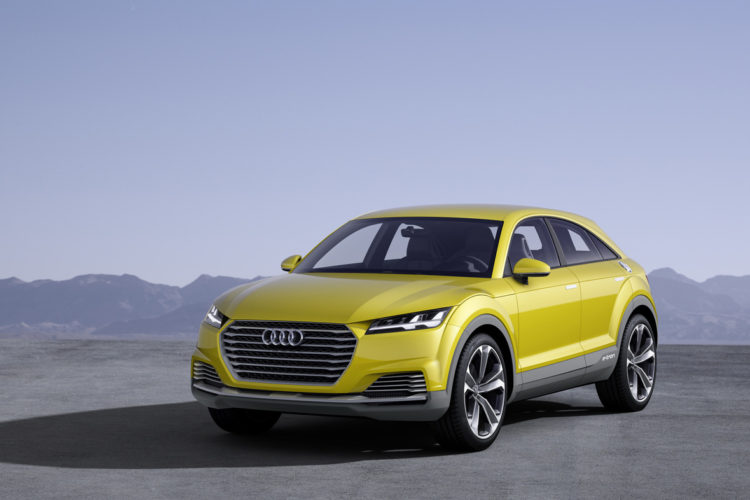
Audi to add two new Q models the Q4 and flagship Q8 Crossover SUV.

  • Production of the Audi Q8 crossover SUV to start in Bratislava in 2018
  • Audi Q4 compact utility vehicle from Győr as of 2019
  • Board of Management Member for Production Prof. Dr. Hubert Waltl: “Increased competitiveness in the SUV segment” 
Audi is to expand its portfolio with two new Q models and has announced where they will be built: Production of the Audi Q8 will start in Bratislava (Slovakia) in 2018 and the first Audi Q4 will drive off the assembly line in Győr (Hungary) in 2019.
“We will integrate two completely new Q‑models into the existing production network and will thus increase our competitiveness in an extremely important segment,” stated Audi’s Board of Management Member for Production and Logistics, Prof. Dr. Hubert Waltl.
With the Audi Q8, the brand will open up a new segment for its top-end models. The premium SUV in a coupe style combines great spaciousness with emotive design and offers the latest technologies in assistance and infotainment systems. 
Audi will produce the model in Bratislava as of 2018. The Audi Q7 has already been produced at the Slovakian plant since 2005. Meanwhile, the second generation of the large SUV is in production there, as an S version and as the Q7 e-tron plug-in hybrid.
In 2019, production of the Audi Q4 will start at Audi Hungaria in Győr. With this model, the brand is entering the segment of compact utility vehicles (CUVs). Featuring a typical coupe-style silhouette, the Audi Q4 will be positioned between the Audi Q3 and Q5. And as of 2018, Audi Hungaria will also be responsible for production of the Audi Q3 compact SUV, which until then will continue to be produced in Martorell, Spain.

Monday, 12 December 2016

Kia celebrates the tenth anniversary of European production in Slovakia.

  • Kia has built over 2.5 million vehicles and 3.8 million engines in Europe
  • 1.7 billion Euros invested in its production facility in Žilina, Slovakia
  • Over 20,000 jobs created in Slovakia at the plant and among suppliers
Kia Motors today marks the tenth anniversary of production in Europe. From the official launch of volume production on 7 December 2006, over 2.5 million vehicles and 3.8 million engines have rolled off production lines at Kia Motors Slovakia in Žilina.
The company has invested more than 1.7 billion EUR since its arrival in Slovakia, generating over 20,000 jobs directly at the plant and among 40 of the facility’s most significant Tier 1 and Tier 2 suppliers. 
Operating three production shifts each day, Kia alone employs approximately 3,800 people. Kia currently manufactures the cee’d model family, Sportage and Venga at the facility, and exports to 95 countries worldwide. 

14 per cent of models produced in Žilina are right-hand drive cars, while almost 40,000 Kia cars produced in Kia’s only European plant are present on Slovak roads.
Eek-Hee Lee, President and CEO of Kia Motors Slovakia, commented: “In the past decade, our company has become one of the biggest employers, producers, exporters and taxpayers in Slovakia. I would like to express my deep thanks mainly to our employees for their effort and passion. They have been the major force in achieving our production and business results over the past decade, and pushed the company to become one of the most efficient production facilities across the Hyundai Motor Group.”
The initial investment for building the plant represented 700 million EUR. The Korean manufacturer has continuously invested into production of new models at the facility, as well as installation of new technologies, with the company’s total investment in the region now totaling around 1.7 billion EUR. In 2016, Kia has invested 60 million EUR in Žilina, with plans to invest a further 130 million EUR in 2017 in innovating the company’s existing product portfolio.
Kia Motors Slovakia has so far paid corporate income tax of around 320 million EUR in Slovakia. Accounting for all taxes, customs duties and levies, Kia has contributed to the state budget or local self-governing region four times the amount drawn in state incentives and tax releases.
Kia Motors Slovakia currently employs around 3,800 people directly at the Žilina facility, with an average age of 35. The longest serving member of staff at the facility has been with the company for 12 years, seven months and four days. Over 800 people have worked at Kia Motors Slovakia for more than 10 years, and almost 2,800 people longer than 5 years, confirming the company’s position among the top employers in the country. Kia is committed to developing the skills and competencies of its employees, and has organised 8,900 training courses for staff since 2006. From the start of full vehicle production, Kia Motors Slovakia has issued over 2,160,000 lunches to its employees in the canteens.
Jan Taliga, Head of Press Shop, Kia Motors Slovakia, commented: “We fondly remember the moment the very first Kia cee’d model rolled off of the production line. As the first Slovak employee, I have witnessed not only the first stages of construction, but also the extension of production from one to two and then three working shifts. During my time working for Kia, I have developed my skills, and enjoyed working as part of a team with my colleagues.”
In the last 10 years, the most popular model produced by Kia in Žilina has been the Kia cee’d model family, accounting for 45 per cent of the total number of vehicles manufactured so far, followed by the brand’s current European best-seller, the Kia Sportage. The most popular colours among customers are black, white and silver.
Every day, two trains and 90 transporters are dispatched, sending 1,400 cars to 95 countries globally. Since 2006, Kia has exported most of its vehicles to Russia (18 per cent), the UK (12 per cent), Germany (9 per cent), Spain (6 per cent), and Italy (6 per cent). Žilina has also produced a series of unique fleet orders for the Slovak and Polish Police Forces, Czech Post, Slovak representatives of an international car rental company, as well as both the biggest pharmaceutical manufacturer and mobile service provider in Poland.
The plant is home to two engine production shops. The facility’s 1.6-litre diesel engine is the single most popular engine produced in Slovakia, accounting for 20 per cent of the total engine production to date, though the majority of the 3.8 million units produced are petrol engines (53 per cent). Almost half of the engines produced by Kia are exported to Hyundai Motor Manufacturing Czech in Nošovice in the Czech Republic.
Among the most favoured long-term employee benefits are direct bus lines provided by the company. 32 company buses transport employees to and from work and cover 10,275 km throughout the Žilina region every day – almost 2.5 million km annually, and equivalent to one bus driving around the world more than 62 times in a year.

Thursday, 15 September 2016

Jaguar Land Rover started production on the new 300,000m² factory in Nitra, Slovakia.

  • Work begins on new manufacturing plant in Nitra
  • New facility will incorporate leading automotive manufacturing technologies
  • Plans to introduce new education initiatives designed to inspire the next generation of automotive engineers
Jaguar Land Rover has started construction of its new manufacturing facility in Slovakia. The ground breaking ceremony was attended by Prime Minister Robert Fico and Andy Garth, UK Ambassador to Slovakia.
Jaguar Land Rover continues to lead the automotive industry in the development of advanced lightweight technologies. The new 300,000m² factory will be at the forefront of aluminium manufacturing and engineering expertise in Slovakia. 

It will manufacture a range of all-new aluminium Jaguar Land Rover vehicles, supporting the company’s on-going commitment to deliver high-tech lightweight cars to its customers.
Dr. Ralf Speth, Chief Executive Officer, said:  “The start of construction in Slovakia today represents the beginning of a new phase in our plan to create a truly global business. The factory will strengthen our international manufacturing capabilities as well as complement our existing facilities in the UK, China, India and Brazil.”
The £1 billion plant will have an annual capacity of 150,000 vehicles and the first cars are expected to come off the production line in late 2018. It incorporates cutting-edge current manufacturing technologies and it is the first in Europe to use Kuka’s Pulse carrier system which is 30% faster than conventional conveyance systems. It will also feature a highly automated paint shop process to ensure the highest quality and to minimise the environmental impact. Looking to the future, the factory has been designed with the flexibility to enable smart, connected manufacturing technologies which will support improved process efficiency, delivery and quality.
The plant will include a range of environmental measures, such as water saving devices and heat recovery systems, to ensure sustainable and efficient operations.
Since Jaguar Land Rover confirmed its plans in Slovakia, more than 40,000 people have registered their interest in working at the new plant. When fully operational, the plant will employ 2,800 people and wide scale recruitment will start towards the end of 2017.
Robert Fico, Prime Minister of Slovakia said: “The Jaguar Land Rover investment confirms that Slovakia is a good place to do business and an investment of such magnitude will have a positive ripple effect not only for the region of Nitra, but also for the whole of Slovakia.”
Working with local communities
Jaguar Land Rover works closely with the communities near to its manufacturing plants around the world and, whilst construction is just starting in Slovakia, the company has already started to establish links with the local neighbourhoods in Nitra and the surrounding area.
Over the course of the next two years, Jaguar Land Rover will work with local organisations to create new education programmes to inspire the next generation of automotive engineers by bringing the world of work to life as well as increasing awareness of the range of careers available to young people.
In addition, it will introduce programmes to offer work experience, training and employability qualifications for people who are unemployed to prepare them for roles in the automotive industry.
Global manufacturing strategy 
The UK is the cornerstone of Jaguar Land Rover’s business and remains at the centre of Jaguar Land Rover’s design, engineering and manufacturing capabilities. Over the past five years, Jaguar Land Rover has employed more than 20,000 people taking its workforce to almost 40,000. It has invested more than £12 billion in new product creation and capital expenditure.
During this time, the Company has invested heavily in its UK vehicle manufacturing facilities at Castle Bromwich, Halewood and Solihull to support the introduction of all-new vehicles such as the Jaguar XE, Jaguar F-PACE, Range Rover Evoque Convertible and Land Rover Discovery Sport. It has doubled its investment in its engine plant in the UK to almost £1 billion – the largest injection into a new British manufacturing plant in decades creating several hundred new jobs.
Jaguar Land Rover has plans to expand its advanced engineering and design centre at Whitley, Coventry and invest in the National Automotive Innovation Centre at the University of Warwick. Jaguar Land Rover’s sustained investment supports the delivery of the UK’s wider industrial strategy.
With plans already in place to take Jaguar Land Rover’s three vehicle manufacturing plants in the UK close to their operating capacity, the creation of overseas manufacturing facilities delivers additional volumes needed to support the company’s future strategy.  It allows Jaguar Land Rover to offer its customers even more exciting new models, protect against currency fluctuations as well as building a globally competitive business.
Jaguar Land Rover confirmed plans for its first overseas manufacturing plant in 2012 when it signed a joint venture agreement with Chery Automobile Company Ltd in China. Since then, it has started production of the Range Rover Evoque, Land Rover Discovery and the Jaguar XFL in China; opened its plant in Brazil; agreed a new contract manufacturing partnership with Magna Steyr in Austria and introduced three new vehicles to its local assembly facility in India. 
Jaguar Land Rover in mainland Europe
Europe has the largest number of Jaguar Land Rover retailers with almost 900 outlets across 47 countries. Since the beginning of 2016, Jaguar Land Rover has sold more than 85,000 vehicles in Europe. Last year, it sold more than 110,000 vehicles in the region making it Jaguar Land Rover’s most successful year in Europe this century.

Sunday, 28 February 2016

New car registrations grew by 6.1% in January, buoyed by the SUV segment, and large growth in some countries.

  • New car registrations grew by 6.1% in January, buoyed by the SUV segment
  • Despite the biggest drop in market share, Volkswagen still led the market
  • New Opel/Vauxhall Astra and Fiat Panda entered the top 10 models table
  • New small and compact SUVs posted impressive market share gains
With 1.09 million units sold, January 2016 marked the 29th consecutive month of year-on-year registration growth in Europe. The month saw a 6.1% increase in volume compared with January 2015, and the region’s highest January sales in four years. 
The results were boosted by strong growth in two of the big-5 European markets – Italy and Spain - as well as Ireland, Czech Republic, Switzerland and Finland. However, the Netherlands, Belgium, Greece, Croatia and Latvia all experienced a downturn in sales.

Volkswagen remained the best-selling brand for the month with 128,500 units sold, though it experienced a loss of market share, falling from 12.9% in January 2015 to 11.8% last month. The German car maker registered the only negative change among the top 10 best-selling brands. 
Its sister brand Audi had a different experience, increasing its volume by 14.2%, the highest rise in the top 10. This boosted its market share by 0.41 percentage points. Other big market share winners were Mazda (+0.42 percentage points), Opel/Vauxhall (+0.36), Fiat (+0.34) and Honda (+0.33).
Once again the Volkswagen Golf was the top model, thanks in particular to its strong position in Germany and Italy, though it also performed well in other large and mid-size markets. 
However, it also saw its market share drop in 20 of 29 European markets. The Golf’s market share stood at 3.4% in January 2016, compared to almost 4.0% in the same month of 2015, its second lowest monthly share since January 2014. Sales volumes fell by 9.5% from January 2015 to 36,900 units. 
However, Opel/Vauxhall experienced an excellent 50% gain in year-on-year growth with its new-generation Astra, a direct rival to the Golf, with sales totalling 16,900 units. The Astra posted the highest percentage increase in the top 10 as volumes soared in Germany (+98%), Spain (+60%) and France (+114%).
The Golf was followed by the usual three best-selling subcompacts – Volkswagen’s Polo, Ford’s Fiesta and Renault’s Clio, with the Polo growing 4.9% to almost 25,000 units. The volume falls recorded by the Fiesta and Clio allowed the Peugeot 208 to gain ground on its competition, posting sales of 19,200 units, an increase of 19.4% year-on-year. 
The small Peugeot benefitted from increasing demand in France (+27%) and Italy (+45%), its two main markets, and outsold its competitor from GM, the Opel/Vauxhall Corsa (-14.7% at 18,000 units).
It was also a challenging start to the year for the Nissan Qashqai, as its registrations fell by almost 1%. Small sales rises in the UK (+3%) and Italy (+4%) were not sufficient to offset decreases in Germany (-13%) and France (-14%). 
The Skoda Octavia dropped one position in the top 10 models to eighth with 17,400 units (+1%), and Fiat re-entered the top 10 thanks to sales of the Panda in Italy (+42%) that counted for 79% of its total registrations.
Outside the top 10, the Volkswagen Passat and Peugeot 308 experienced relatively moderate growth, while the Renault Captur posting a small percentage decrease (1.6%).
The Captur’s rival, the Opel/Vauxhall Mokka, had a positive month, occupying 20th position thanks to an 8.1% increase in volume. The performance of the Fiat 500 also declined. The 13,600 units sold, represented a drop of 2% due to fewer sales in the UK (-33%) and France (-9%). Registrations of the Mercedes C-Class fell by 14% following a slowdown in all the big-5 European markets.
The new Hyundai Tucson was Europe’s best performer in terms of market share gain, adding 1.1% to its market share. Its largest market was Ireland, which contributed 20% of its European sales. 
The Renault Kadjar was another big winner with a 0.75% rise in share, achieved through sales of almost 8,200 units. It was followed by the Fiat 500X, Suzuki Vitara, Opel/Vauxhall Karl/Viva and the Mercedes GLC, all with more than 0.5 percentage points gains. The models that posted the biggest falls in market share were the Hyundai ix35, Volkswagen Golf, Opel/Vauxhall Corsa, Volkswagen Golf Sportsvan, Renault Scenic and the BMW 5-Series.
“After two months of double-digit growth, the European new car market slowed down in January. Volkswagen remained top but lost ground to its main rivals, who benefitted from the success of their SUVs and new models. January’s figures suggest that the current momentum behind SUVs will continue, further establishing the segment’s importance,” commented Felipe Munoz, Global Automotive Analyst at JATO Dynamics.
Thursday, 11 February 2016

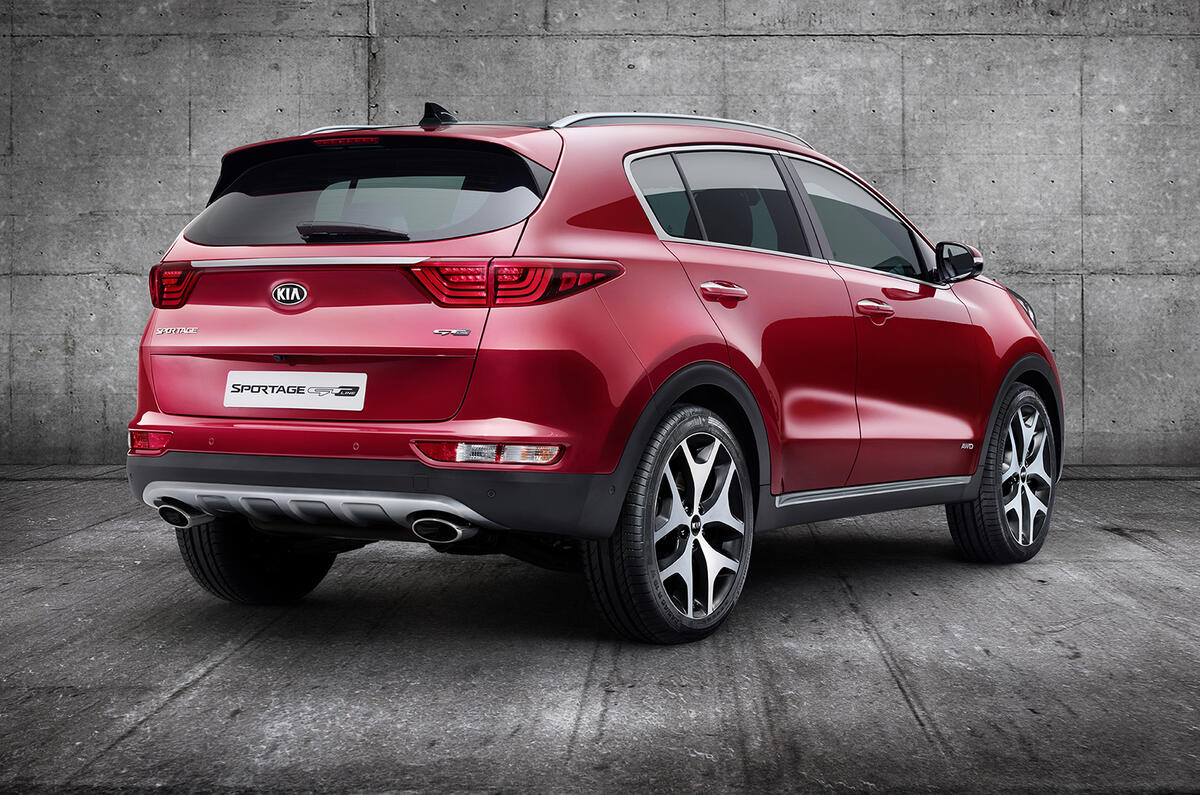
All-new Sportage went on sale on Friday 5 February and 1,500 customers placed orders in the first weekend.

  • All-new Sportage went on sale on Friday 5 February
  • 1,500 customers placed orders in the first weekend
  • First Edition and KX -2 most popular models
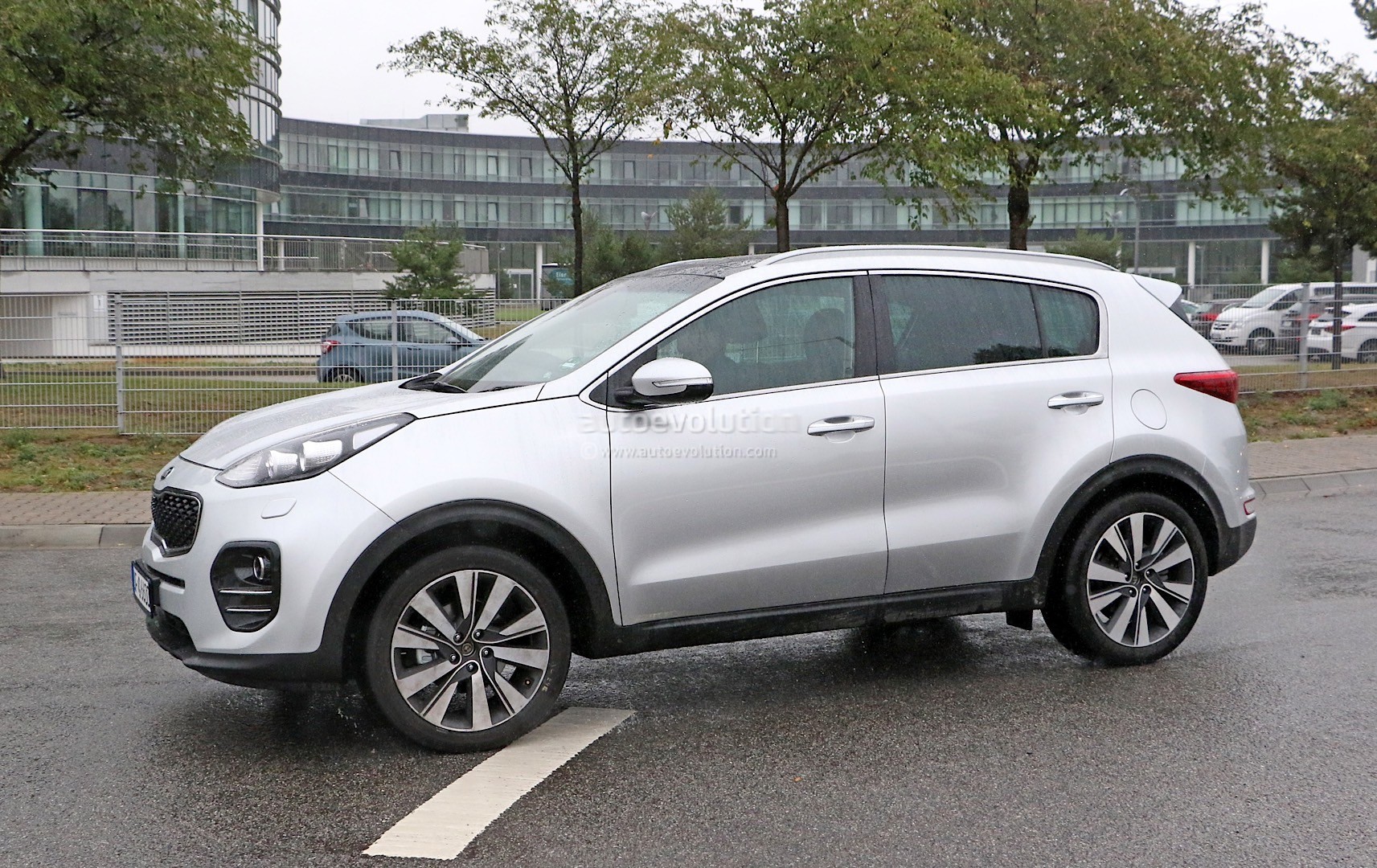
The dramatic and stylish all-new Kia Sportage has caused a showroom-sensation during its first few days on sale with both existing owners and new-to-the-brand motorists putting down deposits on confirmed orders.
Although the high-quality and technologically advanced car only went on sale on Friday 5 February, Kia dealers up and down the country were reporting heavy showroom traffic as word of the car’s remarkable new appearance and up-graded interior spread.

In just the first three days almost 1,500 sold-orders had been placed by dealers to satisfy the avalanche of interest from customers – the best-ever three-day order-take in Kia’s history!
Paul Philpott, President and Chief Executive of Kia Motors (UK) Limited said: ”The all-new Sportage is a significant step forward for Kia, both in terms of interior quality and dynamic refinement and sophistication – and clearly both existing and new customers recognise that fact! Our dealers currently have only one worry – can we satisfy the demand? Well, both Kia in the UK and our factory in Slovakia are working flat-out to ensure we can!
“The previous version enjoyed its best-ever year in 2015 – its run-out year – and from this initial surge of interest I am confident the all-new Sportage is going to get off to a flying start and hopefully put last year’s sales performance in the shade.”
The all-new Sportage range consists of 18 trim versions, three engine variants and three different transmissions. With fuel economy ranging from 37.2 to 61.4mpg combined according to engine and transmission, CO2 figures starting at 119g/km,  the new model is priced from £17,995 to £31,645 OTR.

Wednesday, 30 September 2015

Extensively revised 5dr cee’d, 3dr pro_cee’d, Sportswagon and GT to build on the 1,000,000 sold already.

  • Extensively revised 5dr cee’d, 3dr pro_cee’d, Sportswagon and GT
  • More than a million cee’ds sold already
  • Cumulative UK sales now well over 100,000
  • Range designed, engineered, built and sold exclusively in Europe
  • New powertrains lower fuel consumption and CO2 emissions
  • Highest level of driver aids and connected car services ever in a cee’d
  • New GT-Line trim package plus upgrades through the range
  • cee’d from £14,905, pro_cee’d from £15,250, Sportswagon from £16,750
Kia today reveals pricing and specification details for the extensively revised cee’d family, which is set to build on more than a million sales of the range already. The revisions affect the five-door cee’d, three-door pro_cee’d, spacious cee’d Sportswagon and sporty cee’d GT and pro_cee’d GT.


In May this year Kia announced that sales of the cee’d range had hit the one million mark since the start of production in 2006. The one-millionth car to come off the assembly line was a white GT five-door destined for a Dutch customer. 

The cee’d is sold only in Europe and is made there at the company’s Žilina plant in Slovakia. Most of the design and engineering work is done at the company’s Frankfurt studios and technical centre, and the diesel engines are made at Žilina.

In the UK, cumulative cee’d family sales sit at 105,000. Kia sold 62,519 versions of the first-generation range, which was on sale from 2006 to 2012, while the current model has claimed close to 45,000 customers. It is Kia’s third-best-selling car in Britain, after the Sportage and Picanto. Around two-thirds of sales are of the five-door model.

Kia expects to sell 13,500 versions of the upgraded cee’d family in its first full year, with 9,100 going to fleet and business customers and 4,400 going to retail customers. 

The best-selling version among fleet buyers is predicted to be the five-door 1.6 CRDI diesel with grade 2 trim, thanks to its combination of improved power and torque with lower fuel consumption and emissions. The retail favourite is likely to be the petrol 1.4 SR7 special edition.

The cee’d has played a significant role in Kia’s sustained and sustainable growth in the past nine years. In Europe it accounts for 21 per cent of all Kia sales. The UK is the company’s largest and most profitable European market. 

First deliveries of the new cee’d family will be arriving in UK dealerships on October 1, priced from £14,905 (cee’d), £15,250 (pro_cee’d) and £16,750 (Sportswagon).

Kia offers 19 versions of the five-door cee’d in the UK, nine of the pro_cee’d and 12 Sportswagons. Depending on body style, there are up to eight trim levels – 1, SR7, 2, 3, 4, 4 Tech, GT-Line and GT.

Every car in the cee’d family comes with the best warranty in the business – seven years or 100,000 miles, including labour, subject to terms and conditions. The warranty is fully transferable to the next owner if the car is sold before the time or mileage limit expires.

Pricing:
cee’d
1.4 1£14,905
1.4 CRDi 1£16,195
1.6 CRDi 1£16,795
1.4 SR7£15,750
1.4 CRDi SR7£17,040
1.6 GDi 2£17,795
1.0 T-GDi (98bhp) 2£17,945
1.6 CRDi 2£18,895
1.6 CRDi 7-DCT 2£20,330
1.0 T-GDi (118bhp) 3£20,120
1.6 CRDi 3£20,695
1.6 CRDi 7-DCT 3£22,130
1.6 CRDi 4£22,295
1.6 CRDi 7-DCT 4£23,730
1.6 CRDi 4 Tech£24,295
1.0 T-GDi (118bhp) GT-Line£20,220
1.6 CRDi GT-Line£20,795
1.6 CRDi 7-DCT GT-Line£22,230
1.6 T-GDi GT£23,605
pro_cee’d
1.4 SR7£15,250
1.6 GDi 2£17,295
1.0 T-GDi (98bhp) 2£17,445
1.6 CRDi 2£18,395
1.6 CRDi 7-DCT 2£19,830
1.0 T-GDi (118bhp) GT-Line£19,720
1.6 CRDi GT-Line£20,295
1.6 CRDi 7-DCT GT-Line£21,730
1.6 T-GDi GT£23,105
cee’d Sportswagon
1.4 CRDi 1£17,395
1.4 SR7£16,750
1.6 CRDi 2£19,895
1.6 CRDi 7-DCT 2£21,330
1.0 T-GDi (118bhp) 3£21,120
1.6 CRDi 3£21,695
1.6 CRDi 7-DCT 3£23,130
1.6 CRDi 4 Tech£25,495
1.6 T-GDi GT£23,105
1.0 T-GDi (118bhp) GT-Line£21,220
1.6 CRDi GT-Line£21,795
1.6 CRDi 7-DCT GT-Line£23,230