Purpose

I will try my best to provide detailed info on various cars and what is like to live with them, I have already produced a few for Jaguar-car-forums, I will do my best to be unbiased, but it will be hard for some cars. I will re-produce press releases and copy from other motoring news.
Showing posts with label strada. Show all posts

Sunday, 22 November 2015

The new rear wheel drive Lamborghini Huracan LP-580-2: The essence of driving fun.

  • New dynamic design of front and rear
  • Designed and engineered to provide perfect rear-wheel driving fun
  • Weight reduction with recalibrated power management for highly-involving driver experience
  • 0-100km/h in 3.4 seconds, top speed of 320 km/h
Automobili Lamborghini presents the Lamborghini Huracán LP 580-2: a two-wheel drive version of the Huracán coupe. Specifically designed and engineered for its rear-wheel drive set-up, the Huracán LP 580-2's combines dynamic new looks with a package for an enhanced Lamborghini driving emotion.


"The Lamborghini Huracán LP 580-2 continues the Lamborghini tradition of pure, visionary and technology-driven models," says Stephan Winkelmann, President and CEO of Automobili Lamborghini. 

"The rear-wheel drive model fits perfectly into our Huracán family, appealing to those wanting an even more intense driving experience, or who currently drive other rear-wheel- drive marques and aspire to driving a Lamborghini. 

This is the purest expression of a Lamborghini to date, with class-leading technological refinements. It is a serious car for serious drivers: it is maximum driving fun."

The Huracán LP 580-2 has been engineered and tuned for an essential driving experience. With its naturally aspirated V10 5.2 l engine sending 426 kW / 580 hp to the rear axle, the Huracán LP 580-2's dry weight is just 1,389 kg, thus 33 kg lighter than the four-wheel-drive version.

Weight distribution is biased 40% at the front / 60% at the rear, reducing inertia on the front axle. An entirely new power management set-up, encompassing modified suspension, new steering set-up and recalibrated stability and traction controls connects the driver as directly as possible with the road. 

The selectable Lamborghini driving modes STRADA, SPORT and CORSA are tuned to provide oversteering characteristics, emphasizing authentic rear-wheel drive behavior.


The engaging, sporty fun of the two-wheel drive Huracán LP 580-2 perfectly complements the existing Huracán offering with the all-encompassing technology and experience of the four wheel-drive Huracán LP 610-4 and the the lifestyle appeal of the Huracán LP 610-4 Spyder.
Design
The Lamborghini Huracán LP 580-2 is clearly different from its four wheeldrive stable mate. The front and rear of the Huracán LP 580-2 have been redesigned, accenting a young, fresh and more assertive look and highlighting the aeronautic styling.
Each design detail of the Lamborghini Huracán LP 580-2 celebrates the aesthetic of function; the result of a close collaboration between the Centro Stile designers and Lamborghini's aerodynamic experts. 
The large, newly formed front air intakes specifically direct the cooling air and headwind to increase down pressure on the front axle. The spoiler lip at the rear works together with the rising diffuser in the underbody to improve airflow around the rear of the car - the Huracán does not require a movable rear spoiler.
The Huracán LP 580-2 sits on new, different-sized (front/rear) 19" Kari rims, enhancing the car's dynamic expression. Pirelli PZero tyres have been exclusively developed for the rear-wheel drive car. Steel brakes with aluminum brake disc calipers have been specially contoured for weight reduction and improved cooling.
Re-engineered for rear-wheel drive performance
The Huracán's V10 5.2 l naturally aspirated, mid-mounted engine has been reengineered to provide a maximum 426 kW (580 hp) power output and 540 Nm of torque, with 75% of torque already available at 1,000 rpm.
As in the other Huracán models, the LP 580-2 features cylinder deactivation to improve engine efficiency. When full engine capacity is not required, five of the ten cylinders are temporarily deactivated by switching off one cylinder bank.
When the driver accelerates, the system switches back instantaneously to tencylinder mode, while being virtually impossible to detect by the driver. This feature reduces fuel consumption to 11.9 l/100 km (combined circle) and CO2 to 278 g/km.
Weighing 1,389 kg dry, with a weight reduction of 33 kg over the Huracán LP 610-4 coupe, the Huracán LP 580-2 achieves a weight to power ratio of just 2.4 kg/hp. The LP 580-2 uses the Huracán's hybrid aluminum and carbon fiber chassis, contributing to the lower weight.
With a new setup for springs and anti-roll bars on double wishbone suspension, torsional stiffness of the Huracán LP 580-2 is improved by 50% compared to the Gallardo LP 550-2.
The Lamborghini Doppia Frizione (LDF) seven-speed dual clutch architecture ensures the fastest gear changes and includes 'launch control' for maximum acceleration from a standing start. 
The electronic power steering and optional Lamborghini Dynamic Steering (LDS) have been tuned to improve the car's agility and controllability in every driving condition, depending on driving mode and speed. New rear kinematics heighten the car's 'centered' feeling.
The Lamborghini Piattaforma Inerziale (LPI) - the Huracán's sensor system placed in the center of gravity of the car, tracing all 3D movements - has also been implemented in the rear-wheel drive version. 
It provides real time information to the optional Magneto Rheological Suspension (MRS), steering and stability control systems: the ESC has been regulated to adapt to all adherence conditions yet emphasize the rear-wheel drive behavior in each driving mode.
Driving emotion - maximum enjoyment
Every aspect of the Lamborghini Huracán LP 580-2 has been engineered for driving fun, allowing drivers to interpret the feedback from the car and connect with the road or track.
The ANIMA (Adaptive Network Intelligent Management: 'soul' in Italian) button on the steering wheel allows the driver to adopt different driving modes, recalibrated to suit the spirit of the rear-wheel drive model. 
STRADA, for daily use, provides a slight understeering feedback and is traction-oriented; SPORT, is for sporty and emotional driving fun with slight oversteering behavior; and CORSA, ensures maximum performance in track mode, providing a neutral steering behavior.
Specifications, heritage and pricing
The LP 580-2 is available in the full range of Huracán external and internal colors and trims. In addition, through Lamborghini's personalization program Ad Personam, the options for external and internal colors are limitless.
The Huracán LP 580-2 is fitted with the latest Lamborghini Infotainment System II, with a 12.3" high resolution TFT instrument panel.
Previous Lamborghini rear-wheel drive models include the predecessor Gallardo LP 550-2. The Lamborghini Miura, Countach and Diablo in rear-wheel drive variants were perfect examples of the fun-to-drive concept. 
The rearwheel drive Huracán LP 620-2 Super Trofeo launched in 2014, races at tracks worldwide in this year's three Lamborghini Blancpain Super Trofeo series in Europe, Asia and USA.
The Huracán LP 580-2 is available at the Lamborghini dealerships at a
suggested retail price of 150.000 Euros + tax (Europe).

Thursday, 9 April 2015

Brazilian slump causes FIAT to halt production to ease very high stock levels.

Fiat Chrysler Automobiles will halt production at a plant in Brazil from today through Monday due to lower demand for cars and high stock levels. The nearly 16,000 workers at the plant in Betim, Minas Gerais, will be on paid leave.
A Fiat representative said it had previously announced paid leave from Friday through Sunday due to the Easter holiday, and had added days because of elevated supplies.

The representative declined to comment on stocks at the plant but union president Joao Alves de Almeida said the factory was manufacturing some 2,000 cars a day, down from peaks of 3,400 a few years ago, and had enough cars stocked for 40 sales days.
"This isn't good news -- it creates a climate of apprehension between the workers who are concerned about their future and maintaining their jobs," Almeida said.

On Monday another union said Volkswagen had furloughed 4,200 workers at its second-largest factory in Brazil for three weeks.
Many automakers are working to cut costs in Brazil, where sales and output are down more than 20 percent in the first two months. Jobs in the auto industry have fallen 8 percent in the 12 months through February.

Sunday, 21 September 2014

FIAT to utilise next generation Mitsubishi L200 as an own brand pick up.

Fiat Chrysler will source a new midsize pickup for Europe and Latin America from Mitsubishi Motors.
The truck will be based on the next-generation Mitsubishi L200 model, Fiat and Mitsubishi said in a statement today.
The automakers said they have signed a non-binding memorandum of understanding to develop and manufacture a midsize pickup truck, supplied by Mitsubishi and based on the next-generation L200.
The Japanese automaker is also due to supply its made-in-Thailand Attrage sedan to Chrysler for sale in Mexico, according to Reuters sources.
The Current version of the Mitsubishi L200
Fiat and Mitsubishi did not give any more details about the pickup.
Automotive News Europe reported in May that the pickup will be sold by the Fiat Professional light commercial vehicle brand in Europe and Latin America.
Fiat Chrysler’s new five-year plan, unveiled in May, has a pickup for Europe and Latin America debuting in 2016. At the moment it is unclear where Fiat’s pickup will be made, but Mitsubishi builds the current L200 in Thailand.
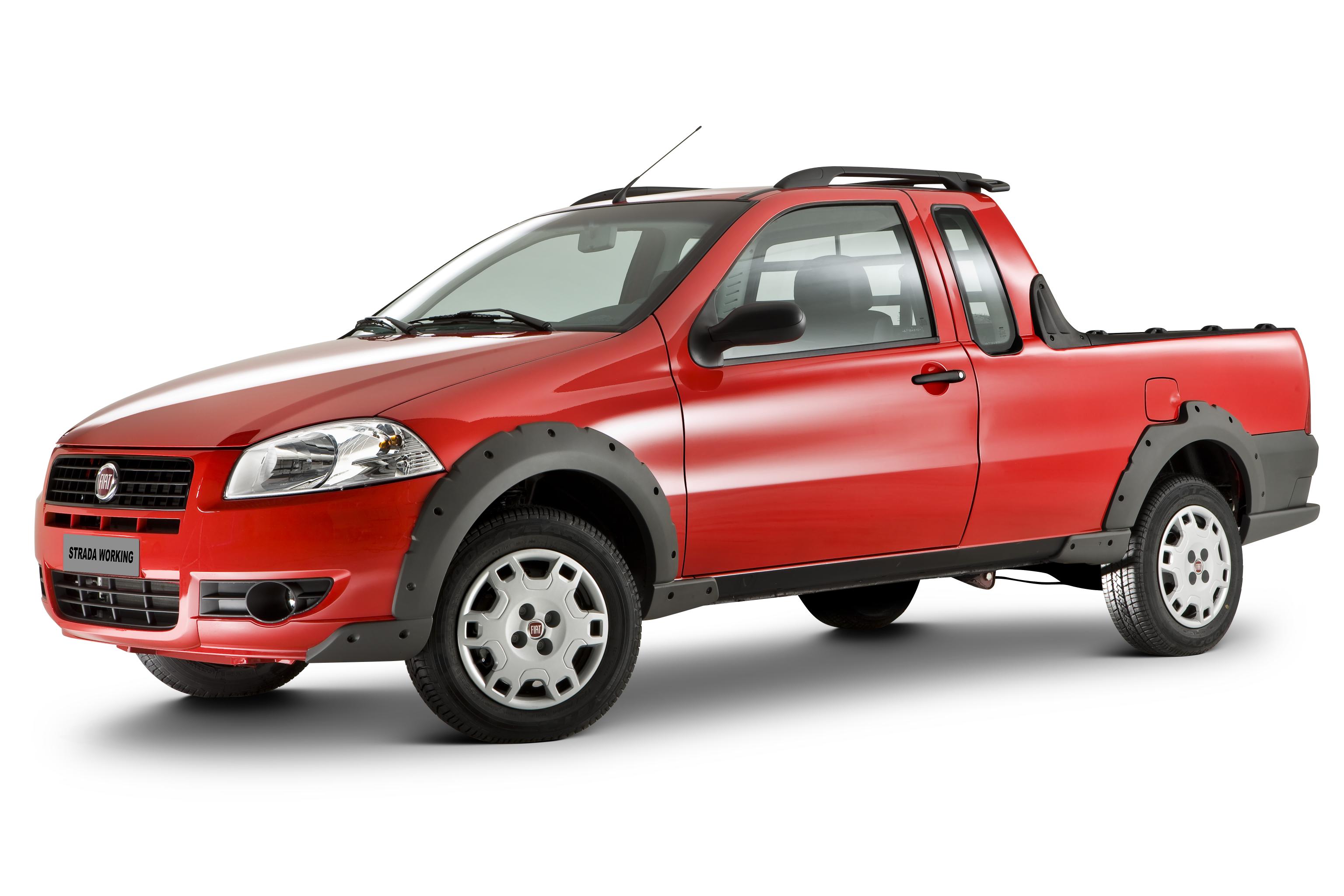
Fiat’s current lineup includes the Strada, a front-wheel-drive-only unibody small pickup built in Brazil and sold in Europe and Latin America. The Strada was Fiat Professional’s top seller last year with a volume of 134,000 units.
Broadening Fiat Professional’s lineup is a crucial element of Fiat Chrysler CEO Sergio Marchionne’s plan to make the automaker’s European business profitable again. Fiat has lost 2.15 billion euros ($2.93 billion) in the region in the past three years, but aims to end losses by 2016.
Marchionne first promised a large pickup with a 1-ton loading capacity in his 2006 business plan. The pickup was due to arrive in 2008 from Fiat’s plant in Argentina sharing underpinnings with Tata Motors’ Xenon, but Fiat decided not to build its own version of the model.
Plans for a pickup reappeared in Marchionne’s 2010 business strategy. It was supposed be a version of the Dodge Dakota pickup. That model was never built.

Sunday, 1 June 2014

Fiat to add large pick up to range, a rebadged Mitsbishi L200

Fiat will team with Mitsubishi to add a long-promised large pickup to its lineups in Europe and Latin America, sources told Automotive News Europe.
A Fiat spokesman confirmed that Mitsubishi will provide the Italian automaker with a variant of the L200. Fiat’s first body-on-frame pickup will be sold by commercial vehicle unit Fiat Professional starting in 2016, the sources said.

Broadening Fiat Professional’s lineup is a crucial element of Fiat Chrysler CEO Sergio Marchionne’s plan to make the automaker’s European business profitable again. Fiat has lost 2.15 billion euros ($2.93 billion) in the region in the past three years, but aims to end losses by 2016.
Analysts estimate that one of the automaker’s bright spots in Europe is Fiat Professional, which has delivered between 200 million euros and 300 million euros in annual operational profit during the last 10 years.
Along with helping to boost Fiat Professional’s profit, Marchionne is counting on the pickup to increase the unit’s global sales to 600,000 by 2018 from 431,000 last year. Europe, the Middle East, Africa and Russia accounted for 250,000 of last year’s sales; Latin American sales were 179,000 with the remaining 2,000 coming from Asia Pacific.
Fiat sold 134,000 units of the Strada last year in Europe and Latin America.

Fiat’s current lineup includes the Strada, a front-wheel-drive-only unibody small pickup built in Brazil and sold in Europe and Latin America. The Strada was Fiat Professional’s top seller last year with a volume of 134,000 units.
The Mitsubishi-based pickup is larger and comes in rear-wheel and four-wheel-drive configurations.


Marchionne first promised a large pickup with a 1-ton loading capacity in his 2006 business plan. The pickup was due to arrive in 2008 from Fiat’s plant in Argentina sharing underpinnings with Tata Motors’ Xenon, but Fiat decided not to build its own version of the model.
Plans for a pickup reappeared in Marchionne’s 2010 business strategy. It was supposed be a version of the Dodge Dakota pickup. That model was never built.


Fiat Chrysler’s new five-year plan, unveiled earlier this month, has a pickup for Europe and Latin American debuting in 2016. At the moment it is unclear where Fiat’s pickup will be made, but Mitsubishi builds the current L200 in Thailand.

Sunday, 22 December 2013

Stunning new Huracán from Lamborghini, a worthy Gallardo successor.


  • Innovative technology and absolute performance redefine the super sports car experience
  • Pure and powerfully dynamic design language
  • New V10 with 610 hp, acceleration from 0-100 km/h in 3.2 seconds, top speed of over 325 km/h
  • From January 2014: private preview events for qualified prospects

A new era is beginning for Automobili Lamborghini and the luxury super sports car segment: with the brand new Huracán Lamborghini is not only presenting the successor to the iconic Gallardo, but is also redefining the benchmark for luxury super sports cars in this segment.


With its pure and unique design, an innovative technology package, outstanding dynamics and excellent quality, the Huracán offers a super sports car experience on a whole new level. The Huracán combines absolute performance with easy-to drive road behaviour and both luxurious and sport-oriented finish. With the Huracán, Lamborghini is taking a big step into the future, and enhancing the brand's illustrious history with the next automotive legend.

Starting from January 2014 the Huracán will be the protagonist of over 130 private preview events in more than 60 cities throughout the world.


The Lamborghini Huracán will make its world public debut at the Geneva Motorshow 2014.

Name
With a total volume of 14,022 cars produced, the Lamborghini Gallardo has been the most successful Lamborghini ever and, in its ten-year lifecycle, lifted the Lamborghini marque to a whole new level. Its successor, the new Huracán, has been developed from scratch down to the very last detail and, like the Gallardo and most other Lamborghini models, derives its name from the world of
bullfighting. The fighting bull Huracán of the Spanish Conte de la Patilla breed was known for his outstanding courage and strong sense of attack. He fought in Alicante in August 1879, showing his unrelenting character and remaining defiant and invincible, thus entering into the legend of fighting bulls' history.

Design
The new Huracán revolutionizes the design language of the Gallardo and is pure in its lines: precise technology and top level craftsmanship meet an audacious design with sharp edges, monolithic and sculptured volumes and precise surfaces. The starting point is the silhouette of the Huracán, born out of the desire of creating an automobile, whose profile is defined by only one line that merges the front with the cockpit and the rear of the car. The lateral windows come together to create a hexagonal form inserted like a glass jewel in the car's profile.


Also by night is the Huracán unmistakably a Lamborghini. Not only are the main headlamps equipped with full LED illumination, but all other light functions also feature state-of-the-art LED technology as a standard feature for the first time in the segment.

Interior
The interior is dominated by an innovative cockpit. A 12.3 inch full-color TFT instrument panel delivers all car information to the driver, from rev counter to navigation maps and infotainment functions, and can be configured by the driver in different setups. Fine Nappa leather and Alcantara distinguish the interior, with several color combinations offered to ensure broad individualization options. The design of dashboard and central tunnel underline a new lightness in the interior. Superb craftsmanship guarantees the highest quality and sense of luxury throughout.

Chassis and powertrain
Systematic lightweight design and Automobili Lamborghini's extensive expertise in carbon fiber come together in the Huracán's new hybrid chassis -- an integrated structure of carbon and aluminum elements. With a dry weight of 1,422 kg it enables not only the excellent power-to-weight ratio of just 2.33 kilograms per horse power, but also guarantees race-car precision with
outstanding stiffness.


The new 5.2 liter V10 engine delivers a maximum power of 448 kW / 610 HP at 8,250 rpm and a maximum torque of 560 Nm at 6.500 rpm. In the new ''Iniezione Diretta Stratificata'' (IDS), direct and indirect gasoline injections are smartly combined. This results in more power and torque with lower fuel consumption and emissions compared with the Gallardo V10 engine. The top speed of over 325km/h and the acceleration from 0 to 100 km/h in 3.2 seconds and to 200 km/h in 9.9 seconds only partially describe the dynamic experience at the wheel of the Huracán. Also thanks to the Stop & Start technology, the combined EU consumption figure has been further reduced to 12.5 liters per 100 km (290 g/km CO2 emissions). The engine complies with EU6 emissions regulation.

Driving dynamics
The power of the V10 engine is brought to the road via the new 7-speed dual clutch transmission ''Lamborghini Doppia Frizione'' (LDF) and fully electronically controlled four-wheel drive system. The different driving modes of the Huracán can be selected via a driving dynamics selector switch in the steering wheel -- from traction-oriented on the road to extreme performance on the race track, with three setups of the dynamics system: STRADA, SPORT and CORSA. The different modes ensure extensive modification in road behavior of the Huracán. In particular they influence the set-ups of several systems, such as the gearbox and engine behavior, the sound, the four-wheel-drive system and electronic stability control. The Huracán's carbon-ceramic brakes are a standard feature for consistently superb braking performance. The ''Lamborghini Dynamic Steering'' variable steering ratio system and magneto-rheologic suspension damper control are both available as options for further customization of the Huracán's dynamic behavior. They are also calibrated via the three different dynamic set-ups.

The Huracán is produced at the Automobili Lamborghini headquarters in Sant'Agata Bolognese on an entirely newly-equipped production line. Delivery to the first customers is planned for spring 2014.