Purpose

I will try my best to provide detailed info on various cars and what is like to live with them, I have already produced a few for Jaguar-car-forums, I will do my best to be unbiased, but it will be hard for some cars. I will re-produce press releases and copy from other motoring news.
Showing posts with label gothenburg. Show all posts

Tuesday, 16 August 2016

On 17 August 1966, the Volvo 144 was launched and it became the first Volvo to break the million unit barrier.

On 17 August 1966, the Volvo 144 was presented in the midst of an ongoing manhunt. With this new model series, Volvo could develop into a considerably bigger car maker. In eight years, no fewer than 1.25 million cars were produced – creating Volvo’s first million seller.
Almost four hundred journalists were in attendance at the Lorensberg function rooms in central Gothenburg on 17 August 1966. The new Volvo 144 was to be presented, unveiled by raising a dividing wall behind which three pre-series models of the new Swedish car were waiting. 
Rumours about Volvo’s new model had been circulating for several years and what the press now finally got to see was an austere and modern vehicle. Parallel to the unveiling in Gothenburg, the new model was also revealed in Oslo, Copenhagen and Helsinki.

The cars used at the press show in Gothenburg had been lifted into the premises the evening before by crane, hidden in large wooden crates. Naturally, the entire procedure was supposed to be as discreet as possible, but this proved difficult since a major manhunt was underway to catch two police killers. 
A nationwide alert had been issued and as the wooden crates were being lifted into the function rooms, the police received a tip-off that both fugitives may have been in the audience at the adjacent cinema, which had to be evacuated.
Back in June 1960, Volvo’s management – with CEO Gunnar Engellau at the helm – made the final decision on the basic directive for the new car. The P660, as the project was designated, was to be larger than the Amazon, but of the same weight and price class. 
It was to fulfil strict safety requirements and comfortably carry four or five people. Moreover, the car was to have the same wheelbase as its predecessors, the PV 544 and the Amazon. 
Unlike when the Amazon was developed, several different chassis versions were planned from the start.
With the 140 series, Volvo introduced a naming scheme in which the first digit designated the model series, the second digit the number of cylinders and the third digit the number of doors.
Mass production of the 144 started two days after the presentation, on 19 August 1966. In 1967 the two-door 142 was launched, and in 1968 production of the 145 estate began. A closely related model was the 164, which was launched as the 1969 model. 
It shared many chassis components with the 140 series, but had a 10 cm longer wheelbase and a longer front to fit the straight six-cylinder B30 engine. Yet another chassis version was launched in 1970. 
This was the spacious load-carrying Volvo 145 Express, on which the roof was raised from the B pillar and back.
Chief Designer Jan Wilsgaard was also the man behind the Amazon’s elegant lines and, despite the differences, likenesses can be seen between the models. There was a strong desire for a grille design reminiscent of the Amazon’s. 
The shoulder that widened the doors below the side windows was also similar to that on the Amazon, although on the 144 this feature was even more pronounced. Like the Amazon, the 142 and the 144 had vertical tail lights.
The 140 series was well suited to the ideals of the 1960s, giving precedence to function. It had a spacious interior and large windows. Scandinavian design, with its clean and simple lines, is a popular approach today and the 140 series is a prime example of its expression.
The 140 series entailed several important advances in both passive and active safety. The chassis was extremely resilient to twisting and was fitted with crumple zones and a protective roll cage. 
The brake system was advanced with disc brakes both front and rear together with a dual-circuit system with twin hydraulic circuits at the front. 
This provided a three-way partitioning of the circuits, so that if one circuit failed both front brakes and one rear brake would still function. 
What’s more, there were reducing valves to prevent the wheels locking during heavy braking, a solution first employed by Volvo. A split steering column and a dashboard with a collision-protected frame were other safety features. 
Later, the 140 series was also fitted with headrests, retractable seat belts and seat belt reminders as standard.
The Volvo 140 series had a conventional design with a front-mounted engine and rear-wheel drive. Initially, the series employed the tried and tested 1.8-litre four-cylinder B18 engine from the Amazon, producing 75 hp DIN – or 96 hp DIN with twin carburettors. 
The 1969 model had the 2-litre B20 engine, producing 82 hp and 100 hp DIN respectively. As of the 1971 model, there were also versions with electronically controlled fuel injection, producing 120 hp DIN.
When production of the 142, the 144 and the 145 came to an end in the summer of 1974, 1,251,371 cars had rolled off the production line. The model series became the company's first million seller and helped further Volvo’s position as an international player. 
The legacy of the 140 series is, however, greater than this, stretching all the way to 1993. Its replacement, the Volvo 240, borrowed much from the 140 series chassis and went on to become Volvo’s most mass produced model, with some 2.8 million cars in 19 years.

Monday, 4 May 2015

Volvo Cars celebrates 25th Anniversary of the Integrated Booster Cushion.

  • Volvo Cars introduced the first integrated booster cushion for children in 1990
  • Recommends children should travel rearward facing until the age of four
Volvo Cars is celebrating the 25th anniversary of the introduction of the first ever integrated booster cushion in conjunction with the United Nations Global Road Safety Week (May 4-10). Back in 1978 Volvo Cars developed the very first cushion for children in cars. 
In 1990 the Swedish car maker took child safety to a new dimension with the development of the first integrated booster cushion.

The first integrated booster cushion was actually a redesigned centre armrest that was developed to safely elevate the seating position of the child so that the existing central 3-point safety belt could be used to best effect. This removed the need for accessory child restraints for older children and also increased their comfort. 
The clear benefit of the integrated design also means that the cushion is always available and the potential for misuse is minimized. Few car makers offer integrated booster cushions for children to this day.
“The introduction of the first integrated booster cushion for improved child safety in 1990 was a huge step forward for child safety. 
One of the key benefits of integrated booster cushions is that it is developed as a part of the seat and the safety belt is in more direct contact with the child’s body, removing the possibility of ‘slack’ in the belt that could be associated with accessory booster cushions/seats or child seats,” said Lotta Jakobsson, Senior Technical Leader at Volvo Cars Safety Centre.
Volvo Cars achieved yet another world first in child safety when they added the integrated two-stage booster cushion in 2007, enabling adjustment between two settings for the safest and most comfortable seating position for children of varying height. 
Apart from the obvious benefit of increased safety and comfort, the integrated cushion also provides a better seating position for the child, allowing them to look out the windows. This has the effect of making children less prone to boredom and agitation, which can also negatively affect the driver’s experience and concentration abilities.  In the lower of the two positions the seat is suitable for larger children.
“The beauty of the integrated two-stage booster cushion is that it is always available and does not detract from normal adult usage of the seats. It means in effect that the rear seat is suitable for all but small children who should always be placed in a rearward facing child seat until the age of four. This increased safety and flexibility makes the integrated booster cushion a perfect solution. 
Unfortunately, not many car makers are offering such solutions at present. At Volvo Cars we believe that car makers should take the responsibility for developing child safety systems as a part of vehicle development to ensure the best performance. Children are our future – and we feel strongly that they should be given the best when it comes to safety. ” concluded Lotta Jakobsson.
Since 2008 Volvo Cars has communicated the vision that by 2020 no one should be seriously injured or killed while driving a new Volvo car. The longer term goal is to design cars that will not crash.
Achievements from Volvo over the years.
  • The 3-point safety belt was pioneered by Volvo and first used in a production vehicle in 1959.
  • Rear 3-point safety belts were added to the outer rear seats in Volvo cars from 1969.
  • Centre lap belts were replaced with 3-point safety belts in all Volvo cars from 1986 with an adjustable headrest being added in the centre from 1991.
  • The first integrated booster cushion for children was launched in 1990 in the Volvo 800 Series cars.
  • The first integrated two-stage booster cushion was introduced in 2007.
  • A comfort cover was also developed to increase support for sleeping children.
  • Volvo recommends a rearward facing child seat up to the age of three or four at least .
  • According to IIHS Statistics on Child Safety in the United States for 2013, 35% of children aged 13 and under fatally injured in car crashes were unrestrained (no safety belt or child seat). 25% wore a safety belt and 32% were in a child safety seat. The total number of deaths was 640. In 1985 the number of children unrestrained that were fatally injured was 71%, with just 7% wearing a safety belt and just 8% using a child safety seat. In 1985 the death toll was 1,131.
  • Volvo Cars offers a full range of child safety products that cover new-born babies to children around the age of 12.
  • #SaveKidsLives

Tuesday, 9 December 2014

How to crash test a car the Volvo way, now we know why they are so safe.


Volvo Cars’ safety expert Anders Axelson knows that brilliant ideas can pop up in the strangest of circumstances. A visit to Legoland with his twin daughters in 2007 inspired Anders to turn an amusement park ride into an efficient test method in Volvo Cars’ quest for better protection in run-off road crashes.

“Watching people being thrown in all directions during a ride in the ‘Robocoaster’, I suddenly realised that those rapid, random movements resembled the violent forces occupants in a run-off road crash are exposed to,” says Anders Axelson.

Run-off road crashes had been on Anders’ mind since 2006 when Volvo Cars intensified the development of technology to help protect car occupants in these common and complex scenarios.


Based on real-life accident data, Anders Axelson’s team initiated three complete vehicle crash test track methods, called ‘Ditch’, ‘Airborne’ and ‘Rough terrain’, for evaluating the consequences of various run-off road scenarios.

Analysing films from a large number of these tests confirmed that being thrown out of the ideal, firmly strapped-in seat position correlates well with potential injury-causing mechanisms seen in real-world crashes.

Searching for a test method

“The engineers developed promising solutions to actively retract the occupants in order to keep them in position. But since running complete cars into the terrain is a time-consuming and expensive test method, we needed a quicker and cheaper solution to evaluate the ideas,” Anders Axelson recalls.

The stroke of genius conveniently came on a family trip to Legoland in Denmark. At the time, Anders’s twin girls were too small for the ‘Robocoaster’, but after watching other kids being shaken by the robot arm, he realised that the ride had potential beyond making kids scream with joy.

Back at the office, Anders started searching for a similar robot that could be programmed to mimic the exact movement patterns that Volvo Cars had recorded during the complete vehicle run-off road crash tests.

Unique test rig

“The industrial robot manufacturer ABB had the technology and the knowledge to programme a machine designed for precision work to move a car seat around in a seemingly random pattern. It worked brilliantly,” says Anders Axelson.

A vehicle seat and restraint system is mounted on the multi-axial industrial robot. The robot, which is used together with a crash test dummy, can be programmed to simulate the occupant kinematics during crucial parts of run-off road scenarios.

During the development work of the all-new XC90 and upcoming cars based on the company’s new scalable architecture, Volvo Cars’ own ‘Robocoaster’ has been used to find the combination of safety belt geometry, rapid belt retraction and seat design that helps keep the occupant firmly in position in run-off road scenarios.

World-first run-off road safety solution

The result is a world-first run-off road protection package that includes rapid electrical safety belt retraction as well as unique ‘energy-absorbing’ functionality in the seat that cushions the vertical forces that occur in a ‘hard landing’ in the terrain.

“The most valuable result from the ‘Robocoaster’ tests is probably the insight into how well the safety belt retraction interacts with the enhanced side support in our new seat generation,” says Anders Axelson.

By the way, Anders Axelson never went on the ‘Robocoaster’ ride during that visit to Legoland. “No way. Violent rides like that make me sick,” he says with a smile.

Monday, 8 December 2014

Orders now being taken for Volco's new XC90 Sports Utility Vehicle.

  • Volvo’s Gothenburg factory accepts new orders for the first vehicle from the new SPA platform
  • Order system opens with an influx of pre-orders placed at dealers
  • New engine and options now available from preview customer feedback
Volvo Car Corporation has opened the order books for the all-new Volvo XC90, the first vehicle to be built on its brand new in-house designed and built chassis, using its own in-house designed and built engines.

Amongst the first orders to be placed are the lucky 1927 owners of the First Edition, 53 of them being from the UK.  Customers who have already placed orders at dealers will have their order accepted by the factory and become the some of the first owners to have their vehicle delivered.
Having been able to preview the all-new XC90 to a number of customers and from feedback already received, a number of additions have been made available to order. Principle changes have been the introduction into the UK of the 320hp T6 petrol engine and the addition in the availability of the auxiliary heater on the D5. The auxiliary heater, standard on the T8 Twin Engine, allows the driver to pre-condition the vehicle cabin to a set temperature so that it is ready for when the car is required.
Design
The XC90 will be built on Volvo’s brand new SPA chassis. Designed under the leadership of Thomas Ingenlath, the new vehicle shows the new design direction of Volvo Cars, together with its new interior and centre-piece, the tablet style centre touchscreen. 
Engines
The XC90 is the first car to be powered solely by Volvo’s new Drive-E engine range. Available to order from launch with either an all-wheel-drive (AWD) D5 225hp diesel, an AWD T6 320hp petrol or an AWD T8 Twin Engine petrol plug-in hybrid with 400hp.
First Edition
The all-new Volvo XC90 First Edition was sold exclusively on-line and was sold out within 47 hours, at peak time seven cars were sold every minute. Only 1927 cars were made available, a celebration of the year that Volvo was founded, all in one specification level and in the same exterior colour and interior upholstery.

Monday, 20 October 2014

Volvo Cars adds a third shift and 1,300 new jobs in the Torslanda plant

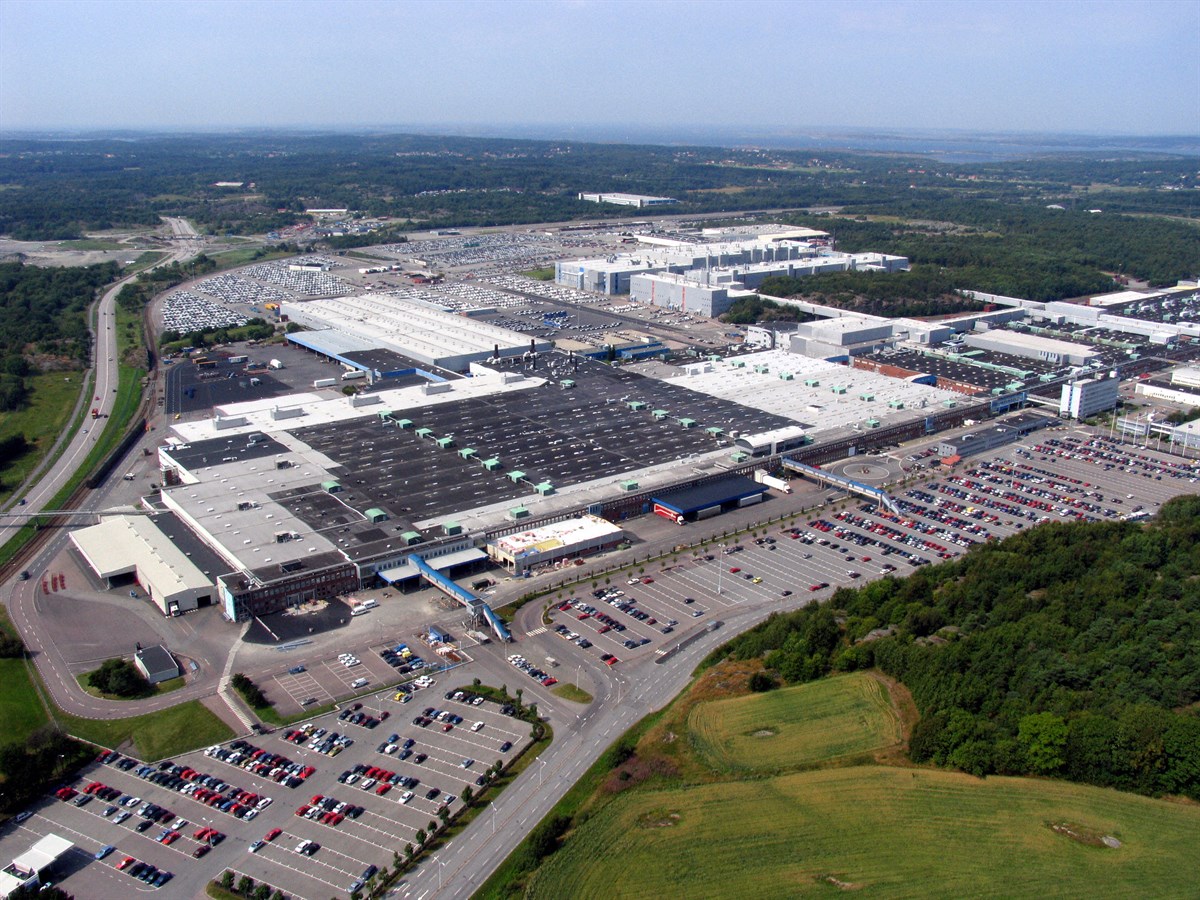
Volvo Cars will add a third working shift in its Torslanda, Gothenburg plant to meet the increasing customer demand for the company’s new cars. The expansion, planned for the first quarter of 2015, will be made in connection with the start of production for the all-new Volvo XC90 SUV.

Adding the third shift means the company will create approximately 1,300 new jobs and follows the opening of an entirely new body shop which lifted the production capacity in the Torslanda plant to 300,000 cars annually. This also means the total number of employees at Torslanda increases by close to 40 per cent.
Volvo Cars Torslanda Plant, 2004
The all-new Volvo XC90 SUV marks the first car from the new in-house developed Scalable Product Architecture (SPA), which will form the base for a range of upcoming new Volvo models. The new platform as well as the expansion of the Torslanda plant are part of Volvo’s ongoing USD 11 billion investment program in new products and production capacity.

Volvo Cars global retail deliveries were up by 9.2 per cent during the first nine months of the year while the outlook for the full year is a total sales volume of approximately 470,000 cars representing a 10 per cent growth and an all-time high sales result for the company. The all-new Volvo XC90 SUV is expected to further grow the company’s sales volumes during 2015, creating a need for increased output from the Torslanda plant where the new car is to be produced. Deliveries from the Torslanda plant are expected to reach another all-time high in 2015.

In addition to introducing a third shift, the Torslanda plant will also implement a revised working agreement to further support higher production volumes. The new agreement increases the flexibility in production to meet customer demand.

The new working agreement will also be introduced in the first quarter of 2015 and when fully implemented, the Torslanda plant will employ 4,600 people. The plant, which earlier this year celebrated 50 years of car making, currently produces the Volvo S60, S80, V60, V70, XC70 and XC90 models.

Monday, 14 July 2014

An end of an era as the last Volvo XC90 rolls of the lines after 12 years.

  • After more than 636,000 cars, production of current XC90 stops today
  • Last XC90 out of Torslanda plant joins Volvo Museum collection
  • Torslanda plant now prepares for production of all-new XC90
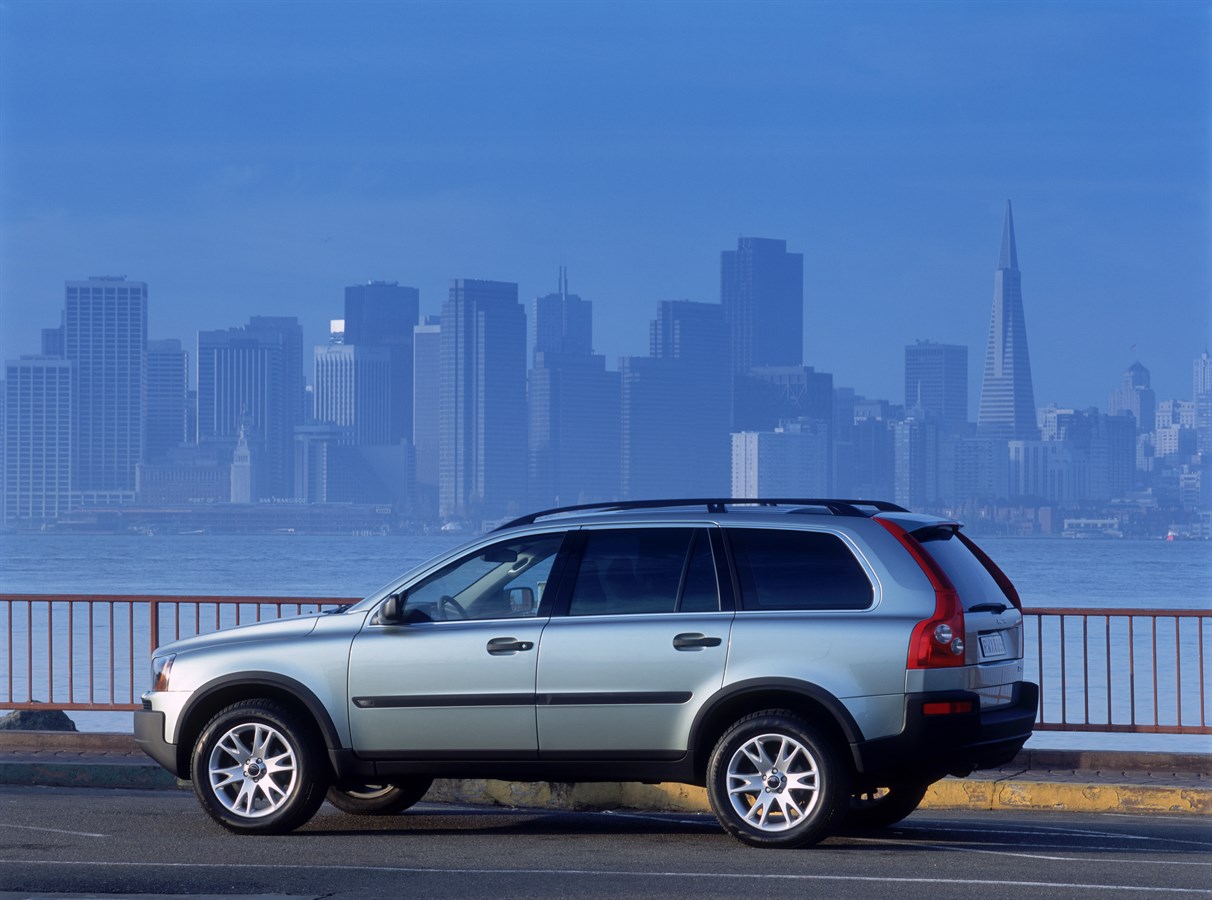
Today marks the end of an era for Volvo Cars as production in Sweden of the iconic XC90 – a car that revolutionised the global SUV sector – comes to an end after 12 highly successful years.
The story began on 7 January 2002, when Volvo Car Corporation launched an eagerly awaited new model at the Detroit Motor Show. It was a car that dealers and customers principally in America had been yearning for – the Volvo XC90. 

A car that would be awarded more than 100 international distinctions, including "SUV of the Year" as early as 2003, and that was named Sweden's most valuable export product, with an annual export value of more than SEK 40 billion in the peak years. Before sales started in 2003, Volvo's dealers had already received 15,000 orders.

Volvo XC90

636,143 XC90s produced

But all good things must come to an end. After producing 636,143 XC90s, a legend of the car world will leave the factory in Torslanda today to make room for the next generation of the XC90. The last XC90 made in Gothenburg will be driven directly to the Volvo Museum, also located in Gothenburg. However, production of the current XC90 will continue in Volvo's new car plant in Daqing later in the year, under the name of Volvo XC Classic, which will only be sold in China.
The all-new Volvo XC90 will also be produced in the Torslanda factory. The car, which will be revealed in August, will start production at the end of January 2015.
Hans-Olov Olsson, who is currently the Vice Chairman of Volvo Car Corporation's Board of Directors, was responsible for sales in the USA at the end of the 1990s. In 1998, he succeeded in convincing the company's then CEO, Tuve Johannesson, that the company should invest in an SUV.
In August 1998, Volvo Cars project director Hans Wikman was commissioned to develop a proposal for a modern, 7-seater SUV that was not too large. The car project was named P28, was to be based on the same platform as the Volvo S80 and should be launched in 2002. The aim was to sell 50,000 cars a year, a goal that would be beaten by a clear margin – during the peak years 2004-2007, around 85,000 cars were sold each year. The USA has been the largest single market for the XC90, with record figures achieved in 2004 (38,800 cars sold) and 2005 (36,200).
At the same time as drawing up three design proposals, two in California and one in Gothenburg, a female reference group was brought together in California, including Swedish actress Maud Adams, to contribute their wishes and comments, as American women would make up a large proportion of the intended target group.
The first Volvo XC90

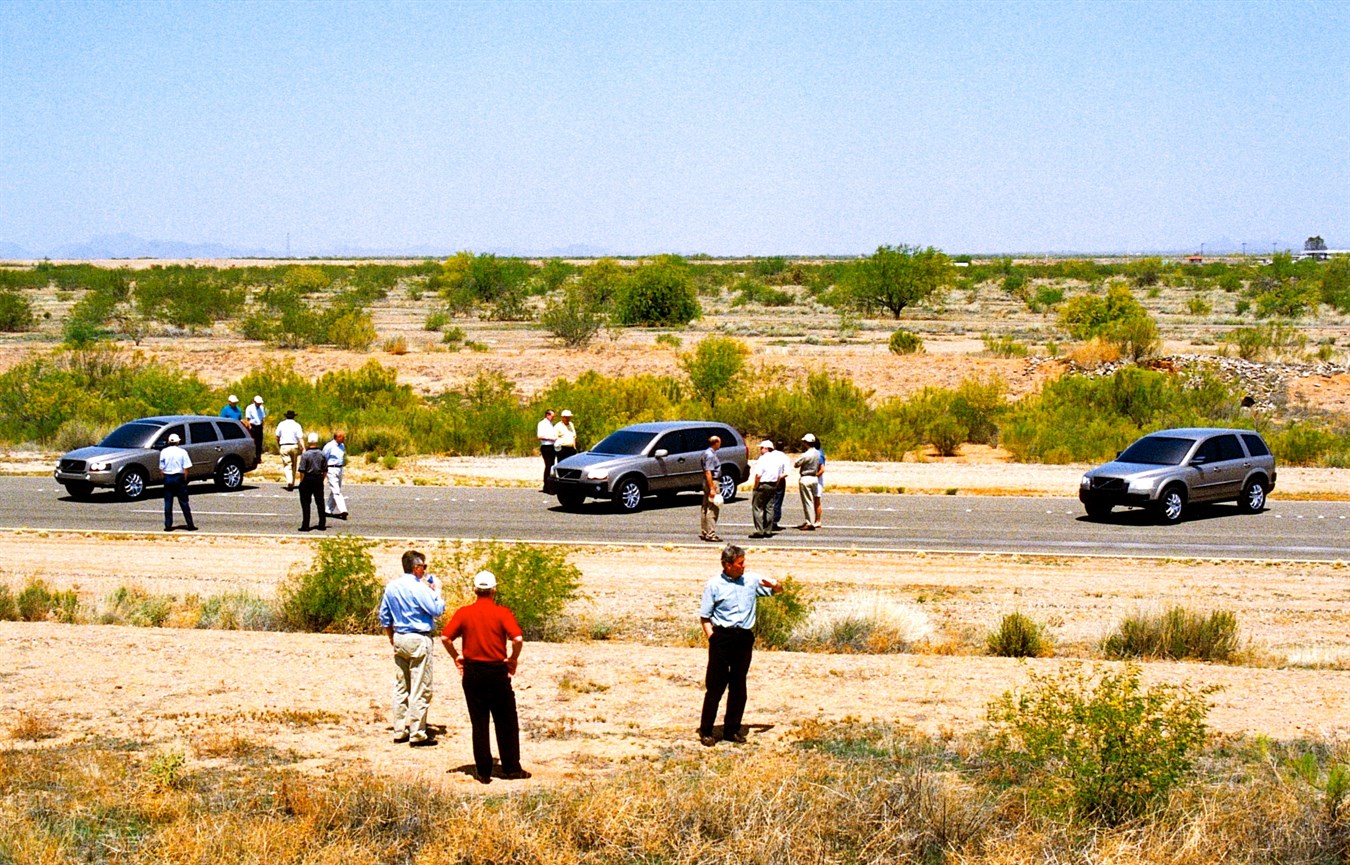
41°C in the desert
The 4th of May 1999 was an important day for the project. In temperatures of 41°C, the three design proposals were presented at Volvo Cars’ test track outside Phoenix, Arizona. Senior management and some members of the future project management attended the gathering, with the aim of reaching agreement on the focus of the design. The winning exterior proposal was designed by Doug Frasher from Volvo's Concept & Monitoring Center in California, who also designed the exterior of the Volvo S80.

Hans Wikman remembers the feeling when the management team inspected the three design alternatives under the burning desert sun:
"Everyone in the project team was a little tense. After all, the SUV programme had been put on ice a couple of times before. We now had our fingers crossed that the design and the planned content would be good enough so that the management would approve it with no reservations. And that is exactly what happened."
Shot in the arm for the SUV segment
However, many critics felt that Volvo Car Corporation was entering the SUV segment too late in 2002. However, the XC90 came to be a shot in the arm for the entire segment by resolving many of the problems experienced in earlier SUVs.

"We were using the working hypothesis 'The Next Generation SUV'," explains Hans Wikman. "In other words, in the XC90 we were going to show innovative solutions for the drawbacks for which the SUVs of the time were known”
These solutions included:
  • The potential to create a flat cargo floor behind the front seats;
  • Driving properties equivalent to those of a regular car;
  • Leading fuel economy within the segment.
Five global innovations
The Volvo XC90 also presented five global innovations when the car was introduced in 2002:
  • RSC (Roll Stability Control), a system that uses a gyro sensor to detect and counter the risk of overturning, and ROPS (Roll Over Protection System) to optimise the protection for everyone in the car in the event that, despite everything, it should still overturn.
  • Inflatable side curtains for all three rows of seats.
  • An integrated, adjustable booster cushion for children in the second row.
  • Seat belts with "tensioners" for all seats.
  • A lower crossbeam at the front, which had the task of activating the car's safety systems in the event of a collision.

More than a decade later, the American Insurance Institute for Highway Safety (IIHS) still ranked the XC90 as one of the safest cars on the market by naming it the 2014 Top Safety Pick+.

The Volvo XC90 was launched with a range of five and six-cylinder engines. All were transversely mounted in accordance with Volvo's powertrain concept. In 2004, the range was extended with a powerful, transversely mounted V8 engine made of aluminium, which was combined with a six speed automatic gearbox.
 "We have learnt a great deal from the first generation XC90"
Now the first generation XC90 will make room for the next, a car that has made advances in terms of development and content at least on a par with the first.
"I am convinced that our customers will be very pleased," says Dennis Nobelius, who is primarily responsible for the all-new XC90. "We have learnt a great deal about the important holistic approach for everyone in the car, when it comes to following up this success."
“Our all-new XC90 is not just a natural development from an incredibly successful car, it is also an excellent example of the transformation underway at Volvo Cars, both within the company and from a brand perspective,” says Lex Kerssemakers, Senior Vice President Product Strategy & Vehicle Line Management at Volvo Cars. “We look forward to a new era of success.