Purpose

I will try my best to provide detailed info on various cars and what is like to live with them, I have already produced a few for Jaguar-car-forums, I will do my best to be unbiased, but it will be hard for some cars. I will re-produce press releases and copy from other motoring news.
Showing posts with label Zhejiang Geely Holding group. Show all posts

Tuesday, 30 May 2017

Geely Holdings has signed a memorandum to take control of Lotus and 49.9% of Proton.

DRB-HICOM Berhad (DRB-HICOM) has reached an agreement with China-based Zhejiang Geely Holding Group Co.,Ltd (GeelyHolding) for the Chinese car group to acquire 49.9% equity in PROTON Holdings Berhad. DRB-HICOM currently owns 100% of the manufacturer of the first national car. The two parties signed the agreement in Putrajaya today, witnessed by YB Datuk Seri Johari Abdul Ghani, the Minister of Finance II.
The deal will enable PROTON to tap into Geely Holding’s vast range of platforms and power trains, and will also enable PROTON to have access to existing markets of the Chinese carmaker, as well as right-hand drive markets in south-east Asia.
DRB-HICOM Group Managing Director, Dato’ Sri Syed Faisal Albar says the PROTON brand will remain present and will grow significantly with the new foreign strategic partner on board.
“Our intention was always to ensure the revitalization of the PROTON nameplate. It was Malaysia’s first national car brand and has more than 30 years of history. This deal will be the catalyst to elevate a brand that Malaysians resonate with,” said Syed Faisal.
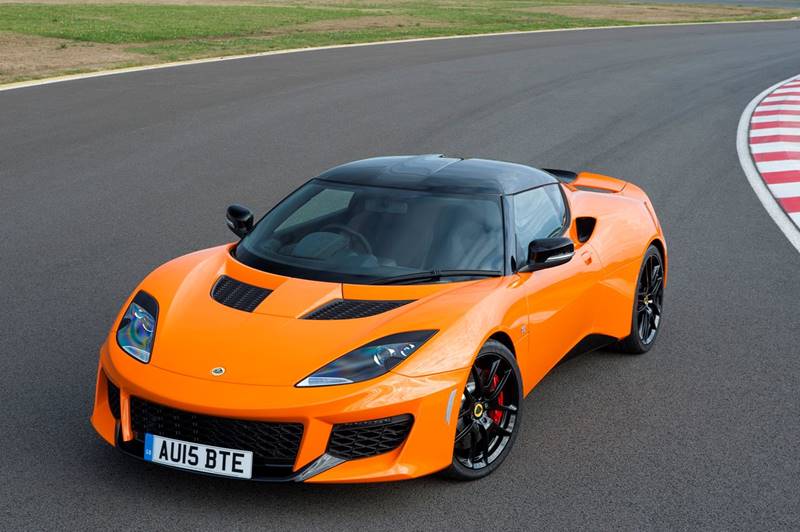
The deal will also see PROTON sell its entire equity in British carmaker Lotus, which will see the Group exit the sports car segment.Geely Holdings, which also owns Volvo Car Corporation and The London Taxi Company, is one of the leading passenger vehicle carmakers in China. It already has facilities across the globe, including 16 manufacturing plants, 7 design studios and 5 research & development centres.
The deal with PROTON will offer Geely access into the key ASEAN market, and also R&D and manufacturing presence in the region.
Both parties expect to sign the Definitive Agreement in July 2017.

Sunday, 22 May 2016

Zhejiang Geely Holding Group takes out a Bond securing US$400m to assist in Zero Emission vehicle development.

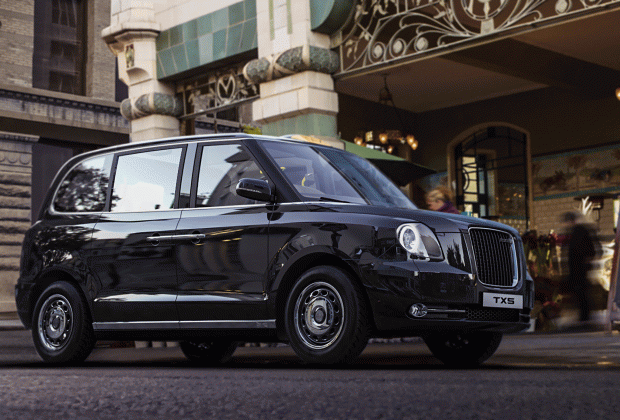
Zhejiang Geely Holding Group (“ZGH” or the “Group”) priced the first-ever Green Bond on the offshore market from a Chinese automobile company, raising US$400m to support the development of zero-emission capable vehicles by its UK subsidiary, the London Taxi Company (“LTC”), manufacturer of the iconic London Black Cab.
The senior unsecured bonds, issued through ZGH’s wholly-owned subsidiary LTC GB Limited, carry a fixed interest rate of 2.75% per annum with a tenor of five years, which is the lowest coupon ever amongst the USD bonds issued by Greater China's auto companies. The final order book of over US$2.3bn represented an oversubscription ratio of close to 6 times.

ZGH will use the net proceeds from the Green Bond to finance or refinance the design, development and production of zero-emission capable vehicles by LTC. ZGH is investing GBP300m in LTC’s new research and production facility in Ansty in the West Midlands region of the UK to develop the next generation London taxi, the TX5. The new model was unveiled last October in London in the presence of the Chinese President Xi Jinping during his state visit to the UK. The TX5 is a zero-emission capable vehicle and will be launched in the UK at the end of 2017 and in international markets in 2018. The vehicle will hence be compliant with new environmental requirements being introduced in London.
LTC is also working on several zero-emission model concepts, including light commercial vehicles as part of ZGH’s plans to significantly raise production at LTC and position it as a leading manufacturer of green and environmentally friendly transportation.
“We are delighted with the response of investors to our Green Bond offering” said Yifan Li, CFO of ZGH. “The issuance of the Green Bond is in line with our corporate vision to produce the safest, most environmentally friendly and most energy-efficient vehicles. The commitment of ZGH and all of the Group’s brands to reduce emissions means we are well positioned to benefit from the shift towards ever greener vehicles.”
“We are committed to producing zero-emission capable vehicles,” said Peter Johansen, CEO of LTC. “I believe the issuance of the Green Bond will further enhance our competitive edge in new energy technologies. Our next generation of zero-emission vehicles, the TX5, will be sold across the world, creating an environmentally friendly transportation system.” 
Bank of China provided a Standby Letter of Credit for the Green Bond. Joint Global Coordinators included Bank of China, Bank of America Merrill Lynch, Barclays and Société Générale.
ZGH engaged Deloitte to provide independent limited assurance in relation to the Green Bond Management Statement.

Monday, 4 May 2015

Volvo Cars celebrates 25th Anniversary of the Integrated Booster Cushion.

  • Volvo Cars introduced the first integrated booster cushion for children in 1990
  • Recommends children should travel rearward facing until the age of four
Volvo Cars is celebrating the 25th anniversary of the introduction of the first ever integrated booster cushion in conjunction with the United Nations Global Road Safety Week (May 4-10). Back in 1978 Volvo Cars developed the very first cushion for children in cars. 
In 1990 the Swedish car maker took child safety to a new dimension with the development of the first integrated booster cushion.

The first integrated booster cushion was actually a redesigned centre armrest that was developed to safely elevate the seating position of the child so that the existing central 3-point safety belt could be used to best effect. This removed the need for accessory child restraints for older children and also increased their comfort. 
The clear benefit of the integrated design also means that the cushion is always available and the potential for misuse is minimized. Few car makers offer integrated booster cushions for children to this day.
“The introduction of the first integrated booster cushion for improved child safety in 1990 was a huge step forward for child safety. 
One of the key benefits of integrated booster cushions is that it is developed as a part of the seat and the safety belt is in more direct contact with the child’s body, removing the possibility of ‘slack’ in the belt that could be associated with accessory booster cushions/seats or child seats,” said Lotta Jakobsson, Senior Technical Leader at Volvo Cars Safety Centre.
Volvo Cars achieved yet another world first in child safety when they added the integrated two-stage booster cushion in 2007, enabling adjustment between two settings for the safest and most comfortable seating position for children of varying height. 
Apart from the obvious benefit of increased safety and comfort, the integrated cushion also provides a better seating position for the child, allowing them to look out the windows. This has the effect of making children less prone to boredom and agitation, which can also negatively affect the driver’s experience and concentration abilities.  In the lower of the two positions the seat is suitable for larger children.
“The beauty of the integrated two-stage booster cushion is that it is always available and does not detract from normal adult usage of the seats. It means in effect that the rear seat is suitable for all but small children who should always be placed in a rearward facing child seat until the age of four. This increased safety and flexibility makes the integrated booster cushion a perfect solution. 
Unfortunately, not many car makers are offering such solutions at present. At Volvo Cars we believe that car makers should take the responsibility for developing child safety systems as a part of vehicle development to ensure the best performance. Children are our future – and we feel strongly that they should be given the best when it comes to safety. ” concluded Lotta Jakobsson.
Since 2008 Volvo Cars has communicated the vision that by 2020 no one should be seriously injured or killed while driving a new Volvo car. The longer term goal is to design cars that will not crash.
Achievements from Volvo over the years.
  • The 3-point safety belt was pioneered by Volvo and first used in a production vehicle in 1959.
  • Rear 3-point safety belts were added to the outer rear seats in Volvo cars from 1969.
  • Centre lap belts were replaced with 3-point safety belts in all Volvo cars from 1986 with an adjustable headrest being added in the centre from 1991.
  • The first integrated booster cushion for children was launched in 1990 in the Volvo 800 Series cars.
  • The first integrated two-stage booster cushion was introduced in 2007.
  • A comfort cover was also developed to increase support for sleeping children.
  • Volvo recommends a rearward facing child seat up to the age of three or four at least .
  • According to IIHS Statistics on Child Safety in the United States for 2013, 35% of children aged 13 and under fatally injured in car crashes were unrestrained (no safety belt or child seat). 25% wore a safety belt and 32% were in a child safety seat. The total number of deaths was 640. In 1985 the number of children unrestrained that were fatally injured was 71%, with just 7% wearing a safety belt and just 8% using a child safety seat. In 1985 the death toll was 1,131.
  • Volvo Cars offers a full range of child safety products that cover new-born babies to children around the age of 12.
  • #SaveKidsLives

Sunday, 26 April 2015

Volvo to consider producing small cars at it's Ghent, Belgium facility, as well as in China !

Volvo will build a new family of compact cars based on a common platform at its Belgian factory, CEO Hakan Samuelsson said. The cars will be developed with parent Zhejiang Geely Holding Group, Samuelsson said, and will also likely be built in China, although no decision has been reached on which of its plants will get the work.
"We have decided we will be using Ghent for Europe," Samuelsson said, referring to Volvo's factory in Ghent, Belgium. "In China, we have to look into this." Volvo currently builds the Volvo S60, V40 and XC60 models in Ghent.

Samuelsson said it was a "good guess" that the first Volvo vehicle to be built using the new platform, called the compact modular architecture (CMA), would be a new generation of the Volvo V40 hatchback, since it is the only compact that Volvo markets around the world now.
Samuelsson said Volvo's sales of smaller cars had always been too small to be profitable and the automaker needed a partner that could share the costs of developing and manufacturing a competitive vehicle.
China output
The executive said the automaker has three production options in China with Geely: two existing plants in the southwestern city of Chengdu and the northeast city of Daqing, or a new automobile assembly plant being built in Luqiao, a district of the eastern China city of Taizhou.
Two sources close to Geely said Volvo and its Chinese parent were likely to make cars based on the CMA platform together at the Luqiao plant.

Geely is expected to start producing an SUV based on CMA underpinnings at the Luqiao plant toward the end of 2016.
Volvo is also interested in using a common platform and powertrain technologies with Geely to come up with a small SUV, Samuelsson said.
"SUVs are growing in the world, so that is a good guess that something in that segment will be worth taking a look at," the CEO said.
Zhejiang Geely, which also owns black cab maker London Taxi Company, bought Volvo from Ford Motor Co. in 2010.

Tuesday, 27 January 2015

USA - Volvo's revival plan starts with immediate effect after dropping to its lowest level since 1978.


After its U.S. market share fell to the lowest level since 1978, Volvo has put its global product strategy chief in charge of North America and significantly boosted its marketing budget in preparation for an upcoming blitz of new vehicles.
Lex Kerssemakers, a 55-year-old native of the Netherlands, replaces Tony Nicolosi as CEO of Volvo Cars of North America after a 15-month period in which sales continued to fall. Kerssemakers, whose 29 years at Volvo include no prior stints in the U.S., described his immediate task as "very simple and very clear": put the Chinese-owned brand on a path back toward annual U.S. sales of at least 100,000 units.
Last year, it sold just 56,366.
"The revival plan of the U.S. starts now, and it will be very much product and brand driven," Kerssemakers told Automotive News. "With a strong network, a strong brand, strong products and a good financial offer, I'm convinced Volvo will be back on track."

Given Volvo's performance in five years under Zhejiang Geely Holding Group, Kerssemakers' job hardly appears simple. It's one of just two U.S. brands with sales that have declined since 2009, vs. a 58 percent gain for the industry overall.
Volvo was the worst-performing luxury brand in 2014, posting an 8 percent decline from the year before. It finished 2014 with just 0.3 percent of the overall U.S. market, half the share it had a decade ago.
Kerssemakers said he believes the company can reverse its sales slide this year but would not give a specific projection. He also declined to say how much Volvo has raised its marketing budget.

"We think it should be sufficient to start the revival journey and increase the level of awareness," he said. "We're working on the marketing plan now."
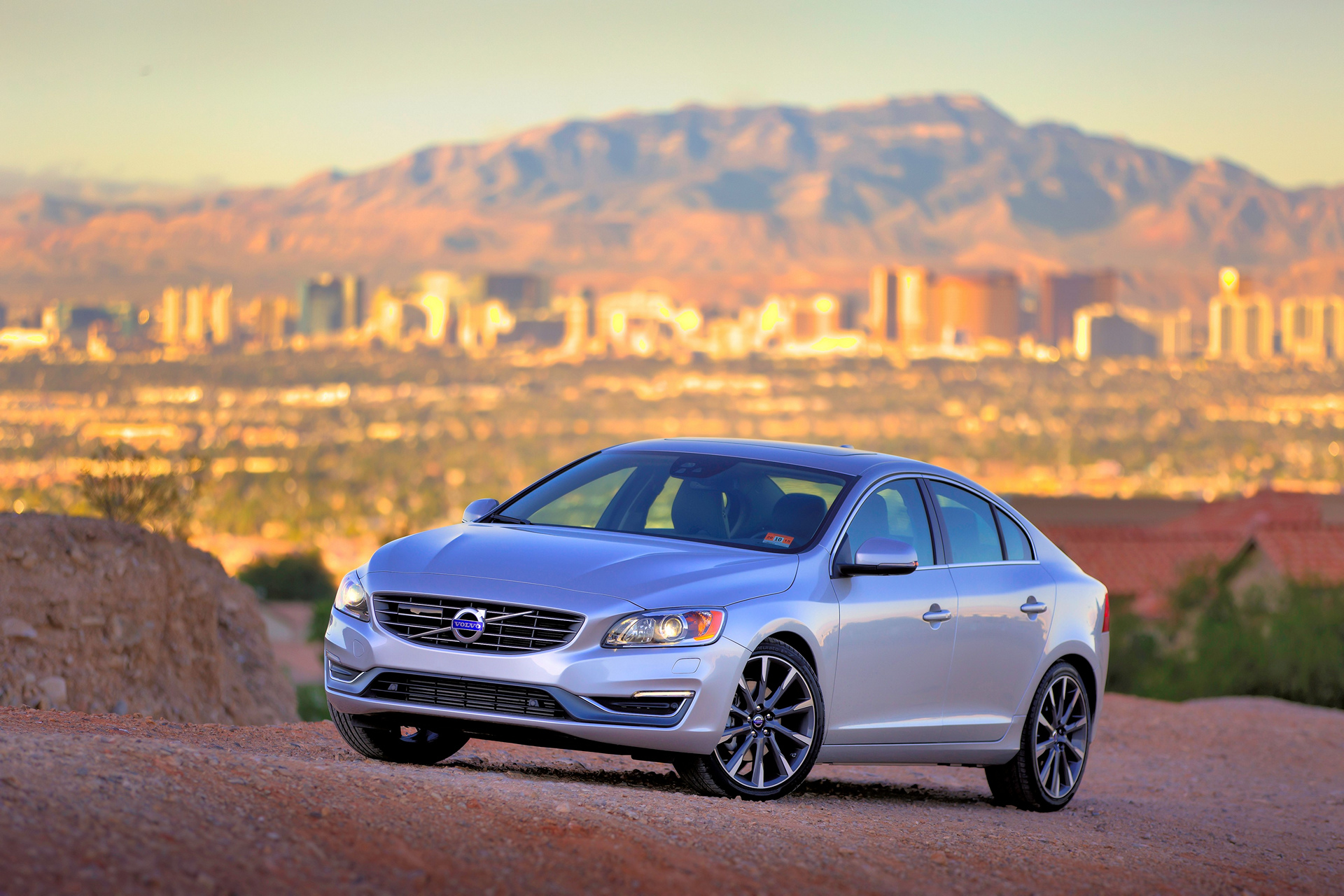
Kerssemakers will oversee the rollout of several critical models in 2015, including the XC90 large crossover and V60 Cross Country wagon. Volvo also plans to begin importing the S60 Inscription, a long-wheelbase sedan it unveiled at the Detroit auto show this month, to the U.S. from China.
The XC90 is well-executed and a "hugely significant statement car" for Volvo, said Stephanie Brinley, a senior analyst with IHS Automotive. She said Volvo's methodical approach since Ford Motor Co. sold the brand in 2010 could pay off down the road but that its rebound won't be quick.
IHS projects Volvo's U.S. sales to be only 80,000 units by 2020.
"They chose to kind of sit back for a while, which in the short term means lost sales and, unfortunately, some American consumers have forgotten about them as a brand," Brinley said. "The issue is it will take a little time to regain share of mind."
Kerssemakers said he realizes dealers' hands have been tied by the aging vehicles on their lots. He plans to meet with them at the end of March to lay out where the brand is headed.
"The dealers have faced a situation where they did not get fresh products in the way they were used to from Volvo," Kerssemakers said. "So we need to show them and convince them that this is coming, so that they start to invest in the brand Volvo again. Those elements should lead us to the 100,000 and to a sustainable equation."
He said it's too soon to say when Volvo could reach 100,000 units but that he hopes to have a better idea in six to eight months.

In addition to being North American CEO, Kerssemakers is now senior vice president for the Americas, with responsibility for North and South America, giving him broader authority than Nicolosi had.
Nicolosi was named president of Volvo Cars Financial Services of the Americas. Before becoming CEO of Volvo Cars of North America, initially in an acting capacity at the age of 53 in October 2013, he was head of Volvo Car Financial Services U.S.
Volvo recently shifted profit-and-loss responsibility in the U.S. to its three regions, a move that Kerssemakers said increases accountability and reduces the "number of layers between there, where the action is, and executive management."
You can reach Nick Bunkley

Tuesday, 17 June 2014

USA - Chinese made Volvo's to be expported to the USA and Russia, well apparently it may be true !?

Volvo, with help from its Chinese owner Zhejiang Geely Holding Group, plans to start exporting Chinese-made cars to the United States and Russia as early as next year, said a Volvo executive, who requested anonymity because he is not authorized to speak with the media.
The senior executive said the automaker would start exporting a long-wheel-based version of the S60 called the S60L, to the United States and the XC90 SUV to Russia as early as the end of next year. Volvo will eventually export about 10,000 S60Ls and a few thousand XC90s each year, the executive said.
Volvo's global head of media relations David Ibison confirmed that the company would start exporting from China although he said the timing and target markets had yet to be decided.

Volvo felt it could minimize foreign exchange risks by adding China as a production base, despite consumer concerns about the quality of made-in-China products, the executive said. "The dollar and the yuan have the best relationship, a more stable relationship than the euro and the dollar," he said. Volvo aims to use two assembly plants in China to export to the United States, Russia and possibly other markets such as Southeast Asia. One plant in the southwestern city of Chengdu began producing the S60L sedan late last year, and the second is ramping up production of the XC90 in the northeastern city of Daqing.
Geely’s Volvo strategy
Geely's strategy for Volvo is being closely watched as a possible model for other Chinese companies that have had limited success digesting and managing major consumer brands, following multi-billion-dollar foreign acquisitions in recent years. Geely's purchase of Volvo from Ford Motor Co. four years ago surprised many in the auto industry, who doubted that a relative newcomer could turn around the money-losing 87-year-old Swedish business while protecting its famous brand.
Yale Zhang, head of Shanghai-based consulting firm Automotive Foresight, said Volvo's outlook under the ownership of Geely and its founding chairman Li Shufu now looked "impressive," as Chinese demand for entry-level luxury cars soared. "Chairman Li has been so patient with Volvo and it's finally paying off," he said.
Investors in other Chinese firms that are struggling to manage foreign consumer brands are intensely interested in how Li, dubbed the Henry Ford of China, handles Volvo. Lenovo Group Ltd., for example, had trouble maintaining market share for years after its 2005 purchase of IBM's personal computer business. Another Chinese carmaker, SAIC Motor Corp, which bought roughly half of South Korea's Ssangyong Motor Co. in 2004 was forced to sell its stake after Ssangyong's business slumped in the wake of the financial crisis of 2008.
China sales boost
The executive said Volvo sales in China were likely to jump by almost 50 percent on-year to more than 90,000 vehicles in 2014, making the country its biggest market ahead of the United States. That is well above the 80,000 cars Volvo initially projected to sell this year.
Ibison said that although Volvo's China sales had grown 35 percent year-on-year so far this year, selling 90,000 cars in 2014 could be "a step too far." The carmaker's focus is to make sure "our growth is profitable and sustainable," he said.
The company sold a total of 61,146 vehicles in China last year, up 46 percent from 2012. This was just 77 vehicles behind deliveries in the United States, which dropped 10 percent to 61,223.
"We are satisfied with the progress we've made so far in China," the executive said. Volvo's two plants in China should be able to achieve full capacity of about 250,000 vehicles a year by about 2018, helping to drive domestic sales, he added.

Wednesday, 9 April 2014

Volvo aims for 1 million car sales

Volvo Cars targets annual sales of more than 1 million vehicles in the long term, co-owner and chairman Li Shufu told a Swedish newspaper.
Volvo, bought by China's Zhejiang Geely Holding Group from Ford Motor in 2010, aims for annual sales of 800,000 cars by 2020, almost double the level last year, helped primarily by growth in China. 

"The long-term target beyond 2020 is above a million cars," Shufu was quoted a saying in an interview in Brussels with Swedish business daily Dagens Industri published today.
Shufu reiterated Volvo's 8 percent operating margin goal, from 1.6 percent in 2013. 

He also said the carmaker's strategy was in place and that future top-level discussions would focus on "fine tuning."
Volvo reported operating profit of 1.92 billion crowns ($296 million) last year from 66 million in 2012, thanks to stronger sales and cost management.