Purpose

I will try my best to provide detailed info on various cars and what is like to live with them, I have already produced a few for Jaguar-car-forums, I will do my best to be unbiased, but it will be hard for some cars. I will re-produce press releases and copy from other motoring news.
Showing posts with label low emissions. Show all posts

Sunday, 19 March 2017

FLEET WORLD - The Citroen Dispatch takes the honours as best medium van in this years ceremony.

New Citroën Dispatch has continued its award-winning ways by taking the Best Medium Van prize in the 2017 Van Fleet World Honours.
The New Citroën Dispatch has been named Medium Van of the Year in the 2017 Van Fleet World Honours. The award was won jointly with the Peugeot Expert and Toyota Proace at a prestigious ceremony earlier today at the RAC Club in Pall Mall.
This latest award in the New Citroën Dispatch trophy cabinet joins the What Van? Light Commercial Vehicle of the Year 2017 and Medium Van of the Year 2017 awards, which were presented at the end of last year. 
Van Fleet World Editor, Dan Gilkes, said; “The New Dispatch is quite simply a great mid-weight van that has taken a huge step forwards from its predecessor. 
The van is not simply a like-for-like replacement, as the addition of a third compact model broadens the line-up, opening up new opportunities and providing customers with increased choice to suit specific operating requirements.
“There’s a good choice of 1.6 and 2.0-litre engines delivering a good mix of economy and low emissions, with power and refinement. The vans can also be supplied with a very high specification, including industry first head-up display and hands-free side door opening.
“Citroën has managed to deliver strong load volume and payload capacities, while providing a comfortable, car-like driving environment in a van with perfect dimensions for urban use.”
The Van Fleet World Awards are chosen by a panel of expert journalists at the publication, who have considerable experience of the van market.
Commenting on the award, Jeremy Smith, Citroën UK’s Head of Commercial Vehicles & Business Sector Operations, said; “We thought we were on to a winner with the New Dispatch range.

The awards from What Van?, and now Van Fleet World, show that others with experience in the van sector think so too. We are delighted that the experts at Van Fleet World have recognised the strengths of the New Dispatch with this latest award.”

Thursday, 18 June 2015

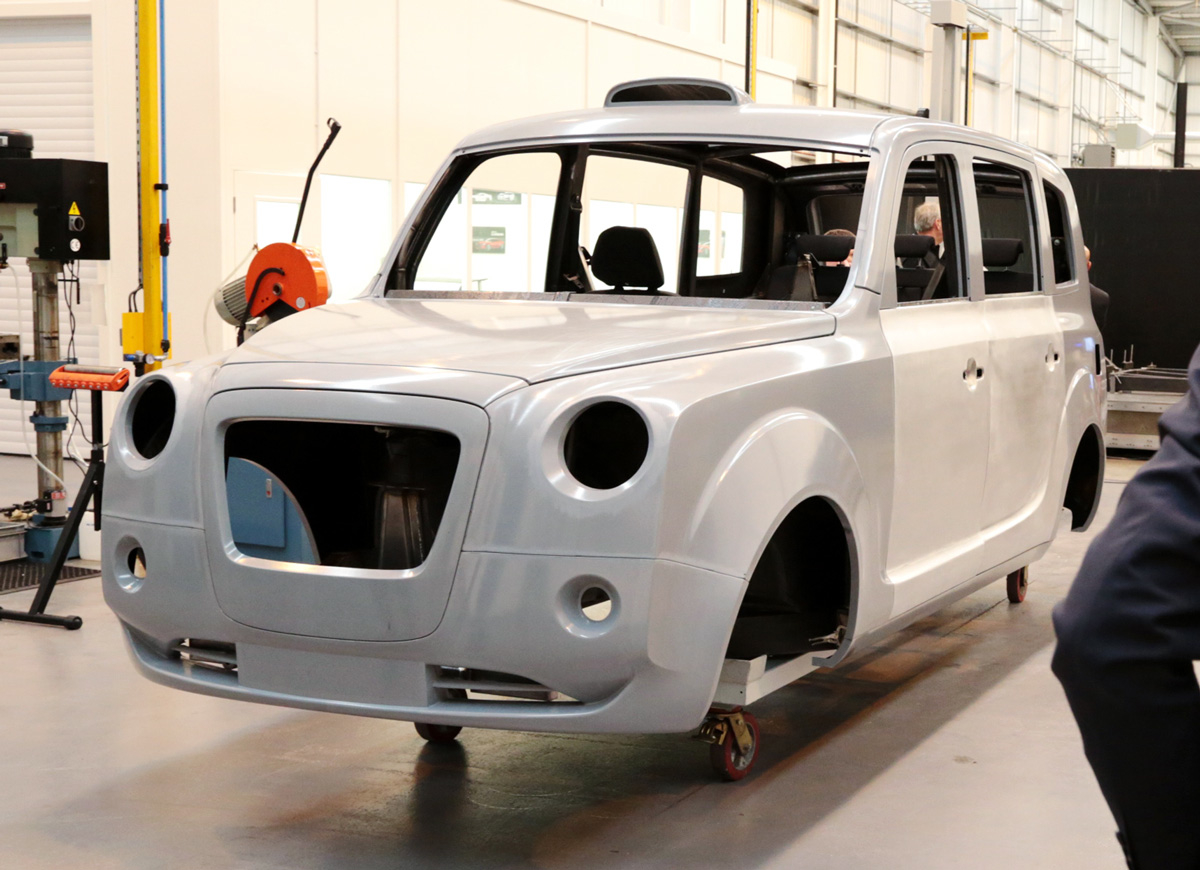
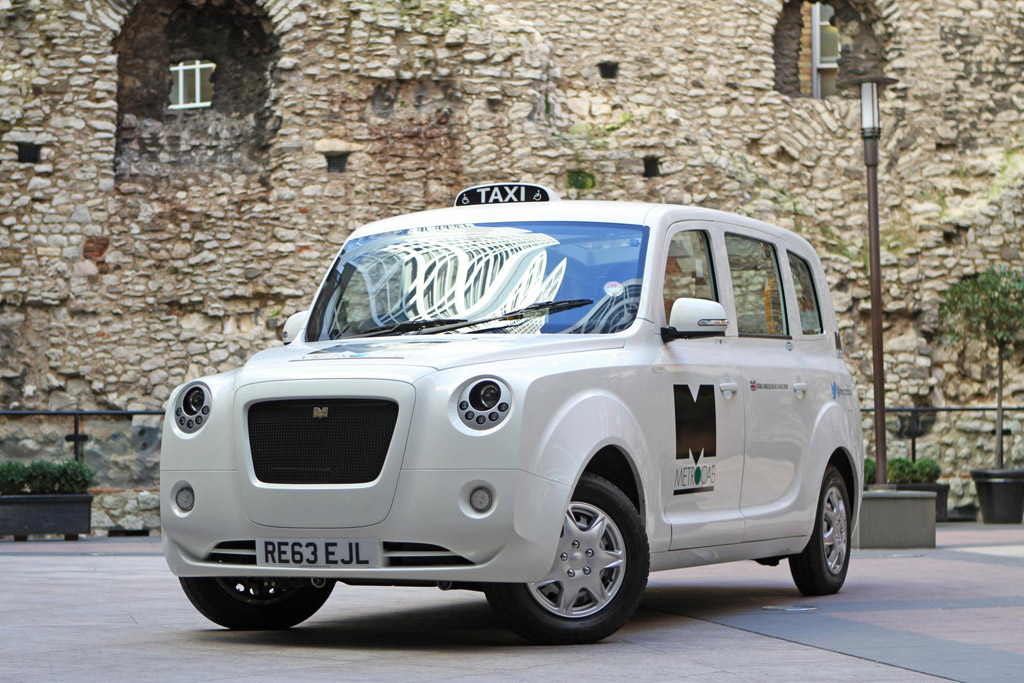
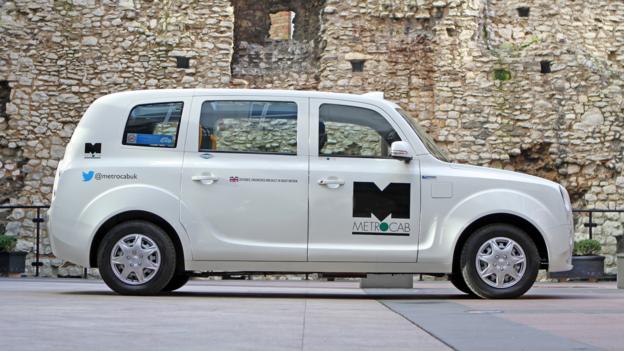
London Taxi Company to take legal action against Metrocab's new Low Emission alternative cab.

London Taxi Company, which builds the UK capital's iconic black cabs, is taking legal action against a low-emission alternative, saying the similar design would confuse drivers and customers.
The company said the Metrocab plug-in hybrid breached its trademarks. Frazer-Nash Research and Ecotive said last month they would start production of the new Metrocab in 2016, in partnership with privately held manufacturer Multimatic Holdings.

"It is actually all about the shape," said Douglas Campbell, a lawyer for the London Taxi Company, at a London court hearing ahead of a November trial.
London Taxi Company's owner, China’s Geely Automobile Holdings, is investing 250 million pounds ($387 million) in a new factory in Coventry, England, to build a greener plug-in hybrid version of its new black cab.
Frazer-Nash Research and Ecotive are building a 50 million-pound factory near Coventry.
"The identity of the manufacturer of the car is a matter of supreme indifference to the passenger," Frazer-Nash said in documents at a London court hearing. Officials at the London Taxi Company declined to comment. A spokesman for Frazer-Nash didn't immediately respond to emails and phone calls seeking comment.
London Mayor Boris Johnson announced last year that all of the city's new taxis should be able to operate as zero-emission vehicles by 2018 as part of efforts to reduce pollution.

Drivers of black cabs must pass a four-year training program called the "knowledge" to demonstrate their understanding of the city's 25,000 streets. Each cab driver essentially runs a small business, buying or renting vehicles, licensed by London's transport authority.
The London Taxi Company manufactures the majority of black cabs. Frazer-Nash's zero-emission Metrocab is currently undergoing trials in the city.

Monday, 16 March 2015

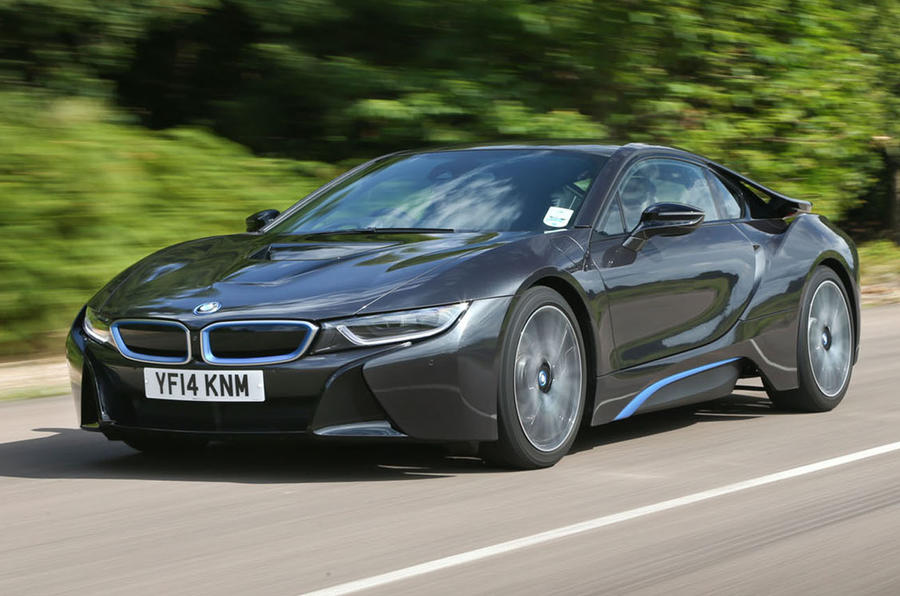
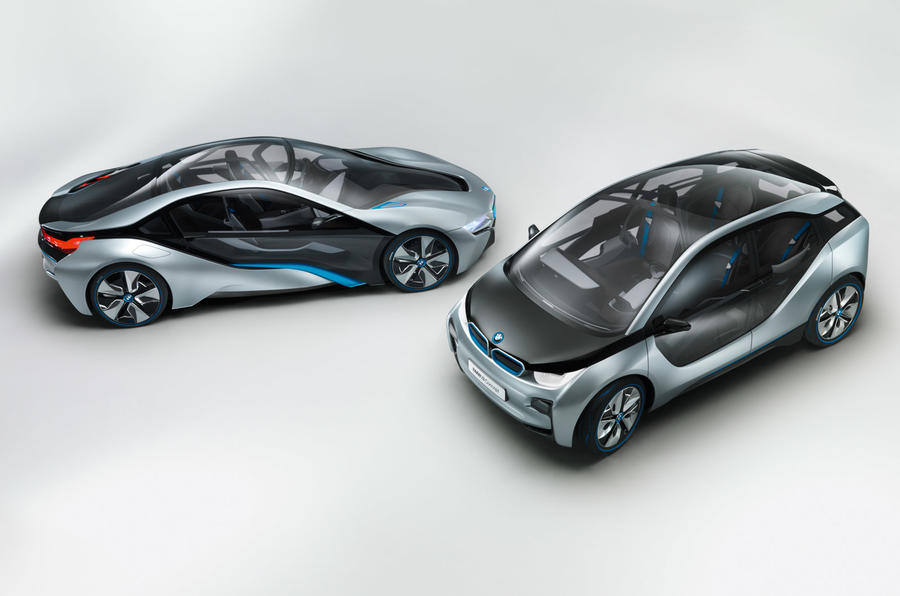
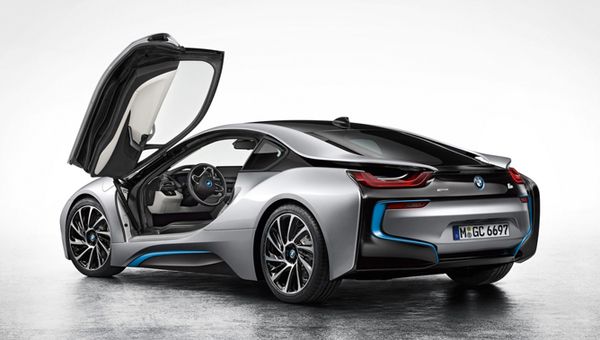
BMW to consider a third model to add to it's range 'i' models, but not for a while yet !

BMW is currently weighing which type of model will join its “i” family of low-emission vehicles, a top executive said, adding that the model would arrive after 2020.
“We are still in the strategic research phase where we brainstorm,” BMW Group r&d chief Klaus Froehlich told Automotive News Europe. “Teams that start with a white sheet of paper. They talk with customers, hold workshops, then present their ideas and we decide.”

Froehlich disputed media reports that claimed the third model after the i3 and i8 would be a variant of the X5 premium large SUV. He said the mission of the i subbrand is to change the perception of how a low-emissions car should look and perform, therefore there are no plans to re-package an existing BMW Group model and call it an i model.
Also, he said the i subbrand is supposed to be a starting point for cutting-edge innovation that progressively moves down into the rest of the automaker’s lineup. Current examples include carbon fiber, which is a key part of the i3 and i8 and is moving into other BMWs, and the i8’s plug-in hybrid powertrain, which is being added to high-volume models such as X5, 3 series and 4 series.
Better batteries
BMW will focus on steadily improving the i3 and i8 during the six-plus years until the subbrand’s portfolio grows again.
“We have a minimum 20 percent battery density improvement every three years, thus over the i3 and i8’s life cycle, we will offer more performance, more range or a combination of the two,” Frohlich said.
When asked whether current i3 and i8 owners would be able to switch to the more powerful electrical powertrains Froehlich said: “I don’t think a retrofit makes sense. When better batteries are available, we could then offer models with a longer range or with the same range but at a lower price.”
He added that replacing the batteries is very complex because they are integrated and bonded into the chassis.
Last year, BMW sold 16,052 i3s and 1,741 i8s.
Christiaan Hetzner

Wednesday, 12 November 2014

Green Apple awards give best Supermini to the Skoda Citigo, I thought it was a citycar ?

  • ŠKODA Citigo named Best Supermini in the annual Green Apple Awards
  • Fourth year in succession that ŠKODA has been honoured
  • Judges praise the Citigo’s quality, practicality and low running costs
  • Citigo CO2 emissions from 95g/km
ŠKODA has enjoyed a fruitful time at 2014 Green Apple Awards with the Citigo collecting the award for Best Supermini. The frugal, low-emissions Czech city car pipped rivals to clinch the title in the majestic surroundings of the House of Commons in London.

The Green Apple awards are run by the Green Organisation, an independent non-profit body that rewards environmental best practice. Judging was performed by members of the Midland Group of Motoring Writers, who singled out the Citigo for its quality, economy and value.


One Green Apple Awards judge said: “The ŠKODA Citigo offers a great drive, is thoroughly practical and has low fuel consumption.” Another added: “The Citigo is the perfect demonstration of how a car can be economical, inexpensive, beautifully built and a pleasure to drive."

Low running costs and minimal emissions have been at the core of the Citigo’s appeal since its launch in 2012. Offered with a choice of two highly economical engines, CO2 outputs start at just 95g/km, while fuel economy of 68.9mpg is possible on the combined cycle. Prices for the Citigo range start from just £8,210.

The Citigo’s award marks the fourth year in a row that ŠKODA has triumphed at the Green Apple Awards. The judging panel awarded top marks to the Yeti in 2011, 2012 and 2013, and has consistently praised ŠKODA’s passion for building affordable, low emissions cars. 

Commenting on the Citigo’s latest award, Alasdair Stewart, Brand Director for ŠKODA UK, said: “We’re delighted to accept this award for the Citigo. Low running costs and reduced emissions are key factors in the development of all ŠKODA products, and this award for the Citigo recognises the advances we’re making in both areas.”

The Green Apple Award is the latest in a long line of prestigious titles won by the Citigo. In 2012 it was awarded Car of the Year by Auto Express, along with the 2012 What Car? Green Award and the 2013 Driver Power Best Small Car title.

Wednesday, 11 June 2014

New 1.5L Skyactive-D engine to appear in new Mazda2

  • Company announces ultra-efficient SKYACTIV-D 1.5 for next-generation supermini
  • Small-displacement unit to offer ideal blend of performance and fuel economy
Mazda confirms its all-new Mazda2 will debut with the SKYACTIV-D 1.5, a brand-new 1.5-litre clean diesel engine, when the convention-challenging carmaker introduces its next-generation B-segment model, which will be initially launched in Japan.
First unveiled in March at the Geneva International Motor Show alongside the Mazda Hazumi concept (the basis for the all-new Mazda2), the SKYACTIV-D 1.5 shares much with its award-winning sibling: The SKYACTIV-D 2.2 clean diesel available for the Mazda CX-5, Mazda6 and Mazda3. The SKYACTIV-D 1.5 was developed in the pursuit of ideal combustion despite a very low compression ratio. As a result, the engine boasts outstanding dynamic performance from standstill to its unusually high redline..

New innovations for the small-displacement newcomer to the SKYACTIV range include an expanded homogenous lean burn range, even less mechanical resistance, and new insulation technology to counter the increased cooling loss associated with a smaller engine. So it’s exceptionally efficient and clean, delivering top-class fuel economy and emissions, and will comply with Euro 6 without needing pricey exhaust aftertreatment.
In addition to the SKYACTIV-D 1.5, the all-new Mazda2 will come equipped with the full line-up of SKYACTIV Technology, including the highly efficient six-speed SKYACTIV-Drive automatic and SKYACTIV-MT manual transmissions. It will also have the carmaker’s fuel-saving i-stop idle-stop and i-ELOOP brake energy regeneration systems. Mazda expects its new clean diesel-powered supermini to achieve the best fuel economy of any combustion-engine powered vehicle available in Japan*. The SKYACTIV-D 1.5 should be popular in Europe, too. The company believes the next Mazda2 will follow in the tracks of existing SKYACTIV-based Mazdas, among other things in terms of outstanding real-world fuel consumption and Mazda’s characteristic driving fun.
* According to Japan’s strict JC08 test cycle, excluding hybrids and microcars
SKYACTIV-D 1.5: What’s new
  • Combustion mode transition control technology and high dispersion solenoid injectors to suppress cooling losses
  • High- and low-pressure exhaust gas recirculation used to extend the homogeneous lean burn range, improving fuel economy and the sense of performance
  • Cooling water control valves and water jacket spacers to improve combustion efficiency while reducing mechanical resistance
  • Variable geometry turbocharger with rotation sensor to deliver plentiful boost pressure throughout the engine’s rpm range
  • Intercooler integrated into the intake manifold to improve acceleration response and turbocharger efficiency
SKYACTIV-D 1.5: Key specifications (Mazda in-house measurements) Engine typeIn-line four-cylinder DOHC 16 valve direct-injection diesel
Displacement1,497cm3
Bore x stroke76.0mm x 82.5mm
Compression ratio14.8:1
Maximum power output (net)77kW / 105PS at 4,000rpm
Maximum torque (net)250Nm at 1,500-2,500rpm

Tuesday, 28 May 2013

AUDI continues to develop the e-tron range with the new A3


  • - Audi A3 Sportback e-tron: sporty plug-in hybrid
  • - Audi A3 Sportback g-tron: optimum carbon footprint
  • - Audi tron models combine driving pleasure with sustainability

One of the strategic corporate objectives of Audi is to develop technologies that combine driving fun with sustainability. It seeks solutions that strike a balance between individual mobility on the one hand and economy, ecology and the requirements of Audi customers on the other. The models of the Audi tron family demonstrate especially well how these seemingly opposing pulls can be reconciled. g-tron stands for drive concepts that run on synthetic Audi e-gas and natural gas and achieve an excellent COâ‚‚ footprint. The first production model to pave the way for COâ‚‚-neutral long-distance mobility is the A3 Sportback g-tron. The term e-tron, on the other hand, stands for the systematic electrification of the driveline. As one outcome of its research and development projects in this area, Audi is now going into volume production with the A3 Sportback e-tron, the first premium compact car with plug-in hybrid drive.


With its plug-in hybrid concept, the A3 Sportback e-tron combines the advantages of the combustion engine with those of electric drive. The entire expertise that Audi has built up in the sphere of hybrid technology has been channeled into its concept. The parallel driveline features a 1.4 TFSI working in tandem with a powerful electric motor. The power is transmitted to the front wheels via a newly developed e-S tronic. The liquid-cooled lithium-ion battery is located ahead of the front axle; it stores 8.8 kWh of energy, enough to drive 50 kilometers (31.07 miles) purely electrically and therefore with zero local emissions.

With 150 kW (204 hp) of system power and 350 Nm of system torque (258.15 lb-ft), the Audi A3 Sportback e-tron is a sporty premium compact vehicle. It accelerates from 0 to 100 km/h (62.14 mph) in 7.6 seconds and reaches a top speed of 222 km/h (137.94 mph). The overall range is 940 kilometers (584.09 miles) and the electric range 50 kilometers (31.07 miles). Consumption measured in accordance with the ECE standard averages just 1.5 liters of fuel per 100 km (156.81 US mpg), equivalent to CO2 emissions of 35 grams per kilometer (56.33 g/mile). The A3 Sportback e-tron will go on sale from the end of 2013.

The A3 Sportback g-tron interprets the principle of sustainable mobility in a new, pioneering way. Its 1.4-liter TFSI engine runs on Audi e-gas, a synthetic fuel that in chemical terms is almost identical to natural gas and can therefore be distributed as mains natural gas. This fuel, which the brand with the four rings produces at its newly completed facility in Werlte, in the Emsland district, is CO2-neutral. Its starting components are water and carbon dioxide, and it is produced using exclusively renewable power. The A3 Sportback g-tron will be arriving at dealers before the end of this year.

Motor sport is the ideal development lab for new technologies, and the toughest test environment is the 24 Hours of Le Mans. At last year’s competition on the Sarthe circuit, the R18 e-tron quattro brought Audi a historic double victory with a hybrid racecar that highlights just how much power an electrified driveline can put on the road.

In terms of its concept, the LMP-1 prototype is an uncompromising racing car, but in numerous individual areas it harbors potential that could ultimately find its way into production models The V6 TDI in the 2012 Le Mans winner supplies over 375 kW (510 hp) and 850 Nm (626.93 lb-ft) to the rear wheels. The motor-alternator unit (MAU) on the front axle is always good for 150 kW of extra thrust when accelerating out of a bend. Here it uses energy that it has captured during braking operations and stored temporarily in a flywheel energy storage system. When both electric motors on the front axle are active, the LMP-1 prototype becomes a quattro.

As well as the R18 e-tron quattro, last year Audi brought out a second high-tech car – the all-electric-drive R8 e-tron high-performance sports car. It sprints from a standstill to 100 km/h (62.14 mph) in 4.2 seconds and is governed at 200 km/h (124.27 mph). Its two electric motors supply the rear wheels with a combined 280 kW of power and 820 Nm of torque (604.80 lb-ft).

With its body made from aluminum and carbon-fiber-reinforced plastic polymer (CFRP), the multimaterial space frame of the Audi R8 e-tron is the latest manifestation of the ultra lightweight construction technology of Audi. Every facet of this high-performance sports cars demonstrates the sheer breadth of what is technically feasible. All components are systematically configured for maximum performance and range. All Audi production developments will now benefit from the expertise acquired throughout this project. There is for instance the large T‑shaped battery that doubles up as a supporting element and stores almost 49 kWh of energy, enough to drive 215 km (133.59 miles). The heat pump controls the temperature of the interior and assemblies energy-efficiently. The aerodynamics have also been optimized for maximum efficiency. The engineers of Audi have covered all key aspects of electric mobility with the R8 e-tron.

The Audi A1 e-tron is a technology demonstrator of entirely different stature. It is conceived as a specialist for urban driving. Its electric motor achieves peak output of 85 kW. The battery stores 13.3 kWh, making a operating range of 50 km (31.07 miles) possible. For longer journeys a rear-mounted combustion engine, which in its second development stage develops 25 kW (34 hp), charges up the electric motor via an alternator. Audi is participating in the German government’s “Electric Mobility Showcase” pilot project by running the A1 e-tron in six regions throughout the country in order to obtain more practical findings.

The A3 Sportback g-tron and A3 Sportback e-tron already show how diverse the Audi range of technologies for sustainable mobility is. Audi will be bringing further pioneering cars onto the market in rapid succession.

Friday, 1 March 2013

The stylish 2008 from Peugeot, the modern crossover


  • Peugeot’s eagerly anticipated debut in the growing compact crossover segment
  • 2008 brings new sophistication to the market, with contemporary design
  • Low-emission engines as standard; petrol from 99g/km, diesel even lower at 98g/km
  • Fuel economy as high as 61.8mpg
  • Huge range of personalisation options for owners, including body decal designs
After the 208 next comes the 2008. Peugeot’s stunning new compact crossover – making its world debut in road-ready production trim – builds on the success of the popular supermini and will undoubtedly be one of the stars of the 2013 Geneva Motor Show. With its perfect mix of contemporary styling, clean and efficient engines, plus a versatile cabin, it’s an exciting addition to the Brand’s already comprehensive line-up.


The 2008 is the latest expression of Peugeot’s renewed brand positioning on its move up market and clearly visible in the 208. The 2008 signals the Marque’s arrival in a highly competitive sector, pushing customers’ expectations to a new level. The car oozes desirability, with an athletic design, engaging driving experience, high levels of comfort and equipment, and outstanding quality in materials and finish.
Further enhancing Peugeot’s strategy of enhancing its crossover range to attract new customers, the 2008 is a truly global car. It addresses the increasing demands of customers around the world and is the first vehicle produced by the Marque which has been designed, developed and engineered simultaneously by employees based in Europe, China and Latin America. Vehicles for Europe will be produced in the factory in Mulhouse, France.
The 2008 brings a new level of innovation to the B-segment by combining the expertise and experience of two acclaimed Peugeot vehicles; as a compact crossover, it blends the success and design of the award-winning 3008 with all the features, performance and state-of-the-art engines of the new 208 supermini.
With a characterful on-the-road presence, the 2008 is intended for young city-dwellers who love the urban environment but also enjoy escaping from it at every opportunity. In keeping with the dynamism of its profiled silhouette, power comes from the latest generation of low fuel consumption Peugeot engines. With e-HDi diesel and three-cylinder petrol technology, Peugeot's urban crossover stands out from the competition due to CO2 emissions starting at just 98g/km. Fuel economy can be as high as 61.8mpg.


The Peugeot 2008 in greater detail
“Creating the 2008 was a great challenge but we had a very precise idea of the vehicle that we wanted to offer customers. The style brought to life in an early phase did not require any major modifications up until production. The very first sketch was perfect”, says Eric Dejou, 2008 Design Manager.
Measuring 4.16 metres long and 1.74 metres wide, the Peugeot 2008 brings together the robustness of an SUV with the practicality of space, comfort and modularity displayed so successfully in the Marque’s existing passenger cars. The goal for the design and engineering team was to combine Peugeot’s strong reputation for styling flair with a unique driving experience while offering desirable user benefits. The result is a car that’s equally at home in town or on the open road.
The 2008 puts a new twist on the existing Peugeot family face, as seen on the 208. The floating grille is cut from a solid block and set upright to create a powerful and dominant design cue. The sculpted headlamps with LED daytime running lights blend seamlessly into the nose.  From the side, the car presents a dynamic yet elegant profile enhanced by the roof bars which hint at the car’s practicality and versatility. At the rear, the wide tailgate and low loading lip – just 60cm off the ground – mean exceptional ease of use. Complimentary to the appeal of its elevated driving position, 2008 has many other attractive features; stylish matt-finished alloy wheels, black bumpers and body sills, stainless steel front and rear scuff-plates and chromed side mouldings are the perfect blend of practicality and style.


A new level of interior versatility
Agnès Tesson Faget, 2008 Product Project Manager, said: “We wanted to create an exceptional on board space for our customers which takes care of all the occupants and offers them new sensations. The unique ergonomics of the instruments and controls, the careful choice of materials, the quality of assembly, the light ambience ... the 2008 stimulates the senses.”
The interior of the Peugeot 2008 provides the driver and passengers with a spacious and flexible cabin, with a cockpit-style instrument panel and aircraft-type handbrake. A smart satin chrome finish to the air vents, handbrake lever, steering wheel, gear lever and touch-screen trims all add to the level of luxury and create a genuinely premium feel.
The wheelbase of 2.54 metres means generous space for every occupant of the 2008, while the ergonomically thinner seat backs mean it’s particularly roomy for rear passengers, who also benefit from a 12v power socket for the connection of a portable device and can even access the boot when the vehicle is moving.
Folding the 60:40 split rear seats boosts storage volume from 360 to 1,194 litres, of which 22 litres are under the floor. One press of the button at the top of the rear seat back is all it takes to fold the seat, as the base cushion retracts automatically.
The boot is exceptionally spacious considering the car’s compact dimensions. The floor comes with five recessed rails which run from the sill to the front seat backs. Six chromed hooks allow items to be secured safely. There is a storage area on each side, with a retaining strap and net.


A new Grip Control system, first seen on the 3008, builds on Peugeot’s crossover experience and is available on 2008. Due to the international success of the 3008, Peugeot has extensive expertise in the Crossover sector. Drawing on this has enhanced development of the 2008 which sets a new standard for on-road handling in the segment. It is the first crossover to offer the precision driving characteristics of a hatchback.
One of the key benefits is Grip Control, an advanced new technology which has been patented by the PSA Group and optimises traction in low-grip conditions. It adapts to the terrain by acting on the front wheels, using the electronic components already present on the vehicle. The driver remains in control and can decide at any time to move from Standard mode using the dial located on the centre console, choosing instead Snow, Off-Road, Sand or ESP Off.
Park Assist is also available on the 2008 to make parking easier for drivers, which uses ultrasound to measure an empty space then controls the steering to position the vehicle perfectly. The driver manages the vehicle’s progress: its movement, brakes, gears and clutch, leaving the difficulty of manoeuvring the car into a space is made by the Park Assist system.
Safety, as you would expect, on the 2008 is at the highest level. The large seven-inch touch screen is at the driver’s fingertips and by minimising commands for control of the infotainment system it allows the driver to keep his eyes on the road ahead. Cruise control with speed limiter is standard on all versions, as are six airbags – two front, two side, two curtain. Also on every 2008 is ESP with Anti-Skid Regulation (ASR), Stability Control (CDS), Emergency Braking Assistance (EBA) and Electronic Brake Force Distribution (EBFD), as is Isofix mountings for child seats in the rear.
PSA Group innovation means efficient petrol and diesel engines
Eric Tomietto, Stop&Start Project Manager, said: “Stop&Start allows the 2008 to offer excellent fuel economy and low CO2 emissions while retaining a high level of driving pleasure. The six engines fitted with this system start with CO2 at only 98g/km for diesel and 99g/km for petrol.”
The expertise and innovation of the PSA Group – as seen with Stop&Start petrol engines, e-HDi diesels, and advanced three-cylinder technology – means the 2008 sets new standards for combining driving pleasure with environmental awareness. The 2008 is available with a range of fuel efficient engines, with fuel economy as high as 61.8mpg and CO2 as low as 98g/km.
Peugeot 2008 petrol range:
1.2-litre e-VTi 82bhp Stop&Start99g/km
1.2-litre VTi 82bhp  114g/km
1.2-litre e-THP 110bhp Stop&Start104g/km
1.6-litre VTi 120bhp   135g/km
1.2-litre e-THP 130bhp Stop&Start109g/km
Peugeot 2008 diesel range:
1.4-litre HDi FAP 68bhp104g/km
1.6-litre e-HDi FAP 92bhp98g/km
1.6-litre e-HDi FAP 92bhp103g/km
1.6-litre e-HDi FAP 115bhp106g/km
In the months following its launch, the 2008’s engine range will be extended further with versions of the turbocharged three-cylinder petrol engine, with two power outputs available: 1.2-litre e-THP 110 and 1.2-litre e-THP 130.
Personalisation, accessories and Apps
The 2008 will be available with Peugeot Connect Apps, allowing the driver to travel with complete autonomy and freedom in his environment. Apps will include traffic and parking information, tourist attractions and weather updates. The information will be provided at two levels. The first, when the vehicle is stationary, permits full access to all the functions. The second is activated automatically when the vehicle is moving and limits access to the functions. Certain applications can only be used when the vehicle is stationary.


A range of accessories gives 2008 owners the choice of styling the exterior and interior of their car in a more personalised way. The range is inspired by the theme of the 2008 Concept. High quality decals feature black stripes contrasting with flashes of contemporary colours such as yellow, pink and orange. Body sills, roof bars, front grille, mirror casings, rear door decoration, vents, centre console, instrument panel visor and wheel centres – all can be enhanced through the accessory programme.
Different alloy wheels in 15”, 16” and 17” are also available, plus a range of transportation solutions, which include a towbar which can be removed without tools, plus secure roof bars to accommodate a bicycle carrier, ski carrier or roof box.
In conclusion, 2008 is an attractive proposition incorporating many product virtues, a higher driving position, and the latest-generation engines. These draw on the benefits provided by the lightness and profiled silhouette to offer an exceptional driving experience, combined with a real breakthrough in performance and fuel economy. Due to the technology of the e-HDi diesel and new 3-cylinder petrol engines, the 2008 Urban Crossover stands out from the competition with CO2 starting from just 98g/km.
Order books for the Peugeot 2008 open at UK dealerships in May and it is officially on sale later in the summer.  Demand is anticipated to be as strong as it has been for the much acclaimed 208, which has already secured over 20,000 UK orders during its first six months.