Purpose

I will try my best to provide detailed info on various cars and what is like to live with them, I have already produced a few for Jaguar-car-forums, I will do my best to be unbiased, but it will be hard for some cars. I will re-produce press releases and copy from other motoring news.
Showing posts with label vorsprung durch technik. Show all posts

Thursday, 8 June 2017

Audi will embrace the future with two advanced new Q SUVs and three e-tron battery electric vehicles

Audi will embrace the future with two advanced new Q SUVs and three e-tron battery electric vehicles while also replacing five ‘core’ models
  • New model generations in five core series, expansion of SUV family, extensive electrification
  • Technology for driverless city cars ready for an initial small series by 2021
Audi is facing up to the challenges of the present day but also confidently embracing the future with ambitious plans. Following a year that was impacted by the diesel crisis, the company intends to continue pushing forward with its strategic transformation, the details of which have just been outlined to shareholders by the Board of Management at its Annual General Meeting in Neckarsulm, Germany.
“We are rejuvenating our model portfolio enormously and will renew five existing core model series by mid-2018,” stated Rupert Stadler, Chairman of the Board of Management of AUDI AG. 
PLEASE ACCEPT THE PICTURES AS DESIGN CONCEPTS AND NOT AS REAL CARS

“In addition, we will expand our successful Q family by 2019 with two new concepts – the Audi Q8 and the Audi Q4 – and we will launch our battery-electric e-tron models.” Audi plans to launch three new electric models by 2020, after which the brand will gradually electrify models in each of its core series.
The focus this year is on top-end models with the new generations of the Audi A8 and Audi A7. The premium manufacturer will unveil the A8 at the first Audi Summit to be held in Barcelona on July 11. With this new event concept, the Ingolstadt-based company will create an exclusive presentation format all around the Four Rings. “There, we will show the world everything that defines Vorsprung durch Technik and our brand,” explained Stadler.
Over 30% fully or partially electric sales by 2025
Audi is systematically utilising Group synergies in order to implement topics of the future even faster and more efficiently. In April, the brand agreed on new development cooperation with Porsche for future vehicle architectures. Part of the cooperation is the development of shared premium architecture for electrification – an effective lever to enhance the competitiveness of electric cars. By 2025, Audi intends to achieve a proportion of one third fully or partially electric models in its unit sales.
In addition to the traditional car business, the premium brand will expand its range of digital services in the future. With myAudi, the company aims to create a consistent entry into the brand’s digital world and establish a platform for a wide range of online services, which will be open also for third-party providers to offer services. Audi is also expanding its mobility services for urban areas and intends to offer them in more than 15 markets worldwide by the end of this decade.
With a subsidiary founded in March 2017, Audi will take over the leading role within the Volkswagen Group in the development of autonomous driving. Autonomous Intelligent Driving GmbH is working on the technology for driverless vehicles in urban environments, which will be applicable in models of various brands. The technology is to be ready for application in a first small series of cars early in the next decade.
“We are financing our transformation out of our own resources,” said Axel Strotbek, Member of the Board of Management of AUDI AG for Finance, IT and Integrity. “Our business operations are robust also in the currently challenging situation. On the side of expenditure and investment, our ‘Speed up!’ program is helping us to achieve a high level of efficiency and thus a maximum focus on the topics of the future.”
In the first quarter of 2017, the Audi Group achieved an operating profit of more than €1.2 billion. With an operating return on sales of 8.7 percent, the company clearly met its profitability target. The net cash flow increased to more than €1.5 billion.
In full-year 2017, the company intends to slightly increase deliveries of Audi-brand cars compared with the number of 1,867,738 automobiles delivered in 2016. Revenue should also slightly surpass the prior-year level of €59.3 billion. In terms of operating return on sales, following the 5.1 percent of last year, Audi now plans to achieve its strategic target corridor of 8 to 10 percent once again. In 2016, operating profit was reduced by €1.8 billion and operating return on sales by 3.1 percentage points due to special items in connection with the diesel crisis and Takata airbags.

Sunday, 29 January 2017

The 8 millionth quattro mode is a Q5 SUV produced in Mexico, Vorsprung durch Technik.

All-new Q5 mid-size SUV is the recipient of the eight millionth quattro drivetrain in Audi series production history
  • Milestone Q5 rolls off the production line at new plant in Mexico
  • quattro with ultra technology is latest development step
  • Great success in motorsport as well as on the road
Audi is quattro and quattro is Audi – the famous all-wheel-drive system has been a defining feature of the Vorsprung durch Technik brand for over 35 years, and proof of that enduring appeal has been provided this week by the eight millionth quattro-equipped model to leave the production line. 
Fittingly, the worthy recipient of this particularly momentous example of the all-weather roadholding and driver appeal amplifier is an all-new Q5 SUV in Garnet Red fresh from a brand new plant in San José Chiapa, Mexico.   

quattro technology made its debut in 1980, and today it is available in more than 100 model versions. 
The quattro all-wheel drive system is standard in the Audi Q7, the Audi A4 allroad quattro, the Audi A6 allroad quattro, the Audi A8, the Audi R8 and all S and RS models, and it is available as an option in all other model series. 
In 2015, 44 percent of all Audi customers worldwide chose models equipped with quattro drive. The Audi Q5 topped the list with about 262,000 units. 
The quattro models generated particularly strong sales in the United States, Canada, Russia and in the markets of the Middle East. In Germany quattro sales totaled 122,048 cars.
Audi offers quattro all-wheel-drive in different versions tailored to each model. For the compact model series with transverse-mounted engines, an electronically controlled hydraulic multi-plate clutch is mounted at the rear axle. 
On the R8 mid-engine sports car, the multi-plate clutch is mounted on the front axle. According to the driving situation encountered, these active systems distribute drive torque variably to both axles.
The self-locking centre differential used in many Audi models with a longitudinally installed, front-mounted engine, is a purely mechanical planetary gear. Normally it splits the drive torque sent to the front and rear wheels with a 40:60 distribution.
The sport differential is available on the rear axle with some of the top-of-the-range engines. It actively distributes the torque between the rear wheels by means of two superposition units, each with an electrohydraulic multi-plate clutch. 
In extreme cases, almost all of the torque is sent to one wheel – the system actually pushes the car into the curve, eliminating any chance of understeer.
Latest development: quattro with ultra technology
The latest phase of development from Audi is the quattro system featuring ultra technology. Designed for models with a longitudinally mounted engine, it uses an actively controlled multi-plate clutch at the end of the transmission which distributes the torque variably between the drive axles in all-wheel drive operation. 
A decoupler in the rear axle differential can additionally open the connection to the rear wheels. Both clutches are opened in driving situations where the all-wheel drive doesn’t offer any advantage. 
This way, the parts of the rear drivetrain responsible for drag are not engaged. The system's control unit uses a multitude of data to produce a model of the vehicle's status projecting about half a second into the future. If the system detects, for instance, that the inside wheel is about to lose grip, it switches predictively to all-wheel drive.
As a result, the all-wheel drive is always ready when it is needed. The new concept considerably boosts efficiency without diminishing traction or driving dynamics.
Success story: the history of quattro
Audi achieved a milestone in automotive history with the quattro permanent all-wheel drive system – in 1980, no other manufacturer offered fast-running and light all-wheel drive technology for high-volume production.
The technology premiered in 1980 in the Ur-quattro at the Geneva International Motor Show. In 1986 Audi replaced the first generation's manually locking centre differential with a Torsen differential which could variably distribute drive torque. 
The planetary drive followed in 2005, with its asymmetrical, dynamic distribution of power and torque. The self-locking centre differential is the subject of continual development by Audi engineers and is considered the benchmark for traction and driving dynamics combined with very light weight.
Audi has also celebrated many triumphs in motorsport with quattro technology. The list so far includes four World Rally Championship titles, six victories in the famous Pikes Peak Hill Climb race in the United States, a title win in the TransAm series in the U.S., two DTM titles, 11 national Super Touring Car Championships, and a Touring Car World Cup. 
The latest victory for quattro technology: In late November, Mattias Ekström and his private rallycross team EKS captured the Driver World Champion and Team World Champion titles with the Audi S1 EKS RX quattro in the FIA World Rallycross Championship.

Thursday, 23 June 2016

GOODWOOD - Audi will have no fewer than NINE new models on display at this years motoring bonanza.

Some of the finest examples of Vorsprung durch Technik from the past and present converge on the UK’s largest motoring garden party 
  • 540PS R8 Spyder tops the power charts while the all-new Q2, the most compact Audi SUV to date, joins the Q7 e-tron plug-in hybrid, the 900Nm SQ7 TDI and A4 allroad quattro
  • Home of quattro off-road driving experience runs right through from Thursday to Sunday at 08:00 to 18:00 each day
  • Oliver Jarvis, one of the trio who clinched third place for Audi at last weekend’s Le Mans 24 Hours race, will drive an R8 V10 plus on the supercar hillclimb on Friday and Saturday
  • Track-side Audi Pavilion ideally placed for viewing all the unmissable action
  • Over 30 Audi models on display over the course of four days 
No fewer than nine brand new Audi models will make their UK public debuts at this year’s Goodwood Festival of Speed, collectively covering an intoxicating spectrum of speed, performance, trendsetting technology and masterly design. 
The latest proponents of Vorsprung durch Technik will include the Q2 compact SUV charting new territory for Audi, the beautifully brawny new S5 Coupé, the ground-breaking new SQ7 TDI and the searing 400PS, sub-five-second TT RS Coupé. 


These rising stars will mingle with Audi masterstrokes of the past, including the Auto Union Type C Grand Prix car, the S1 quattro E2 Group B competition car and the Audi V8 DTM, which will be piloted by Pink Floyd legend Nick Mason, rally legend David Llewellin and circuit racing star Frank Biela respectively.
In keeping with the Festival of Speed’s tradition of annual themes, which this year focuses on ‘full throttle – the endless pursuit of power’, the most potent products in the Audi Sport stable will naturally take centre stage.
Fans can witness the five-cylinder, 400PS TT RS Coupe, the 197mph R8 V10 Spyder and the limited edition R8 selection 24h in the metal, while other high-performance newcomers include the 435PS, 900Nm SQ7 TDI - the first ever series production car to feature an electrically powered compressor - and the 354PS S5 Coupé, which takes to the stand less than a month after its world premiere.
Also representing the other quattro-driven members of the Audi family attending Goodwood are the all-new Q2 and the Q7 e-tron. Audi enters a new segment with the Q2, which combines the very latest technology with a bold new design and compact footprint yet also retains all of the practicality associated with the Q range of SUVs. 
The Q7 e-tron is the brand’s second plug-in hybrid vehicle, offering up to 34 miles of battery-powered driving and a total range of over 820 miles. Both will sit alongside the Audi A4 allroad quattro, an even more rugged variant of the 2016 What Car? Car of the Year that takes cross-country capability to new levels.
Rounding out the nine UK debuts is the new Audi A3 range, which can be ordered now in three-door, five-door Sportback, Saloon or Cabriolet form from UK Audi Centres. The class-leading latest model further develops a series of best-selling qualities that Audi has consistently honed in the A3 over the course of 20 years and takes on board a host of new technology from the classes above.
Goodwood visitors can take in  these models in detail on the stunning Audi stand located right by the track, and a separate exclusive VIP viewing area complete with refreshments is accessible for all Audi owners who show their key fob - a long-standing tradition of the brand with the four rings at Goodwood.
Also customary for Audi is a celebration of its milestone moments from yesteryear, and marking two separate anniversaries will be Audi Tradition with an extraordinary line-up that consists of a ferocious 16-cylinder Grand Prix winner, an all-conquering rally car and a DTM legend.
Pink Floyd drummer and car enthusiast Nick Mason will be taking the wheel of the Auto Union Type C - the most successful model of the Auto Union Silver Arrows before the Second World War. 
In 1936, the 560-hp six-cylinder developed by Ferdinand Porsche won the European Grand Prix Championship. Ever since then, the Type C has been inseparably associated with the name of Bernd Rosemeyer. The leading driver was almost unbeatable in that racing season.
Ensuring that the full force of the five-cylinders under the bonnet of the legendary Audi Sport quattro S1 E2 are unleashed before the crowd will be David Llewellin, who helped to propel the Group A rallye quattro cars to national acclaim in the Eighties.
Five-time Le Mans champion Frank Biela will also drive the 1990 Audi V8 quattro DTM over the weekend. This 462PS-strong racing car was Audi’s debut vehicle at the German Touring Car Masters (DTM) in 1990 where it won the title upon its first attempt.
Goodwood attendees can look forward to an additional attraction this year: Mattias Ekström’s rallycross team will be competing in the motorsport event. As Ekström will be on the DTM grid at the Norisring that weekend, British EKS driver Andrew Jordan will be at the wheel of the 560PS Audi S1 EKS RX quattro in the tradition-steeped race.

Friday, 20 May 2016

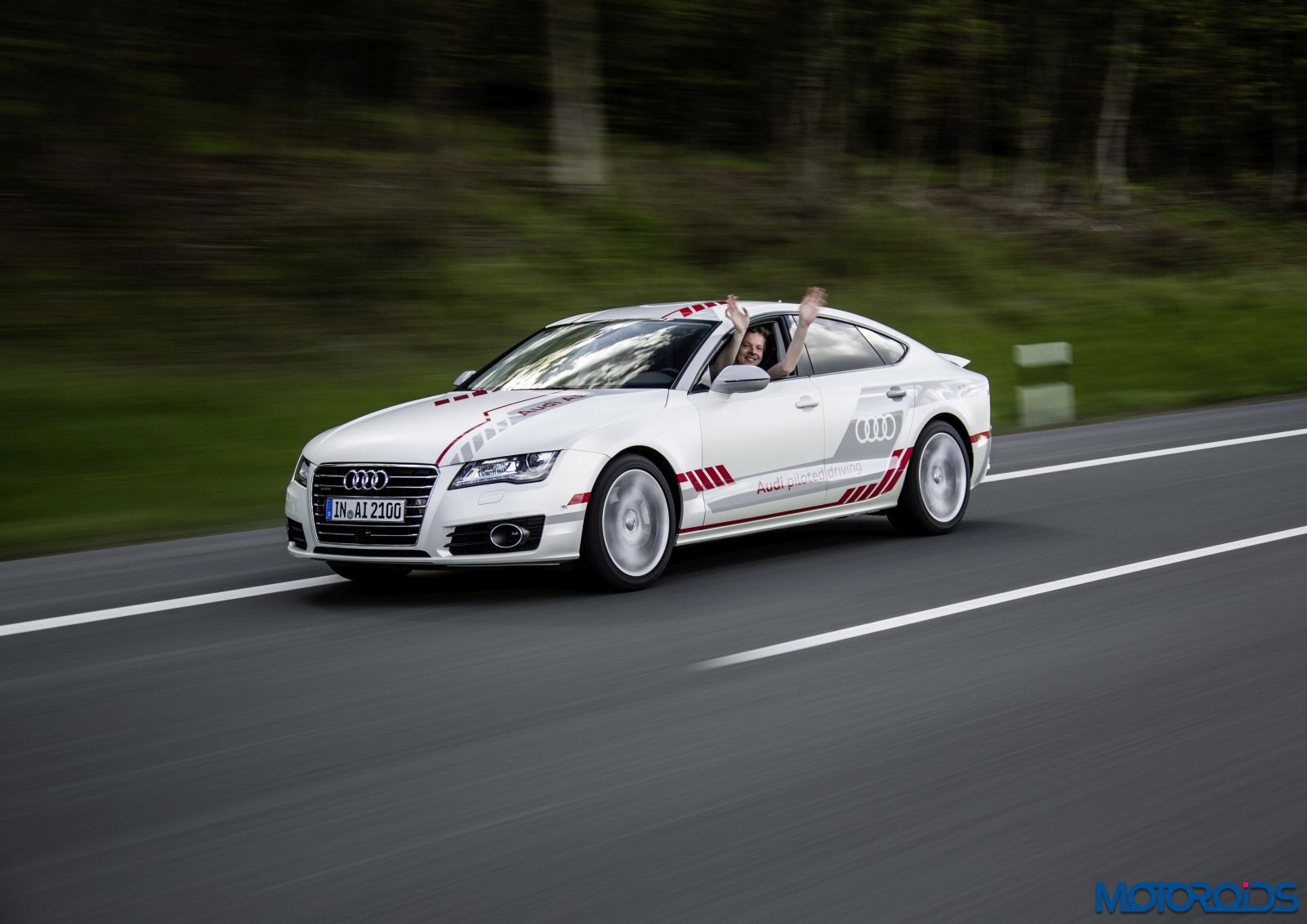
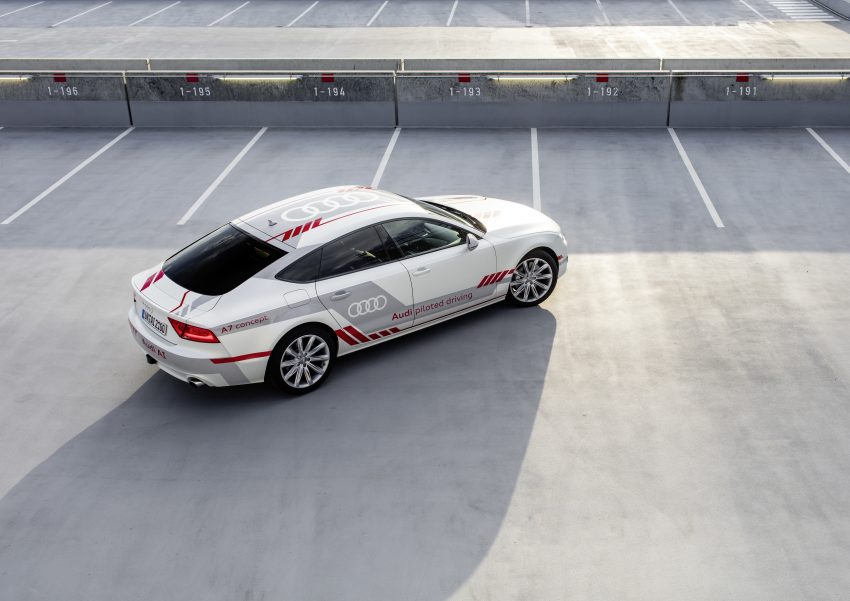
Audi A7 drives it's self wherever you want to go, the technology is getting better and more realistic day by day.

  • Piloted A7 displays the results of further character-building development work to foster ‘social competence’ 
  • Audi A7 piloted driving concept: concept car impresses with its natural interaction with other road users during autobahn testing
  • Navigation system can now devise routes containing maximum piloted driving opportunities
  • Car-to-X communication: digital test site on the A9
  • “First mile”: piloted driving in the urban environment
The evolution of the piloted Audi is continuing apace – the Vorsprung durch Technik brand’s latest research car, the Audi A7 piloted driving concept “Jack”, is now even more adept at operating just like a human driver – its autonomously performed motorway driving manoeuvres have been further refined, and it is now even more proficient at showing consideration for other road users. 
“Jack” exhibits a driving style that is adaptive to the given situation, safe and especially interactive – it is a research car with social competence.
Audi is continually advancing the development of its piloted driving test car. “Jack” – the internal nickname for the A7 Sportback-based technology platform – is now driving more naturally. 

This is illustrated by the way it confidently deals with hazardous points on the road, passes trucks with a slightly wider lateral gap and signals upcoming lane changes by activating the indicator and moving closer to the lane marking first – just like human drivers would do to indicate their intentions. The opportunities for taking full advantage of “Jack’s” piloted features are also now made more apparent to its driver – its sophisticated navigation system is now capable of computing a route containing the largest possible proportion of piloted driving sections.
The cooperative attitude of “Jack” is especially apparent when other vehicles want to merge into its lane on the motorway. Here the test car decides – based on the selected driving profile – whether to accelerate or brake, depending on which is best suited to handling the traffic situation harmoniously for all road users.
State-of-the-art zFAS controller
The super brain of piloted driving is the central driver assistance controller, or zFAS. It uses state-of-the-art, high-performance processors to evaluate the signals from all sensors in real-time and create a model of the car’s surroundings. This model represents the prevailing traffic situation as accurately as possible. It lets the zFAS calculate upcoming manoeuvres in advance, taking a look into the future, so to speak.
Piloted driving offers greater safety, more efficient utilisation of the transportation infrastructure and more relaxation time for the driver. Audi has already derived systems for assisted driving from the tested technologies, including the traffic jam assist function now available in the Audi A4 and Audi Q7.
Audi continues to document its progress in piloted driving with spectacular events. In the United States, for instance, a driverless Audi TTS etched the brand’s four rings trademark into the surface of a salt flat and also conquered the legendary hill climb up Pikes Peak in the Rocky Mountains without a driver. At the Hockenheim Motodrome, a driverless Audi RS 7 Sportback chased down the limits of driving physics in fall 2014. Since then, Audi has been demonstrating the next steps in piloted driving on public roads too, for example under real traffic conditions on American highways from the west coast to Las Vegas.
Digital test site on the A9 autobahn
The future is networked – this is especially applicable to piloted driving. In the future, cars and the infrastructure will communicate with one another more intensively. Common information interfaces are an important condition for this, so that the benefits of piloted driving can be better utilised on motorways. The digital test site on the A9 autobahn – announced by the German Federal Ministry of Transport and Digital Infrastructure – offers ideal conditions for evaluating and further developing future functions and concepts together with representatives of the Free State of Bavaria, the automotive industry and the IT industry. The brand with the four rings can once again probe the technical possibilities of Car-to-X communication here – under real road conditions and in real time.
In the future, information on variable-message traffic signs, for example, will be digitally transmitted into the car in order to assist the traffic flow. In addition, Audi is defining and testing elements of the future communications standard 5G together with IT partners. Car-to-X communication immediately enables piloted driving cars to use paved road shoulders when these are temporarily opened.
Another step forward is Car-to-Car communication between automobiles that are travelling on the same routes. They can report on hazardous points and accidents in real time. The driving speeds of other road users operating with piloted driving are then automatically adjusted to the potential hazard.
The local infrastructure plays a special role for piloted driving on the motorway. In addition to sensors in the car, signals from the environment give the driver a precise preview of the road ahead. Audi’s partners for the digital test site on the A9 autobahn, for example, are testing the internal composition and modified material structure of roadside posts. These are to be designed to reflect the radar sensors of cars even from greater distances. In addition, project participants within the scope of the test parameters are studying special traffic signs that allow the test vehicles to localize their positions with high precision within the various driving lane markings.
For most customers, the complexity of traffic situations significantly intensifies again along the route segment from the motorway exit to city zones. Audi is researching and developing another test site for this so-called “first mile” in Bavaria, near the redesigned autobahn exit “Ingolstadt-Süd.” From 2017, Audi – together with the city of Ingolstadt – will be testing construction methods such as the use of different types of pavement as well as technical solutions such as the use of sensors in junction zones. Piloted driving research cars from Audi are already being incorporated into the design of the new infrastructure. Test operation should begin in 2018.

Monday, 2 May 2016

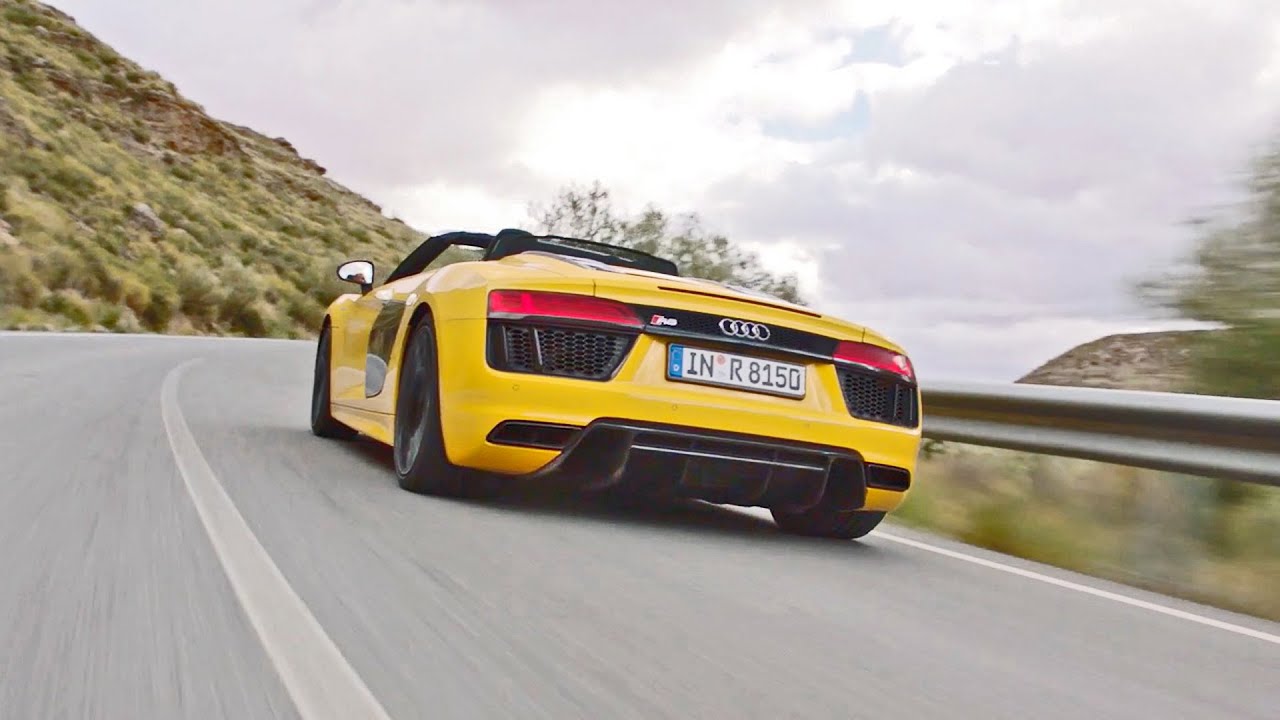
UK debut of all-new convertible Audi R8 V10 Spyder - the fast got faster and the best got better.

Faster, tauter, technology-packed Audi convertible super sports car makes its domestic debut at the UK epicentre of Vorsprung durch Technik
  • UK debut of all-new convertible R8 at Audi City London in Piccadilly
  • Available for UK order from late spring, first UK deliveries in late 2016
  • V10 engine developing 540PS, from 0 to 62mph in 3.6 seconds
  • Audi Space Frame with 50 percent improvement in rigidity
  • R8 debut for Audi smartphone interface and Bang & Olufsen audio with headrest-mounted speakers
A landmark Audi location in the heart of London is the fitting backdrop for the UK debut of a new generation of the convertible super sports car lauded as a milestone for Vorsprung durch Technik – the all-new Audi R8 Spyder has taken centre stage for selected media guests at Audi City in Piccadilly. 
Appealing to purists with its naturally aspirated V10 power, and to technophiles with sophisticated new features including the fully digital Audi Virtual Cockpit, the latest open-air R8 is not only more powerful and quicker against the clock, but also even more tightly pinned to challenging roads thanks in part to a 50 per cent improvement in torsional rigidity.

The key point of differentiation between Coupe and Spyder R8 models is of course the lightweight cloth hood, which tapers into two fins that stretch the cloth so that the roof harmonises perfectly with the dramatic lines of the high-performance sports car. Opening and closure is fully automated, and at speeds of up to 31mph the hood can be slickly concealed beneath the sculpted integral cover, or reattached to shield occupants from a sharp shower, in just 20 seconds. 
The rear window, sunk into the bulkhead, can also be retracted and extended at the touch of a button.
The strong backbone of the new R8 Spyder is the newly developed multi-material Audi Space Frame (ASF) which incorporates an intelligent mix of aluminium and carbon fibre that helps to keep dry weight down to just 1,612kg. Aluminium components make up a fraction under 80 per cent of the weight. 
They form a lattice that Audi’s engineers have used to incorporate specific reinforcements especially into the sills, A-pillars and windscreen frame. Combined with innovative manufacturing methods that lower the weight of individual components by up to ten per cent, these pare the weight of the body back to just 208 kilograms and boost torsional rigidity by over 50 per cent compared with the previous model.
Strong motorsport DNA: the V10 power unit
The even greater structural integrity provides an even more effective operating environment for a new iteration of the potent mid-mounted ten-cylinder engine.  
The latest V10 retains the purity of natural aspiration but adds advanced features such as dual injection and a freewheeling mode which enables it to ‘decouple’ whenever possible to optimise response and improve fuel economy by ten per cent. 
540PS of power and 540 Nm (398.3 lb-ft) of torque at 6,500 rpm deliver phenomenal road performance, with the 0 to 62mph sprint taking just 3.6 seconds on the way to a top speed of 197mph, but the latest R8 Spyder is also capable of returning up to 24.1mpg, corresponding to 277 grams CO2 per kilometre.
Behind the V10 there is a seven-speed S tronic dual-clutch transmission delivering lightning-fast shifts, which channels power to a newly designed quattro drive system with an electro-hydraulically activated multi-plate clutch at the front axle. 
It can distribute drive fully variably according to the situation, and in extreme cases can transfer up to 100 percent to the front or rear wheels.
The intelligent control system is incorporated into the Audi drive select system, which offers four modes ranging from overtly dynamic to comfort-oriented. In conjunction with the optional R8 performance leather steering wheel, three more driving programs are available: dry, wet and snow. 
They make handling even more precise and stable, to match the specific conditions of the road being travelled.
The controls place the focus squarely on the driver, who can operate all important functions with the multifunction and satellite push-buttons without having to take hands off the steering wheel or look away from the road. The large 12.3-inch, fully digital Audi virtual cockpit presents all information using rich 3D graphics.
The internet-based services delivered by Audi connect come as standard in the R8 Spyder, as does the intuitively operated MMI navigation plus with MMI touch, the Audi Music Interface and belt microphones which make it even easier to use natural-language voice control and the phone. MMI search, which makes search suggestions after input of just the first few letters, offers a shortcut to the required information.
The Audi smartphone interface, which made its debut in the Q7 and A4 model lines, is also adopted by the second generation R8 Spyder. It enables selected content from compatible iOS and Android smartphones to be displayed by the Audi virtual cockpit. 
The Audi phone box can also be specified to connect mobile phones to the car aerial and charge them inductively. 
The Bang & Olufsen Sound System is another highlight: For the first time, it plays through two head restraint loudspeakers mounted in each seat, for an excellent audio experience even when driving with the hood down.
Largely hand-built
The build quality of the new R8 Spyder, which is largely hand-built at a special facility near Neckarsulm, Germany, is of the highest standard. Over and above the extensive standard equipment, customers have almost unlimited scope to tailor both the interior and exterior to their individual preferences. 
Body components such as the front spoiler, the diffuser and the new sideblades are also available in carbon. LED headlights with newly developed laser technology can be added as an alternative to the standard all-LED headlights to maximise visibility and range for the driver, bringing increased safety at night.
The all-new R8 Spyder is making an early curtain call in London before becoming available to order later this spring. The first examples of the open-air super sports car will reach UK customers in late 2016.